Biblical wisdom, historical insight, and personal growth — all in one place

Category: Content Type (Page 1 of 5)

Top Category for grouping content types

A Timeline of Events Leading to the Declaration of Independence

This timeline traces the French and Indian War, the imperial policies and colonial resistance that helped produce the Declaration’s 27 grievances, and the opening battles of the Revolution. Historical note: Congress adopted the Declaration on July 4, 1776, and authenticated the approved text that day; most delegates signed the engrossed parchment on August 2, 1776, rather than all signing on July 4.

Background — Molasses Act (December 25, 1733): Although it predates this timeline’s 1754 starting point, Parliament imposed a duty on molasses imported from non-British colonies. It was widely evaded; the 1764 Sugar Act lowered the rate but strengthened enforcement.

French and Indian War to the Declaration of Independence, 1754–1776

Date

Event

Simple description and connection to colonial grievances

1754–1763

French and Indian War

Britain and its colonies defeated France in North America. The war left Britain deeply in debt, and Parliament tried to make the colonies help pay the cost, beginning a cycle of taxation and resistance.

October 7, 1763

Proclamation of 1763

Britain barred colonial settlement west of the Appalachian Mountains to reduce frontier conflict. Many colonists believed the restriction ignored their wartime sacrifices and limited access to western land.

April 5, 1764

Sugar Act

Parliament reduced the older Molasses Act duty but enforced it more strictly and taxed sugar, molasses, wine, and other imports. Vice-admiralty courts tried many customs cases without juries, helping inspire complaints about taxation and judicial power.

April 19, 1764

Currency Act

Parliament restricted colonial paper money. Colonists argued that the policy worsened shortages of hard currency and showed that distant lawmakers could interfere with colonial economies.

March 22, 1765

Stamp Act

A direct tax required stamps on newspapers, legal papers, licenses, and many other printed items. “No taxation without representation” became a rallying cry; protests and boycotts led to repeal in 1766.

March 24, 1765

Quartering Act

Colonial governments had to provide lodging and supplies for British troops. Resistance to supporting a standing army later appeared in grievances about troops, quartering, and military power.

October 7–25, 1765

Stamp Act Congress

Delegates from nine colonies met in New York and asserted that only colonial representatives could tax them. The meeting was an early step toward intercolonial cooperation.

March 18, 1766

Declaratory Act

Parliament repealed the Stamp Act but declared that it had authority to legislate for the colonies “in all cases whatsoever.” This kept the central constitutional dispute alive.

June 29–July 2, 1767

Townshend Acts

New import duties were placed on glass, lead, paint, paper, and tea, and customs enforcement was expanded. Colonial boycotts followed; Parliament repealed all Townshend duties except the tax on tea in 1770.

October 1, 1768

British Troops Arrive in Boston

Regular soldiers were stationed in Boston to enforce imperial laws and maintain order. Their presence increased tension and reinforced fears of standing armies in peacetime.

March 5, 1770

Boston Massacre

British soldiers fired into a hostile crowd, killing five colonists. Patriot writers used the event to portray military occupation as dangerous and oppressive.

June 9, 1772

Burning of the Gaspee

Rhode Island colonists attacked and burned a British customs schooner. A royal commission’s threat to send suspects to Britain for trial intensified fears about being transported overseas and denied local juries.

May 10, 1773

Tea Act

The act helped the East India Company sell tea directly in America while retaining the Townshend tea duty. Colonists opposed the tax and the company’s favored position, seeing both as attempts to make them accept Parliament’s taxing power.

December 16, 1773

Boston Tea Party

Protesters dumped 342 chests of East India Company tea into Boston Harbor. Britain answered with punitive laws that pushed many colonies toward united resistance.

March–June 1774

Coercive (Intolerable) Acts

Britain closed Boston’s port, altered Massachusetts government, strengthened royal authority, and broadened arrangements for quartering troops. Colonists viewed the measures as attacks on representative government, local law, and civil liberties.

June 22, 1774

Quebec Act

Britain expanded Quebec’s boundaries and established a different governing system there. Many colonists treated it as part of the “Intolerable Acts” and objected to altered boundaries and government without representative assemblies.

September 5–October 26, 1774

First Continental Congress

Delegates from twelve colonies met in Philadelphia, issued a declaration of rights, organized a trade boycott, and petitioned the king. The meeting coordinated resistance while still seeking redress.

April 18, 1775

Old North Church Signals

Two lanterns hung in the Old North Church signaled that British troops were moving by sea, prompting Paul Revere to start his midnight ride to warn colonial leaders of the advancing forces.

April 19, 1775

Battles of Lexington and Concord

British troops marched to seize military supplies; fighting with colonial militia opened the Revolutionary War. The battles gave concrete force to complaints about military coercion and attacks on Americans.

May 10, 1775

Second Continental Congress Convenes

Delegates met in Philadelphia to direct the war effort. Congress later created the Continental Army and named George Washington commander in chief.

May 10, 1775

Capture of Fort Ticonderoga

Ethan Allen, Benedict Arnold, and colonial forces seized the fort and its artillery. The cannon later helped force the British evacuation of Boston.

June 17, 1775

Battle of Bunker Hill

Most fighting occurred on Breed’s Hill near Boston. Britain captured the position but suffered heavy losses, showing that colonial forces could withstand trained regulars.

July 5–8, 1775

Olive Branch Petition

Congress made a final appeal to King George III for reconciliation while affirming colonial rights. The king rejected the appeal and soon declared the colonies in rebellion, supporting later claims that petitions had been ignored.

August 23, 1775

Proclamation of Rebellion

George III declared that the colonies were in “open and avowed rebellion.” Britain expanded military measures rather than negotiating constitutional concessions.

December 22, 1775

Prohibitory Act

Parliament barred colonial trade and authorized seizure of American ships. Colonists saw this as economic warfare and a step toward treating them as enemies outside the king’s protection.

January 10, 1776

Common Sense Published

Thomas Paine argued plainly for independence and republican government. The pamphlet helped move public debate from resistance toward separation.

March 17, 1776

Evacuation of Boston

After Continental forces placed artillery on Dorchester Heights, British troops withdrew from Boston. The victory strengthened the revolutionary cause.

May 15, 1776

Congress Recommends New Governments

Congress urged colonies to replace governments that still depended on royal authority. This accelerated the shift from protest to independent self-government.

June 7, 1776

Lee Resolution Introduced

Richard Henry Lee proposed that the united colonies “are, and of right ought to be, free and independent States.” Congress postponed the vote while a committee drafted a declaration.

June 11–28, 1776

Declaration Drafted

The Committee of Five assigned Thomas Jefferson to prepare the main draft. Its list of 27 grievances gathered years of complaints about legislation, taxation, courts, standing armies, trade, violence, and unanswered petitions into a case against George III.

July 2, 1776

Independence Approved

Congress adopted the Lee Resolution, formally deciding that the colonies were independent states. Debate then continued over the wording of the Declaration.

July 4, 1776

Declaration Adopted

Congress approved the final text of the Declaration of Independence and ordered it printed. The document bears July 4 as its official date; John Hancock, as president of Congress, and Charles Thomson, as secretary, authenticated the approved action, while most delegates signed the engrossed parchment on August 2.


Why the 27 Grievances Still Belong in the Classroom

The Declaration’s 27 Grievances are not simply a list of colonial complaints. Taken together, they show why the colonists believed British rule had become abusive and why they chose independence. Teaching the Grievances as one sustained argument helps students understand the Declaration, identify the problems the Constitution later addressed, and consider why limits on government still matter.

What the Grievances Mean Today

The Grievances should not be treated as isolated complaints or matched mechanically to modern controversies. Read together, they show a pattern: representative government was obstructed, legal protections were weakened, public officials escaped accountability, and military and executive power operated without sufficient restraint. Students who study that pattern can examine the principles involved without assuming every present-day dispute matches an abuse from our nation’s founding era.

The Grievances also show that lawful authority has limits. Government can work through established institutions and still cause injustice when power is concentrated, oversight fails, procedures are unfair, or citizens have no effective way to object. That does not make every disputed policy, accusation, investigation, or unpopular decision an act of tyranny. Students need evidence, context, and due process to separate constitutional concerns from political disagreement.

Why They Remain Important to Education

The 27 Grievances give teachers a focused case study in civic reasoning. Students can identify each complaint, examine the evidence behind it, group related charges, and decide how the full list supports the Declaration’s case for independence. In doing so, they study not only what happened but also how people recognize abuses, defend public claims, and seek political change.

This work also teaches students to judge public claims. They learn to separate allegations from evidence, compare political arguments with historical records, and tell a constitutional issue from an ordinary policy dispute. Those skills matter when news moves quickly, partisan messages compete for attention and claims often circulate without enough context.

A sound lesson avoids both uncritical praise and automatic distrust of government. Students should understand their right to challenge public officials and their duty to support serious claims with evidence. They should also see how elections, courts, legislative oversight, open procedures, and peaceful participation hold officials accountable and resolve disputes within constitutional government.

Why They Still Matter: The Constitution and Bill of Rights

The Constitution becomes easier to understand when students first examine the abuses that worried the founding generation. Separation of powers limits one branch’s ability to dominate government. Checks and balances give each branch ways to restrain the others. Representative institutions connect lawmaking to the people, while an independent judiciary provides a place to challenge government action under law. These features are not abstract arrangements; they are responses to the danger of power operating without effective limits.

The Bill of Rights makes the connection even more direct. Its protections for speech, religion, assembly, petition, due process, jury trial, and security from unreasonable searches give students concrete examples of liberty protected by law. Studying the grievances before these amendments helps students understand why rights need enforceable limits on government, not merely statements of principle.

Seen in this light, the Constitution is more than a set of technical rules. Its structure allows government to act while limiting its power. No system can guarantee sound decisions or prevent every abuse, but the Constitution gives citizens and institutions ways to expose errors, restrain authority, correct injustice, and protect peaceful disagreement.

Recurring Patterns of Human Nature

The pressures that foster abuse of power have not disappeared. Fear can make restrictions look necessary, and loyalty to a leader, party, or cause can make misconduct easier to excuse. Secrecy hides mistakes. Complicated procedures scatter responsibility. Repeated often enough, an exceptional action can begin to seem ordinary.

People also tend to judge power by who uses it. They may defend an action when it helps their side and condemn the same action when an opponent takes it. Immediate political gain can eclipse concern for constitutional limits. When public problems feel constant or too complicated to follow, citizens may simply stop paying attention.

Abuse is not inevitable, but written safeguards are not enough. Constitutional government also depends on citizens who examine evidence, question power without rejecting government itself, listen to opposing views, defend minority rights, respect lawful limits, and take part in public life.

Conclusion

Teachers should present the 27 Grievances as the evidence behind the Declaration’s case for independence and as a bridge to the Constitution and Bill of Rights. Careful study shows students how a pattern of government action can threaten liberty, how public claims should be tested, and why constitutional safeguards depend on informed citizens. The goal is not to force eighteenth-century events into present-day controversies. It is to give students historical knowledge and civic judgment to recognize abuses of power, evaluate arguments, and defend their rights through lawful democratic action.

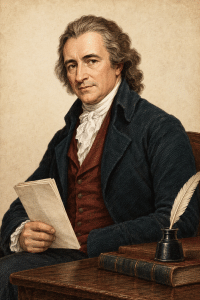
Thomas Paine: The Voice That Made Independence Plain

A brief companion to 27 Grievances Explained

Why Paine Matters

Thomas Paine (1737–1809) did not draft the Declaration of Independence or command an army. He served differently: he made the case for independence understandable to ordinary readers. Arriving in America from England in 1774, Paine entered public life as the conflict with Britain was becoming a war. His direct, energetic prose helped turn a dispute over rights within the British Empire into a public argument for creating a new nation.

From Protest to Independence

When Common Sense appeared anonymously on January 10, 1776, many colonists still hoped for reconciliation with Britain. Paine argued that the real question was no longer whether Parliament had imposed unjust policies, but whether a distant monarchy should rule America at all. He attacked hereditary monarchy, rejected the idea that an island should govern a continent, and presented independence as practical, necessary, and morally defensible.

Paine’s importance was not that he invented the desire for independence; Patriot leaders had already debated separation. His achievement was to carry the argument beyond legislatures and elite circles. Writing in a forceful style for a broad audience, he gave readers language for discussing monarchy, self-government, and the colonies’ future. Common Sense circulated widely—although surviving records do not support a precise sales total—and made independence a subject of urgent public debate in the months before July 1776.

Its extraordinary reach helped move the independence debate beyond political institutions and into everyday colonial life.

Words for a Difficult War

Paine continued writing for the revolutionary cause after independence was declared. His American Crisis essays, which began appearing late in 1776, spoke to people facing military setbacks, hardship, and uncertainty. Rather than laying out a plan of government, the essays urged Americans to hold their ground. Paine’s message was straightforward: liberty came at a cost, and independence would mean little unless people were willing to defend it.

From Argument to Action

Common Sense and the Declaration performed different tasks. Paine addressed the public to build support for separation; the Declaration announced and justified that separation on behalf of the united colonies. Yet the two belong in the same story. Paine helped make independence imaginable and immediate. The Declaration gave independence an official voice and grounded it in principles of equality, rights, consent, and resistance to destructive government.

Paine’s contribution was both political and educational. He turned complicated questions into choices ordinary readers could understand: monarchy or self-government, inherited power or public consent, submission or independence. By addressing citizens rather than specialists, he demonstrated how political writing could move people to act. Locke had explained why people may resist a government that violates their rights; Paine challenged Americans to decide whether that moment had arrived.

Questions for Students

  • Why did Paine believe reconciliation with Britain was no longer realistic?
  • How did his criticism of monarchy support the case for self-government?
  • What made his style effective for a broad colonial audience?
  • How do the purposes of Common Sense and the Declaration of Independence differ?
  • Which of Paine’s arguments would have been most persuasive in early 1776, and why?

Read Paine for Free

Common Sense — Project Gutenberg

The Writings of Thomas Paine, Volume 1: The American Crisis

Use note: Paine’s original writings are in the public domain. The summary above is written in original language and does not reproduce extended passages from those works. Modern introductions, translations, annotations, and edited layouts may carry separate rights, so the links above favor collections that identify their access or public-domain status.

Study Material on Lostpine: Divine Dignity: How the Bible Forged Human Rights

You can find more on Thomas Paine’s wisdom by clicking HERE. You can find a short biography by clicking HERE.


What the Grievances Teach Us About Preserving the Republic

The Declaration’s grievances show that elections alone cannot protect a republic. Government power must be limited and divided, and people must have lawful ways to challenge abuse. The colonists described a government that had become distant, unaccountable, and unresponsive. Their complaints help us examine both abuses of power and the conditions that allow them.

The Constitution addresses these dangers through representation, separation of powers, checks and balances, and federalism. Due process, jury trials, and access to courts give people ways to challenge government action. Civilian control of the military and Congress’s control of taxes and spending add further checks on the use of public power.

These safeguards depend on people and institutions doing their jobs. Officials must follow the law, each branch must protect its role, courts must remain independent, and citizens must recognize threats to constitutional government. A modern abuse need not resemble one from 1776. The important questions are whether power is becoming concentrated, accountability is being avoided, or lawful remedies are being weakened.

Use the grievances to ask careful questions, not to make quick accusations. Begin with the colonists’ complaint, identify the constitutional safeguard meant to address it, and compare it with a well-sourced modern example. Ask who holds the power, what limits apply, what remedies are available, and whether each part of government is fulfilling its role. Disagreement with a policy does not prove constitutional abuse. The greater concern is the failure of lawful limits and checks.

Preserving a republic requires continued attention. The Constitution provides guardrails, but citizens must understand them, test public claims against evidence, use lawful remedies, and hold government accountable. Reading the grievances alongside the Constitution turns history into a practical civic lesson: What danger did the colonists identify? What safeguard addresses it? Is that safeguard working today? If not, what lawful action could strengthen it?

How to Read a Grievance

Use four steps for each grievance. Keep the explanation neutral, specific, and brief. Separate what the text says from personal interpretation.

  1. Read the original language. Show the grievance as written, define unfamiliar words, and restate it without changing its meaning.
  2. Explain the historical background. Identify the policy, institution, or event behind the complaint; who acted; who was affected; and why colonists considered it an abuse.
  3. Identify the constitutional response. Connect the grievance to a provision, amendment, or structural safeguard that limits a similar danger. Do not force a perfect one-to-one match.
  4. Name the civic principle. Identify the broader idea, such as representation, due process, judicial independence, civilian control, or accountability—and explain why it matters.

Teacher check: Ask, “What danger did the grievance identify? What safeguard addresses it? What evidence shows whether that safeguard is working?”

John Locke: The Ideas Behind American Liberty

A brief companion to 27 Grievances Explained

Why Locke Matters

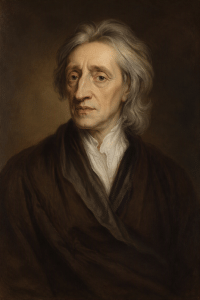
John Locke (1632–1704). AI-generated interpretation based on Godfrey Kneller’s 1697 public-domain portrait; source reference: Wikimedia Commons.

John Locke did not write the Declaration of Independence or the Constitution. He did something just as important: he supplied much of the language and logic that made those documents possible. Long before the American colonies declared independence, Locke had argued that people possess rights by nature, that government exists to protect those rights, and that political power is legitimate only when it rests on the consent of the governed.

From Natural Rights to the Declaration

Locke’s argument in the Second Treatise of Government is easy to recognize in the Declaration. His natural rights—life, liberty, and property—appear in American form as “Life, Liberty and the pursuit of Happiness.” His belief that government receives its authority from the people becomes “the consent of the governed.” His conclusion that a people may replace a government that betrays its trust becomes the Declaration’s case for independence.

Jefferson and the Continental Congress were not merely borrowing a few memorable phrases. They were adopting a moral framework. Rights come before government. Government is a trust, not a master. When rulers repeatedly violate the purpose for which government was formed, the people are not bound to submit forever. The 27 grievances supplied the evidence; Locke’s reasoning helped explain why that evidence justified separation.

From Principle to a Constitution

The Constitution does not repeat Locke word for word, nor was he the Founders’ only influence. Yet its structure reflects the problem he placed at the center of political life: how can a people create a government strong enough to protect liberty without allowing it to become a threat to liberty? Written powers, representative institutions, regular elections, and the ability of citizens to hold officeholders accountable all rest comfortably within Locke’s understanding of government by consent.

His defense of religious toleration also belongs in this story. Locke insisted that faith could not be produced by force and that civil authority should not command the conscience. The American protection of religious liberty developed through many voices and experiences, but Locke helped give the principle a durable intellectual foundation.

Locke’s wisdom was indispensable because he helped turn resistance to tyranny into a reasoned defense of liberty. He taught that freedom was not a gift handed down by a ruler. It belonged to the people, and government was responsible to them. The Declaration gave that conviction a national voice. The Constitution gave it a working form.

Read Locke for Free

Use note: Locke’s original writings are in the public domain. A modern introduction, translation, annotation, or edited layout may carry separate rights, so the links above favor collections that identify their access or public-domain status.

You can find more on John Locke’s wisdom by clicking HERE. You can find a short biography by clicking HERE.

Teacher’s Notes on the Articles of Confederation

Overview

The Articles of Confederation were America’s first plan for government. Congress adopted them in 1777, the states finished ratifying them in 1781, and they lasted until the Constitution replaced them in 1789. In class, I would place them between the Declaration and the Constitution: the Declaration explained why independence was necessary; the Articles tried to answer what came next.

The Articles came from Revolutionary fears. Americans had just fought against a government they thought had too much power, so they did not want to create another strong central government. The states joined as a “firm league of friendship” rather than a single strong federal system.

“The said States hereby severally enter into a firm league of friendship with each other, for their common defence1Note: “defence” is not a spelling error. It is the original spelling used in the Articles of Confederation. Today, Americans usually spell it “defense.” , the security of their liberties, and their mutual and general welfare…” Article III

That phrase matters. The states wanted to cooperate, but they still saw themselves as separate and independent.

This is the main point: the Articles gave the new country unity but little national power. That is why they became the bridge from the ideals of the Declaration to the stronger government created by the Constitution.

The Goals of the Articles of Confederation

  • Work together: The states needed a plan to fight Britain as a single force.
  • Handle the war: Congress needed to manage the war, make treaties, and ask other countries for help.
  • Protect state power: The states wanted cooperation without giving too much power to one central government.
  • Name the country: The Articles officially used the name The United States of America.
  • Set basic rules: The states needed rules for voting, money, troops, land, and disagreements.
  • Money problems: Congress could borrow money and set coin values, but it could not tax or force states to pay. This made national debts hard to manage.

How it was created

  • Congress started the process: On June 11, 1776, Congress chose a committee to plan how the states would work together.
  • John Dickinson: John Dickinson from Delaware wrote most of the first draft.
  • States were treated equally: Each colony or state had a representative on the committee.
  • Congress delegates: Congress discussed and changed the draft before approving the Articles on November 15, 1777.
  • State governments: The Articles did not officially take effect until all 13 states approved them. Maryland was the last state to ratify them on March 1, 1781.

The Purpose of the “Articles”

The Declaration and the Articles did different jobs. The Declaration explained why the colonies were leaving Britain. The Articles were the first attempt to run the new country after independence.

The Articles kept the national government weak on purpose because Americans feared too much central power. That helped protect the states, but it also created problems. Congress could not tax, enforce laws well, or solve major issues on its own. The Constitution was written to fix those weaknesses. The Bill of Rights was added to remind people that even with a stronger government, individual freedoms still had to be protected.

What the Articles Contained

  1. Name of the union: The confederacy was called “The United States of America.”
  2. State sovereignty: Each state kept its sovereignty, freedom, and independence except for powers specifically given to Congress.
  3. League of friendship: The states agreed to cooperate for common defense, liberty, and general welfare.
  4. Congress: The national government centered on a one-house Congress.
  5. Equal state voting: Each state had one vote in Congress, regardless of population.
  6. Limited national powers: Congress could handle foreign affairs, make treaties, declare war, manage relations with Native nations, borrow money, and settle some disputes.
  7. No strong executive branch: There was no president with broad national executive power.
  8. No national court system: There was no separate federal judiciary, as created later by the Constitution.
  9. No power to tax directly: Congress could request money from states but could not force states to pay.
  10. Difficult amendment process: Changes to the Articles required unanimous consent of all thirteen states.

Why the Articles Were Replaced by the Constitution

  • Congress could not tax: Congress could ask the states for money, but it could not make them pay. This made it hard to pay debts or support the country.
  • Congress could not regulate trade effectively: States often made their own trade rules, causing problems between states and with other countries.
  • The national government had trouble enforcing laws: Congress had to depend on the states to carry out national decisions.
  • No separate executive branch: There was no president to carry out national laws or respond quickly to problems as they arose.
  • No separate federal court system: There was no national court system to interpret laws or settle disputes consistently across the country.
  • Changes were hard to make: Every state had to agree before the Articles could be changed, so fixing problems was almost impossible.
  • Problems after the war revealed weaknesses: debt, inflation, trade problems, and unrest led many leaders to believe the national government needed more power.
  • Some leaders wanted reform: Leaders like James Madison, George Washington, Alexander Hamilton, John Jay, and James Wilson believed the national government needed to be stronger.

Teaching Connection to the Declaration of Independence and Constitution

The simple connection is this: the Declaration gave the reasons for independence, the Articles were the first plan of government, and the Constitution fixed the problems the Articles could not solve. The Bill of Rights helped reassure people that the new, stronger government would not become too powerful.

Teacher Talking Points

  • The Founders did not start with the Constitution. Their first try was the Articles of Confederation, which kept the states very independent.
  • This makes sense because they had just broken away from Britain. They were nervous about giving too much power to one central government again.
  • The problem was that the Articles went too far the other way. The national government was so weak that it had trouble paying debts, handling trade problems, and keeping order.
  • The Constitution was the second try. It gave the national government more power but also limited it through checks and balances, federalism, and, later, the Bill of Rights.
  • Interesting fact: The Articles had no president and no separate national court system. Congress was basically the main national government.
  • Interesting fact: Each state had one vote in Congress, no matter how large or small the state was.
  • Question for students: Why did Americans want a weak national government in 1777, but a stronger one by 1787?

Comparison Chart: Articles of Confederation vs. Constitution

Topic

Articles of Confederation

Constitution

Basic idea

A loose “league of friendship” among independent states.

A stronger federal union with shared power between the national and state governments.

Power of the national government

Weak; most power remained with the states.

Stronger; the national government received specific powers, while states kept reserved powers.

Branches of government

One main branch: Congress.

Three branches: legislative, executive, and judicial.

Executive leader

No president with broad executive authority.

A president carries out laws, leads the executive branch, and serves as commander in chief.

National courts

No separate national court system.

A federal judiciary, including the Supreme Court, interprets laws and resolves disputes.

Taxation

Congress could request money from states but could not directly tax citizens.

Congress can levy taxes to raise revenue for national needs.

Trade and commerce

Congress had limited authority to regulate interstate commerce.

Congress can regulate interstate and foreign commerce.

Voting in Congress

Each state had one vote, regardless of population.

Congress has two houses: equal state representation in the Senate and population-based representation in the House.

Amending the government plan

Changes required unanimous approval from all thirteen states.

Amendments are difficult but possible without unanimous state agreement.

Main weakness or concern

Too little national authority to solve shared problems.

Fears of excessive national power were addressed through checks and balances, federalism, and, later, the Bill of Rights.


  • 1
    Note: “defence” is not a spelling error. It is the original spelling used in the Articles of Confederation. Today, Americans usually spell it “defense.” ↩︎

Teacher’s Notes on the U.S. Constitution

  1. The Constitution Cannot Be Separated from the Declaration of Independence. The U.S. Constitution did not emerge in a vacuum; it was crafted as the direct remedy to the abuses detailed in the Declaration of Independence. The Declaration’s 27 Grievances form the context: the lived experience of a people whose rights had been repeatedly violated. Without understanding those grievances—what the colonists endured, why each injustice mattered, and how those abuses shaped their political imagination—the Constitution appears merely structural. In truth, it is a deliberate response to tyranny. Every article, every clause, and every protection within the Constitution reflects a specific grievance the Founders sought never to repeat. To study the Constitution faithfully, one must begin with the Declaration, where the moral purpose and historical urgency of American self‑government are first revealed.
  2. The Convention was originally called to revise the Articles of Confederation, not to write an entirely new Constitution. This is a teaching point because it shows how delegates moved from “fixing” the old government to replacing it with a stronger federal system; the Library of Congress notes that the delegates gathered intending to revise the Articles, but the process ultimately led to the creation of a new national framework.
  3. The U.S. Constitution is the oldest written national constitution still in use.
    This makes it an unusual example of a plan for self-government that has lasted for generations. The National Archives describes the Constitution as the foundation that united the states under “We the People,” and the National Archives Museum virtual exhibit notes that it is among the oldest and shortest written constitutions still in effect.
  4. Constitution Day is observed on September 17 because that is the day the Constitution was signed in 1787.
    The National Archives explains that September 17 marks the signing of the U.S. Constitution in Philadelphia, and the Department of Education identifies it as Constitution Day and Citizenship Day.
  5. The Constitution begins with the phrase “We the People,” which points students to the idea of government by the people.
    The National Archives highlights the Preamble’s wording and explains that the Constitution placed the power of the union in the people, not in the states alone.
  6. Only 39 delegates signed the Constitution.
    The National Constitution Center notes that 55 delegates attended the Constitutional Convention, but only 39 signed the final document. Three delegates dissented and refused to sign:

    1. George Mason of Virginia
    2. Edmund Randolph of Virginia
    3. Elbridge Gerry of Massachusetts
    4.  They objected mainly because the original Constitution did not include a bill of rights, and they were also concerned that the new federal government would have too much power.
  7. The Constitution was written in Philadelphia’s Pennsylvania State House, now known as Independence Hall.
    The Declaration of Independence was also signed in that building, making it one of the country’s most important civic sites, according to the National Constitution Center.
  8. The Constitution was prepared in secrecy.
    Delegates met behind closed doors guarded by sentries so they could debate freely. Important contributors to the drafting and final wording included James Madison, Gouverneur Morris, James Wilson, the Committee of Detail, and the Committee of Style, according to the National Constitution Center.

    1. The Committee of Detail included John Rutledge of South Carolina, Edmund Randolph of Virginia, Nathaniel Gorham of Massachusetts, Oliver Ellsworth of Connecticut, and James Wilson of Pennsylvania. Their job was to turn the Convention’s agreed ideas into a working draft. [teachingamericanhistory.org]
    2. The Committee of Style and Arrangement included William Samuel Johnson of Connecticut, Alexander Hamilton of New York, Gouverneur Morris of Pennsylvania, James Madison of Virginia, and Rufus King of Massachusetts. This committee cleaned up and arranged the near-final text. Gouverneur Morris is often credited with shaping the Preamble’s “We the People” wording.
  9. The Constitution did not take effect as soon as it was signed.
    It first had to be ratified by nine of the thirteen states. The Congressional Research Service explains that the Constitution was formally adopted after New Hampshire became the ninth state to ratify it on June 21, 1788. Rhode Island was the last of the original thirteen states to ratify it, on May 29, 1790. Rhode Island did not send delegates to the Constitutional Convention. This helps students understand that the Constitution was not instantly or universally accepted. The Library of Congress notes that 55 men from 12 states gathered and that Rhode Island refused to participate.
  10. The Bill of Rights was not part of the original Constitution.
    The first ten amendments were added in 1791 after many Americans argued that the Constitution needed clearer protections for individual rights, according to the National Archives and the National Constitution Center.
  11. Congress first proposed 12 amendments that became the Bill of Rights, but only 10 were ratified at the time.
    The National Archives states that 10 of the 12 proposed amendments were ratified on December 15, 1791.
  12. One of the original 12 proposed amendments became the 27th Amendment more than 200 years later.
    The National Archives Museum virtual exhibit explains that the congressional pay amendment proposed in 1789 was finally ratified in 1992 as the 27th Amendment. “Any law changing the pay of members of Congress cannot take effect until after the next election for the House of Representatives.”
  13. Benjamin Franklin was the oldest delegate at the Constitutional Convention, and Jonathan Dayton was the youngest.
    The National Constitution Center reports that Franklin was 81 and Dayton was 26.
  14. Thomas Jefferson and John Adams did not sign the Constitution because they were serving abroad.
    This is a useful “surprising fact” for students who assume every major Founder was present. The National Constitution Center explains that Thomas Jefferson was in France and John Adams was in Great Britain.
  15. More than 11,000 constitutional amendments have been introduced in Congress, but only 27 have been ratified.
    This helps students see that the Constitution can be changed, but that change is intentionally difficult, according to the National Constitution Center.
  16. The “six big ideas” of the Constitution.
    Limited government, republicanism (people choose leaders to represent them in government), checks and balances, federalism, separation of powers, and popular sovereignty (the people are the ultimate source of government power).

A declaration is a formal statement of principles, beliefs, rights, or intentions. In American history, a declaration often explains why people are taking an important action, such as declaring independence or stating shared values.

A constitution is the basic plan for a government. It explains how the government is set up, what powers it has, how leaders are chosen, and how laws are made.

A bill of rights is a list of rights and freedoms the government must protect. It helps limit what the government can do to individuals.

Summary: A declaration states the reasons or principles behind an important action, such as declaring independence; a constitution establishes the government; and a bill of rights lists protections that the government must respect.  Students need all three ideas together, so the documents make sense in context.

Ideas for Final Exams for 27 Grievances Explained

Cause & Effect–Based Essay Prompts (High School Level)

Write a well‑developed paragraph for each question. Support your ideas with reasoning, examples, and connections to the Declaration and Constitution.

1. Cause → Effect: Why Governments Lose Legitimacy

Explain how a government’s repeated violations of people’s rights can cause citizens to withdraw their consent. How does this idea help explain why the Declaration of Independence was written?

2. The Purpose of Government

Describe the Founders’ belief about the purpose of government. How does this belief shape the structure and limits placed on government power in the Constitution?

3. Abuse of Power as a Cause of Revolution

Choose one type of abuse described in the grievances (such as unfair laws, misuse of the military, or interference with justice). Explain how this abuse could cause a society to demand major political change.

4. The Rule of Law vs. Rule by One Person

Explain why the Founders believed that a government ruled by laws—not by the will of a single ruler—is essential for a free society. What effects does this principle have on how the Constitution is designed?

5. Citizenship and Responsibility

Describe how the Declaration and Constitution imply responsibilities for citizens. What happens to a nation when citizens fail to participate, stay informed, or hold leaders accountable?

6. Separation of Powers as a Preventive Measure

Explain how dividing government power among branches is an effect of the grievances listed in the Declaration. Why did the Founders believe this structure would prevent future abuses?

7. Consent of the Governed

Discuss why “consent of the governed” is a foundational idea in American government. What are the effects when leaders ignore or override the will of the people?

8. Limited Government and Human Nature

The Founders believed that human nature makes concentrated power dangerous. Explain how this belief caused them to design a limited government, and what effects those limits have on citizens’ freedoms.

9. Justice and Fair Legal Processes

Many grievances deal with unfair trials, biased judges, or ignored laws. Explain why fair legal processes are essential to liberty and how the Constitution responds to these concerns.

10. The Declaration as a Cause of the American Identity

Explain how the ideas in the Declaration of Independence helped shape the long‑term identity and values of the United States. What effects do these ideas still have on American citizenship today?


Cause & Effect–Based Questions (Younger Students)

Answer each question in 3–4 complete sentences.

1. Why do people create governments?

Explain what people expect the government to do and what happens when it stops doing those things.

2. What makes a government unfair?

Describe one way a government can treat people unfairly and how that might cause people to speak out or protest.

3. Why did the colonists feel they needed to separate from Britain?

Explain one major problem they had and what effect it had on their decision.

4. What does “consent of the governed” mean?

Explain why leaders need permission from the people and what happens when they ignore them.

5. Why is it important for laws to apply to everyone?

Describe what happens when leaders don’t follow the same rules as the people.

6. How does dividing government power protect freedom?

Explain why the Founders didn’t want one person or group to have all the power.

7. What responsibilities do citizens have in a free country?

Describe one responsibility and explain why it matters.

8. Why is a fair court system important?

Explain how unfair trials or biased judges can harm people and why the Constitution protects against that.

9. How can too much government power become a problem?

Describe what might happen when a government has no limits.

10. How do the ideas in the Declaration still affect us today?

Explain one idea from the Declaration and how it shapes the way Americans think about freedom or citizenship.


Scoring Guidelines for Teachers

1. Understanding of the Concept (0–4 points)

4 – Excellent

  • Demonstrates a clear and accurate understanding of the core idea (e.g., purpose of government, limited government, consent of the governed).
  • Connects the idea to the Declaration and/or Constitution in a meaningful way.
  • Shows insight into the cause-and-effect relationship described in the prompt.

3 – Proficient

  • Shows a generally accurate understanding with minor gaps.
  • Makes a reasonable connection to the founding documents.
  • Identifies a cause/effect relationship but may not fully develop it.

2 – Developing

  • Shows partial or vague understanding.
  • Mentions the Declaration or Constitution, but without clear relevance.
  • Cause/effect relationship is weak or incomplete.

1 – Beginning

  • Shows minimal understanding or confuses key ideas.
  • No meaningful connection to the founding documents.
  • Cause/effect relationship missing.

0 – No Response / Off Topic

2. Use of Reasoning and Explanation (0–3 points)

3 – Strong Reasoning

  • Provides logical explanation, examples, or reasoning to support the idea.
  • Shows the student can explain rather than memorize.

2 – Adequate Reasoning

  • Some explanation is present, but it may be general or partially developed.

1 – Limited Reasoning

  • Statements are made without explanation or support.

0 – No reasoning provided

3. Clarity and Organization (0–2 points)

2 – Clear and Well‑Organized

  • Paragraph is coherent, stays on topic, and flows logically.
  • Sentences connect smoothly.

1 – Partially Organized

  • Some clarity, but ideas may jump around or lack transitions.

0 – Disorganized or difficult to follow

4. Writing Quality (0–1 point)

1 – Competent Writing

  • Grammar, spelling, and sentence structure do not interfere with meaning.
  • Student writes in complete sentences.

0 – Frequent errors that interfere with understanding

Total Possible Points per Question: 10 – 100 for a full test/quiz


Structured Lesson Plans & a Few “Bell Ringers”

Are you looking for quick, 5–10-minute bell ringers or even full 45-minute lesson modules you can use immediately? Because 27 Grievances Explained is built around clear, discrete complaints in the Declaration of Independence, here are a few ready-to-use classroom routines that help students analyze language, connect grievances to historical events, and debate which complaints mattered most.

  • The “Modern Translation” Challenge: Provide a worksheet where students are given the original text of a grievance and must translate it into modern slang or contemporary English. This helps students decode eighteenth-century language while preserving the original meaning.
  • Primary Source Matching: Create a detective-style activity in which students match a specific historical event, such as the Stamp Act, the Tea Act, the Quartering Act, or the closure of colonial legislatures, to the grievance it most directly inspired.
  • Rank the Grievances: Ask students to sort the 27 grievances into a “most serious to least serious” order and defend their ranking in writing or discussion. This encourages prioritization, argumentation, and the use of textual evidence.
  • Which Grievance Is This? Use short classroom prompts that describe a situation in plain language, and ask students to identify which grievance it matches. This works well as a warm-up, exit ticket, or review game.
  • Then and Now Connections: Invite students to compare one grievance to a modern civic issue involving government power, rights, or representation. The goal is not to claim the situations are identical, but to help students see why these complaints mattered.
  • One Grievance, One Mini-Lesson: Build a series of short lessons where each class opens with a single grievance, its historical background, and a short discussion question. Over time, students build familiarity with all 27 without feeling overwhelmed.
  • Cause and Effect Chains: Ask students to trace how one British policy led to colonial resentment, protest, and then inclusion in the Declaration. This helps students move beyond memorization to historical reasoning.
  • Perspective Rewrite: Have students rewrite a grievance from the viewpoint of a Patriot, Loyalist, colonial merchant, or royal official. This adds nuance and supports historical empathy while still grounding the lesson in understanding the issues a play during the Revolution.
  • Bell Ringer Debate Cards: Create quick prompts such as, “Was this grievance a violation of rights or just an unpopular policy?” Students can respond in two or three sentences before discussing with a partner.
  • Socratic1The Socratic method is a philosophical approach developed by the ancient Greek philosopher Socrates (470–399 BC) that uses systematic doubt and questioning to help others clarify and refine their understanding of a topic, ultimately leading to a clearer expression of truth Seminar Prompts: Deep-dive questions that don’t have a simple “yes/no” answer. For example: “If Grievance #17 (taxation without consent) had been resolved, would the other 26 have been enough to start a revolution?”
  • The “Break-Up Letter” Assignment: A popular middle-school activity involves students writing a “break-up letter” to King George III, using at least 3 of the grievances from “27 Grievances Explained.”
  • Mock Trial Outlines: A guide for a classroom mock trial where students “sue” the Crown using 27 Grievances Explained as their primary evidence.
  • The King’s Rebuttal: An interesting “Wildcard” exercise would be a section exploring how the British Parliament or King George III might have defended their actions. This encourages critical thinking and historical empathy by showing students the “other side” of the legal argument.
  •  
  • 1
    The Socratic method is a philosophical approach developed by the ancient Greek philosopher Socrates (470–399 BC) that uses systematic doubt and questioning to help others clarify and refine their understanding of a topic, ultimately leading to a clearer expression of truth ↩︎

Color‑Coded Constitutional Mapping Chart

27 Grievances → Constitutional Fixes

Color Key (Print‑Friendly):

  • 🟦 Legislative Fix — Congress gains power/limits on the executive
  • 🟥 Rights Fix — Bill of Rights protections
  • 🟩 Judicial Fix — Courts, jury trials, due process
  • 🟨 Structural Fix — Federalism, separation of powers
  • ⬛ No Direct Clause — Principle addressed indirectly

Grievances 1–5: Attacks on Self‑Government & Representation

Grievance

Constitutional Fix

Category

1. King refused necessary laws

Preamble; Article I; 17th Amendment

🟦 Legislative

2. Blocked urgent laws & neglected them

Article I, Sec. 8; 10th Amendment

🟨 Structural

3. Demanded colonists give up representation

Article II limits; Senate confirmations

🟦 Legislative

4. Forced legislatures to meet far away

10th Amendment; 2nd Amendment

🟨 Structural

5. Dissolved legislatures

Article I; 10th Amendment

🟦 Legislative

Grievances 6–12: Military Abuse & Loss of Civil Authority

Grievance

Constitutional Fix

Category

6. Refused new elections

Article I, Sec. 8 (militia & army limits)

🟦 Legislative

7. Restricted immigration & settlement

Article I, Sec. 8; Article II, Sec. 1

🟦 Legislative

8. Obstructed justice

Article III; 6th & 7th Amendments

🟩 Judicial

9. Judges dependent on King

Article II, Sec. 2; state constitutions

🟩 Judicial

10. “Swarms of officers” enforcing taxes

Article I, Sec. 7–8; voting amendments

🟦 Legislative

11. Standing armies in peacetime

Article I, Sec. 8 (2‑year funding rule)

🟦 Legislative

12. Military above civil authority

Civilian control; Insurrection Act

🟨 Structural

Grievances 13–17: Foreign Jurisdiction, Trade, & Taxation

Grievance

Constitutional Fix

Category

13. Foreign jurisdiction & admiralty courts

Commerce Clause; judicial review

🟩 Judicial

14. Quartering troops

3rd Amendment

🟥 Rights

15. Mock trials protecting soldiers

Article III; 6th & 7th Amendments

🟩 Judicial

16. Cutting off trade

Commerce Clause

🟦 Legislative

17. Taxation without consent

Article I, Sec. 7–8

🟦 Legislative

Grievances 18–22: Destruction of Legal Rights & Government Forms

Grievance

Constitutional Fix

Category

18. Denial of jury trials

Article III; 6th & 7th Amendments

🟩 Judicial

19. Transporting colonists overseas for trial

Article III; 6th Amendment

🟩 Judicial

20. Arbitrary government in Quebec

Article IV, Sec. 3; 1st Amendment

🟥 Rights

21. Taking away charters & altering governments

Article VI (Supremacy); Oath Clause

🟨 Structural

22. Suspending legislatures

Article I (Congress legislates)

🟦 Legislative

Grievances 23–27: War, Mercenaries, Impressment, Frontier Conflict

Grievance

Constitutional Fix

Category

23. Declared colonies out of protection & waged war

Article I, Sec. 8 (Congress declares war)

🟦 Legislative

24. Attacks on coasts & towns

Shared war powers

🟨 Structural

25. Use of foreign mercenaries

No direct clause; Congress controls war

⬛ Indirect

26. Forcing Americans into British service

No direct clause; principle of liberty

⬛ Indirect

27. Inciting frontier violence

Congress controls tribal relations

🟦 Legislative


« Older posts

"For it is by grace you have been saved" - Ephesians 2:8-9  

Copyright: © 2001 - 2026 Lostpine

Translate »