
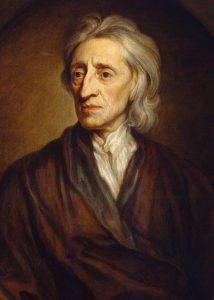
John Locke was an English philosopher and political thinker born in 1632 in Somerset, England. He lived during a time of major political conflict, including civil war, struggles over the monarchy, and the Glorious Revolution. These events shaped his belief that government should exist to serve the people rather than control them. Locke became one of the most influential thinkers of the Enlightenment and is often called the “father of liberalism” because his ideas helped define individual rights and limited government.
Locke’s greatest contribution to freedom was his argument that all people are born with natural rights, especially the rights to life, liberty, and property. He believed that governments derive their power only from the consent of the governed, meaning rulers are legitimate only when the people agree to be governed. If a government becomes tyrannical and fails to protect these rights, Locke argued that citizens have the right to resist or replace it. These ideas deeply influenced democratic government and later inspired important political documents, including the principles behind the American Declaration of Independence.
Among Locke’s most important writings are An Essay Concerning Human Understanding, Two Treatises of Government, and A Letter Concerning Toleration. In An Essay Concerning Human Understanding, he argued that knowledge comes from experience rather than from ideas people are born with. In Two Treatises of Government, he rejected the divine right of kings and explained that political authority must rest on natural rights and the consent of the people. In A Letter Concerning Toleration, Locke defended religious tolerance and argued that government should not force religious belief, an idea that strongly influenced later views on freedom of religion.
John Locke died in 1704, but his ideas have remained powerful for centuries. His writings helped shape modern democracy by promoting constitutional government, individual liberty, and religious freedom. Political leaders, philosophers, and reformers continued to build on his work long after his death, and his influence can still be seen in democratic societies today. Because he connected freedom with reason, rights, and responsible government, Locke remains one of the most important thinkers in the history of political thought.
Additional information on John Locke’s Wisdom can be found HERE. You will find information on how Locke helped with both our Declaration and Constitution by clicking HERE.