Biblical wisdom, historical insight, and personal growth — all in one place

Category: Shadows (Page 24 of 29)

The Crown of Thorns

Most scenes of Christ’s crucifixion include Him with a crown of thorns. The crown was meant to mock Christ. The Roman soldiers who carried out Pontius Pilate’s sentence were no different than those in our own world today. They added their own spin to the punishment. The story of the crown of thorns was recorded in all four Gospels. The crown was a symbol of disgrace. It was meant to make fun of Christ’s claim that He was the anointed King who would bring forward God’s kingdom on earth.
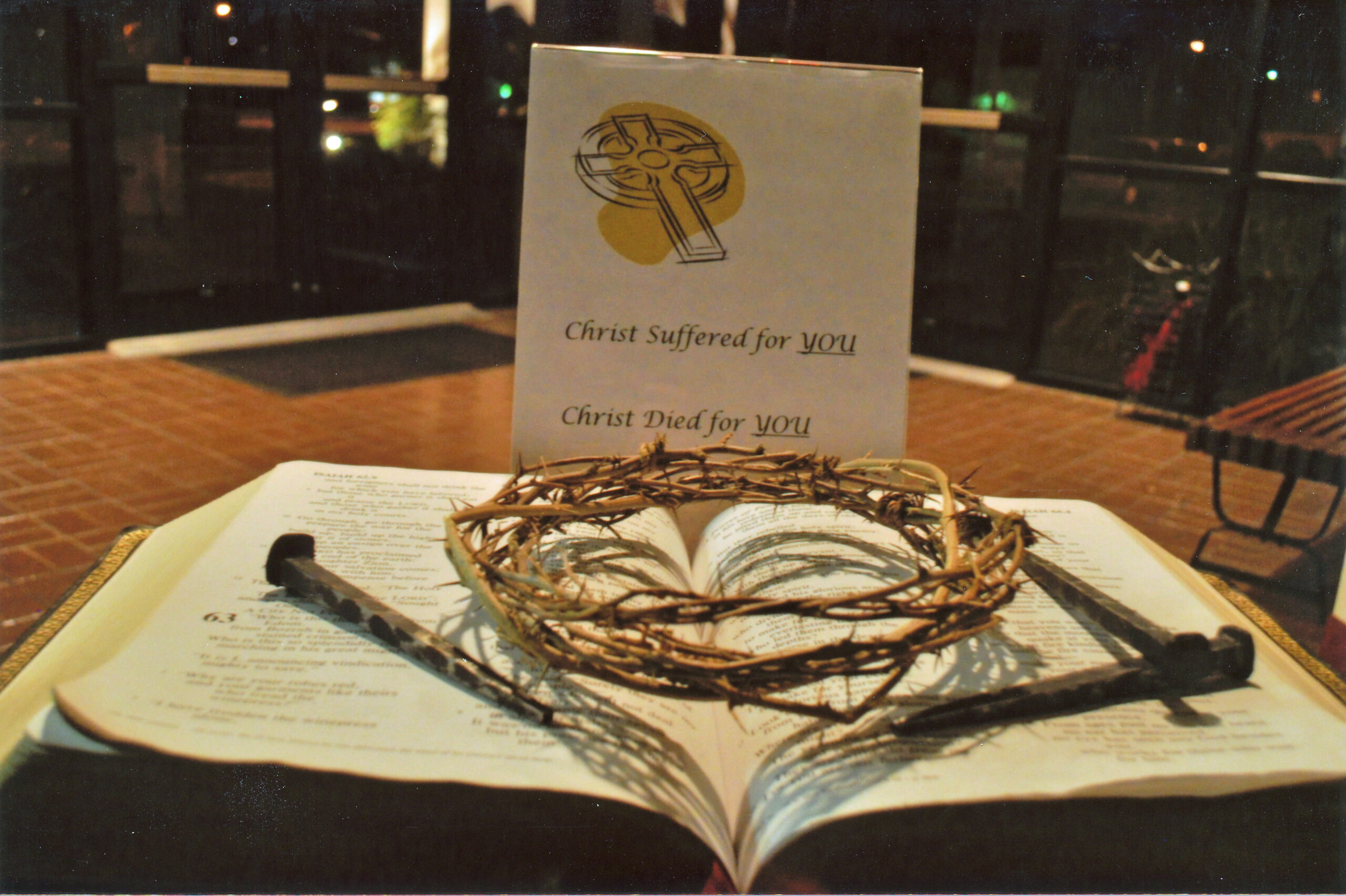
 
(John 19:2)1New International Version Translations – “The soldiers twisted together a crown of thorns and put it on his head. They clothed him in a purple robe”
 
The imagery of the crucified Christ wearing a crown of thorns is important. It helps us to remember who Christ is and what He did for humankind. The crown of twisted thorns is our symbol of the curse brought about because of Adam’s first sin.
 
(Genesis 3:17-19) – To Adam he said, “Because you listened to your wife and ate fruit from the tree about which I commanded you, ‘You must not eat from it,’ “Cursed is the ground because of you; through painful toil you will eat food from it all the days of your life. It will produce thorns and thistles for you, and you will eat the plants of the field. By the sweat of your brow you will eat your food until you return to the ground, since from it you were taken; for dust you are and to dust you will return.”
 
In Romans Chapter 5, the Apostle Paul argues that Adam’s sin also brought about sin for the whole world. As a result, this brought death to all humanity. The Apostle goes on to state that Christ’s death on the cross was the sacrifice for that original sin along with all later sins. Because the penalty for sin is now paid, there is a pathway to eternal life for all who repent and believe on the Lord Jesus Christ. Isaiah 53:6 says in a prophecy of Christ’s suffering for sin, “We all, like sheep, have gone astray, each of us has turned to our own way; and the Lord has laid on him the iniquity of us all.”
 
Christ’s crown of thorns does creates a theological paradox. Deep in the earth’s geologic record, before the supposed ‘first appearance’ of man, even before the supposed catastrophic ‘extinction’ of the dinosaurs at the end of the ‘Cretaceous period,’ fossils of thorns have been found, preserved in stone. Yet, Scriptures tell us that God created the world in six days. After He created man in His own image and likeness, He declared that all His creation was “very good” (Genesis 1:31). There was no death. No thorns and thistles to hamper humankind.
 
Because of Adam’s sin, the earth is now cursed. Humankind must now see their labors intertwined with thorns and thistles. Whether this is a metaphor or not, is up to your individual faith to answer. The bottom line is that we had it good and now we are cursed! Thorns and thistles are pictured throughout Scriptures as a bad thing (Numbers 33:55; Proverbs 15:19). They are remembered as the curse of sin. A judgment upon the nations (Isaiah 34:13). Thorns are viewed as objects that choke out the life of humankind.
 
(Matthew 13:3-8) – “Then he told them many things in parables, saying: “A farmer went out to sow his seed. As he was scattering the seed, some fell along the path, and the birds came and ate it up. Some fell on rocky places, where it did not have much soil. It sprang up quickly, because the soil was shallow. But when the sun came up, the plants were scorched, and they withered because they had no root. Other seed fell among thorns, which grew up and choked the plants. Still other seed fell on good soil, where it produced a crop—a hundred, sixty or thirty times what was sown.”
 
Thorns and thistles in our world are meant to give us a constant reminder of God’s presence and His judgment. No one escapes our world without God’s righteous judgment. The King the world needed was sent by God. There He was standing in front of those Roman soldiers. Jesus announces this Kingdom to them and told everyone to change their minds. Stop thinking the way they are thinking. All are being called to believe on Him! Yet, He was despised and rejected. Led out of the city as a sheep to be slaughtered and die as a curse on a tree.
 
God’s Truth tells us that God’s Justice must always be served. Every transgression will be punished under the wrath of the Almighty. The people of Israel were looking for the wrong kind of king. Our world today is still looking for the wrong king. The people of Israel wanted a military king. The leaders of today want power, they all want to be that king! The question for all to ask is whether our greatest concern should be our deliverance from the wrath of evil nations? Is this the king we need? Or maybe all should be concerned about the delivery from the wrath of God for the punishment of our sins? Is the craziness of our world punishment from an awesome God?
 
God has already satisfied His need for justice in Christ. Jesus offered Himself as the payment for the sins of humankind. He was crushed under God’s wrath for us. The curse of God towards humanity for sin was taken up by Christ on the cross.
 
(2 Corinthians 5:21) – “God made him who had no sin to be sin for us, so that in him we might become the righteousness of God.”
 
Our Scriptures outline a perfect plan. God is not random. The Scriptures reveal that to display God’s righteousness for the wicked, God had to satisfy His justice in something or someone else. Nothing in all creation could provide a enough payment for the sins of the world. Nor could any man with their own merit or with their own blood atone for their own sin (or anyone else’s). It took Christ on the cross to free us from the curse! We are called to repent from our old way of thinking, from our old way of living, and from our dead deeds. What are dead deeds? It is the false narrative that by accommodating the world, by redefining sinful behavior, and by being nice to people, an eternal blissful life awaits us all. That is not what Scriptures say! That eternal blissful life is out there but unless we are repentant and place our faith and trust in Jesus Christ, only the eternal curse of thorns and thistles await.
 
(Romans 5:8) – “But God demonstrates his own love for us in this: While we were still sinners, Christ died for us.”
 
Our world tries to distract you with discussions on whether thorns were created millions of years ago, before dinosaurs. They will try to use the thorns to show that the Bible is not of God. They call it science. Our Bible tells us that “thorns” appeared only after the creation of Adam and Eve. My advice is to stick with God’s version of the story. It is a good story, easy story to understand.  We need thorns in our world to be constantly reminded that God’s justice will prevail. It is human understanding that is flawed. The good news for us is that God did not leave us to perish without a Savior. He sent us Jesus. Jesus is the Son of God, the second member of the Trinity, the Incarnate God. He is the one and only King worth seeking. He is the King who will come to restore peace and prosperity to the nations. And He comes without the curse of thorns and thistles this time! No more curse of death! We know this because the Apostle John helps us see this in Revelations. John describes the new heaven and new earth, God’s Kingdom:
 
(Revelations 22:3) – “No longer will there be any curse. The throne of God and of the Lamb will be in the city, and his servants will serve him.”
A simple 12th century hymn summarizes the hope we have. It’s lyrics tell how the curse of thorns is negated by the simple bloom of a Rose.  This “Twelfth Night” German carol combines the story of Luke 1-2 and Matthew 2 with Isaiah’s prophecies about the “rose” from the “stem of Jesse ” (Isa. 11:1; 35:1-2). Stanzas 1 and 2 are a combination of folklore (“amid the cold of winter”) and Christological interpretation of Isaiah 11:1 and 35: 1-2. Stanza 3 introduces imagery from John 1. Thank you to our God for the Rose, the curse forever gone!
 
Lo, how a Rose e’er blooming
From tender stem hath sprung!
Of Jesse’s lineage coming
As men of old have sung.
It came, a flower bright,
Amid the cold of winter
When half-gone was the night.

Isaiah ’twas foretold it,
The Rose I have in mind:
With Mary we behold it,
The virgin mother kind.
To show God’s love aright
She bore to men a Savior
When half-gone was the night.

This Flower, whose fragrance tender
With sweetness fills the air,
Dispels with glorious splendor
The darkness everywhere.
True man, yet very God,
From sin and death He saves us
And lightens every load

 

Contemplations

  • What external evidence to you consistently see that re-enforces your belief there is a God in our world?
    • Ideas to Explore: Living things? Nature? The imperfections of humankind? The Bible?
  • Do you think that Christianity can ever separate itself from the Bible?
    • Ideas to Explore: Why do so many people hate it? Why are so many people trying to re-write it? How is it that we reassure ourselves that God is the author of the Bible?
  • Most open-minded people agree that humanity is flawed – Can you think of a better plan than Christ?
    • Ideas to Explore: What society without a belief in God has succeeded? Why don’t people just accept the Bible as God’s Word?
  • Pick your favorite “ism.” Will any succeed forever?
    • Ideas to Explore: How long does any society last? Why do they fail? Do any current successfully societies exist that are atheistic? Of the societies that are on your  list, are people trying to get into them or out of them? Why?
  • Assuming the basic needs of human survival are being met, what else would you want to see that would bring joy and happiness to your life?
    • Ideas to Explore: Does humanity need freedom to be happy? Can someone else force happiness? What does it really take to be happy? Is it all about things?
  • If you are of the opinion that the world is a mess, what is your plan to fix it?
    • Ideas to Explore: Can humankind  fix it? How does humanity ignore the evidence (thorns and thistles) of a broken world.  How should our society change to stop the death, destruction, fix the poverty, end pain? 
  • 1
    New International Version Translations ↩︎

Have You Thought About Eternity?

If you were asked, “What is eternity,” would you have a good answer? Eternity is forever or you might even say eternal life is the ultimate promise of almost every religion. Once you enter eternity, what would be like? Is there some type of instant perfection that never goes away? Will we ever get bored in eternity? What is there to keep the inquisitive mind of a human active and stimulated, forever?

Apologetics is often called the defense of the Christian faith. The word “apologetics” is derived from the Greek word apologia, which means an answer given in reply. In ancient Athens, it referred to a defense made in the courtroom as part of the normal judicial procedure. For those who are seeking eternal life, are you ready to defend the concept of eternity, timeless existence? Once time is removed, can you defend eternity without including God in the discussion? Is there or was there a Creator of our Universe and all that is in it? Is the Universe we live in everlasting?

All discussions on eternity usually include the idea of a Creator. Creationism, the idea that our universe somehow happened, is a hard concept to understand. The idea of randomness should be tested against the idea of purpose and design. Because randomness is generally chaotic, evidence of purposeful design should lead us to the idea of a masterful Creator. God, as an eternal being exists without the concept of time. To be eternal, God must be absolute. God, by human definition, always existed and always will.

(Genesis 1:1)1NIV New International Version Translations – “In the beginning God created the heavens and the earth.”

The very first verse of the Bible that Christians subscribe to reinforces the point: God was there before our world, before us. It was God who established the boundaries and concept of time. The world subscribes to the idea that our universe is nothing more than an improbable and spontaneous set of matter and anti-matter that just happened! If that is the case, humanity is nothing more than a subset of the randomness, lacking purpose, and design. Watching today’s news may lead you to believe that yourself!

If we are to ever understand the idea of “forever,” there are two areas to consider:

  • Purpose – What is the purpose of our Universe, our world? What is the purpose of God and of humanity itself?
  • Design – Are our universe, our world, and our humanity on earth part of a purposeful, useful design? Is it the result of a random collision of particles in the absence of time?

Purpose

To help understand the purpose, all things should be compared against each other. Within that view, the interrelationships of dependence and service to each other become clearer. Let us take a simple example:

A single-cell amoeba exists, it moves and is a predator to bacteria, protozoa, and algae. It can eat almost any organic nutrients in its habitat. As for what eats an amoeba: they are preyed upon and eaten by small fish and crustaceans such as tiny shrimp. Larger fish, birds, and reptiles eat crustaceans and shrimp. This trend of purpose continues and creates a chain of purpose that leads right through the plant and animal kingdom. It ends with us, human beings. Is this a purposeful design or a result of randomness? Did we really evolve from the amoeba?

(Genesis 1:26-28) – Then God said, “Let us make mankind in our image, in our likeness, so that they may rule over the fish in the sea and the birds in the sky, over the livestock and all the wild animals, and over all the creatures that move along the ground.” So God created mankind in his own image, in the image of God he created them; male and female he created them. God blessed them and said to them, “Be fruitful and increase in number; fill the earth and subdue it. Rule over the fish in the sea and the birds in the sky and over every living creature that moves on the ground.”

It would be narcissistic to think that the chain of purpose ends with humanity. It is reasonable then to ask what is the purpose of humanity. Our Bible tells us that humankind’s chief end is to glorify God and to enjoy Him forever.2This is the first question of the Westminster Shorter Catechism asks “What is the chief end of man?” God’s purpose for humanity is then by definition, something eternal. We were conceived by God in His eternal past with the intent to create something that will remain in His eternal future. Whatever God wants, intends, and desires are His plan according to His will. God is absolute. When He wills to do something, when He resolves to do something, He will do it. God’s purpose then becomes part of God’s design, His plan. His pleasure is always good. His will is always good. His intentions are always good. God’s plan is always perfect!

(Ephesians 3:11-12) – “according to his eternal purpose that he accomplished in Christ Jesus our Lord. In him and through faith in him we may approach God with freedom and confidence.”

Design

The world we live in may look like a world built of chance and chaos. Yet, our world began with a purpose. It is being sustained for a purpose. God has an ultimate eternal purpose for our world in mind. This is God’s world, and His rule is purposeful, not capricious, and arbitrary. An English theologian, William Paley, summarized it in 1807:

“In crossing a heath, suppose I pitched my foot against a stone and were asked how the stone came to be there: I might possibly answer, that, for anything I knew to the contrary, it had lain there forever; nor would it perhaps be very easy to show the absurdity of this answer. But suppose I had found a watch upon the ground, and it should be inquired how the watch happened to be in that place; I should hardly think of the answer which I had before given, e.g. that, for anything I knew, the watch might have always been there. Yet why should not this answer serve for the watch as well as for the stone? Why is it not as admissible in the second case, as in the first? For this reason, and for no other, viz. that when we come to inspect the watch, we perceive (what we could not discover in the stone) that its several parts are framed and put together for a purpose, e.g. that they are so formed and adjusted as to produce motion, and that motion so regulated as to point out the hour of the day; …This mechanism being observed (it requires indeed an examination of the instrument, and perhaps some previous knowledge of the subject, to perceive and understand it; but being once, as we have said, observed and understood), the inference we think is inevitable, that the watch must have had a maker: that there must have existed, at some time, and at some place or other, an artificer who formed it for the purpose which we find it actually to answer: who comprehended its construction, and designed its use.”

Humans are not the originators of the physical world. We can only be credited with discovering and copying a few parts of it. In the fields of engineering, chemistry, ballistics, and aerodynamics, and in almost every area of human endeavor, God has been there first. We observe, then create, and then seek credit. It is the Apostle Paul who states it most succinctly:

(Romans 1:20) – “For since the creation of the world God’s invisible qualities, his eternal power and divine nature, have been clearly seen, being understood from what has been made, so that people are without excuse.”

Eternity

Therefore, if God exists, eternity exists. Add to this thought that Christ, the Incarnate God, came to earth to show us that both God and eternity existed. Christ came to show us that humanity would be part of God’s eternal plans. What then will it be like to be in eternity with God?

(Revelations 21:2-8) – I saw the Holy City, the new Jerusalem, coming down out of heaven from God, prepared as a bride beautifully dressed for her husband. And I heard a loud voice from the throne saying, “Look! God’s dwelling place is now among the people, and he will dwell with them. They will be his people, and God himself will be with them and be their God. ‘He will wipe every tear from their eyes. There will be no more death’ or mourning or crying or pain, for the old order of things has passed away.” He who was seated on the throne said, “I am making everything new!” Then he said, “Write this down, for these words are trustworthy and true.” He said to me: “It is done. I am the Alpha and the Omega, the Beginning and the End. To the thirsty I will give water without cost from the spring of the water of life. Those who are victorious will inherit all this, and I will be their God and they will be my children. But the cowardly, the unbelieving, the vile, the murderers, the sexually immoral, those who practice magic arts, the idolaters and all liars—they will be consigned to the fiery lake of burning sulfur. This is the second death.”

God is planning to establish a new heaven and a new earth, where Christ will spend eternity among His redeemed people in perfect and constant communion. There, we will enjoy a new heaven and a new earth, living with God. Sin and its horrible effects on humanity will be gone. Hallelujah! Our experiences will be assured by the promises of God. And the best news, we live as God’s children without the fear of a second death.

Paul reminds us in Philippians 3:20, “But our citizenship is in heaven. And we eagerly await a Savior from there, the Lord Jesus Christ,” Hebrews 12:22 affirms our eternal joy. “But you have come to Mount Zion, to the city of the living God, the heavenly Jerusalem. You have come to thousands upon thousands of angels in joyful assembly,”

Eternity is our future home and our future hope. That ought to make a difference in our lives today. Until sin is defeated along with death, there is no way humanity will ever fully understand eternity. Our definition is limited by the temporal intellect of humanity. Your faith must tell you that eternity is true. To spend “forever” with our God and with our Savior will be better than to spend it with the sin of our world, a second death. Our limited view of the world seems to tell us that eternity is real. That being the case, it appears that the choice is not whether you will be part of it. You already are! The choice is who you will spend it with!

Contemplations

  • What do you think about when discussing eternity?
    • Ideas to Explore: Finding people that we love that have died? Reuniting with our past pets? Asking God a list of questions as to why there were injustices on earth.
  • Do you believe that we can ever fully conceptualize eternity?
    • Ideas to Explore: Can anything temporal ever conceive eternity?  Is a peaceful eternal existence worthy to pursue? What happens if there is no eternity? What happens if there is? What happens if you are with the wrong group forever?
  • If God is eternal, if eternity and our joy are predicated on our relationship with God, why do so many people neglect their relationship with God?
    • Ideas to Explore: Is a relationship with Christ the keystone to the relationship with God? How do we get to know God and Christ better?
  • How does the world lie to us about God?
    • Ideas to Explore: Creationism? Worldly pleasures? Deceit? Fear? 
  • How would you explain eternity to a child?
    • Ideas to Explore: Use your personal testimony. Search for the child’s fears and try to elevate them. Be their living example of what a good relationship with God looks like. Share your hope and joy.
  • As a Christian, are you already in an eternal relationship with God?
    • Ideas to Explore: Once we accept Christ as our savior, there should be no fears to be concerned with.
  • 1
    NIV New International Version Translations ↩︎

  • 2
    This is the first question of the Westminster Shorter Catechism asks “What is the chief end of man?” ↩︎

Entitlements, Is This What God Wants For Us?

The Bible is filled with references to helping those who are poor and in need of our charity. There is a caution for clarity here. The Apostle Paul was quite specific in his letter to the Thessalonians when he said:

(2 Thessalonians 3:10)1NIV New International Version Translations– “For even when we were with you, we gave you this rule: ‘The one who is unwilling to work shall not eat.’”

The verse above is set in the context of 2 Thessalonians 3:6–15. It warns believers against idleness and laziness. The focus of the command is against those who refuse to work rather than those who are unable to do so. The verses preceding the instruction to those unwilling to work gives a positive example:

(2 Thessalonians 3:7-9) – “For you yourselves know how you ought to follow our example. We were not idle when we were with you, nor did we eat anyone’s food without paying for it. On the contrary, we worked night and day, laboring and toiling so that we would not be a burden to any of you. We did this, not because we do not have the right to such help, but in order to offer ourselves as a model for you to imitate.”

Paul and his companions did not come to the people of Thessalonica to take their food, or money. They came to share Christ with them. They were willing to work a side job to provide for their own food. Paul points out the importance of sorting out those who can work from those who have a real need for help. If any Christian worker came to a church and refused to work, Paul says not to offer him food. This instruction also had application to people within society.

(2 Thessalonians 3:11–12) – “We hear that some among you are idle and disruptive. They are not busy; they are busybodies. Such people we command and urge in the Lord Jesus Christ to settle down and earn the food they eat.”

Believers are to be known for working hard, not for a lazy attitude. It is fair then to seek a clear understanding of poverty. The world defines poverty as those who do not have enough income. Our world also assigns additional conditions to poverty such as oppression, isolation, or injustice. Because economic poverty is often a catalyst of other forms of poverty, it is one of the nonnegotiable elements in our definition of poverty. Insufficient food, debt, or the inability to clothe or to have shelter are the results of poverty. Circumstances and causes associated with poverty are complex. Paul seems to be stating that in some instances, however, the state of poverty is self-inflicted. Poverty can also exist in a person whose moral/spiritual condition has degraded:

(Proverbs 23:21) – “for drunkards and gluttons become poor, and drowsiness clothes them in rags.”

(Proverbs 28:19) – “Those who work their land will have abundant food, but those who chase fantasies will have their fill of poverty.”

The Apostle Paul is talking about idleness. Our world defines idleness as inactivity; slothfulness; uselessness; profitableness; worthlessness; foolishness. It is an aversion to exertion. Scriptures take this condition straight on.

(Proverbs 18:9) – “One who is slack in his work is brother to one who destroys.”

(Proverbs 19:15) – “Laziness brings on deep sleep, and the shiftless go hungry”

Solomon set the stage long before the Apostle Paul. He clearly linked not working to poor living conditions.

(Ecclesiastes 10:18) – “Through laziness, the rafters sag; because of idle hands, the house leaks.”

The Bible is consistent in its view of both poverty and the Christian attitude toward poverty. Those unwilling to work are not the “poor” that our Bible mentions. Jesus talks about the poor over 400 times. The poor are those who are unable to work. There is a difference. James 1:27 defines evidence of a true religion as “look[ing] after orphans and widows in their distress.” These are the needy children and widows, the disabled, those with special needs, the elderly, and others who, through no direct fault of their own, cannot earn a living. These are the people most deserving of help.

Work is a gift from God. Since the beginning of our world, work has been part of God’s plan for humanity. Remember, He created our world. God worked Himself as part of that creation process. That means you can view the act of working as a direct gift from God Himself!

(Genesis 2:15) – “The Lord God took the man and put him in the Garden of Eden to work it and take care of it.”

(Colossians 3:23-24) – “Whatever you do, work at it with all your heart, as working for the Lord, not for human masters, since you know that you will receive an inheritance from the Lord as a reward. It is the Lord Christ you are serving.”

According to 2020 U.S. Census Bureau, there are about 11 million single parent families with children under the age of 18. Eighty percent are headed by single mothers.2https://singlemotherguide.com/single-mother-statistics/ Over one half of the mothers were never married. Approximately one third of them were divorced. One third of the 11 million households live in poverty. Government cannot fix this problem! The government created the problem. Government has taken God out of schools and homes. It is government that has weakened family relationships by substituting themselves through entitlements for what God had intended families to do.

(1 Timothy 5:8) – “Anyone who does not provide for their relatives, and especially for their own household, has denied the faith and is worse than an unbeliever.”

U.S. has the world’s highest rate of children living in single-parent households. Would you still call us an advanced society? List any of your favorites: drugs, crime, child trafficking, or homelessness. We lead the world in most of them. Is it our own government that is removing the incentives to work? Who is the blame? Is it biased media,  governmental educational systems, or growing entitlement programs? When is enough, enough? God calls us to live FOR Christ, OBEDIENT to God’s Word, as WITNESSES against the corruption in our world. Either our government is growing poverty or society is abandoning God. What do you think our God is calling us to do? It is time to make a choice!

Contemplations

  • Does our society view parenting as a career?
    • Ideas to Explore: Do you think that governmental policies are encouraging men to abandon their families? How are fathers held accountable to their children? Are our entitlements encouraging mothers to have children out of wedlock? 
  • Can government ever be the foundation that replaces God?
    • Ideas to Explore: Where are the examples of Godly behavior within government?  Is government growing more generous citizenry in our country? 
  • Are we individually responsible for the consequences of a sinful nation?
    • Ideas to Explore: Is it the role of government to instill Godly behavior? Can government instill Godly behavior in society? What is society’s role in responding to the consequences of sin? Where does accountability begin and charity end?
  • Is it possible for a nation to survive without the blessings of our Creator?
    • Ideas to Explore: Can any type of “ism” be a replacement for a nation of Godly people? 

The Four Woes of Isaiah!

Isaiah1https://www.gotquestions.org/life-Isaiah.html is best known for his prophecies about the Messiah. Prophecies were made hundreds of years before Jesus was born. Matthew quotes Isaiah when describing John the Baptist’s ministry. Jesus quoted Isaiah’s prophecies when speaking in parables. The apostle Paul also refers to the same prophecies when he is in Rome. The Gospels quote more from Isaiah’s writings than from any other Old Testament prophet. What made people sit up and take notice of Isaiah was that he foretold the judgment of God upon Judah. The Bible speaks more about the tribe of Judah than any other single tribe of Israel. After the death of Solomon, the nation of Israel became divided. Jesus, our Savior, is the Lion of the tribe of Judah. Jesus’s lineage and the Church He established would come through the tribe of Judah.

We study Isaiah because he had a direct link to our God. Isaiah received God’s instructions to share with the people of Judah. There is no doubt that our nation today needs Isaiah’s messages. There are those who doubt that our nation was founded upon Godly principles. They are wrong! If you have doubts, read the Federalist Papers2https://guides.loc.gov/federalist-papers/full-text. The Federalist Papers are a series of 85 essays written by Alexander Hamilton, John Jay, and James Madison between October 1787 and May 1788. The essays were published anonymously, under the pen name “Publius,” in various New York state newspapers of the time. They form the foundation of our Constitution. In them, you will find that we are a country created on the foundation of being a nation under God.

Woe means “grief, anguish, affliction, wretchedness, calamity, or trouble.” The dictionary defines the word woe as “an exclamation of judgment on others.” The Bible uses the word to describe misfortune on oneself. Isaiah had specific concerns about the nation of Judah. These are known as the “Four Woes of Isaiah.” Isaiah was concerned for this nation because the people would not repent of their sins and turn to the LORD (Isaiah 5:20-23, 26-30). Three of the woes address the nation of Judah. The fourth woe was foretold after Isaiah had witnessed God sitting on His heavenly throne. The woes are about the character of a nation that had rejected God, His Laws, and Commandments. Is Isaiah talking to us today? Should we contemplate whether the spiritual condition of Judah parallels that of our nation?

The first woe condemned Judah for rejecting God’s Laws. The issue with Isaiah is that the people had no moral absolutes, and no moral compass to follow.

(Isaiah 5:20)3NIV New International Version Translations – “Woe unto them that call evil good, and good evil; that put darkness for light, and light for darkness; that put bitter for sweet, and sweet for bitter!”

The sin defined here is that of “perverting and confounding” things, especially in the areas of morality and religion. Isaiah defines a nation that preferred fake doctrines to those that were true. He called out people who preferred evil instead of upright conduct. The nation of Judah was busy removing all the distinctions between right and wrong. The people’s preferences were to pursue what was wrong! Judah had become a nation without God, without a direction. By removing God, they removed all common sense. The winds, the trends, and the “isms” of the world were about to destroy God’s people.

Isaiah’s second woe described the people as unteachable.

(Isaiah 5:21) – “Woe unto them that are wise in their own eyes, and prudent4wise, shrewd in their own sight!”

Paul’s letter to Rome describes that same spiritual problem in these words: “Although they claimed to be wise, they became fools” (Romans 1:22). It is not that our world lacks teachers or schools. Isaiah knew very well that the source of the material used was critical to the success of the instruction.

(2 Timothy 3:16-17) – “All Scripture is God-breathed and is useful for teaching, rebuking, correcting, and training in righteousness, so that the servant of God may be thoroughly equipped for every good work.”

Most people think that the sole purpose of teaching is to impart knowledge. Imparting knowledge or facilitating learning is only one of the responsibilities of teaching. We live in an age where parents are shirking their responsibilities in raising their children. Students are being empowered by society to seek their knowledge from sources other than God. When is it that desirable characteristics or moral values get established? If it is not through family, if not by education based on God’s Laws, have we turned over our instructions to social media, a secular educational system, the government, and the Internet? God help us if that is true!

Isaiah’s third woe highlighted the selfish nature of the people of Judah and their loathing of the righteous.

(Isaiah 5:22-23) – “Woe unto them that are mighty to drink wine [drunkards], and men of strength to mingle strong drink5boasting of their drunkenness: Which justify [acquit] the wicked for reward [bribe], and take away the righteousness [innocence; justice, rights and liberties] of the righteous from him!”

This is worth a bit of decomposition. Isaiah was lamenting that the people of Judah now hated the righteous, and loathed the righteous. Is this the biblical equivalent of “cancel culture” at its worst? If someone followed God, and did not support the recklessness of Judean society, they were loathed. The meaning of loathing is to “find repugnant.” The word is filled with hatred and bigotry. If the people of Judah had social media, they might have had a “secret review panel” to make sure that only the contemporary views of society could be posted. Righteousness is an attribute that belongs to God, the Lawgiver, and can only be found in His Laws. No man can be justified by his works apart from God’s Laws. Therefore, righteousness is a wonderful gift from God to humanity. It is granted by Grace through God’s love for us despite our imperfections. It is the God-given quality imputed to man when we believe in His Son Jesus Christ.

The fourth woe is one that Isaiah stated about himself. Shaken by a vision of the LORD sitting on His heavenly throne (Isaiah 6:1-4), Isaiah saw the man he was and was overwhelmed by his sinfulness.

(Isaiah 6:5) – “…Woe is me! for I am undone [dumb; silent; perish]; because I am a man of unclean lips, and I dwell in the midst of a people of unclean6defiled; polluted lips: for mine eyes have seen the King, the LORD of hosts.”

Isaiah’s lament for himself was that he could see the people needed to be shown the errors of their ways. Yet, Isaiah viewed himself not as righteous but as a sinful person. God was looking for a man who would declare His final warning to Judah before effecting His judgment. God responded to Isaiah by purging his lips of sin:

(Isaiah 6:6-7) – “Then one of the seraphim flew to me with a live coal in his hand, which he had taken with tongs from the altar. With it he touched my mouth and said, “See, this has touched your lips; your guilt is taken away and your sin atoned for.”

Isaiah answered, saying, “Here am I; send me” (Isaiah 6:8).

The sinful conditions of Judah in Isaiah’s day are the same as those in our nation and world today. The world has rejected God and His Commandments. Society is morally bankrupt (no right or wrong), removing God from public places, and becoming unteachable. Our nation worships temporal pleasures. The media and entertainment industries boast of vices and despise righteousness through the products they produce and release to our nation. Recklessness is called courage, and prudence is timidity. Treachery is shown as cleverness, and honesty somehow has become stupidity. There is never enough stuff! Isaiah’s warnings were to tell the people of Judah that once God’s judgments were made, God would not disturb them in their pleasures. Why, because they prefer their reasoning to the counsels and commands of God. Isaiah did add that their pleasures would be temporary in this world, and there would be consequences, and judgments forthcoming. We have had our sins purged by the Cross of our Savior. God is calling out, “Whom shall I send!” 

Contemplations

  • What moral compass do you think our society follows today?
    • Ideas to Explore: Sports, entertainment industry, media, political leaders? Which groups that are providing direction are godly? Do you think that a nation can survive without God? What is the role of the church?
  • Where do you see the parallels between Judah and our nation today?
    • Ideas to Explore: The Removal of God from Society? The focus is on race instead of God. The perversions of life? The insanity of politics? The bigotry and hatred of God-fearing people?
  • Where do you see the dangers in a culture that cancels freedom of expression?
    • Ideas to Explore: Why is the current focus of the “cancel culture” on conservative views? Can a free society survive without freedom of expression?
  • Has the COVID crisis exposed any new thoughts you might have about our educational system?
    • Ideas to Explore: Is online learning exposing any issues? Why is there such a focus on color and race? What do you think the children will be like if they grow up with dozens of self-declared genders? How do we teach children to “want to learn?”
  • How would you describe a “functional home?”
    • Ideas to Explore: Is God in the home? Are there two parents? How are the parents involved in the education of the children?
  • What has been the impact of the liberalization of drugs in our culture?
    • Ideas to Explore: More states legalize drugs – Is this a growing problem for society? How do drugs interfere with a person’s ability to learn?

Are you a “Leftist” or a “Rightist?”

Society has become more politicized in recent years. When we hear the terms “right” and “left,” people line up to immediately disagree. Even before they know the topic! What are the origins of the political terms “left” and “right?” One story begins in France in 1789. As the French Revolution gained momentum, an angry mob had just stormed the Bastille. The French National Assembly gathered to act as the revolution’s government. They were to write a new constitution. The key issue was how much power the king should have. Those who believed that the king should have absolute power sat to the assembly’s president’s right. Those who thought he should not, the more radical view, sat to the left.

There is an earlier event in history that is also worth noting, with similar references to “right” and “left.” The Gospel of Luke tells us that during Jesus’ crucifixion, two other men suffering the same death were on either side of Him. The one to Jesus’s right has become known as the “Good Thief.” The one to His left is referred to as the “Unrepentant Thief.” Our good thief acknowledged the true King, like the example in the French Revolution. The unrepentant thief on the left, mocked our Savior, which was a more radical view to take. What is most interesting about these stories is that our world seeks to make us pick sides. Lines are drawn that we are never to cross. Can something be done instead to understand why the thief on the right received Grace? He received forgiveness and eternal life. What were the mistakes made on the left?

Both thieves were already on their crosses in Luke’s Gospel. We can discount any “good works” as part of the equation of salvation. Neither could be baptized. For all practical purposes, the last few moments of their lives would determine their eternal fate. Their lives of thievery and sin were over. Both men would soon die. It is this part of the story that all people should take great hope in. God’s Grace is enough for all those who seek Him, even up to the moments before death.

(Luke 23:32-38)1New International Version Translations – “Two other men, both criminals, were also led out with him to be executed. When they came to the place called the Skull, they crucified him there, along with the criminals—one on his right, the other on his left. Jesus said, ‘Father, forgive them, for they do not know what they are doing.’ And they divided up his clothes by casting lots. The people stood watching, and the rulers even sneered at him. They said, ‘He saved others; let him save himself if he is God’s Messiah, the Chosen One.’ The soldiers also came up and mocked him. They offered him wine vinegar and said, ‘If you are the king of the Jews, save yourself.’ There was a written notice above him, which read: this is the king of the jews.”

It is remarkable that, while in the excruciating and mind-numbing torment of the cross, the Son of Man had the heart, mind, and will to pray for others. Both men began their time on their crosses by mocking and blaspheming Jesus. They were no different than many of the spectators. Even His disciples were busy abandoning Him. One thief, while in agony himself, heard the Spirit of God call to him to repent. He accepted the forgiveness God was about to provide. One man, the thief on the right, answered the call. His sins were forgiven, including his blasphemy against the Son of God (Luke 5:31-32, 12:8–10) just a few minutes earlier.

The thief on the left, at the point of death, rejected Jesus. While being tortured himself, he joined his torturers in insulting the Savior of the world. He most likely did so because he wanted his torturers to think he was like them. A man of the world! Many like him are proud of their hatred of God (Matthew 27:44). It is hard to give either man any excuses. Not only were they next to the Savior, but they could also hear Jesus pray. Both men could hear the testimony of Jesus as He was dying and as they were dying. Both men could see the world go dark. The humility of repentance saved one, while the sin of pride condemned the other.

What can be learned from this story is that we are all sinners in need of a Savior. No matter how great our sins are, no matter if we or the world think our sins are minor or extreme, it is never too late to repent and accept the gift of salvation (Ephesians 2:8–9; Revelation 22:17). It takes a mind and the will to choose life over death (Hebrews 9:27) It is also never too late to proclaim the Gospel’s message to someone else.

Repentance is a change of mind, a change of purpose, and a change in direction. Repentance is turning away from previous sinful behavior, attitudes, or opinions. True repentance goes beyond saying we are sorry for something. True repentance results in a new behavior pleasing in God’s sight. Repentance, however, does not always shield us from the consequences of our actions. The good thief died that day.

(Romans 6:23) – “For the wages of sin is death, but the gift of God is eternal life in Christ Jesus our Lord.”

The Gospels do not mention specific names for the thieves. In the Catholic faith, by tradition, they are given names. The good thief is named Saint Dismas and the unrepentant thief is named Gestas. While both men were suffering the same gruesome execution and both were in the presence of Jesus, their reactions to their situation were quite different. Gestas, the unrepentant thief, mocks Jesus, “Aren’t you the Messiah? Save yourself and us!” (Luke 23:39) Gestas asks Jesus to come down from his cross.

The good thief, Dismas, does not ask to be taken down from his sure and painful death. Instead, he rebukes Gestas and proclaims Jesus’ innocence. He asks, instead, to be taken up with Jesus, saying, “Jesus, remember me when you come into your kingdom.” (Luke 23:42). Jesus replies, “Truly I tell you, today you will be with me in paradise.”

Our lesson is not about placing hope in this world but in the promise of the next. Which man do you relate to? Will you hang with Jesus on the right or the left side? All must make that choice one day! Will you be on the “right,” supporting the One and Only King, or to the “left,” taking up the radical views of our world?

(2 Corinthians 7:10) – “Godly sorrow brings repentance that leads to salvation and leaves no regret, but worldly sorrow brings death.”

Conclusion

Solomon, who is considered the wisest man to ever live, gave us this final thought to ponder. He may very well have set the stage for the final categorization of political parties.

(Ecclesiastes 10:2) – “The heart of the wise inclines to the right, but the heart of the fool to the left.”

Contemplations

  • What do you think of when you hear that someone is on the “right” side of an issue or the “left” side?
    • Ideas to Explore: Why have these words become political, and so polarizing? Can someone from the right of an issue and the left of an issue ever agree? Is agreement even a good idea?
  • We do live in a binary world. There is a right and wrong answer to all issues. How do you decide your position?
    • Ideas to Explore: Right seems to be staying the course, while Left seems to take the more controversial position – Does this always mean you must choose a side? Is middle ground ever a wrong conclusion?
  • Who wins if we stop common-sense discourse?
    • Ideas to Explore: Divisiveness itself is not new, but the addition of hatred is – Why? Who wins when we hate each other? How do two people, one placing their faith in Jesus and the other placing their faith in the world, come to common ground? Is that a reasonable expectation?
  • Even close to death, one thief did not seek Jesus as the Savior – Why do you think that some people just will not accept Jesus as the Son of God?
    • Ideas to Explore: The world is very enticing. Some may not believe in eternal life. Repentance is not always easy. Fear of consequences of the world more than consequences from God.
  • 1
    New International Version Translations ↩︎
Laodicea

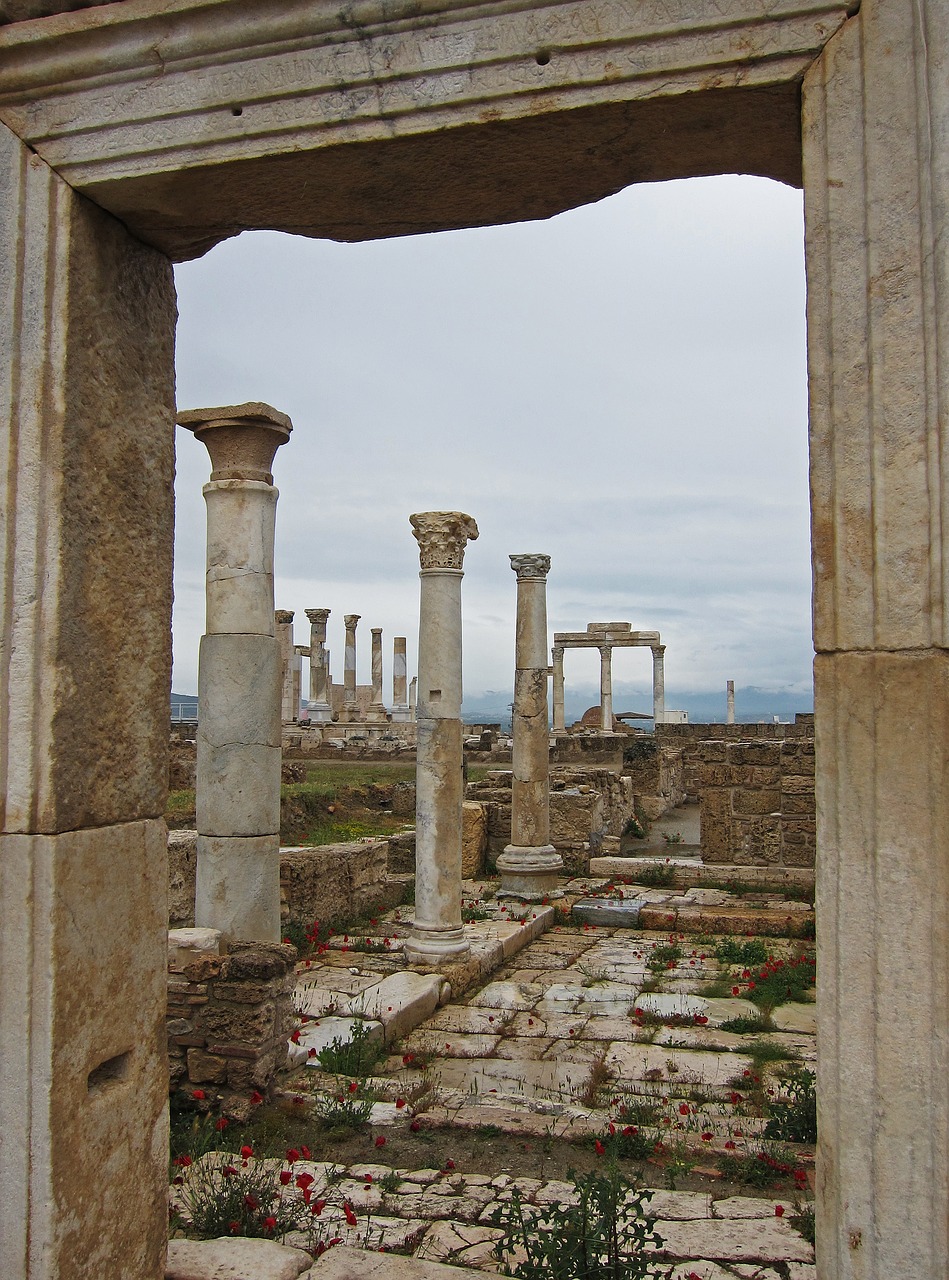
All but one of the messages to the churches of Asia, mentioned in Revelations, are practical. The exception is the church of Laodicea, known as the “lukewarm church.” Laodicea, now called Pankkale, was located on the south bank of the River Lycus. It was approximately 100 feet above the valley floor on a flat plateau. Today it is located in Turkey. Laodicea was in a triangle of cities along with Colossae (southeast) and Hierapolis (northeast). It was founded by the Greek king Antiochus II (261-246 BC) of Syria, who named it for his wife, Laodike. Antiochus II populated Laodicea with Syrians and Jews from Babylonia. Laodicea suffered repeated earthquakes. In 60 AD, the city was completely destroyed. Because of the wealth of the city, it was rebuilt without any relief aid. The city was able to recover by its own resources.

Laodicea was a wealthy city during the Roman period. It was known for banking, a medical school, textile industry (black wool), and famous eye and ear salve. Laodicea had been built for its defensive position overlooking the road system. It was located where three highways came together. This trade route connected important cities like Ephesus, Smyrna and Sardis. Laodicea even minted its own coinage. Its only major weakness was lack of an adequate water supply. Citizens were prideful of their wealth.

The Laodicean church was in danger of losing its impact on the world. It had become occupied with the world by leaving God outside of its culture. Laodicea was ineffective. The issue pointed out in Revelations is that if a church is not changing the culture around it, the culture will change the church. In contrast , the cities of Hierapolis offered its medicinal hot springs. Colossae offered a refreshing supply of cold water. Laodicea, had to bring its water through high-pressure stone pipes from hot springs five miles away. By the time it reached Laodicea the water was lukewarm and had a nauseating smell of minerals.

(Revelations 3:14-22)1NIV New International Version Translations – “To the angel of the church in Laodicea write: These are the words of the Amen, the faithful and true witness, the ruler of God’s creation. I know your deeds, that you are neither cold nor hot. I wish you were either one or the other! So, because you are lukewarm—neither hot nor cold—I am about to spit you out of my mouth. You say, ‘I am rich; I have acquired wealth and do not need a thing.’ But you do not realize that you are wretched, pitiful, poor, blind and naked. I counsel you to buy from me gold refined in the fire, so you can become rich; and white clothes to wear, so you can cover your shameful nakedness; and salve to put on your eyes, so you can see. Those whom I love I rebuke and discipline. So be earnest and repent. Here I am! I stand at the door and knock. If anyone hears my voice and opens the door, I will come in and eat with that person, and they with me. To the one who is victorious, I will give the right to sit with me on my throne, just as I was victorious and sat down with my Father on his throne. Whoever has ears, let them hear what the Spirit says to the churches.”

The Book of Revelation was written during the Roman emperor Domitian’s reign (r. 81–96 AD). Domitian was notorious for being the first Roman emperor to declare himself a god while still alive. This troubled Christians, Jews and even the Roman Senate. Other emperors were made gods only after their death. Domitian persecuted anyone who would not take part in the worship of emperors and their families. Although Jews were exempt from participating, Christians were not. At first, Christianity was considered a sect within Judaism. This gave Christians a temporary exemption from emperor worship. As more Gentiles (non-Jews) converted to Christianity, the percentage of Jewish people in the Christian Church decreased. This resulted in the removal of any exemptions or special status about emperor worship. The church had to comply or face the loss of its followers.

The Christians at Laodicea were affected by Domitian’s decrees. This harmed their ability to buy and sell products and services in their city. The image of the beast mentioned in Revelation refers to the emperor. He was the beast! Christians in Laodicea could no longer buy or sell unless they had taken the mark of the beast. In other words, “accepted the godly status of Domitian.

(Revelation 13:15-17) – “The second beast was given power to give breath to the image of the first beast, so that the image could speak and cause all who refused to worship the image to be killed. It also forced all people, great and small, rich and poor, free and slave, to receive a mark on their right hands or on their foreheads, so that they could not buy or sell unless they had the mark, which is the name of the beast or the number of its name. “

The pressure on the rich Christians to maintain their wealth was intense. Since a great deal of Laodicea’s wealth depended upon trade, the Christian merchants were in a quandary. Would they cooperate with the imperial cult and maintain their trade associations? Would they renounce Domitian and reaffirm their faith in Christ? Many of the Laodicean Christians chose to compromise their faith. The writer of the apocalypse could say, “I will spit you out of my mouth” (Revelation 3:16). The New King James Version translations uses the word “vomit.”  Under pressure from society and their Roman king, they changed their beliefs. It is no different than today’s churches accommodating worldly pressures against their traditional doctrine.

Today, we live in a time blessed by prosperity and freedom. Yet, the Church seems almost dead. The Church has ceased to have any major impact on large segments of society. Atheism and humanism have taken over. Government and public policy are being governed by philosophies that are antibiblical. At times, they even seem intolerant of the Truths within Scripture. Pulpits remain silent with respect to politics and trending morality so as not to alienate members. Pulpits are “lukewarm.” When was the last sermon you heard that addressed the 2,362+ abortions that occur daily in the United States?2https://www.all.org/learn/abortion/abortion-statistics/

What is the problem? Is it that people cannot deal with prosperity? With freedom and prosperity come the temptation to trust in our worldly blessings rather than to trust in the One who has provided them. When people have plenty, they need nothing. The problem is that a prosperous humanity is putting their faith in the wrong things. Christ told us to do the opposite, to lay up treasures in heaven.

(1 Tim 6:17-19) – “Command those who are rich in this present world not to be arrogant nor to put their hope in wealth, which is so uncertain, but to put their hope in God, who richly provides us with everything for our enjoyment. Command them to do good, to be rich in good deeds, and to be generous and willing to share. In this way they will lay up treasure for themselves as a firm foundation for the coming age, so that they may take hold of the life that is truly life.”

The mission of Christ’s Church is to teach those who are “rich in this present world” not to be comfortable or to fix their hope on the pleasures of this world. It will be God who provides us with all things to enjoy both now and in eternal life. To be lukewarm is to adapt to the world rather than become an agent who transforms the world. We are the wealthiest nation in the world with more churches, more Bibles, Christian literature, and Christian schools than any other nation in the world. Yet, we are losing the battle.

Why isn’t the church more effective in the world today? Is the problem with the world? Is the world to too stubborn and too blind to listen? Or could part of the problem be with us? Have we, because of materialism, political correctness, excluded the Savior from our lives? Can we no longer see that our vision must be His vision, His character our character? The Lord Himself comments within Revelation: Christ is warning the church at Laodicea, not condemning it. Christ is  giving us instructions. Christ says that trusting material wealth, worldly opinion, rather than pursuing a personal relationship with Christ is dangerous.

Other churches throughout the Roman Empire responded differently. For example, the Christians at Smyrna are applauded in the Book of Revelation for maintaining their faith despite extreme difficulty. They refused to take part in the imperial cult even though this meant affliction and poverty for them.

(Revelation 2:9) – “I know your afflictions and your poverty—yet you are rich! I know about the slander of those who say they are Jews and are not but are a synagogue of Satan.”

Our government, the media, and even our educational system impact the thinking of so much of America. They are, for the most part, intolerant of Christianity’s point of view. Leadership in both Europe and the U.S. are working for a single world government. All this is being done while the people of the world are preoccupied with comfort and pleasure, the good life. The moral climate or condition of both Europe and the U.S. is no better than the smelly water of Laodicea. According to recent polls, the values, priorities, practices, and pursuits of professing Christians and non-Christians alike, are similar. We have become lukewarm.

The Laodicean church’s “lukewarm” legacy was not its final legacy. The church survived Domitian’s reign. The city became the seat of a Christian bishop. Later in the 4th century, a Christian council was held there. Archaeologists have discovered about 20 ancient Christian chapels and churches at the site. Christ loves His Church. Our lesson is to stick to the original mission!

(Matthew 28:18-19) – “Then Jesus came to them and said, ‘All authority in heaven and on earth has been given to me. Therefore go and make disciples of all nations, baptizing them in the name of the Father and of the Son and of the Holy Spirit,’”

Contemplations

  • When was the last time that you heard a pulpit message about how your choices for political leadership could impact your freedom of religion? Could save your country?
    • Ideas to Explore: Is a safe message always the best message? Are there political choices that enhance or inhibit religious freedom? What about abortion as population control? Are our children being given anti-Christian messaging through our educational system?
  • Are you concerned over controversy?
    • Ideas to Explore: Christ was “controversy.” Do controversies like political discourse, LGBTQIA, illegal immigrations, voting laws all upset you?  Christ upset everyone. He gave a message of “right and wrong.” There was not a middle ground, a “lukewarm” response that ever made Christ happy.  Where do you struggle with your choices and feelings?
  • When was the last time that you heard a pastoral message that offended someone? 
    • Ideas to Explore: Does pointing out sin offend? Can we be “lukewarm” and still serve Christ?
  • Why do we put our pastors under such pressure as to force decisions on messaging that does not offend?
    • Ideas to Explore: Is the pastor’s role to expose, to save or to include, to just minister? Does ministering to the “flock” mean always be kind and gentle? Does being “kind” mean avoiding instructions on God’s Truth?
  • How do we keep a church from becoming Lukewarm?
    • Ideas to Explore: What is it within a church that inhibits honesty? Can a church serve both the world and God? 

Why is God Silent?

There may be times when, in solemn supplication (prayer), we call out to our Creator and there is “Silence” in return. The proverbial question in life is why? To begin with, we know that God cares about His creation. God cares about you! In Isaiah 55:6, God’s Word tells us to “Seek the Lord while he may be found; call on him while he is near.” God is near, always near to us and ready to hear us.

(Psalm 34:18)1NIV New International Version Translations – “The Lord is close to the brokenhearted and saves those who are crushed in spirit.”

God not only hears our prayers but is happy to respond. Listen to Isaiah 65:24, “Before they call, I will answer; while they are still speaking, I will hear.” The verse is referring to the promise of the relationship we have with God. God has extended His saving Grace to all humanity.

Matthew Henry, the theologian, says, “These are high expressions of God’s readiness to hear prayer; and this appears much more in the grace of the gospel than it did under the law; we owe the comfort of it to the mediation of Christ as our advocate with the Father and are obliged in gratitude to give a ready ear to God’s calls.”

We should never make the mistake of feeling that God is not listening. He is, and He is always guiding us, whether we can feel it or not.

(Psalm 44:21) – “would not God have discovered it, since he knows the secrets of the heart?”

Psalm 44, composed by sons of Korah, is a lament of the people. When one of God’s people suffers, all suffer together.2The Sons of Korah were the sons of Moses’ cousin Korah. The story of Korah is found in Numbers 16. Korah led a revolt against Moses; he died, along with all his co-conspirators. God caused “the earth to open her mouth and swallow him and all that appertained to them” (Numbers 16:31-33). However, “the children of Korah died not” (Numbers 26:11). Several psalms are described in their opening verses as being by the Sons of Korah: numbers 42, 44–49, 84, 85, 87 and 88.” God knows the heart. He knows of our suffering even without our prayer.

Time

The first area to consider is the difference between our world and God’s Realm. We live in a physical world. Our world has four known space-time dimensions of length, width, height (or depth) and time. God’s Realm is not limited by the physical laws and dimensions like that of our world.

(Isaiah 57:15) – “For this is what the high and exalted One says—he who lives forever, whose name is holy: ‘I live in a high and holy place, but also with the one who is contrite and lowly in spirit, to revive the spirit of the lowly and to revive the heart of the contrite.’”

In Psalm 90:4, Moses gets right to the point. He describes the timelessness of God: “A thousand years in your sight are like a day that has just gone by, or like a watch in the night.” The eternity of God is beyond the comprehension of humankind. Our lives are short. We grow weaker as we age. God never weakens with the passage of time. The differences between our world and God’s Realm means:

(Proverbs 3:5) – “Trust in the Lord with all your heart and lean not on your own understanding;”

It is easy to think that the only answer that God can give to prayers is “yes.” God is not an ATM. Making a list of things we desire and expecting God to fulfill that list is like online shopping with free delivery. That is not the way it works. A prayer is not like a token to be used in the Almighty’s vending machine. Prayer starts with having a real, deep relationship with God. As we come to know God on a much deeper level, God can reveal all the reasons why He may be silent.

The Free Will Problem

Most people are quite familiar with the story of earth’s first people, Adam and Eve. Created in God’s image, they were both given “Free Will.” Free Will is the idea that humans can make their own choices in life. They can determine their own fate, and carry the responsibility for their own actions. In the case of our “first couple,” God was quite clear to them. He established boundaries and was explicit about consequences. If God knows the “secrets of the heart,” why then did He let Adam and Eve make such a poor choice? Our answer lies with the very nature of who God is! Free Will is the ability to live free not as a puppet under the control of the “Master Puppeteer.” It is the foundation of the human experience. God created us to be free! Consequences exist for every action in life. That is why understanding God’s Laws and living with Common Sense are important to the quality of life.

The thief prays not to get caught. Once caught prays not to go to jail. Once released, prays to find another victim. The gambler prays for good luck. The parent prays their sick child is healed. The widow weeps for the loss. The jobless pray for work. We have a God that can sort all this out. The amazing part about prayer is that every prayer is heard by God without bias. God’s answer is based on His Love for us. Our expectation should be that God does not answer our prayers if we ask for things He does not want us to do or to have. One important consideration is that requests should be in harmony with His Law and Word.

(Proverbs 28:9) – “If anyone turns a deaf ear to my instruction, even their prayers are detestable.”

(James 4:3) – “When you ask, you do not receive, because you ask with wrong motives, that you may spend what you get on your pleasures. “

No” is also an answer. While we may not like the answer, “No” is an answer of love on the part of God. Especially when we ask Him for things which are not for our good or for His glory. God does not always give us what we want. He gives us what we need!

(Romans 6:28) – “And we know that in all things God works for the good of those who love him, who have been called according to his purpose.”

God’s answers may not be immediate. Sometimes our prayers are answered in a way that we fail to recognize. We pray for prosperity, and sometimes financial stress is given. But one day, looking back we are stronger for the test. We pray for health, and affliction is given, and we are better able to sympathize with those in need. God never makes mistakes.

When We See Suffering

Job never asked why those bad things were happening to him. The closest he ever came was when he said, “I say to God: Do not declare me guilty but tell me what charges you have against me.” (Job 10:2). Job was sharing his agony with the very God he could not understand. Suffering is a mystery. There are things we do not know the answer to and may never know until God explains all to us. In all suffering, there still is a message of compassion.

(Matthew 25:35-36) – “For I was hungry, and you gave me something to eat, I was thirsty, and you gave me something to drink, I was a stranger and you invited me in, I needed clothes and you clothed me, I was sick, and you looked after me, I was in prison, and you came to visit me.”

As the sons of Korah in Psalm 44 so lamented, when one of us is hurting, all are hurting. We are called to notice the pain of others. The real question then becomes “How we can minister to those who are suffering?” To respond to someone’s pain, prayers give hope and glorify God. People watch Christians. They need to see a difference for the Gospel’s message to be meaningful. They will ask, “How is it that Christ is so in control of a person’s life that are able to help others?” People can become the answer to the prayers of others.

Conclusion

When we see how Jesus prayed, we find that it is not complex. We are seeking how we can please God and follow His commandments. We are asking for knowledge of His will for us.  We are asking for forgiveness. The closer we get to God, the more we can avoid sin. This helps us to see things more clearly.

(Deuteronomy 31:8) – “The Lord himself goes before you and will be with you; he will never leave you nor forsake you. Do not be afraid; do not be discouraged.”

Avoiding God, being angry with God, leaving God is not a good response to His silence. To hear from God, we need to be close. The right response to silence is to “lean in,” and listen for His whispers!

Contemplations

  • Are you ever angry with God?
    • Ideas to Explore: Unanswered prayers. Do you see a futility in the world’s suffering? What about the state of evil in our world?
  • How do you “lean in” on God?
    • Ideas to Explore: What do you do to improve your relationship with God? Read God’s Word? Study God’s Word? Fellowship with other believers?
  • Do you notice the unanswered prayers of others around you?
    • Ideas to Explore: Are there people in your life that just could use a hug, your help, your own prayers?
  • What are the ways we can become the “answered prayers” of others?
    • Ideas to Explore: Volunteerism, tutoring, mission work, supporting youth missions are all ways to answer someone else’s prayers. Are these part of your life?
  • Jesus askes that you “trust Him into death?”
    • Ideas to Explore: How do we build that kind of trust? Does it take “Yes” only or is a “No” to a prayer or silence on a prayer strengthening your faith in Jesus? It is the only thing standing in the way of you and eternal life!
  •  
  • 1
    NIV New International Version Translations ↩︎
  • 2
    The Sons of Korah were the sons of Moses’ cousin Korah. The story of Korah is found in Numbers 16. Korah led a revolt against Moses; he died, along with all his co-conspirators. God caused “the earth to open her mouth and swallow him and all that appertained to them” (Numbers 16:31-33). However, “the children of Korah died not” (Numbers 26:11). Several psalms are described in their opening verses as being by the Sons of Korah: numbers 42, 44–49, 84, 85, 87 and 88.” ↩︎

What is God’s Truth?

God’s Truth often offends people. The gospel’s message is one that asks people to change, and that can be hard to do. Others might take offense at their need for a “Savior,” someone to be subservient to bow to. In fact, Jesus pretty much promises that people will be angry at His message:
 
(Luke 21:12-19)1NIV New International Version Translations – “But before all this, they will seize you and persecute you. They will hand you over to synagogues and put you in prison, and you will be brought before kings and governors, and all on account of my name. And so you will bear testimony to me. But make up your mind not to worry beforehand how you will defend yourselves. For I will give you words and wisdom that none of your adversaries will be able to resist or contradict. You will be betrayed even by parents, brothers and sisters, relatives and friends, and they will put some of you to death. Everyone will hate you because of me. But not a hair of your head will perish. Stand firm, and you will win life.”
In all four gospels, Jesus commands His disciples to deny their old lives of sinful selves and sinful human thinking. We are called to give our past life to the cross. The hardest part comes next: to then take up our own cross. This means no more self-pity over denying ourselves things we want. No more making up rules for the life we want. If the desire, the goal, is to spend eternity in Heaven, life cannot be to make everyone happy with us. A new life means a life of obedience based on God’s Truth. If knowing God’s Truth is critical to finding eternal life, then what is God’s Truth?
 
(John 18:37-38) – “’Then You are a king!’ Pilate said. ‘You say that I am a king,’ Jesus answered. ‘For this reason I was born and have come into the world, to testify to the truth. Everyone who belongs to the truth listens to My voice.’ ‘What is truth?’ Pilate asked. And having said this, he went out again to the Jews and told them, ‘I find no basis for a charge against Him.’”
 
What is truth? asks Pilate when Jesus Christ stands at His trial before him. A good question even today since we live in a world in which absolute truth does not exist. Pilate was dismissive, angry that Christ dared to speak with Truth. Yet, there was Pilate looking into the face of the Incarnate Truth but could not discern it. Truth is reality. It is how things are. Truth is consistent with the mind, will, character, glory, and being of God. Truth is the self-disclosure of God Himself. All Truth is defined by God, whose very nature is Truth. Truth is divine, from above, not of this world. Truth is not determined by opinion polls or public surveys. It does not come from human knowledge. Truth is found only by divine revelation.
 
God’s Truth is absolute because God is absolute. Human truth is subjective, relative, and pragmatic. It gives way to personal or cultural preferences. The issue today is whether there is absolute truth that is true for everyone. This would be the truth, no matter who they are, where they live, or what they do. Society defines truth as whatever it wants it to be. Something cannot be both true and not true. In such a worldview of self-deception, truth is no longer objective. All truth must be true! The Truth we seek must be absolute because it comes from the one and only God.
 
Since God does not change, neither does His Truth. What is true today for God is true tomorrow. Truth is the same yesterday, today, and forever. Right is always right, and wrong is wrong. Wrong is forever wrong! Society may try to redefine morality. But Jesus called Himself the Truth, not the custom of the day. The world changes, but God’s Truth remains unchanging.
 
(Psalm 119:89) – “Your word, LORD, is eternal; it stands firm in the heavens.”
 
God’s truth is not subjective. It is not discovered through personal feelings. It is not determined by private groups or secret fact-checkers. Truth is black and white! God’s Truth is not abstract, vague, or nebulous. Truth is found within our Scriptures. God’s Truth can be observed in action, discussed, studied, analyzed, believed, proclaimed, and defended in our world. Because God is objective, His Truth is impartial, unbiased, unprejudiced, and non-partisan. God’s Truth speaks to all people in all places the same way.
 
(John 8:32) – “Then you will know the truth, and the truth will set you free.”
 
Jesus is the incarnation of God’s Truth. Jesus came to save mankind and to make us right with God. Now we can cast the guilt of sin aside and live in God’s Truth. The Truth that Jesus brought possesses power. The test for His Truth is whether it converts, sanctifies, and strengthens us. God’s Truth renews minds, revives hearts, and redirects lives. God’s Truth saves!
 
(1 Corinthians 1:23) – “but we preach Christ crucified: a stumbling block to Jews and foolishness to Gentiles,”
 
The Apostle Paul describes why the gospel message he preached seems so foolish to so many people. He uses “foolishness” to describe how people respond. The word comes from the same Greek word used to form terms such as moron (mōrian). It shows us that the world does not only see the gospel as odd, or unusual, they see it as stupid or idiotic. God’s Truth is not intended to please the world; it is intended to save it. God’s Truth is the “Final Word” on all that matters. It will not be the Internet, social media, artificial intelligence, or the News Media that bring salvation to a single soul. God is the one Source and sole Author of Truth. Sin is whatever God says it is. Judgment is whatever God says it is. Salvation is what God says it is. Heaven and hell are what God says they are. It matters not what humanity says but only what God says. Everyone’s destiny is contingent upon one truth, God’s Truth!
 
(Psalm 145:18) – “The Lord is near to all who call on him, to all who call on him in truth.”
 
We find God’s Truth only when we seek it. God’s Truth is worth seeking. Therefore, those who seek God and are willing to give all for God’s Truth will be rewarded. By the way, God’s Truth comes conveniently packaged in a book called the “Bible.” Get yours today!
 

Contemplations

  • Where do you see the world redefining God’s Truth?
    • Ideas to Explore: Schools and education; Government, laws within our lands; churches? How do these and other groups attempt to decide what is right and wrong, ignoring God’s Truth?
  • What has society told you to believe that you know is the opposite of what God tells you to believe?
    • Ideas to Explore: You should have no trouble making a big list here. Why is this destructive to our society?
  • With so many sources all claiming to have the “truth,” how do you discern right from wrong?
    • Ideas to Explore: Think of multiple sources for God’s Truth. Which are reliable, and how do you validate them against the ultimate source, the Bible?
  • How do you think the pastors of our world should handle offending people? 
    • Ideas to Explore: Can a church remain Godly and never offend anyone? How should conflicting views be handled?
  • Who do you think is responsible for knowing right from wrong?
    • Ideas to Explore: Everyone claims some expertise in interpreting God. How should the truth about Truth be settled? 
  • What do you think the conflicts associated with redefining truth are doing to youth?
    • Ideas to Explore: Think through the impacts of divorce, drugs, a biased educational system, social media, and biased news. What is this doing to our young people? What is the correct response from families and the church to these concerns? How do we save the young people?
  • 1
    NIV New International Version Translations ↩︎
A Closer Look at Equipping Disciples of Christ

A key component of the mission of the Church is equipping members for discipleship. What exactly does that mean? Is today’s Church focused on the right priorities? With so many people leaving the Church, it is worth our time to take a deeper look.

(Matthew 28:19-20) 1NIV New International Version Translations– “Therefore go and make disciples of all nations, baptizing them in the name of the Father and of the Son and of the Holy Spirit, and teaching them to obey everything I have commanded you. And surely I am with you always, to the very end of the age.”

From the directive in Matthew, there are good clues to help with a definition of “equipping.” The word “go” indicates that the product of the Church’s efforts is to send people out into the world around us. There is also an outward component, baptizing. Baptism is for those who have either acquired or have a knowledge of God’s Truth (Romans 10:17; 1 Timothy 2:4; Hebrews 11:6). To gain such knowledge requires equipping teachers who know God’s Word. Then passing it on. That sounds simple enough but there are complications. There is always a danger that the message is being tailored for acceptance rather than to God’s Truth.

(2 Timothy 4:3-5) – “For the time will come when people will not put up with sound doctrine. Instead, to suit their own desires, they will gather around them a great number of teachers to say what their itching ears want to hear. They will turn their ears away from the truth and turn aside to myths. But you, keep your head in all situations, endure hardship, do the work of an evangelist, discharge all the duties of your ministry.”

The pressure to sustain or grow congregations is real. Technology and music needs to wow worshipers and bring them back each week. Christian education can resemble fellowship rather than learning. Sermons must engage but not be divisive.  All this while our world is busy teaching counter messages. Many denominations are responding by adopting worldly opinions so as not to offend. Christ’s church was not meant to be a place that accepted everyone’s opinions. God’s Kingdom is NOT a democracy where everyone gets to vote on policy. Repentance is disruptive. God’s Word is disruptive.

What might be good clues to make sure God’s Truth is being taught?

(Romans 1:19) – “since what may be known about God is plain to them, because God has made it plain to them. “

Clue One: The basic reality of God is plain enough. Paul says, “Open your eyes and there it is.” God is well organized, loves diversity, is powerful and real. To deny God is to deny Truth!

(Romans 2:13-16) – “For it is not those who hear the law who are righteous in God’s sight, but it is those who obey the law who will be declared righteous. Indeed, when Gentiles, who do not have the law, do by nature things required by the law, they are a law for themselves, even though they do not have the law. They show that the requirements of the law are written on their hearts, their consciences also bearing witness, and their thoughts sometimes accusing them and at other times even defending them.”

Clue Two: Some things are hard wired in us by God. Most people know there is a right and wrong. Our conscience tells us this. The conscience is like a law written in the human heart. Our world tries to tell us to ignore God, think only of yourself. What Truth will you chose to believe? It starts with us!

(John 1:!4) – “The Word became flesh and made his dwelling among us. We have seen his glory, the glory of the one and only Son, who came from the Father, full of grace and truth.”

The ultimate Truth is Christ. He must be forefront in all we do. Christ didn’t come to make people happy, He came to give people life, everlasting life. Discipleship, equipping people is all about moving Christ to the front of your life!

Clue Three: God gave each of us reasoning and the Holy Spirit (revelation). Truth is knowable. Truth is not a mystery.

(Proverbs 4:26) – ” Give careful thought to the paths for your feet
and be steadfast in all your ways.”

God expects us to think, to use common sense, to be discerning. The world is not a reliable teacher. It will take observation, prayer, and knowledge of God’s Word to become an effective disciple. Hard work for the Church and for the future disciples of the Church.

Clue Four: God provided us a complete text book. It is the best “user manual” for life ever written.

(2 Timothy 3:26) – “All Scripture is God-breathed and is useful for teaching, rebuking, correcting and training in righteousness,”

Successful completion of the church’s mission requires all disciples to:

  • Know and believe that All Scriptures are from God. No selective cutting and pasting allowed.
  • Believe and rely on the Scriptures for their decisions. Disciples may offend some people. Remember, it is not about pleasing our world, it is all about pleasing our God!

As the most widely published book ever, external evidence supports the Bible as a book that you can rely on. The Bible’s has the benefit of about 40 main contributors. Thirty were in the Old Testament and ten in the New Testament. Within a few generations from its first writings, there were thousands of copies made. External evidence also includes many archeological discoveries. The final evidence of Scripture’s authenticity is that, although written over 1,500 years, it tells one consistent story. No human being could account for that. It’s an amazing example of the power of God.

Clue Five: It takes Jesus, front and center to equip disciples. One of the clearest and the most well know verses in the Bible is “Jesus said, I am the way the truth and the life. No one comes to the Father but by Me.” Notice Jesus says, “I.” Jesus Christ is not a religion. He is not a ritual. Jesus did not come to give us rules and regulations. It turns out that God’s Truth is a person! Jesus came to forgive and “equip!

Other religious leaders all say they are looking for the truth. Some say they are teaching the truth. A handful say they point to the truth or are a prophet of truth. Jesus says “I am the truth.

What do you do with the truth once you have discovered it?

(2 Timothy 2:15) – “Do your best to present yourself to God as one approved, a worker who does not need to be ashamed and who correctly handles the word of truth.”

Consider that the average person spends 2 hours a day on social media. They spend 3.5 hours watching television, and 8 to 9 hours sleeping. Add in working, transportation time, meal prep and leisure time. Soon you begin to see one of the problems. One to two hours in church once a week can be overcome by life itself. Can you become equipped in an hour or two once a week? Jesus even tried to simplify the message:

(John 13:34-35) – “A new command I give you: Love one another. As I have loved you, so you must love one another. By this everyone will know that you are my disciples, if you love one another.”

Is Jesus’ simple message enough? The world’s message is counter that of love. It is divisive, always separating people into groups. Whether by political, color, domination, economic, or heritage, love is never the goal. Winners and losers, hatred are the goals for the world. Power and corruption rein supreme. In Scriptures, a disciple is to be a learner who endeavors to obey what they have learned. To be a disciple of Christ, to become “equipped,” one must:

  • Love God with all their whole being (Matthew 22:37)
  • Love their families and neighbors as they love themselves (Matthew 22:39)
  • Keep themselves holy and pure (Ephesians 1:4)
  • Be unified with each other (1 Corinthians1:10)
  • Be wise and understanding about God’s Word (Ephesians 5:17)
  • Set themselves apart from the world (1 Thessalonians 4:3)
  • Be prepared for the spiritual battle ahead because they must live in the world (Ephesians 6:10-20)

How would you answer the question, why are people leaving the church? Is the mission of Christ’s Church too hard? Has the world moved on? Should we no longer worry about God’s Truth? Is the Church focused on the wrong things? What about those who cannot afford to be financially generous, living on fixed income, hear the pressure to give, but are too  embarrassed to come, and my very favorite, those who do not want to be confronted with their “sin?” Are the demands just too much today? Our generation and the next generations have a few big decisions to make!

Contemplations:

  • Do you believe that you are called to be a disciple for Christ?
    • Items to Explore: This is a hard question. Where does your inner faith point you? Paul says there are different gifts and do you know your gifts?  Do you believe that all people are called to be disciples? Are you comfortable with sharing your faith and teaching others about the God’s Word?
  • Discipleship seems to be dependent upon a knowledge of Scripture. What do you do to learn as much as you can?
    • Items to Explore: We learn God’s Word many ways. Do you attend worship or watch online regularly? What about supplemental Bible Study? Are you an avid reader of inspirational material? Do you allocate personal time to reading God’s Word?
  • Can you tell someone how your life was before Christ, how you grew to know Him and turn your life over to Him, and what life is like now?
    • Ideas to Explore: Testimonies do not have to be dramatic. Everyone has a story that relates to someone else. Being a disciple is about a willingness to share your experiences. It is also about living for Jesus. Do you really know what that entails and means?
  • If someone asked you to define “God’s Truth,” what would you tell them?
    • Items to Explore: Can you be honest about sinful behavior and tell a family member or close friend how God may not approve of what they are doing? Without being judgmental, how would you point out “sin?” Are you apt to avoid controversy so not to offend someone? Can you draw a clean line between sinful behavior and Godly behavior?
  • What keeps you from expanding your commitment to discipleship?
    • Items to Explore: Time, beliefs, fear?


  • 1
    NIV New International Version Translations ↩︎

Reading Between the Lines

There is a lot of imagery in the Scriptures and there is always a danger of taking  the literal view of the message and missing the “real message.” This study looks at one example of why we should take time to reflect on what we read and to look for what is hidden between the lines.

(Luke 5:1-11)1NIV New International Version Translations – “‘One day as Jesus was standing by the Lake of Gennesaret, the people were crowding around him and listening to the word of God. He saw at the water’s edge two boats, left there by the fishermen, who were washing their nets. He got into one of the boats, the one belonging to Simon, and asked him to put out a little from shore. Then he sat down and taught the people from the boat. When he had finished speaking, he said to Simon, ‘Put out into deep water, and let down the nets for a catch.’ Simon answered, ‘Master, we’ve worked hard all night and haven’t caught anything. But because you say so, I will let down the nets.’ When they had done so, they caught such a large number of fish that their nets began to break. So they signaled their partners in the other boat to come and help them, and they came and filled both boats so full that they began to sink. When Simon Peter saw this, he fell at Jesus’ knees and said, ‘Go away from me, Lord; I am a sinful man!’ For he and all his companions were astonished at the catch of fish they had taken, and so were James and John, the sons of Zebedee, Simon’s partners. Then Jesus said to Simon, ‘Don’t be afraid; from now on you will fish for people.’ So they pulled their boats up on shore, left everything and followed him.”

The first four apostles were fishermen. They owned their own boats. As fishermen, they were like middle-class business owners of today. They had no specific religious credentials to qualify them to join Jesus. The four fishermen were living in the age of Roman oppression. Their lives included high taxes and military enforcement of Roman law. There were other forms of social conflict and economic distress in their land. The world that these fishermen lived in was a mess. Many of us today can identify with the world that the apostles lived in. It was like our own world is today, a mess.

Jesus directed Simon (soon to be Peter) to put down their nets in the “deep water.” Simon’s response begins with an age-old point of view. The men had fished all night and had nothing to show for their efforts. Their response was first to say, why bother? Why should they expect a different outcome? Yet they do what Jesus says to do. This specific response is what we all will model in the future Christian Church, to do what Jesus says to do. During an unpromising situation, the future apostles let down their nets again. When they do so, they catch a super-abundance of fish. Their old nets cannot handle the catch and begin to break.

Many people read and take a visual view of these verses. Jesus, Son of God Himself, knows all things. He even knows where the fish are. From this story, we are told that the future apostles fill their boat. They are amazed at how much Jesus knows about fishing, He must have special powers, calling Him Master and Lord.  He must be God! However, is there another message between the lines?

There is a more subtle message in this Scripture that we should not miss, its connection to the “deep water” (Greek: bathos). This idea of “deep water” occurs several other times in the Septuagint (the Greek translation of the Torah, Prophets, and Writings) in connection with the primordial sea, the sea that was created by God Himself that had existed from the very beginnings of time. The sea is a powerful Jewish symbol of chaos. Luke, the Gospel writer, sees his world as a chaotic and hostile place, stuck between traditional Judaism and the followers of Jesus, the repressive behavior of the Roman Empire, and conflicts within the church itself. The apostle Paul says it best when speaking of Jesus using the same Greek word, bathos. He says that nothing, not the deepest ocean, not all the world’s chaos can separate us from Christ! In other words, not even the chaotic world, Satan’s world can keep us from Christ!

(Romans 8:39) – “neither height nor depth [bathos], nor anything else in all creation, will be able to separate us from the love of God that is in Christ Jesus our LORD.”

Luke also uses the fishing imagery to spell out the mission for the apostles in a way well-known to them: “from now on you will be catching people.” They were familiar with “catching.” “Catching” is a very different word today. It is typically associated with disease (Webster – communicable, contagious, pestilent, transmissible, transmittable). Luke’s imagery is better because as fishermen, the future disciples could relate to the work they were being asked to do. They could understand the risks involved and the satisfaction involved in catching fish. Jesus thinks the same will be true of the mission of His Church. “Catching people from the depths of chaos within our world” will be a good thing. A lot of work, yes. Risks, yes. But the satisfaction of serving Jesus cannot be compared to any worldly pleasure. From this fishing trip, the ministry of the apostles becomes the model for the disciples and the Church itself. As the apostles pulled their nets from the sea teeming with fish in Luke 5:1-11, so the Church spreads its nets to create a new community for God.

It becomes clearer to us that Jesus is not trying to trick the fisherman into just working for Him. In this early encounter with Jesus, He is visually sharing with them the mission that they will be asked to undertake. Luke is saying that Jesus’ command to change the side of the boat that the nets were on was nothing more than a command to change His Church from an internal focus on itself (shallow water) to an external focus on the chaos within our world (deep water). Jesus is encouraging His Church to drop its nets into the chaos of life, not just fish in the shallow waters. Jesus is asking us to be witnesses to the impact that God can have on lives. He is asking His disciples take on the job of inviting people into the movement towards God’s Kingdom. We see the threat of chaos in our world today in national politics, relationships among races and ethnic communities, international relationships, and many other places. According to Luke, the Church is to continue it’s focus on the same mission established by Jesus Himself . We are share the Gospel to individuals, households, and communities as an alternative way of living.

(Revelation 2:24) – “Now I say to the rest of you in Thyatira, to you who do not hold to her teaching and have not learned Satan’s so-called deep secrets, ‘I will not impose any other burden on you,”

Here, the apostle John is praising the ministry and people of Thyatira2Thyatira – A city in the north of Lydia, on the river Lycus. The Bible mentions Thyatira and also that the Church at Thyatira is one of the seven Churches of the Book of Revelation and is also mentioned in Acts 16:14 because they have been living and acting by principles established by Christ. Because of their living by Christ’s principles, they grew wiser and better. The same should be the goal of all Christians, to desire to grow in faith and that our last works of life should be our best works. Yet Thyatira was also being impacted by wicked people. John warns those who are trying to snuff out the good living and good works of Christ’s Church. John reminds us that God knows the hearts of men, their principles, designs, frame, and temperament. He will take care of those who are interfering. The apostle encourages the church in Thyatira to keep themselves pure and undefiled and not give up on the mission. Why, because to let your guard down, is dangerous. God’s mysteries are as dangerous as the mysteries of Satan and Satan will go to unfathomable depths of deceit to disrupt the mission of the Church. When you are living (catching or fishing) in the “bathos,” the deep water, it is easy to get tired and give up.

To encourage Christ’s believers, we are reminded of how tender Christ is to His faithful servants! He lays nothing on his servants accept what is good for them. Remember, Christ loves us! There is Christ’s personal promise that an ample reward awaits those who persevere, who are victorious in the end. There is even the promise of the gift of knowledge and wisdom that can be used to survive in this chaotic world today.

Contemplations

  • How do you read the Word of God?
    • Items to Explore: Do you just read the Bible? How regularly? Do you use a study guide? Is there a difference between reading God’s Word and knowing God’s Word?
  • Do you ever seek the Hebrew and Greek words and their definitions to help you with clarity?
    • Items to Explore: Language in itself is dynamic. Words are added, and meaning changes. Going back to the original source has value. How would you apply this logic to everyday life? Do you think the changing definitions of familiar words are part of the Generation Gap?
  • Do you participate in discussion groups?
    • Ideas to Explore: Are you being taught the meaning of Scripture? How do you validate what you hear? Do you discuss, internalize, and compare Scripture’s messages to your life today?
  • In what ways have you found the Bible to still be relevant in society today?
    • Ideas to Explore: When you read passages in the Bible, do you try to find comparisons in our world today? Do you use discussion groups to expand your interpretations and ideas? What are your concerns with discussion groups?
  • What discourages you from the mission of the Church?
    • Ideas to Explore: Where is the Church winning? Losing? Do you have ideas on how to improve the Church, so it is successfully completing Christ’s mission?
  • Where does the discouragement come from, the discouragement that would cause you to lose hope?
    • Ideas to Explore: What parts of society support Christ’s mission for His Church? What parts discourage His mission? How do you keep yourself positive on track in support of Christ’s Church?
  • 1
    NIV New International Version Translations ↩︎

  • 2
    Thyatira – A city in the north of Lydia, on the river Lycus. The Bible mentions Thyatira and also that the Church at Thyatira is one of the seven Churches of the Book of Revelation and is also mentioned in Acts 16:14 ↩︎
« Older posts Newer posts »

"For it is by grace you have been saved" - Ephesians 2:8-9  

Copyright: © 2001 - 2026 Lostpine

Translate »