Biblical wisdom, historical insight, and personal growth — all in one place

Category: Shadows (Page 13 of 30)

Lord and Savior

We often miss the obvious. In most churches, we watch hundreds of baptisms. They are all similar. The candidate, the person being baptized, is asked to answer the question: “Who is Jesus Christ?” If the person is a child, the parents, family, and church members are asked to raise the child knowing the answers to this question. The answer is always the same, “My Lord and Savior.” A simple but provocative question and an obvious answer, or is it? What does it mean to call out publicly that Jesus Christ is my or will be a child’s Lord and Savior?

  • Jesus as Lord: This requires that we see Jesus as our master, leader, and ultimate authority in life. We must believe in His teachings and strive to follow His example. This acknowledgment of Jesus as Lord involves surrendering our will to Him and seeking to live according to His principles, not our own free will.
  • Jesus as Savior: This requires that we believe Jesus is the one who saves us from sin and its consequences. Jesus’ sacrificial death on the cross is our atonement for humanity’s sins, offering salvation and eternal life to those who accept Him.

By professing Jesus as our Lord and Savior, we are placing our faith in His redemptive work and trust in Him for forgiveness and eternal salvation. But not so fast! Before we peel this onion, what are the expectations that go with this statement of faith? What is the Fine Print? Are we dependent on theological beliefs, and denominal interpretations, or is it something much greater? Many religions interpret salvation as eternal life with God. Is our belief based on Jesus different?

(John 3:16)[1NIV New International Version Translations – “For God so loved the world that he gave his one and only Son, that whoever believes in him shall not perish but have eternal life.”

Our faith in Jesus Christ comes from the belief that He is the Incarnate Son of God and the only Savior of humanity. Our faith involves acknowledging Jesus as Lord and believing in His sacrificial death and resurrection for the forgiveness of our sins. But there is “fine print.” There are a few things, requirements for this grace—that have been extended to us. Repentance is a crucial aspect of salvation. It involves acknowledging one’s sins, turning away from them, and seeking forgiveness from God. True repentance is accompanied by “a change in behavior” and “a desire to live by God’s will.” If you are not willing to live like Christ, you might want to spend some more time in prayer and reflection before making your commitment to follow Jesus. This is not an easy thing to do. It takes work, it takes effort, and it takes a lifetime.

Human beings were made in God’s image.  “It is God’s will that you should be sanctified:” (1 Thessalonians 4:3).  There is no other higher goal for God in His universe. Yet, humans cannot sanctify themselves. The Triune God sanctifies. The Father sanctifies (1 Corinthians 1:30) by the Holy Spirit (2 Thessalonians 2:13; 1 Peter 1:2) and in the name of Jesus Christ (1 Corinthians 6:11). God’s plan, however, has been disrupted by sin. Evil in our world deprives us of the good that God intended for His creation, “for all have sinned and fall short of the glory of God” (Romans 3:23).

What brings you to Christ is a gift from God, given by His Grace. It cannot be earned through good works or personal merit but is freely given to those who accept it through faith. We all seek eternal life with God in heaven. Salvation is not just a future hope but also a present reality that transforms believers’ lives. God has an expectation for you that you experience spiritual renewal and growth as you are conformed to the likeness of Christ through the work of the Holy Spirit. If no change is present, no sanctification is happening either. It is a wonderful measure to help us on our journey to eternity.

We are called to live lives of obedience and discipleship in response to God’s love for His creation. This includes following Jesus’ teachings, serving others, and living out the values of the Kingdom of God. It is not about baptism; it is not about the water; it is about committing to live a “Christ-like life.” When a child is baptized, those around the child commit themselves to praying for the child, be the child’s teachers, and set Christ-like examples for the child. Why? So that one day, when the child understands who Jesus is, they can answer the question: Who is Jesus Christ? “He is my Lord and Savior!”

(Matthew 16:24) – “Then Jesus said to his disciples, ‘Whoever wants to be my disciple must deny themselves and take up their cross and follow me. For whoever wants to save their life will lose it, but whoever loses their life for me will find it.'”

There will be lots of self-denial and a daily willingness to follow Jesus wholeheartedly, even to the point of sacrificing one’s desires and preferences. We may even find that the world hates us for our choices.

(Romans 12:1-2) – “Therefore, I urge you, brothers and sisters, in view of God’s mercy, to offer your bodies as a living sacrifice, holy and pleasing to God—this is your true and proper worship. Do not conform to the pattern of this world, but be transformed by the renewing of your mind. Then you will be able to test and approve what God’s will is—his good, pleasing, and perfect will.”

We are called to offer ourselves as living sacrifices to God, implying a surrender of one’s will to His purposes and a transformation of our mindset to align with His will. Jesus was a humble, obedient servant, serving as a model for those who place their faith in Him. Lest we forget, Jesus Himself, chose a public declaration of surrendering His will to His Father. In the Dead Sea Scrolls (found at Qumran), texts describe rituals involving washing, bathing, sprinkling, and immersing. These practices influenced early Christian baptism. John the Baptist, considered a forerunner to Jesus, used baptism as a central sacrament in his messianic movement. John the Baptist’s form of baptism was characterized by immersion in water, symbolizing purification, and repentance. Jesus Himself underwent baptism by John the Baptist (Matthew 3:13-17). With this public example, Jesus instituted the sacrament of baptism for the Christian Church.

(Matthew 3:13-17) – “Then Jesus came from Galilee to the Jordan to be baptized by John. But John tried to deter him, saying, ‘I need to be baptized by you, and do you come to me?’ Jesus replied, ‘Let it be so now; it is proper for us to do this to fulfill all righteousness.’ Then John consented. As soon as Jesus was baptized, he went up out of the water. At that moment heaven was opened, and he saw the Spirit of God descending like a dove and alighting on him. And a voice from heaven said, ‘This is my Son, whom I love; with him I am well pleased.’”

Today’s baptisms continue to use water and a Trinitarian invocation, “I baptize you in the name of the Father and of the Son and the Holy Spirit”. Baptism symbolizes the end of an old way of living, and a new birth (being born again). While baptism represents the forgiveness and cleansing from sin that comes through faith in Jesus Christ, it will also be the public declaration of one’s confession of faith and belief in the Gospel’s message, “Who is the Christ? He is my Lord and Savior.” that draws us into the kingdom of heaven with Jesus.

Contemplations

  • What is your opinion on baptism? Is it a requirement to be saved? Once you are baptized, are you guaranteed to go to heaven?
    • Ideas to Explore: There are a lot of opinions formed on and around baptism based on denominational beliefs. Which ones did you grow up with?
  • Why is a “public declaration” more effective than one done in silence?
    • Ideas to Explore: Human pride, soliciting help from others to live for Jesus, public vows like marriage, courts, etc. depend on them.
  • How do you get to know Jesus?
    • Ideas to Explore: Read about Him in the Bible. Go to church. Attend discussion groups. Watch people who claim to know Him. Please share your story.
  • What is the benefit of symbolism like water, emersion, and public declarations of faith?
    • Ideas to Explore: Could they simplify the mysteries concerning faith? They are seen by many. Marriages and baptisms bring families together. Allow people to relive their vows.
  • Why are sacraments important?
    • Ideas to Explore: Sacraments are Christian rites that symbolize and convey God’s grace and love for humanity. Christ Himself initiated them, representing important spiritual milestones in the lives of His believers. They provide us with opportunities to feel God’s presence more strongly.
  • 1
    NIV New International Version Translations ↩︎

Surviving when Evil is in Charge

Do you think that evil oversees our world? It is a provocative question, for sure. Historic deficits are making us a debtor nation, placing our children’s future at risk. Drugs are killing our younger generations by the tens of thousands because of border politics. Our nation has a government that has lost track of almost 100,000 children who may be at risk of being trafficked to the perverts of this world. Politicians are enriching themselves at the expense of their citizens. Perversions are being claimed as human rights. The world holds more and more terror every day, all of it seeking the destruction of our nation and freedom. If you disagree, you are no doubt tuned into the wrong people in our world.

Defining the characteristics of “evil” is complex and subjective. There are, however, some commonly identified characteristics that can be associated with “evil” behavior:

  • Lack of Empathy – Evil individuals typically exhibit a profound inability or unwillingness to empathize with the suffering or feelings of others. They are indifferent to the pain they cause. There is a lack of a moral compass or conscience, allowing them to commit harmful acts without experiencing internal conflict or hesitation.
  • Manipulative – Evil individuals will use manipulation and deceit to achieve their goals, exploiting others without regard for their well-being. They are professional liars. Evil lies, deceives, or betrays the trust of others in pursuit of their interests.
  • Narcissism – Evil traits accompany extreme narcissism. It is unfortunate that narcissistic people see themselves as superior to others and feel entitled to do whatever they desire, regardless of the consequences for others.
  • Aggression and Violence – Evil individuals often resort to aggression, violence, or other forms of harm to achieve their ends or assert dominance.
  • Lack of Remorse or Guilt – Evil individuals may not feel remorse or guilt for their actions, even when they cause harm or suffering.
  • Sadism – Just look at some of the events in the Middle East or Ukraine. The evil you see comes from people who derive pleasure or satisfaction from causing pain or suffering to others they hate.
  • Dehumanization of Others – Evil sees individuals as mere objects or obstacles to being manipulated or discarded, rather than as fellow human beings deserving of respect and dignity.
  • Ruthlessness – The evil we see today is a cold, calculating, ruthless, pursuit of selfish goals. There is little concern for collateral damage or the well-being of others.
  • Greed – Greed and evil are often linked due to the harmful consequences that can arise from excessive desire for wealth, power, or possessions. Greed can fuel corrupt behavior, including bribery, embezzlement, fraud, and other forms of dishonesty.

(2 Timothy 3:1-5)1NIV New International Version Translations – “But mark this: There will be terrible times in the last days. People will be lovers of themselves, lovers of money, boastful, proud, abusive, disobedient to their parents, ungrateful, unholy, without love, unforgiving, slanderous, without self-control, brutal, not lovers of the good, treacherous, rash, conceited, lovers of pleasure rather than lovers of God—having a form of godliness but denying its power. Have nothing to do with such people.”

The Apostle Paul describes the moral decline and characteristics of evil people in the end times. Whether these are the end times is not relevant. Throughout the Bible, there is a consistent theme of warning against evil behavior and urging believers to resist temptation and follow the path of righteousness. All people are sinners and have a propensity toward evil due to the fallen nature of humanity after the disobedience of Adam and Eve in the Garden of Eden (Romans 3:23, Genesis 3). However, that is not an excuse. There are consequences for evil behavior. Those who engage in it will face judgment from God (Proverbs 11:21, Galatians 6:7-8). Our response must be to avoid evil people and separate ourselves from their ungodly influences (Proverbs 4:14-15, 2 Corinthians 6:14-18). God is the righteous judge who will hold evil people accountable for their actions. Justice will be served, either in this life or in the afterlife (Romans 12:19, Hebrews 10:30-31).

This is not a pretty picture, but that does not mean we have no hope.

(Jeremiah 29:11) – “For I know the plans I have for you,” declares the Lord, “plans to prosper you and not to harm you, plans to give you hope and a future.”

To begin with, we have God! We have God in the good times and in the times of uncertainty and adversity. The entire premise behind our covenant with God is that He has a positive plan for the future of His people, one that involves prosperity, protection from harm, and the promise of hope and a fulfilling future.

(Romans 8:28) – “And we know that in all things God works for the good of those who love him, who have been called according to his purpose.”

The Apostle Paul reminds us of God’s sovereignty and providence. Even amid difficult circumstances, God is actively at work for the benefit of those who love Him and are called according to His purpose. The “good” mentioned in this verse doesn’t necessarily refer to immediate comfort or success, but rather to the ultimate good of God’s larger plan of redemption and restoration. It signifies God’s ability to bring about positive outcomes, growth, and transformation even in the face of evil.

(Hebrews 10:23) – “Let us hold unswervingly to the hope we profess, for he who promised is faithful.”

Paul is again encouraging us to remain steadfast in our hope and faith in God, despite any challenges or trials we may face. The apostle emphasizes the reliability of God’s promises and His faithfulness to fulfill them. There is a side note here that is important not to miss. To “hold unswervingly to the hope we profess” means to cling firmly to the hope that is found in Jesus Christ and the promises of God, without wavering or doubting. We need to trust in God’s character and His ability to keep His word, even when circumstances may seem uncertain or difficult. Our God does not lie, “in hope of eternal life, which God, who never lies, promised before the ages began” (Titus 1:2).

(Romans 8:38-39) – “For I am convinced that neither death nor life, neither angels nor demons, neither the present nor the future, nor any powers, neither height nor depth nor anything else in all creation, will be able to separate us from the love of God that is in Christ Jesus our Lord, because it’s unbreakable.”

The above passages are from Paul’s letter to the Romans. They are a powerful declaration of the unbreakable love and security that believers have in their relationship with God through Jesus Christ. It lists various circumstances and evil forces, including death, life, angels, demons, present, future, powers, height, depth, and anything else in creation, emphasizing that none of these things can separate those who believe in Jesus Christ from the love of God. To repeat: Nothing in existence, whether physical or spiritual, can sever the bond between us and God’s love for us. God’s love remains constant and unwavering, regardless of any external factors or challenges.

Contemplations

  • What do you personally do to know that you are listening to the truth?
    • Ideas to Explore: Deuteronomy 19:15 states, “A matter must be established by the testimony of two or three witnesses.” Therefore, having multiple sources is one way to ensure you are hearing the truth. 1 Thessalonians 5:21 encourages believers to test or examine everything and hold on to what is good, suggesting the importance of personal discernment in evaluating teachings, experiences, and claims to determine their validity and truthfulness.
  • What about the media, whether social or cable news, How do you know what you hear is true?
    • Ideas to Explore: Believers are urged to test or examine the spirits (teachings, messages, or influences) they encounter to discern whether they originate from God. This involves personal scrutiny and discernment to guard against deception. “Dear friends, do not believe every spirit, but test the spirits to see whether they are from God because many false prophets have gone out into the world” (1 John 4:1).
  • How do you keep your children filled with hope for their future?
    • Ideas to Explore: Teach Them God’s Promises – For example, in Deuteronomy 6:6-7, parents are instructed to impress God’s commandments on their children and talk about them regularly. Let your children see your faith and hope in action. Pray with them. Help your children focus on the blessings they have rather than what they lack. Teach them to serve others. Encourage your children to look beyond themselves and consider the needs of others. Be part of a community that strengthens their faith and gives them a sense of belonging.
  • 1
    NIV New International Version Translations ↩︎

The Relevance of the Old and New Testaments

There is a growing attitude in our world that the Old Testament may no longer be relevant. The New Testament has replaced it. Replaced by Jesus and His command to just love one another. This could hardly be further from the Truth. We will look at both Testaments and see what we can find to counter any claims of either obsolescence or oversimplification.

Humanity’s Mission, Partially Defined

(Genesis 1:26)1NIV New International Version Translations  – ”Then God said, ‘Let us make mankind in our image, in our likeness, so that they may rule over the fish in the sea and the birds in the sky, over the livestock and all the wild animals, and over all the creatures that move along the ground.’”

The Old Testament contains 39 books divided into several categories: The Pentateuch (Torah) – 5 books; Historical Books – 12 books; Wisdom Books (Writings) – 5 books; Major Prophets – 5 books; and Minor Prophets – 12 books. Some denominations include 10 additional deuterocanonical books known as the “Apocrypha.” The Old Testament was originally written in Hebrew. It spans the period from the creation of the world (typically dated to around 4000 BC) to around the 4th century BC. This timeline encompasses numerous events and narratives, including the lives of patriarchs such as Abraham, Isaac, and Jacob; the exodus of the Israelites from Egypt; the establishment of the kingdom of Israel; the reigns of various kings; and the prophets who delivered messages from God to the people of Israel and Judah. The 27 books of the New Testament are divided into 4 sections: the Gospels (4 books); the Acts of the Apostles (1 book); the Epistles (21 books); and Revelation (1 book). The original writings of the New Testament were written in Greek. The New Testament covers about 70 years, from the birth of Christ to His death and resurrection. The last book, Revelation, foretells the eventual return and the ultimate victory of God over evil.

The word “testament” means “covenant,” so these two major biblical divisions, old and new, refer to the Old Covenant and the New Covenant. A covenant in the Bible is a “solemn agreement between two parties, in which one or both promise to perform certain actions.”  The Old Covenant refers to the agreement God made with the nation of Israel in which He promised, “I will be your God, and you will be my people” (Leviticus 26:12). God first made this covenant with Abraham, the father of the Jewish people, and reaffirmed it with his descendants (such as Jacob, Moses, and David).

God also promised in the Old Testament, that He would make a new covenant with Israel that would also extend to all of humanity (Jeremiah 31:31; Joel 2:28). This covenant was established by Jesus Christ, and the New Testament tells the story of how Jesus brought it about through His life, death, and resurrection (1 Corinthians 11:23–26).

The Old Testament remains relevant for several compelling reasons. It is a place where we first see the footprints of our Creator and begin to understand His character. We also find evil there. It provides us with a glimpse of who our enemies are in this world. The oldest book in the Old Testament (the first written) remains a matter of debate. However, a group of scholars argues that Job is among the earliest. Although the exact date remains uncertain, strong evidence suggests that Job lived in the 2nd millennium BC. Consequently, the Book of Job was likely written around that time, making it the oldest book in the Bible. In the Book of Job, we first see God and Satan in our world. It is how we begin to know both.

The Old Testament not only provides a foundation for knowing the God we cannot see but also lays the groundwork for the Incarnate God that the world can see, Jesus Christ. Here we find the Mosaic Law, Israel’s history, and prophecies about the Messiah. Without this context, there is no basis for understanding the New Testament. The Old Testament contains valuable teachings about God’s heart, His ways, and His wisdom. It provides us with insights into human nature, sin, redemption, and the consequences of disobedience. It offers us the first glimpse of God’s plan for humanity. The Old Testament points us to prophecies, demonstrating the continuity between the two testaments. The Old Testament points us to Jesus Himself as the promised Messiah. We also find the foundational teachings, laws, history, and prophecies of the Christian faith.

The many stories, laws, and teachings of the Old Testament provide timeless ethical and moral principles that remain applicable today. These include principles such as love, justice, compassion, humility, and the importance of community. Jesus did not supersede these; He came to reinforce them.

(Matthew 5:17-18) – “Do not think that I have come to abolish the Law or the Prophets; I have not come to abolish them but to fulfill them. For truly I tell you, until heaven and earth disappear, not the smallest letter, not the least stroke of a pen, will by any means disappear from the Law until everything is accomplished.” 

Many themes and issues addressed in the Old Testament—such as the pursuit of justice, care for the marginalized, stewardship of the environment, and the quest for meaning and purpose—remain relevant in every modern society. The Old Testament offers valuable insights and guidance for navigating these complex issues. It is an evolving text that remains subject to interpretation, study, and application by religious scholars, theologians, and everyday individuals in various ways. While its teachings and messages are open to reinterpretation and application in response to changing cultural, social, and ethical contexts, God’s Truth remains steadfast. By seeking Truth over 4,000 years of history, the Old Testament continues to inspire, challenge, and teach individuals and communities worldwide.

“We find Christ in all the Scriptures. In the Old Testament, He is predicted, in the Gospels, He is revealed, in Acts, He is preached, in the epistles, He is explained, and in Revelation, He is expected.” ~ Alistair Begg

The authorship of both the Old Testament and New Testament is a complex and debated topic among scholars. Traditional Jewish and Christian belief attributes the authorship of various books to prophets, scribes, and leaders, all under divine inspiration. If one considers that many books were composed by multiple authors or communities over an extended period, as evidenced by archaeology, wisdom, and consistency, it is evident why the Bible is considered the inspired Word of God. It is the Bible’s diversity of thought and story that establishes its uniqueness. The Bible is the best-selling book of all time. Estimates exceed 5 billion copies sold and distributed worldwide. The Bible has had a profound impact on history, culture, and spirituality, making it a cornerstone of human literature. As of 2020, the full Bible has been translated into 704 languages. The New Testament has been translated into 1,551 languages, and parts of the Bible into 1,160 additional languages.

The entire Bible, including the Old and New Testaments, tells the story of God’s rescue of humankind from the consequences of their free will and sin. The Old Testament tells the story of paradise lost, and the New Testament tells the story of paradise restored.

(Revelation 21:3) – “And I heard a loud voice from the throne saying, ‘Look! God’s dwelling place is now among the people, and he will dwell with them. They will be his people, and God himself will be with them and be their God.’”

Conclusion

Salvation by Faith: The New Testament emphasizes salvation by faith in Jesus Christ. While the Old Testament contains glimpses of this Truth, the New Testament clarifies that faith in Jesus is central to our relationship with God. Good works and obedience to the Law no longer contribute to salvation; it is through faith in Christ’s sacrifice that we are reconciled with our God.

God’s Triune Nature: The Old Testament hints at God’s Trinitarian nature (Father, Son, and Holy Spirit). However, the New Testament explicitly reveals this truth:

  • Jesus, the Son, claims His divinity (John 10:33).
  • The Father is acknowledged in heaven (Matthew 6:9).
  • The Holy Spirit is recognized as God (Acts 5:3–4).

God’s Mission and Hope: The New Testament not only commands Christians to engage in God’s mission but also to tell the story of that mission. It reveals the motives and methods of the apostles, offering hope to believers as they participate in God’s redemptive work.

Jesus as the Suffering Servant: The New Testament identifies Jesus as the one who fulfills Old Testament prophecies. He is the suffering servant predicted by Isaiah, offering salvation to all (Matthew 12:15–21; Luke 4:16–21; Hebrews 9:11–28; 1 John 2:1–2).

In summary, the Old Testament is essential to having a true understanding of the Bible and God’s unfolding of His plan of Creation. The New Testament deepens our understanding of God’s love, grace, and redemptive plan through Jesus Christ. Together, they unveil the heart of God and invite us into a personal relationship with Him.

Contemplations

  • How do you spend time with the Bible?
    • Ideas to Explore: Audiobooks, reading, studying using supplemental commentary, discussion groups, listening to sermons, and others speaking on God’s Word, the Internet, etc. (There is no incorrect way)
  • What are your goals when you spend time with God’s Word?
    • Ideas to Explore: Grow in faith, remove concerns, seek answers to questions you have about our world, find hope, etc.
  • Do you see the Old and New Testaments as one story?
    • Ideas to Explore: Is it one story to you?
  • How do you reconcile those parts of the story that are difficult to understand or believe?
    • Ideas to Explore: Our salvation is grounded in faith. Faith is believing in what we cannot see or understand. Would you expect to find every answer to every question in God’s Word?
  • If salvation is a process based on repentance and faith, in what ways do you see God’s entire story changing your life and giving you hope?
    • Ideas to Explore: Our time in this world constitutes a process called sanctification. That is, walking and getting to know our Savior. Like any walk, it has a destination. Where are yours?
  • 1
    NIV New International Version Translations ↩︎

Bias

Bias refers to the inclination or prejudice for or against someone or something. It often manifests as an unfair preference for or against a particular group, individual, or idea. Bias can influence decisions, perceptions, attitudes, and behaviors. Unfortunately, bias can lead to unfair treatment or judgment. One of the most powerful Bible verses addressing bias is found in the book of James.

(James 2:1-4)1NIV New International Version Translations – “My brothers and sisters, believers in our glorious Lord Jesus Christ must not show favoritism. Suppose a man comes into your meeting wearing a gold ring and fine clothes, and a poor man in filthy old clothes also comes in. If you show special attention to the man wearing fine clothes and say, ‘Here’s a good seat for you,’ but say to the poor man, ‘You stand there’ or ‘Sit on the floor by my feet,’ have you not discriminated among yourselves and become judges with evil thoughts?”

God intends to treat all people equally. This means that we are not to show either favoritism or manifest thoughts of predisposed bigotry toward anyone over factors such as wealth or appearance. God does not, however, prohibit us from having differing opinions. Our personal experiences, both positive and negative, shape our biases. The culture and values passed down to us through generations contribute to the formation of biases. Culture is based on shared beliefs, values, customs, traditions, and behaviors. Biases, however, reflect a predisposition toward each other. Biases all too often result in unfair treatment or judgment. Beliefs and attitudes learned from family, peers, media, and the community influence how we perceive and interact with others. Unconscious biases, also known as implicit biases, are the automatic preferences or prejudices that we hold without even being aware of them. Implicit biases are the most dangerous! Marketing, media, and politics feed on implicit biases.

(Proverbs 21:2) – “A person may think their own ways are right, but the Lord weighs the heart,”

The Bible does not explicitly use the terms “unconscious biases” or “implicit biases.” These are modern psychological concepts. However, our Bible emphasizes the importance of introspection, humility, and fairness in our interactions with others.  Additionally, the Apostle Paul tells us, “Do nothing out of selfish ambition or vain conceit. Rather, in humility, value others above yourselves, not looking to your own interests but each of you to the interests of the others” (Philippians 2:3-4).

The question before us is how to avoid or correct unconscious biases. To help us, we will look at the Book of Proverbs. Proverbs are not unique to Christianity. They can be found in many cultures and traditions. The Book of Proverbs is attributed primarily to King Solomon, with contributions from other authors as well. A proverb is typically drawn from observations of human behavior and the natural world. They convey timeless truths about human nature and the world around us. They are meant to be both instructive and thought-provoking.  Here are four to help guide our thinking on unconscious bias.

  • (Proverbs 18:17) – “In a lawsuit, the first to speak seems right, until someone comes forward and cross-examines.”
  • (Proverbs 18:13) – “To answer before listening—that is folly and shame.”
  • (Proverbs 18:15) – “The heart of the discerning acquires knowledge, for the ears of the wise seek it out.”
  • (Proverbs 18:2) – “Fools find no pleasure in understanding but delight in airing their own opinions.”

In media, whether social or news-related, advertising, or politics, our best advice from Solomon seems to say that we should be careful, give consideration, listen, and seek understanding before making judgments or decisions. While these passages may not explicitly state “hear both sides of an argument,” they underscore the principle of being fair-minded and open to different viewpoints. Slogans and headlines are all sensationalized today to establish or trigger unconscious biases in our society.

Biases can distort judgment and decision-making processes. They lead to suboptimal or even harmful outcomes. They harm any society or nation. Whether in personal interactions, organizational policies, or societal institutions, biased decision-making undermines fairness, effectiveness, and trust. Prejudiced attitudes and behaviors are formed, leading to misunderstandings, conflicts, and feelings of alienation or marginalization. We can see in the world’s history how enemies take advantage of prejudice. We can find an example in Luke 10:25-37. The well-known “Parable of the Good Samaritan” is a story illustrating how prejudice and stereotypes blinded individuals to the needs of others. The story shows us how compassion and kindness overcame prejudice, as demonstrated by the Samaritan’s actions.

Ignoring bias is dangerous because it undermines trust.  If people perceive that the information they are consuming is slanted or unfair, they become skeptical of all information. This erosion of trust can have far-reaching consequences for democracy and informed public discourse. When media, marketing, or politics prioritize sensationalism, spin, or partisan agendas over facts, they have falsely altered public opinion, undermining the democratic process. The public’s ability to make informed choices has been damaged.

God, in His Word, has been clear about bias, whether unconscious or not. He states:

Love Your Neighbor – In both the Old and New Testaments, the Bible instructs believers to love their neighbors as themselves (Leviticus 19:18; Matthew 22:39). This principle underscores the importance of treating others with compassion, empathy, and respect, regardless of their background or identity.

Equality Before God – The Bible teaches that all individuals are created in the image of God and are therefore equal in dignity and worth (Genesis 1:27; Galatians 3:28). This principle emphasizes the inherent value of every person and rejects discriminatory attitudes or practices based on factors such as race, ethnicity, or social status.

Justice and Fairness – The Bible repeatedly calls for justice and fairness in dealings with others, urging believers to act with integrity, honesty, and impartiality (Deuteronomy 16:19-20; Micah 6:8). This includes advocating for the rights of the marginalized, defending the oppressed, and standing against discrimination and injustice. Proverbs 18:5 reminds us, “It is not good to be partial to the wicked and so deprive the innocent of justice.”

Avoid Partiality – The Bible warns against showing favoritism or partiality based on outward appearances or social status (James 2:1-9). Instead, believers are called to treat all people with equality and respect, regardless of their background or circumstances.

Repentance and Transformation – The Bible acknowledges the reality of human sinfulness, including biases and prejudices, and calls individuals to repentance and transformation (Romans 12:2; Ephesians 4:22-24). This involves acknowledging one’s own biases, seeking forgiveness, and striving to live according to the principles of love, justice, and reconciliation.

Throughout our world’s history, God has been addressing issues such as justice and equality and condemning attitudes and actions that promote bias or unfair treatment of others based on their characteristics.

(Job 36:17-23) – “But now you are laden with the judgment due the wicked; judgment and justice have taken hold of you. Be careful that no one entices you by riches; do not let a large bribe turn you aside. would your wealth or even all your mighty efforts sustain you so you would not be in distress? Do not long for the night, to drag people away from their homes. Beware of turning to evil, which you seem to prefer to affliction. God is exalted in his power. who is a teacher like him? Who has prescribed his ways for him, or said to him, ‘You have done wrong?’”

This is why the Bible is so critical to us, teaching us how to avoid the ideas and biases that are offensive in God’s eyes. That is why without God, the world is biased, prejudiced, and discriminatory. Without God’s Word, we have no hope; without Christ, we have no forgiveness.

Contemplations

  • Where do you see the media, advertising, and/or politics taking advantage of unconscious biases?
    • Ideas to Explore: The repeated use of short phrases or acronyms such as MAGA, LGBTQIA+, and DEI.
  • Where do you see the use of difficult-to-define terms that are often misunderstood or misrepresented?
    • Ideas to Explore: Where or who uses these terms: Social Justice, Equity, WOKE, non-Binary, racist?
  • How do you protect yourself against the influence of your own unconscious biases?
    • Ideas to Explore: Always seek opposing opinions before making decisions; avoid the use of stereotyping; use the Bible as a guide to decision-making.”
  • When was the last time that you realized what you had believed for years was wrong?
    • Ideas to Explore: Unfortunately, unconscious biases are static. If you have trouble here, this could indicate you need to put more effort into fact-finding.
  • What do you personally do so that you do not pass on your personal biases to your children?
    • Ideas to Explore: This may be the most prevalent way hatred is passed on to subsequent generations. Everyone needs a plan on how to filter their own biases.
  • Are all biases bad?
    • Ideas to Explore: We all love sports teams, a certain college, a favorite restaurant, a type of car, our neighborhood, etc. These are normal biases. However, when they interfere with our ability to respect others or become hateful, one might want to do some self-examination.
  • 1
    NIV New International Version Translations ↩︎

Esne Complicatus?

Most people can find things wrong with humanity, with societal norms, and with the morals that are meant to establish peace and harmony. In an unjust society, there can be no peace. The Latin phrase “Esne Complicatus?” is translated as “Are you complicit?” This is the question that every person should ask themselves. It is not the chaos, the bad behavior, or the untruthful presentation of facts by others that should be our first concern. As a believer in God and a follower of Christ Jesus, the question we must first ask is: How are we involved? It is a reasonable question because God’s Word gives us guidance in this area.

One place we can find this guidance is in the form of a story called “The Sin of Eli’s Sons” (1 Samuel 2-4). Eli was a high priest in Israel, and his sons, Hophni and Phinehas, also served as priests.

(1 Samuel 2:29)1NIV New International Version Translations –  “Why do you scorn my sacrifice and offering that I prescribed for my dwelling? Why do you honor your sons more than me by fattening yourselves on the choice parts of every offering made by my people Israel?”

Hophni and Phinehas were accused of taking advantage of their position as priests by demanding more than their rightful share of the sacrifices brought by the people. They would take portions of the meat offered for sacrifices before it was properly consecrated, violating the prescribed procedures for the handling of sacred offerings. The writings in 1 Samuel also imply that Hophni and Phinehas engaged in sexual misconduct with the women who served at the entrance of the Tabernacle tent. Their behavior was not only a violation of the moral code but also a desecration of the sacred space. Eli’s sons were not showing proper respect for the offerings made to the Lord. They treated the sacrifices and the Lord’s house with contempt, further demonstrating their lack of reverence. However, Eli’s sons are not the lesson in this story. Sinful people have always existed. They exist today, and God punishes them in His time and choosing. Our lesson applies to Eli, their father.

Eli knew about their wrongdoing but failed to restrain them. As a result, both Eli and his sons faced severe consequences. Eli said, “Tu es complicis.” Eli was complicit. Because of their immoral actions and disobedience, a prophecy was given by a man of God against Eli’s house. The prophecy foretold that the priesthood would be taken away from Eli’s descendants. His sons, Hophni and Phinehas, would both die on the same day (1 Samuel 2:27–36). This prophecy eventually came true in the later chapters of 1 Samuel. The Ark of the Covenant, housed in the Tabernacle tent, would also be captured by the Philistines as further punishment.

Our belief in God and Christ Jesus does not make us less susceptible to believing everything we are told to believe. History tells us that believers typically desire to be obedient to authority.  While this helps create order in society, we can find ourselves complicit with others in doing what is wrong in God’s eyes. This desire to be obedient can be nothing more than misguided loyalty if we are obedient to what is sinful! We only need to remember the holocaust of World War II or the annihilation of 12 million indigenous people in America’s history to understand how slippery the slope can be into sin. As Christians, we are expected to know better. Even our New Testament gives us examples of “Tu es complicis.“

(Matthew 26:14-16, 47-50) – “Then one of the Twelve—the one called Judas Iscariot—went to the chief priests and asked, ‘What are you willing to give me if I deliver him over to you?’ So they counted out for him thirty pieces of silver. From then on Judas watched for an opportunity to hand him over.

While he was still speaking, Judas, one of the Twelve, arrived. With him was a large crowd armed with swords and clubs, sent from the chief priests and the elders of the people. Now the betrayer had arranged a signal with them: ‘The one I kiss is the man; arrest him.’ Going at once to Jesus, Judas said, ‘Greetings, Rabbi!’ and kissed him.’ Jesus replied, ‘Do what you came for, friend.’ Then the men stepped forward, seized Jesus and arrested him.”

Judas Iscariot, one of Jesus’ disciples, betrayed him to the religious authorities for thirty pieces of silver. Judas’ actions were a form of complicity in the plot against Jesus. This betrayal led to Jesus’ arrest, trial, and crucifixion.

(Matthew 27:15-26) – “Now it was the governor’s custom at the festival to release a prisoner chosen by the crowd. 16 At that time, they had a well-known prisoner whose name was Jesus Barabbas. So when the crowd had gathered, Pilate asked them, ‘Which one do you want me to release to you: Jesus Barabbas, or Jesus who is called the Messiah?’ For he knew it was out of self-interest that they had handed Jesus over to him. While Pilate was sitting on the judge’s seat, his wife sent him this message: ‘Don’t have anything to do with that innocent man, for I have suffered a great deal today in a dream because of him.’ But the chief priests and the elders persuaded the crowd to ask for Barabbas and to have Jesus executed. ‘Which of the two do you want me to release to you?’ asked the governor. ‘Barabbas,’ they answered. ‘What shall I do, then, with Jesus, who is called the Messiah?’ Pilate asked. They all answered, ’Crucify him!’ ‘Why? What crime has he committed?’ asked Pilate. But they shouted all the louder, ‘Crucify him!’ When Pilate saw that he was getting nowhere but that instead an uproar was starting, he took water and washed his hands in front of the crowd. ‘I am innocent of this man’s blood,’ he said. ‘It is your responsibility!’ All the people answered, ‘His blood is on us and our children!’ Then he released Barabbas to them. But he had Jesus flogged and handed him over to be crucified.’”

In the trial of Jesus, Pontius Pilate, the Roman governor, knew that Jesus was innocent but succumbed to pressure from the crowd and handed him over to be crucified. Pilate’s complicity in the unjust execution of Jesus is documented in the Gospels. While history is devoid of facts about the consequences of Pontius Pilate’s complicity, his quick omission from history suggests that the consequences were harsh.

Our modern legal systems take their direction from biblical laws and recognize the concept of complicity in crimes. People who aid, or abet, in a criminal act may be held criminally liable, along with those who participate in a crime. The legal treatment of complicity typically includes principles such as:

Designating the person who directly commits a crime as the principal offender. Accomplices are individuals who assist, encourage, or participate in the commission of a crime but do not specifically commit the criminal act. In these latter roles, we have the complicity of:

  • Aiding and abetting: Assisting or encouraging the commission of a crime.
  • Accessory Before the Fact: Helping or encouragement before the crime occurs.
  • Accessory After the Fact: Assisting or harboring a criminal after the crime has been committed.

Accomplices (complicity) may be held criminally liable to the same extent as the principal offender, especially in the eyes of God. And how can we be complicit? By running interference, deflecting criticism, and/or recruiting victims. There is also complacency when we are unwilling to report or take action to stop what we know is wrong. For example, complacency is prevalent in human trafficking, drug addiction, and antisemitism. If we allow unethical or harmful actions, there will be a general erosion of what is good about a society. Expect to see a steady but slow decline in moral principles. Expect to see social inequalities reinforced because of discrimination. When individuals or groups benefit from or remain passive in the face of discriminatory practices, people become desensitized to unethical actions. It does not take long until they fail to condemn them, accepting them as the norm. Complicity erodes trust within a society. When individuals feel that others are complicit in wrongdoing, then trust in institutions, organizations, and even interpersonal relationships is diminished.

Addressing complicity requires a culture of accountability, ethical responsibility, and justice. But on whose terms?  Encouraging open dialogue, promoting empathy, and empowering individuals to challenge unethical practices are crucial steps toward mitigating the societal issues associated with complicity. Our baseline, however, cannot be the ever-changing sands of society itself. Only God’s Truth can prevail because only our God is destined to prevail. God’s Truth does not change.  (See Lostpine’s Study: Amos the Prophet for Adults)

We conclude this study with a few more Bible Verses on Complicity: (Proverbs 29:24; Romans 1:32; Ephesians 5:11)

Contemplations

  • What do you think are the most pressing issues in our society today where complicity may be a problem?
    • Ideas to Explore: Corruption and Unethical Behavior, Government (politicians and/or the bureaucracy), antisemitism, global War, education, environment, etc. Please add your own.
  • Should people be held accountable for their actions when they support movements like open borders, sanctuary cities, defunding law enforcement, legalizing drugs, antisemitism, etc.?
    • Ideas to Explore: What should we do to understand the cause and effect of our actions and decisions? If we support social justice, such as no cash bail, and a criminal continues to commit crimes, are we just as guilty if a repeat offender harms someone?
  • Jesus on the Cross removed all past, present, and future sins; does that mean complicity is no longer a concern?
    • Ideas to Explore: Where does repentance fit in? Where does forgiveness fit in? How would you define repentance?
  • Should parents be held accountable for their children’s actions because of “complicity?”
    • Ideas to Explore: What did Eli do to draw God’s ire?
  • 1
    NIV New International Version Translations ↩︎

The Gibeonite Deception

Joshua was born as Hoshea, but Moses renamed him Joshua, which means “the Lord is salvation.” He was chosen by God to lead the Israelites after Moses’ death. History knows Joshua for his courage, faithfulness, and obedience to God. One of the most significant events associated with Joshua is the conquest of Canaan, the land God had promised to the descendants of Abraham. Under Joshua’s leadership, the Israelites miraculously crossed the Jordan River. They marched around Jerrico once with all the armed men and did this for six days. Priests carry trumpets of rams’ horns in front of the ark. On the seventh day, they all march around the city seven times, with the priests blowing the trumpets. With a long blast on the trumpets, the entire army gave a loud shout, and the city walls collapsed. Quickly, the reputation of both the Israelites and their God spread throughout the promised land that Joshua was about to enter.

The specific instructions for Joshua’s leadership in conquering Canaan are outlined in various passages throughout the Book of Joshua. One notable instance is in Joshua 1:1-9, where God speaks to Joshua and encourages him to be strong and courageous. The instructions include the command to meditate on the Book of the Law, day and night, to follow God’s commands, and to lead the Israelites in the conquest of their promised land. This story allows us to see how God deals with the leaders of nations.

According to the biblical account in (Joshua 9), the Gibeonites were inhabitants of the city of Gibeon, which was one of the Hivite cities in the land of Canaan. Gibeon was approximately 6 miles (10 kilometers) northwest of Jerusalem. The archaeological ruins of Gibeon have been identified at a site called El-Jib. The people were descendants of the Amorites (2 Samuel 21:2). When the Israelites, led by Joshua, were conquering the promised land, the Gibeonites decided to use a ruse to avoid being destroyed by the Israelites. They sent a delegation to Joshua, pretending to be travelers from a distant land, and asked to make a treaty with the Israelites. However, Israel was forbidden to make peace with any of the tribes of Canaan (Exodus 23:23-24). God’s specific commands were to destroy them.

(Joshua 9:3-6)1NIV New International Version Translations – “However, when the people of Gibeon heard what Joshua had done to Jericho and Ai, they resorted to a ruse: They went as a delegation whose donkeys were loaded with worn-out sacks and old wineskins, cracked and mended. They put worn and patched sandals on their feet and wore old clothes. All the bread in their food supply was dry and moldy. Then they went to Joshua in the camp at Gilgal and said to him and the Israelites, We have come from a distant country; make a treaty with us.’”

This story is important to history because it shows three things: (1) Peace through strength works–Joshua’s reputation along with God’s reputation brought fear to their enemies; (2) The extent to which an enemy will use deceit to survive—the history of wars are filled with deceit; and (3) the risks of implementing strategies without our God are very real! The Israelites soon discovered they had been tricked by the Gibeonites and discussed among themselves how to respond. The leaders of Israel decided:

(Joshua 9:19–21) – “‘We have given them our oath by the Lord, the God of Israel, and we cannot touch them now. This is what we will do to them: We will let them live, so that God’s wrath will not fall on us for breaking the oath we swore to them.’ They continued, ‘Let them live, but let them be woodcutters and water carriers in the service of the whole assembly.’ So the leaders’ promise to them was kept.”

Despite being entrapped by deception, the Israelites did the right thing, upholding their oath, and did not harm the Gibeonites. The Gibeonites were made into servants for the service of the Tabernacle. The Gibeonites, through their cunning, managed to secure a covenant with the Israelites that spared them from destruction. No harm, no foul, right? Let’s take a closer look at how a nation’s leaders were forced into an ethical corner and, with God’s help this time, found a way out.

No one likes to be deceived. We teach our children not to lie and administer punishment if they do. Yet, lying and disobedience are part of humanity. The big mistake was that Joshua had not sought the counsel of the LORD before making a covenant with the Gibeonites. Today, we might relate that to forgetting to do a careful review of God’s Truth and pray before making decisions that affect a nation. Joshua made peace with them, making a covenant with Gibeon. The ruse by Gibeon was working perfectly. In Joshua 16-20, Israel’s leaders discovered that they had been deceived. The Israelites responded appropriately by keeping their sworn oath to the Gibeonites. Later, King Saul would break this vow and his sin would bring famine for three years upon Israel (2 Samuel 21:1-9). The Gibeonites were enslaved, but their hearts were in the right place.

(Psalm 84:10) – “Better is one day in your courts than a thousand elsewhere; I would rather be a doorkeeper in the house of my God than dwell in the tents of the wicked.”

The people of Gibeon had decided to embrace the God of Israel. What we have here is an example of Godly leadership. Joshua did what was right under the circumstances. He was caught in an ethical dilemma between his obligation to the Gibeonites and his obligation to God. Once Joshua perceived the problem, he acted with the wisdom that came from above. First, Joshua rescued (the Gibeonites) from the Israelites, and the Israelites did not kill them (Joshua 9:26). Joshua lived up to the meaning of his name: “Salvation.” Joshua became their redeemer and protector from the wrath of Israel. This is a demonstration of God’s mercy.

We are commissioned by God to save our enemies if we can and only destroy them if we must. Our leaders must always remember that deceit in world affairs is common. Relying on God’s Truth, trusting in His Wisdom, and seeking His counsel is not a weakness of leadership; it is a necessity of leadership. The solution to Joshua’s mistake was redemptive (Joshua 9:26-27). Though the Gibeonites were enemies of the Israelites, the eventual incorporation of the Gibeonites into Israel showed them the mercy and grace of God available to all people. Thus, Joshua 9 reveals the need for believers in Christ to pray concerning all major decisions and to seek His will before moving forward. The fact that the Lord held the Israelites to their covenant with the Gibeonites shows that God requires the faithfulness of His people. Breaking a covenant, no matter who it is with, is serious. The Gibeonites went on to become part of the new Jewish nation. Did it matter? Gibeon is mentioned in the Book of Nehemiah (Nehemiah 3:7) as one of the towns resettled by the Jewish exiles returning from the Babylonian captivity. The population there would help rebuild the walls of Jerusalem during the reign of Artaxerxes.

Contemplations

  • Do you think our enemies still fear our God?
    • Ideas to Explore: What in today’s world would make our enemies fear us? Do you think our enemies see us as Godly people? Do you think we choose leaders who strike fear into our enemies? Do our leaders fear our God?
  • What benefits do you see in leadership that keeps its word and honors its covenants with its people and other nations?
    • Ideas to Explore: Is it easier to make peace? Is it easier to create national unity?
  • What signs (behavior) would you expect to see in a nation’s leaders if they honored God?
    • Ideas to Explore: If we do not hold our own nation’s leaders accountable to God, what risks do you see?
  • 1
    NIV New International Version Translations ↩︎

Why are Christians Persecuted Around the World?

There has been an alarming rise in anti-Christian hate crimes lately. It not only includes things like burning crosses outside of Christian churches (example: Sylmar Christ Church in Los Angeles, July 6, 2023 (AP), but also high levels of persecution, discrimination, and even deaths worldwide. More than 365 million Christians, one in seven in the world, are considered at risk1https://www.newsmax.com/platinum/anti-christian-hate-crimes/2024/01/25/id/1150900/. Did you ever wonder why the world hates Christians so much?

The Christian faith is based on the teachings and beliefs centered around Jesus Christ. We believe in the existence of one God who is loving, all-powerful, and the Creator of the universe. Central to Christianity is the belief that Jesus Christ is the Son of God and the savior of humanity. In other words, God became incarnate (living with us). Through Jesus’ life, death, and resurrection, we form the foundation of Christian teachings. As proof, Christians point to the Bible, comprised of the Old and New Testaments. The Bible is considered sacred to Christians because it contains the inspired word of God. It serves as a guide for our faith and lives.

Central to Christian ethics is the teaching of love, compassion, and service to others. Following the example of Jesus, Christians strive to live virtuous lives and promote justice and mercy. Christians often gather in communities for worship, fellowship, and mutual support. Gatherings include public professions of faith (baptism) and communion (recognition of Jesus’ sacrifice on the cross). The church is considered the body of Christ here on Earth. I hope you are staying with me so far. It is difficult to understand the basis for the world’s hatred! Like every religion on earth, Christians believe they are right! However, Christians also believe in the concept of salvation, which is the forgiveness of sins and the assurance of eternal life, attainable through faith in Jesus Christ, not through acts (good or bad). This belief makes Christianity unique. We do not believe that one’s salvation comes from killing everyone who does not agree with us.

The Christian mission’s message can be summarized in these two Bible verses:

(John 3:16)[mfn]NIV New International Version Translations[/mfn] – “For God so loved the world that he gave his one and only Son, that whoever believes in him shall not perish but have eternal life.”

(Matthew 28:19-20) – “Therefore go and make disciples of all nations, baptizing them in the name of the Father and of the Son and the Holy Spirit, and teaching them to obey everything I have commanded you. And surely I am with you always, to the very end of the age.”

These verses highlight the call to share the gospel and make disciples, spreading the message of Jesus Christ. 1 Peter 2:12 encourages believers to live honorably among non-believers: “Live such good lives among the pagans that, though they accuse you of doing wrong, they may see your good deeds and glorify God on the day he visits us.” It is hard to see the gospel’s message as a source of hatred. We are to live as Jesus lived, being examples of His love to all of humanity.

The hatred, however, is real. Its sources are many, and here are a few of the predominant ones to consider:

Education should always promote both cooperation and unity. This is why it is important for any group of people to actively monitor what is being taught to their children and even to themselves as adults. While regional differences have always existed in what people believe, the issue grows more complex with the extreme immigration occurring in our world. Cultures with non-compatible beliefs are being merged. These ideologies often distort religious teachings to meet their worldly purposes. When political ideologies exist, including a lack of understanding or tolerance for differing opinions, opinion news and media are the first to leap in, creating false stereotypes or biased portrayals of religious groups. This places further pressure on the purpose of education.

(Proverbs 1:7) – “The fear of the LORD is the beginning of knowledge, but fools despise wisdom and instruction.”

Solomon’s proverb verse above emphasizes the value of seeking wisdom and instruction. But the verse below really highlights the concerns we should have:

(Colossians 2:8) – “See to it that no one takes you captive through hollow and deceptive philosophy, which depends on human tradition and the elemental spiritual forces of this world rather than on Christ.”

The Apostle Paul emphasizes the importance of being discerning and cautious about teachings that may lead people away from the truth of Christ. Historical events or conflicts involving Christian-majority countries have also contributed to negative sentiments that have existed for generations. One very significant contributor to the lack of religious tolerance, including Christianity, is when governments view religion as a threat to either order or governmental power. Many extremist groups exist with religious or political motivations. While some social and political groups attempt to crush religion, conversely, some religious groups attempt to crush political opposition. When these groups gain power in government, laws and practices can restrict even the simple sharing of one’s faith. Think this cannot happen in modern nations? Rosa Lalor, who lives in Liverpool, England, was arrested and fined for silently praying in front of an abortion clinic2https://ewtn.co.uk/article-arrested-for-praying-silently-on-a-uk-street/. Stories like this happen daily and should be very disturbing to all of us!

(John 15:18) – “If the world hates you, keep in mind that it hated me first.”

The passage above is part of a larger passage where Jesus is speaking to His disciples about the challenges they may face in following Him. Remember, Jesus was falsely accused, given an unfair, biased trial, beaten viciously until the flesh was stripped from His back, and then nailed to a wooden cross to die. It is quite a punishment for an innocent person. All this because He told people not to sin, repent, and then rely on God for strength. Is this the message that the world hates, or is it that Jesus represents a risk to the world’s authority?

(James 3:13-17) – “Who is wise and understanding among you? Let them show it by their good life, by deeds done in the humility that comes from wisdom. But if you harbor bitter envy and selfish ambition in your hearts, do not boast about it or deny the truth. Such “wisdom” does not come down from heaven but is earthly, unspiritual, demonic. For where you have envy and selfish ambition, there you find disorder and every evil practice. But the wisdom that comes from heaven is first of all pure; then peace-loving, considerate, submissive, full of mercy and good fruit, impartial and sincere.”

The hatred against Christians comes from worldly wisdom; it is not from God. Reread those verses from Jesus’ brother, James. Hatred is not peace-loving; hatred is not considerate or submissive; there is no mercy in hatred; there is no “good fruit” in hatred. Do you see impartial justice from sincere people? If you want these things, plan on being hated! Here, Isaiah relates to Satan’s sentence (his being cast out by God) into our world!

(Isaiah 14:12-15) – “How you have fallen from heaven, morning star, son of the dawn! You have been cast down to the earth, you who once laid low the nations! You said in your heart, ‘I will ascend to the heavens; I will raise my throne above the stars of God; I will sit enthroned on the mount of assembly, on the utmost heights of Mount Zaphon. I will ascend above the tops of the clouds; I will make myself like the Most High.’ But you are brought down to the realm of the dead, to the depths of the pit.”

Unfortunately, in our world, evil and hatred exist. We are called to search for what is pure: peace-loving, considerate, submissive, full of mercy, bearing good fruit, impartial, and sincere. As Christians, we are called to have faith in Christ and wait faithfully for His return.

Contemplations

  • Have you experienced firsthand bigotry toward your faith?
    • Ideas to Explore: Work, neighborhood, within your family, government, educational systems—please add your own experiences.
  • Have any of these made you fearful?
    • Ideas to Explore: Dangerous experiences can be very threatening to children. How do you personally handle them? Avoidance, confrontation, etc.
  • Where are the greatest threats to your religious freedom going to come from? Your opinion!
    • Ideas to Explore: Government, societal pressure, family, etc.
  • To what extent are you willing to keep your faith?
    • Ideas to Explore: Change where you live, work, or go to school. File complaints. Examine your political beliefs and align them with your faith.

Turning Anxiety Off

Tips from the Apostle Paul given to the Philippians

Anxiety is no fun. We all experience it at times in our lives if there is stress or a perceived threat. Anxiety is a feeling of fear, unease, or worry. While occasional anxiety is a normal part of life, chronic or excessive anxiety can interfere with daily activities and impact our overall well-being. If we look at the world today, everyone has good reason to be a little anxious now and then.

(Philippians 4:6-7)1NIV New International Version Translations – “Do not be anxious about anything, but in every situation, by prayer and petition, with thanksgiving, present your requests to God. And the peace of God, which transcends all understanding, will guard your hearts and your minds in Christ Jesus.”

The Apostle Paul gives some very specific advice in his letter to the Philippians.  While the exact external pressures that the Philippians were facing during the time Paul wrote his letter from prison are not explicitly detailed in the letter to them, scholars suggest that the Philippian Christian community likely encountered persecution, social challenges due to their commitment to different religious and cultural norms, a lack of unity, and economic challenges. It sounds like our world today, doesn’t it? In the letter to the Philippians, Paul expresses his deep care for the Philippians and provides them with practical guidance on how to survive their challenges. Part of Paul’s broader message of rejoicing in the Lord, maintaining unity, and finding contentment in all circumstances was directed at turning off anxiety.

Let’s look at this advice and see if there is some help in how to deal with anxiety. Turning off anxiety is not a straightforward process, as it’s a complex emotional response that often requires us to do more than just pray about our concerns. To begin with, anxiety affects the body both physically and mentally. Both the body and the mind should be considered. Good, safe physical activity can soothe both the body and the mind. Sleep is also important. Even Jesus felt the need to rest. In the Gospel Mark:

Mark 6:30–32: “The apostles gathered around Jesus and reported to him all they had done and taught. Then, because so many people were coming and going that they did not even have a chance to eat, he said to them, ‘Come with me by yourselves to a quiet place and get some rest.’ So, they went away by themselves in a boat to a solitary place.”

In other parts of the Gospels, there are references to Jesus withdrawing to desolate places or spending time in prayer, suggesting moments of rest and spiritual renewal. While the Bible doesn’t provide detailed accounts of Jesus’ daily routines, these passages indicate that He did value and prioritize times of rest and solitude. Jesus recognized the need for rest and solitude, both for Himself and His disciples, after they had been actively engaged in ministry. Restful sleep requires one to know and trust in God’s protection.

(Psalm 4:8): “In peace I will lie down and sleep, for you alone, Lord, make me dwell in safety.”

Taking time to reflect upon our salvation through God’s grace and Jesus’ sacrifice on the cross is the first step to the peace necessary for turning off anxiety.

(Matthew 11:28–30): “Come to me, all you who are weary and burdened, and I will give you rest. Take my yoke upon you and learn from me, for I am gentle and humble in heart, and you will find rest for your souls. For my yoke is easy, and my burden is light.”

The Apostle Paul goes further and begins to provide a formula for the elimination of anxiety.

(Philippians 4:8): “Finally, brothers and sisters, whatever is true, whatever is noble, whatever is right, whatever is pure, whatever is lovely, whatever is admirable—if anything is excellent or praiseworthy—think about such things.”

Paul’s advice is to control what we think about. “But the things that come out of a person’s mouth come from the heart, and these defile them. For out of the heart come evil thoughts—murder, adultery, sexual immorality, theft, false testimony, slander” (Matthew 15:18–19). There is a direct connection between thoughts, actions, and anxiety. Guarding our thoughts is one aspect of controlling anxiety. In a litigious world overpowered by hateful media, it will take work to keep our focus on thoughts that align with God’s principles and values. Think of it as a race; Paul did!

(Philippians 3:13–14): “Brothers and sisters, I do not consider myself yet to have taken hold of it. But one thing I do: Forgetting what is behind and straining toward what is ahead, I press on toward the goal to win the prize for which God has called me heavenward in Christ Jesus.”

In the above verses, the Apostle Paul uses the metaphor of a race to convey the idea of pressing on toward the goal of eternal life with Christ. It is those challenges and distractions that cause our anxiety. This tip from Paul is to keep life’s focus on the eternal goal. The relationship between thoughts and emotions is a fundamental aspect of managing anxiety.  This brings us to Paul’s final tips:

(Philippians 4:12-13) “I know what it is to be in need, and I know what it is to have plenty. I have learned the secret of being content in any and every situation, whether well fed or hungry, whether living in plenty or in want. I can do all this through him, who gives me strength.”

Paul tells us to think about the “good and bad,” approaching the present without judgment. He says that he has identified the negative or irrational thoughts that contribute to his anxiety. This helps him recognize and reframe any erroneous thinking patterns, allowing him to replace catastrophic thoughts with more realistic and positive ones. Contemplation places Paul in a calm place where he can reflect on problems with a more positive mindset. This forms his beneficial habit of gratitude, focusing on positive aspects of his life. Paul takes time to acknowledge and appreciate what is going well. He ends his metaphor of the race with a joyous victory, the “Finish Line,” “Eternity with Christ Jesus.”

(Romans 12:2): “Do not conform to the pattern of this world but be transformed by the renewing of your mind. Then you will be able to test and approve what God’s will is—his good, pleasing, and perfect will.”

Our world lives and breeds anxiety. Did you ever notice that most fraud techniques are based on elevating anxiety?  Look for a sense of urgency or fear. If you see it, step back quickly. Politics is based on fear. “Our democracy will end” or “our planet will cease to exist!” These are two of my favorite anxiety builders. Yet, we should be comforted by our Bible, knowing that no one knows except for God Himself.

(Matthew 24:36) “But about that day or hour no one knows, not even the angels in heaven, nor the Son, but only the Father.”

Summary

The Apostle Paul is simply telling the Philippians to think about the good and bad and gain a perspective that is realistic in life. Know that their goals are not based in this world but should rest with their Savior, Christ Jesus. Paul was reminding them to turn to God in prayer, with thanksgiving, and trust that God’s peace would guard their hearts and minds. By encouraging them to bring their concerns to God in prayer, Paul aimed to strengthen their faith and reliance on God’s provision and care, even in the face of difficulties. To translate this for us today, it might sound like “Turn off the news, stay out of social media, be wary of politicians, and, above all, stop the hate.” This is God’s world!

(Psalm 94:19): “When anxiety was great within me, your consolation brought me joy.”

Contemplations

  • Make a list, mentally or on paper, of the things that might make you anxious.
    • Ideas to Explore: Things like the world at war, educating children, the border and immigration, elections, your health, your financial condition, the environment, etc.
  • Now, from this list, check those you are in control of.
    • Ideas to Explore: Only a few are things you can control. Maybe how much you spend, whether you take care of your health, the hatred you might be harboring toward people, etc.
  • Take stock of your life and list the good things.
    • Ideas to Explore: A family, enough to eat, transportation, a home to live in—anything that brings a smile to your face.
  • Paul suggested that you have a balanced list (life) and not focus on the negative. Did you?
    • Ideas to Explore: Is one list too big? Do you see the blessings in life?
  • The concept of contemplation is to carry your thoughts to another place or time. Take yourself to eternity. What would bring you eternal joy?
    • Ideas to explore: From which list did you find the most joyful thoughts coming? Then, is your joy based on Christ’s promise of eternity? Is your joy still based on a temporal world?
  • Which list is your prayer list—the one that makes you anxious or the one that brings you joy?
    • Ideas to Explore: Are the anxieties of this world controlling the joys of the next?
  • 1
    NIV New International Version Translations ↩︎

Coram Deo

The idea of taking an “oath” comes from Scripture: “Fear the Lord your God, serve him only, and take your oaths in his name “(Deuteronomy 6:13), and “and if in a truthful, just, and righteous way you swear, ‘As surely as the Lord lives,’ then the nations will invoke blessings from him, and in him they will boast” (Jeremiah 4:2). There are a lot of other places where the concept of an oath is also mentioned in the Bible. The word “oath” comes from the Anglo-Saxon process of judicial swearing, the solemn appeal to a deity as a witness of truth or a promise. Our society traditionally places one’s right hand upon a Bible, and an oath is taken before God. There are many types of oaths:

A Few Applications of Oaths

  • Oath of Office: an oath or affirmation a person takes before undertaking the duties of an office. An attestation of following the law.
  • Hippocratic Oath: an oath taken by physicians and other healthcare professionals swearing to practice medicine honestly.
  • Oath of Allegiance: an oath whereby a subject or citizen acknowledges a duty of allegiance and swears loyalty to a country.
  • Oath of Citizenship: an oath of allegiance taken by immigrants or citizens to obey the country’s constitution.
  • Juror’s Oath: an oath taken by jurors at the beginning of jury selection or trial to be fair and honest.
  • Duty Oath: delivered on enlistment into the military or law enforcement service, swearing to protect one’s laws and constitution.

Therefore, the idea of taking an oath before God has been around since the formation of society itself.

(Genesis 16:5)1NIV New International Version Translations – Then Sarai said to Abram, “You are responsible for the wrong I am suffering. I put my slave in your arms, and now that she knows she is pregnant, she despises me. May the Lord judge between you and me.”

God Himself takes an oath in Hebrews 6:16–18.  We are also warned about taking an oath with each other in Matthew 5:34 and Matthew 5:37.  We will focus this study on those who take an oath before God, those who might place their hand upon the Word of God, swearing to uphold a set of standards. But we have a problem! Our leaders and our society often promise to uphold our laws and then ignore those very same laws. They also ignore the laws of God himself. Why do human beings even need to make oaths and vows? Today, they seem meaningless!

It is because of sin. Scripture tells us that “everyone is a liar” (Psalm 116:11). Coram Deo, a Latin phrase, appears in Psalm 56:13. When translated into English, the verse says, “For you have delivered me from death and my feet from stumbling, that I may walk before God [Coram Deo] in the light of life.” In other words, it means to live a life “before the face of God.” This is to be a life of integrity, honoring God with a spirit of adoration and gratitude. An oath is meant to publicly show the initial intent of one’s heart behind a promise one makes. God does not hold us responsible for the words of our oaths. God holds us responsible for our actual intentions, the motives of the heart. To violate an oath always requires atonement (punishment—repentance). It is not complex in God’s eyes, “Again, you have heard that it was said to the people long ago, ‘Do not break your oath but fulfill to the Lord the vows you have made’” (Matthew 5:33-37). We can, therefore, establish that breaking one’s oath invokes God’s displeasure. To live in coram Deo means to be constantly aware of God’s presence, to live in constant communion with God, and to integrate God into every aspect of life.

Back to our oath again. If God is always present, “in our face,” so to speak, why do so many people place their hands upon God’s Holy Word and swear to uphold the laws of a nation, for example? Yet, in their performance, they only seek power, riches, and fame. A more important question is: Why do we keep these people leading us? Why do we still believe, year after year, that their oath before God means anything to them?

To begin with, the noise of life, the constant rush, the complexity of everyday living, and the constant drumbeat of media and social networking are very time-consuming. This leaves very little time to research and access accurate information about people, their qualifications, or their honesty. Misinformation and a lack of transparency contribute to making uninformed decisions. Many people are misled by prioritizing loyalty to a political party over the qualifications or honesty of a person. Unfortunately, charismatic individuals with effective communication skills appeal to voters, even when they are unqualified.

(1 Timothy 3:2-3) – “Now the overseer is to be above reproach, faithful to his wife, temperate, self-controlled, respectable, hospitable, able to teach, not given to drunkenness, not violent but gentle, not quarrelsome, not a lover of money.”

The verse in 1 Timothy as well as many others emphasizes qualities such as integrity, honesty, faithfulness, and righteousness, which are necessary characteristics for leaders and people in responsible positions. No one wants doctors who have very little interest in doing their best to help you. What we may need here, however, is a little self-examination. Many times, people apply these principles in the context of their values. A strong bias can also lead to prioritizing a single issue that aligns with someone’s stance, overlooking other aspects such as qualifications or honesty.

(James 2:1-4) – “My brothers and sisters, believers in our glorious Lord Jesus Christ must not show favoritism. Suppose someone comes into your meeting wearing a gold ring and fine clothes, and a poor person in filthy old clothes also comes in. If you show special attention to the one wearing fine clothes and say, ‘Here’s a good seat for you,’ but say to the one who is poor, ‘You stand there’ or ‘Sit on the floor by my feet,’ have you not discriminated among yourselves and become judges with evil thoughts?”

A final and important context about someone’s oath is often played out in the media and news today. Issues and candidates are often subject to being “shaped” to meet the public’s perception of fairness and honesty. Hundreds of millions of dollars are spent to shape a candidate for leadership. Unfortunately, time usually leads us to disillusionment or frustration. There is no substitute for honesty and integrity before God.

The Bottom Line

There is always a danger of showing favoritism based on appearances. Facts matter! It is also important for society to be impartial. Our Constitution and legal system were originally designed to operate that way. There is also no room for bigotry. Our God demands this. That is why our society cannot function without the “oath” and without “God’s Providence.”. It is what God requires of us when He sees that hand upon His Word! God requires fairness, justice, and the avoidance of partiality in decision-making. God requires coram Deo. When someone promises God to do something, God expects them to follow through!

Contemplations

  • Where do you see Coram Deo in our nation today?
    • Ideas to Explore: Examine politics, education, especially higher education, social media, general opinion news, corporations concerning their products, local governments, the military, law enforcement, and religious institutions, and please add your own. Are any of these standouts in Coram Deo?
  • Are you concerned when someone takes an oath before God and then ignores it?
    • Ideas to Explore: Do you pay attention to whether a person is living coram Deo? Do you care? Are you willing to change your mind?
  • How would you decide if someone is living in Coram Deo?
    • Ideas to Explore: Do you use your own life as a comparison to others? What are your sources for validation?
  • How does the entire concept of “forgiveness” play into Coram Deo?
    • Ideas to Explore: Do people get second chances? Why should they? Should they get “seven times seven” chances? When is enough enough for you?
  • 1
    NIV New International Version Translations ↩︎
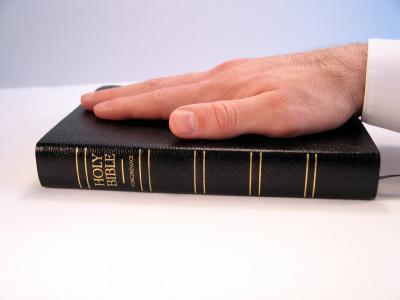
Tears of a Father

Today, the day of this publication is Good Friday. It’s an unusual name. We call the day of our Savior’s corrupt trial, beating, and death by crucifixion a “Good” day. It is a day of hope because it leads to Easter Sunday, commemorating Jesus’ resurrection, and victory over sin and death. In that regard, it was the ultimate sacrifice made by Jesus to redeem humanity. Let’s ponder for a moment that day and see how great that sacrifice was.

The characteristics of God are beyond human understanding. While humanity is finite, God is infinite. God is self-existent, without origin or dependence on anything. God exists eternally, existing everywhere simultaneously. God’s knowledge is perfect, knowing all things, past, present, and future. His character is unchanging, pure, existing with moral perfection, and separated from sin. The character and eternal nature of God existed even before creation. He exists beyond the limits of the material universe. God is timeless, existing without the constraints of the past, present, and future. Humanity falls short in even describing His glory, beauty, and majesty. Yet, God so loved His creation, that He sent His one and only Son to save us, His creation.

The concept of one God in three persons (Father, Son, and Holy Spirit) is mysterious and beyond human analogy or comprehension. The idea of God, or part of God limiting Himself to become a human is the mystery of the Incarnation. Jesus, God in human form, lives as we do and dies as we must.

(Romans 8:15)1NIV New International Version Translations – “The Spirit you received does not make you slaves, so that you live in fear again; rather, the Spirit you received brought about your adoption to sonship. And by him we cry, “Abba, Father.”

At the birth of Jesus, God becomes a Father. And now, we can begin to relate to God. Fatherhood brings love, unwavering support, and a desire to protect, instilling values such as integrity, responsibility, perseverance, kindness, and patience. Jesus would model His Father in many ways. Jesus remained sinless throughout His life and even unto death. Jesus’ ministry on earth is filled with signs and wonders that can only be attributed to His Father. On the evening before Jesus’ death, what we call Maundy Thursday, His Father would watch His Son abandoned by those whom Jesus mentored. Sharing a last meal, disciples, men mentored by Jesus, remained confused about who Jesus was. After the meal, Jesus would go to the garden of Gethsemane to pray before His arrest. He takes Peter, James, and John with him and asks them to keep watch while He prays. However, they fall asleep repeatedly, despite Jesus’ request to stay awake (Matthew 26:36-46). This is followed by Judas Iscariot, one of Jesus’ disciples, approaching the chief priests and agreeing to betray Jesus in exchange for thirty pieces of silver (Matthew 26:14-16).

God would then see Caiaphas, a Jewish high priest, oversee a trial, conviction, and crucifixion, accusing Jesus of blasphemy (Matthew 26:63-66). The death of Jesus would be overseen by so-called “men of God.” Jesus’ trial did not adhere to the principles of justice and fairness outlined in Jewish law, and it would be characterized by irregularities, bias, and a lack of due process. Jewish law required trials to be conducted during daylight hours, not at night. The full Sanhedrin (court) was not present as required. The witnesses brought forward against Jesus during his trial were contradictory and unreliable. Jesus was not provided with a proper defense. He was questioned and accused, but He was not allowed to defend Himself adequately. The outcome of the trial was predetermined, with the religious leaders seeking Jesus’ death regardless of the evidence presented. The Bible verses that support the points made above are: (Timing and Composition of the Court: Matthew 26:57-68; Mark 14:53-65; Luke 22:54, 66-71; John 18:12-14, 19-24) (Witnesses: Matthew 26:59-61; Mark 14:55-59; Luke 22:67-71; John 18:19-23)(Defense and Outcome: Matthew 26:62-64; Mark 14:60-64; Luke 22:67-71; John 18:29-40; 19:1-16)

Peter, the disciple who would become the anchor of the future Christian Church, would cower in fear. He would deny his association with Jesus three times. Yes, three years of friendship, all those miracles, even watching Jesus raise the dead to life, would not be sufficient to bolster Peter’s bravery. What must God have thought when that rooster crowed (Matthew 26:69-75)?

Then came the insults. The Sanhedrin turned Jesus over to the Roman governor, who had Jesus stripped and given a scarlet robe, and then twisted together a crown of thorns and set it on His head. They put a staff in His right hand. The Romans knelt in front of Him and mocked Him (Matthew 27:27-31). Then Pontius Pilate, the Roman governor of Judea, took Jesus and had Him flogged. Jesus was stripped of His clothing, and bound to a post, with His back and shoulders fully exposed to the blows of the scourge. The Roman flogging used a flagrum, a whip, consisting of multiple leather thongs or cords attached to a wooden handle. At the end of each thong were pieces of bone, metal, or sharp objects designed to inflict deep wounds with each blow. Vicious blows were given to the back, shoulders, chest, and legs with full force, tearing into the flesh with each strike. It continued until Jesus was near death. Can you imagine any father watching His son endure this injustice and suffering? God watched and endured for us.

Are you still reading? It’s hard, isn’t it? Reading about the extent of God’s Grace to humanity. Just think of what it must have been like to be a witness. Jesus would then be forced to carry His cross through a taunting crowd to Golgotha, which means “place of the skull” in Aramaic. There, He would be nailed to it. Nails were driven through His wrists and feet. For hours, Jesus would hang, bleeding, dying. Even the Son of Man called out for mercy.

(Mark 14:36) – “Abba, Father,” he said, “everything is possible for you. Take this cup from me. Yet not what I will, but what you will.”

The Creator of the Universe was watching His one and only Son take upon Himself, the sins of the world, our sins! Jesus did this for you and me! A Father watches His Son suffer and then finally die, leaving His earthly presence behind. Yes, God so loved His creation, that He sent His one and only Son to die for us. If Friday ended there, it is doubtful that anyone would ever call it good. But it didn’t end. With the removal of our sins through Jesus’ sacrifice, we could now have a relationship again with our God. Sunday would come and change history forever. The tomb would be empty. “Jesus had risen.”

From that moment on, we could look forward, as Adam and Eve first did, to living forever and eating from the “Tree of Life” (Genesis 2:9). In the Book of Revelation, the Tree of Life reappears as part of the new Jerusalem, symbolizing eternal life and healing for those who are faithful to God and for those who place their faith and trust in Jesus.

(Revelation 22:1-2) – “Then the angel showed me the river of the water of life, as clear as crystal, flowing from the throne of God and of the Lamb down the middle of the great street of the city. On each side of the river stood the tree of life, bearing twelve crops of fruit, yielding its fruit every month. And the leaves of the tree are for the healing of the nations.”

How do you spend Good Friday? Tradition is to use 12 noon to 3 pm (the traditional time of the crucifixion) for quiet reflection and prayer. I do remember one year while living in Illinois, my church teamed up with another, and the men of the churches carried a cross through the main street of our town, Belvidere. People lined the street to watch as the men carried the cross about a mile from one church to the other. While we took turns with the heavy cross, the experience left a permanent place in my heart for Good Friday. It will never be an ordinary day for me. The goodness of Good Friday lies in the Christian understanding that, through Jesus’ sacrifice on the cross, believers are offered the opportunity for forgiveness of sins and eternal life. The first Good Friday paved the way for salvation and redemption for humanity. Despite the somber nature of the crucifixion, Good Friday can now be viewed as a day of hope because it leads to Easter Sunday, Jesus’ resurrection, and victory over death. The promise of eternal life became real!

(2 Corinthians 6:18) – “And, ‘I will be a Father to you, and you will be my sons and daughters, says the Lord Almighty.’”

(See Other Lostpine Good Friday Studies: Are you a “Leftist” or a “Rightist?” –  Is the Resurrection of Jesus True?)

Contemplations

  • What do you do on Maundy Thursday, Good Friday, and Easter?
    • Ideas to Explore: Each day represents an opportunity to reflect upon the gift of Grace that humanity has received. Many attend services. On Sunday, Easter, make it a celebration of Hope!
  • History confirms that Jesus lived and was crucified. Where do you place Jesus’ sacrifice in your life’s priorities?
    • Ideas to Explore: Church, prayer, family gatherings, special events, etc.
  • How do you teach your children about Good Friday?
    • Ideas to Explore: The day was real; the death and resurrection were real. As children mature and understand more about God and Jesus, it is important to appropriately share the full story.
  • 1
    NIV New International Version Translations ↩︎

« Older posts Newer posts »

"For it is by grace you have been saved" - Ephesians 2:8-9  

Copyright: © 2001 - 2026 Lostpine

Translate »