
Contemplation is an art that invites us to engage more deeply and reflectively with God’s Word and His truths. Essentially, it’s about meditating thoughtfully, going beyond just scratching the surface to truly seek an experience of God’s presence. The Bible supports this practice, encouraging us to embrace meditative prayer, reflection, and spiritual growth as essential pathways to wisdom, inner peace, and a closer relationship with God. As you begin your journey of studying God’s Word, cultivating a contemplative mindset can deepen your understanding and help you forge a transformative connection with Him. This preparation of your heart allows you to receive guidance, insight, and spiritual renewal.
Psalm 119:15 states, “I meditate on your precepts and consider your ways.” 1NIV New International Version Translations This affirms that reflective meditation is a means to understand God’s ways. In Philippians 4:6-7, we are told, “Do not be anxious about anything, but in every situation, by prayer and petition, with thanksgiving, present your requests to God. And the peace of God, which transcends all understanding, will guard your hearts and your minds in Christ Jesus.” In other words, Contemplation and prayer lead to inner peace.
Saint Ignatius of Loyola (1491–1556) developed this method of Gospel Contemplation, encouraging believers to enter biblical scenes with imagination and prayerful reflection. Born Iñigo López de Oñaz y Loyola in the Basque region of Spain, he was the youngest of thirteen children in a noble family and initially pursued a military career, seeking glory and honor. While recovering from a severe leg injury from a cannonball in 1521, he read about the lives of Jesus and the saints, which inspired him to dedicate his life to God.
He made a pilgrimage to Jerusalem and later studied in Paris, where he gathered companions who would become the first members of the Society of Jesus (Jesuits). The order was officially recognized by Pope Paul III in 1540. Ignatius was the first Superior General of the Jesuits, devoting his life to missionary work, education, and spiritual formation.
Ignatius’s most influential work, Spiritual Exercises2https://ccel.org/ccel/ignatius/exercises/formats/exercises1.0.pdf, is a manual for meditation, prayer, and discernment. It is structured into four weeks, guiding participants through reflection on sin, the life and passion of Jesus, and the resurrection, with the goal of drawing closer to God. His exercises emphasize inner transformation, personal conversion, and discerning God’s will. They are practiced in retreats and adapted for laypeople and clergy alike.
Contemplation, also known as imaginative prayer, is a powerful approach to deepening our spiritual lives, as exemplified by Ignatius of Loyola. This method encourages us to immerse ourselves in Gospel scenes through our senses and imagination, allowing for a genuine “spiritual conversation” with Jesus and the other people with Him, much like friends interact. By engaging in Contemplation, we move beyond merely thinking about prayers as intellectual exercises; we transform them into rich, experiential encounters with God Himself.
This practice can improve our personal prayer life by aligning with Ignatius’s teachings, which have impacted Christian spirituality, education, and our sense of justice. The Jesuits, guided by Ignatius, played a key role in the Counter-Reformation by setting up schools, universities, and missions worldwide.
Incorporating Contemplation into our prayers strengthens our faith and enhances our spiritual journey. Ignatius, the patron saint of soldiers and retreats, taught that personal experiences deepen our relationship with God. By embracing this practice, we enrich our prayers and create a meaningful connection with God. We celebrate this on Ignatius’s feast day, July 31st, which is a great opportunity to improve our spiritual lives and transform our hearts.
Step-by-Step Guide to Ignatian Contemplation
Ignatian Contemplation is a form of prayer that invites you to enter biblical scenes with your senses and imagination, engaging in “spiritual conversation” with Jesus and the other people in the gospel, as one friend speaks to another.
Prepare
- Find a quiet place and settle yourself.
- Ask God for the grace you seek (for example, openness, peace, or guidance).
Read a Gospel Passage
- Select a passage from the Gospels (such as the healing of the blind man, the calming of the storm, or the Last Supper).
- Read it slowly, paying attention to details.
Now Engage Your Imagination
- Picture the scene in your mind: the sights, sounds, smells, and emotions.
- Imagine yourself present, either as a participant, a bystander, or a character.
Interact with the Scene
- Observe what is happening.
- Listen to the words spoken.
- Notice how you feel and what draws your attention.
Speak with Jesus and Others
- Converse with Jesus or other people in the story.
- Share your thoughts, feelings, questions, or concerns with them.
- Listen to responses, either in words or impressions.
Reflect and Respond
- After spending time in the Gospel’s scene, reflect on what you experienced.
- Consider what God might be saying to you through this prayer.
- Respond with gratitude, petition, or resolve.
Close with Prayer
- End with a prayer of thanks or a simple conversation with God.
My Personal Experience with Contemplation
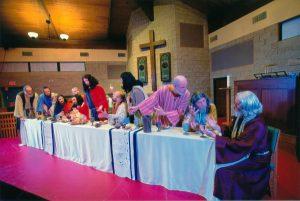
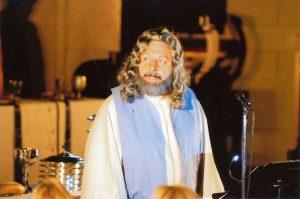 For many years, my church hosted a unique service that reimagined Leonardo Da Vinci’s iconic painting, The Last Supper. I had the opportunity to participate in this remarkable reenactment, an experience that would profoundly change my perspective on communion.
As I sat with a group of thirteen men at a long table, we were all encouraged to embody the Apostles, each sharing moments from our lives with Jesus through a monologue that introduced us to the congregation. Our purpose was to evoke the same emotions in our congregation that DaVinci must have felt while creating his masterpiece. Though we didn’t closely match the clothing from the painting, the ladies of the church provided us with lighter robes. This thoughtful gesture ensured that we would stand out beautifully in the gentle, low light of the sanctuary. Weeks of practice each year would draw those of us who sat at the table together, much like the Apostles themselves. DaVinci’s painting represents the very moment that Jesus said, “And while they were eating, he said, ‘Truly I tell you, one of you will betray me.” (Matthew 26:21)
I still remember the atmosphere of anticipation as we gathered around the table, bread and wine before us. With beards and earnest expressions, we looked at the part, but it was the moment when I took on the role of an Apostle, Thadeus, that everything changed for me. As we shared the breaking of fresh-baked bread, representing His body, and the sharing of wine, symbolic of His blood, I found myself deeply immersed in the scene, feeling as if I were truly sitting there with Jesus, reliving the moment.
Those many services over the years have lingered in my mind. Each time communion is celebrated now, I don’t just partake in a ritual; I envision that sacred gathering. I contemplate what it must have been like for Jesus’ followers to share that intimate meal, to break bread and drink wine in His presence. It has transformed communion from a mere act of remembrance into a personal experience of connection and reflection. I now approach each sharing of the bread and cup with a renewed sense of gratitude, remembering not just the symbolism but also the profound love and unity that the Last Supper represented.
The practice of Contemplation can be adapted for any Gospel passage and is suitable for retreats or daily prayer. Here are some recommended Gospel Passages to get you started.
- The Healing of the Blind Man (Mark 10:46–52)
- The Calming of the Storm (Mark 4:35–41)
- The Last Supper (Luke 22:7–20)
- The Prodigal Son (Luke 15:11–32)
- The Woman at the Well (John 4:1–26)
- The Calling of the Disciples (Matthew 4:18–22)
- The Feeding of the Five Thousand (John 6:1–15)
- Jesus Walking on Water (Matthew 14:22–33)
- The Transfiguration (Matthew 17:1–9)
- The Crucifixion (Luke 23:33–43)
- The Resurrection (John 20:1–18)
These passages will invite you to imagine the sights, sounds, emotions, and interactions, allowing for a personal encounter with Jesus, His disciples, and those whose lives He directly impacted thousands of years ago.
“Consider how God dwells in creatures: in the elements, giving them being; in the plants, giving them life; in the animals, giving them sensation; in men, giving them understanding.” ~ St. Ingnatius—from Spiritual Exercises
As you step back into the rhythm of daily life, may the quiet that seems so fleeting continue to shape your seeing, listening, and loving. Contemplative prayer is not an escape from the world but a way of returning to it with clearer eyes and a more generous heart. Consider carrying forward the desire that St. Ignatius expressed so simply and so beautifully: “May it please the Supreme and Divine Goodness to give us abundant grace ever to know His holy will and perfectly to fulfill it.” May God’s grace guide your intentions, steady your steps, and deepen your companionship with Christ in all things. Amen
- 1NIV New International Version Translations ↩︎
- 2