
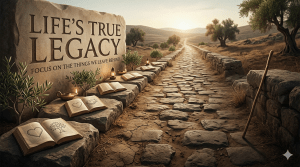
No matter how full or empty, public or private, celebrated or unnoticed, your life may be, Scripture reminds us of a common ending that all humanity shares:
(Ecclesiastes 3:20)1NIV New International Version Translations[ – “All come from dust, and to dust all return.”
From the opening pages of Genesis to the closing reflections of Ecclesiastes, the Bible repeatedly forces us to face a humbling truth: our physical lives are brief, fragile, and finite. If you need a reminder, the following passages illustrate the tension between mortality and purpose:
Genesis 2:7 — Humanity formed from the dust, animated by God’s breath.
Genesis 3:19 — Because of sin, humanity returns to the ground from which it came.
Ecclesiastes 3:20 — All living beings share the same physical destiny.
Ecclesiastes 12:7 — Dust returns to the ground, but the spirit returns to God.
Job 34:15 — Without God’s breath, humanity perishes and returns to dust.
Psalm 103:14 — God remembers our frame; He remembers we are dust.
Together, these verses highlight an undeniable truth: our lives are finite. We cannot escape the passage of time; instead, we are called to manage it wisely. This leads us to an important question: If all we leave behind is dust, does anything we do truly matter? However, Scripture consistently challenges that notion. The Bible portrays life not as something to prolong indefinitely, but as something to invest in meaningfully. Our years are not meant to be merely impressive; they are meant to bear fruit. Therefore, the critical question becomes: What will endure because you lived?
More Than Dust: God’s Design for Impact
The Bible teaches us that even though our physical bodies will eventually return to dust, our lives have significant meaning and can positively impact the world. We are seen as God’s creations, designed to do good works that were intended for us even before we were born (Ephesians 2:10). As we go through life, we are encouraged to act with justice, mercy, and humility, reflecting what God expects of us (Micah 6:8).
When we consistently do good, we can expect to see positive results, reminding us that our efforts can lead to meaningful change (Galatians 6:9–10). Each generation shares stories about God’s actions, creating a rich history of faith (Psalm 145:4). By sharing the truth with others, we create a lasting legacy that can influence beyond our own lives (2 Timothy 2:2). The memory of those who live righteously remains a blessing, teaching us that while material treasures may fade, the things that truly matter last forever (Proverbs 10:7; Matthew 6:19–21).
Ultimately, any work we do for the Lord has purpose and significance, contributing to a bigger plan that affects others and the world around us (1 Corinthians 15:58).
What “Leaving More Than Dust” Looks Like
As we navigate through our lives, it’s essential to recognize that true legacy isn’t measured by the belongings we accumulate, but by the relationships we nurture and the impact we have on those around us. Scripture consistently emphasizes the importance of people over possessions, reminding us that material wealth is fleeting and ultimately fades away. In contrast, the influence we exert through acts of faith, kindness, and truth endures. These virtues shape not only our character but also leave a lasting imprint on the lives of others. Consider how the lessons we impart and the love we share can act as a guiding light for future generations.
When we focus on building meaningful connections and fostering an environment of integrity, we create a ripple effect that extends far beyond our lifetimes. Each interaction becomes an opportunity to sow seeds of hope and encouragement, ensuring that even after we depart for our eternal destination, our values and beliefs live on in those we’ve touched. Embracing this perspective allows us to reflect on how we want to be remembered. Will we be seen as individuals who chased after fleeting material gains, or as beacons of compassion and truth? The winds of time will blow away online applause, but the truth you speak into the world can endure long after. By prioritizing the well-being of others, we can craft a narrative that emphasizes our shared humanity and our commitment to something greater than ourselves—an eternal life offered through Christ, which calls us to express love and purpose in every moment. In this way, though the dust may settle on our earthly journey, the impact of our lives can resonate for eternity.
Faith That Is Passed On
As we reflect on our beliefs, let us recognize the importance of sharing them with others. What we keep to ourselves matters far less than the faith we actively pass on. If we allow our beliefs to remain unshared, we risk watching them fade away. Christians must commit to intentionally transferring their faith to those around them, nurturing a community where God’s values and convictions can thrive. Together, we can inspire one another and ensure that our beliefs endure for generations to come. Let’s take that step today, share your faith, and impact lives.
A Shadow’s Perspective
Shadows do not exist without light, but they reveal shape, direction, and distance. In the Gospel of John, Jesus is referred to as the “light of men,” as seen in John 1:4-5, which states, “In him was life, and that life was the light of all mankind. The light shines in the darkness, and the darkness has not overcome it.” The shadow of death serves as a poignant reminder of our limited time, the significance of our choices, and the influence we have that extends beyond our lifespan. Additionally, the dust of our existence highlights our mortal nature, while faith offers us insight into the purpose of our being.
Closing Thought
One day, each of us will return to dust. But long before that day comes, we decide whether our lives will end as a forgotten footprint or a blessing remembered, carried forward in the lives of others. The question is not whether we will leave the world. The question is: Will we leave more than dust?
Contemplations
- When you hear the phrase “dust to dust,” what emotions does it awaken in you? (For example: comfort, urgency, regret, gratitude, humility, resolve)
- Ideas to Explore: Which emotion is strongest—and why do you think that is at this season of your life? How might this awareness reshape the way you prioritize your time, energy, and relationships?
- If your name were removed from your accomplishments, what evidence would remain that your life truly mattered?
- Ideas to Explore: What would still exist in the lives of others—habits, character, faith, courage, love—because you were there? Are there influences you’ve had that will continue quietly, without recognition or credit?
- Who represents the next generation in your life—someone who will be shaped by what you choose to invest in or neglect today?
- Ideas to Explore: Is this person someone younger, newer in faith, or simply more vulnerable to influence? If nothing changed, what would they most likely learn by watching your life rather than listening to your words?
- If your life were remembered for one spiritual quality, what would you hope it to be—and is that quality currently visible in your daily life?
- Ideas to Explore: Which qualities feel most enduring: faithfulness, humility, love, generosity, courage, mercy? Where do your daily choices currently point—toward character formation or convenience?
- 1NIV New International Version Translations[ ↩︎