Biblical wisdom, historical insight, and personal growth — all in one place

Category: Wisdom (Page 13 of 13)

Alexander the Great

Alexander the Great was born at Pella, Macedonia in 356 B.C. His father was King Phillip 11 and his mother was Olympias, a deeply spiritual woman who taught her son that he was an ancestor of Achilles and Hercules. From the earliest age, Alexander was conditioned for conquest and kingly glory. He, thus, became focused on and became a great ruler.

When he was 13, Alexander became student to the great Greek philosopher Aristotle. Under Aristotles tutorship he gained an interest in philosophy, medicine and science. However, Aristotles concept of small city-state government would not have gone down well with the young prince who was bent on world domination. Aristotle did, however, cultivate Alexanders interest in reading and learning. At age 16 Aristotle was called to Macedonia to put down a Thracian rebellion while his father was away. Distinguishing himself immediately, Alexander quelled the rebellion, stormed the rebels stronghold and renamed it Alexandroupolis, after himself.

After taking the throne of Macedonia he had embarked on his campaign of conquest. His army consisted of 30,000 foot soldiers and 5,000 cavalrymen, small but efficient. Along with the army he took engineers, surveyors, architects, scientists and even historians. Numerous engagements and successful defeat superior odds. After an eight year campaign Alexander was now ruler of a massive empire. He was keen to push further west but his men were weary and intent on returning to their families. Reluctantly he complied with their wishes.

Alexander was a caring military leader. He would visit his men after the battle, examining their wounds and praising them for their valiant efforts. He would also arrange extravagant funerals for the fallen. He would arrange games and contests for his men. The affection for their leader was what galvanized his troops. Returning to Macedonia Alexander assumed the role he had coveted for so long The great Conqueror. However, his lifestyle gave way to excessive drinking, followed by fits of rage and paranoid suspicion. In June, 332 B.C. Alexander fell victim to malarial fever. Some historians say Alexander was poisoned. He never recovered. The man who no man could defeat died on June 13, 323 B.C. He was just 32 years and 8 months old.

“In faith and hope the world will disagree, but all mankind’s concern is charity.”

“I am indebted to my father for living, but to my teacher for living well.”

“I do not separate people, as do the narrow-minded, into Greeks and barbarians. I am not interested in the origin or race of citizens. I only distinguish them on the basis of their virtue. For me each good foreigner is a Greek and each bad Greek is worse than a barbarian.”

“I would rather live a short life of glory than a long one of obscurity.”

“There is nothing impossible to him who will try.”
Lostpine’s Favorite Quotes

This is just a sampling of some of our favorite words from the wise. Click on the name for more of their wisdom.

“Man can alter his life by altering his thinking.”  ~William James
“I’ve learned that people will forget what you said, people will forget what you did, but people will never forget how you made them feel.” ~ Maya Angelou
“Everywhere man blames nature and fate, yet his fate is mostly but the echo of his character and passions, his mistakes and weaknesses.”  ~Democritus
“The whole difference between construction and creation is exactly this: that a thing constructed can only be loved after it is constructed; but a thing created is loved before it exists.”  ~Charles Dickens
“Nothing in education is so astonishing as the amount of ignorance it accumulates in the form of inert facts.”  ~Henry Brooks Adams
“Facts do not cease to exist because they are ignored.”  ~Aldous Huxley
“Keep your face to the sunshine and you can never see the shadow.”  ~Helen Keller
“The only thing to fear is fear itself.”  ~Franklin Roosevelt
“A pessimist sees the difficulty in every opportunity; an optimist sees the opportunity in every difficulty.”  ~Winston Churchill
“Genius is one percent inspiration and ninety-nine percent perspiration.”  ~Thomas Edison
“Never interrupt your enemy when he is making a mistake.”  ~Napoleon Bonaparte
“We hang the petty thieves and appoint the great ones to public office.”  ~Aesop
“A small error in the beginning is a great one in the end.”  ~Thomas Aquinas
“Violence never settles anything.”  ~Genghis Khan
“Better to have loved and lost, than to have never loved at all.”  ~Saint Augustine
“We build too many walls and not enough bridges.”  ~Sir Isaac Newton
“What worries you, masters you.”  ~John Locke
“I think; therefore I am.”  ~René Descartes
“The bible shows us not how heaven goes, but how to go to heaven.”  ~Galileo Galilei
“Silence is the virtue of fools.”  ~Sir Francis Bacon
“Few sinners are saved after the first 20 minutes of a sermon.”  ~Mark Twain
“Two roads diverge in a wood, and I took the one less traveled by, and that has made all the difference.”  ~Robert Frost
“There’s two theories to arguin’ with a woman. Neither one works.”  ~Will Rogers
“A God who let us prove his existence would be an idol.” ~Dietrich Bonhoeffer
“Aim at heaven and you will get earth thrown in. Aim at earth and you get neither.”  ~C. S. Lewis
“Before everything else, getting ready is the secret to success.”  ~Henry Ford
“There are two ways to live your life: One is as though nothing is a miracle — The other is though everything is a miracle.”  ~Albert Einstein
“Any fool can criticize, condemn and complain and most fools do.”  ~Benjamin Franklin
“Life is pleasant. Death is peaceful. It’s the transition that is troublesome.”  ~Isaac Asimov
“Just as iron rusts from disuse, even so does inaction spoil the intellect.”  ~Leonardo da Vinci
“The secret to getting things done is to act.” ~Dante
“Faith is different from proof; the latter is human, the former is a Gift from God.”  ~Blaise Pascal
“Leave nothing for tomorrow which can be done today.” ~Abraham Lincoln
“Friendship is composed of a single soul inhabiting two bodies.” ~Aristotle
“The years between fifty and seventy are the hardest. You are always being asked to do things, and yet you are not decrepit enough to turn them down.” ~George Marian Eliot
“I find that the harder I work, the more luck I seem to have.” ~Thomas Jefferson
“It may be true that you can’t fool all the people all the time, but you can fool enough of them to rule a large country.” ~Will Durant
“In general, the art of government consists of taking as much money as possible from one class of citizens to give to another.” ~Voltaire
“What lies beyond us and what lies before us are tiny matters compared to what lies within us.” ~Ralph Waldo Emerson
“Where is there dignity unless there is honesty?” ~Marcus Tullius Cicero
“Science is organized knowledge. Wisdom is organized life.” ~Immanuel Kant
“Imagination was given to man to compensate him for what he is not, a sense of humor to console him for what he is.” ~Francis Bacon
“Catch on fire with enthusiasm and people will come for miles to watch you burn.” ~John Wesley
“Once abolish the God, and the government becomes the God.” ~Gilbert Chesterton
“I am indebted to my father for living, but to my teacher for living well.” ~Alexander The Great
“The past, the present and the future are really one: they are today.” ~Harriet Beecher Stowe
“It is better to light a candle than curse the darkness.” ~Anna Eleanor Roosevelt
“The most useful piece of learning for the uses of life is to unlearn what is untrue.” ~Antisthenes
“To measure the man, measure his heart.” ~Malcolm S. Forbes
“Hard work spotlights the character of people: some turn up their sleeves, some turn up their noses, and some don’t turn up at all.” ~Sam Ewing
“You are not here merely to make a living. You are here in order to enable the world to live more amply, with greater vision, with a finer spirit of hope and achievement. You are here to enrich the world, and you impoverish yourself if you forget the errand.” ~ Woodrow Wilson
“Every man must do two things alone; he must do his own believing and his own dying.” ~Martin Luther
“We don’t see things as they are, we see them as we are.” ~Anais Nin
“The highest activity a human being can attain is learning for understanding, because to understand is to be free.” ~Baruch Spinoza
“What you possess in the world will be found at the day of your death to belong to someone else. But what you are will be yours forever.” ~Henry Van Dyke
“We have two ears and one mouth so that we can listen twice as much as we speak.” ~ Epictetus
“The democracy will cease to exist when you take away from those who are willing to work and give to those who would not.” ~Thomas Jefferson
“Sin will take you farther than you ever expected to go; it will keep you longer than you ever intended to stay, and it will cost you more than you ever expected to pay.” ~ Kay Arthur

Aesop

Aesop was born around 620 B.C. and is a legendary Greek story teller. According to Herodotus, he was a slave who lived in Samos in the 6th cent. B.C. and eventually was freed by his master. Other accounts associate him with many wild adventures and connect him with such rulers as Solon and Croesus. The fables called Aesop’s fables have been preserved, the most famous of these fables include: The Fox and the Grapes and The Tortoise and the Hare. Within these fables is a vast storehouse of knowledge, wit and truth.

“A crust eaten in peace is better than a banquet partaken in anxiety.”

“United we stand, divided we fall.”

“A liar will not be believed, even when he speaks the truth.”

“We hang the petty thieves and appoint the great ones to public office.”

“Affairs are easier of entrance than of exit; and it is but common prudence to see our way out before we venture in.”

“It is thrifty to prepare today for the wants of tomorrow.”

“After all is said and done, more is said than done.”

“Better beans and bacon in peace than cakes and ale in fear.”

“Destroy the seed of evil, or it will grow up to your ruin.”

“Wealth unused might as well not exist.”

“Don’t let your special character and values, the secret that you know and no one else does, the truth – don’t let that get swallowed up by the great chewing complacency.”

“He that always gives way to others will end in having no principles of his own.”

“If you allow men to use you for your own purposes, they will use you for theirs.”

“It is easy to be brave from a safe distance.”

“It is in vain to expect our prayers to be heard, if we do not strive as well as pray.”

“No act of kindness, no matter how small, is ever wasted.”

John Adams

John Adams was born in October, 1735 in Braintree, Massachusetts. John Adams is best known as both a signer of the Declaration of Independence and as the President of the United States from 1797-1801, following George Washington.

As an early colonist agitator against the Stamp Act of 1765, John Adams helped draft the Declaration of Independence in 1776. He served as an all-purpose diplomat for the new republic during the Revolutionary War, and after the war, in 1785, he became the first American Minister to London. He served two terms as vice-president under Washington (1789-97), and beat Thomas Jefferson in 1796 to become president himself. He was respected but not popular, and served one term before losing to Jefferson in the elections of 1800. His son, John Quincy Adams, was president from 1825 to 1829.

Adams was the first president to attend Harvard University and the first to have a son become president. His wife, Abigail Adams, is one of history’s best-known First Ladies. By great coincidence, John Adams and Thomas Jefferson died in separate states on the same day, July 4, 1826, the 50th anniversary of the signing of the Declaration of Independence.

“In my many years I have come to a conclusion that one useless man is a shame, two is a law firm and three or more is a congress.”

“A government of laws, and not of men.”

“Facts are stubborn things; and whatever may be our wishes, our inclinations, or the dictates of our passions, they cannot alter the state of facts and evidence.”

“Fear is the foundation of most governments.”

“I always consider the settlement of America with reverence and wonder, as the opening of a grand scene and design in providence, for the illumination of the ignorant and the emancipation of the slavish part of mankind all over the earth.”

“Liberty cannot be preserved without general knowledge among the people.”

“Old minds are like old horses; you must exercise them if you wish to keep them in working order.”

“Power always thinks… that it is doing God’s service when it is violating all his laws.”

“The happiness of society is the end of government.”

“The right of a nation to kill a tyrant in case of necessity can no more be doubted than to hang a robber, or kill a flea.”

Henry Brooks Adams

Henry Brooks Adams was born February 16, 1838, in Boston, Massachusetts. Adams came from a long line of political influences. His father was Charles Francis Adams, an American statesman and minister to Great Britain; his grandfather was John Quincy Adams, the sixth President of the United States; and his great-grandfather was John Adams, the second President of the United States. Adams’ grandfather influenced his grandson’s career by instilling in him a strong moral conscience and a respect for education, especially in literary works.

After a primary education at Boston Latin School and Epes Dixwell School, Adams attended Harvard from 1854 to 1858. He then went to Europe to study civil law at the University of Berlin, but ended up traveling Europe, becoming a student of languages and cultures of the Old World. On his return from Europe, Adams did some legal studies in Quincy, Massachusetts before becoming a private secretary to his father.

In 1868, Adams became a freelance journalist, writing for papers such as the North American Review, the Nation, and the New York Post. He took an instructor’s position at Harvard from 1870 to 1877, where he became editor of the North American Review.

Adams visited Japan with John La Farge, a writer and an artist in 1879. There he wrote a biography entitled The Life of Albert Gallatin. In 1880, he published Democracy, a satirical novel about political life. After his return from Japan, Adams worked on a nine volume history about the administrations of Jefferson and Madison.

Later in life, while traveling the South Seas, Adams began work on Mont-Saint-Michel and Chartres, published in 1904. This work relates a time when society had achieved unity in the twelfth century. He also worked on The Education of Henry Adams, an autobiographical work that criticized an education system that poorly prepared people for their adult lives. Adams died shortly after the publication of The Education of Henry Adams. He posthumously received the Pulitzer Prize in 1919.

Adams died March 27, 1918 in Washington D.C. Although he considered himself a failure, his contributions to literature are widely considered a success.

“Nothing in education is so astonishing as the amount of ignorance it accumulates in the form of inert facts.”

“A teacher affects eternity; he can never tell, where his influence stops.”

“Chaos often breeds life, when order breeds habit.”

“No man means all he says, and yet very few say all they mean, for words are slippery and thought is viscous.”

“One friend in a lifetime is much, two are many, three are hardly possible. Friendship needs a certain parallelism of life, a community of thought, a rivalry of aim.”

“Never esteem anything as of advantage to you that will make you break your word or lose your self-respect.”

“A friend in power is a friend lost.”

“Philosophy: unintelligible answers to insoluble problems.”

“Politics… have always been the systematic organization of hatreds.”

“The woman who is known only through a man is known wrong.”

“From cradle to grave this problem of running order through chaos, direction through space, discipline through freedom, unity through multiplicity, has always been, and must always be, the task of education.”

Wisdom

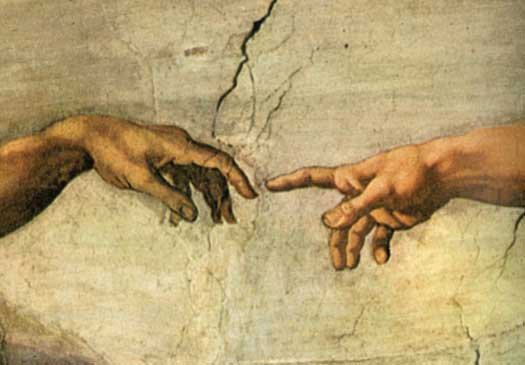
MichaelAngeloThe world is filled with great people who have shared their wisdom. Some of it, so great, that it has changed the course of history, changed people’s lives, and passed the test of time. Click on any of the names below for a brief biography and more quotes from that specific person. Reflect on the history of the individual, their contributions, and their experiences. Then, reflect on how their wisdom can be applied in your life.

Click here for a selection of Lostpine’s favorites.

Adams, Henry Brooks
Adams, John
Aesop
Angelou, Maya
Alexander The Great
Antisthenes
Aristotle
Arthur, Kay
Asimov, Isaac
Aquinas, Thomas
Augustine, Saint
Aung San Suu Kyi, Daw
Aurelius, Marcus
Bacon, Francis
Barclay, William
Bastardi, Joe
Beecher, Henry Ward
Begg, Alistair
Bierce, Ambrose
Boetcker, William
Bonaparte, Napoleon
Bonhoeffer, Dietrich
Brooks, Phillips
Bunyan, John
Cabret, Hugo
Caesar, Julius
Calvin, John
Cather, Willa
Chaplin, Charlie
Chesterton, Gilbert
Churchill, Winston
Cicero, Marcus
Columbus, Christopher
Conant, James
Cromwell, Oliver
Curie, Marie
Dante
da Vinci, Leonardo
Democritus
Descartes, René
Dickens, Charles
Dryden, John
Drucker, Peter
Durant, Will
Edison, Thomas
Einstein, Albert
Eliot, George
Emerson, Waldo
Epictetus
Epicurus
Ewing, Sam
Forbes, Malcolm S.
Ford, Henry
Francis of Assisi, Saint
Franklin, Benjamin
Freeman, Morgan
Frost, Robert
Galilei, Galileo
Gandhi, Mohandas
Geisel, Theodor Seuss
Gunn, Robin
Hegel, Georg Wilhelm
Huxley, Aldous
James, William
Jefferson, Thomas
Johnson, Samuel
Kant, Immanuel
Keller, Helen
Kennedy, John F.
Khan, Genghis
King Jr., Martin Luther
Lewis, Clive Staples
Lincoln, Abraham
Locke, John
Lombardi, Vince
Luther, Martin
McCrae, John
Mead, Margaret
Michelangelo
Mother Teresa
Newton, Isaac
Newton, John
Niemöller, Martin
Nin, Anais
Paine, Thomas
Paley, William
Pascal, Blaise
Patton, George
Peale, Norman Vincent
Plato
Polybius
Pope, Alexander
Pythagoras
Reagan, Ronald
Rodney, Caesar
Rogers, Will
Roosevelt, Franklin
Roosevelt, Eleanor
Seneca, Lucius Annaeus [the younger]
Schuller, Robert
Socrates
Solomon
Sophocles
Sowell, Thomas
Spinoza, Baruch
Stewart, Potter
Stowe, Harriet
Thatcher, Margaret
The Address of Darrel Scott To Congress
The Prayer of St. Francis
Thoreau, Henry David
Twain, Mark
Van Dyke, Henry
Virgil
Voltaire
Washington, George
Wesley, John
Wilde, Oscar
Wilson, Woodrow
Wollstonecraft-Shelley, Mary

Authors Unknown
Holiday Thoughts

Newer posts »

"For it is by grace you have been saved" - Ephesians 2:8-9  

Copyright: © 2001 - 2026 Lostpine

Translate »