Inspiration for Today's World

Category: Snapshots (Page 8 of 45)

What’s Next? Glory, God, Both?

Isaiah 6:81NIV New International Version Translations
8 Then I heard the voice of the LORD saying, “Whom shall I send? And who will go for us?” And I said, “Here am I. Send me!”

Background

The pulpit message that comes from these verses, come from the youth of our church. They are graduating, leaving their protected nests and embarking on what most adults would call life. It is the tradition of our church to let them speak, to share what they have learned in preparation for life’s journey.  The Bible verses that they selected need a little expansion.  So lets look at the background of Isaiah 6:1-8.

Verse 1: Uzziah was king of Judah for over 50 years. But his last years were unhappy (see 2 Chronicles 26:16-21). Human kings must die. But the Lord is King of Heaven. He will never die. In a vision, Isaiah sees a glimpse of the Lord’s great glory (magnificent appearance).

Verse 2: Isaiah sees wings covering the faces of the fiery angels, but not their ears, which are ready to hear God’s instructions. Wings also cover the angels’ feet. That seems to mean that the angels will obey God. They will go only where the Lord sends them.

Verse 3: The word ‘Holy’ is repeated three times to emphasize God’s absolutely pure nature.

Verse 5:In the presence of God, Isaiah now knows what holiness truly means. Isaiah realizes his own true wicked nature.

Verses 6-7: But God has work for Isaiah to do. Then one of the seraphim flew to Isaiah with a live coal in his hand, which he had taken with tongs from the altar. With it he touched Isaiah’s mouth and said, “See, this has touched your lips; your guilt is taken away and your sin is  atoned for. The angel convinces Isaiah that God has forgiven him and Isaiah is now able to do what God asks.

Verse 8: Isaiah is now fit to answer the call of our God, who is so holy. This is the desired actions that any church could hope for after its youth have grown up learning God’s commands and getting to know Jesus, the one who has removed their guilt forever. Therefore, their first and most important lesson is to know that God has called them to make a difference in the world and God has given them Jesus to help them with that journey.

Items for Discussion

  • How do you think the focus on youth should change as they grow up in the church?
  • What do they learn from mission trips?
  • Why is the interaction of youth with the adults in a church so important?
  • How can we keep youth connected to church as they journey through life?


Mark 10:35-45
35 Then James and John, the sons of Zebedee, came to him. “Teacher,” they said, “we want you to do for us whatever we ask.” 36 “What do you want me to do for you?” he asked. 37 They replied, “Let one of us sit at your right and the other at your left in your glory.” 38 “You don’t know what you are asking,” Jesus said. “Can you drink the cup I drink or be baptized with the baptism I am baptized with?” 39 “We can,” they answered. Jesus said to them, “You will drink the cup I drink and be baptized with the baptism I am baptized with, 40 but to sit at my right or left is not for me to grant. These places belong to those for whom they have been prepared.” 41 When the ten heard about this, they became indignant with James and John. 42 Jesus called them together and said, “You know that those who are regarded as rulers of the Gentiles lord it over them, and their high officials exercise authority over them. 43 Not so with you. Instead, whoever wants to become great among you must be your servant, 44 and whoever wants to be first must be slave of all. 45 For even the Son of Man did not come to be served, but to serve, and to give his life as a ransom for many.”

Background2https://www.sermonwriter.com/biblical-commentary/mark-1035-45/

Peter, James, and John are Jesus’ inner circle. On several occasions, including the transfiguration (9:2-8) and the Garden of Gethsemane (14:32-42), Jesus has these three accompany him to the exclusion of the other disciples. Every parent hears, “Will you do something for me?”—and the wise parent determines what is being asked before agreeing. The way that James and John introduce their request of Jesus reflects the fact that they have some misgivings about even asking it. Keep in mind that Jesus has just told the disciples that he is going to Jerusalem to die (10:33-34). The disciples will later come to understand Jesus’ “glory” as having to do with His Passion.

Some interpretations of the prior verse 31 (“But many who are first will be last, and the last first”) as an implied rebuke of Peter and believe that James and John are taking that implied rebuke as an opportunity to gain advantage over Peter, who is the third member of Jesus’ inner circle. Whatever their motivation, it is clear that these brothers—the Sons of Thunder (3:17)—are seeking the two highest places of honor and have no room in their scenario to include Peter.

During Jesus’ time, people usually reclined on couches around a low table to eat at banquets or feasts. When James and John request to sit at Jesus right and left hands in His glory, they are imagining Jesus as a king sitting at a table with his chief advisors at his right and left hands.

It is probably hard to imagine how James and John could be so dense.  so uncaring. Their request is wrong because “they (are) asking Jesus to fit into their plans” rather than trying to see how they might fit into Jesus’ plans, James and John have not only failed to hear Jesus’ prediction of his upcoming death, but they regard this journey to Jerusalem as a messianic march on the city to restore its former Davidic glory so that Jesus might assume the Davidic throne.

Jesus does not rebuke James and John. Instead, he asks a question designed to let them know that their question is headed in the wrong direction. While Jesus doesn’t go into specifics, His question conveys a hint that James and John have invited themselves into a place quite different than the one that they were contemplating. James and John know that Jesus has challenged them, and they pick up the gauntlet—accept the challenge ­­—not understanding the consequences. Later, when Jesus is arrested, they won’t be so brave. Mark tells us, “All of (Jesus’ disciples) deserted him and fled” (14:50).

There is no reason to believe that the other disciples are angry because of James’ and John’s insensitivity to Jesus’ situation. The twelve responded to the second passion prediction by arguing among themselves who was the greatest (9:33-37). Now they are offended because they are contending for places of honor, and James and John are trying to steal the prize from under their noses. Jesus did not rebuke James and John, and He does not rebuke the twelve. Instead, He uses their behavior as a springboard for teaching. We can be sure that He has their full attention. James and John must be embarrassed at the exposure of their raw ambition. The other disciples are indignant, and will listen carefully to insure that Jesus addresses their concern. Instead, Jesus instructs them about the kingdom of God—its rules—how it works.

In the kingdom of God, honors will go to those who serve (Greek: diakonos—those who wait tables) rather than to those who exact service from others. First prize will go to the “bondservant of all”—a slave (doulos)—inferior even to a servant (diakonos)—an absurd proposition, but fully in keeping with Jesus’ recent statement that “If any man wants to be first, he shall be last of all, and servant of all”(9:35).

Jesus calls us to a different ethic, telling us that God honors service rather than power. He challenges us to begin living by Kingdom Rules in the here-and-now. It is a tough sell—and a lesson that the church must continually re-learn. The drive for promotions or appointment to a high position or office might very well be called the number one enemy of the Christian church. Every denomination, congregation and pastor is tempted to look out for Number One instead of serving kingdom needs. We are tempted by grand titles, vestments, and churches—tempted to preach the word that sells instead of the faithful word. Personal ambition did not start with James and John, nor did it end with them. It is alive and well in the world today.

Jesus does not require more than He is willing to give. He modeled service and sacrifice from cradle to grave. While in the form of God, He “emptied himself, taking the form of a slave, being born in human likeness. And being found in human form, he humbled himself and became obedient to the point of death—even death on a cross.” The Jewish people were accustomed to a sacrificial system in which sacrificial animals atone for the sins of the people. Now Jesus says that He will give His life as a ransom for many. In those few words, Jesus introduces a new theology of atonement that separates Christianity from all other religions.

Items for Discussion

  • Everyone wants to either be great or do something great. Is that bad? Why or why not?
  • What advice, from your personal observations or experiences, would you give the youth with regard to these verses?
  • It is difficult to understand how James and John could fail to hear Jesus’ clear prediction of his passion—except that Christians today often hear what they want to hear instead of listening to Jesus’ words about cross-bearing. What are some examples?

Discussion Challenge

  • How does a traditional church remain relevant to contemporary youth?


No Shortcuts

Matthew 10:391NIV New International Version Translations
39 Whoever finds their life will lose it, and whoever loses their life for my sake will find it.

Background

Jesus’ promise is that those who seek life will lose it and those who lose life for His sake will find it” (v. 39). In contemporary times, we could assign two meanings to the word life, one being physical and the other spiritual. However, the Jewish people thought of the person as a holistic bein, not divided into body and spirit (soul). In this verse, the Greek word that is used is psyche and has to do with the person’s personal well-being, their mental state.

We live in a “What’s in it for me!” kind of world where we are tempted to focus on what we can get rather than what we can give. Businesses use accounting gimmickry to persuade people to pay more for their products than they are worth. Executives bail out on Golden Parachutes, leaving behind broken businesses, ruined investors, and abandoned employees. Politicians make decisions based on re-election considerations rather than the good of the nation. Young people go to college, not to become productive citizens, but to make more money, to drive nice cars and to have more fun.

Jesus tells us that such behavior in the long run will lead to ruin and such people will lose their “lives.” We see this even in the short run. Truly happy people are those who live for something larger than themselves. The narcissist strives for happiness but achieves only broken relationships and unfulfilled dreams. Jesus promises that it will be quite different for those who “loses his life (psychen) for my sake” (v. 39).

Religion, specifically our Christian faith, is worth everything. Those who believe the truths of Christianity will examine it, look at the price tag and decide it is worth the cost. Their life’s budget will make everything else come second, yielding their priorities to Christ. It is Christ who leads us through sufferings, holds our hand and walks us to God’s glory with Him. Those who are best prepared for the life to come have the most lose in this present life.  Christ never said that we deserve a reward. We get no wages for sins and we get no wages for charitable deeds. If it was not for the generous gift of God’s Grace, we would have nothing of eternal value. This is the main reason why we are called to thank God for His gift of grace, and boldly confess our faith and trust in His son, Jesus Christ.

Practically all writers of history view this verse as the sacred gift reserved for the martyrs who approached the flame, or the wild beasts, or the burning sands, with this though in their hearts and on their lips. However, there is another message here, not merely for martyrs but for every member of God’s family in every generation. That the person who gives his life without reservation in the pursuit of God’s will is also losing his worldly life in the sense of this verse. To submerge one’s own life and will in that of Christ is to say “It is no longer I that live, but Christ lives in me” (Galatians 2:20).

Items for Discussion

  • How does the world attempt to change our priorities away from our God?
  • Do you think that you must suffer in order to be doing God’s will?  Why or why not?
  • What is it that we must lose and what is it we will gain?
  • Think about an ordinary day, a day in your life. What are the opportunities you might be asked to give up as Paul calls us to do and, instead, to live for Christ?
  • How do you know whether your daily sacrifices are what God and Christ want of you?

Discussion Challenge

  • How does the body of Christ, the Christian Church, help out its members with this task?
  • 1
    NIV New International Version Translations

Why Am I Here?

1 Kings 19:1-16{ref]NIV New International Version Translations[/mfn]
1 Now Ahab told Jezebel everything Elijah had done and how he had killed all the prophets with the sword. 2 So Jezebel sent a messenger to Elijah to say, “May the gods deal with me, be it ever so severely, if by this time tomorrow I do not make your life like that of one of them.” 3 Elijah was afraid and ran for his life. When he came to Beersheba in Judah, he left his servant there, 4 while he himself went a day’s journey into the wilderness. He came to a broom bush, sat down under it and prayed that he might die. “I have had enough, LORD,” he said. “Take my life; I am no better than my ancestors.” 5 Then he lay down under the bush and fell asleep. All at once an angel touched him and said, “Get up and eat.” 6 He looked around, and there by his head was some bread baked over hot coals, and a jar of water. He ate and drank and then lay down again. 7 The angel of the LORD came back a second time and touched him and said, “Get up and eat, for the journey is too much for you.” 8 So he got up and ate and drank. Strengthened by that food, he traveled forty days and forty nights until he reached Horeb, the mountain of God. 9 There he went into a cave and spent the night. And the word of the LORD came to him: “What are you doing here, Elijah?” 10 He replied, “I have been very zealous for the LORD God Almighty. The Israelites have rejected your covenant, torn down your altars, and put your prophets to death with the sword. I am the only one left, and now they are trying to kill me too.” 11 The LORD said, “Go out and stand on the mountain in the presence of the LORD, for the LORD is about to pass by.” Then a great and powerful wind tore the mountains apart and shattered the rocks before the LORD, but the LORD was not in the wind. After the wind there was an earthquake, but the LORD was not in the earthquake. 12 After the earthquake came a fire, but the LORD was not in the fire. And after the fire came a gentle whisper. 13 When Elijah heard it, he pulled his cloak over his face and went out and stood at the mouth of the cave. Then a voice said to him, “What are you doing here, Elijah?” 14 He replied, “I have been very zealous for the LORD God Almighty. The Israelites have rejected your covenant, torn down your altars, and put your prophets to death with the sword. I am the only one left, and now they are trying to kill me too.” 15 The LORD said to him, “Go back the way you came, and go to the Desert of Damascus. When you get there, anoint Hazael king over Aram. 16 Also, anoint Jehu son of Nimshi king over Israel, and anoint Elisha son of Shaphat from Abel Meholah to succeed you as prophet. 

Background

Jezebel sent Elijah a threatening message. The people’s hearts were hardened and were raging against God. This shook Elijah’s faith to its core. Great faith is not always strong enough. Elijah might have been useful to Israel for a time, and he had good reason to depend upon God’s protection, while doing God’s work; yet Elijah flees. God then leaves Elijah to himself, to show that when he was bold and strong, it was through God’s power but when Elijah relies on himself, he is no better than his fathers. God knows what He designs for us for even when we do not. God’s message to Elijah , God will take care of him and provide sufficient grace.

The question God asks is “What are you doing here, Elijah? is an expression of blame or disapproval. It should also be of concern to us to ask, whether we are in our correct place, and engaged in God’s plans and work for us. Lets look at this another way, where we are should be where God is. God’s call to each of us is where we are and where we can be useful to God.

Elijah complained about the people of Israel and their sinful ways. He complained about their reluctance to repent. “I have had enough, LORD,” he said. “Take my life; I am no better than my ancestors.” Despair from a lack of success can hinder many a good effort. Did Elijah come to meet with God? Elijah will find that God will meet him. The wind, and earthquake, and fire, did not make him cover his own face, but the still voice did. Gracious souls are more affected by the tender mercies of the Lord, than by God’s terrors. The mild voice of Jesus who speaks from the cross, or the mercy-seat, is accompanied with peculiar power that can take possession of the heart.

God repeats the question, “What are you doing here, Elijah?” Then Elijah complains about how discouraged he is that the other prophets have been killed and he is alone. They are trying to kill him too. God, responds with an answer. He declares that the wicked house of Ahab shall be rooted out, that the people of Israel shall be punished for their sins and he shows that Elijah was not left alone as he had thought. In fact, a helper should  be raised up for him immediately. Elisha’s (Elijah’s helper) call does not involve any direct encounter with God at all. Instead, it is the prophet Elijah who initiates Elisha’s change in vocation. All Elijah’s complaints are somehow answered and provided for by God.

Items for Discussion

  • What are the things in life that you find discouraging?
  • Was Elijah right or wrong in “abandoning his job” in light of the organized destruction of other prophets and of the abandonment of God by his people?
  • Is there ever a time to give up?
  • How would a person know that God wants them to continue with their “faithful duties” in spite of the personal dangers?
  • What do you consider a “call to discipleship?”
  • How do you know if you should move forward with “duties for God” when asked by someone?


Matthew 9:35-38
35Jesus went through all the towns and villages, teaching in their synagogues, proclaiming the good news of the kingdom and healing every disease and sickness. 36 When he saw the crowds, he had compassion on them, because they were harassed and helpless, like sheep without a shepherd. 37 Then he said to his disciples, “The harvest is plentiful but the workers are few. 38 Ask the LORD of the harvest, therefore, to send out workers into his harvest field.”

Background

Jesus visited not only the great and wealthy cities, but the poor, obscure villages; and there He preached and healed. This example shows us that all people were important to Jesus. The wealthy, the famous, the poor, the sick, the powerless. Jesus is remarking that there were priests, Levites, and scribes, all over the land but they were not effective shepherds of His flock (Zechariah 11:17). Jesus’ compassion was for the “poor sheep, scattered, perishing because they lacked the understanding for salvation. The same is true today. Sheep, the people of our world, do not have a “shepherd.” Therefore, it becomes our call to have compassion and do all we can to help them. There are multitudes of people who desire spiritual instruction. We need active laborers with the right character and motives. The church needs to equip them to honor Jesus’ call to all of us.

Items for Discussion

  • Where do we find the willing laborers for Jesus to use?
  • What is Jesus asking us to do with the poor scattered sheep?
  • What is the difference between a disciple and a follower of Christ?
  • Are you a candidate to be a disciple? Why or Why not?
  • What are the most effective way to equip people, to train them for the task of discipleship?
  • What were the most effective ways you personally encountered that equipped you for discipleship?

Discussion Challenge

  • Where do we find more “laborers” to equip as disciples?

A Second Touch

Mark 8:22-261NIV New International Version Translations
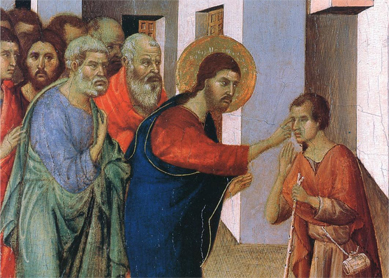
22 They came to Bethsaida, and some people brought a blind man and begged Jesus to touch him. 23 He took the blind man by the hand and led him outside the village. When he had spit on the man’s eyes and put his hands on him, Jesus asked, “Do you see anything?” 24 He looked up and said, “I see people; they look like trees walking around.” 25 Once more Jesus put his hands on the man’s eyes. Then his eyes were opened, his sight was restored, and he saw everything clearly. 26 Jesus sent him home, saying, “Don’t even go into the village.”

Background

This blind man was brought to Jesus by his friends and they begged Jesus to touch him. The man’s friends had no doubt that one touch from Jesus would heal him. This is a very familiar request that every Christian often makes on behalf of family or friends. Pray for them, take them to Jesus and we pray “Lord, touch them! Heal them! Change their hearts and minds about themselves and what they are living for. Make them live for truth and for God.

Certainly Christ did touch him, more than any other person for this man, He gave the man sight. The apostle  Mark emphasizes that Jesus took him by the hand (v.23), and He put his hands on him (v.23), and then once more put His hands on him (v.25). There is no real mystery about why Jesus did this, the man was blind. The sense of touch was far more important to this man than for someone who could see. So when this man held hands with Jesus he knew the actual touch of Jesus was upon him.

Then, notice how Jesus took the blind man away from the crowd, away from the village and dealt with him privately. Jesus was not about to put on a show for these people. Like a good physician Jesus dealt personally with the man. The blind man was an individual not some representative sick man to be gazed at by the curious. Jesus was healing this man for God’s glory not for the entertainment and gossip of the masses. The faces in the crowd were not of particular importance to the blind man, he had not seen them for years.

Jesus could have got more publicity by advertising a healing meeting, and gathering everyone around, and commanding the healed man to hurry back to the village and tell the whole community what had happened. There was none of that at all, quite the reverse. Religion is personal and individual. It is the sure sign that the Lord is dealing with you when you start thinking of Him when no other believers are there, when you forget about the rest of the people and only consider yourself and Jesus. When a person is in serious peril, they think about themselves and their life! After a person is saved that is the time for them to think of others and the salvation of others. This story tells us to first be sure that Jesus has dealt personally with us: “He took the blind man by the hand and led him outside the village” (v.24). Jesus places His spit on the man’s eyes and lays His hands on him. We can see two things in this action:

  1. Things that initially disgust us can bring life and light to us. Truths we once despised can be used by God to transform us.
  2. The blind were on the fringes of society, beggars and paupers, often spit upon and driven away. Jesus was about to not only bring him sight but heal the man emotionally too. What our world would do to insult you, Jesus will do to bring you healing and honor.

Then, we are also told this, that this miracle did not appear to be an immediate cure, there was not a 100 percent success with the first touch from Jesus. This is probably the most unusual aspect of this miracle. The first time that Jesus spit on the man’s eyes and put His hands on him, the man obtained some sense of light. He could make out the shapes of men, but they were distorted. People to him seemed like walking trees. When he looked at them he couldn’t make out their eyes and noses and hair and fingers, just some high moving shapes. It was better than seeing nothing, but it was a long way from good eyesight. Nothing like that happened anywhere else in the gospels where perfect sight was immediate.

To the blind man, there was light, he had been in total darkness and now he could see some things. Even if Jesus stopped there, his life would have been better than before. However, the man wasn’t left like this, seeing men like walking trees. Jesus went on and restored his sight to complete perfect vision. Is there a hint at Jesus’ failure here?  Hardly, because we know that it must have been Jesus’ intention to heal this man with two touches, in stages. Jesus certainly could have gotten it right the first time. Also, Jesus did not insist on cooperation before He healed anyone. He didn’t say, “I need 100% faith from you before you can get this miracle.” There is nothing like that. There is no hint of blame attached to this blind man, that it was not because the blind man hadn’t believed enough or agonized enough.  So, why did Jesus decide to heal him in two stages? Was it because of the accompanying disciples who were watching the progress of this miracle – as they had seen all the others. or was it that Jesus wanted to underline something that was happening to them at a spiritual level.

Jesus was giving His disciples a picture of themselves. This miracle was a mirror which Jesus was holding up to Peter, James and John and the rest. He was saying to them, “Now this is where you are. This is the spiritual state in which you are in today.” You have sight but not full sight yet. This miracle happened at a point in Jesus’ ministry where many people who had been blind to God were starting to catch glimpses of something they had never seen before. They heard Jesus speak with great authority. They watched him drive out demons. They saw him do amazing miracles. They sensed that there was something special about Jesus. They knew that it has something to do with God. But they still didn’t see clearly that Jesus was God in human flesh or that they could have eternal life through Him. They were starting to see, but they needed to see better. Jesus fully intended to heal the blind man, but He also wanted to dramatize the spiritual condition of the people around Him. So Jesus touched the man and then asked him what he saw. The man said he could see some shapes but they were blurred. He was honest. He didn’t try to pretend he saw clearly. Then Jesus touched him again, and everything came into focus.

We can read a few verses further beyond these and discover what it means to go from blurred vision to clear sight in a spiritual sense. See the question Jesus immediately asks his disciples, “‘Who do people say I am?’ They replied, ‘Some say John the Baptist; others say Elijah; and still others, one of the prophets.’ ‘But what about you?’ he asked. ‘Who do you say I am?’ Peter answered, ‘You are the Christ.’” (vv.27-29). The miracle of the two stage healing from blindness to full sight has just occurred at a spiritual level in Peter. They knew that Jesus was enormously important, a gigantic figure. They were starting to see something, but now they saw him clearly, “You are the Christ.”

Only God could give 20/20 vision to this blind man, and it is God alone who can give us the grace to see who Jesus Christ really is. We need something as miraculous as opening the eyes of the blind before we can see Jesus in this way. We need something supernatural, like opening the ears of the deaf, before we will ever hear Jesus speaking to us; it requires a healing from God, like opening the mouth of the mute, before we can declare that Jesus is the Christ, and the Son of God. It was God alone who brought Peter to this awareness. Peter was touched spiritually a second time and fully healed.

Items for Discussion

  • How does Jesus touch us today? In church, in society?
  • What evidence might there be in someone’s life that they are only healed partially regarding their spiritual sight?
  • How does society today “spit on people?”
  • How might God use society’s spittle to heal someone spiritually?
  • One of our concerns should we be with church-goers who come for years but have only accepted “partial sight,”  they see spiritual “stick men” and cannot see the faces and features of the people around them. What causes people to go on in such uncertainty and confusion?

Discussion Challenge

  • There are people in every congregation who were drawn to church, but they haven’t seen what Christ is all about yet. What do we do to touch them again?
  • 1
    NIV New International Version Translations

Freedom Isn’t Free

Psalm 1331NIV New International Version Translations
1 How good and pleasant it is when God’s people live together in unity! 2 It is like precious oil poured on the head, running down on the beard, running down on Aaron’s beard, down on the collar of his robe. 3 It is as if the dew of Hermon were falling on Mount Zion. For there the LORD bestows his blessing, even life forevermore.

Background

This psalm was a song of assent, to a  high place, the Temple in the city of Jerusalem. The purpose of the assent was to worship God in this “high and exalted place.” Psalm 133 is an expression of joy in coming together for worship at the Temple, where God promised to meet them. The psalm is about  blessing received and life provided to God’s people. It is about a united people.

Unity in God is the major theme in Psalm 133. “How very good and pleasant it is when God’s people  live together in unity” (verse 1). The psalm, though short, is calling all people of the world to worship God. It begins at one very particular place but goes out from there. It starts with a few people but flows outward as a blessing for many.

Only liquid can flow. So the psalm (in classic Hebrew parallelism) gives us two liquids: oil and dew.

First in the text comes the “precious oil poured on the head” (verse 2). This is the fragrant, refreshing oil used to consecrate a priest. The priestly intent is clear because the Psalm refers to Aaron, part of Israel’s priestly tribe. “Moses ordained Aaron to the priesthood by anointing his head with oil,” (Leviticus 8:12).

The imagery we are asked to create in our minds is of a generous God. He is not stingy with the oil. It is poured out so that it runs down Aaron’s beard onto his collar. This is fragrant, sweet oil signifying a pleasant gathering of God’s people. Oil was also used by a  generous host for a guest for anointing before a meal (Luke 7:44-46). For Christians, the oil signifies worship, feasting, celebration in unity. Death separates people, but resurrection promises that we will dwell in unity forever in Christ. We can conclude, therefore, that God is in the business of bringing the faithful together, as a community of saints across time and distance.

The second liquid in psalm 133 is the “dew of Hermon” (verse 3). Mount Hermon is far to the north of Jerusalem. Mount Hermon rises above the upper Jordan Valley.The mountain forms one of the greatest geographic resources of the area. Because of its height it captures a great deal of precipitation in a very dry area of the world. Therefore, it had its share of heavy rainfall and snow. The melting snow, or dew, flowed down into the valley. It fed the Jordan River and reached as far as the oasis of Jericho. In dry country, where the rain is scarce and the rivers dry up, the land and the people depend on water that comes from a distant source. It is the scarcity of water in the dry lands, which makes Mount Hermon’s dews so precious.

The people that the Jordan River fed with water recognized that they needed to look beyond what they could see in Jerusalem to faraway lands. The origin of this life sustaining liquid came from afar. In the same way, God’s generosity calls people from afar to worship and in worshiping God together, we enjoy His abundant life and love. We become one family. Like water, we cannot live without God.

People who are divided and culturally, politically or economically separated from one another need God’s call to “live together in unity.” This hope offered to us comes in our generous gift of undeserving grace and in Christ. While people in our world suffer scarcity in everything from food and housing, to justice and love, our message today is that God loves us abundantly and holds nothing back.

Items for Discussion

  • What does it mean to you to live in unity with others?
  • Knowing the power of unity and the corrosiveness of disunity, Jesus prayed that his disciples (including those yet to be born) “may all be one; even as you, Father, are in me, and I in you, that they also may be one in us; that the world may believe that you sent me” (John 17:11, 20-21). Yet, today, our country seems more divisive than ever. What should we do?
  • How do two people who disagree, unite with one another? What is the role of prayer?
  • What is the role of repentance in unity?


Galatians 5:1, 13-18, 25
1 It is for freedom that Christ has set us free. Stand firm, then, and do not let yourselves be burdened again by a yoke of slavery.

13 You, my brothers and sisters, were called to be free. But do not use your freedom to indulge the flesh; rather, serve one another humbly in love. 14 For the entire law is fulfilled in keeping this one command: “Love your neighbor as yourself.” 15 If you bite and devour each other, watch out or you will be destroyed by each other. 16 So I say, walk by the Spirit, and you will not gratify the desires of the flesh. 17 For the flesh desires what is contrary to the Spirit, and the Spirit what is contrary to the flesh. They are in conflict with each other, so that you are not to do whatever you want. 18 But if you are led by the Spirit, you are not under the law.

25 Since we live by the Spirit, let us keep in step with the Spirit.

Background

The Jewish law (613 commandments) prescribed in great detail exactly what a person could and could not do. The Talmud (thousands more rules) tried to specify the exact limits of commandments, such as the prohibition of work on the Sabbath. Even Biblical scholars had problems remembering all the rules. The ordinary person of those days, even if they could read, had little access to the Biblical text and could have only a vague idea when they actually broke the law. It was an impossible situation. We struggle today in the United States with a similar lower case “law” called the Federal Registry.  Here are a few bits of information:

  • The Federal Register is a daily digest published by the federal government since 1936. It contains proposed regulations from agencies, finalized rules, notices, corrections, and presidential documents. The 1936 Federal Register was 2,620 pages long. It has grown steadily since then, with the 2012 edition weighing in at 78,961 pages (it has topped 60,000 pages every year for the last 20 years).
  • Since the first edition was published in 1993, a touch less than 1.43 million Federal Register pages have been published as either new or revised regulations (laws). That’s an average of 71,470 pages per year. Considering that an average year has 250 workdays (the Federal Register is not published on weekends or holidays), that roughly averages out to 286 pages per day.
  • Here is just one example: Obamacare Regulations Are 8 Times Longer Than thr Bible. These regulations add up to 10,516 pages in the Federal Register—or more than eight times as many pages as there are in the Gutenberg Bible, which has 642 two-sided leaves or 1,286 pages.

People today are no different than the Sadducees and Pharisees of Biblical times.  Leaders love rules. However, when the rules become overwhelming, unity, working toward a singular common goals or objectives becomes but a distance dream.  Society just does what it thinks best. Here, differing ideas create division. To the Israelite of Christ’s time, the Jewish law as nothing more than a “Federal Registry.” Growing, changing and impossible to understand. But Christ set us all free by subjecting us to one rule, the rule of grace rather than the rule of law. Christ also gave commandments (“Love God…love your neighbor” Matthew 22:37-40), but He was “full of grace” (John 1:14)—meaning that sinners who are also believers can expect Christ’s sacrifice on the cross to make them whole in God’s sight. Even if you do not know all of the “laws” and make a mistake, Christ’s sacrifice has made us “right with God.”

Paul is also telling us that our freedom from the law isn’t an invitation to live a wild life. It is not a license to sin. Paul expanded on this in his letter to the Romans, where he said that, at baptism, we became new creatures—no longer suited to sinful behavior. If we think of ourselves as united with Christ in Hs death, we will part of His resurrection too.

Christians are called to love God and to love others and do it with humility. By doing so we show we are obeying Jesus. One could address the notion of freedom in our culture as license to do “whatever I want” or to gratify every desire, “As long as I am not hurting anyone.” Yet unbridled self-indulgence is rarely harmless to one’s self or others. It inevitably leads to using others for one’s own ends, while the sinful self is never satisfied, always unfulfilled.

Paul offers a radically different understanding of freedom. The freedom Christ gives is not freedom for self-indulgence but freedom from self for service to others. It is the freedom in which life in community flourishes. The usual Greek word for “walk” is peripateo but now Paul uses the word stoicheo, which conveys the thought of standing or proceeding in an orderly fashion. In this verse, stoicheo conveys the thought of allowing the Spirit to direct our lives in an orderly, God-approved manner.

Items for Discussion

  • How do you define freedom?  How do you think the world defines it? What are the differences if any?
  • What is the human response to overwhelming rules? 
  • What is Jesus saying about these rules?
  • What does it mean for you to “live by the Spirit?”
  • What is the difference between joy and happiness?  See Psalm 5:11

Discussion Challenge

  • How do you think we should address the issues dividing our congregation today? In other words, what should unite us today?


  • 1
    NIV New International Version Translations

Searching

Luke 19:1-91NIV New International Version Translations
1 Jesus entered Jericho and was passing through. 2 A man was there by the name of Zacchaeus; he was a chief tax collector and was wealthy. 3 He wanted to see who Jesus was, but because he was short he could not see over the crowd. 4 So he ran ahead and climbed a sycamore-fig tree to see him, since Jesus was coming that way. 5 When Jesus reached the spot, he looked up and said to him, “Zacchaeus, come down immediately. I must stay at your house today.” 6 So he came down at once and welcomed him gladly. 7 All the people saw this and began to mutter, “He has gone to be the guest of a sinner.” 8 But Zacchaeus stood up and said to the LORD, “Look, LORD! Here and now I give half of my possessions to the poor, and if I have cheated anybody out of anything, I will pay back four times the amount.” 9 Jesus said to him, “Today salvation has come to this house, because this man, too, is a son of Abraham.

Background2https://www.workingpreacher.org/preaching.aspx?commentary_id=825

There are three things to consider when looking at these verses:

Sight is important.  In verses just before these (17:15) , it is the tenth leper’s recognition that he has been healed that causes the leper to alter his course . In the passage immediately before this one, a blind man receives sight and, responses by following Jesus and glorifying God. We now meet Zacchaeus who is not only a tax collector but the chief tax collector. This tells us he was no doubt a wealthy man.  Zacchaeus wants to see Jesus, but he is short and climbs a nearby tree. As he is trying to catch a glimpse of Jesus, Jesus looks up, calls him down, and extends an honor to him by coming to stay at his home.

A second detail is wealth. Luke, more than any other apostle, is consistently concerned about matters of wealth and the treatment of the poor. In the previous chapter a rich man, when asked to give away all he had, leaves Jesus in sadness. The rich man cannot bring himself to abandon any of this wealth.  Most people in this time period believed wealth a sign of God’s favor. Jesus, however, declares that it is nearly impossible for the rich to enter the kingdom of God.  In this story another rich man receives Jesus with joy and promises to give half of his wealth to the poor and promises to restore fourfold any amount he may have defrauded. Jesus announces that the impossible has now happened as “salvation has come to this house” (19:9).

Zacchaeus is physically and morally short. His neighbors despised him. This is seen in their reaction when Jesus invites himself to Zacchaeus’ home. People were often outraged by Jesus’ behavior.  One example is when Simon’s reacted to the fact that Jesus would allow a woman all know to have a poor reputation to wash his feet with her tears (7:39) or the reaction of the Pharisees to the sinners and tax collectors who love to listen to Jesus (15:1-2).

So what does all of this mean? Jesus honors Zacchaeus, which prompts his changed behavior, which Jesus then acknowledges. Therefore, one could conclude that repentance must preceed forgiveness. The presence of Jesus in any way into our lives will bring unimagined things can happen. For example, even a wealthy tax collector might give away half his wealth. We can also draw a conclusion that repentance must include matters of the wallet as well as the heart. The concept of restitution is clear in this story.

Notice that Jesus calls to this chief tax collector by name. “Zacchaeus, come down; for I must stay at your house today.” There is both intentionality and urgency in Jesus’ words. Jesus often takes sides with those considered down and out, not typically those who have it all in the eyes of the world. Zacchaeus is rich, but he is despised by his neighbors, viewed as nothing, or even worse than nothing. Jesus singles him out but we are not told why. Yet by seeing him, calling him, staying with him, and blessing him, Jesus shows us all that even this chief tax collector, is a child of Abraham and a child of God.

Zacchaeus serves as yet further evidence of the possibilities of change that comes when Jesus is presence. So far, the story is hard to believe. A chief tax collector wants to see Jesus; Jesus wants to stay in his home; we see a sinner become overwhelmed with generosity; and Jesus would declare not just him but his whole household saved.  Yet just a few verses earlier Jesus declared that it is nearly impossible for the wealthy to be saved. Zacchaeus may be one more example of the impossible that Jesus embodies and regularly provides.

Zacchaeus simply desires to see Jesus and feel the joy in His presence. It is no different that the feelings each person should have when they are searching for God. Zacchaeus cannot see Jesus because he is too short, both physically and morally. The crowds, society, impede his sight. Yet this rich chief tax collector is so desperate to see Jesus, he will not be deterred and even humiliates himself by climbing a tree. The lesson for us is that when we have a burning desire to see Jesus, He will see us first and our joy will be made complete.

Items for Discussion

  • We often shun those who are different, dirty, or whom we have been told are “bad” in some way. What does this story in Luke tell us about how we are to behave?
  • Who are today’s crowds and how do they impede our sight of Jesus?
  • Should we care that Zacchaeus only makes promises before he receives his salvation from Jesus? Was that fair?
  • Why should restitution be a part of repentance?
  • Who gets the benefits from Zacchaeus’ changed behavior?
  • Sight is important: Where do we see Jesus in the CHURCH?
  • How do strangers, visitors see Jesus in the CHURCH?
  • How do you interpret Jesus’ comment: “Today salvation has come to this house, because this man, too, is a son of Abraham?”

Discussion Challenge

  • What heights will you climb to catch sight of Jesus?

Giving Our Best

Matthew 25:14-291NIV New International Version Translations
14 “Again, it will be like a man going on a journey, who called his servants and entrusted his wealth to them. 15 To one he gave five bags of gold, to another two bags, and to another one bag, each according to his ability. Then he went on his journey. 16 The man who had received five bags of gold went at once and put his money to work and gained five bags more. 17 So also, the one with two bags of gold gained two more. 18 But the man who had received one bag went off, dug a hole in the ground and hid his master’s money. 19 “After a long time the master of those servants returned and settled accounts with them. 20 The man who had received five bags of gold brought the other five. ‘Master,’ he said, ‘you entrusted me with five bags of gold. See, I have gained five more.’ 21 “His master replied, ‘Well done, good and faithful servant! You have been faithful with a few things; I will put you in charge of many things. Come and share your master’s happiness!’ 22 “The man with two bags of gold also came. ‘Master,’ he said, ‘you entrusted me with two bags of gold; see, I have gained two more.’ 23 “His master replied, ‘Well done, good and faithful servant! You have been faithful with a few things; I will put you in charge of many things. Come and share your master’s happiness!’ 24 “Then the man who had received one bag of gold came. ‘Master,’ he said, ‘I knew that you are a hard man, harvesting where you have not sown and gathering where you have not scattered seed. 25 So I was afraid and went out and hid your gold in the ground. See, here is what belongs to you.’ 26 “His master replied, ‘You wicked, lazy servant! So you knew that I harvest where I have not sown and gather where I have not scattered seed? 27 Well then, you should have put my money on deposit with the bankers, so that when I returned I would have received it back with interest. 28 “‘So take the bag of gold from him and give it to the one who has ten bags. 29 For whoever has will be given more, and they will have an abundance. Whoever does not have, even what they have will be taken from them.

Background

These verses in Matthew are commonly called The Parable of the Talents. First, we need to establish a relative value for a “bag of gold,” the term used in this version of the Bible. In a translation of Matthew from the King James Version, the term is defined as a “talent.” A Talent was not a coin but an ancient unit of measurement for weighing gold and silver. Therefore its value obviously depended on whether the coinage involved was copper, gold or sliver.The talent was the heaviest or largest biblical unit of measurement for weight, equal to about 75 pounds or 35 kilograms and in gold, was worth about 20 years of a day laborer’s wage.

In this parable, most of the attention is typically focused on the useless servant. There is little doubt that this servant stood for the Scribes and the Pharisees, and for their attitude about the Law and the truth of God. The useless servant buried his talent in the ground, in order that he might hand it back to his master exactly as it was. The aim of the Scribes and Pharisees was to keep the Law exactly as it was. They sought “to build a fence around the Law.” Any change, any development, any alteration, anything new was abhorrent to them. Their methods lead to the paralysis of religious truth.

Like the man with the talent, they desired to keep things exactly as they were and were condemned for their actions. In this parable Jesus tells us that there can be no religion without adventure, and that God can find no use for the closed mind. Additionally, there is much more in this parable:

The parable tells us that God gives men differing gifts. One man received five talents, another two, and another one. It is not a man’s talent, which matters; what matters is how he uses it. God never demands from results for which they do not already have sufficient abilities to accomplish. What God demands is that each of us should use to the full set of abilities given to us. We are not all equal in skill; but we can be all equal in our efforts. The parable tells us that whatever gifts we have, small or large, we must use them in service to God.

The parable also tells us that the reward of work well done is to be given still more work to do. The two servants who had done well are not told to lean back and rest on their laurels. They are given greater tasks and greater responsibilities in God’s service.

It is important to note that the man who is punished is punished because he did not try. The man with the one talent did not lose his talent; he simply did nothing with it. Even if he had tried something and lost itwould have been better than to do nothing at all. It is always a temptation for us to say, “I have no real skill and I can do so little for God’s kingdom.” The condemnation is for the person who, having even one talent, will not try to use it, and will not risk it for the common good.

Within this parable is a universal truth and rule of life: It tells us that to the person who risks and shares more, more will be given but to risk nothing is to lose everything. The meaning is this–If a person has a skill and exercises it, they progressively will be able to do more with it. But to fail to exercise it, is to inevitably lose it. If we have some proficiency at a game or an art, if we have some gift for doing something, the more we exercise that proficiency and that gift, the harder the work and the bigger the task we will be able to tackle. It is the lesson of life that the only way to keep a gift is to use it in the service of God and in the service of mankind.

Items for Discussion

  • What are the ways people should find their “talents” (skills)? [https://giftstest.com/]
  • How would a person know if they are using their “talents” (skills, even wealth) for the benefit of God’s kingdom?
  • How does a Christian bury their “bag of Gold.?”
  • When we fail to exercise, our muscles atrophy. How would our skills and God-given talents atrophy if we fail to use them?
  • How to we build up, practice those “talents” for God?

Discussion Challenge

  • What should a church or group of believers do to help each other grow stronger with their “talents.?”
  • 1
    NIV New International Version Translations

In the S-P-I-R-I-T

Isaiah 55:6-111NIV New International Version Translations
6 Seek the LORD while he may be found; call on him while he is near. 7 Let the wicked forsake their ways and the unrighteous their thoughts. Let them turn to the LORD, and he will have mercy on them, and to our God, for he will freely pardon. 8 “For my thoughts are not your thoughts, neither are your ways my ways,” declares the LORD. 9 “As the heavens are higher than the earth, so are my ways higher than your ways and my thoughts than your thoughts. 10 As the rain and the snow come down from heaven, and do not return to it without watering the earth and making it bud and flourish, so that it yields seed for the sower and bread for the eater, 11 so is my word that goes out from my mouth: It will not return to me empty, but will accomplish what I desire and achieve the purpose for which I sent it.

Background

Here God makes a gracious offer of pardon, and peace, and of finding complete happiness. We are told that it  will not be in vain to seek God. God Himself through His Word is calling out to us, and God’s Spirit is living through us. Sound great but here comes the catch: there is a day coming when God will not be found. There may come a time in this life, in your life when death and judgment are at the door between you and God but it will be shut. So here is God’s advice given to use through the prophet Isaiah:

  • There must be not only a change of our ways, but a change of our mindset.
  • We must change our judgments about persons and things. It is not enough to stop sinful practices, we must even strive against sinful thoughts.

To repent is to return to our God, against whom we have in effect, rebelled. If we do so, God promises to  pardon us. The caution is not to take God’s mercy for granted. It is not be used or counted on as an occasion to be sinful. Mankind’s thoughts concerning sin, Christ, and righteousness concerning this world differ vastly from God’s view. We forgive, and cannot forget; but when God forgives sin, He remembers it no more. The power of God’s word in this world and His grace, is as certain as any law of nature.

A sacred truth is that “repentance” will produce a spiritual change in the mind of people. This is something no person can do to for another. The Gospel’s message of  grace, however, will make great changes in people. The Gospel delivers us from the wrath to come, the converted sinner finds peace in their conscience; and love constrains them to devote themselves to the service of their Redeemer, Christ. Instead of being profane, contentious, selfish, or sensual, the forgiven sinner becomes patient, humble, kind, and peaceable. The hope of helping change the world in this way should urge us to always look for ways spread the gospel’s message of salvation.

Items for Discussion

  • How many different ways can you think of to share the “Good News” message of the Bible?
  • What have been the ways that seemed to work best for you?
  • Do you believe a person should study or practice sharing with others?
  • Why should we approach sharing the Gospel with a sense of urgency?
  • Apologetics, the reasoned arguments or writings in justification of something, typically a theory or religious doctrine, require some preparation prior to any attempts. What are the things you have done or might do to improve your own abilities in this area?


Romans 8:5-11
5 Those who live according to the flesh have their minds set on what the flesh desires; but those who live in accordance with the Spirit have their minds set on what the Spirit desires. 6 The mind governed by the flesh is death, but the mind governed by the Spirit is life and peace. 7 The mind governed by the flesh is hostile to God; it does not submit to God’s law, nor can it do so. 8 Those who are in the realm of the flesh cannot please God. 9 You, however, are not in the realm of the flesh but are in the realm of the Spirit, if indeed the Spirit of God lives in you. And if anyone does not have the Spirit of Christ, they do not belong to Christ. 10 But if Christ is in you, then even though your body is subject to death because of sin, the Spirit gives life because of righteousness. 11 And if the Spirit of him who raised Jesus from the dead is living in you, he who raised Christ from the dead will also give life to your mortal bodies because of his Spirit who lives in you.

Background

Paul’s focus is not on behavior but on the mindset and motives that lie behind those behaviors.2See further information on Albert Ellis While it is possible for a person whose mind is set on the flesh to adopt behaviors that appear to be Godly, the fleshly mindset constitutes a rotted foundation that is bound to fail under pressure. The person whose mind is set on “the flesh” will hate God and not be able to serve God. Paul warns that the mind that is set on the flesh is opposed to God and therefore leads to death. However, the mind that is set on the Spirit leads to life and peace.

To achieve this mindset requires a spiritual transformation—the kind of transformation involved in being “born anew” or “born from above”(John 3:3). Later in Romans, Paul will say, “Don’t be conformed to this world, but be transformed by the renewing of your mind, so that you may prove what is the good, well-pleasing, and perfect will of God” (12:2). That transformation is a tall order if we rely on pure human strength. In fact, it is  unachievable apart from the grace of God. Christ’s death and resurrection, however, makes such transformation accessible to us, and we are free to pray that Christ will transform us—will grant us the new birth—the necessary birth from above (John 3:3).

Paul’s verses raise some  of the most basic questions in life: who is in charge? who calls the shots? what is our mindset? what is important to us? In a time in which anxiety and worry seem to constitute the air we breathe, how we walk, who dwells in us, and on what we focus may be exactly the questions we need to ponder.

Items for Discussion

  • What do you see in today’s society that hinders our ability to stay focused on Christ?
  • What does it mean to you to have “Christ in you?”
  • What are the things people  do that bring them false security to this issue of which world we live in, the “Flesh” or the “Spirit?”
  • What are the signs you would expect to see in yourself if you are making progress toward living with Christ in you?
  • How does sharing the Gospel’s message with others keep you centered on Christ?

Discussion Challenge

  • What priorities should a body of Christians have to stay centered on Christ?


Going Beyond

Ephesians 3:201NIV New International Version Translations
20 Now to him who is able to do immeasurably more than all we ask or imagine, according to his power that is at work within us,

Background

Verses 20 and 21 are the conclusion to Paul’s prayer which began in verse 14. No matter how bold our own requests may seem, God can do all we ask and much more (1 Corinthians 2:9). God’s methods for accomplishing more than we can imagine comes through His strength. This work, God’s work is done by the Holy Spirit’s power within us, rather than by our human strength.

The apostle Paul wrote Ephesians when he was in a prison in Rome to the people in the town called Ephesus. This was about 61 years after the birth of Christ. It was a busy port and the center of much trade. The temple of the goddess Diana (or Artemis) was there. The business people sold models of Diana’s temple but Paul’s preaching affected their trade. This caused confusion and trouble in the city (Acts 19:23-41) resulting in Paul’s imprisonment. Within Ephesus, there was much division: pagan beliefs, Christian beliefs, and just plain unbelief.

Paul wrote to encourage the personal faith of the early Christians in Ephesus. The letter mainly teaches us about God’s plan for the world and that there is no unity in a world without Christ. One person is against another person. Nations fight each other. Jews and Gentiles are against each other. This is the reason for all that is wrong. But war and divisiveness is not God’s purpose for the world, it is for all to be united. There can be unity only when all things come together with Christ as head. For the church unity must be inside first and then spread to the entire world and for all ages.

Items for Discussion

  • What do you consider the most divisive issues within the Christian church today?
  • Of the issues you have mentioned, how would you personally change the church to bring more unity within its walls? 
    • Your plans should include which issues to address first
    • Whether compromise and consensus have a place in the Christian church
    • Who in the church should address those issues?
    • Does unity mean “I must agree with everyone’s point of view?”
  • What does it mean to you when you hear the terms, “Christ as the Head of the Church?”
  • How should a church handle the irreconcilable issues that seem to be present in our society today?
  • When people disagree with a view point, what are the actions that one would expect to see if their goals were to reconcile their differences?
  • What actions of disagreement lead to irreconcilable differences?

Discussion Challenge

  • How specifically can you, as an individual, help the Christian church grow in unity?


  • 1
    NIV New International Version Translations

What Do You Expect?

John 2:1-111NIV New International Version Translations
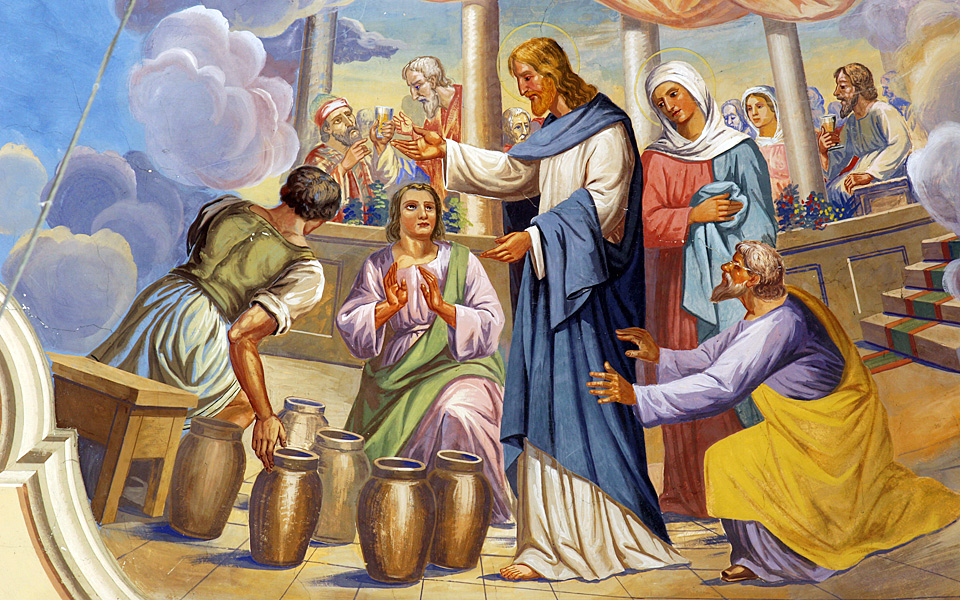
1 On the third day a wedding took place at Cana in Galilee. Jesus’ mother was there, 2 and Jesus and his disciples had also been invited to the wedding. 3 When the wine was gone, Jesus’ mother said to him, “They have no more wine.” 4 “Woman, why do you involve me?” Jesus replied. “My hour has not yet come.” 5 His mother said to the servants, “Do whatever he tells you.” 6 Nearby stood six stone water jars, the kind used by the Jews for ceremonial washing, each holding from twenty to thirty gallons. 7 Jesus said to the servants, “Fill the jars with water”; so they filled them to the brim. 8 Then he told them, “Now draw some out and take it to the master of the banquet.” They did so, 9 and the master of the banquet tasted the water that had been turned into wine. He did not realize where it had come from, though the servants who had drawn the water knew. Then he called the bridegroom aside 10 and said, “Everyone brings out the choice wine first and then the cheaper wine after the guests have had too much to drink; but you have saved the best till now.” 11 What Jesus did here in Cana of Galilee was the first of the signs through which he revealed his glory; and his disciples believed in him.

Background2https://www.studylight.org/commentaries/dsb/john-2.html

Cana of Galilee is so called to distinguish it from Cana in Coelo-Syria. It was a village very close to Nazareth. One of the Coptic3 Coptic Christians belong to the Coptic Orthodox Church of Alexandria, the largest Christian church in Egypt. They trace their founding to St. Mark, who has traditionally been believed to be the author of the Gospel of Mark; Mark is credited with converting the Copts, who were native Egyptians, to Christianity. gospels tells us that Mary was a sister of the bridegroom’s mother. There is an early set of Prefaces to the books of the New Testament called the Monarchian Prefaces4http://earlychristianwritings.com/monarchianprologues.html which tell us that the bridegroom was no other than John himself, and that his mother was Salome, the sister of Mary. We do not know whether these extra details are true or not, but the story is so vividly told that it is clearly an eye-witness account.

There is no mention of Joseph. The explanation most probably is that by this time Joseph was dead. It would seem that Joseph died quite soon after of Jesus’s brothers and sisters, and that the reason why Jesus spent eighteen long years in Nazareth was that he had to take upon himself the support of his mother and his family. It was only when his younger brothers and sisters were able to look after themselves that he left home.

The wedding festivities lasted far more than one day. The wedding ceremony itself took place late in the evening, after a feast. After the ceremony the young couple were conducted to their new home. By that time it was dark and they were conducted through the village streets by the light of flaming torches and with a canopy over their heads. They were taken by as long a route as possible so that as many people as possible would have the opportunity to wish them well. But a newly married couple did not go away for their honeymoon; they stayed at home; and for a week they kept open house. They wore crowns and dressed in their bridal robes. They were treated like a king and queen, were actually addressed as king and queen, and their word was law.

It was in a happy time like this that Jesus gladly shared. But something went wrong. It is likely that the coming of Jesus caused something of a problem. He had been invited to the feast, but he had arrived not alone but with five disciples. Five extra people may well have caused complications. Five unexpected guests might provide any festival with a problem, and the wine went more quickly than expected.

For a Jewish feast wine was essential. “Without wine,” said the Rabbis, “there is no joy.” It was not that people were drunken, but in the East wine was an essential. Drunkenness was in fact a great disgrace, and they actually drank their wine in a mixture composed of two parts of wine to three parts of water. At any time the failure of provisions would have been a problem, for hospitality in the East is a sacred duty; but for the provisions to fail at a wedding would be a terrible humiliation for the bride and the bridegroom.

So Mary came to Jesus to tell him that it was so. The King James Version translation of Jesus’ reply makes it sound very discourteous. It makes him say: “Woman, what have I to do with thee?” That is indeed a translation of the words, but it does not in any way give the tone. The phrase, “What have I to do with thee?” was a common conversational phrase. When it was uttered angrily and sharply it did indicate complete disagreement and reproach, but when it was spoken gently it indicated not so much reproach but misunderstanding. It means: “Don’t worry; you don’t quite understand what is going on; leave things to me, and I will settle them in my own way.” Jesus was simply telling Mary to leave things to him, that he would have his own way of dealing with the situation. The word woman (gunai) is also misleading. It sounds to us very rough and abrupt. But it is the same word as Jesus used on the Cross to address Mary as he left her to the care of John (John 19:26).

John was writing his gospel for Greeks and so he explains that these jars were there to provide water for the purifying ceremonies of the Jews. Water was required for two purposes. First, it was required for cleansing the feet on entry to the house. Second, it was required for the handwashing. John commanded that the jars should be filled to the brim. John mentions that point to make it clear that nothing else but water was put into them. The head-waiter was responsible for the seating of the guests and the correct running of the feast. When he tasted the water which had become wine he was astonished. He called the bridegroom–it was the bridegroom’s parents who were responsible for the feast–and spoke jestingly. “Most people,” he said, “serve the good wine first; and then, when the guests have drunk a good deal, and their palates are dulled and they are not in much of a condition to appreciate what they are drinking, they serve the inferior wine, but you have kept the best until now.”

So it was at a village girl’s wedding in a Galilean village that Jesus first showed his glory; and it was there that His disciples caught another dazzling glimpse of what He was. The amount of wine that Jesus produces may seem like a humorous exaggeration to us, but this exaggerated amount is precisely why John introduces Jesus’ public acts with this story. God’s presence now fills the world “up to the brim.” As Jesus’ first public act, the changing of water to wine symbolizes the “fullness we have all received” (1:16) through Jesus’ presence in the world.

Items for Discussion

  • What would you say this miracle is all about? See John 1:16-18 for a possible answer
  • How do you choose to introduce yourself to people for the first time?
  • Why do you think that Jesus would use this simple family gathering to introduce Himself to us?
    • Think about these themes: wine, hospitality, parental obedience, compassion for others, etc.
  • What makes this miracle so unique?5No one actually saw it. Nor was there a thunder clap to herald the event. God’s glory is not what humans expect it to be. His glory is not for mere display, but has the purpose to fulfill His service to his creation.


Luke 17:21
21 nor will people say, ‘Here it is,’ or ‘There it is,’ because the kingdom of God is in your midst.”

Background

The original question posed by the Pharisees was, “When is the Kingdom of God coming?” (verse 20). The kingdom of God was among the Jews or was it was a spiritual kingdom, set up in the heart by the power of God? We are asked to observe how it had been with sinners formerly, and in what state the judgments of God, which they had been warned of, found them. Here is shown what a dreadful surprise this destruction will be to the secure and sensual pleasures of men when the Son of man is actually revealed to them all. Christ came to destroy the Jewish nation, not by the Roman armies, but to offer the world God’s saving grace through Himself.

This was not a mystical revelation by Jesus that in some seed form, the Kingdom of God is within everyone in a New Age sense. After all, Jesus would not have told Pharisees that the kingdom of God was within them. The statement of Jesus called attention to Himself, not to man. Like many today, the Pharisees said they wanted the Kingdom of God to come; but you can’t want the Kingdom and reject the King. “The Pharisees asked Him when the Kingdom of God would appear, while it was right in their midst because the King Himself was there.”

Items for Discussion

  • What does the term “Kingdom of God” mean to you?
  • How would you explain the statement, the reign of God is “in the heart.”6It does not come with pomp and splendor, like the reign of temporal kings, merely to control the external “actions” and strike the senses of people with awe, but it reigns in the heart by the law of God; it sets up its dominion over the passions, and brings every thought into captivity to the obedience of Christ.
  • What cautions are Jesus giving us with regard to His return someday? (verses 22-23)
  • What parts of the Kingdom are with us now and what parts do you expect will come later?
  • How do you feel about the statement, “there is no salvation but through Jesus Christ?”

Discussion Challenge

  • What are the best ways to help people get to know who Jesus is?
  • 1
    NIV New International Version Translations
  • 2
  • 3
    Coptic Christians belong to the Coptic Orthodox Church of Alexandria, the largest Christian church in Egypt. They trace their founding to St. Mark, who has traditionally been believed to be the author of the Gospel of Mark; Mark is credited with converting the Copts, who were native Egyptians, to Christianity.
  • 4
    http://earlychristianwritings.com/monarchianprologues.html
  • 5
    No one actually saw it. Nor was there a thunder clap to herald the event. God’s glory is not what humans expect it to be. His glory is not for mere display, but has the purpose to fulfill His service to his creation.
  • 6
    It does not come with pomp and splendor, like the reign of temporal kings, merely to control the external “actions” and strike the senses of people with awe, but it reigns in the heart by the law of God; it sets up its dominion over the passions, and brings every thought into captivity to the obedience of Christ.
« Older posts Newer posts »

"For it is by grace you have been saved" - Ephesians 2:8-9  

Copyright: © 2001 - 2025 Lostpine

Translate »