Inspiration for Today's World

Category: Snapshots (Page 7 of 45)

A Funny Thing Happened to the Word…

2 Corinthians 8:3-51NIV New International Version Translations
3 For I testify that they gave as much as they were able, and even beyond their ability. Entirely on their own, 4 they urgently pleaded with us for the privilege of sharing in this service to the LORD’s people. 5 And they exceeded our expectations: They gave themselves first of all to the LORD, and then by the will of God also to us.

Background

The grace of God must be at the root and foundation of all that is good in us, or done by us, all of the time. It is this grace and favor from God that makes us useful to others and able to do good works. Paul commends the charity of the Macedonians, pleading with him (Paul) to receive their gift. Whatever we lay aside for God, we are being reminded that we are only giving God what is already His. All we might give for charitable uses, will not be accepted by God, or benefit us, unless we first give ourselves to the Lord. By crediting all  good works to the grace of God, we not only give the glory to God but also show others where their strength should lay and their faith be placed.

Items for Discussion

  • In general, it is obvious that people do not follow the example being given by Paul – Why?
  • How would you define stewardship?
  • Is there a difference between charity and stewardship with respect to God’s eyes?
  • We are called to give time, treasure, talent and testimony. Is one more important than another?


Romans 12:1-3
1 Therefore, I urge you, brothers and sisters, in view of God’s mercy, to offer your bodies as a living sacrifice, holy and pleasing to God-this is your true and proper worship. 2 Do not conform to the pattern of this world, but be transformed by the renewing of your mind. Then you will be able to test and approve what God’s will is-his good, pleasing and perfect will. 3 For by the grace given me I say to every one of you: Do not think of yourself more highly than you ought, but rather think of yourself with sober judgment, in accordance with the faith God has distributed to each of you.

Background

The book of Romans is often divided  into two parts:

  • a theological explanation of the gospel (chapters 1-11) and
  • a series of communications emphatically urging someone to do ethical things (chapters 12-15).

This separation is because Paul introduces a new style and new content as he brings the story of Christ’s redemption to bear on the life of the believer in tangible and practical ways.

Paul is urging his audience to present their bodies as living sacrifices, which “is your true and proper worship.” In verse 2 he further defines what this means, to be transformed by renewing of your mind to discern God’s perfect will. “Spiritual worship” involves the presentation of the body, accomplished by the renewal of the mind.

Your body now has new life and a renewed mind that results from a union with Christ (6:1-23; 8:1-13). This union allows believers to present their bodies, not to sin as instruments of unrighteousness (6:13), but to God as living sacrifices; and to employ a mind fixed not on the flesh, but on the Spirit, in order to discern what kind of deeds are pleasing to God (8:6-9).

Remember that Paul is redefining worship for all God’s people, who respond to God’s mercies not by giving up animals for sacrifice but by giving their own bodies as living sacrifices to God. The term “spiritual” can also be translated as “rational” worship, worship connected with moral behavior where we truly offer ourselves for service to others. This point highlights the fact that Gentiles were engaging in improper worship of creatures rather than proper worship of the Creator (1:23, 25). They dishonored their bodies (v. 24), and failed to place their faith in God (1:28, 32). Jews worship no better, because they sough to approve God’s will by standards (rules) applied to God’s Law, but failed (2:18).

Now we are to use a new mind to think rightly about ourselves and each other: “Do not think of yourself more highly than you ought, but rather think of yourself with sober judgment…”(verse 3). Paul calls for a new way of thinking that takes account of others. The actions of unity, humility, and love described in by Paul are examples of what it looks like to offer our bodies as a living sacrifice”. As believers, we are to use our gifts for the sake of others, to act according with the “measure of faith” (metron pistews) that God has given to each of us.

By these verses, one might conclude that worship is adequately performed through our corporate liturgy, preaching, and music. These practices are not wrong; but they do not reach far enough for Paul. Paul’s style of worship happens as we live out our faith by serving one another to build up the body of Christ. The quality of our worship is not measured by what happens on only Sunday mornings, but by what happens when we are together Monday through Saturday.

Items for Discussion

  • What does offering your bodies as a living sacrifice mean to you?
  • What does it mean to be conformed to this world?
  • Is there such a thing as a living sacrifice and a dead sacrifice (Romans 12:1)?
  • How do we transform our lives?
  • How does diversity help the body of Christians in a church accomplish God’s goals?
  • Where do our gifts come from? Who has them?

Discussion Challenge

  • What are the ways that we can honor these verses by gathering together to serve one another, Monday through Saturday?
  • 1
    NIV New International Version Translations
What You Sow

Galatians 6:1-201NIV New International Version Translations
1 Brothers and sisters, if someone is caught in a sin, you who live by the Spirit should restore that person gently. But watch yourselves, or you also may be tempted. 2 Carry each other’s burdens, and in this way you will fulfill the law of Christ. 3 If anyone thinks they are something when they are not, they deceive themselves. 4 Each one should test their own actions. Then they can take pride in themselves alone, without comparing themselves to someone else, 5 for each one should carry their own load. 6 Nevertheless, the one who receives instruction in the word should share all good things with their instructor. 7 Do not be deceived: God cannot be mocked. A man reaps what he sows. 8 Whoever sows to please their flesh, from the flesh will reap destruction; whoever sows to please the Spirit, from the Spirit will reap eternal life. 9 Let us not become weary in doing good, for at the proper time we will reap a harvest if we do not give up. 10 Therefore, as we have opportunity, let us do good to all people, especially to those who belong to the family of believers.

Background

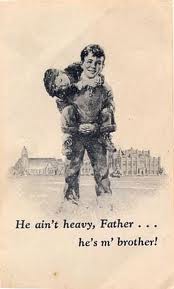
Simply, we are called to bear one another’s burdens. When we do so, this fulfills the law of Christ. This obliges us to mutually help each other and to have compassion towards each other. It is an action that makes us look good before the world, to bear one another’s burdens, just as if we were on a journey together. It is very common for a person to look upon themselves as wiser and better than other people, and good enough to dictate to them. However, one who acts in this way deceives themselves by pretending to be what they are not. This cheats them of living as Christ did and puts them at a disadvantage. Sooner or later, this will lead to sadness.

To take the position that we are greater than other, to know the right way to live will never gain us esteem before God or men. Every one must live, and prove their own work. The better we know our own hearts and motives, the less we will despise others. How slight the sins of others may seem to us, sooner or later, they will find them a heavy burden, especially when their time comes to reckon with God. No man can pay a ransom for his brother; and all sin is a burden to the soul. It is a spiritual burden; and the less a man feels it to be such, the more cause he should have to suspect himself first. Most people are dead to their sins, and therefore, have no sight or sense of the spiritual burden of sin. Feeling the weight and burden of our sins is a blessing and we must seek the forgiveness of our Savior. We should pray always to be adequately warned against every sin before we fall victim to them.

Many excuse themselves from the work of religion, though they may make a show, or may even profess it. They even may impose religion on others, yet they only deceive themselves. God, who knows our hearts as well as our actions cannot be deceived. God cannot be mocked. Our life can be considered the present time and this is the time for planting: it is seed time. In the eternal world to come, we shall reap from what we sow now. There are two types of sowing (planting), one for the flesh, and the other for the Spirit. These are the seeds that will generate the harvest within the hereafter. Those who live a carnal, sensual life, must expect no other fruit from such a planting as just misery and ruin. But those who, under the guidance and influences of the Holy Spirit, live a life of faith in Christ, and abound in Christian graces, will reap a Spirit-filled life everlasting.

We expect to tire in our duty, particularly in doing good. It is hard work. This we should carefully watch and guard against. Only to those who persevere in doing well will find the promised reward . We should set our goals, to take care to do good in our life-time, and make this the business of our lives.

Items for Discussion

  • What are Christ’s laws?
  • How can we test ourselves, test our actions against the law of Christ?
  • What are the many ways we carry each other’s burdens?
  • Why is it so important to share back what helps us with our instructors, our helpers?
  • How does the sowing of the flesh differ from sowing to please the Spirit? How can you tell the difference?
  • We are cautioned about becoming weary. How does a Christian who is trying to live by Christ’s laws become weary?
  • Where are your places of respite and healing?

Discussion Challenge

  • How would you change the Church so that it equipped people to share the burdens of others?
  • 1
    NIV New International Version Translations

The Folly of God

1 Corinthians 1:18-251NIV New International Version Translations

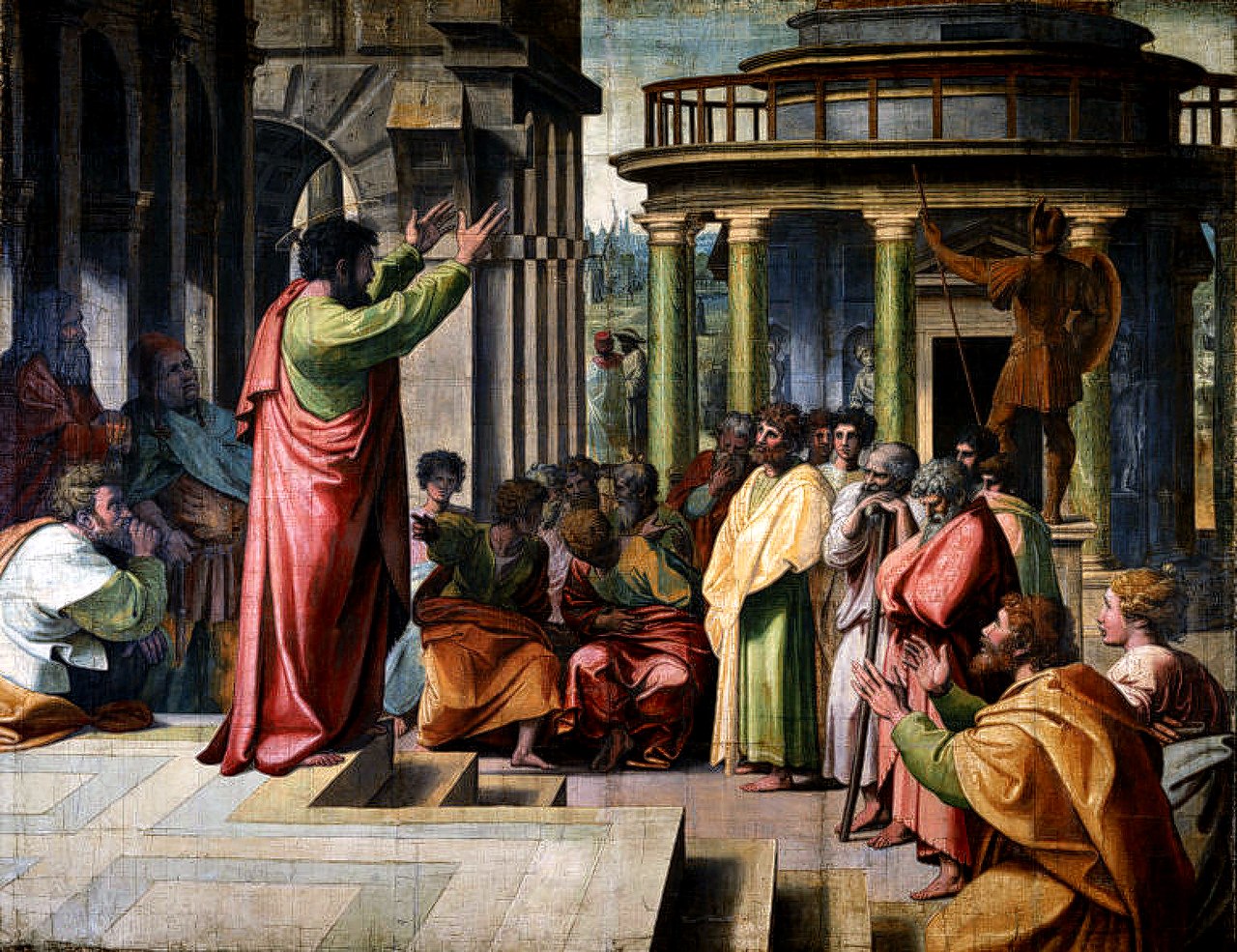
18 For the message of the cross is foolishness to those who are perishing, but to us who are being saved it is the power of God. 19 For it is written: “I will destroy the wisdom of the wise; the intelligence of the intelligent I will frustrate.” 20 Where is the wise person? Where is the teacher of the law? Where is the philosopher of this age? Has not God made foolish the wisdom of the world? 21 For since in the wisdom of God the world through its wisdom did not know him, God was pleased through the foolishness of what was preached to save those who believe. 22 Jews demand signs and Greeks look for wisdom, 23 but we preach Christ crucified: a stumbling block to Jews and foolishness to Gentiles, 24 but to those whom God has called, both Jews and Greeks, Christ the power of God and the wisdom of God. 25 For the foolishness of God is wiser than human wisdom, and the weakness of God is stronger than human strength.

Background

Paul had been raised in the Jewish tradition. He took advantage of his status as both a Jew and a Roman citizen to minister to both Jewish and Roman audiences. Paul was likely born between the years of 5 BC and 5 AD. While he was still fairly young, he was sent to Jerusalem to receive his education at the school of Gamaliel (Acts 22:3), one of the most noted rabbis in history. The Hillel school was noted for giving its students a balanced education, likely giving Paul broad exposure to classical literature, philosophy, and ethics. However, later, after an encounter with the resurrected Christ on a road to Damascus, Paul would become know for his plain style of preaching about Christ.

Paul’s writings were known for their summation and substance of the gospel. “Christ crucified” is the foundation of all our hopes, the fountain of all our joys, and by His death we live. The preaching of salvation for lost sinners by the sufferings and death of the Son of God, if explained and faithfully applied, appears foolishness to those on their way to destruction. The sensual, the covetous, the proud, and ambitious see that the gospel opposes their favorite pursuits. Paul would expound that those who receive the gospel’s message and were enlightened by the Spirit of God would see more of God’s wisdom and power in the doctrine of Christ being crucified, than in all His other works. God left a great part of the world to follow the dictates of man’s worldly will, to boast on their worldly joys. This event shows that human wisdom is, in itself, the folly; that mankind is unable to find, accept or retain the knowledge of God as the Creator.

It pleased Paul, by the foolishness of his preaching, to save those that believe. There is a notable subtlety here: It is by the foolishness of preaching NOT by foolish preaching. The message of Christ and the gospel are only foolish to those of this world who prefer what this world has to offer. The gospel’s message has been and will forever be foolishness to all well on their way down the road to eternal destruction. The message of Christ, plainly delivered, is the only sure method by which people can learn which road they are travelling on. Paul makes it clear that the road for our journey is a choice. The dangers Paul talks about is that our choice of roads do not lead to the same place. Only one choice leads to an eternity with God.

The doctrine despised by our world is that salvation comes only by faith in a crucified Savior. God became human, purchasing the church with His own blood, to save multitudes, all that believe, from their ignorance, delusion, and vices. This is the message of Paul: Christ’s death is a blessing for every time and age. When God uses the weak, they become stronger in their effects, than the strongest people. There is no foolishness or weakness in God, only in what worldly people consider as such. Paul knew that Christ’s story would overcome all the admired wisdom and strength  contained in our world.

Items for Discussion

  • What wisdom is most sought after in our world today?
  • How would your examples above prove to be misleading when it comes to salvation?
  • Do you think that science leads people toward or away from God today?
  • Why do you think people are often quick to believe worldly wisdom and discard the gospel’s message?
  • In what way do you think the “simplicity” of the gospel’s message frightens people?
  • How is complexity used to hide truth?
  • How do you think a well stated and simple message of Christ can bring peace to our nation and world?

Discussion Challenge

  • How do we simplify the gospel for our community around us
  • 1
    NIV New International Version Translations
Dealing With Frustration

I Kings 8:12-211NIV New International Version Translations
12 Then Solomon said, “The Lord has said that he would dwell in a dark cloud; 13 I have indeed built a magnificent temple for you, a place for you to dwell forever.” 14 While the whole assembly of Israel was standing there, the king turned around and blessed them. 15 Then he said: “Praise be to the Lord, the God of Israel, who with his own hand has fulfilled what he promised with his own mouth to my father David. For he said, 16 ‘Since the day I brought my people Israel out of Egypt, I have not chosen a city in any tribe of Israel to have a temple built so that my Name might be there, but I have chosen David to rule my people Israel.’ 17 “My father David had it in his heart to build a temple for the Name of the Lord, the God of Israel. 18 But the Lord said to my father David, ‘You did well to have it in your heart to build a temple for my Name. 19 Nevertheless, you are not the one to build the temple, but your son, your own flesh and blood—he is the one who will build the temple for my Name.’ 20 “The Lord has kept the promise he made: I have succeeded David my father and now I sit on the throne of Israel, just as the Lord promised, and I have built the temple for the Name of the Lord, the God of Israel. 21 I have provided a place there for the ark, in which is the covenant of the Lord that he made with our ancestors when he brought them out of Egypt.”

Background2https://www.easyenglish.bible/bible-commentary/1kings-lbw.htm

We do not know who wrote the books of Kings. Some people say that Jeremiah did. He lived just before Jerusalem’s enemies overcame the city. 2 Kings 24:18-25:30 is the same as Jeremiah chapter 52. There is nothing about Jeremiah in the books of 1 Kings and 2 Kings. However, Jeremiah went to Egypt. 2 Kings ends with the events in Babylon. An unknown prophet in Babylon probably wrote both 1 Kings and 2 Kings.

The writer or writers used a lot of information from other books. These books probably included Isaiah, Jeremiah and Chronicles. The book refers to an unknown book called the ‘Book of the acts of Solomon.’ It also mentions the ‘Books of the chronicles of the kings of Israel and Judah’.  It also uses collections of stories about the prophets Elijah, Elisha, Micaiah and Isaiah.

The author gave a message. He did not just write history. He follows what the Book of Deuteronomy taught. Deuteronomy contains God’s law for His people. It directs how they should live. But most of the kings in Judah and Israel did not obey these instructions. (In fact, none of the kings in the northern kingdom (called Israel) were good kings.) And when the kings were evil, most of the people in their kingdoms became evil too.

The Books of 1 Kings and 2 Kings tell us about a period of nearly 400 years. This was from the time when David died to the exile in Babylon. In 930 B.C. (years before Christ) the kingdom divided into two parts. This happened after the death of Solomon. This is the most important event in the book.

In these verses, Solomon briefly recounts the history of his father, David, who wanted to build a temple but was told that his son would do so instead. Solomon says, “Yahweh has established His word that He spoke; for I have risen up in the place of David my father, and I sit on the throne of Israel, as Yahweh promised, and have built the house for the name of Yahweh, the God of Israel” (v. 20).

Solomon was encouraging the priests, who were taken back at a dark cloud. The cloud was a sign of the glory of the Lord filling the temple. This showed that God accepted the building and furniture of the temple. Such an event had happened centuries before. It happened when Moses finished the construction of the tent of the Lord’s presence. On both occasions, the cloud showed that God was really present. He had been present at the tent. And now he was present at the temple. God sent the cloud so that people could not see the wonderful light of His presence. That light is too bright for people to see, because of their human weakness. Solomon was telling them to  consider what God has said, and to compare God’s word and works together. Whatever good we do, we must look on it as the performance of God’s promise to us, not of our promises to Him.

Items for Discussions

  1. How would you describe the world’s definition of frustration?
  2. Is this radically different from a Biblical view? Why or Why Not?
  3. Scriptures define Frustration as:
    1. Frustration is an indication of a lack of faith and trust in the Lord.
    2. Sometimes the Lord allows our plans to be frustrated because it’s simply not His time or His will.
    3. Frustration can result from trying to do things in our own strength.
    4. Sometimes frustration results from attempting a task that is beyond our training and experience or is not our “calling.”
  4. What have you personally witnessed where frustration actually became damaging, interfering even with God’s Providence?
  5. One dictionary defines frustration as:
    1. To break or interrupt; hence, to defeat; to disappoint; to balk; to bring to nothing; as, to frustrate a plan, design or attempt; to frustrate the will or purpose.
    2. To disappoint; applied to persons.
    3. To make null; to nullify; to render of no effect; as, to frustrate a conveyance or deed.
  6. What should we do so that our frustrations do not get the best of us?
    1. Frustration is caused whenever we are blocked from achieving a goal by conditions or people that we cannot control. In the state of frustration, we are mentally somewhere in the future. Be in the present so as to stop feeling frustrated.
    2. Interestingly, being angry all the time can be a bad habit – Break the habit.
    3. The root of frustration is dissatisfaction. Appreciate the things that you have.
    4. Anger is a response that you pick so as to deal with powerlessness. Remember Solomon’s advice, the power is God’s to use, not ours.
    5. We feel frustrated when we cannot do what we wanted to in the future thanks to a present problem. Identify what you can do right now and pursue it.
    6. Life can sometimes be unfair. Work to solve any pain that happened in your past. Why, it’s over!
    7. Get rid of fear-Anger is often caused by fear. Remember: God’s in charge!

Discussion Challenge

  • How is living in a frustrated world an opportunity for the Church?

Handling Stress Without Strain

John 14:27-29; 15:1-51NIV New International Version Translations

27 Peace I leave with you; my peace I give you. I do not give to you as the world gives. Do not let your hearts be troubled and do not be afraid. 28 “You heard me say, ‘I am going away and I am coming back to you.’ If you loved me, you would be glad that I am going to the Father, for the Father is greater than I. 29 I have told you now before it happens, so that when it does happen you will believe.

1 “I am the true vine, and my Father is the gardener. 2 He cuts off every branch in me that bears no fruit, while every branch that does bear fruit he prunes so that it will be even more fruitful. 3 You are already clean because of the word I have spoken to you. 4 Remain in me, as I also remain in you. No branch can bear fruit by itself; it must remain in the vine. Neither can you bear fruit unless you remain in me. 5 “I am the vine; you are the branches. If you remain in me and I in you, you will bear much fruit; apart from me you can do nothing.

Background

The peace that Christ  has given us was given to all for their benefit. This peace is available to all even though Christ has left us. This peace is good and comes from the knowledge that we have our justification before God. In one way, Christ then becomes our peace because without Christ, we have no justification before God. This peace is different, however. The peace of God widely differs from that of Pharisees or hypocrites, as is shown by its humbling and holy effects. We are humbled before God by Christ Himself.

Christ is the Vine, the true Vine. The union of the human and Divine natures, and the fulness of the Spirit that is in Him, resemble the root of the vine made fruitful by moisture from a rich soil. Believers are branches of this Vine. The root is unseen, is hidden. It is our life and dependance on Christ. The root of any plant supports the plant, diffusing sap into it. In this way Christ supplies the necessary nutrients to our soul. He is our support and supplier of life, supplier of peace.

The branches of any vine are many. Yet, they all come together meeting at the root. The branches are all part of one vine. As true Christians, though in place, time and even differing opinions, we are distant from each other but all still meet in Christ. Believers, like the branches of the vine, are weak, and unable to stand on their own. The branches are supported by the root of the vine, Christ.

The Vine is under the care and keeping of God and never was there any gardener so wise, so watchful, about His vineyard, as God is about His church. Our call, therefore, is to prosper in His name. We must be fruitful. From a vine we look for grapes, and from a Christian we look for a Christian temperament, disposition, and life. We must honor God, and do good; this is bearing fruit. The unfruitful (branches) are taken away. And even fruitful branches need pruning; for the best of us have ideas, passions, and behaviors, that require modification. Here is where the promise of Christ moves forward to sanctify His believers. For this, we will be eternally grateful.

Christ’s words are spoken to all believers and there is a cleansing value in His  words. As the Grace works inside on us, corruption is driven out of us. The more fruit we bring forth, the more we grow in producing what is good. The more good we produce, the more Christ is glorified. Like all plans, branches must remain attached to become fruitful. In order to live a fruitful life, we must abide in Christ, joined to Him by faith. It should be the great concern of all Christ’s disciples to constantly keep  up their dependence on Christ first and foremost to always be in fellowship with Him.

Items for Discussion

  • What are your recommendations to eliminate stress? What works for you?
  • How does peace facilitate rest and remove stress?
  • Does our world really want peace?
  • Why would a healthy and active relationship with Jesus reduce stress from someone’s life?
  • What are some Biblical messages about living peacefully, without stress?

Peace and harmony come to those who extend it to others  –  “If it is possible, as far as it depends on you, live at peace with everyone.” (Romans 12:18).

We are called to be peacemakers – “Blessed are the peacemakers, for they will be called children of God.” (Matthew 5:9).

Pray that God will make it possible – “for kings and all those in authority, that we may live peaceful and quiet lives in all godliness and holiness.” (1 Timothy 2:2).

Pray for peace of mind. Pray for peaceful relationships. And pray for God’s peaceful Kingdom to come soon! Paul’s admonition in Philippians 4:6-7 (Revised Standard Version) beautifully summarizes this wonderful subject: “Have no anxiety about anything, but in everything by prayer and supplication with thanksgiving let your requests be made known to God. And the peace of God, which passes all understanding, will keep your hearts and your minds in Christ Jesus.”

Discussion Challenge

  • Unshared fruit just falls to the ground and rots; How are we called to use the fruit from our vine within/outside the Christian Church? 
  • 1
    NIV New International Version Translations

Where Faith Leads Us

Matthew 14:22-331NIV New International Version Translations

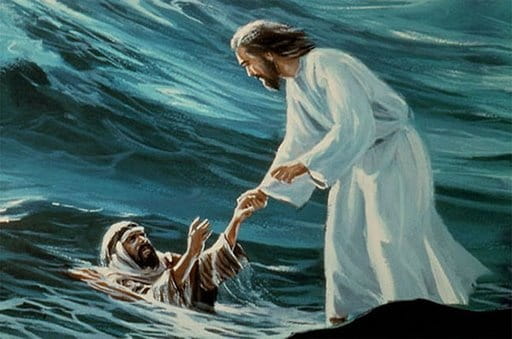
22 Immediately Jesus made the disciples get into the boat and go on ahead of him to the other side, while he dismissed the crowd. 23 After he had dismissed them, he went up on a mountainside by himself to pray. Later that night, he was there alone, 24 and the boat was already a considerable distance from land, buffeted by the waves because the wind was against it. 25 Shortly before dawn Jesus went out to them, walking on the lake. 26 When the disciples saw him walking on the lake, they were terrified. “It’s a ghost,” they said, and cried out in fear. 27 But Jesus immediately said to them: “Take courage! It is I. Don’t be afraid.” 28 “Lord, if it’s you,” Peter replied, “tell me to come to you on the water.” 29 “Come,” he said. Then Peter got down out of the boat, walked on the water and came toward Jesus. 30 But when he saw the wind, he was afraid and, beginning to sink, cried out, “Lord, save me!” 31 Immediately Jesus reached out his hand and caught him. “You of little faith,” he said, “why did you doubt?” 32 And when they climbed into the boat, the wind died down. 33 Then those who were in the boat worshiped him, saying, “Truly you are the Son of God.”

Background

It is always important to take a story out of Scripture and place it in context with the events that both preceded and followed it. The story of Jesus walking on the water follows the story of the Feeding of the Five Thousand. As they did then, they do once again. The disciples try to find the resources within themselves to resolve the problem–but without success. Once again, they learn that they need Jesus to save the situation–and themselves.

While Mark 6:45-52 and John 6:16-21 also tell this story, Matthew is the only one to include the story of Peter attempting to walk on the water to meet Jesus even though Matthew uses Mark as one of his sources.  Matthew ends his story is quite differently. In Mark, the story ends with the disciples being astounded, not understanding. In Matthew, the disciples worship Jesus and acknowledge that He is the Son of God.

This story is similar to Matthew 8:23-27, where a storm threatened to sink the boat while Jesus slept. In that story, Jesus rebuked the winds and the sea, and they obeyed him. In both stories:

  • The disciples are in a boat.
  • There is a sense in which Jesus is absent from the disciples. In Matthew 14, he sends the disciples ahead by themselves. In Matthew 8, He was in the boat, but He was asleep.
  • The disciples are caught in a storm and afraid.
  • Jesus uses the word, oligopistos (“of little faith”) to rebuke the disciples.
  • The disciples are amazed at Jesus’ power. In the Matthew 8 story, they said, “What kind of man is this, that even the wind and the sea obey him?” In the Matthew 14 story, they say, “You are truly the Son of God.”

At the time of the writing of this Gospel, Matthew’s church is weathering a storm of persecution. By this time in history, Peter has most likely been crucified. (Note: The New Testament was written not in real time, as news, but more as reflections by its authors. Matthew wrote his Gospel sometime after 70 AD.) The Christians in Matthew’s church are not in rebellion, but are faithfully serving God. The story of the disciples on the sea, therefore, mirrors exactly the situation of Matthew’s church. It holds a promise that Jesus comes to Christians in the midst of the storm. The storm does not hold the upper hand because Christ is present with us in the storm and redeems us from the storm. The two storm stories address issues of danger, fear and faith for every Christian. This passage was meant to bring great comfort to the early Christians. While not spared suffering and death, they were to be confident that Christ would save them even if they were to die.

None of the Gospels tells us how far Peter walks but, when he falters, he is close enough to Jesus that Jesus can reach out and catch him. Jesus says, “You of little faith, why did you doubt?” (v. 31b). This is the only place that Jesus applies “you of little faith” to one disciple rather than the group as a whole. Note that Jesus first saves Peter, then He rebukes him. It is comforting to know that our Savior first saves. Amen.

The real question you must ask yourself is whether you believe Jesus really worked miracles. If He could heal the sick without medicine and feed hungry crowds with only a little food, there is no reason to believe that Jesus could not walk on water. If no miracles are true, then we would have to even question the resurrection. There is no way to prove conclusively that Jesus worked miracles. Belief in miracles and the resurrection are a matter of faith, not proof. The best evidence of miracles will be the changes that you see in your life and the lives of others as a result of your/their relationship with Christ.

Items for Discussion

  • How is faith created?
  • How is faith strengthened?
  • What is the difference on one’s faith between seeing something and hearing about something? Does it have contemporary implications?
  • Peter was able to walk on the water because he had faith in Jesus’ word “come.” Whythen did he then begin to sink? See John 12:48-49; 2 Corinthians 5:6-7; Colossians 3:17; Hebrew 12:1-3
  • What are some examples of how we let doubt overcome our faith?
  • What are some of the storms people commonly experience? What are the causes of these storms?
  • Think about the story’s details: Peter could not walk on water like Jesus. What parts of the story might convince the other disciples that Jesus was the “Son of God?”

Discussion Challenge

  • How does a gathering of believers strengthen one’s faith?
  • 1
    NIV New International Version Translations

So Little With So Much

Mark 6:30-441NIV New International Version Translations
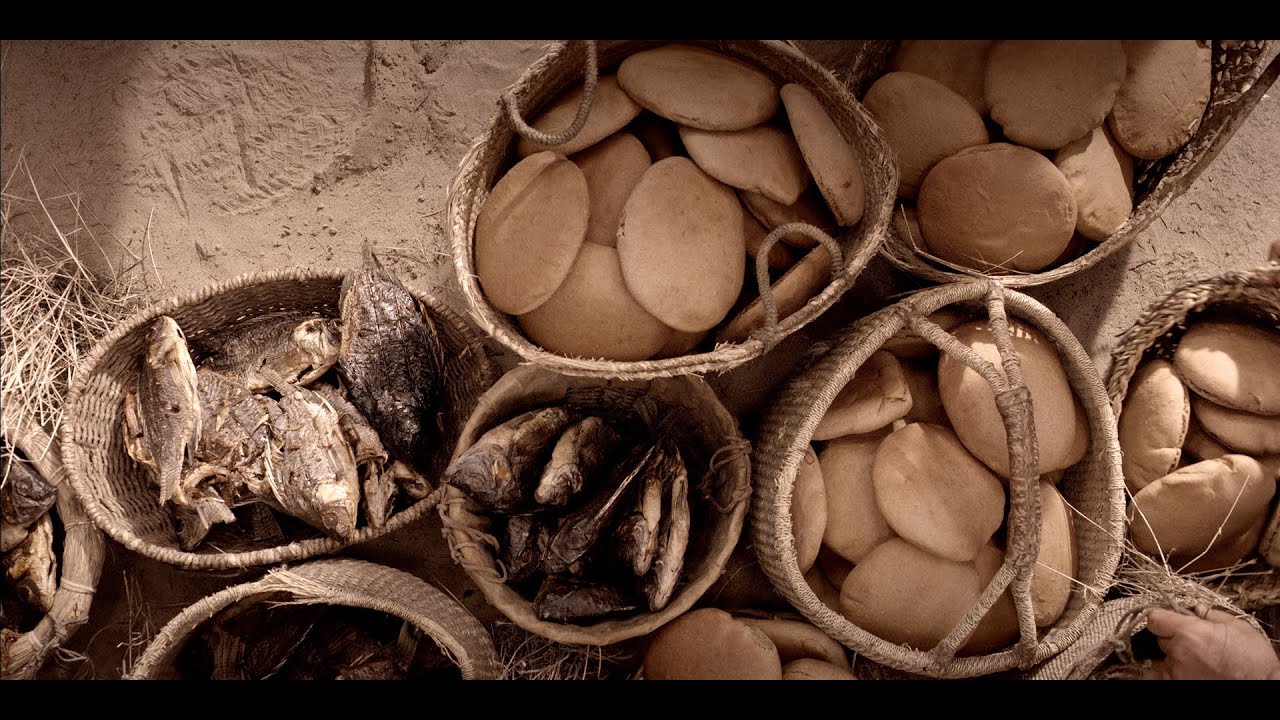
30 The apostles gathered around Jesus and reported to him all they had done and taught. 31 Then, because so many people were coming and going that they did not even have a chance to eat, he said to them, “Come with me by yourselves to a quiet place and get some rest.” 32 So they went away by themselves in a boat to a solitary place. 33 But many who saw them leaving recognized them and ran on foot from all the towns and got there ahead of them. 34 When Jesus landed and saw a large crowd, he had compassion on them, because they were like sheep without a shepherd. So he began teaching them many things. 35 By this time it was late in the day, so his disciples came to him. “This is a remote place,” they said, “and it’s already very late. 36 Send the people away so that they can go to the surrounding countryside and villages and buy themselves something to eat.” 37 But he answered, “You give them something to eat.” They said to him, “That would take more than half a year’s wages ! Are we to go and spend that much on bread and give it to them to eat?” 38 “How many loaves do you have?” he asked. “Go and see.” When they found out, they said, “Five—and two fish.” 39 Then Jesus directed them to have all the people sit down in groups on the green grass. 40 So they sat down in groups of hundreds and fifties. 41 Taking the five loaves and the two fish and looking up to heaven, he gave thanks and broke the loaves. Then he gave them to his disciples to distribute to the people. He also divided the two fish among them all. 42 They all ate and were satisfied, 43 and the disciples picked up twelve basketfuls of broken pieces of bread and fish. 44 The number of the men who had eaten was five thousand.

Background

This Gospel text begins with an account of the disciples’ return after they had been previously sent out by Jesus in Mark 6:6-13, and follows the unpleasantness of John’s beheading described in Mark 6:14-29.

In verse 31 Jesus tells the disciples to get away by themselves to rest. No doubt this message  says something about the importance of rest or maybe even the importance of the Sabbath. But immediately, as the verses continue in verses 33-34,  Jesus and the disciples get very little rest.  This story is about the disciples having been out on their own, now come back together with Jesus. It may be a small point, but the success of the disciples in their ministry is not measured simply by how much they accomplished but by how much they have learned.

Mark 6:34 begins with a large crowd that interferes with Jesus’ and the disciples’ plan for a little rest, but still Jesus has compassion on them. The Greek word used here is splagchnizomai, denoting sympathy, mercy, and loving concern. Why does Jesus have compassion on them? “Because they were like sheep without a shepherd.” That is such a vivid and powerful image. Most of us at one time or another feel the same way. We know Jesus to be the Good Shepherd and if that is the case, then what we see is Jesus showing compassion to these “shepherdless” sheep. Jesus does not launch into healing but says in Mark 6:34, “He began teaching them many things.” What we are seeing here is a living definition of the term, “ministry.” It begins with attending to the  immediate physical needs people have, and then educating them by clearly and faithfully by sharing the Gospel’s message of good news.

The people were seeking the spiritual food of Jesus’ words, but He also took care of their need for bodily food. This miracle shows that Jesus came into the world, not only to restore, but to preserve and nourish both people’s spiritual life as well as their physical life. In Jesus, there is enough for all that stop, listen and follow Him. None were sent away empty in this story. Though Jesus, He had bread and fish at His command. Jesus also would teach us not to waste any of God’s bounties, remembering how many are hungry in our world.

Items for Discussion

  • Why do you think it is so important to include the physical needs of those we wish to share the Gospel’s message into our planning?
  • What kinds of things can we all do with those around us to follow Jesus’ example?
  • Why do you think Jesus asked the disciples to give them something when He knew they wouldn’t have been able to?
  • What can we learn from the boy who gave them?
  • What did Jesus do when He saw His plans had been messed up? Is there anything we can learn from Jesus’ attitude here?
  • Why is rest important for those involved in ministry? What should our role be?

Discussion Challenge

  • Based on this story in Mark, would you change the Church’s ministry to our communities around us? How?
  • 1
    NIV New International Version Translations

A Cluttered Desk-Mind

Proverbs 4:1-91NIV New International Version Translations
1 Listen, my sons, to a father’s instruction; pay attention and gain understanding. 2 I give you sound learning, so do not forsake my teaching. 3 For I too was a son to my father, still tender, and cherished by my mother. 4 Then he taught me, and he said to me, “Take hold of my words with all your heart; keep my commands, and you will live. 5 Get wisdom, get understanding; do not forget my words or turn away from them. 6 Do not forsake wisdom, and she will protect you; love her, and she will watch over you. 7 The beginning of wisdom is this: Get wisdom. Though it cost all you have, get understanding. 8 Cherish her, and she will exalt you; embrace her, and she will honor you. 9 She will give you a garland to grace your head and present you with a glorious crown.”

Background

Solomon is probably speaking to his children here. Given that Solomon had 700 wives and 300 concubines (1 Kings 11:3) it’s very likely the number of children is large. However, the Bible doesn’t give that information. If one considers that the normal number of offspring in that time and area would probably be more than five per female, it appears that Solomon could have had at least 5000 children. So we view much of Proverbs as a father passing his advice onto his children, a lot of children.

We to must look at our teachers as our fathers. Though their instruction, use it to model our lives and correct our lives accordingly. Solomon’s parents loved him, therefore taught him. Wise and godly men, in every age of the world, and position in society, agree that true wisdom comes from obedience, and is tied closely to happiness. Get wisdom, take the lumps and pains it brings. Solomon tells his children to get control over themselves and then take more pains to get more wisdom because it is better than all of the wealth of this world.

Every child must gain interest in Christ’s salvation. This wisdom is the one thing every child needs to get out of this world so that they can journey into the next most glorious world, God’s eternal world. A human soul without true wisdom and grace is a dead soul. How pitiful are those, who, with all their wealth and power, die without getting understanding of Christ. They die without hope and without God!  Solomon calls out to his children the most important lesson he can provide them, listen to your God who speaks the words of eternal life. Therefore, our path of life should always be directly before us. By taking, and holding fast to our parent’s instructions, we can avoid the many deviations from a Godly life  or stumbling on our path through a worldly life.

Items for Discussion

  • How do we actually learn, get “true wisdom?”
  • What is it that is the most important for children to learn? For adults?
  • What happens if the adults, the parents are poor examples?
  • In your experiences, what are the most effective ways to teach? Children? Adults?
  • Solomon wrote down his advice. How have you prepared your own advice to your children so they can use it after you are gone?
  • How do you think the obedience of Solomon to his parents helped him in his adult life?
  • Obedience seems to be tied to happiness – Where is our society failing today, to help pass on happiness? Children? Adults?


Luke 13:22-30
22 Then Jesus went through the towns and villages, teaching as he made his way to Jerusalem. 23 Someone asked him, “LORD, are only a few people going to be saved?” He said to them, 24 “Make every effort to enter through the narrow door, because many, I tell you, will try to enter and will not be able to. 25 Once the owner of the house gets up and closes the door, you will stand outside knocking and pleading, ‘Sir, open the door for us.’ “But he will answer, ‘I don’t know you or where you come from.’ 26 “Then you will say, ‘We ate and drank with you, and you taught in our streets.’ 27 “But he will reply, ‘I don’t know you or where you come from. Away from me, all you evildoers!’ 28 “There will be weeping there, and gnashing of teeth, when you see Abraham, Isaac and Jacob and all the prophets in the kingdom of God, but you yourselves thrown out. 29 People will come from east and west and north and south, and will take their places at the feast in the kingdom of God. 30 Indeed there are those who are last who will be first, and first who will be last.”

Background

In these verses, our Apostle Luke gives us a collected set of thoughts that can also be found elsewhere in Matthew:

  • “Enter in by the narrow gate; for wide is the gate and broad is the way that leads to destruction, and many are those who enter in by it. How narrow is the gate, and restricted is the way that leads to life! Few are those who find it” (Matthew 7:13-14).
  • “Many will tell me in that day, ‘Lord, Lord, didn’t we prophesy in your name, in your name cast out demons, and in your name do many mighty works?’ Then I will tell them, ‘I never knew you. Depart from me, you who work iniquity” (Matthew 7:22-23).
  • “I tell you that many will come from the east and the west, and will sit down with Abraham, Isaac, and Jacob in the Kingdom of Heaven, but the children of the Kingdom will be thrown out into the outer darkness. There will be weeping and gnashing of teeth” (Matthew 8:11-12).
  • “But many will be last who are first; and first who are last” (Matthew 19:30).
  • “So the last will be first, and the first last” (Matthew 20:16).
  • “While they went away to buy, the bridegroom came, and those who were ready went in with him to the marriage feast, and the door was shut. Afterward the other virgins also came, saying, ‘Lord, Lord, open to us.’ But he answered, ‘Most certainly I tell you, I don’t know you’” (Matthew 25:10-12).

Let’s outline these verses:

  1. Salvation requires our earnest effort because it is the narrow door (13:24).
    1. the door is narrow and exclusive, not wide and all-inclusive.
    2. many will seek to enter and will not be able to do so.
  2. Salvation requires our urgent attention because the narrow door will close soon (13:25-27).
    1. time is coming soon when the door will be shut.
    2. there is a great difference between a casual acquaintance with Jesus and a personal relationship with Him.
  3. Salvation requires our careful self-examination because the door, once closed, is eternally closed (13:28-30).
    1.  the horrible consequences of making a mistake.
    2.  there are two and only two final categories for eternity (in or out).
    3. requires our careful self-examination because those who assume they’re in may be out.

Items for Discussion

  • Have you thought about eternity? How often? What were the circumstances?
  • How can salvation be a free gift simply received and yet require our striving?
  • Are we too casual about salvation because we have disregarded the biblical doctrine of hell?
  • How can we know that we are entering through the narrow door?
  • What keeps people from thinking about eternity?
  • How do you feel about Christ’s story that once the door is closed, it is not going to be opened?

Discussion Challenge

  • What would you be willing to do to help the one person you love the most enter eternity?
  • 1
    NIV New International Version Translations

A Long Chain of Faith

Isaiah 5:1-71NIV New International Version Translations
1 I will sing for the one I love a song about his vineyard: My loved one had a vineyard on a fertile hillside. 2 He dug it up and cleared it of stones and planted it with the choicest vines. He built a watchtower in it and cut out a winepress as well. Then he looked for a crop of good grapes, but it yielded only bad fruit. 3 “Now you dwellers in Jerusalem and people of Judah, judge between me and my vineyard. 4 What more could have been done for my vineyard than I have done for it? When I looked for good grapes, why did it yield only bad? 5 Now I will tell you what I am going to do to my vineyard: I will take away its hedge, and it will be destroyed; I will break down its wall, and it will be trampled. 6 I will make it a wasteland, neither pruned nor cultivated, and briers and thorns will grow there. I will command the clouds not to rain on it.” 7 The vineyard of the LORD Almighty is the nation of Israel, and the people of Judah are the vines he delighted in. And he looked for justice, but saw bloodshed; for righteousness, but heard cries of distress.

Background2https://www.sermonwriter.com/biblical-commentary/isaiah-51-7-commentary/

Isaiah may have sung this song at the week-long harvest festival known as the Feast of Tabernacles, where his singing would have fit naturally into the festive atmosphere and would have caught the attention of the crowds. The song and its underlying story would draw the people in. The song then asks them to serve as judges, thereby drawing them in further (v. 3-4). The last verse, though, has a barbed hook. The listeners learn to their surprise that the song is not really about a vineyard but instead is about them—their sins—the judgment that has been pronounced on them.

The care of the Lord over the church of Israel, is described by the management of a vineyard. He planted it with the choicest vines; gave them a most excellent law, instituted proper Laws. The temple was a tower, where God gave tokens of His presence. He set up His altar, to which the sacrifices should be brought; all the means of grace are noted here. God expects fruit from those that enjoy His privileges. Good purposes and good beginnings are good things, but not enough; there must be good fruit; thoughts and affections, words and actions, agreeable to the Spirit. Israel brought forth bad fruit.

The song is like the story of the rich man and the poor man told by Nathan the prophet to King David (2 Samuel 12). When Nathan told that story, David didn’t realize that he was listening to a parable. He thought that Nathan was presenting an injustice which he, as king, had power to remedy. It was only after David rendered judgment on the rich man that Nathan said, “You are the man,” revealing that his story was really about David’s liaison with Bathsheba and his treachery at having Uriah killed.

Isaiah’s song follows that same format ­­—a story that draws the people in, invites them to pronounce judgment, and then reveals that the story is not about someone else, but is about them. The mood of the song shifts by stages. It begins on a joyful note as it tells about the person who developed the vineyard (vv. 1-2). It darkens slightly as it asks listeners to judge whether the owner did all that needed to be done (vv. 3-4). It then takes on a threatening tone as the owner of the vineyard reveals his decision to destroy the vineyard (vv. 5-6). Finally, it reveals the listeners to be the vineyard (v. 7).

Wild grapes are the fruits of the corrupt nature. Where grace is not working, corruption is working. But the wickedness of those that profess religion, and enjoy the means of grace, must be on the sinner alone. This is often shown in the departure of God’s Spirit from those who have long worked against Him, and the removal of His gospel from places which have long been disappointed in its message. Instead of the grapes of humility, meekness, love, patience, and contempt of the world, is what God looks for. The wild grapes are pride, passion, discontent, and malice, and contempt of God. Instead of the grapes of praying and praising, the wild grapes are of cursing and swearing.

Items for Discussion

  • What do you find most frightening about verses 5 and 6?
  • How should society assess itself against this story?
  • What do you see happening to society, to the people, when God withdraws His Spirit?
  • What are the contemporary ways we curse and swear, literally and figuratively?


Hebrews 11:29-12:2
29 By faith the people passed through the Red Sea as on dry land; but when the Egyptians tried to do so, they were drowned. 30 By faith the walls of Jericho fell, after the army had marched around them for seven days. 31 By faith the prostitute Rahab, because she welcomed the spies, was not killed with those who were disobedient. 32 And what more shall I say? I do not have time to tell about Gideon, Barak, Samson and Jephthah, about David and Samuel and the prophets, 33 who through faith conquered kingdoms, administered justice, and gained what was promised; who shut the mouths of lions, 34 quenched the fury of the flames, and escaped the edge of the sword; whose weakness was turned to strength; and who became powerful in battle and routed foreign armies. 35 Women received back their dead, raised to life again. There were others who were tortured, refusing to be released so that they might gain an even better resurrection. 36 Some faced jeers and flogging, and even chains and imprisonment. 37 They were put to death by stoning; they were sawed in two; they were killed by the sword. They went about in sheepskins and goatskins, destitute, persecuted and mistreated— 38 the world was not worthy of them. They wandered in deserts and mountains, living in caves and in holes in the ground. 39 These were all commended for their faith, yet none of them received what had been promised, 40 since God had planned something better for us so that only together with us would they be made perfect. 1 Therefore, since we are surrounded by such a great cloud of witnesses, let us throw off everything that hinders and the sin that so easily entangles. And let us run with perseverance the race marked out for us, 2 fixing our eyes on Jesus, the pioneer and perfecter of faith. For the joy set before him he endured the cross, scorning its shame, and sat down at the right hand of the throne of God.

Background

Hebrews 11 is the great faith chapter of the Bible, first defining faith (v. 1) and then using well-known Hebrew people to show faith in action. These people heard God’s promises and believed them in spite of waiting a very long time to see the promises fulfilled—some promises never having been fulfilled in their lifetime. For instance, Abraham didn’t live long enough to see the nation that sprang from his seed. The chapter defines faith as the assurance (hupostasis—reality) of things hoped for and the proof (elegchos—proof or certainty) of things not seen.

Then the author relates the faith journey of a number of the Old Testament greats:

  • Abel, Enoch, Noah, Abraham, Sarah, Isaac, Jacob, Joseph, and Moses.

Our reading continues the list:

  • The people of Israel at the Red Sea, Rahab the harlot, Gideon, Barak, Samson, Jephthah, David, and Samuel and the prophets.

The author concludes that all of these mentioned in Hebrews 11 are worthy of praise. They have been attested (with a passive verb he implies that God, through Scripture, commends them) throughout their faithfulness. This applies to their lives when they trusted God for various things, and also to their faithfulness that has continued beyond the pale of death. They have not yet taken possession of the promise, the promise to remain with God and his people in his city forever (Hebrews 4:1; 6:17; 9:15; 10:36; 11:16). Hence God continues to attest to their faithfulness because ultimate perfection remains ahead for them.

God looked ahead and made provision for something better, something better that concerns not just the faithful of the past, but also the faithful of the present, for both the author and his readers. The forebears in faith cannot reach that place of perfection without the present generation of the faithful. Until everyone joins the party (Hebrews 12:22), until everyone resides in the household (Hebrews 3:6), the promise remains unobtained.

And so, the baton passes to them by. The author paints a scene of the close of a race. As runners enter the stadium, they are surrounded by the crowd all around. The “cloud of witnesses” both proclaims the story of their own faith, and expectantly waits for those running to endure in theirs. Get rid of anything that would trip you up, the author commands. With the cloud around you, keep your eyes before you on the ultimate runner — the one who created the race of faith and the only one who has reached its perfect end. Jesus endured an excruciating death and did not let the shame of his death destroy the joy that kept Him going. This was the same joyful promise to which all God’s children, all of us look forward to. And what is that goal? Residing with God and His people forever. Jesus is there now, at God’s right hand, and through His prayers (Hebrews 7:25) He not only cheers the church on but sustains them along the way.

Items for Discussion

  • What is the hardest part about keeping your faith, remaining faithful?
  • What are the ways that we are cheered on and what are the ways we cheer others on?
  • The idea of being witnesses is brought out in these verses – what are the things we to be witness to?
  • If we do not do this as a church, as a body of Christians, what are the risks to the church and to ourselves?

Discussion Challenge

  • How can we tell that we are not only good witnesses to God’s Spirit but are engaged with others to pass it on?

Hand-Me-Downs

John 17:13-191NIV New International Version Translations
13 “I am coming to you now, but I say these things while I am still in the world, so that they may have the full measure of my joy within them. 14 I have given them your word and the world has hated them, for they are not of the world any more than I am of the world. 15 My prayer is not that you take them out of the world but that you protect them from the evil one. 16 They are not of the world, even as I am not of it. 17 Sanctify them by the truth; your word is truth. 18 As you sent me into the world, I have sent them into the world. 19 For them I sanctify myself, that they too may be truly sanctified.

Background2https://www.christianity.com/bible/commentary.php?com=mhc&b=43&c=17

Our Scripture for today is Christ’s prayer for himself and His prayer for his disciples The first thing we notice is that Christ prayed as a man and as an Intercessor for His people. He is praying to God on our behalf. Yet He spoke with majesty and authority, as one not only with but equal to God Himself. Eternal life could not be given to believers unless Christ, their Hope, both glorified God, and was glorified Himself. This is the sinner’s way to eternal life. When this knowledge is perfect in us, holiness and happiness will be fully enjoyed by us.

The holiness and happiness of the of Christ’s resurrection and the grace granted by His Father, God Himself, is the joy set being offered to us. It is the sole purpose for which Christ endured the cross and suffered the shame of death itself. Christ’s glory was the end of the sorrow for His soul, and by obtaining it, He was fully satisfied, completing His task here on earth. We are taught that our glorifying God is needed as evidence of our belief in Christ, through whom eternal life is God’s free gift. Christ is praying for Himself.

Christ goes on to pray for those that are His. God gave them the people as sheep to the shepherd, to be kept, protected just as a patient to the physician, to be cured of their infirmities.  God gave Christ the people of the world as children to a tutor, to be taught and saved. It should be a great satisfaction to us, in our reliance upon Christ, that He is who He is and He told us what He did.  Christ offered this prayer for His people alone as believers, not for the world at large.

No one who desires to come to God, and is conscious that they are unworthy to come on their own, need be discouraged by Christ’s declaration. Christ is both able and willing to save all that come to Him. Observe the basis on which  Christ makes His plea, “All mine are yours, and yours are mine.” This speaks to the fact that the Father and the Son are one.

Christ does not pray that we might be rich and great in the world, but that we might be kept from sin, strengthened for our duty, and brought safe to heaven. The prosperity of Christ’s prayer is for the soul. He pleads with His holy Father, that He would keep us by His power and for His glory, that we might be united in love for one another and in the work we do together. Christ did not pray that His disciples should be removed from this world, or that they might escape the rage of men. They were tasked to do great work for the glory of God, and the benefit of mankind. He prayed that God would keep them from  evil, from being corrupted by the world. Christ prayed that the remains of sin in our hearts and the power of Satan would not impact our journey through this world.  By this prayer, we can see that we are not left here to pursue the same worldly desires as those around us, but to glorify God, and to serve our generation. The Spirit of God in true Christians is opposed to the spirit of the world.

Christ prayed that His disciples might not only be kept from evil, but made to be better. It is the prayer of Jesus for all that are His that they may be made holy. Even disciples of Christ must pray for sanctifying grace. The means of obtaining this grace is, “through the truth and the Word of God is truth.” Christ prays to God to sanctify us, set us apart for God and His service. Christ prays that God’s own hand go with us in all we do. The real holiness of all true Christians is the fruit of Christ’s death, by which the gift of the Holy Spirit was purchased for us; He gave Himself for His church, to sanctify it.

Items for Discussion

  • What does it mean “not to be in the world?”
  • How do we hand down our faith to others in the world?
  • What are the struggles of being a faith filled person in a faithless world?
  • How do disciples of Christ maintain their strength when the environment (the world) works to destroy our faith?
  • What are the things we can do to recharge our “Faith Batteries?”

Discussion Challenge

  • This prayer is many things: leave-taking reflections; summary words; a call to spiritual struggle and commitment; and most of all, a prayer for someone who loves his followers deeply. How can a body of Christians pass the love of our Savior to those who are around us?
« Older posts Newer posts »

"For it is by grace you have been saved" - Ephesians 2:8-9  

Copyright: © 2001 - 2025 Lostpine

Translate »