Inspiration for Today's World

Category: Snapshots (Page 6 of 45)

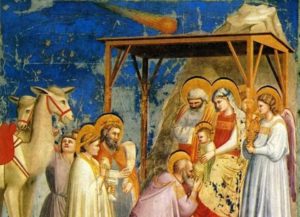
The Star Still Shines

Matthew 2:1-121NIV New International Version Translations
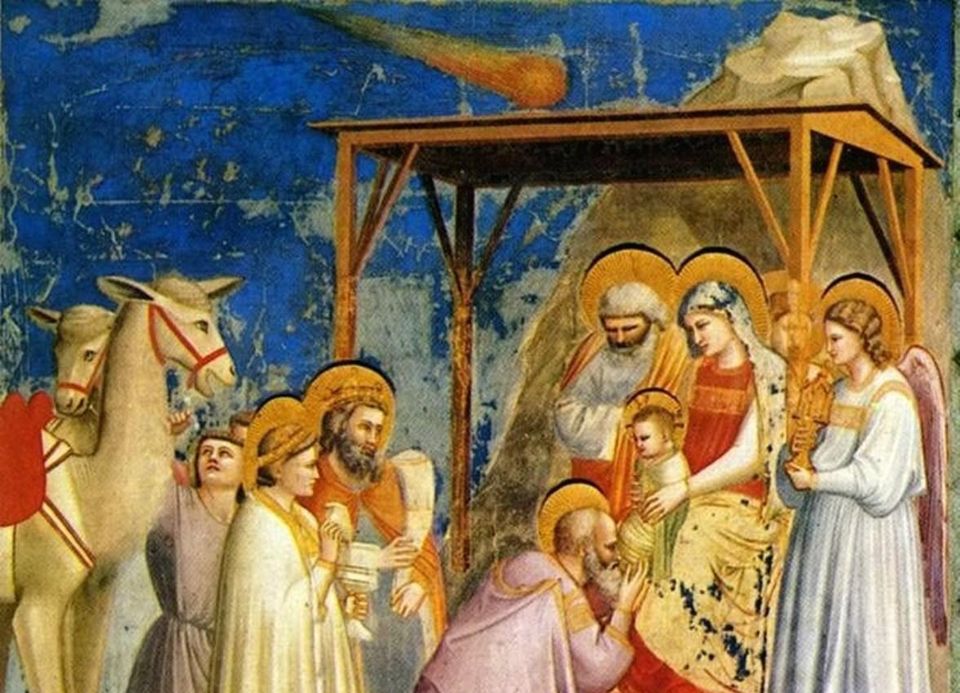
1 After Jesus was born in Bethlehem in Judea, during the time of King Herod, Magi from the east came to Jerusalem 2 and asked, “Where is the one who has been born king of the Jews? We saw his star when it rose and have come to worship him.” 3 When King Herod heard this he was disturbed, and all Jerusalem with him. 4 When he had called together all the people’s chief priests and teachers of the law, he asked them where the Messiah was to be born. 5 “In Bethlehem in Judea,” they replied, “for this is what the prophet has written: 6 “‘But you, Bethlehem, in the land of Judah, are by no means least among the rulers of Judah; for out of you will come a ruler who will shepherd my people Israel.’” 7 Then Herod called the Magi secretly and found out from them the exact time the star had appeared. 8 He sent them to Bethlehem and said, “Go and search carefully for the child. As soon as you find him, report to me, so that I too may go and worship him.” 9 After they had heard the king, they went on their way, and the star they had seen when it rose went ahead of them until it stopped over the place where the child was. 10 When they saw the star, they were overjoyed. 11 On coming to the house, they saw the child with his mother Mary, and they bowed down and worshiped him. Then they opened their treasures and presented him with gifts of gold, frankincense and myrrh. 12 And having been warned in a dream not to go back to Herod, they returned to their country by another route.
Background

The biblical Magi (or singular: magus), also referred to as the (Three) Wise Men or (Three) Kings, were the distinguished foreigners who visited Jesus after his birth, bearing gifts of gold, frankincense, and myrrh. They are regular figures in traditional accounts of the nativity celebrations of Christmas and are an important part of our Christian tradition.  Matthew is the only one of the four gospels to mention the Magi. Matthew reports that they came “from the east” to worship the “king of the Jews”. The gospel never mentions the number of Magi, but most western Christian denominations have traditionally assumed them to have been three in number, based on the statement that they brought three gifts. In Eastern Christianity, especially the Syriac churches, the Magi often number twelve. Their identification as kings in later Christian writings is probably linked to Psalm 72:11, “May all kings fall down before him”.

Although Matthew’s account does not explicitly state the motivation for their journey (other than seeing the star in the east, which they took to be the star of the King of the Jews), the Syriac Infancy Gospel provides some clarity by stating explicitly in the third chapter that they were pursuing a prophecy from their prophet, Zoradascht.

The text in Matthew’s verses specifies no interval between the birth and the visit, and most artistic depictions and the closeness of the traditional dates of December 25 and January 6 encourage the popular assumption that the visit took place the same winter as the birth. However, later traditions varied, with the visit taken as occurring up to two winters later. This time frame is explained by Herod’s command in Matthew 2:16–18 that the Massacre of the Innocents included boys up to two years old. The Magi are mentioned twice shortly thereafter in verse 16, in reference to their avoidance of Herod after seeing Jesus, and what Herod had learned from their earlier meeting. The star which they followed has traditionally become known as the Star of Bethlehem.

There is tradition that the Magi were also astrologers, men knowledgeable about the stars, planets and constellations. This tradition is formed from their desire to follow a “Star,” so bright as to indicate that something great was taking place under it to the East. While it is difficult to apply specific dates to these events, it is thought that the constellation of Leo (King or Lion) was encapsulating the Star of Bethlehem at the time. This would have led the Magi to conclude that a great King would be found under the Star. One theory that exists is that the wandering planet Jupiter and the planet Mars, possibly even other celestial bodies were in a retrograde which aligned as if they were over Bethlehem when viewed from the East.2http://www.bethlehemstar.com/.

The theories regarding the gifts generally break down into two:

  1. All three gifts are ordinary offerings and gifts given to a king. Myrrh being commonly used as an anointing oil, frankincense as a perfume, and gold as a valuable offering.
  2. The three gifts had a spiritual meaning. Gold as a symbol of kingship on earth, frankincense (an incense) as a symbol of deity, and myrrh (an embalming oil) as a symbol of death.

God seems to do whatever it takes to reach out to and embrace all people. God announces the birth of the Messiah to shepherds through angels on Christmas, to Magi via a star on Epiphany, and to the political and religious authorities of God’s own people in through visitors from the East. From a simple manger, where a child lies wrapped in bands of cloth, God’s reach, God’s embrace through Jesus, and His reasons for coming to earth just get bigger and bigger. Jesus eats with outcasts and sinners. Jesus touches people who are sick and people who live with disabilities. Jesus even calls the dead back to life. Ultimately, Jesus draws all people to Himself through the cross. In Jesus, no one is beyond God’s embrace. Through Jesus everyone is reconciled to God.

God’s radical grace is wondrously frightening. The Magi did not come looking for the Jesus through preaching, liturgy, sacraments, a welcoming congregation, or a social ministry. They came seeking Jesus after studying the night skies. God’s message to them was in the heavens. The alternative belief, of course, is to join Herod in not seeing God’s ever-expanding embrace, or being threatened by it, and giving way to just plain fear: “When King Herod heard this, he was frightened, and all Jerusalem with him” (Matthew 2:3). The prophecy that was fulfilled by the Massacre of the Innocents can be found in Jeremiah 31:15. Herod jealously reached out only to himself, just far enough to violently protect his place and preserve his power. Jesus’ birth offers us both a gift and a choice. We can run from it or run to it, discard it or embrace it. We can follow the Star or remain in the east!

Items for Discussion

  • Is the story of the Star of Bethlehem important to your faith? Why?
  • There are many variants to the Christmas Story. Is it important to have only one story where the facts are in perfect supportable alignment? Why or why not?
  • The Wise Men, the Magi were joyful – what was at the roots of their joy? Why do you think they were in awe of a baby?
  • What significance do you personally place on the “Star of Bethlehem?”
  • When inconsistencies exist in a Biblical story, how to you personally rationalize their purpose?

Discussion Challenge

  • What meaning will the “Star of Bethlehem” have for you on July 4th?
  • While the question above may seem meaningless, it does open one’s mind to why do we constantly relive the story of Jesus’ birth/death and why should humanity care?


The Afterglow of Christmas

Luke 2:201NIV New International Version Translations
20 The shepherds returned, glorifying and praising God for all the things they had heard and seen, which were just as they had been told.

Background

Christmas, our annual celebration for Christ’s birth, has come and gone.  Boxes are being filled with decorations, trees taken down, and outdoors, the beautiful lights and nativity scenes, are put away for another year.  The shepherds were simple men, having received satisfactory evidence of the truth of the “Good Tidings” in Christ’s birth.  As shepherds, they would have related well to understanding that God brought forth a living example of His Divine influence on them. They returned to the care of their flocks, glorifying God for what He had shown them, and for the blessedness which they felt. Christ, born of a woman, laid in a stable, proclaimed and ministered to by heaven itself, should be a subject of frequent discussions within every family. We are called through Advent and the Christmas miracle, to compare the predictions of the prophets with the facts stated in history. Our job now that the holiday is over is to confirm in these sacred truths as we return to our families and friends, glorifying and praising God for what we have seen and heard.

This whole unfolding drama is God’s story, and God is the one who should be praised because of it. When the angels leave, the shepherds get up and go into Bethlehem to see with their own eyes the sign that was promised to them. And they find the sign just as it was given, and they begin to share with those around them who were amazed. Just like the angels, the shepherds also depart, and like the angels the shepherds are also praising God and, more than that, they are glorifying God. They are lifting up the one who is already exalted and honoring him with their praises and in this way they glorify God.

We are very ordinary people as compared to those who became witnesses to the birth of Christ. We are very ordinary shepherds, however, meant to serve as witnesses to the Incarnation of our Lord. Other than the angels, the shepherds were the first to proclaim the Good News of Jesus’ birth. But the story must not end here, it must begin here. The proclamation of “Good News,” the coming of Christ for the Salvation of mankind, must be spread throughout our world. Christmas was never meant to be a destination that ended a year, a season, it was intended to begin a season of Hope. Merry Christmas to all!

Items for Discussion

  • What is the Spirit of Christmas and how do we keep it alive in the hearts of mankind?
  • Christ caused the shepherds to “glorify God.” Why is this no longer a result of the Christmas season in our world?
  • How does the faith of those around us influence our own faith walk?
  • What are the parts of Christmas that you miss putting away until next year?
  • Like the census in Bethlehem, Christmas draws us back to our roots – in what ways?
  • Once we have been privileged to experience God’s presence, we then have a responsibility to share that experience with other people—to spread the word—to proclaim the Gospel. What are the ways we can accomplish this next year?
  • How do we experience God’s presence?

Discussion Challenge

  • What is the role of a church in spreading the Good News?
    • Preaching?
    • Teaching?
    • Living?
    • Honoring?
  • 1
    NIV New International Version Translations

Emmanuel – God With Us

This is the fourth Sunday in Advent. We light the candle of Peace. This fourth candle reminds us that Jesus comes to bring Peace to both the world and to people’s hearts. Without Christ there is no peace in this world. It is also the time for our Cantata. A cantata is a composition for one or more voices usually comprising solos, duets, recitatives, and choruses and sung to an instrumental accompaniment. They are most often based on a poem, play, or story. Our story is the coming of Jesus to the world. We do this presentation for Christmas Cantata because it expresses Christmas in a way that everyone around the world can easily understand. For this year, a cantata written and arranged by Lloyd Larson has been chosen. It is a wonderful mix of traditional and contemporary music in a Lessons and Carols style.

The incarnation message is central to the Christmas story: God becoming human and living among us. The gospel of John says it best: “The Word (meaning God) became flesh and lived among us.” (John1:14) What a powerful statement of love and devotion! God loved us enough that we became the recipients of more than a letter; more than a phone call; even more than a visit from a special friend. We were chosen to be the recipients of the Creator’s greatest gift – a portion of the very being of God himself. And then we were invited into a personal relationship with God through Jesus.

In the celebration of Christmas, we all enjoy the meaningful family traditions, inspiring programs and pageantry, the beloved carols, and all of the sights, sounds and smells of the season. But in the midst of it all there is one basic and central message which pervades all that transpires in this holy season: Emmanuel – God With Us! May that message be clear as you read these timeless scriptural passages and as you sing the songs of the season – both old and new. This personal gift from God is truly the greatest of all Christmas gifts!

This specific lesson borrows from a very famous founding father, Thomas Jefferson. The Life and Morals of Jesus of Nazareth, commonly referred to as the Jefferson Bible, is one of two religious works constructed by Thomas Jefferson. The first, The Philosophy of Jesus of Nazareth, was completed in 1804, but no copies exist today. The second, The Life and Morals of Jesus of Nazareth, was completed in 1820 by cutting and pasting with a razor and glue numerous sections from the New Testament as extractions of the doctrine of Jesus. Jefferson’s condensed composition excludes all miracles by Jesus and most mentions of the supernatural, including sections of the four gospels that contain the Resurrection and most other miracles, and passages that portray Jesus as divine. Jefferson wrote that the doctrines which flowed from the lips of Jesus Himself are within the comprehension of a child.

It is understood by some historians that Jefferson composed it for his own satisfaction, supporting the Christian faith as he saw it. As a retired President, he did not produce his small book to shock or offend the world; he composed it for himself, for his devotion, for his assurance, for a more restful sleep at nights and a more confident greeting of the mornings. The draft was found at Jefferson’s bedside after his passing and then published later under his name. It is with this Jeffersonian spirit that we place our cantata’s Scriptural Text into a story, for all to read and understand where and why our Savior came to this world.

Emmanuel – God With Us

1Isaiah 11:1-4a, 6A shoot will come up from the stump of Jesse; from his roots a Branch will bear fruit. The Spirit of the Lord will rest on him—the Spirit of wisdom and of understanding, the Spirit of counsel and of might, the Spirit of the knowledge and fear of the Lord—and he will delight in the fear of the Lord. He will not judge by what he sees with his eyes or decide by what he hears with his ears; but with righteousness he will judge the needy, with justice he will give decisions for the poor of the earth. The wolf will live with the lamb, the leopard will lie down with the goat, the calf and the lion and the yearling together; and a little child will lead them.

2Isaiah 40:1-5 (7:14)Comfort, comfort my people, says your God. Speak tenderly to Jerusalem and proclaim to her that her hard service has been completed, that her sin has been paid for, that she has received from the Lord’s hand double for all her sins. A voice of one calling: In the wilderness prepare the way for the Lord; make straight in the desert a highway for our God. Every valley shall be raised up, every mountain and hill made low; the rough ground shall become level, the rugged places a plain. And the glory of the Lord will be revealed, and all people will see it together. For the mouth of the Lord has spoken. Therefore, the Lord himself will give you a sign: The virgin will conceive and give birth to a son, and will call him Immanuel.

3Isaiah 9:2, 6-7The people walking in darkness have seen a great light; on those living in the land of deep darkness a light has dawned. For to us a child is born, to us a son is given, and the government will be on his shoulders. And he will be called Wonderful Counselor, Mighty God, Everlasting Father, Prince of Peace. Of the greatness of his government and peace there will be no end. He will reign on David’s throne and over his kingdom, establishing and upholding it with justice and righteousness from that time on and forever. The zeal of the Lord Almighty will accomplish this.

4Matthew 1:18-21This is how the birth of Jesus the Messiah came about: His mother Mary was pledged to be married to Joseph, but before they came together, she was found to be pregnant through the Holy Spirit. Because Joseph her husband was faithful to the law, and yet did not want to expose her to public disgrace, he had in mind to divorce her quietly. But after he had considered this, an angel of the Lord appeared to him in a dream and said, “Joseph son of David, do not be afraid to take Mary home as your wife, because what is conceived in her is from the Holy Spirit. She will give birth to a son, and you are to give him the name Jesus, because he will save his people from their sins.”

5Luke 1:35-38aThe angel answered, “The Holy Spirit will come on you, and the power of the Most High will overshadow you. So, the holy one to be born will be called the Son of God. Even Elizabeth your relative is going to have a child in her old age, and she who was said to be unable to conceive is in her sixth month. For no word from God will ever fail. “I am the Lord’s servant,” Mary answered. “May your word to me be fulfilled.”

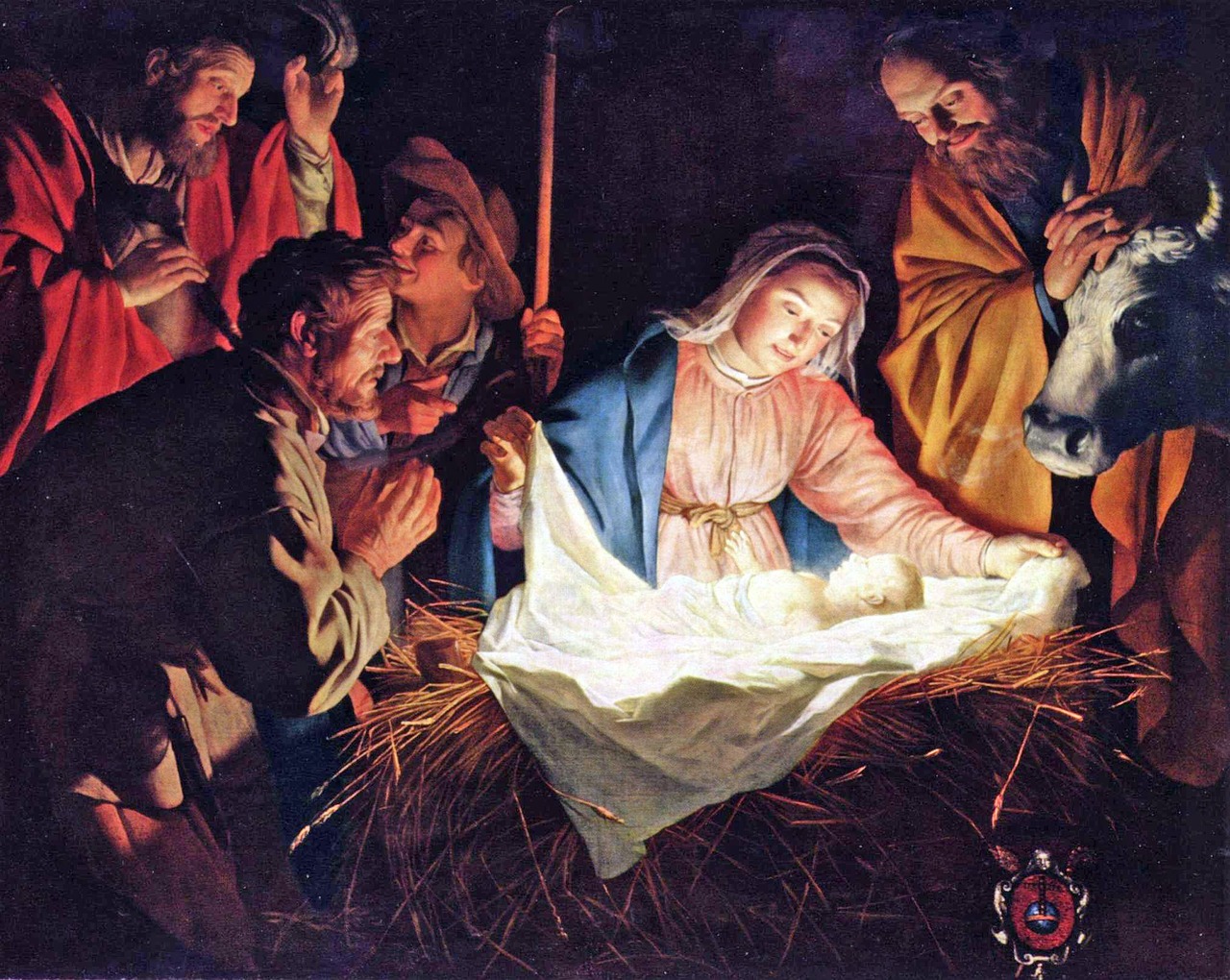
6Luke 2:1, 3-7In those days Caesar Augustus issued a decree that a census should be taken of the entire Roman world. And everyone went to their own town to register. So, Joseph also went up from the town of Nazareth in Galilee to Judea, to Bethlehem the town of David, because he belonged to the house and line of David. He went there to register with Mary, who was pledged to be married to him and was expecting a child. While they were there, the time came for the baby to be born, and she gave birth to her firstborn, a son. She wrapped him in cloths and placed him in a manger, because there was no guest room available for them.

7Luke 2:8 -14And there were shepherds living out in the fields nearby, keeping watch over their flocks at night. An angel of the Lord appeared to them, and the glory of the Lord shone around them, and they were terrified. But the angel said to them, “Do not be afraid. I bring you good news that will cause great joy for all the people. Today in the town of David a Savior has been born to you; he is the Messiah, the Lord. This will be a sign to you: You will find a baby wrapped in cloths and lying in a manger.” Suddenly a great company of the heavenly host appeared with the angel, praising God and saying, “Glory to God in the highest heaven, and on earth peace to those on whom his favor rests.”

8Luke 2:15-20When the angels had left them and gone into heaven, the shepherds said to one another, “Let’s go to Bethlehem and see this thing that has happened, which the Lord has told us about.” So, they hurried off and found Mary and Joseph, and the baby, who was lying in the manger. When they had seen him, they spread the word concerning what had been told them about this child, and all who heard it were amazed at what the shepherds said to them. But Mary treasured up all these things and pondered them in her heart. The shepherds returned, glorifying and praising God for all the things they had heard and seen, which were just as they had been told.

9John 1:1-5,14In the beginning was the Word, and the Word was with God, and the Word was God. He was with God in the beginning. Through him all things were made; without him nothing was made that has been made. In him was life, and that life was the light of all mankind. The light shines in the darkness, and the darkness has not overcome it. The Word became flesh and made his dwelling among us. We have seen his glory, the glory of the one and only Son, who came from the Father, full of grace and truth.

Isaiah 11:1-4a, 6 ↩; Isaiah 40:1-5 (7:14) ↩; Isaiah 9:2, 6-7 ↩; Matthew 1:18-21 ↩; Luke 1:35-38a ↩; Luke 2:1, 3-7 ↩; Luke 2:8 -14 ↩; Luke 2:15-20 ↩; John 1:1-5,14 ↩

Items for Discussion

  • What Biblical stories would you include or exclude if you were telling the story of Christmas, Christ’s coming?
  • How would you describe the purpose of Christ, why He came?
  • What traditions of Christmas are the most important to you and your family?

Discussion Challenge

  • How do we keep Christmas alive all year?
  • 1
    Isaiah 11:1-4a, 6
  • 2
    Isaiah 40:1-5 (7:14)
  • 3
    Isaiah 9:2, 6-7
  • 4
    Matthew 1:18-21
  • 5
    Luke 1:35-38a
  • 6
    Luke 2:1, 3-7
  • 7
    Luke 2:8 -14
  • 8
    Luke 2:15-20
  • 9
    John 1:1-5,14

In the Heart, Yes!

John 1:9-131NIV New International Version Translations
9 The true light that gives light to everyone was coming into the world. 10 He was in the world, and though the world was made through him, the world did not recognize him. 11 He came to that which was his own, but his own did not receive him. 12 Yet to all who did receive him, to those who believed in his name, he gave the right to become children of God- 13 children born not of natural descent, nor of human decision or a husband’s will, but born of God.

Background

The true Light is not “true” as compared to the concept of “true or false.” True is used here as an answer to God’s perfect response to human failure. We need then to compare Jesus to the worldly solutions, to the failings of our world which are all imperfect by their very nature. The meaning of the Greek is clear but difficulty arises from the fact that in English there is only one word to represent these two ideas. The word for the fuller meaning of “ideally true” is not confined to John’s Gospel  but is used frequently in his writings. The adjective is used nine times in this Gospel, and not at all in the other three. A comparison of the passages will show how important it is to get the right meaning of what the word means. You can find the here: (See John 4:23; John 4:37; John 6:32; John 7:28; John 8:16; John 15:1; John 17:3; John 19:35.) This Light, Jesus, is truth because the Light, Jesus, is not subject to the changing conditions of time and space. Jesus is true for all humanity, and brings “light to everyone.”

To fully understand Christ as Light, we first look to John the Baptist who came to bear witness concerning Jesus. Nothing more fully shows the darkness of human’s minds than that when the Light had appeared, there needed a witness (John the Baptist) to call attention to it.  By His Spirit and grace He enlightens all so that they are drawn to salvation through Him. Those who are not enlightened by Jesus, will perish in darkness. Jesus would come into our world  and take our nature upon Himself, and live among us. The Son of the Highest, the Son of God  was here in this lower world, in the world, but not really part of it. The purpose was to save a lost world, a world separated from God by its own making. Yet, in spite of His visit, the world still struggles to know Him.

When Jesus returns again as a Judge, the world will know Him. Many will claim that they are Jesus’s own (a child of God), even though they did not repent of their sins, or relinquish their will to Jesus so He could reign over them.  To be a “child of God” we must be born again. This new birth is ( 1 Peter. 1:23 ) “For you have been born again, not of perishable seed, but of imperishable, through the living and enduring word of God.” By the Divine presence Jesus, He was always in the world, even before its creation. People will typically discover their weaknesses from those most familiar with them, but it was not so with Jesus. Those who were most intimate with Him saw His glory, His perfection. Although He came as a servant, His form was like the Son of God. We know this through the holiness of His doctrine, and in His miracles. Jesus was full of grace, fully acceptable to his Father (God),  and therefore qualified to plead for us. It was Jesus who shared the truth of God to us.

Items for Discussion

  • How would you define “light” and compare it to Jesus’s coming to our world?
  • What do you think it means to be a “child of God?”
  • How does our world tell us to fix things and why is this inadequate?
  • What is the most significant change our society can make to welcome Jesus?
  • What are the attributes of a child that we are asked to model on behalf of our God?
  • What are the opportunities over the Advent and Christmas season to show people who Jesus really is?

Luke 2:22-38
22 When the time came for the purification rites required by the Law of Moses, Joseph and Mary took him to Jerusalem to present him to the Lord 23 (as it is written in the Law of the Lord, “Every firstborn male is to be consecrated to the Lord”), 24 and to offer a sacrifice in keeping with what is said in the Law of the Lord: “a pair of doves or two young pigeons.” 25 Now there was a man in Jerusalem called Simeon, who was righteous and devout. He was waiting for the consolation of Israel, and the Holy Spirit was on him. 26 It had been revealed to him by the Holy Spirit that he would not die before he had seen the Lord’s Messiah. 27 Moved by the Spirit, he went into the temple courts. When the parents brought in the child Jesus to do for him what the custom of the Law required, 28 Simeon took him in his arms and praised God, saying: 

29 “Sovereign Lord, as you have promised, you may now dismiss your servant in peace. 30 For my eyes have seen your salvation, 31 which you have prepared in the sight of all nations: 32 a light for revelation to the Gentiles, and the glory of your people Israel.”

33 The child’s father and mother marveled at what was said about him. 34 Then Simeon blessed them and said to Mary, his mother: “This child is destined to cause the falling and rising of many in Israel, and to be a sign that will be spoken against, 35 so that the thoughts of many hearts will be revealed. And a sword will pierce your own soul too.” 36 There was also a prophet, Anna, the daughter of Penuel, of the tribe of Asher. She was very old; she had lived with her husband seven years after her marriage, 37 and then was a widow until she was eighty-four. She never left the temple but worshiped night and day, fasting and praying. 38 Coming up to them at that very moment, she gave thanks to God and spoke about the child to all who were looking forward to the redemption of Jerusalem.

Background2https://sermonwriter.com/biblical-commentary/luke-222-40/

At the point of the advent story, Jesus is only a few weeks old, but he has been recognized as the Messiah by:

  • Elizabeth, Mary’s kinswoman, whose baby, John, “leaped in her womb, and Elizabeth was filled with the Holy Spirit. She called out with a loud voice, and said, Blessed are you among women, and blessed is the fruit of your womb!’” (1:41-42).
  • Zechariah, Elizabeth’s husband, who prophesied that God “has raised up a horn of salvation for us in the house of his servant David ” (1:69).
  • Angels and shepherds (2:8-20). The Wise Men will come later.

Purification applies only to the mother. Whether intentionally or not, Luke combines two rites here:

  • One is the purification of the mother following the birth of a child (Leviticus 12:1-8). The mother is considered unclean for forty days following the birth of a son or eighty days following the birth of a daughter. During that time, she is prohibited from going to the temple or handling holy objects.
  • The other is the presentation in the temple—a consecration and redemption of the firstborn (Exodus 13:1-2, 11-16) signifying that the child is “holy to the Lord” (v. 23). The redemption commemorates the deliverance of the people of Israel through the final plague—the death of the firstborn of Egypt. Henceforth, all firstborn of Israel (animals as well as humans) are to be redeemed.
  • A third requirement for a baby boy is circumcision. That took place earlier, on the eighth day after Jesus’ birth (v. 21).

Luke makes it clear that Jesus, from the very beginning, is obedient to the Law of Moses. He also confirms the devotion of Joseph and Mary to the law, mentioning the law three times in verses 22-24 and again in verses 27 and 39. Luke has already told us of Mary’s devotion (1:38, 46-55). We will soon learn that Joseph and Mary go to Jerusalem every year for Passover (2:41-42). The law of Moses was God’s plan in the Old Testament for the salvation of the Jewish people. Jesus is God’s plan in the New Testament for the salvation of all people. It is fitting that Jesus, from the beginning of His life, has His roots firmly planted in God’s law. As he will later explain, “Don’t think that I came to destroy the law or the prophets. I didn’t come to destroy, but to fulfill” (Matthew 5:17).

The law requires a sacrifice of “a year old lamb for a burnt offering, and a young pigeon, or a turtledove, for a sin offering” (Leviticus 12:6). However, there is a provision in the law for a woman who cannot afford a lamb. In that case, she is allowed to sacrifice two turtledoves or two pigeons (Leviticus 12:8). This offering of two pigeons tells us that Joseph and Mary are poor. Jesus begins his life in concert with the poor whose cause he will champion throughout his ministry. He was born in a stable and was raised as the son of a carpenter in Nazareth, far from Jerusalem and the temple—far from the center of wealth and power.

We meet Simeon. Luke emphasizes Simeon’s unusual qualifications. He is righteous and devout. He has spent a lifetime “looking for the consolation of Israel” (v. 25). The Holy Spirit rests on him, and has revealed to him that he will not die until he has seen the Messiah (vv. 25-26). The Spirit guides him to the temple, where he encounters Joseph, Mary, and Jesus (v. 27). He takes the baby in his arms and prays, “Now you are releasing your servant, Master, according to your word, in peace; for my eyes have seen your salvation” (vv. 29-30). God has fulfilled his promise, and Simeon has seen the Savior. Surely, over the years, he has prayed a thousand prayers, hoped a thousand hopes, and suffered a thousand disappointments. Finally, his dream is realized, and he can die in peace. God has rewarded his waiting. We are a busy and impatient society. We expect instant gratification, and do not like to be kept waiting. When our dreams don’t come true in a day, we need to keep in mind that God is still at work, still preparing the gift to fit our needs and preparing us for the gift. We need to pray, not just for the gift, but also for patience to wait for God’s unveiling.

Simeon tells Mary, “a sword will pierce through your (Mary’s)  own soul” (v. 35). There will be times during Jesus’ ministry when Jesus seems not to care about his family (8:19-21)—or when he seems to speak sharply to Mary (John 2:4), and those must be painful times for Mary. Also, Mary cannot fail to see that Jesus stirs great controversy, and it must be painful to know that it is the best rather than the worst of society that opposes him. At the cross, the sword that pierces Jesus’ side surely will not be as painful as the sword that pierces Mary’s heart. God has honored Mary by choosing her to be the mother of the Messiah, but the honor does not include an easy life. What could be more painful than a mother witnessing her son’s executed as a common criminal?

Items for Discussion

  • Why should we care about this story? Is it important to have Jesus recognized as Messiah while a child?
  • What does Luke teach you in this story?
  • What is the difference between the Law of Moses and Jewish law at the time?
  • Is it significant to know that Jesus came honoring the Law of Moses? Why?
  • Are there any special conclusions you draw from this story in Luke about Jesus?

Discussion Challenge

  • It is all about Jesus. So how to we help the world get to know Him better?


In the Flesh, Yes

Isaiah 9:2, 6-71NIV New International Version Translations
2 The people walking in darkness have seen a great light; on those living in the land of deep darkness a light has dawned.

6 For to us a child is born, to us a son is given, and the government will be on his shoulders. And he will be called Wonderful Counselor, Mighty God, Everlasting Father, Prince of Peace. 7 Of the greatness of his government and peace there will be no end. He will reign on David’s throne and over his kingdom, establishing and upholding it with justice and righteousness from that time on and forever. The zeal of the Lord Almighty will accomplish this.

Background

Isaiah sees in his vision a light shining on the forlorn and weary wanderers. They had been wandering in the “living in a land of deep darkness” (the phrase comes from Psalm 23:4; Job 3:5), almost as in the gloom of the land of the dead. Suddenly there breaks in the dawn of a new and glorious day. Historically, Isaiah sees the return of some of the inhabitants of that region to their allegiance to God and the house of David (2 Chronicles 30:11; 2 Chronicles 30:13) and this may have been the starting point of his hope for the nation of Israel. The message probably shows that he was thinking of Assyrian invasions, and the defeat of Assyrian armies, of a nation growing strong in numbers and prosperity.  In this, as in other cases of prophesy, we adapt the words to a further meaning which were not necessarily in the mind of Isaiah. Today, we see the Son of man, Jesus, appearing as the light of the world. Isaiah’s words seem to be the only adequate expression of hope.

Isaiah earlier mentioned a child who would be born and who would be named Immanuel (7:14). Now he mentions a child again, a very special child who will enjoy great authority and wisdom and who will establish endless peace. Government during Isaiah’s time was regarded as a burden, to be carried on the back or shoulders of the people. Unfortunately, not too much has changed in today’s world either. However, this “son” is going to bear the burden on his own shoulders so the people no longer need to uphold their burden.

We are always surprised that God would choose to raise a child, a newborn, to deliver his people and to establish peace, justice, and righteousness. We would expect him as did the people of Isaiah’s time, to raise up a mighty warrior like King David rather than a child. However, we must remember that David wasn’t a mighty warrior when God chose him. He was only a shepherd boy, the youngest son of Jesse. David too was such an unlikely candidate that Jesse didn’t even think to bring David in from the fields when Samuel came looking for the one who would become king (1 Samuel 16). It is God’s usual practice to use as His instrument someone who has nothing to offer except God’s blessing. A child, then, would be an obvious choice,  a newborn infant an even more obvious choice.

  • The four titles express the essential character of this new king:
    WONDERFUL COUNSELOR: The child will be a wise counselor, which contrasts wonderfully with King Ahaz, whose foolish policies have been so destructive.
  • MIGHTY GOD: Filled with Godly power to lead faithfully. This king will have God’s true might about Him, power so great that it can absorb all the evil which can be thrown at Him.
  • EVERLASTING FATHER: Our earthly fathers (including father-figures such as kings) live/reign for only a period of time and then they are gone. This child will become a father whose reign will last forever.
  • PRINCE OF PEACE: The establishment and maintenance of peace is no small achievement. The peaceful reign of this child will contrast nicely with the chaotic reign of Ahaz.

The characteristics of the child-king’s reign (government) will be:

  • Growing authority.
  • Endless peace.
  • Justice: Fair treatment for all, regardless of position, power, or wealth.
  • Righteousness: Protection of those who are weak.
  • From now and forever–This kind of everlasting rule cannot be achieved by mere power or wealth. It requires God’s help, and that in turn requires that the ruler rule in justice and righteousness.

God is no dispassionate God. He is zealous and determined to establish peace, justice, and righteousness. He has shown His zealousness over a period of centuries as He has patiently shaped and molded His people. It has been and will continue to be a rocky road, because the people are fundamentally rebellious. Nevertheless, in his zeal, God will continue to rebuke, reshape, woo, and love His people.

Items for Discussion

  • Why is the contrast of walking from darkness into light so effective in describing Christianity?
  • List a few burdens of Government.  How would you expect Christ’s Kingdom and rule to be different?
  • Think about the attributes of a king versus just an elected official. Why does the next world require a “King?”
  • Isaiah and the prophesy of Christ really opens our advent season. Why should we pay attention to the prophetic stories in the Bible?
  • Our world really doesn’t get the true meaning of Christ’s coming as a child.  How should we tell the story so more people understand who He is?


John 1:14-19
14 The Word became flesh and made his dwelling among us. We have seen his glory, the glory of the one and only Son, who came from the Father, full of grace and truth. 15 (John testified concerning him. He cried out, saying, “This is the one I spoke about when I said, ‘He who comes after me has surpassed me because he was before me.’”) 16 Out of his fullness we have all received grace in place of grace already given. 17 For the law was given through Moses; grace and truth came through Jesus Christ. 18 No one has ever seen God, but the one and only Son, who is himself God and is in closest relationship with the Father, has made him known. 19 Now this was John’s testimony when the Jewish leaders in Jerusalem sent priests and Levites to ask him who he was.

Background

We can begin by understanding that “the Word became flesh,” means that there is only one person who has always been God’s Son. Jesus became like us, human. But He had always existed, although not as a human person. He had been with God  in heaven, even before He was born. Jesus came to show us the truth about God. He showed us how much God loves us and how kind God is to us, even when we do not deserve it. When John the Baptist saw Jesus, he recognized him as the Messiah. John the Baptist emphasized that Jesus was much more important than himself. Although Jesus was a man, He had always existed and John the Baptist recognized this. When we trust in Jesus is when we  receive His many blessings, blessings that cannot be earned or that we deserve. They are God’s free gifts to us.

God gave the Law to Moses so that the people would know how to behave. The Law emphasized God’s perfect moral standards. Unfortunately, no one could obey all of the Law’s rules. It was too difficult. However, Jesus emphasized that God wanted to forgive us. When we trust Jesus, we receive God’s forgiveness. Jesus did not come to replace God’s Law but to make it complete. Before Jesus came, people followed a rigid set of rules. Now we follow a person, Jesus. To trust Jesus is to have a relationship with Him. Through that relationship, we are guided to do the right things, to please God.

Up until Christ’s birth, God had spoken by means of Moses and the prophets. But nobody had ever seen God. People only knew the characteristics of God. However, by means of His Son, God came down to earth. This message was one that John the Baptist was sharing. He lived in the desert. He wore clothes that he had made from camels’ hair. He ate strange food (Matthew 3:4). His father Zechariah was a priest.

John the Baptist was not a political leader but he gained power because many people listened to his message. John the Baptist’s message was to repent and to receive baptism. So when the Jewish leaders heard about John the Baptist, they sent some priests to him. They wanted to know if John the Baptist was teaching wrong beliefs. They needed to know if he was a genuine prophet. Also, perhaps they also came because they were jealous; He was popular with the people.

Items for Discussion

  • Why does the attribute of forgiveness make Christianity such a unique faith?
  • How do you think John the Baptist’s strange looks and personal habits either helped or hurt his effectiveness?
  • Jesus said yes to becoming a human, with all the pain and anguish that we deal with. Why was there no other way?
  • Why is the message “repent and be baptized” so perfect for the world, even today?

Discussion Challenge

  • How can we help show people that the Christ child is the incarnate God we all seek?
  • 1
    NIV New International Version Translations

In the Beginning, Yes!

Genesis 1:26-311NIV New International Version Translations
26 Then God said, “Let us make mankind in our image, in our likeness, so that they may rule over the fish in the sea and the birds in the sky, over the livestock and all the wild animals, and over all the creatures that move along the ground.” 27 So God created mankind in his own image, in the image of God he created them; male and female he created them. 28 God blessed them and said to them, “Be fruitful and increase in number; fill the earth and subdue it. Rule over the fish in the sea and the birds in the sky and over every living creature that moves on the ground.” 29 Then God said, “I give you every seed-bearing plant on the face of the whole earth and every tree that has fruit with seed in it. They will be yours for food. 30 And to all the beasts of the earth and all the birds in the sky and all the creatures that move along the ground-everything that has the breath of life in it-I give every green plant for food.” And it was so. 31 God saw all that he had made, and it was very good. And there was evening, and there was morning-the sixth day.

Background

This lesson is created for the first Sunday of the ADVENT season. Advent is the beginning of the Church Year leading up to Christmas and including the four preceding Sundays. It is the New Year’s Day for the Christian Church. The definition of the word “advent” means  the arrival of a notable person, thing, or event. Of the many synonyms for advent, we have: arrival · appearance · emergence · materialization · surfacing · occurrence · dawn · origin · birth · rise · development · approach · coming · looming · nearing · advance. In Christian theology, it also means the coming or second coming of Christ.

When God created Adam and Eve and placed them in the Garden of Eden, it was not the end of creation but the beginning.  Creation, God’s creation, is a process that continues today. From the very beginning, God implies the expansion of His own community. He says, “Let Us,” indicating a community already exists. Man was also made, physically, in God’s image, and our own creation begins with characteristics of shape and form in common with God. The remainder of the Bible fills in the details of how mankind is being brought forward from having not only form and shape that is common with God, but also with God’s own character, so that we fit perfectly into the community that God has created and is expanding.

When the Jesus came, He came with a message from “His Father.” Jesus brought, “the good news of the Kingdom of God” (Mark 1:14-15). There should be no doubt in our minds that God is forming a community. There also should be no doubt that Jesus Christ will rule this community, first, and afterward, forever.  The important thing for us with advent is what ramifications this good news of the Kingdom of God has on the way we live our lives. In the course of the story of Christ’s ministry, and the apostles’ who came afterward, we find some interesting things that have a direct impact on the way we live our lives. This is why we start each season with advent, as a constant reminder of where Jesus came from and why He came.

First, Christ was the Son of God. This is a family relationship. “Son” is used in the Bible in at least two different ways. One means “a direct descendant of.” The other is used in the sense of “characteristics of, but not necessarily direct descendant of.” The Bible says plainly that Jesus was the Son of God, a direct relationship. Since He was of the same Family, there is a family relationship. He was not only the literal Son born of Mary of the Holy Spirit, but He also showed the characteristics of God. He was God.

We have already seen that the community that He is creating is a kingdom.  The kingdom exists today and we exist in it. This kingdom is also a Family. Everybody is related, all being sons of our Creator, God. Everybody has the same characteristics. Just like human descendants of parents look like their parents, we too have characteristics of God. Everything fits together beautifully, and logically. God is reproducing Himself.

Items for Discussion

  • What characteristics of God do you see in ourselves?
  • Why should we draw comfort from the fact that we are created in God’s image?
  • Why is it important to the Christian Church to renew its calendar each year and relive the story of Christ’s coming and death?
  • If God and Jesus are perfect (which they are), why are humans so flawed?
  • We are told to have hope, not despair for the future? Why?
  • Do you have any advent traditions?


Luke 1: 5-24
5 In the time of Herod king of Judea there was a priest named Zechariah, who belonged to the priestly division of Abijah; his wife Elizabeth was also a descendant of Aaron. 6 Both of them were righteous in the sight of God, observing all the Lord’s commands and decrees blamelessly. 7 But they were childless because Elizabeth was not able to conceive, and they were both very old. 8 Once when Zechariah’s division was on duty and he was serving as priest before God, 9 he was chosen by lot, according to the custom of the priesthood, to go into the temple of the Lord and burn incense. 10 And when the time for the burning of incense came, all the assembled worshipers were praying outside. 11 Then an angel of the Lord appeared to him, standing at the right side of the altar of incense. 12 When Zechariah saw him, he was startled and was gripped with fear. 13 But the angel said to him: “Do not be afraid, Zechariah; your prayer has been heard. Your wife Elizabeth will bear you a son, and you are to call him John. 14 He will be a joy and delight to you, and many will rejoice because of his birth, 15 for he will be great in the sight of the Lord. He is never to take wine or other fermented drink, and he will be filled with the Holy Spirit even before he is born. 16 He will bring back many of the people of Israel to the Lord their God. 17 And he will go on before the Lord, in the spirit and power of Elijah, to turn the hearts of the parents to their children and the disobedient to the wisdom of the righteous—to make ready a people prepared for the Lord.” 18 Zechariah asked the angel, “How can I be sure of this? I am an old man and my wife is well along in years.” 19 The angel said to him, “I am Gabriel. I stand in the presence of God, and I have been sent to speak to you and to tell you this good news. 20 And now you will be silent and not able to speak until the day this happens, because you did not believe my words, which will come true at their appointed time.” 21 Meanwhile, the people were waiting for Zechariah and wondering why he stayed so long in the temple. 22 When he came out, he could not speak to them. They realized he had seen a vision in the temple, for he kept making signs to them but remained unable to speak. 23 When his time of service was completed, he returned home. 24 After this his wife Elizabeth became pregnant and for five months remained in seclusion.

Background

The father and mother of John the Baptist were like all of us, imperfect in God’s eyes. They too were saved in the same way as all others are saved by God. Their sadness was that they had no children, and it could not be expected that Elizabeth should have any in her old age. While Zachariah was burning incense in the temple, their were a multitude of the people praying with him. All the prayers we offer up to God, are acceptable and successful because of Christ’s intercession with God. While Zachariah prayed earnestly, he still needed Christ. We should not expect any fruitful blessings if we do not pray earnestly.  We cannot expect that the best of our prayers are ever acceptable or will be answered without Christ’s intercession. It is His purpose, to bridge the gap between our God and our soul that our sinful nature has created and make us blameless before God.

The prayers Zachariah often made, received an answer that would bring him joy. Prayers of faith are filed in heaven, and are not forgotten. Prayers made when we were young and entering into the world, may be answered when we are old and going out of the world. God’s mercies are doubly sweet when they come as an answer to prayer. Zachariah would have a son in his old age. This son would be instrumental in the conversion of many souls to God, and in preparing them to receive the gospel of Christ. Zachariah’s son would be John the Baptist.

Zachariah heard all that the angel said, but because he did not believe, had no faith, he could not speak afterwords. God dealt justly with him, because he had objected to God’s own words. Here you have to admire the patience of God towards Zachariah. God would deal kindly with him because he was prevented from speaking any more distrustful, unbelieving words. Thus also God confirmed his faith. It is oftn by the rebukes of God for our sins, we are brought to give more credit to the word of God. God, in essence, is removing our reason to complain. Even real believers are apt to dishonor God by unbelief; and their mouths are stopped in silence and confusion, when otherwise they should have been praising God with joy and gratitude. In God’s gracious dealings with us we ought to observe His gracious regards for us. God, therefore, looks on us with compassion and favor. God loves us.

Items for Discussion

  • Where in today’s society do we find the “foretellers” of the coming of Jesus?
  • Why do you think people remove Jesus from Christmas?
  • In what ways do you maintain the spirit of a foreteller for advent?

Discussion Challenge

  • Christmas services will bring the largest turnouts for a church. What should be done between the start of Advent and Christmas to create a momentum that keeps people coming to church?
  • 1
    NIV New International Version Translations

First Thanks, Then Giving

2 Corinthians 8:1–91NIV New International Version Translations
1 And now, brothers and sisters, we want you to know about the grace that God has given the Macedonian churches. 2 In the midst of a very severe trial, their overflowing joy and their extreme poverty welled up in rich generosity. 3 For I testify that they gave as much as they were able, and even beyond their ability. Entirely on their own, 4 they urgently pleaded with us for the privilege of sharing in this service to the LORD’s people. 5 And they exceeded our expectations: They gave themselves first of all to the LORD, and then by the will of God also to us. 6 So we urged Titus, just as he had earlier made a beginning, to bring also to completion this act of grace on your part. 7 But since you excel in everything-in faith, in speech, in knowledge, in complete earnestness and in the love we have kindled in you-see that you also excel in this grace of giving. 8 I am not commanding you, but I want to test the sincerity of your love by comparing it with the earnestness of others. 9 For you know the grace of our LORD Jesus Christ, that though he was rich, yet for your sake he became poor, so that you through his poverty might become rich.

Background

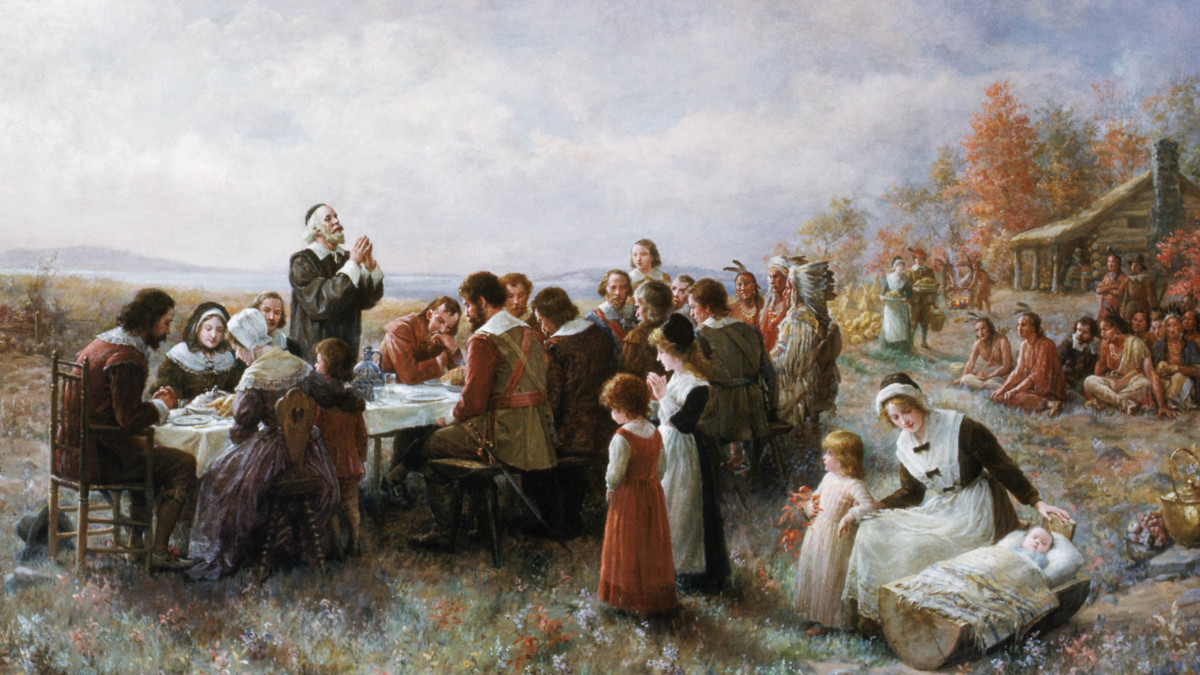
THANK YOU is an expression of gratitude or politeness, in response to something done or given. Thank you was shortened from the phrase “I thank you”. Derived from the old English “thancian” – related to Old Frisian “thankia” Old Norse “thakka” Old Saxon, Old High German “thancōn” leading to the middle German “danken” and the modern English “thank”. As the holiday “Thanksgiving” is upon us, it is a good time to reflect on things to be thankful for and how we express that gratitude today.

In the letter called 2 Corinthians, it is thought to be mostly comprised of the last of four letters written to the church in Corinth. The letter is a deeply personal letter — a response to the complex history of the Apostle Paul and the church he established there. The circumstances behind this letter reveal the difficult, often painful realities of the life of a minister. More than any of his other letters, 2 Corinthians shows us the heart of Paul as a pastor. The Apostle Paul reminds them of charitable work for the poor they have done. (1-6) Paul enforces this by reminding them of their gifts, and by the love and grace of Christ they have shared. (7-9) By their willingness they have encouraged everyone around also to do this type of good work.

The Apostle Paul tells them that the grace of God must be at the root and the ongoing source of all the good that is in us, including the good done by us, at any time. It comes from the Grace and favor of our God. If we are made useful to others, and move forward to do any good work, it is because of God, not our own character. He commends the charity of the Macedonians. The Macedonians had sever needs themselves but still supported Paul’s ministry to the point of even praying that he would accept their limited generosity.

Whatever we use or set aside for God’s purpose, it is only giving Him what is already His. All we give for charitable uses, will not be accepted by God, or even turned to our advantage, unless we first give ourselves to the Lord. By ascribing all good works to the grace of God, we not only give the glory to Him but also show other people where their strength should be placed. Abundant spiritual joy increases in our own hearts when the work and labor of love is involved. How different this from the conduct of those who will never join in any good works, unless they are urged into it!

Faith is the root of this generous spirit. Without faith it is not possible to please God, (Hebrews 11:6) so those who abound in faith, will abound in other graces and good works. All of this becomes visible to others through love. Great talkers are not always the best doers; but the Corinthians were diligent in their generosity, as well as knowledgeable about Paul’s teachings and about Christ. To this list of good things, of Christian character that Corinthians had, the Apostle Paul wants them to add this grace, “to abound in charity to the poor.” The best argument for Christianity and its duties come from the grace of God and the love of Christ.  Although Christ was rich, being God, equal in power and glory with the Father, He not only became man for us, but He also became poor.  Christ emptied Himself, as if it were, to pay the ransom for our souls by His sacrifice on the cross.

Items for Discussion

  • What ways do you express your thankfulness on Thanksgiving?
  • Are there traditions that your family has for this holiday?
  • Why are the traditions of a family so important to sustain and pass on to future generations?
  • How do you think God measures the acceptability of a person’s gift?
  • Why is it important that not only God but also people around us know we are we are generous on God’s behalf?
  • What effect do you think Paul wanted from these gifts over and above helping the poor?
  • In what specific ways have you experienced God being gracious to you?

Discussion Challenge

  • What activities would you expect to see in a thankful generous church?
  • 1
    NIV New International Version Translations

Use It or Loose It

Luke 12:13-211NIV New International Version Translations
13 Someone in the crowd said to him, “Teacher, tell my brother to divide the inheritance with me.” 14 Jesus replied, “Man, who appointed me a judge or an arbiter between you?” 15 Then he said to them, “Watch out! Be on your guard against all kinds of greed; life does not consist in an abundance of possessions.” 16 And he told them this parable: “The ground of a certain rich man yielded an abundant harvest. 17 He thought to himself, ‘What shall I do? I have no place to store my crops.’ 18 “Then he said, ‘This is what I’ll do. I will tear down my barns and build bigger ones, and there I will store my surplus grain. 19 And I’ll say to myself, “You have plenty of grain laid up for many years. Take life easy; eat, drink and be merry.”‘ 20 “But God said to him, ‘You fool! This very night your life will be demanded from you. Then who will get what you have prepared for yourself?’ 21 “This is how it will be with whoever stores up things for themselves but is not rich toward God.”

Background

The issue here is not ownership of possessions but ownership by possessions. Wealth is a hard taskmaster. The person who desires wealth is tempted to make the acquisition of more things their top priority in life. We are all tempted to believe that we can find true security in wealth. Faith in wealth crowds out faith in God. It is not money that is the problem, however, but love of money (1 Timothy 6:10).

Lets look at the Old Testament and what it says about inheritance.  Deuteronomy 21:17 calls for a double portion of the inheritance for the firstborn son. If there are two sons, the elder receives two-thirds (67 percent), and the second son one-third (33 percent). If there are three sons, the elder receives two-fourths (50 percent), and the others receive one-fourth each (25 percent). If there are four sons, the elder receives two-fifths (40 percent), and the others receive one-fifth each (20 percent). Deuteronomy specifies that the father’s affection or lack thereof for the wife of the firstborn must not affect the inheritance. This complicated questions concerning inheritance, sons of different mothers, or from multiple wives.

This man’s issue is not the amount that he has inherited, but rather the fact that his father has left the inheritance to his two sons jointly, not equally. This man doesn’t want joint ownership, but wants to be independent of his brother. His love of money supersedes his love for his brother. This is not about the law in Deuteronomy.

It is unlikely that he is a firstborn son, because a firstborn son would have control of any estate and would not require Jesus’ assistance. While the man addresses Jesus as teacher, he is not asking to be taught anything. Instead, he tells Jesus what he wants and asks (or commands) Jesus to do his bidding, to separate the estate and inheritance for him. He wants to take advantage of Jesus’ moral authority—seeks to use Jesus’ authority to gain power over his brother in the dispute over their inheritance.

This man’s selfishness is in sharp contrast with the context in which he makes his request. Jesus has been teaching people by the thousands (12:1). He warned them of hypocrisy coming from the Pharisees (12:1). Jesus told them not to fear those who kill the body but those who can corrupt them and cast them into hell (12:4-5). Jesus encouraged them to confess the Son of Man before people (12:8-9), to share their reasons and faith in Him. He told them that they will face opposition and assured them that the Holy Spirit will give them the right words when they are dragged before the authorities (12:11-12). In the midst of these serious concerns, a man interjects a request for help with his inheritance. In doing so, he reveals that he has not heard anything Jesus has been saying. The man is only concerned about his personal problem. His interruption and issue is trivial by comparison with the teaching that the man is interrupting, and so is an inappropriate and disruptive question.

So Jesus gives us a parable to answer this man. “The ground of a certain rich man brought forth abundantly” (v. 16). The man was rich prior to this harvest, and the harvest simply increases his wealth. Jesus portrays a windfall harvest—a harvest far in excess of the rich man’s investment in planting and tilling—a harvest that is truly a gift of God. As we shall see, the abundant harvest raises the question of stewardship. What responsibility do we incur when we acquire more than we need? “He reasoned within himself” (v. 17a). The man talks with nobody but himself. He is so inwardly focused that he requires no counsel. He certainly has not asked God for guidance.

“What will I do, because I don’t have room to store my crops?” (v. 17b). Most of us would be glad have this problem,  having more money than we know what to do with. This man certainly seems glad. However, money is all that he has. He mentions nothing of family or friends. He has no sense of community. He has no inclination to help the poor or to donate to worthwhile charities. He is rich in money and poor in everything else. What is the man’s solution? “I will pull down my barns, and build bigger ones, and there I will store all my grain and my goods” (v. 18). The abundant harvest exceeds the rich man’s expectations, requiring quick decisions regarding storage or disposal. Jesus does not suggest that the man has come by the great harvest dishonestly. There is no suggestion that the man misused his hired hands or harvested grain from his neighbor’s fields, no fraud involved.

The parable draws a contrast between “many years” (v. 19) and “tonight” (v. 20). The man is foolish because he hasn’t taken into account his own mortality, which will claim him this very night. Jesus is not responsible for his pending death in the parable, Jesus just knows this. “The things which you have prepared—whose will they be?” (v. 20b). People who love possessions guard them jealously, maintain tight controls, build fences to prevent other people from gaining access to those possessions. This is not about someone squandering their wealth, it is a longer range view of wealth. What happens when rich people die? What happens when any of us die? Wills, trusts and philanthropic gifts provide only basic protection for someone’s wishes. Fortunes, big and small, are often spent in ways that the person never envisioned and would never have approved.

“So is he who lays up treasure for himself, and is not rich toward God” (v. 21). We should not assume that this verse applies only to Silicon Valley Millionaires or politicians. We don’t have to be wealthy by the world’s standards to fall into this trap. The jeopardy applies to any person who “lays up treasure for themselves” and who “is not rich toward God.”

The problem is not this man’s wealth but his selfishness and hoarding. While wealth tempts people to hoard or squander, poverty can also have its risks.  If poor people share their surplus unselfishly with people, they are following Jesus’s instructions. However, even the hungry can hoard a piece of bread, especially if it is more than they really needed.

Items for Discussion

  • Do you think people try to take advantage of Jesus in today’s society, similar to the rich man in this story?
  • How would you define “surplus wealth?”
  • Can you think of any biblical characters who were wealthy and successful? How were they different from this rich man?
  • What is the problem with looking for satisfaction in possessions?
  • How is the world’s perspective on investing in our lives at odds with God’s perspective?
  • How do you define greed and what introspective test questions could you give yourself to see if you are at risk like the man in this story?
    • Self-Test:
    • (1) Do my thoughts more often run after material things than after God Himself?
    • (2) Do I ever compromise godly character in the pursuit of material gain?
    • (3) Do I enjoy material things more than I enjoy knowing God?
    • (4) How do I respond when I lose material things?
    • (5) What would I do if I suddenly came into a fortune?
  • What is the lesson here on maintaining relationships with people over handling our riches?

Discussion Challenge

  • How can we teach others to view Jesus is like an eternal 401K?
  • 1
    NIV New International Version Translations

Side by Side

Philippians 1:3-51NIV New International Version Translations
3 I thank my God every time I remember you. 4 In all my prayers for all of you, I always pray with joy 5 because of your partnership in the gospel from the first day until now,

Background

Founded in the 4th century B.C. and renamed after King Philip of Macedon, Philippi was an important outpost on the Egnation Way. Two important battles were fought here in 42 B.C. resulting in the defeat of Cassius and Brutus, conspirators in the assassination of Julius Caesar.

In the opening verses of Paul’s letter to the Philippians, he expresses joy and confidence, the dominant theme throughout the entire letter. This is actually quite remarkable because this letter was written while Paul was in captivity, separated from the people he cared for most and kept from the work of Christ he loved to do. The words “joy” and “rejoice” occur no less than thirteen times in this short letter. The Apostle Paul is expressing his own feeling but desires the same for the people in Philippi.

Paul tells us that his highest honor was to be a servant of Christ. This should also translate onto ourselves because for those who are not really saints on earth, never will be saints in heaven. Without Christ, the best saints are just sinners and unable to stand before God. There is no inward peace without grace. Inward peace springs from a sense of Divine favor and there is no grace and peace but from God, the origin of all blessings.

While at Philippi Paul was poorly treated and saw little fruit for his labor. Yet Paul remembers Philippi with nothing but joy. Paul is not only telling us but showing us that we must thank our God for the graces and comforts, gifts and usefulness of others. As we may receive the benefit, God receives the glory. The work of grace will never be perfected till the day Christ returns. However, we must always be confident that God will perform His good work in every trusting soul and through every trusting soul. Paul is reminding us that the people of God are endeared to their ministers (and teachers) when they receive the benefits of their ministry. We are all fellow-sufferers in the cause of the Gospel and should be also endeared to one another in the same way. This simple process ensures that our faith is passed on to future generations.

Items for Discussion

  • What qualities can you see in Paul’s prayer? What can we learn from this?
  • Explain ‘grace’ and ‘peace’ in your own words.
  • What does Paul show us about his relationship to God?
  • How did the Philippians react to Paul’s imprisonment?
  • Paul says the Philippians are his partners in the gospel. What might he mean?
  • For what in particular did he give thanks in  verse 1:5? 
  • How can we follow these principles when we face difficulties in our own lives?
  • How can we use our own troubles to encourage other believers?
  • In what ways can you help your Christian minsters and teachers?

Discussion Challenge

  • God will complete the good work all ministers and teachers begin in someone. What is the role of the congregation of a church in aiding this process?
  • 1
    NIV New International Version Translations

A Scream in the Dark or a Call to Follow

Mark 10:17-221NIV New International Version Translations
17 As Jesus started on his way, a man ran up to him and fell on his knees before him. “Good teacher,” he asked, “what must I do to inherit eternal life?” 18 “Why do you call me good?” Jesus answered. “No one is good-except God alone. 19 You know the commandments: ‘You shall not murder, you shall not commit adultery, you shall not steal, you shall not give false testimony, you shall not defraud, honor your father and mother.'” 20 “Teacher,” he declared, “all these I have kept since I was a boy.” 21 Jesus looked at him and loved him. “One thing you lack,” he said. “Go, sell everything you have and give to the poor, and you will have treasure in heaven. Then come, follow me.” 22 At this the man’s face fell. He went away sad, because he had great wealth.

Background

This young man, showed great enthusiasm towards Jesus. He asked what he should do now, that he might be happy forever. The man asks what he must do to inherit eternal life. As a rich man, he understands inheritances. The law spells out inheritances. The firstborn son is to inherit two shares of the property, and each of the other sons is to inherit one share (Deuteronomy 21:17). In other words, the firstborn son is to get twice as much as any of his brothers. If there are no sons, daughters are allowed to receive the inheritance (Numbers 27:8-11). However, in most cases, a daughter would receive only a dowry—a bridal present from her father.

This rich young man surely knows those laws like the back of his hand. Now he wants to know the law regarding eternal life—what he must do to inherit eternal life. What are the requirements? What must he do? Most people do ask for good things to be had in this world during their lifetime. This man obviously recognized that the real prize was happiness for eternity.  Just like in Psalm 4:6, Many, LORD, are asking, “Who will bring us prosperity?” Let the light of your face shine on us., the man starts off asking about good to be done in this world, in order to enjoy the greatest good in the other world.

Christ encouraged this question by first showing him love, then by directing his behavior. But here comes the good news, bad news and the sorrowful parting between Jesus and this young man. The man asks Christ what he must do more than he has already done, to obtain eternal life? The man has obeyed God’s Laws. Shouldn’t that have been enough? Christ responds are you willing to bear a cross now, in expectation of future crown? The young man was sorry he could not become a follower of Christ. The terms were too hard. His worldly possessions were great and had a deep hold on him. He wanted easier terms that would assure eternal life, and keep hold of his worldly possessions too. He went away disappointed.

We see this same kind of logic in Matthew 6:24. “No one can serve two masters. Either you will hate the one and love the other, or you will be devoted to the one and despise the other. You cannot serve both God and money.” In our verses, Jesus looked at him and loved him. This tells us two things:

  • First, the man didn’t come to Jesus, as so many powerful men did, trying to find out if Jesus was real. The young man asked a question for the purpose of learning from Jesus, and anticipated doing what Jesus told him to do.
  • Second, Jesus saw that the man’s heart was pure and felt a genuine affection for him. Whether He knew in advance how the man would respond is something that we do not know. What we can deduce is that Jesus was giving the man a genuine opportunity to choose the road that leads to eternal life.

Why then should Jesus demand such a large sacrifice from this man? There are at least two possibilities:

  • As this story reveals, this man’s wealth is very important to him—more important even than eternal life.  The security afforded by material possessions tempts us to trust in possessions rather than in God.
  • This story follows immediately after the story of the children in which Jesus said, “Most certainly I tell you, whoever will not receive the Kingdom of God like a little child, he will in no way enter into it” (10:15). The rich man is quite unlike those children. They were poor, but he is rich. They were dependent, but he is not. They had no status or power, but he has both. They had no security apart from those who cared for them, but the rich man is quite secure in his own right. Perhaps Jesus is simply requiring the rich man to become like a child before God—to strip himself of those things that provide him security so that he might find his security in God.

It is possible, then, that Jesus tailored the requirement to sell everything especially for this man—to meet his particular spiritual needs. We should expect, however, that Jesus will ask something equally difficult and tailored for us.

Items for Discussion

  • This of course is stewardship month and this message goes to the heart of giving. How would you determine if, like this man, your worldly possessions were a barrier to entering eternal life with God?
  • What clues might there be to help you answer the question above?

In just several more verses Jesus will say “It is easier for a camel  to go through a needle’s eye than for a rich man to enter into the Kingdom of God” (v. 25). The disciples then ask the obvious question, “Then who can be saved?” (v. 26). If this decent, God-fearing, law-abiding man, whom God has blessed with riches, cannot be saved, who can?

  • The question to you is if you believe wealth is a barrier to eternal life?

Listen carefully to Jesus’ answer to His disciples question: “With men it is impossible, but not with God, for all things are possible with God” (v. 27). Apart from grace, this decent, God-fearing, law-abiding man has no hope.

  • So what are the barriers to accepting God’s grace?

Hint: Grace is God sending His only Son to die on the cross so that we guilty ones might be reconciled to God and received into heaven. 

Discussion Challenge

  • How does the body of the Church learn about God’s gift of grace and then accept it?


  • 1
    NIV New International Version Translations
« Older posts Newer posts »

"For it is by grace you have been saved" - Ephesians 2:8-9  

Copyright: © 2001 - 2025 Lostpine

Translate »