Inspiration for Today's World

Category: Snapshots (Page 5 of 45)

Glorious Things of Thee Are Spoken

Exodus 17:1-71NIV New International Version Translations
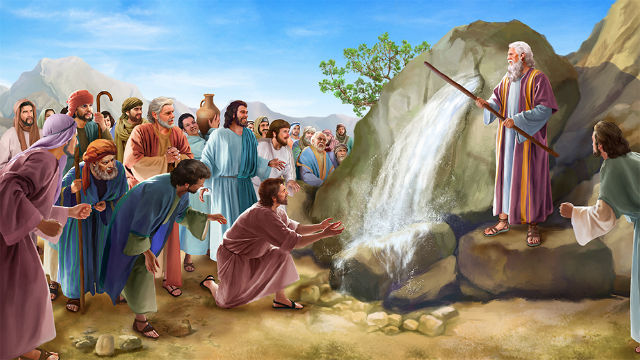
1 The whole Israelite community set out from the Desert of Sin, traveling from place to place as the LORD commanded. They camped at Rephidim, but there was no water for the people to drink. 2 So they quarreled with Moses and said, “Give us water to drink.” Moses replied, “Why do you quarrel with me? Why do you put the LORD to the test?” 3 But the people were thirsty for water there, and they grumbled against Moses. They said, “Why did you bring us up out of Egypt to make us and our children and livestock die of thirst?” 4 Then Moses cried out to the LORD, “What am I to do with these people? They are almost ready to stone me.” 5 The LORD answered Moses, “Go out in front of the people. Take with you some of the elders of Israel and take in your hand the staff with which you struck the Nile, and go. 6 I will stand there before you by the rock at Horeb. Strike the rock, and water will come out of it for the people to drink.” So Moses did this in the sight of the elders of Israel. 7 And he called the place Massah and Meribah because the Israelites quarreled and because they tested the LORD saying, “Is the LORD among us or not?”
Background2https://www.workingpreacher.org/preaching.aspx?commentary_id=1067
The question in our lesson plaguing God’s people is whether God is with them. When we are served up a “test of faith,” will God be there to answer us, to hold our hand, to light our path? This is not the first time the Israelites have lacked for water. The first time, they had been in the wilderness for three days (Exodus 15:22). When they arrived at Marah, they found the water there undrinkable on account of its bitterness. After the people complained, Moses called out to God and God provided a piece of wood, which, when thrown into the water made it sweet and potable (15:23-25a).  God then tested them (15:25b), saying that if the people would listen to God’s voice and keep all of God’s commandments He would not bring diseases on them as He did with the Egyptians, “for I am the LORD who heals you” (15:26).

In Exodus 16, the chapter right before our lesson, the people struggle to listen to God’s voice with regard to the gathering of manna. In particular, to the command not to store it up. This was, in essence, a test of their faith. Exodus 16 ends with the statement: “The Israelites ate manna forty years, until they came to habitable land” (16:35). The faithfulness of the people to trust God on a daily basis was fulfilled.

When we get to Exodus 17, the Israelites hit another speed bump. They have camped at Rephidim, but there is no water to drink. The complaining that was so prevalent in chapter 16 resurfaces, and this time, it is intensified with quarreling. They say to Moses, “Give us water to drink” (17:2). Apparently unfazed by the lack of water himself, Moses accuses the people of testing God. “Why do you quarrel with me? Why do you test  the LORD?” (17:2). Previously God had devised tests for the people (15:25b; 16:4) and Moses has interpreted the people’s quarreling and requests for water as testing God. What precisely is being “tested”?

The people’s continuing doubt seems both to be about who is in charge (they still identify Moses as the one who brought them up out of Egypt, rather than God) and why they have been chosen by God. In Egypt, they were chosen by the Pharaoh for work (Exodus 1:11) and ultimately, for death (Exodus 1:16). They suspect that this is Moses’ and God’s intention for them as well, for they wonder if they have been brought into the wilderness to die, to be killed, along with their children (their futures) and their livestock (their security).

Based on their questions, they seem to assume that God has left Moses in charge and that Moses’ agenda mirrors that of the Pharaoh — to use the people: for labor and as a means to gain glory for himself and God over Pharaoh’s authority. So Moses goes back to God again, complaining about the people: “What shall I do with this people?!” God tells Moses to take the staff he used at the Nile River and to meet God on the rock at Horeb, from which water will flow when Moses strikes it with his staff.

God chooses to bring the people life, not death, as they suspect. God takes something that is lifeless, stone, and brings forth water representing life itself. For without water there is only death. The Israelites are about to learn another lesson. Out of Egypt and out of the wilderness, God will find ways to make life flow in unexpected ways. God will require a certain amount of trust from His people, a willingness to put their faith in a god who seems not to do things in the typical way. Remember, their perspective on what a god was like had been heavily influenced by their time in Egypt.

God seems almost to forget about the people’s needs but responds with creativity when the people loudly protest. The people keep pushing the question: “Are you another god like Pharaoh?” It may be that the people are working to shape God’s character just as God works to shape the character of His people. The mutual testing in the wilderness yields a people with a unique faith who have inspired countless generations of people to follow them. Amazing isn’t it, after 6,000 years, we still believe in God!

The story does not tell us about the people’s reaction to this little miracle at Massah and Meribah. But Moses names the place, not after the miracle, but after the people’s doubting and testing: “Is the LORD among us or not?” (17:7). While this name highlights the wildness and freedoms of God, it also memorializes the fears, questions, and doubts of people of faith. The lesson for us is to never forget that when faced with the same types of fears and begin to question whether God is among us or not, God will always respond with and through flowing streams of life-giving water.

Items for Discussion

  • What is it about the character of humans that would soon forget gifts from God?
  • Why might it take dramatic miracles to help define the characteristics of God for His people? Do you think God still does this today?
  • Can you think of ways in which God has acted in our world to make life to flow from places of death?
  • How do we still quarrel with God?
  • The very character of God has been passed on from generation to generation. How?

John 4:5-42
5 So he came to a town in Samaria called Sychar, near the plot of ground Jacob had given to his son Joseph. 6 Jacob’s well was there, and Jesus, tired as he was from the journey, sat down by the well. It was about noon. 7 When a Samaritan woman came to draw water, Jesus said to her, “Will you give me a drink?” 8 (His disciples had gone into the town to buy food.) 9 The Samaritan woman said to him, “You are a Jew and I am a Samaritan woman. How can you ask me for a drink?” (For Jews do not associate with Samaritans.) 10 Jesus answered her, “If you knew the gift of God and who it is that asks you for a drink, you would have asked him and he would have given you living water.” 11 “Sir,” the woman said, “you have nothing to draw with and the well is deep. Where can you get this living water? 12 Are you greater than our father Jacob, who gave us the well and drank from it himself, as did also his sons and his livestock?” 13 Jesus answered, “Everyone who drinks this water will be thirsty again, 14 but whoever drinks the water I give them will never thirst. Indeed, the water I give them will become in them a spring of water welling up to eternal life.” 15 The woman said to him, “Sir, give me this water so that I won’t get thirsty and have to keep coming here to draw water.” 16 He told her, “Go, call your husband and come back.” 17 “I have no husband,” she replied. Jesus said to her, “You are right when you say you have no husband. 18 The fact is, you have had five husbands, and the man you now have is not your husband. What you have just said is quite true.” 19 “Sir,” the woman said, “I can see that you are a prophet. 20 Our ancestors worshiped on this mountain, but you Jews claim that the place where we must worship is in Jerusalem.” 21 “Woman,” Jesus replied, “believe me, a time is coming when you will worship the Father neither on this mountain nor in Jerusalem. 22 You Samaritans worship what you do not know; we worship what we do know, for salvation is from the Jews. 23 Yet a time is coming and has now come when the true worshipers will worship the Father in the Spirit and in truth, for they are the kind of worshipers the Father seeks. 24 God is spirit, and his worshipers must worship in the Spirit and in truth.” 25 The woman said, “I know that Messiah” (called Christ) “is coming. When he comes, he will explain everything to us.” 26 Then Jesus declared, “I, the one speaking to you—I am he.” 27 Just then his disciples returned and were surprised to find him talking with a woman. But no one asked, “What do you want?” or “Why are you talking with her?” 28 Then, leaving her water jar, the woman went back to the town and said to the people, 29 “Come, see a man who told me everything I ever did. Could this be the Messiah?” 30 They came out of the town and made their way toward him. 31 Meanwhile his disciples urged him, “Rabbi, eat something.” 32 But he said to them, “I have food to eat that you know nothing about.” 33 Then his disciples said to each other, “Could someone have brought him food?” 34 “My food,” said Jesus, “is to do the will of him who sent me and to finish his work. 35 Don’t you have a saying, ‘It’s still four months until harvest’? I tell you, open your eyes and look at the fields! They are ripe for harvest. 36 Even now the one who reaps draws a wage and harvests a crop for eternal life, so that the sower and the reaper may be glad together. 37 Thus the saying ‘One sows and another reaps’ is true. 38 I sent you to reap what you have not worked for. Others have done the hard work, and you have reaped the benefits of their labor.” 39 Many of the Samaritans from that town believed in him because of the woman’s testimony, “He told me everything I ever did.” 40 So when the Samaritans came to him, they urged him to stay with them, and he stayed two days. 41 And because of his words many more became believers. 42 They said to the woman, “We no longer believe just because of what you said; now we have heard for ourselves, and we know that this man really is the Savior of the world.”

Background3https://www.workingpreacher.org/preaching.aspx?commentary_id=905

Jesus, like so many times in His examples, crosses social boundaries. He asks a Samaritan woman for a drink.  The encounter has three parts:

  1. First, it is all about water.
  2. Second, Jesus has a conversation about the woman’s private life.
  3. Third, their is a conversation about worship in Spirit and truth, which leads the woman from the well wondering about the Messiah and His revealing to her that it is really He.

The reference to living water in Greek refers to water that is flowing rather than still “fresh rather than stagnant” while also actually meaning “living.” Jesus links the water to the gift of eternal life gushing up in the believer who receives Jesus’ gift. The language of the well scene “water, water jar, and drawing” — reminds us of the miracle at Cana when Jesus first revealed His glory to His disciples. The word used initially for well (in 4:6; a different word is used in verse 12) and then for the spring gushing up to eternal life appears several times in Revelation.

The Lamb will guide them to “springs of the water of life” (7:17). Jesus also says, “To the thirsty I will give water as a gift from the spring of the water of life.” (21:6).In John 7:37-39 when on the last great day of the Feast of Tabernacles Jesus says, “Let anyone who is thirsty come to me, and let the one who believes in me drink. As the scripture has said, “‘Out of the believer’s heart shall flow rivers of living water.'”

To summarize, we interpret the meaning of the living water as the gift of the Spirit here in verse 4:14.

As soon as the woman asks for the living water, the conversation turns to her life, and Jesus will now tell her everything she has ever done, as she later confirms. Then, having been seen by Jesus, she sees him differently, and the conversation takes another turn. She immediately understands Him to be a prophet and asks Him a serious question about worship to which He gives a serious answer.

The Spirit is introduced here explicitly. To worship God as God wants is to worship in the Spirit, presumably with the Spirit that Jesus offers gushing up from the heart, and in truth, which we will later understand to be embodied in Jesus himself (8:31-32; 14:6). Worship, this seems to suggest, is about relationship, dwelling in the vine Jesus. The Samaritan woman, who has entered into relationship with Him here, perhaps understands this. She suggests in her roundabout way that He is the coming Messiah, and for the first and only time in John, Jesus says that He is.

What is life-changing for the woman is, according to her, that she has been entirely known by Him, and this being known has enabled her to know Him. The story is about her being able to begin to see who He is, being given a gift which leads to real worship. She now is a conduit for the living water. The woman’s testimony, in turn, has brought a harvest to Jesus.

In order to be changed, the woman had to experience the truth and love of Jesus. Now, with the courage to become a witness, she was able to share the Spirit and the truth with others.

Items for Discussion

  • Why is water such a good visual for Jesus’s truth and love?
  • What happens when water becomes stagnant, polluted?
  • Of all the significant information, John gives us verse 28,  “Then, leaving her water jar, the woman went back to the town and said to the people,” – Why do you think we were given a fact so trivial as to “she left her water jar behind?”
  • Between our Old Testament and New Testament verses, water is the common theme. What other commonalities do you see?

Discussion Challenge

  • What are the ways we can share the “Spirit” we see here today and keep the “water” pure?

No Hands and Feet But Ours

Ephesians 4:1-7, 111NIV New International Version Translations
1 As a prisoner for the Lord, then, I urge you to live a life worthy of the calling you have received. 2 Be completely humble and gentle; be patient, bearing with one another in love. 3 Make every effort to keep the unity of the Spirit through the bond of peace. 4 There is one body and one Spirit, just as you were called to one hope when you were called; 5 one Lord, one faith, one baptism; 6 one God and Father of all, who is over all and through all and in all. 7 But to each one of us grace has been given as Christ apportioned it. 

11 So Christ himself gave the apostles, the prophets, the evangelists, the pastors and teachers,

Background

In the verses considered here, believers are called to a different kind of unity, one that is created by and grows in love. The unity is based not in similarity of gifts, but in the connections created by the Spirit given and shared through baptism.

Paul wrote this letter to the people in Ephesus when he was in a prison in Rome, about 61 years after the birth of Christ. At one time, Greek leaders had ruled Ephesus. However, during Paul’s imprisonment,  the Romans ruled the city. Ephasus was the capital of the Roman region called Asia. It was a busy port and the center of much trade. Ephasus was the site of the temple of the goddess Diana (or Artemis). The business people sold models of Diana’s temple there but Paul’s preaching affected their trade. This caused confusion and trouble in the city (Acts 19:23-41) leading to his imprisonment.

This letter is different from other letters by Paul. The main differences are:

  • he does not give any special greetings;
  • he does not send a message to any one particular person;
  • he does not talk about special problems.

Paul wrote the letter to encourage the personal faith of the Christians. It gives teaching, prayers and great praises to God. It is about Jesus Christ. Paul makes clear that Christ is the head of the church.

Paul states that all has been given; believers have not attained or reached or otherwise brought upon themselves the great gifts of God. (Notice the passive verbs in Ephesians 4:1, 4,  and 7). Even as all has been given, the one Spirit, one Lord, baptism, and so forth (Ephesians 4:4-6) such that everyone has been filled with a whole new life (see especially v. 6 in which this uniting bond of oneness is above all AND through AND in all). It is the call of every Christian.

The activities of those called and by God, summarized by living worthily (Ephesians 4:1), include bearing with one another, maintaining the unity of the Spirit, speaking the truth in love, and growing up. not just maturing but growing into Christ Himself.  Growing up in Christ is a very interesting idea for us. If anything, in our age of rapid and unedited communication, the winds of opinion and doctrine fly faster than we can keep up. Scientific studies, poorly reported, spin us from one healthy option to the next without time for reflection and good decision making impacts our faith as Christians. How do we slow down enough and build enough trust with one another to speak the truth in love? How does the Christian church survive in a world of heavy political divisions?

In the original Greek, it says that Jesus has given certain people to the church as a gift. These people have different gifts. But together they are God’s gift to the church. They then use their gifts and do their jobs in the church. The result of this is that God can build up the church. and it can grow. Perhaps the most important thing for us in these verses is the clarity of our purpose as believers, to give ourselves to eachother. What might the world look like if we lived our lives worthy of the life of the one who gave Himself to and for us? Imagine that.

Items for Discussion

  • Why is Christ ineffective without us?
  • What attributes make the Christian Church successful in the world?
  • Assuming you have given yourself to Christ, why does it then make sense that Jesus can give you back to the Church as a worker? Why then are so many reluctant?
  • How has modern technology like the Internet, Cell Phones, Twitter, Facebook, etc. made it harder to honor Christ’s call to be peaceful people?
  • How do we combat the advances of modern communication and pull in subsequent generations into the Church?
  • Why is humility so important?
  • How does being patient and gentle help with loving one another?
  • If we do not step up to the challenges facing the Church, who will?

Discussion Challenge

  • How should the Church measure itself against Jesus Himself?
  • 1
    NIV New International Version Translations

A Tail from the Trail

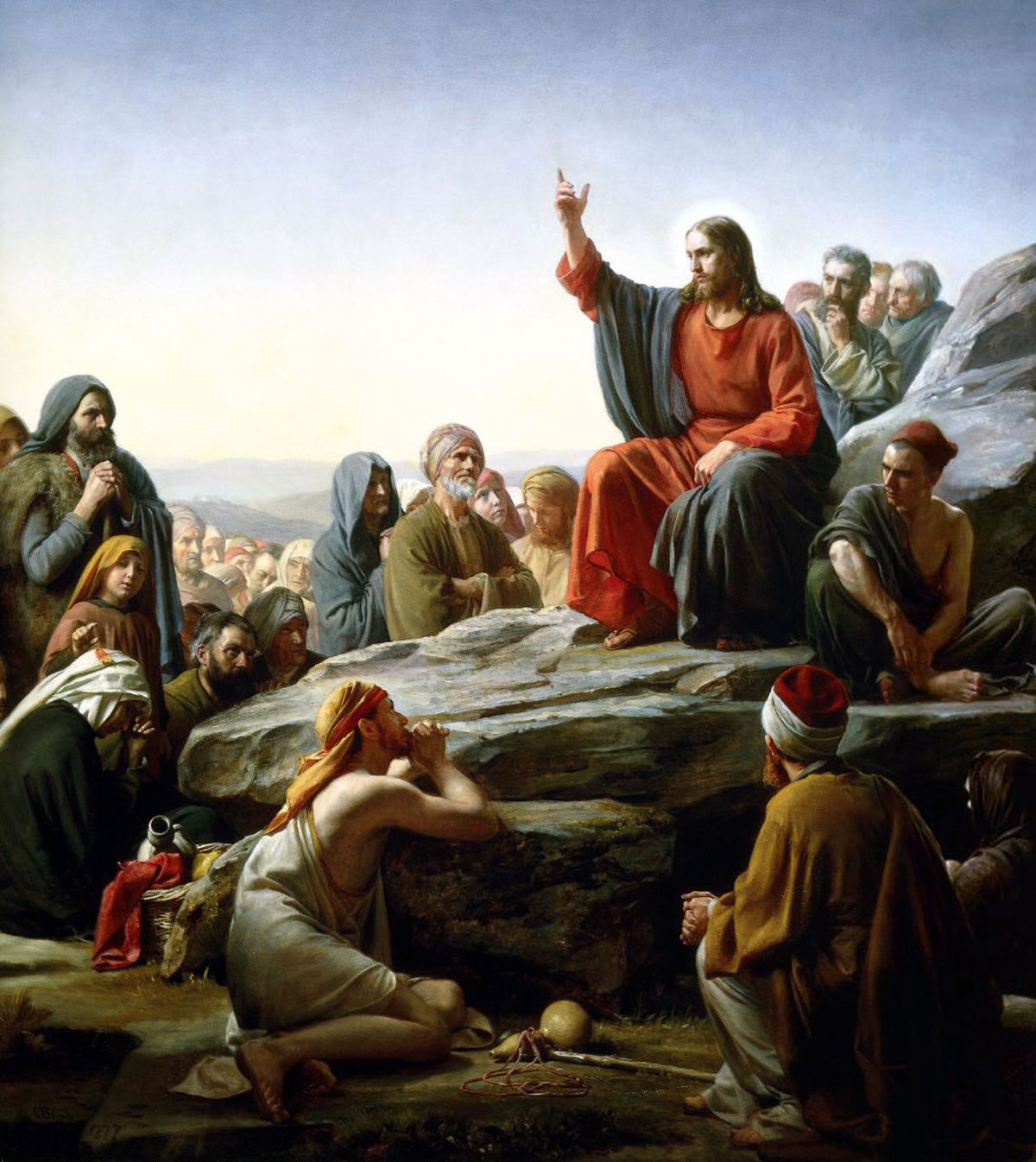
Matthew 5:1-10; 13-161NIV New International Version Translations
1 Now when Jesus saw the crowds, he went up on a mountainside and sat down. His disciples came to him, 2 and he began to teach them.  He said: 3 “Blessed are the poor in spirit, for theirs is the kingdom of heaven. 4 Blessed are those who mourn, for they will be comforted. 5 Blessed are the meek, for they will inherit the earth. 6 Blessed are those who hunger and thirst for righteousness, for they will be filled. 7 Blessed are the merciful, for they will be shown mercy. 8 Blessed are the pure in heart, for they will see God. 9 Blessed are the peacemakers, for they will be called children of God. 10 Blessed are those who are persecuted because of righteousness, for theirs is the kingdom of heaven.

13 “You are the salt of the earth. But if the salt loses its saltiness, how can it be made salty again? It is no longer good for anything, except to be thrown out and trampled underfoot. 14 “You are the light of the world. A town built on a hill cannot be hidden. 15 Neither do people light a lamp and put it under a bowl. Instead they put it on its stand, and it gives light to everyone in the house. 16 In the same way, let your light shine before others, that they may see your good deeds and glorify your Father in heaven.

Background

Merriam Webster defines a beatitude as a state of utmost bliss. In the Christian Church, the Beatitudes are defined as the eight blessings recounted by Jesus in the Sermon on the Mount in the Gospel of Matthew. Each is a proverb-like proclamation, without narrative. Four of the blessings also appear in the Sermon on the Plain in the Gospel of Luke, followed by four woes which mirror the blessings.

Matthew places the Sermon at the beginning of Jesus’ public ministry, emphasizing that Jesus is the authoritative teacher of God’s people. Jesus breaks into the public arena by proclaiming, “repent, for the kingdom of heaven has come near” (Matthew 4:17). He calls His first disciples from the task of fishing for fish to the task of fishing for people (verses 18-22). Then, Jesus shows the disciples just what this new kind of fishing looks like by preaching the good news of the kingdom of heaven to people and bringing forth a new power by healing every kind of disease and affliction (verses 23-25).

A key principle of Jesus’s ministry is embracing this life as “blessed.” This is a theme that runs throughout verses 5-10: those are blessed who are poor in spirit, who mourn, who are meek, who hunger and thirst for righteousness, who are persecuted. The word “blessed” does not mean “holy,” and neither does it mean “happy” in the sense of being in a good mood. Rather, the word, “blessed” refers to a fortunate state of life. Jesus is saying that those who are poor in spirit are fortunate! It may surprise us that He speaks these words about those whose present circumstances seem so unfortunate.

Jesus can speak this way because He is revealing a new perspective on an old kingdom . The first and the last of the nine beatitudes extend His proclamation of the good news by applying the presence of the kingdom (of heaven) to the poor and persecuted (verses 3, 10). These beatitudes are like bookends for the rest of them, fully defining God’s kingdom. Jesus does this to tell us that who possess the “kingdom” are “blessed.” The present conditions of the world are unfortunately variations on the same Old Testament theme.

Those who are poor in spirit, who mourn, who are meek, and who hunger and thirst for righteousness suffer because of their faithfulness to God, and they trust in God to vindicate them (Isaiah 61:1-2; Psalm 24:3-4; Psalm 37, especially verse 11; 42:1-2).

While those who oppress God’s people may be fortunate for a moment, those who trust the Lord will be fortunate forever. Jesus calls those who would be His followers to the same radical commitment and hope for the future.

The promise of a better future  does not mean, however, that the focus is entirely future. Jesus insists that God has the final word, bringing assurance into the present. This is why He can say, “Blessed are those who mourn…blessed are the meek…blessed are those who hunger and thirst for righteousness…blessed are the merciful…blessed are the pure in heart…blessed are the peacemakers.” Jesus gives His followers eyes to see that the future is certain and this transforms their present.

Jesus is calling us to join a radical new kingdom. He gives us a vision to match, that the kingdom of heaven infiltrates our present. We can continue fishing for people, proclaiming the good news of the kingdom at great cost to ourselves, fighting oppressive powers in Jesus’ name. We can suffer for the sake of Jesus and the Gospel, with the assurance that God has the last word.

We end our study as Jesus ended his sermon on the mount, with new definitions for sharing the “Good News” of the Gospel.  First, Jesus compares us to salt. So what is salt? Sodium, one of the ingredients in table salt, helps control the balance between fluid in the cells and fluid outside the cells in your body. It also controls blood pressure. Sodium influences the body’s function to either hold onto extra fluid when you need it or excrete fluid when you don’t. Sodium also plays an essential role in nerve and muscle functioning. So life itself needs salt. Life itself needs Jesus!

Like many life sustaining substances, too much is not a good thing. Salt is also a flavoring. In the right proportions, salt enhances the foods we eat. Finally, salt is a preservative. It inhibits the growth of bacteria and protects our food from decay.  When we are called to share the Gospel, we are called to think “Salt.”  We are to keep in mind that without the Gospel’s message of hope, we have no life. When sharing our message of Jesus, we are to do so as a “flavoring,” a sprinkling onto and into our words and deeds.  The next generations are dependent upon our sprinkling, because without the Gospel, their very faith cannot be preserved for further generations.

Jesus ends with light, light placed on a stand, not under a bowl.  It is with light that others can see our lives, living the very Gospel we use as a flavoring.  Light shows others who we are, and who we place our faith in. On a stand, our light is seen by all.  However, the most important attribute of light is that light can be passed on without diminishing its flame/light.  During the times of Jesus, light was seen as a simple oil lamp or candle.  Once lit, the flame could be shared so others could light their own lamps, thus magnifying the light for all to see and share.

Items for Discussions

  • Where do you see the Kingdom of God in the world today?
  • Why does God’s Kingdom exist some places and in others, seems to be non-existent?
  • Can you explain some of the reluctance that people have for proclaiming the Good News?
  • What makes Jesus’s message so hard to sell to others? 
  • What happens if we fail to convince others to accept Jesus’s new kingdom?

Discussion Challenge

  • Think about this analogy : God is not asking us to have a mountain top experience but pop our heads out of a mole hill once in a while. How would a better understanding of this analogy help us in today’s times?
  • 1
    NIV New International Version Translations

Where Faith Leads Us

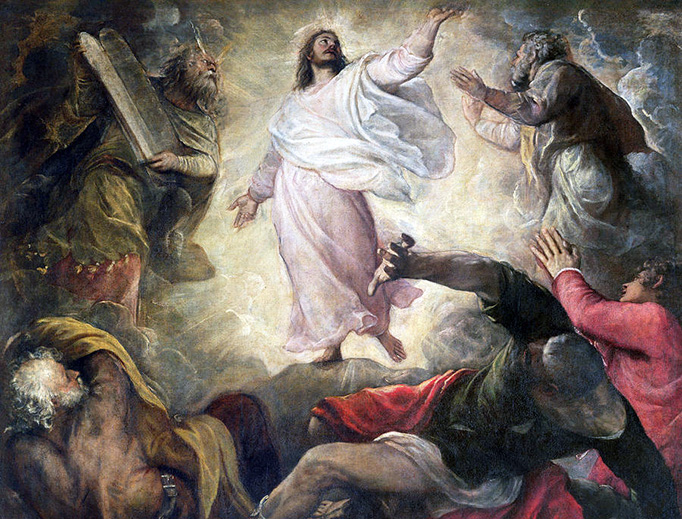
Luke 9:30-351NIV New International Version Translations
30 Two men, Moses and Elijah, appeared in glorious splendor, talking with Jesus. 31 They spoke about his departure,[a] which he was about to bring to fulfillment at Jerusalem. 32 Peter and his companions were very sleepy, but when they became fully awake, they saw his glory and the two men standing with him. 33 As the men were leaving Jesus, Peter said to him, “Master, it is good for us to be here. Let us put up three shelters—one for you, one for Moses and one for Elijah.” (He did not know what he was saying.) 34 While he was speaking, a cloud appeared and covered them, and they were afraid as they entered the cloud. 35 A voice came from the cloud, saying, “This is my Son, whom I have chosen; listen to him.”

Background

Jesus is at the top of a mountain being transfigured, receiving the visits of Moses and Elijah and they are talking about Jesus’ departure. The three were celebrating the Feast of Booths or Tabernacles where people celebrated the protection offered by God during their wanderings in the wilderness (Leviticus 23:39-43). Moses and Elijah can be interpreted as the law and prophecy. They are now reunited with the Messiah. When the disciples see this gathering they want to build a shelter for each so they can stay with them but Jesus says they all need to go back to the people. Elijah and Moses disappear into a cloud that overshadows them. From this cloud appears a voice from God saying who Jesus is and that the disciples are to listen to him.

This transfiguration story is a magical story that has tremendous theological and social consequences. First, the apparent trinity at the top of the mountain is wrapped up in glory! A glory that is shared, that illuminates each other, that strengthens each other’s lives, and gives meaning to the past and future events. Second, when they disappear they disappear into a shadow, a cloud, and from that cloud comes the voice of God affirming Jesus. Third, Jesus has gone through a metamorphoses (“transfigured” in Greek: metamorphothe), a transfiguration, a radical change and shift, an event that transforms those who go through it. This transfiguration does not serve to benefit Jesus but prepares Him to go back to the people and continue his ministry until His departure. Fourth, before the sacred, we are also taught to keep in silence.

One of the first lessons of this text is that the glory of God is only possible if lived together, in community. Nobody, not even Jesus, can shine alone! The work of that trinity shows that only when we are together that God’s radiance can light each other’s lives. Also, we can only make sense of ourselves if the people who came before us are presence in our struggle. Our ancestors come to us to give us a thick sense of the present. They come to assure us that they survived under the name of God and we can do that too. Glory for us is only possible if shared and that means that we are to share the light of Christ to the world, especially those placed in the shadows of our world. The voice of God comes affirming Jesus. In that way, when we light the lives of those placed in the shadows of our world, it will be from those shadows that the voice of God appears, affirming Jesus! When we take the time to meet the transfigured Jesus we are disfigured, transfigured, and refigured. We become part of God’s mission on earth.

This Scripture story is about getting out of our worship spaces, and rebuking the unclean spirits of the powers that be, and shedding light into the lives of the poor of our communities. Unless we take time to learn what transfiguration means,  Glory will be an unknown word and experience. If we, together with our churches, in the name and by the grace of God, cannot heal the children of our own people and give them back to their parents, we will never know what transfiguration means.

Items for Discussion

  • What do you think the Biblical sense of “Community” means?
  • How do people differ when they are in a group as compared to alone? (both good and bad)
  • What does the word, “Glory,” mean to you? How might people in the midst of glory look different?
  • What would the activities of a church or body of Christians look like if they were a part of “God’s Community?”
  • What responsibilities do you see for those who are mobile to minister to those who might be infirmed?
  • Why is living in an insulated world inconsistent with God’s plans for His people?

Discussion Challenge

  • In a world filled with generational gaps, differing interests, polarizing political views, where do you see the role of the church moving?
  • 1
    NIV New International Version Translations

Salty Christians

Matthew 5:13-201NIV New International Version Translations
13 “You are the salt of the earth. But if the salt loses its saltiness, how can it be made salty again? It is no longer good for anything, except to be thrown out and trampled underfoot. 14 “You are the light of the world. A town built on a hill cannot be hidden. 15 Neither do people light a lamp and put it under a bowl. Instead they put it on its stand, and it gives light to everyone in the house. 16 In the same way, let your light shine before others, that they may see your good deeds and glorify your Father in heaven. 17 “Do not think that I have come to abolish the Law or the Prophets; I have not come to abolish them but to fulfill them. 18 For truly I tell you, until heaven and earth disappear, not the smallest letter, not the least stroke of a pen, will by any means disappear from the Law until everything is accomplished. 19 Therefore anyone who sets aside one of the least of these commands and teaches others accordingly will be called least in the kingdom of heaven, but whoever practices and teaches these commands will be called great in the kingdom of heaven. 20 For I tell you that unless your righteousness surpasses that of the Pharisees and the teachers of the law, you will certainly not enter the kingdom of heaven.

Background2https://www.workingpreacher.org/preaching.aspx?commentary_id=842

In these verses, Jesus ties “salt” and “earth” together. Generally we refer to the “earth’s salt” as something good. It comes from the earth.  The earth can be viewed as a the source of seasoning (cf. Job 6:6), purifier (cf. 2 Kings 2:19-23), and preservative. The most important attribute about salt is that it is not an element useful to itself. Salt’s value comes in its application on other things. The followers of Jesus are being called to exist for others. Yet, Jesus issues a warning. Salt may become (literally) “foolish” (nothing more than a useless pile), losing its taste or value.

In the same way, light functions in order to allow humans to see. During Jesus’ time, when it was nightfall, it was dark. r: in darkness, “we grope like the blind along a wall, groping like those who have no eyes” (Isaiah 59:10).] Jesus uses the example of light not only to allow others to see whatever they wish but also for others to witness the acts of justice that Jesus’ followers perform. Beyond that, it is meant to allow others to recognize the cause of these actions, our God.

Jesus’ emphasis about “salt” and “light” relate to the functions of His faithful followers in the world, and so does His emphasis on the law and doing good. In this sermon, Jesus is not desiring to end the law (verse 5:17). To “abolish” (kataluo) something is usually to tear it apart, to loosen it; it is the opposite of “building up” (oikodomeo). In Matthew’s Gospel, the verb is commonly used in reference to the temple (cf. Matthew 24:2; 26:61; 27:40). What is important is that Jesus does not say that He has come to “build up” the law but rather to “fulfill” it. “Jesus chooses to “fulfill” the law in the sense by interpreting its meaning. When Jesus says He will not abolish, He clearly does not mean He will not re-interpret the law.

Another point of the sermon is to point out how difficult this new obedience actually is to follow (verse 5:20). When we think of the Pharisees, if the first thought that comes to mind is “hypocrites” or “self-righteous/sanctimonious person” (from the first definition given in the Webster’s Online Dictionary), then Jesus’ comparison is not a challenge at all. Rather, we must recognize the positive influence of Pharisees to the Jewish community.

Who were the Pharisees? What type of influence did they have on the population? They shared many basic beliefs with Jesus. Both believed that the Law should be applied to all areas of life. One distinction was that the Pharisees believed in a two-fold law: written and oral. Jesus apparently did not value the “oral law” (cf. Matthew 15:1-20). Both believed in the general resurrection, future rewards and punishments, and the activity of angels and demons in the world. Jesus’ followers must be more committed to God’s justice in the world than these prominent leaders.

Though the thrust of 5:13-20 is on the actions of this “higher righteousness” that a light may make clear (e.g., 5:16), the intent behind anyone’s actions is more important (cf. 5:21-22, 27-8, 38-9, 43-4; 7:12!). Who are ‘salt’ of the earth? They are the humble, the ones who mourn, the meek, and those who thirst after doing what is right in the world. Who are ‘light’? They are the merciful, the pure in heart, the peacemakers, and those who receive abuse for standing up for what is right.

Items for Discussion

  • What does it mean to be salty in today’s society?
  • Can you think of some examples of how people are “salty?”
  • Can you give more examples of how the Christian experience sheds light onto the world?
  • If a Christian loses their saltiness, can they get it back? How?
  • What do you think about Jesus’s comparative statement in verse 20? Is this a help?

Discussion Challenge

  • If the Church is about “flavoring life” and “letting the world see God,” where should its priorities be?

Afraid of Giants

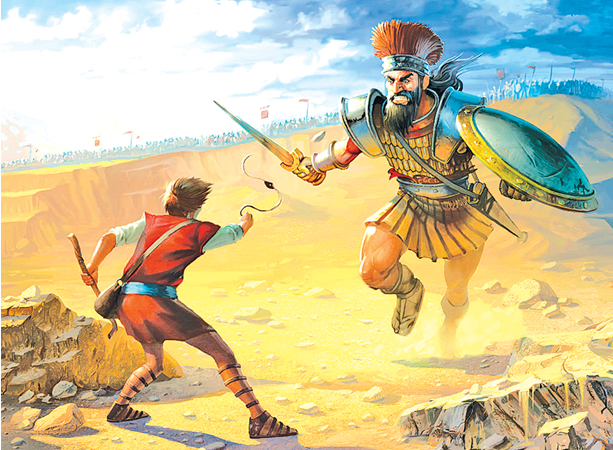
1 Samuel 17:20-501NIV New International Version Translations
20 Early in the morning David left the flock in the care of a shepherd, loaded up and set out, as Jesse had directed. He reached the camp as the army was going out to its battle positions, shouting the war cry. 21 Israel and the Philistines were drawing up their lines facing each other. 22 David left his things with the keeper of supplies, ran to the battle lines and asked his brothers how they were. 23 As he was talking with them, Goliath, the Philistine champion from Gath, stepped out from his lines and shouted his usual defiance, and David heard it. 24 Whenever the Israelites saw the man, they all fled from him in great fear. 25 Now the Israelites had been saying, “Do you see how this man keeps coming out? He comes out to defy Israel. The king will give great wealth to the man who kills him. He will also give him his daughter in marriage and will exempt his family from taxes in Israel.” 26 David asked the men standing near him, “What will be done for the man who kills this Philistine and removes this disgrace from Israel? Who is this uncircumcised Philistine that he should defy the armies of the living God?” 27 They repeated to him what they had been saying and told him, “This is what will be done for the man who kills him.” 28 When Eliab, David’s oldest brother, heard him speaking with the men, he burned with anger at him and asked, “Why have you come down here? And with whom did you leave those few sheep in the wilderness? I know how conceited you are and how wicked your heart is; you came down only to watch the battle.” 29 “Now what have I done?” said David. “Can’t I even speak?” 30 He then turned away to someone else and brought up the same matter, and the men answered him as before. 31 What David said was overheard and reported to Saul, and Saul sent for him. 32 David said to Saul, “Let no one lose heart on account of this Philistine; your servant will go and fight him.” 33 Saul replied, “You are not able to go out against this Philistine and fight him; you are only a young man, and he has been a warrior from his youth.” 34 But David said to Saul, “Your servant has been keeping his father’s sheep. When a lion or a bear came and carried off a sheep from the flock, 35 I went after it, struck it and rescued the sheep from its mouth. When it turned on me, I seized it by its hair, struck it and killed it. 36 Your servant has killed both the lion and the bear; this uncircumcised Philistine will be like one of them, because he has defied the armies of the living God. 37 The Lord who rescued me from the paw of the lion and the paw of the bear will rescue me from the hand of this Philistine.” Saul said to David, “Go, and the Lord be with you.” 38 Then Saul dressed David in his own tunic. He put a coat of armor on him and a bronze helmet on his head. 39 David fastened on his sword over the tunic and tried walking around, because he was not used to them. “I cannot go in these,” he said to Saul, “because I am not used to them.” So he took them off. 40 Then he took his staff in his hand, chose five smooth stones from the stream, put them in the pouch of his shepherd’s bag and, with his sling in his hand, approached the Philistine. 41 Meanwhile, the Philistine, with his shield bearer in front of him, kept coming closer to David. 42 He looked David over and saw that he was little more than a boy, glowing with health and handsome, and he despised him. 43 He said to David, “Am I a dog, that you come at me with sticks?” And the Philistine cursed David by his gods. 44 “Come here,” he said, “and I’ll give your flesh to the birds and the wild animals!” 45 David said to the Philistine, “You come against me with sword and spear and javelin, but I come against you in the name of the Lord Almighty, the God of the armies of Israel, whom you have defied. 46 This day the Lord will deliver you into my hands, and I’ll strike you down and cut off your head. This very day I will give the carcasses of the Philistine army to the birds and the wild animals, and the whole world will know that there is a God in Israel. 47 All those gathered here will know that it is not by sword or spear that the Lord saves; for the battle is the Lord’s, and he will give all of you into our hands.” 48 As the Philistine moved closer to attack him, David ran quickly toward the battle line to meet him. 49 Reaching into his bag and taking out a stone, he slung it and struck the Philistine on the forehead. The stone sank into his forehead, and he fell facedown on the ground. 50 So David triumphed over the Philistine with a sling and a stone; without a sword in his hand he struck down the Philistine and killed him.

Background

The books of 1 and 2 Samuel used to be one book. Many years later, it was divided into two parts. The name of the book comes from the first important person in this book, Samuel the prophet. However, Samuel did not write the book, dying before the end of it. The book of 1 Samuel records a major change from the time of the judges to Israel’s first king. The judges had led the Israelites for about 350 years after the death of Joshua. During this time the Israelites called their leaders ‘judges’. Samuel was the last of the judges. He was also a prophet and a priest. Samuel anointed Saul, the first king of Israel. But Saul did not obey God. So, God chose another king, David, who would obey him. 1 Samuel ends with the death of Saul. The book of 2 Samuel records the life of David as king.

Ephrathah is another name for Bethlehem. ‘Judah’ is the land that belongs to the tribe of Judah. Jesse was too old to fight in the army. But 3 of his sons were in Saul’s army. When David was with Saul, David played his harp. When Saul did not need him, David went back to Bethlehem. Jesse’s sons had been with Saul for at least 6 weeks. Jesse wanted to know whether they were safe. He also wanted to know whether the battle was going well. So, he sent David with some food for them. First, David got another shepherd to look after his sheep. Then he went to find his brothers. Goliath insulted the Israelite army twice a day for 40 days. Every day the Israelites got ready for a battle. They shouted their war cry as they went out. They hoped that this would frighten their enemy but every day they saw Goliath and were afraid. They ran away. David arrived at the Israelites’ camp and heard Goliath shouting to them.

Saul wanted someone to kill Goliath. That person would save Israel. Saul offered a big reward. First, he offered a lot of money. Then the man could marry Saul’s daughter. The reward was not just for the brave man. It was for his family too. They would not have to pay taxes in Israel. The Hebrew word meant that the family would be ‘free’. This can also mean that they did not have to serve the king.  while the Israelite soldiers knew the reward for the man who would kill Goliath, David did not know this so he had to ask. David did not want honor for himself. He wanted honor for the living God. ‘Heathen Philistine’ means that the Philistines did not worship the one true, living God. They worshipped false gods and idols (including Dagon). David did not want Israel to have this shame of defeat. David especially did not like it when Goliath insulted the God of Israel.

Eliab, David’s older brother was angry with David and insulted him. Perhaps he was jealous. Eliab was afraid of Goliath but David was not afraid. David was young, strong and he was brave, skills learned while protecting his father’s sheep. David, through God’s help, had killed fierce lions and bears. He knew that God would help him now to kill Goliath. David insulted Goliath when he called him a ‘heathen Philistine’.

No one in the army of Israel would fight Goliath. So Saul let David fight him. Saul gave David his armor to protect him. But David was not used to wearing armor. Instead, David trusted God to protect him. The battle was not really between David and Goliath. The battle was between Goliath’s gods and the God of Israel. It was an insult to call a person ‘a dog’. Goliath thought that David was insulting him. Goliath did not know the power of Israel’s God. He thought that no one could defeat him. Goliath thought that his armor and his strength would protect him. However, David was confident. The ‘name of the Lord’ (verse 45) is another way to refer to the Lord himself. (See Exodus 3:13-15.) David knew the power of his God. He also knew that this was the Lord’s battle, not his. He told this to Goliath. David gave the honor to God.

David could see where Goliath’s helmet did not protect him. So David took just his shepherd’s stick, bag and a sling. A shepherd used his stick to fight wild animals. A ‘sling’ was a piece of material with a string on each side. David put the stone in the material and held the two pieces of string. He swung this round fast. Then he let go of one piece of string. The stone went through the air very fast letting David attack Goliath before he got too close. David was an expert with a sling. He was very accurate. He had probably often practiced while he protected his the sheep. The stone hit Goliath. It made him unconscious and he fell forward. David did not have a sword of his own. So he used Goliath’s sword to cut off his head. The Philistines saw the power of Israel’s God. They ran away. But they did not become slaves to the Israelites as Goliath had said earlier in verse 9. The Israelites killed many *Philistines as they ran home.

After a battle, the soldiers robbed the enemy that they had defeated. This was the soldier’s reward. David took Goliath’s armour as his reward. In 1 Samuel 21:9, the priest had Goliath’s sword. Perhaps David gave the sword to the Lord because the Lord won the battle. In those days, the leader of the army that won a battle cut off the head of their enemy’s leader. This was the prize for the winner. It made the army who lost the battle feel humble. Verse 54 does not say when David took Goliath’s head to Jerusalem.

The only way to tackle the giants of our lives is to take small, single steps of faith. Those steps give us the courage and confidence to continue. We don’t have to use force or physical strength to succeed. In Matthew (17:20), Jesus said, “If you have faith as a grain of mustard seed, will say to this mountain, ‘move, hence to yonder place’ and it will move and nothing will be impossible for you.”

Items for Discussion

  • What do you think are today’s contemporary GIANTS?
  • Why are people fearful of them?
  • What is it about the strength of one’s faith that helps them overcome fear?
  • Saul tried to use bribery to garner courage – Why didn’t it work?
  • While David was no doubt faithful and brave, what skills did he have that helped assure his success?
  • How would you explain this statement: Faith is a skill, just like that of a marksman with a slingshot, that needs to be practiced to be effective.
  • If the unknown is fearful, how would you recommend someone overcome it?

Discussion Challenge

  • Who are the Goliaths standing before the Christian Church today?
  • 1
    NIV New International Version Translations

Happiness Is….

Luke 6:17-26
17 He went down with them and stood on a level place. A large crowd of his disciples was there and a great number of people from all over Judea, from Jerusalem, and from the coastal region around Tyre and Sidon, 18 who had come to hear him and to be healed of their diseases. Those troubled by impure spirits were cured, 19 and the people all tried to touch him, because power was coming from him and healing them all. 20 Looking at his disciples, he said: “Blessed are you who are poor, for yours is the kingdom of God. 21 Blessed are you who hunger now, for you will be satisfied. Blessed are you who weep now, for you will laugh. 22 Blessed are you when people hate you, when they exclude you and insult you and reject your name as evil, because of the Son of Man. 23 “Rejoice in that day and leap for joy, because great is your reward in heaven. For that is how their ancestors treated the prophets. 24 “But woe to you who are rich, for you have already received your comfort. 25 Woe to you who are well fed now, for you will go hungry. Woe to you who laugh now, for you will mourn and weep. 26 Woe to you when everyone speaks well of you, for that is how their ancestors treated the false prophets.

Background

We begin by finding Jesus, standing on “a level place” (or “a plain”). Matthew sets a similar picture in the sermon on a mount to emphasize that Jesus received those teachings from God (Matthew 5-7). The geographical setting has a different function in the Gospel of Luke. Some prophets use the word “level” that provides the background for its use in Luke-Acts (pedinos in the Septuagint, the Greek translation of the Torah, Prophets, and Writings). The word “level” often refers to places of corpses, disgrace, idolatry, suffering, misery, hunger, annihilation, and mourning (see Jeremiah 9:22; 14:18; 30:4; Daniel 3:1; Joel 1:10, 20; 2: 22; 3:19; Habakkuk 3:17; Zechariah 12:11).  To then rephrase this, while standing in a broken world, Jesus teaches the ways to find God.

Where Matthew begins the sermon on the mount with nine beatitudes (Matthew 5:3-12), Luke 6:20-26 begins the sermon on the plain with four beatitudes and four woes. The word “blessed” used here refers to being aware in the present of having a place in the community’s movement towards God. To be “blessed” does not mean an absence of struggle. Indeed, as 6:22-23 indicates, to be in the community moving towards God can invite hatred, exclusion, being reviled, and being defamed as others reject God and His witnesses. To be blessed is to live through such opposition aware that the struggle is only temporary and that “your reward is great in heaven,” that is, that God will gather the faithful into His Kingdom at the end.

To live under the verdict of “woe” means condemnation. Suffering under a curse in the present and receiving final judgement to eternal punishment after the conclusion of this world.  An interesting point is brought out here. The woeful may not experience apparent discomfort during their life. They will mistake the wealth, overflowing tables, good times, and prestigious relationships for God’s highest purposes. Like the rich person of Luke 16:19-31, they will awake to a fiery eternal existence.

To be clear, condemnation awaits all those who do not repent and place their faith in Jesus. Luke offers a longer view.  A person’s relationship with wealth and high social standing should reveal a concern. Luke wants such people to avoid condemnation by repenting and accepting/following Jesus. Simply put, it means putting one’s material resources at the service of the entire community (see Luke 3:10-14; 8:1-3; 12:13-21; 18:18-27; 19:1-10; Acts 2:42-47; Acts 4:35-5:11; 6:1-6; 20:33-35). Luke intends to shock persons with wealth into repentance and sharing their money and goods for the good of the church and world.

Items for Discussion

  • How is our world similar to the level places of the prophets and Luke?
  • How do we maintain the values and practices of a Godly life in the midst of the level places of this world’s life?
  • How would you explain the curse of abundance and power?
  • While we teach our children to strive for success, what advice is critical to keeping them from the “woes” that may lie ahead in their life?
  • How do we balance our life of relative comfort with a world that is “level?”
  • Why do you think that not enough people are concerned about what lies ahead in eternity?

Discussion Challenge

  • What are the principles in teaching, promoting generosity that lead one to true happiness?

Launch Out Into The Deep

Luke 5:1-111NIV New International Version Translations

1 One day as Jesus was standing by the Lake of Gennesaret, the people were crowding around him and listening to the word of God. 2 He saw at the water’s edge two boats, left there by the fishermen, who were washing their nets. 3 He got into one of the boats, the one belonging to Simon, and asked him to put out a little from shore. Then he sat down and taught the people from the boat. 4 When he had finished speaking, he said to Simon, “Put out into deep water, and let down the nets for a catch.” 5 Simon answered, “Master, we’ve worked hard all night and haven’t caught anything. But because you say so, I will let down the nets.” 6 When they had done so, they caught such a large number of fish that their nets began to break. 7 So they signaled their partners in the other boat to come and help them, and they came and filled both boats so full that they began to sink. 8 When Simon Peter saw this, he fell at Jesus’ knees and said, “Go away from me, Lord; I am a sinful man!” 9 For he and all his companions were astonished at the catch of fish they had taken, 10 and so were James and John, the sons of Zebedee, Simon’s partners. Then Jesus said to Simon, “Don’t be afraid; from now on you will fish for people.” 11 So they pulled their boats up on shore, left everything and followed him.

Background2https://www.workingpreacher.org/preaching.aspx?commentary_id=3958

The first four apostles were fishermen. With their own boats, they were similar to middle class business owners today. They had no specific religious credentials to qualify them to  join Jesus. They represented the age of living under Roman oppression, including high taxes and military enforcement of Roman law. There were other forms of social conflict and economic distress. The world that these fishermen lived in was a mess. Many Christians today can identify with the world that the apostles lived in. The question we all seek the answer for is “Why did Jesus choose these twelve?” For Luke, Jesus evidently chose them under prophetic inspiration. Since Jesus ascended to the right hand of God, He could still work through the apostles through the Holy Spirit (Luke 24:50-52; Acts 1: 1-11; 7:56).

Jesus directed Simon (soon to be Peter) to put down their nets in the deep water. Simon’s response begins with an old age point of view: they had fished all night and caught nothing, so why should they expect anything different? Yet they do what Jesus says to do. This specific response is what we all will model in the Christian Church, to do what Jesus says to do. In the midst of an unpromising situation, the future apostles let down their nets again. When they do so, they catch a super-abundance of fish. Their old nets cannot handle the catch and begin to break.

This first and specific event helps us establish apostolic authority and  model what the apostles and the church are to do. The soon-to-be-apostles indicate their willingness to follow Jesus by doing what He said to do.  When they listen and respond, even in the face of unpromising circumstances, Jesus comes through providing them with the catch of a lifetime. Why should Luke’s church pay attention to the apostolic tradition as interpreted by Luke? Because that tradition was confirmed in the experience of the apostles from their first encounter with Jesus.

There is a subtle aspect to this Scripture that we should not miss, its connection to the “deep water” (bathos). This theme occurs several times in the Septuagint (the Greek translation of the Torah, Prophets and Writings) in connection with the primordial sea, a powerful Jewish symbol of chaos (see also Psalm 68:2; Ezekiel 26:20; 32:18-24; Sirach 24:5; 51:5). Luke perceives his world as a chaotic and hostile place, stuck between traditional Judaism and the followers of Jesus, the repressive behavior of the Empire, and conflict within the church.

Luke spells out the mission of the apostles in an image well-known to them: “from now on you will be catching people.” This image of fishing recalls earlier instructions from God to prophets to bring people together (to catch them) for judgement (see Jeremiah 16:16; Amos 4:2; see Habakkuk 1:14-15). The ministry of the apostles becomes the model for the disciples and the church.  As the apostles pulled their nets from the sea teeming with fish in Luke 5:1-11, so the church in Acts fills its nets (membership) to create a new community for God.

Luke is encouraging the church to drop its nets into the chaos of life, that is, to witness  the impact of God  can have on lives, and to invite people into the movement towards God’s Kingdom. The threat of chaos is self-evident in national politics, relationships among races and ethnic communities, international relationships, and many other places. According to Luke, the church continues the apostolic tradition when it offers individuals, households, and communities the values and practices of the Peace of God as an alternative way of life.

Items for Discussion

  • Have you ever felt a call?  Please explain.
  • Where do you see the Peace of God, the Reality of God, standing out in our world?
  • What conclusion can you draw from the fact that Jesus took fishermen, not religious scholars, to create His first team of disciples?
  • What are the most important attributes of a good disciple (your opinion)?
  • Why do you think we needed disciples in the first place?
  • What are the risks to effective discipleship today?

Discussion Challenge

  • Yes, the world is in chaos and we need more disciples – But when the odds of becoming a martyr are high, how do you recruit more help? 

The World In God’s Hands

John 3:16-171NIV New International Version Translations
16 For God so loved the world that he gave his one and only Son, that whoever believes in him shall not perish but have eternal life. 17 For God did not send his Son into the world to condemn the world, but to save the world through him.

John 16:33b
But take heart! I have overcome the world.

Background2https://sermonwriter.com/biblical-commentary/john-31-17/

This is an amazing statement! The kosmos world is the world that is opposed to God. How could God love such a world? Luther said, “If I were as our Lord God, and these vile people were as disobedient as they now be, I would knock the world to pieces.” The miracle is that God does not!

In spite of mankind’s failures with handling their creation gift of free will, God sends the Son that whoever believes in Him should not perish, but have eternal life.” Luther calls this verse “the gospel in miniature.” God’s motive is love and God’s objective is salvation. However, God provides not just salvation but opportunity to the world. Those who actually receive eternal life are those who believe in His Son.

The wording of this verse is very much like that in the story of Abraham, who was commanded by God, “Now take your son, your only son, whom you love, even Isaac, and go into the land of Moriah. Offer him there for a burnt offering on one of the mountains which I will tell you of” (Genesis 22:2). Abraham prepared to obey this command, but was prevented by an angel of God from sacrificing his son. Unlike Abraham’s experience, God, however, does not spare Himself. God’s is giving of his Son who goes to the cross for us.

God’s response is not just a weak indulgence to His creation but a divine self-sacrifice. God could have easily ignored the world’s sins and allow people to live in darkness. We deserved that treatment.  However, that would have reflected apathy, not love. As any earthly parent knows, letting the child run wild is much easier than real hard parenting. The term “loved” translates the Greek verb agapao. The noun form agape is not a love which is merely emotional. It is the love of genuine interest, that of determined dedication. It is the love which acts out of concern for others.

John 3:16 is probably the most loved verse in the Bible, and we hear it frequently. It suffers from being so often repeated apart from its context. John 3:17 gives us part of that context, stating God’s purpose in sending the Son. It is not to condemn (krine) the world, but to save it. Krine can mean either judged or condemned, but in this context, it means condemned. God sends the Son, not to condemn the world, but to save it.

We dare not take the gift of God’s Son lightly. It cost the Father the life of His Son. How can the Father offer mercy to those who reject such a precious gift. If it was necessary for God to send the Son to save the world, it must be that the world really needs saving. The world, therefore, must be very lost. The Son’s work is beneficial only if the world accepts God’s plan for salvation. John puts it this way: “He who believes in him is not judged. He who doesn’t believe has been judged already, because he has not believed in the name of the one and only Son of God.”

We ought to be encouraged by all of this because Christ has overcome the world before us. None of us knows how to act if brought into temptation. Humanity is weak, we will fail. So let us watch and pray without ceasing, that we may not be left to ourselves and by trusting in Christ, know that we can overcome our worldly nature.

Items for Discussion

  • Do you think our society understands why is deserves to be condemned? Can you list a few reasons?
  • God is a “gold star” parent. Why do you think it is so hard to relate to God being a parent, having a Son?
  • Why does God “Love” His world so much?
  • What makes humanity weak and unable to save itself?
  • Is it possible to save humanity without God? Why or why not?
  • This text suggests that mankind can save itself by making a “choice.” What would you say to those who might take the position that God does not matter, we are all predestined to our fate?

Discussion Challenge

  • How should we summarize the “Good News” for our friends, family and world?
  • 1
    NIV New International Version Translations
  • 2
    https://sermonwriter.com/biblical-commentary/john-31-17/

I Am Baptized

Mark 1:10-111NIV New International Version Translations
10 Just as Jesus was coming up out of the water, he saw heaven being torn open and the Spirit descending on him like a dove. 11 And a voice came from heaven: “You are my Son, whom I love; with you I am well pleased.”

Background

Mark’s Gospel doen’t waste a lot of time before it moves to Christ’s ministry, the reason why He came to earth.  In fact, Christ’s baptism was His first public appearance, after living a rather unknown life. At this moment in history much has been and is hidden about what is to come.  As we are about to learn, Christ is taking upon himself the likeness of sinful flesh; and, for our sakes, is about to be set apart and declared holy. Christ’s ministry goes public from here!

The Greek root-word baptizein means to plunge, immerse, to sink; hence to wash; to be immersed, overwhelmed. From the Jewish rules of purification concerning ritual uncleanness the word gained a technical religious connotation implying “purification” from all that might exclude one from God’s presence. In simplicity we might then say that the baptism of Christ was to prepare Him for God’s work in this world. For Christians today, the purpose of baptism is to give visual testimony of our commitment to Christ. When a child is baptized, it is the parents, family and congregation that are giving the visual testimony to “their” commitment to raise the child in a Christ-like manner.

Our two verses also point us to the Trinity with the Spirit and the Father and the Son.  It is here where we get the roots of our marching orders, to go forward and teach all nations, baptizing the in the name of the Father, Son, and Holy Spirit. It is, therefore, the Trinity that bears witness from heaven, of our mission on this earth.

John’s baptism of Christ had two components, repentance and forgiveness (Mark 1:4).

4 And so John the Baptist appeared in the wilderness, preaching a baptism of repentance for the forgiveness of sins. 5 The whole Judean countryside and all the people of Jerusalem went out to him. Confessing their sins, they were baptized by him in the Jordan River. 6 John wore clothing made of camel’s hair, with a leather belt around his waist, and he ate locusts and wild honey. 7 And this was his message: “After me comes the one more powerful than I, the straps of whose sandals I am not worthy to stoop down and untie. 8 I baptize you with water, but he will baptize you with the Holy Spirit.”

As John the Baptist explains what took place with Jesus, he adds that the baptism is not only with water, but with the Holy Spirit. Those two elements are still true of baptism today. The baptismal liturgy marks the end of the old life and beginning of a life lived under God’s grace and forgiveness. The gift of the Holy Spirit is also part of our baptism service today (“ … you have been sealed by the Holy Spirit … ”). Our own baptisms today are also witnessed by the Trinity.

The Holy Spirit gave Christ the power for His future work coming in the shape of a gentle bird. This indicates to us that Christ also came in a gentle way.  This example reminds us of the same kind of gentle bird in Genesis. That a bird, a dove,  came back to Noah. It was the sign of a new beginning (Genesis 8:6-12). The message from heaven is important too. It used words from the Old Testament. Isaac was the son whom Abraham loved (Genesis 22:2). God was ‘very pleased’ with the Servant whom he had chosen. Jesus therefore knew that God approved of Him. He also knew that His work would be that of a servant. He would know that the last of Isaiah’s ‘Servant’ songs spoke about a ‘suffering’ servant (Isaiah 53).

Items for Discussion

  • Why are people still baptized today?
    • We get baptized because Jesus commanded it.
    • Baptism is a public identification with Christ.
    • Baptism symbolizes our death to sin.
    • Baptism is a sign of being a disciple.
    • Baptism as a covenant sign, membership with the covenant made with people directly by God.
  • Baptism is considered a Sacrament – What is a Sacrament?
    • A Christian rite (such as baptism or communion) that is believed to have been ordained by Christ. Many Christians consider the sacraments to be a visible symbol of the reality of God, as well as a means by which God enacts His grace upon us. The definition of sacrament formulated by Augustine of Hippo2https://en.wikipedia.org/wiki/Augustine_of_Hippo is an outward sign of an inward grace that has been instituted by Christ.
  • Why do you think it was necessary for Christ to be baptized?
  • We all take an oath to help support the Christian life of a child who is being baptized.  What do you think that means?
  • What is or should be different in a person after taking an oath?
  • What do you think we lose within our society of we abandon sacraments like baptism?

Discussion Challenge

  • How should the Christian Church renew its vows, its baptismal oath, so that the original intent expressed by Mark is present in our world today?


« Older posts Newer posts »

"For it is by grace you have been saved" - Ephesians 2:8-9  

Copyright: © 2001 - 2025 Lostpine

Translate »