Biblical wisdom, historical insight, and personal growth — all in one place

Category: Snapshots (Page 45 of 45)

The Woman Was Fearless

Psalm 27:1-4; 13-141NIV New International Version Translations
1 The Lord is my light and my salvation—whom shall I fear? The Lord is the stronghold of my life—of whom shall I be afraid? 2 When the wicked advance against me to devour me, it is my enemies and my foes who will stumble and fall. 3 Though an army besiege me, my heart will not fear; though war break out against me, even then I will be confident. 4 One thing I ask from the Lord, this only do I seek: that I may dwell in the house of the Lord all the days of my life, to gaze on the beauty of the Lord and to seek him in his temple.

13 I remain confident of this: I will see the goodness of the Lord in the land of the living. 14 Wait for the Lord; be strong and take heart and wait for the Lord.
ladywithjesusBackground2http://www.easyenglish.info/psalms/psalm027-taw.htm

We do not know when David wrote Psalm 27. Some believe that he wrote it in 2 parts, writing verses 1 – 6 when life was good and God was answering all his prayers. Perhaps it was after he had killed Goliath. (See Psalm 27:2). He wrote verses 7-12 when life was difficult, when David thought that God was hiding from him. Perhaps it was when Saul was fighting him. (See Psalm 27:12). He wrote verses 13-14 when he put the 2 parts together.

Others also believe that David wrote it all at the same time. In the past God had been good to him. Why was God not good to him now? He would still believe in God and wait for his help. In Psalm 27 we learn that for David life had its ups and downs. The ups were the good times. The downs were the difficult times.

Biblical Truth

The ups and downs of life also happen to us. When life is difficult, our challenge is to remember the good times. When we think that God has forgotten us, we must remember the times when He did not forget us. We must be like David in Psalm 27:14. We must wait for the Lord. One day he will give us help. If we believe this, it will make us strong.

Items for Discussion

  • What kinds of things make up the ups and downs of life?
  • What is life like without any “UPS?”
  • How do people handle life without any ups in it, only “DOWNS?”
  • What makes a down an up?
  • What role does confidence in the Lord play in handling life’s ups and downs?
  • What role does patience play in handling life’s ups and downs?
  • Exactly what is the CONFIDENCE that David had in the Lord and why is this important?


Mark 14:3-9
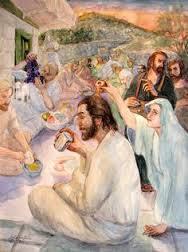
3 While he was in Bethany, reclining at the table in the home of Simon the Leper, a woman came with an alabaster jar of very expensive perfume, made of pure nard. She broke the jar and poured the perfume on his head. 4 Some of those present were saying indignantly to one another, “Why this waste of perfume? 5 It could have been sold for more than a year’s wages and the money given to the poor.” And they rebuked her harshly. 6 “Leave her alone,” said Jesus. “Why are you bothering her? She has done a beautiful thing to me. 7 The poor you will always have with you, and you can help them any time you want. But you will not always have me. 8 She did what she could. She poured perfume on my body beforehand to prepare for my burial. 9 Truly I tell you, wherever the gospel is preached throughout the world, what she has done will also be told, in memory of her.”

Background

Let’s set the stage here. While Jesus is in Bethany, He goes to the house of Simon the leper for dinner. As Jesus is eating, a woman comes in with an alabaster cruse (long necked container) of ointment of pure nard that was very costly. She breaks the cruse, and poured the nard over Jesus’ head. The apostles start to chide her for wasting something that is so costly, claiming they could have sold it and gotten a year’s wages for the nard.

We do not know exactly who Simon the leper was. Since Jesus did not go to heal Simon, we must assume that Jesus had healed him earlier. This household had been united with the household of Lazarus (John 12:2). The woman is Mary, the sister of Lazarus (John 12:3). Jesus rebukes those who are only thinking of the money.

Biblical Truth3http://www.easyenglish.info/bible-commentary/mark-ks.htm

We know many things about the woman but we learn them from the other Gospels. The Bible tells us who she was (John 12:3). And we know many things about her family (Luke 10:38-42; John 11:1-44). But Mark only tells us how she showed her love for Jesus. She gave something that was both beautiful and expensive. And she gave it all up. Some disciples thought that Jesus would be angry. They were not rich men. They knew that the gift was expensive. They wanted to use the money so that they could help poor people. And they thought that the woman had wasted her gift.
But the woman did not waste her gift. She had a short time to show her love to Jesus. And she showed that she loved him completely. Soon Jesus would die.

Those disciples knew that poor people needed money. But they did not know what God was doing. By her gift, the woman showed that she knew. She was preparing Jesus’ body for his death. That is why it was right to give this gift. It was right to give an expensive gift because Jesus is a king. And the woman had to give it before Jesus’ death. The women would not have the time to give these gifts after his death (Mark 16:1-8).

Items for Discussion

  • What effect do you think Mary’s experiences in her life, the things she saw, would have had on her faith?
  • By Mary’s actions, what did she demonstrate to those who were watching that evening?
  • While the gift of nard was expensive, it was not the value of the gift that made her an effective witness. What was it that made Mary’s actions such an effective testimony?
  • The Apostles were motivated by good things, helping the poor. So what is it about the example of Mary that they missed?

Discussion Challenge

  • How does the modern church set examples that are as effective as Mary’s example?

It Was A Perfect Act!

Isaiah 65:17-251NIV New International Version Translations
17 “See, I will create new heavens and a new earth. The former things will not be remembered, nor will they come to mind. 18 But be glad and rejoice forever in what I will create, for I will create Jerusalem to be a delight and its people a joy. 19 I will rejoice over Jerusalem and take delight in my people; the sound of weeping and of crying will be heard in it no more. 20 “Never again will there be in it an infant who lives but a few days, or an old man who does not live out his years; the one who dies at a hundred will be thought a mere child; the one who fails to reach a hundred will be considered accursed. 21 They will build houses and dwell in them; they will plant vineyards and eat their fruit. 22 No longer will they build houses and others live in them, or plant and others eat. For as the days of a tree, so will be the days of my people; my chosen ones will long enjoy the work of their hands. 23 They will not labor in vain, nor will they bear children doomed to misfortune; for they will be a people blessed by the Lord, they and their descendants with them. 24 Before they call I will answer; while they are still speaking I will hear. 25 The wolf and the lamb will feed together, and the lion will eat straw like the ox, and dust will be the serpent’s food. They will neither harm nor destroy on all my holy mountain,” says the Lord.

tombBackground

Chapter 65 in the book of Isaiah is about the calling of the Gentiles, and the rejection of the Jews. (1-7) The Lord would preserve a remnant. (8-10) Judgments upon the wicked. (11-16) The future happy and flourishing state of the church. (17-25)

Biblical Truth2http://www.christianity.com/bible/commentary.php?com=mhc&b=23&c=65

In the grace and comfort believers have in and from Christ, we are to look for this new heaven and new earth. The former confusions, sins and miseries of the human race, shall be no more remembered or renewed. The approaching happy state of the church is described under a variety of images. He shall be thought to die in his youth, and for his sins, who only lives to the age of a hundred years. The event alone can determine what is meant; but it is plain that Christianity, if universal, would so do away violence and evil, as greatly to lengthen life. In those happy days, all God’s people shall enjoy the fruit of their labors. Nor will children then be the trouble of their parents, or suffer trouble themselves. The evil dispositions of sinners shall be completely subdued; all shall live in harmony. Thus the church on earth shall be full of happiness, like heaven. This prophecy assures the servants of Christ that the time approaches, where they shall be blessed with the undisturbed enjoyment of all that is needed for their happiness. As workers together with God, let us attend his ordinances, and obey his commands.

Items for Discussion

  • Why does it make a difference that it is God who is telling us what eternal life in heaven will be like?· Do you think eternity will be spent in a physical place?
  • What do you like most about God’s description of eternity?
  • It appears that we will still work in eternity-How do you feel about that?
  • Whether verse 25 is a metaphor or not, we will not know for sure until our arrival there-However, what can you tell about the place we call Heaven from this verse?


Luke 24:1-12
1 On the first day of the week, very early in the morning, the women took the spices they had prepared and went to the tomb. 2 They found the stone rolled away from the tomb, 3 but when they entered, they did not find the body of the Lord Jesus. 4 While they were wondering about this, suddenly two men in clothes that gleamed like lightning stood beside them. 5 In their fright the women bowed down with their faces to the ground, but the men said to them, “Why do you look for the living among the dead? 6 He is not here; he has risen! Remember how he told you, while he was still with you in Galilee: 7 ‘The Son of Man must be delivered over to the hands of sinners, be crucified and on the third day be raised again.’ ” 8 Then they remembered his words. 9 When they came back from the tomb, they told all these things to the Eleven and to all the others. 10 It was Mary Magdalene, Joanna, Mary the mother of James, and the others with them who told this to the apostles. 11 But they did not believe the women, because their words seemed to them like nonsense. 12 Peter, however, got up and ran to the tomb. Bending over, he saw the strips of linen lying by themselves, and he went away, wondering to himself what had happened.

Background3http://www.biblestudytools.com/commentaries/matthew-henry-complete/luke/24.html

Our Lord Jesus went gloriously down to death, in spite of the malice of his enemies, who did all they could to make his death shameful; but he rose again more gloriously, of which we have an account in this chapter; and the proofs and evidences of Christ’s resurrection are more fully related by Luke than they were by Matthew and Mark. Here is:

  1. Assurance given by two angels, to the woman who visited the sepulchre, that the Lord Jesus was risen from the dead, according to his own word, to which the angels refer them (v. 1-7), and the report of this to the apostles (v. 8-11)
  2. The visit which Peter made to the sepulchre, and his discoveries there (v. 12).
  3. Christ’s conference with the two disciples that were going to Emmaus, and his making himself known to them (v. 13-35).
  4. His appearing to the eleven disciples themselves, the same day at evening (v. 36-49).
  5. The farewell he gave them, his ascension into heaven, and the joy and praise of his disciples whom he left behind (v. 50-53).

Biblical Truth4http://www.easyenglish.info/bible-commentary/luke22-24-im-lbw.htm

The Sabbath day was the 7th day of the week. It ended at sunset on the Saturday. Then the first day of the week started. But the women could not do much during the hours of darkness. Very early on Sunday morning at sunrise, the women came to the grave. They were Mary Magdalene, Mary the mother of James and Salome and perhaps other women. They had prepared spices and they had come to place the spices on Jesus’ body. They had discussed among themselves who could move the heavy stone from the grave (Mark 16:3). But there had been an earthquake and an angel had rolled the stone away (Matthew 28:2). So, when the women arrived, the grave was open. The women went into the grave but Jesus’ body was not there. Instead, two men stood there. The clothes that the two men wore shone like lightning. They were angels. The women were very afraid. And they fell down with their faces to the ground.

One of the angels sat down on the right side of the grave (Mark 16:5). And he spoke to the women. He told them not to be afraid. He knew that they had come to find Jesus. He said that Jesus was not there. Jesus was not dead. He had been dead but now he was alive. The angel invited the women to see where the body had been. He reminded them of what Jesus had said. Jesus had spoken about his death and that he would rise to life again (Matthew 16:21; Matthew 17:22-23; Luke 9:22; Luke 18:31-33). And the women remembered that Jesus had said this. Then the angel told the women to go back to the disciples. They must tell the disciples that Jesus had risen from death. Jesus would go before them to Galilee and there they would see him.

Mary Magdalene had been first at the grave. She discovered that Jesus’ body was not there. She ran to tell Peter and John (John 20:1-2). As the other women went to tell the disciples, Jesus met them. He told them to tell the disciples to go to Galilee. There the disciples would see him (Matthew 28:9-10). This was what the angels had already told them. It seems that Mary Magdalene went back to the grave and she wept there. She looked into the grave and she saw the two angels there. They asked her why she wept. She answered them and then turned away. As she turned, she saw Jesus. But she did not know that it was Jesus. She thought that he was the gardener. Then Jesus called her name and she recognised Jesus. Afterwards she went to tell the disciples about it (John 20:11-18).

The women told the 11 apostles and all the other disciples what had happened. Their report was so strange that the apostles did not believe the women. The story sounded like nonsense to them. They did not expect Jesus to rise from death to life. But Peter and John ran to the grave. Peter looked into the grave and he saw the grave clothes. He went in. And he saw how the cloth for the head was separate from the rest of the grave clothes. If someone had removed the body, that person would not have left the clothes in the grave. This convinced John that Jesus’ body had come out of those clothes (John 20:2-10). They went home and Peter wondered about these things.

Items for Discussion

  • How do you think our world would be different if Christ did not rise from the dead?
  • Why was it important for God prove to humanity that there is life after death?
  • Easter is about two important things: sacrifice and afterlife-Why are both so important?
  • Imagine standing on the shore of an ocean wondering what is on the other side-How would you learn about the faraway place without actually going there?
  • So based on the prior question, how are the Scriptures like a travel blog?

Discussion Challenge

  • So how should today’s church bring the story of hope and eternal life to the people of the world?

From These Stones

Joshua 4:1-71NIV New International Version Translations
1 When the whole nation had finished crossing the Jordan, the Lord said to Joshua, 2 “Choose twelve men from among the people, one from each tribe, 3 and tell them to take up twelve stones from the middle of the Jordan, from right where the priests are standing, and carry them over with you and put them down at the place where you stay tonight.” 4 So Joshua called together the twelve men he had appointed from the Israelites, one from each tribe, 5 and said to them, “Go over before the ark of the Lord your God into the middle of the Jordan. Each of you is to take up a stone on his shoulder, according to the number of the tribes of the Israelites, 6 to serve as a sign among you. In the future, when your children ask you, ‘What do these stones mean?’ 7 tell them that the flow of the Jordan was cut off before the ark of the covenant of the Lord. When it crossed the Jordan, the waters of the Jordan were cut off. These stones are to be a memorial to the people of Israel forever.”

Monument RocksBackground2http://www.biblestudytools.com/commentaries/matthew-henry-complete/joshua/4.html

Chapter 4 of Joshua gives a further account of the miraculous passage of Israel through Jordan. This chapter highlights:

  1. The provision that was made at that time to preserve the memorial of this crossing, by twelve stones set up in Jordan (v. 9) and other twelve stones taken up out of Jordan (v. 1-8) itself.
  2. The march of the people through Jordan’s channel, the two tribes first, then all the people, and the priests that bore the Ark of the Covenant last (v. 10-14). This was similar to the crossing of the Red Sea where God parted the waters for the people of Israel.
  3. The closing of the waters again upon their coming up with the Ark of the Covenant (v. 15-19).
  4. The erecting of the monument in Gilgal, to preserve the remembrance of this work of wonder for posterity (v. 20-24).

Biblical Truth

In verses 2, 4, and 8 Joshua chose 12 men, choosing one from each of the tribes of Israel. They would be the representatives, acted for all the Israelites. Similar to today, we are all doing God’s work and sometimes our leaders do things for us. We must recognize and appreciate the work that they do for us.

In verses 3, 5 and 9, the men took 12 stones from the middle of the river Jordan. Joshua built a monument with these stones. It would always remind the Israelites about what God had done for them during this remarkable crossing. Just as the Passover reminds Israelites that God rescued them from slavery in Egypt, the pile of stones would remind them that they had come into the Promised Land with God’s help.

The belief is that there may have been two monuments that the Israelites built, with one in the middle of the river Jordan. This was to show that the old life was finished. The journey through the desert had ended. They had entered the Promised Land. The past was now behind them. Whether there were only one or were two, the point was to remember a “born again” moment. Generations of slavery, forty years of wandering and then a new life, leaving the past behind them. Our New Testament tells us in 2 Corinthians 5:17 that if anyone is in Christ Jesus they are a new person. Their old lives have ended and their new lives have begun.

Items for Discussion

  • What are the things we do today to remember what our God has done for us?
  • What “monuments” do we still build today?
  • Why are “monuments” an important part of our history?
  • If we were to remove all of the “monuments” in our country, what impact would that have on our lives?
  • This is also a story about delegation and how the acts of leaders is shared by those they represent – What attributes in leadership do you respect most?


Luke 3:2-10
2 during the high-priesthood of Annas and Caiaphas, the word of God came to John son of Zechariah in the wilderness. 3 He went into all the country around the Jordan, preaching a baptism of repentance for the forgiveness of sins. 4 As it is written in the book of the words of Isaiah the prophet:

“A voice of one calling in the wilderness, ‘Prepare the way for the Lord, make straight paths for him. 5 Every valley shall be filled in, every mountain and hill made low. The crooked roads shall become straight, the rough ways smooth. 6 And all people will see God’s salvation.’”

7 John said to the crowds coming out to be baptized by him, “You brood of vipers! Who warned you to flee from the coming wrath? 8 Produce fruit in keeping with repentance. And do not begin to say to yourselves, ‘We have Abraham as our father.’ For I tell you that out of these stones God can raise up children for Abraham. 9 The ax is already at the root of the trees, and every tree that does not produce good fruit will be cut down and thrown into the fire.” 10 “What should we do then?” the crowd asked.

Background

Chapter 3 of Luke is about John the Baptist’s ministry. (1-14) John the Baptist testifies concerning Christ. (15-20) The baptism of Christ. (21,22) The genealogy of Christ. (23-38)

Biblical Truth

The scope and design of John’s ministry was to turn the people from their sins, and toward their Saviour. John the Baptist came preaching, not as a sect, or political party, but as a profession of faith. He did so with the sign or ceremony of washing with water. By the words used here, John preached the necessity of repentance, in order to the release us of our sins, and that the baptism of water was an outward sign of that inward cleansing and renewal of heart. This would be true repentance, along with our profession of it. This the fulfilment of Scriptures, Isaiah 40:3, in the ministry of John.

When way is made for the gospel to enter the heart, by taking down high thoughts, and bringing them into obedience to Christ, by levelling the soul, and removing all that hinders us in the way of Christ and His grace, then preparation is made to welcome the salvation of God. Here are some general warnings and exhortations which John the Baptist gave.

The guilty, corrupted race of mankind is become a generation of vipers; hateful to God, and hating one another. There is no way of fleeing from the wrath to come, but by repentance; and by the change of our way the change of our mind must be shown. If we are not really holy, both in heart and life, our profession of religion and relation to God and his church, will stand us in no stead at all (no gain). Instead, it will become our destruction if we do not bring forth the fruits of repentance.

John the Baptist gave instructions to several sorts of persons. Those that profess and promise repentance, must show it by reformation, according to their places and conditions. The Gospel requires mercy, not sacrifice; and its design is, to engage us to do all the good we can, and to be just to all men. And the same principle which leads men to forego unjust gain, leads to restore that which is gained by wrong. John tells the soldiers their duty. Men should be cautioned against the temptations of their employments. These answers declared the present duty of those who were asking John about his message, and at once formed a test of their sincerity. As none can or will accept Christ’s salvation without true repentance, so the evidence and effects of this repentance are spelled out here.

Items for Discussion

  • John the Baptist knew his ministry (his role and purpose in God’s Kingdom), what is yours?
  • Why is it so hard to change your own heart?
  • Why is John the Baptist so specific about ill-gotten gains from one’s employment?
  • What is John the Baptist saying about ill-gotten gains and what we should do with them?
  • How do you think our society does with the concepts of repentance discussed here? Do people get it?
  • How would you tell if a body of Christ, a church, was truly a repentant group as John the Baptist defines repentance?
  • What should be the Christian monument that we leave for others?

Discussion Challenge

  • How should a church, help its congregation become a truly a repentant group as John the Baptist defines repentance?

And So I Choose

Psalm 841 NIV New International Version Translations
1 How lovely is your dwelling place, Lord Almighty! 2 My soul yearns, even faints, for the courts of the Lord; my heart and my flesh cry out for the living God. 3 Even the sparrow has found a home, and the swallow a nest for herself, where she may have her young—a place near your altar, Lord Almighty, my King and my God. 4 Blessed are those who dwell in your house; they are ever praising you. 5 Blessed are those whose strength is in you, whose hearts are set on pilgrimage. 6 As they pass through the Valley of Baka, they make it a place of springs; the autumn rains also cover it with pools. 7 They go from strength to strength, till each appears before God in Zion. 8 Hear my prayer, Lord God Almighty; listen to me, God of Jacob. 9 Look on our shield, O God; look with favor on your anointed one. 10 Better is one day in your courts than a thousand elsewhere; I would rather be a doorkeeper in the house of my God than dwell in the tents of the wicked. 11 For the Lord God is a sun and shield; the Lord bestows favor and honor; no good thing does he withhold from those whose walk is blameless. 12 Lord Almighty, blessed is the one who trusts in you.

sparrowBackground

While David’s name is not in the title of this psalm, we still have every reason to believe that he wrote it. It is penned in David’s style because it breathes so much of his excellent spirit and is so much like the sixty-third psalm which he also wrote. The belief is that David wrote Psalm 84 when he was forced by Absalom’s rebellion to leave his city, which he lamented in his absence, not so much because it was the royal city but because it was the holy city. This psalm bears witness to the breathings of a gracious soul seeking God. It is a psalm or song for the Sabbath, the day of our solemn assemblies of worship. The psalmist with great devotion expresses his affection:

  1. To the decrees of God; his value for them (v. 1), his desire towards them (v. 2, v. 3), his conviction of the happiness of those that did enjoy them (v. 4-7), and his placing his own happiness so very much in the enjoyment of them (v. 10).
  2. To the God of those decrees; his desire towards him (v. 8, v. 9), his faith in him (v. 11), and his conviction of the happiness of those that put their confidence in him (v. 12). In singing this psalm we should have the same devout affections working towards God that David had, and then the singing of it will be very most pleasing to the soul.

The psalm is titled “To the chief musician upon Gittith. A psalm for the sons of Korah.” The “Gittith” is a musical instrument, by some supposed to have been used by the people of Gath, and by others to have been employed at the festivities of the vintage (grape harvest). Psalm 8,81,84. The sons of Korah is used to denote Assir and Elkanah and Abiasaph, Korah’s 3 individual sons (Exodus 6:24; compare Numbers 26:11).

Biblical Truth

The psalmist says in verse 3 that small birds can live in the temple. But the psalmist is far away, verse 2. If it is the same psalmist as in Psalms 42 and 43, then he is hundreds of miles away! When he thinks about it, it makes him feel weak. In verses 5 – 7, he tells us about the pilgrims to Jerusalem. They may come on long journeys, but they really want to come to Zion. The “dry valley” in verse 4 is “Baca Valley” in Hebrew. The Baca is a tree that lives in dry places. We do not know where this Baca Valley was. But the dry place did not stop the pilgrims. They found water there, maybe the autumn rains. Christians have always believed that this verse means: when life is difficult, God will send help.

In verse 3, the psalmist calls God his king. But in verses 8 and 9 the psalmist prays for another king. It is the king of Israel that lives in Jerusalem. He calls this king “a shield”. The king stops other countries hurting his people. The word is not “king”, but is “messiah” in Hebrew. It means “anointed”. “Anointed” means “oil poured on”. This is how they made kings long ago. All the Kings of Israel were messiahs, but Jesus is the Great Messiah! He is our king … if we trust in him. Then we will be very happy, verse 12. Verse 11 does not say that God is the sun, but a sun. This means that God is like a sun. He is not the sun that we see in the sky!

Items for Discussion

  • What are the things or places that we long for in today’s world?
  • How would you describe the longing for God that permeates this psalm if you saw it in a person?
  • Do you think that Christians today, “Long for God?” Why or why not?
  • What is it about God’s decrees (commandments) that give you insight into the character of God?
  • Where do you see the “humility” of the psalmist?

John 10:14-18
14 “I am the good shepherd; I know my sheep and my sheep know me— 15 just as the Father knows me and I know the Father—and I lay down my life for the sheep. 16 I have other sheep that are not of this sheep pen. I must bring them also. They too will listen to my voice, and there shall be one flock and one shepherd. 17 The reason my Father loves me is that I lay down my life—only to take it up again. 18 No one takes it from me, but I lay it down of my own accord. I have authority to lay it down and authority to take it up again. This command I received from my Father.”

Background

Chapter 10 of the Gospel of John contains the following: The parable of the good shepherd. (1-5) Christ the Door. (6-9) Christ the good Shepherd. (10-18) The Jews’ opinion concerning Jesus. (19-21) His discourse at the feast of dedication. (22-30) The Jews attempt to stone Jesus. (31-38) He departs from Jerusalem. (39-42)

Biblical Truth

Christ is a good Shepherd; many who were not thieves, yet were careless in their duty, and by their neglect the flock was much hurt. Bad principles are the root of bad practices. The Lord Jesus knows whom he has chosen, and is sure of them; they also know whom they have trusted, and are sure of Him. See here the grace of Christ; since none could demand his life of him, he laid it down of himself for our redemption. He offered himself to be the Saviour. He was both the offerer and the offering, so that his laying down his life was his offering up himself. From hence it is plain, that he died in the place and stead of men; to obtain their being set free from the punishment of sin, to obtain the pardon of their sin; and that his death should obtain that pardon. Our Lord laid not his life down for his doctrine, but for his sheep.

Items for Discussion

  • How will you know Christ’s voice when you hear it?
  • What must we do to be part of Christ’s flock?
  • Why does it matter that Christ willingly gave His life for us?
  • Why should the world gain hope in Christ’s words of verse 16?
  • If Christ has already brought us into His flock, what then is expected of us?

Discussion Challenge

  • What can the church do to help people “Long for God’s kingdom?
  • 1
    NIV New International Version Translations

Love and Loyalty

Deuteronomy 5:1-61NIV New International Version Translations
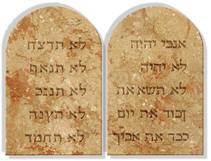
1 Moses summoned all Israel and said: Hear, Israel, the decrees and laws I declare in your hearing today. Learn them and be sure to follow them. 2 The Lord our God made a covenant with us at Horeb. 3 It was not with our ancestors that the Lord made this covenant, but with us, with all of us who are alive here today. 4 The Lord spoke to you face to face out of the fire on the mountain. 5 (At that time I stood between the Lord and you to declare to you the word of the Lord, because you were afraid of the fire and did not go up the mountain.) And he said: 6 “I am the Lord your God, who brought you out of Egypt, out of the land of slavery.

10commandmentsBackground2https://en.wikipedia.org/wiki/Book_of_Deuteronomy

The Book of Deuteronomy means “second law or spoken words” and is the fifth book of the Hebrew Bible, and of the Jewish Torah. The book consists of three sermons or speeches delivered to the Israelites by Moses on the plains of Moab, shortly before they enter the Promised Land. The first sermon recapitulates the forty years of wilderness wanderings which have led to this moment, and ends with an exhortation to observe the law (or teachings), later referred to as the Law of Moses; the second reminds the Israelites of the need for exclusive allegiance to one God and observance of the laws (or teachings) he has given them, on which their possession of the land depends; and the third offers the comfort that even should Israel prove unfaithful and so lose the land, with repentance all can be restored.

One of its most significant verses is Deuteronomy 6:4, the Shema, which has become the definitive statement of Jewish identity: “Hear, O Israel: the LORD our God, the LORD is one.” Verses 6:4–5 were also quoted by Jesus in Mark 12:28–34 as part of the Great Commandment.

Biblical Truth3https://www.biblegateway.com/resources/matthew-henry/Deut.5.1-Deut.5.5

Here, Moses summons the assembly of his people. He called all Israel; not only the elders, but, it is likely, as many of the people that could come within hearing his voice directly. None of them were above God’s command, or the meanest and toughest of them below God’s jurisdiction. They were all bound to follow God’s commands. God demands attention. We are to hear and heed, hear and remember, hear, so we may learn, and then retain God’s commands. Otherwise, hearing God has no purpose. When we hear the word of God we must set about to learn it, so that we may have God’s Word ready for any occasion. What we have learned, we must also put into practice because the purpose of hearing is learning, not to fill our heads with ideas, or our mouths with talk. We are to correct and direct our affections and conversations toward God.

Moses refers to the covenant made with them in Horeb as that which they must govern themselves by. See the wonderful free gift of divine grace that turned God’s command into a covenant. The gift that binds our consent to obey God’s commands with God’s promises to us. Observe, the parties to this covenant. God made it, not with our fathers, not with Abraham, Isaac, and Jacob. To our fathers, God gave the covenant of circumcision but did not give the Ten Commandments. The light of divine revelation grew gradually, and the children were made to know more of God’s mind than their fathers had done.

The covenant was made with us, or our immediate parents that represented us, before Mount Sinai. God made this covenant visible to us Himself. He talked with the people face to face; word to word. God did not use dark visions, as He did to the fathers (Job 4:12, 13), but openly and clearly, and so that all the thousands of Israel might hear and understand. He spoke to them, and then received their answer. The covenant was created face to face. The mediator of the covenant: Moses stood between God and them, at the foot of the mount (Deut. 5:5), and carried messages between them both.

Here, Moses was acting as a type of Christ, who stands between God and man, to show us the word of the Lord, a blessed days-man, which has laid his hand upon us, so that we may hear from God and speak to Him without fear. The verses that follow begin the repetition of the Ten Commandments. Though they had been spoken before, and written, they are again line by line, repeated so that we can keep the word of God in our minds and preserve and renew its impact upon us.

Items for Discussion

  • God seems to be spoon-feeding the Israelites their rules for living generation by generation. Why would this be an effective way of teaching God’s people a new way of life?
  • Why is face to face communications so much more effective than just reading something?
  • What impact do you think modern day technology like the Internet, Email, Facebook, Twitter, etc. have on the task of teaching people? What is good and what is bad about it?
  • Where in modern day society do we still use intermediaries and why is this still being done?
  • Why do you think that the “Ten Commandments” generate such adverse reactions when our government references them? Aren’t they just logical and desirable behavior between people?
  • If society does not use the Ten Commandments, what other guidelines, teachings would bring about suitable behavior?

1 Corinthians 13
1 If I speak in the tongues of men or of angels, but do not have love, I am only a resounding gong or a clanging cymbal. 2 If I have the gift of prophecy and can fathom all mysteries and all knowledge, and if I have a faith that can move mountains, but do not have love, I am nothing. 3 If I give all I possess to the poor and give over my body to hardship that I may boast, but do not have love, I gain nothing. 4 Love is patient, love is kind. It does not envy, it does not boast, it is not proud. 5 It does not dishonor others, it is not self-seeking, it is not easily angered, it keeps no record of wrongs. 6 Love does not delight in evil but rejoices with the truth. 7 It always protects, always trusts, always hopes, always perseveres. 8 Love never fails. But where there are prophecies, they will cease; where there are tongues, they will be stilled; where there is knowledge, it will pass away. 9 For we know in part and we prophesy in part, 10 but when completeness comes, what is in part disappears. 11 When I was a child, I talked like a child, I thought like a child, I reasoned like a child. When I became a man, I put the ways of childhood behind me. 12 For now we see only a reflection as in a mirror; then we shall see face to face. Now I know in part; then I shall know fully, even as I am fully known. 13 And now these three remain: faith, hope and love. But the greatest of these is love.

Background

It is ironic that the Bible’s premier verses on love would come from a letter written to the people of Corinth. Corinth was a wealthy trade city and known for its twelve pagan churches, the most infamous being Aphrodite, the Greek goddess of sex and love. At this temple, one thousand prostitutes pursued their trade and gave the money into the temple treasury. This was the way that Aphrodite was worshipped. The people of Corinth were so well known for their sins that it was considered an insult to call someone “a Corinthian.”

The letter was written from Ephesus (16:8), a city on the west coast of today’s Turkey, about 180 miles by sea from Corinth. According to Acts of the Apostles, Paul founded the church in Corinth (Acts 18:1–17), then spent approximately three years in Ephesus (Acts 19:8, 19:10, 20:31). The letter was written during this time in Ephesus, which is usually dated as being in the range of 53 to 57 AD. In chapter 13 the apostle Paul goes on to show more particularly a better way to live, through a new definition of love. Paul recommends it by showing the necessity and importance of this new love, (1 Cor. 13:1-3), by giving a description of this new love’s properties and fruits (1 Cor. 13:4-7), and by showing how much this new love excels the best of gifts and other graces. He does this by reminding us of the real love’s lasting qualities (1 Cor. 13:8-13).

Biblical Truth

Here is a summary of the chapter:

  • There are many gifts that people can have, but the greatest gift of all will be the ability to love.
  • Some people might be able to predict the future and even understand all the mysteries of the world. However, if there is no love in their heart, then something is missing.
  • Love is patient
  • Love is kind
  • Love does not envy
  • Love does not boast
  • Love is not proud
  • Love does not dishonor others
  • Love is not self-seeking
  • Love is not easily angered
  • Love keeps no record of wrongs
  • Love does not delight in evil but rejoices with the truth
  • Love always protects
  • Love always trusts
  • Love always hopes
  • Love always perseveres
  • Love never fails

Basically, love is everything good and nothing bad. It lasts forever, while spiritual gifts will fall by the wayside. Predictions and speaking in tongues can only get you so far in life. Love is for always, or at least should be for always. Paul explains that when he was a child, he acted like a child. But, now, he’s a grown man and he’s done with the childish things. When this world is done, when God has wiped everything away, it will be like looking in a mirror for the first time and really seeing. Before this, we only knew part of what there was to know. But when our world is gone, we’ll know everything. When this happens, spiritual gifts won’t matter. The only feelings that will exist when God finishes are faith, hope, and love. But of course, the most excellent one of all will be love.

Items for Discussion

  • So why is it so hard to love?
  • Where does the world get confused when it comes to love?
  • What does it mean to be loyal to someone or some group?
  • The message title is “Love and Loyalty.” Can you be loyal without love?
  • Are the benefits of love similar/different than those of loyalty? In what ways?
  • Can you teach someone to be loyal?
  • Can you teach someone to love?

Discussion Challenge

  • How would a church pass on to the next generation, more love and more loyalty?

Snapshots

The Revised Common Lectionary was created by clergy to provide synergy across denominations so that the messages heard each Sunday and during the week followed predetermined Scripture selections. Each Snapshot was developed for an adult discussion group gathered to discuss weekly worship Scripture selections in more detail. They generally follow the Lectionary. Some of the notes used for this group are provided below.

The study material is gathered from the Internet and does not represent original work. Material is a “snapshot” of available study material and where it was used as is, the material is referenced back to the original website in the footnotes1Note: The material listed below can be referenced back to 2005. As a result, the footnotes to references may link to resources that are no longer available. While Lostpine does periodic checks to update these links, there are times that the original resource is not available any more. We leave the “broken link” as a marker to point to where the information was originally referenced.. Some of Lostpine’s favorite resources can be found here.

To see this list in alphabetical order, use our Sitemap. If you would like to look up specific verses to find the Snapshot for those verses, use our Biblical Directory for Snapshots. Click here to view them all.

The Bible Studies in the section entitled SNAPSHOTS was originally started in March of 2005. The Study below ends its production with 448 Snapshots.  Lostpine has added a new series based, not on the common lectionary, but on the less common Scriptures. You can find Shadows here, published each Friday.

12/27/2020
Epilogue: Now What? – Revelation 22:5

12/20/2020
The Power of Light – John 1:1-5; John 8:12; Matthew 5:14-16

12/13/2020
Emmanuel Has Come – Lostpine – Matthew 1:20-23

12/6/2020
Who Needs A Savior? – Romans 7:21-25

11/29/2020
The Anointed One(s) – Exodus 30:22-30; Luke 7:36-48

11/22/2020

11/15/2020
Yes You Can – Philippians 4:13; 2 Corinthians 12:9

11/8/2020
To Worship Rightly – Matthew 11:28-30; Luke 10:29-37

11/1/2020

10/25/2020
Our God of Surprises! – Matthew 22:15-22

10/18/2020
Our Quest for Hope – Isaiah 11:1-9

10/11/2020
Standing on the Promise – Exodus 32:1-14; Philippians 4:1-9

10/4/2020
Soul Food – Luke 12:22-20

9/27/2020
Focusing On God – Mark 1:35-42

9/20/2020
On Being Lifted Up – Hebrews 12:7-14

9/13/2020
Promise Fulfilled – Joel 2:28-29; John 14:15-19

9/6/2020
Fruitful Work – 1 Corinthians 3:1-9

8/30/2020
Zestful Living – Romans 12 & 13

8/23/2020
Growing and Reaching – 1 Corinthians 13:1-13

8/16/2020
Go On – Matthew 19:19-22

8/2/2020
The “Look” of Faith – 1 Corinthians 11:23-39

7/21/2020
Footsteps – Galatians 5:16-25; Psalm 55:22

7/19/2020
The Transforming Power of God – Acts 10:39b-44; Romans 12:1-2

7/12/2020
An Overflowing Heart – Mark 6:34

7/5/2020
Founded On The Rock – Hebrews 12:28; Matthew 7:24-25

6/28/2020
Keep On Digging – Luke 12:35-40

6/21/2020
The Spirit and Love – Luke 7:36-50

6/14/2020
Treasures In Earthen Vessels – 2 Corinthians 4:5-7

6/7/2020
This Little Light – John 12:35-36; Matthew 5:14, 16

5/31/2020
In The S-P-I-R-I-T – Isaiah 55:10; Romans 8:9

5/23/2020
Using Memories – Deuteronomy 32:7

4/17/2020
Pointing Beyond Ourselves – 1 Corinthians 1:31

4/10/2020
The Testing Ground – Genesis 1-13

4/3/2020
Broken Bread, Eyes Opening – Luke 24:28-35

3/26/2020
The Power of Hope – Romans 5:1-8

3/19/2020
I Doubt It – Luke 24:5b-9

3/12/2020
Raised and Waiting – Luke 24:5b-9; Matthew 28:6-7

4/5/2020
The Triumph of Humility – Matthew 21:1-10

3/29/2020
Bound – Luke 6:32-34

3/22/2020
Yield – Matthew 6:17-18

3/15/2020
Glorious Things of Thee Are Spoken – Exodus 17:1-17; John 4:5-42

3/8/2020
No Hands and Feet But Ours – Ephesians 4:1-7; 11

3/1/2020
A Tale from the Trail< – Matthew 5:1-10; Matthew 5:13-16

2/23/2020
Where Faith Leads Us – Luke 9:30-35

2/16/2020
Afraid of Giants – 1 Samuel 17:20-50

2/9/2020
Salty Christians – Matthew 5:13-20

2/1/2020
Happiness Is…. – Luke 6:17-26

1/26/2020
Launch Out Into The Deep – Luke 5:1-11

1/19/2020
The World In God’s Hands – John 3:16-17; John 16:33b

1/12/2020
I Am Baptized – Mark 1:10-11

1/5/2020
The Star Still Shines – Matthew 2:1-12

12/29/2019

12/22/2019
Emmanual – God With Us – Seasonal Cantata

12/15/2019
In the Heart, Yes! – John 1:9-13; Luke 2:22-38

12/8/2019
In the Flesh, Yes! – Isaiah 9:2, 6-7; John 1:14-19

12/1/2019
In the Beginning, Yes! – Genesis 1:26-31; Luke 1:5-24

11/24/2019
First Thanks, Then Giving – 2 Corinthians 8:1-9

11/17/2019
Use It or Lose It – Luke 12:13-21

11/10/2019
Side By Side – Philippians 1:3-5

11/3/2019
The Strengthening Angel – Luke 22:39-43

10/27/2019

10/20/2019
A Funny Thing Happened to the Word… – 2 Corinthians 8:3-5; Romans 12:1-3

10/13/2019
What You Sow – Galatians 6:1-10

10/6/2019
The Folly of God – 1 Corinthians 1:18-25

9/29/2019
Dealing With Frustration –  1 Kings 8:12-21

9/22/2019
Handling Stress Without Strain – John 14:27-29; 15:1-5

9/15/2019
Where Faith Leads Us – Matthew 14:22-33

9/8/2019
A Makeover By Jesus> – 2 Corinthians 5:16-21

9/1/2019
So Little So Much – Mark 6:30-44

8/25/2019
A Cluttered Desk-Mind – Proverbs 4:1-9; Luke 13:22-30

8/18/2019
A Long Chain of Faith – Isaiah 5:1-7; Hebrews 11:29-12:2

8/11/2019
Hand-Me Downs – John 17:13-19

8/4/2019
What’s Next? Glory, God, Both? – Isaiah 6:8; Mark 10;35-45

7/28/2019
No Shortcuts – Matthew 10:39

7/21/2019
Why Am I Here? – 1 Kings 19:1-16; Matthew 9:35-38

7/14/2019
A Second Touch – Mark 8:22-26

7/7/2019
Freedom Isn’t Free – Psalm 133: Galatians 5:1, 13-18, 25

6/30/2019
Searching – Luke 19:1-9

6/23/2019
Giving Our Best – Matthew 25:14-29

6/16/2019
In the S-P-I-R-I-T – Isaiah 55:6-11; Romans 8:5-11

6/9/2019
Going Beyond – Ephesians 3:20

6/2/2019
What Do You Expect? – John 2:1-11; Luke 17:21

5/19/2019
Why a Church is Worth Living For – Acts 11:1-18; Revelations 21:1-6

5/12/2019
A Content Life (A Mother’s Day Recipe) – Psalm 47; Philippians 4:4-9

5/5/2019
An Attitude of Gratitude – Psalm 100; Luke 17:11-19; Philippians 1:3-6

4/28/2019
Jesus is Playing with Us – John 20:19-31; Revelations 1:4-8

4/21/2019
The Best of All Possible News – Isaiah 65:17-25; Luke 24:1-12

4/14/2019
Singing the Same Old Song – Psalm 118:1-2, 19-29; Mark 14:1-11

4/7/2019
The 5 Life Attitudes that Begin with the Letter F – Isaiah 43:18-19; John 12:3-5, 7 and Philippians 3:4-14

3/31/2019
Where is Your Treasure? – Matthew 6:19-21

3/24/2019
What Makes a Great Church? – Romans 5:5; Matthew 23:11-12

3/17/2019
Knowing Who and Whose We Are – Genesis 15:1-12, 17-18; Luke 13:31-35

3/10/2019
Lead Us Not Into Temptation – Deuteronomy 26:1-11; Luke 4:1-13

3/3/2019
The Grace of God Has No Boundaries – Isaiah 42:1-9; Acts 10:34-43

2/24/2019
His Dream, It was Impossible but not to God – Psalm 37:1-11; 39:4; Genesis 45:3-11; 15

2/17/2019
Hello My Name is … – Psalm 139:1-16; Ephesians 1:3-14

02/10/2019
Holy Impossible – Isaiah 6:1-8; Luke 5:1-11

2/3/2019
Exit Laughing – Matthew 6:21; Romans 6:23; Philippians 4:19

1/27/2019
When We Have Wondered Too Far – Psalm 23; Luke 15:1-7

1/20/2019
The Savior of the World – Isaiah 49:1-6; John 1:29-41

1/13/2019
Fulfilling All Righteousness – Isaiah 42:1-8; Matthew 3:13-17

1/6/2019
A Crown of Beauty – Isaiah 62:1-3; John 1:1-18

12/30/2018
Lost and Found> – Luke 2:41-52

12/23/2018
To The Eye Invisible; To the Ear Impossible – Proverbs 1:5; Colossians 1:15-18

11/18/2018
Imagine the Gift of Forever – Psalm 37:18; John 5:24; 1 John 5:11

11/11/2018
What’s My Legacy? – 1 Kings 17:8-16; Mark 12:41-44

11/4/2018
Why is Life So Fragile? – Deuteronomy 6:1-9; Mark 12:28-34

10/28/2018
Be Prepared to Take the Helm – Jeremiah 32:7-9; Mark 10:46-52

10/15/2018
The Value of Service – Job 23:1-9; 16-17; Mark 10:17-31

9/16/2018
The Usual Suspect – Isaiah 50:4-9; Mark 8:27-38

9/9/2018
Just As We Suspected – Proverbs 22:1-23; Mark 7:24-30

8/26/2018
And There You Have It – Isaiah 43:19; 2 Corinthians 5:14-17

8/12/2018
Fear, Hear, See, Speak, Be the Good – Genesis 2:26-31; 1 Thessalonians 5:11-18

8/5/2018
The Bread of Life – Psalm 132:13-15; John 6:35-51

7/28/2018
The Real Miracle – John 6:1-21

7/22/2018
Led By The Spirit> – John 14:1-17; 25-26

7/15/2018
That’s Dancing – 2 Samuel 6:1-19; Mark 6:14-29

7/1/2018
Why Did It Happen? – Proverbs 22:7; Proverbs 13:22

6/24/2018
Peace Be Still – 1 Samuel 17:4-11; Mark 4:35:41

6/10/2018
A Good Judge of Character – 1 Samuel 8:4-15; Mark 3:20-29

5/27/2018
Talk of the Towns – Isaiah 6:1-8; Luke 19:11-27

5/20/2018
Charged Up – Isaiah 40:27-31; Romans 8:9-11

4/29/2018
The True Vine – Psalm 22:25-31; John 15:1-8

4/1/2018
Do Not Be Alarmed (Yeah Right!) – Psalm 114; Mark 16:1-8

3/25/2018
The Shirts Off Our Back – Psalm 118; Mark 11:1-11

3/18/2018
Magnetic< – Jeremiah 31:31-34; John 12:20-33

3/11/2018
Light Has Come Into The World – Numbers 21:4-9; John 3:14-21

3/4/2018
Leading With Love – Psalm 32:8-11; Ephesians 4:1-6

2/18/2018
Bringing You To God – Genesis 9:8-17; 1 Peter 3:18-22

2/4/2018
Jesus Heals, Prays, and Proclaims the Good News – Isaiah 40:21-31; Mark 1:29-39

1/28/2018
He’s Lord of All – Deuteronomy 18:15-20; Mark 1:21-28

1/14/2018
God Knows Us – God Calls Us – 1 Samuel 3:1-20; John 1:45-51

12/24/2017
Message of the Magi – Isaiah 9:2-11; Matthew 2:10-11

12/17/2017
The Story of Shepherds – Psalm 23; Luke 2:8-19

12/10/2017
Telling The Story – Isaiah 40:1-8; Luke 6:43-45

11/26/2017
Was There Someone With Us? – Nahum 1:7; Luke 17:11-19

11/19/2017
Being and Believing – Jeremiah 23:22-24; Matthew 23:12

10/29/2017
The Progress of Religion – Psalm 90:1-6; 13-17; Matthew 22:34-46

10/15/2017
Sofa Diving?< – Deuteronomy 31:8; Luke 21:1-4

10/8/2017
If You’ve Ever Been Up A Tree? – Jeremiah 29:11; Luke 19:1-10

10/1/2017
Life Is In The Narrative – Exodus 17:1-7; Acts 9:1-12

9/24/2017
Is Your Jar Empty Or Full? – Genesis 33:18-20; John 4:4-26

Please note that Lostpine has changed the format of the Snapshot Study slightly. We have discontinued the section entitled “Biblical Truths and Theology in our format.  Our study material was shorted so that it fits a 30 to 45 minute maximum study class.  If you want to add the theology, just use one of the several recommended commentaries listed in Useful Resources.

9/3/2017
Doing What He Tells Us – Exodus 3:1-5; John 2:1-11

8/13/2017
Go, Love, Serve – Jonah 1:1-6; 1 Corinthians 12:14-20

7/23/2017
A More Excellent Way – Genesis 28:10-19; Mark 2:13-14

7/16/2017
A Caring Friend – Psalm 119:105-112; Luke 10:40-42

6/11/2017
A Little Help From Your Friends – Genesis 1:1-5; Mark 2:3-12

6/4/2017
Receive the Spirit – John 14:15-21; Acts 2:1-21

4/23/2017
They Met Jesus – Some Greeks – Isaiah 28:24-26; John 12:20-26

4/16/2017
They Met Jesus – The Women At The Tomb – Psalm 118:1-2; John 20:1-18

3/19/2017
They Met Jesus – Christ Welcomes the Children – Psalm 127:3-5; Matthew 19:13-15

3/5/2017
Give Thanks With A Grateful Heart – Psalm 107:1-9; 2 Timothy 1:3-10; Luke 17:11-19

2/26/2017

2/19/2017
They Met Jesus – The Pharisees – Leviticus 19:1-2, 9-18; Matthew 23:1-12

2/12/2017
They Met Jesus – John the Apostle – Deuteronomy 30:15-20; Luke 9:49-50

2/5/2017
They Met Jesus – James the Son of Zebedee – Psalm 112:1-9; Mark 1:19-20

1/29/2017
They Met Jesus – Simon Peter – Micah 6:1-8; Mark 1:11-17; John 18:15-27

1/22/2017
They Met Jesus – Andrew – Isaiah 9:1-4; John 1:35-40

1/15/2017
They Met Jesus – John the Baptist – Isaiah 49:1-7; Matthew 3:1-17

12/18/2016
New Gifts – Isaiah 7:10-16; Matthew 1:18-25

12/11/2016
Let Heaven and Nature Sing Gloria – A Christmas Cantata

11/25/2016
Come, Thou Long Expected Jesus – Isaiah 2:1-5; Matthew 24:36-44

11/13/2016
Just Do Your Best – Isaiah 55:1-13; Luke 19:11-27

10/30/2016
The Book of Books – Psalm 40:1-10; 2 Timothy 3:16

10/16/2016
On Buying into the Future – Jeremiah 32:6-15; 1 Timothy 6:17-19

10/2/2016
Mustard Seed Faith – Psalm 133; Luke 17:5-6

9/18/2016
A Balanced Life – Psalm 118; Luke 2:52

9/11/2019
The Healing Touch – Lamentations 4:15; Luke 5:12-13

8/28/2016
Is It Worth It? – Psalm 71:1-6; Luke 14:25-33

7/24/2016
The Threefold Purpose – Isaiah 9:2-7; Matthew 9:35-36

7/17/2016
Filler Up – Psalm 8; Luke 11:24-28

7/10/2016
That Thing We Do – Psalm 52; Colossians 1:1-11

6/19/2016
A Father’s Heart – Psalm 103:12-14;  1 Thessalonians 2:11-12

6/5/2016
Of Grace and Gratitude – Psalm 23; Romans 8:28

5/29/2016
The Inevitable Christ -1 Kings 8:20-21; Luke 20:17

5/8/2016
Love and Loyalty -Deuteronomy 5:1-6;  1 Corinthians 13

4/172016
And So I Choose – Psalm 84; John 10:14-18

4/9/2016
From These Stones -Joshua 4:1-7;  Luke 3:2-10

3/27/2016
It Was A Perfect Act! – Isaiah 65:17-25; Luke 24:1-12

3/6/2016
The Woman Was Fearless – Psalm 27:1-4; 13-14; Mark 14:3-9

2/21/2016
Promise or Performance? – Genesis 15:1-12;  Matthew 21:28-32

2/7/2016
Blameless Before the Lord – Hosea 6:4; Jude 1:24-25

1/31/2016
Encouraging One Another – Jeremiah 4:1-10; 1 Thessalonians 5:10-12

1/10/2016
Making The Gospel Our Own – Isaiah 43:1-7; 2 Timothy 2:8-13

12/13/2015

11/29/2015
Flourishing – Habakkuk 3:17-19; Philippians 4:10-15

11/15/2015
God’s Plans Are Greater Than Our Plans -Jeremiah 29:11-13; Ephesians 1:9-14

11/1/2015
Forward In Faith – Exodus 18:23; Romans 2:6-10

10/18/2015
A Living Daring Confidence – Deuteronomy 31:6; Philippians 1:6

10/4/2015
Real Love is From God – Psalm 26; John 13:33-35

09/27/2015
All for One and One for All – Psalm 124; Mark 9:38-50

09/20/2015
Of Gadgets and Glitches – Exodus 15:19-20; Ephesians 1:22-23

09/13/2015
To Make Whole – Proverbs 1:20-23; Matthew 4:23; 9:35

08/30/2015
Overcoming Troubles – Ecclesiastes 3:11-15; John 16:29-33

08/16/2015
All Things Being Equal – 2 Samuel 11:26-12:13; Luke 8:1-3

07/19/2015
Despots and Dictators – 2 Samuel 11:1-15; Acts 12:19b-23

07/19/2015
And The Walls Came Tumbling Down – Joshua 6:1-5; Luke 14:15-24

07/05/2015
Time is of the Essence – Isaiah 13:6-9; 1 Thessalonians 5:1-11

06/21/2015
Stormy Weather – 1 Samuel 17:33-18:5; Matthew 8:23-27

06/14/2015
Do You Truly Love Me? – 1 Samuel 15:34-16:3; John 21:15-17

05/31/2015
What Shall I Say? – Isaiah 6:1-8; John 12:27

05/17/2015
On The Rise– Isaiah 6:1-8; John 12:27

05/10/2015
That is Quite the Family You Have There! – Genesis 24:50-67; 1 Peter 3:4

04/26/2015
To Thine Own Self Be True – Isaiah 43:1-7; Acts 4:32-5:11

04/12/2015
Has No One Condemned You? – Psalm 133; Exodus 30:22-29; John 8:1-12

03/29/2015
Will You Really Lay Your Life Down For Me? – Zechariah 9:9-11; John 12:36-38

03/15/2015
God’s Gift Of Grace – Psalm 133; Exodus 30:22-29; John 8:1-12

03/01/2015
Women’s Work – Ruth 1:7-22; Luke 1:39-56

02/15/2015
Does This Offend You? – Psalm 25:1-10; John 6:52-66

02/08/2015
When Jesus Asks – Psalm 147:1-11; John 5:1-15

01/11/2015
Why Do You Involve Me? – Psalm 29; John 2:1-11; Luke 2:1-7

12/21/2014
Jesus, the Hinge of History – Psalm 89:1-4; Luke 2:1-7

12/01/2014
We Are Sheltered By the Stars – Genesis 26:3-5; Philippians 2:12-16

11/16/2014
What Wouldn’t Jesus Do? – Jeremiah 3:15-18; John 14:18-27

11/02/2014
See Him As He Is – Isaiah 40:1-5; 1 John 3:1-3

10/19/2014
What a Day – Psalm 18:1-24; 1 Thessalonians 5:12-24

10/05/2014
Getting To Know You – Psalm 19:7-14; Philippians 3:4b-14

09/21/2014
Can’t Keep Quiet – Exodus 3:1-14; Acts 4:13-20

09/14/2014
Choice Is Yours – Psalm 114; Romans 14:7-12

08/31/2014
Did You Call Me? – Isaiah 6:1-8; Mark 1:16-20

07/20/2014
Lament and Praise – Psalm 22:1-22

06/15/2014
Praying The Psalms – Psalm 42; Psalm 43

05/25/2014
The “Presents” of Christ – Psalm 66:8-20; John 14:25-31; Hebrews 9:16-22

05/11/2014
Blessed Is The Mother Who Gave You Birth – Isaiah 41:8-10; Luke 11:27-28

04/27/2014
You Better Would – 2 Chronicles 7:11-12; John 20:19-31

04/20/2014
When Morning Rolls Around – Isaiah 53:1-12; Mark 16:1-8

04/13/2014
Going On A Piece – Isaiah 50:4-9; Luke 19:28-44

04/06/2014
Abiding In Christ – Isaiah 42:16; John 15:7; John 9:4-5

03/23/2014
Outening The Light – Jeremiah 31:31-34; John 9:4-5

03/09/2014
Meeting At the Golden Gate – Ezekiel 44:1-3; John 10:7-10

02/23/2014
Treasure In Heaven…Priceless – Psalm 73:12, 23-26; Matthew 6:19-21

02/16/2014
You Can Stop When You Wish – Proverbs 3:5-6; Philippians 4:13

02/01/2014
The Courage to Be Yourself – 2 Samuel 22:23-34; John 8:30-36

01/12/2014
Present Imperfection – Deuteronomy 32:3-4; Matthew 5:43-48

12/22/2013
 Starry Night – Psalm 8; Matthew 2:9-11

12/15/2013

11/24/2013
Thanks A Million – Deuteronomy 8:1-3; Luke 17:11-19

11/24/2013
The Pool of Memory – Deuteronomy 8:1-3; 2 Peter 11:1-14

11/17/2013
Plea for Expanded Ministries – Ezekiel 20:32; Acts 16:9-15

11/10/2013
 Faith Before the World – 1 Samuel 12:23-24; 1 Corinthians 1:1-9

10/27/2013
We Love To Tell The Story – Psalm 46; Romans 1:15-16

10/13/2013
It is Better to Receive than to Give – Deuteronomy 15:7-14; 2 Corinthians 9:6-15

09/29/2013
Creator God – Creating Still – Genesis 1:31-2:1; Mark 2:1-12

09/15/2013
This Is My Story, What’s Yours – Exodus 19:8-9; 1 Corinthians 13:12-13

09/01/2013
From Humble Beginnings – Proverbs 22:1-4; Luke 14:7-14

05/19/2013
Bridge or Barrier – Genesis 11:1-9; Acts 2:1-12

05/05/2013
Stirring Things Up – Psalm 67; John 5:1-9

04/21/2013
Glimpses of Truth – Isaiah 45:18-19; Romans 12:1-12

04/07/2013
The Great Omission – Jeremiah 26:1-3; Matthew 12:38-41

03/31/2013
The Great Awakening – Lamentations 3:52-58; John 20:1-18

03/17/2013
On The Way – Isaiah 30:18-21; John 14:1-6

03/03/2013
A Feast In Exile – Isaiah 55:1-13; Luke 13:1-9

02/17/2013
It’s Easy Once You Know The Secret – Isaiah 28:16; Romans 10:8-13

02/10/2013
Start Shining – Genesis 27:22-34; Hebrews 12:12-17

01/20/2013
Crossroads – Ecclesiastes 3:1-13; Luke 2:21-35

01/06/2013
Will It Matter In A Year? – Habakkuk 3:2; 2 Peter 3:8-10

12/30/2012
Giving It All Away – Psalm 51:1-10; Colossians 3:9-17

12/23/2012
The Story of the Stable – Micah 5:2-5a; Luke 2:15-16

12/16/2012
The Story of the Shepherds Fields – Isaiah 12:2-6; Luke 2:8-10

11/18/2012
With A Heart That Is Full – 1 Chronicles 16:30-34; Philippians 4:5-7

11/11/2012
Who Wrote The Book Of Love? – Psalm 15; Mark 12:28-34

11/04/2012
We Are People Of The Ark – Genesis 6:9-7:5; 1 Peter 1:5-8

10/28/2012
Peace and Hope Courtesy of the Reformation – 2 Samuel 22:1-3; Romans 5:1-5

10/07/2012
The Whole World Has Gone After Him – Isaiah 14:26-27; John 12:17-19

09/16/2012
Scattered Moments of Surprising Grace – Zechariah 12:10; Mark 8:27-30

09/09/2012
A Plan For Greater Works – Jeremiah 29:10-12; John 14:12

08/26/2012
Reconciliation – Proverbs 16:5-6; 2 Corinthians 5:18-19

05/20/2012

05/06/2012
Panoramic Prospects – Deuteronomy 15:1-8; John 15:1-8

04/22/2012
How to be a Christian in Four Easy Steps – Psalm 4; Luke 29:36-49

04/08/2012
Perfect Love Never Ends – Isaiah 54:9-10; Mark 16:1-8

03/25/2012
Perfect Love Always Succeeded – Exodus 13:1-13; 1 Corinthians 13:8

03/04/2012
What Was She Thinking – Isaiah 55:6-12; Matthew 26:1-13

02/26/2012
Perfect Love is Everything – Exodus 20:1-7; 1 Corinthians 13:1-3

02/12/2012
O Perfect Love – Genesis 2:18-24; 1 Corinthians 13:1-14

01/29/2012
God’s Faithfulness to All Generations – Deuteronomy 18:15-20; Ephesians 3:16-21

01/08/2012
The Jumping Off Place – Genesis 1:1-5; Mark 1:4-11

12/09/2011
The Christmas Cantata – Christmas Story in Matthew & Luke

11/27/2011
What Will You Get FROM Christmas? – Isaiah 64:1-9; Romans 8:38-39

11/20/2011
Thanksgiving Day Prayers – Jeremiah 30:18-20; Philippians 4:6

10/30/2011
Widow’s Might – Psalm 90:1-6; Luke 21:1-4

10/16/2011
Hit Us Again, Lord – Exodus 33:12-23; Ephesians 2:10

10/01/2011
Partnering In The Journey – Psalm 19; 2 Timothy 1:1-7

09/18/2011
Never Rest Until You Have Found It – Hosea 14:4-6; Philippians 1:21-30

09/04/2011
Ships at a Distance – Genesis 2:15-18; Ephesians 4:22-25

08/07/2011
Who Cares If You Listen? – Joshua 14:6-15; Revelation 3:20

07/24/2011
Peace of Cake – Psalm 23; John 14:25-31

07/17/2011
Harvest Time – Psalm 139:1-22; Matthew 13:24-30, 36-43

07/10/2011
Hearing the Word is Not Enough – Psalm 119:105-112; Matthew 13:1-9, 18-23

07/03/2011
There is a Big Difference Between Knowing and Doing – Psalm 45:10-17; Romans 7:14-25

06/19/2011
Home Sweet Home: The Steadfast Home – Isaiah 26:1-3; 2 Peter 3:8-13

06/05/2011
Home Sweet Home: Home Beautiful – Zephaniah 3:19; Philippians 1:3-6

05/22/2011
Home Sweet Home: Homework – 2 Samuel 7:10; Hebrews 10:25

05/08/2011
Home Sweet Home: There is No Place Like Home – Isaiah 32:18; Acts 16:14-15

04/24/2011
A Matter of Death and Life – Deuteronomy 30:15-19; John 15:13

04/10/2011
A Ride Inside a Spinning Bubble – Isaiah 26:1-3; Acts 17:1-9

03/27/2011
Making a Big Splash – Psalm 23; Romans 15:13

03/13/2011
Outlook Lookout – Jeremiah 17:7-9; Philippians 4:11-12

03/06/2011
Gifted Women – Ruth 4:13-17; Matthew 6:24-34

02/27/2011
Interpersonal Relationships: How Wonderful It Would Be – Jeremiah 31:1-3; 2 Corinthians 5:11-17

02/13/2011
Trust: An Open House – Proverbs 3:5-6; Matthew 22:34-37

01/30/2011
Environment–The Way We Live Now – Deuteronomy 30:9-14; Colossians 1:1-14

01/02/2011
Messiah’s Star – Isaiah 60:1-6; Psalm 72; Matthew 2:1-12

12/19/2010
Receptive to God’s Will – Isaiah 7:10-16; Matthew 1:18-25

12/05/2010
The Forerunner – Isaiah 11:1-10; Matthew 3:1-12

11/21/2010
Food For Thought – Food For Life – Exodus 16:1-8; John 6:25-35

11/07/2010
Who are the saints? – Psalm 146; Luke 6:20-31

10/24/2010
I Have Fought The Good Fight – Joel 2:23-27; 2 Timothy 4:6-8

10/10/2010
When We Meet To Worship – Pray Fervently – Isaiah 56:5-8; Ephesians 6:18-20

09/19/2010
When We Meet To Worship – Sing Wholeheartedly – 1 Chronicles 16:9-23; Ephesians 5:19-20

09/05/2010
Come Saturday Morning – Isaiah 58:9b-14;Luke 13:10-17

08/22/2010
Do You Want The Faith Of Christ To Grow? – Isaiah 5:1-7;Luke 12:49-56

03/28/2010
The Shadow of the Cross – Isaiah 50:4-9a; Mark 11:1-11

03/14/2010
Unrelenting Love of God – Hosea 13:1-11; John 3:16-17

03/07/2010
Change of Heart – Isaiah 55:1-9; Luke 1-9

02/28/2010
Are You A Person Of Sacrifice? – Psalm 27; Luke 13:31-35

02/21/2010
Temptations – Deuteronomy 26:1-11; Luke 4:1-13

01/31/2010
The First Objections – Jeremiah 1:4-10; Luke 4:21-30

01/10/2010
He Knew He Was Right – Psalm 29; Luke 3:15-17; Luke 3:21-22

12/27/2009
When Do We Put Christmas Back In the Attic? – Psalm 16; Matthew 28:16-20; Philippians 4:4-5; John 15:11-17

11/15/2009
As Easy As ONE, TWO, THREE – Micah 6:1-8; Mark 12:28-34

11/08/2009
Your Lips Say Yes – Psalm 127; Matthew 21:28-32

10/18/2009
Who Is Able? – Psalm 91:9-16; Mark 10:35-45

10/04/2009
Who’s Shout is Heard Round the World? – Psalm 8; Hebrews 2:10-12

09/20/2009
Who’s The Greatest Of Them All? – Psalm 1; Mark 9:30-37

09/06/2009
All Work and No Play – Psalm 125; James 2:12-14

08/23/2009
Take Thou Our Hearts Dear Lord! – Psalm 84; Ephesians 6:10-20

08/09/2009
Lost Then Found – Micah 6:6-8; 3 John 1:2-6

07/26/2009

07/19/2009
Did You See That?! – A Miracle of Jesus – Isaiah 29:13-19; Mark 7:31-39

07/12/2009

07/05/2009
And Heeeeer’s Johnie – Psalm 48; Mark 6:1-13

06/20/2009
Even Wind and Sea Obey – Psalm 9:9-20; Mark 4:2-41

05/31/2009
The Spirit Of Truth – Joel 2:28-32; John 16:5-15

05/24/2009
Christians Transforming the Culture – Psalm 1; John 17:6-19

05/10/2009
In This is Love – Psalm 22:25-31; I John 4:7-10

05/03/2009
Famous Last Words – Psalm 4; Luke 24:44-53

04/12/2009
The Week That Was – Psalm 118:1-2; 4-24; John 20:1-18

03/29/2009

03/08/2009
Hoping Against Hope – Psalm 22:22-31; Romans 4:13-25

03/01/2009
For Our Benefit – Jeremiah 31:31-34; John 12:20-33

02/22/2009
Sweet Chariots of Fire! – 2 Kings 2:1-12; Mark 9:2-9

02/01/2009
The Prophetic Voice – Deuteronomy 18:15-20; Mark 1:21-28

01/04/2009
Appointment To Leadership – Psalm 147:12-20; Luke 10:1-12

12/21/2008
The Best of Gifts – The Worst of Times – Micah 5:2-5a; Luke 1:26-38

12/07/2008
Biding Our Time – Isaiah 40:1-11; Luke 2:25-40; Romans 8:22-25

11/23/2008
Filled with All Good Things – Psalm 51; John 4:31-38

11/09/2008
Sincerest Sympathy – Psalm 103:1-8; 2 Corinthians 1:3-5

10/12/2008
Lord – Make Us Rich – Psalm 65; 1 Timothy 6:17-20

09/28/2008
Extending The Gifts The Spirit Gives You – Psalm 78:1-4; 12-16; Hebrews 6:10-12

09/14/2008
Finding the Gifts the Spirit Gives You – Psalm 114; 1 Corinthians 12:1, 4-26

08/31/2008
The Stranger – Psalm 37:1-4; Philippians 4:4-9

08/17/2008
Don’t Let The Sun Go Down – Jonah 1:1-3a, 4, 11-12, 15, 17; 2:10; 3:1-5, 10; 4:1, 5-7, 9; Ephesians 4:17-32

08/03/2008
Walking in Unity – Psalm 17:1-7; Ephesians 4:1-6

07/20/2008
Family Affair ~ The Prodigal Son – Psalm 130:3-5; Luke 15:20-27

07/13/2008
More on the Prodigal Son – Isaiah 12:1-3; Luke 15:25-32

07/06/2008
Even More on the Prodigal Son – Psalm 119:33-40; Luke 15:11-20

06/22/2008
Silver from the Spirit – Psalm 86:1-10; Ephesians 1:13-14

05/11/2008
The Spirit Jesus Promised – Proverbs 3:5-7; Acts 2

05/04/2008
Jesus on a Mountainside in Galilee – Psalm 32:8-11; Matthew 28:16-20

04/06/2008
The Family of God – Psalm 4; 1 John 3:1-8

03/23/2008

03/09/2008
Celebrate the Journey – Psalm 146:5-10; John 8:30-38

03/02/2008
Living in Harmony – Psalm 95; Romans 12:14-18

02/17/2008
Wouldn’t It Be Lovely – Proverbs 15:2-6; Philippians 4:8-9

02/10/2008
Prefer the Possible – Exodus 3:1-8; Mark 10:23-27

02/03/2008
Cain: In Cold Blood – Genesis 4:1-10; Hebrews 11:1-4

01/13/2008
The Highest Form of Knowledge – Isaiah 4:1-6; 1 Corinthians 2:1-5

01/06/2008
Which One Are You? – Isaiah 60:1-6; Matthew 2:1-12

12/23/2007
Angels of Peace – Genesis 28:10-22; Luke 2:8-20

11/25/2007
Would the Real Jesus Please Stand Up – Isaiah 9:1-7; Matthew 16:13-28

10/28/2007
All People that on Earth do Dwell – Psalm 19; Hebrews 4:12-13

10/14/2007
Giving Rules – Exodus 16:11-18; 2 Corinthians 8:1-15

09/30/2007
But, I didn’t do anything! – Psalm 91:14-16; Luke 16:19-31

09/16/2007
Citizens of Heaven – Job 19:25-27; Philippians 3:20-21

09/02/2007
Our Guide to the Truth! – Psalm 81:10-16; John 16:12-15

08/05/2007
Affirming What We Believe – Christ Victorious – Psalm 107:1-9, 43; Ephesians 1:18-20

07/29/2007
His Utmost! – Psalm 85; Hebrews 2:14-15

07/22/2007
The People You Thought You Knew – Jacob – Genesis 32:22-32; 2 Corinthians 5:16-18

07/15/2007

07/08/2007
The People You Thought You Knew – Adam & Eve – Genesis 3:1-13; James 1:12-18

07/01/2007
The Birth of Freedom – Psalm 72:12; 11-19; Luke 1:34-35

06/24/2007
The Exact Imprint of God – Psalm 42; Hebrews 1:1-4

06/10/2007

06/03/2007
Affirming What We Believe – Blessed Trinity – Isaiah 63:8-10; 2 Corinthians 13:14

05/13/2007
Happily She Never Cared Much For Fame – Proverbs 1:8-10; John 16:20-27

04/29/2007

04/01/2007
Palm Sunday – Zechariah 9:9; Mark 11:1-11

03/18/2007
What God Can Do – Psalm 32; II Corinthians 5:16-21

03/11/2007
And the Greatest of These is Love – Psalm 139:7-18; Ephesians 3:14-19

02/25/2007
The Wind Beneath Our Wings – Psalm 55:1-6; John 14:25-27

02/18/2007
Little Lamb, Who Made Thee? – Psalm 100:1-5; Luke 15:4-7

02/11/2007
Fill Us With Your Love – Jeremiah 31:1-3; John 13:1-17

02/04/2007
Three Things I Pray – Psalm 119:18-20; 3 John 1:2-4

01/14/2007
Out With the Old, In With the New – Psalm 125; Matthew 9:14-17

12/31/2007
Famous Last Words – Psalm 148; 2 Timothy 4:6-8

12/17/2006
We Three Kings from the Orient – Micah 5:1-2; Isaiah 60:5-6; Psalms 72:10-11; Jeremiah 6:20;Ezekiel 27:22; Matthew 2:1-12

12/03/2006
Loudly Let the Trumpets Blare! – Isaiah 18:3-7; I Corinthians 14:6-8

11/19/2006
To Be a Light – Isaiah 49:1-7; Acts 13:42-52

11/06/2006
The Parables of Jesus – I will be Victorious – Isaiah 30:18-21; Matthew 13:1-9; 19-23

10/22/2006
We Give More Than is Asked – Psalm 50:1-6; Acts 3:1-10

10/08/2006
Doing My Part – Psalm 111; Acts 9:32-43

09/24/2006
Standing in the Living Present! – Psalm 1; Philippians 1:1-11

09/16/2006
The Parables of Jesus – Whatever It Takes – Isaiah 53:6; Luke 15:3-7

09/10/2006
Impartiality – Psalm 146; Acts 10:34-43

08/27/2006
Peek-a-boo, I See You – Psalm 18:1-6; 16-19; I Peter 2:9-12

08/13/2006
Barnabas Rallies Round – Psalm 78:23-29; Acts 9:26-31

07/09/2006

06/18/2006
The Parables of Jesus – Size Does Matter – Psalm 11; Matthew 13:31-32

05/28/2006
A Lifetime Guarantee – Psalm 51:1-17; John 17:6-19

05/14/2006
Very Touching, Now Get Up and Get a Move On – Psalm 22:25-31; Acts 6:1-7

04/30/2006
God’s Word from the Porch – Psalm 25:1-10; Acts 3:11-26

04/23/2006
The Untamable Tongue – Psalm 30; James 3:7-12

04/11/2006
More on Fighting the Good Fight – Psalm 46; II Timothy 4:6-8

03/26/2006
The Peace of Jesus – Psalm 107:1-3, 17-22; John 14:27

03/12/2006
Loudly Let the Trumpets Blare! – Isaiah 18:3-7; I Corinthians 14:6-8

03/05/2006

02/26/2006
The Power of Jesus – Psalm 78:1-8

02/19/2006
Who Is The Greatest? – Psalm 128; Matthew 18:1-6

02/12/2006
The Promise of Jesus – John 3:16-17

02/05/2006
The Person of Jesus – Isaiah 53:2; Colossians 2:8-9

01/29/2006
Free To Value Others – Exodus 20:17; Acts 2:1-13

01/08/2006
Rocky Would Have Made Them Take The Stairs – Exodus 20:1-11; Acts 1:6-11

12/11/2005
The Sequel That Improves On the Original – Genesis 1:1; John 1:6-8; 19-28

11/27/2005
There is a WAIT on My Shoulders – Psalm 40:1-5; Luke 1:39-56

11/13/2005
Bringing Up Baby! – Psalm 78:1-7; I Corinthians 13

10/23/2005
Porters, Redcaps and Bellhops – Psalm 90:1-6; Galatians 6:2

10/16/2005
A Small Piece of Paper – Psalm 96:1-9; I John 2:12-13

10/02/2005
Lasting Friendships in Unlikely Places – Psalm 19; I John 1:5-7

09/25/2005
Among Taller Trees – Psalm 105:1-6; James 5:16

09/17/2005
Best Friends – Jeremiah 31:3; Hebrews 10:19-25

09/04/2005
Top Ten List for Everyday Living – Micah 6:6-8; Romans 12:9-13

08/21/2005
If I Knew Then What I Know Now – Psalm 51; Romans 8:31-39

07/24/2005
The Great I Am Part III – Psalm 80:7-19; John 15:1-10

07/17/2005
The Great I Am Part II – Psalm 84; John 14:1-6

07/10/2005
The Great I Am Part I – Psalm 23; John 10:1-15

06/26/2005
Fight the Good Fight – Psalm 91:1-6; I Timothy 6:11-16

06/12/2005
Let Your Light Shine – Isaiah 58:8-11; Matthew 5:13-15

05/29/2005
If You Forgive People Enough – Psalm 46; Colossians 3:12-15

05/15/2005
On The Windy Side of Care – Psalm 68:1-10; I Corinthians 12:24-26

05/01/2005
Amongst Yourselves – Psalm 16:5-11; Colossians 1:3-6

04/24/2005
Families – Psalm 85:8-13; Romans 16:16

04/10/2005
Accepted Everywhere – Psalm 23; Colossians 3:16

04/03/2005
For the Good of the Cause – Psalm 125; I Peter 1:3-9

03/27/2005
The Greatest Moment in History – Jeremiah 31:1-6; John 20:1-18

03/20/2005
The One Who Is Sent – Psalm 118:19-29; Matthew 21:1-11

03/13/2005
A Sunday for the Women – Micah 6:7-8; Luke 7:36-50

03/06/2005
As Children of the Light – Psalm 23; Ephesians 5:8-14

  • 1
    Note: The material listed below can be referenced back to 2005. As a result, the footnotes to references may link to resources that are no longer available. While Lostpine does periodic checks to update these links, there are times that the original resource is not available any more. We leave the “broken link” as a marker to point to where the information was originally referenced.

The Inevitable Christ

1 Kings 8:20-211NIV New International Version Translations
20 “The Lord has kept the promise he made: I have succeeded David my father and now I sit on the throne of Israel, just as the Lord promised, and I have built the temple for the Name of the Lord, the God of Israel. 21 I have provided a place there for the ark, in which is the covenant of the Lord that he made with our ancestors when he brought them out of Egypt.”

cornerstoneBackground

The author of both books of Kings is unknown. Some people believe it was Jeremiah, during the time just before Jerusalem’s enemies overcame the city. In 2 Kings 24:18-25:30 is the same as Jeremiah chapter 52. There is nothing about Jeremiah in the books of 1 Kings and 2 Kings. However, Jeremiah went to Egypt. 2 Kings ends with the events in Babylon. So both books are attributed to an unknown prophet in Babylon.

The writer or writers used a lot of information from other books. These books probably included Isaiah, Jeremiah and Chronicles. The book refers to an unknown book called the ‘Book of the acts of Solomon.’ It also mentions the ‘Books of the chronicles of the kings of Israel and Judah’ and uses collections of stories about the prophets Elijah, Elisha, Micaiah and Isaiah.

The author gave a message. He did not just write history. He follows what the Book of Deuteronomy taught. Deuteronomy contains God’s law for his people. It directs how they should live. But most of the kings in Judah and Israel did not obey these instructions. In fact, none of the kings in the northern kingdom called Israel were good kings and also influenced their people to be evil.

For example, the Book of Deuteronomy explains how the people should worship God. But most kings and most people did not want to worship the real God. They preferred to worship images of false gods. Much of this evil worship had a relationship with sex. People believed that such gods would give them large families and successful farms. And agriculture was very important in Judah and Israel.

The Books of 1 Kings and 2 Kings tell us about a period of nearly 400 years. This was from the time when David died to the exile in Babylon. In 930 B.C. This happened after the death of Solomon, the most important event in the book. During this time, Israel was divided into two kingdoms.

There is more about the northern kings (Israel) than about the southern kings (Judah.) The author writes a great deal about the kings who affected the religion of the country. He does not say much about the other kings. For example, he says a lot about Ahab who made people worship Baal. He says very little about Ahab’s father Omri, who was a much better king. The author also says a lot about the prophets, in particular Elijah and Elisha. He explains why God allowed his people to go into exile. They did not give honor to God at Jerusalem.

Biblical Truth

In chapter 8, Solomon is now making a solemn surrender or dedication of this house unto God, delivering it to God by his own act and deed. He begins with recitals of what has been before done, leading to what is now being done: accordingly, here is a recital of the special causes and considerations moving Solomon to build a place of worship.

  • He recites the wanting of such a place.
  • He recites David’s purpose for wanting to build such a place. God chose the person first that should rule his people (I chose David, 1 Kgs. 8:16) and then put it into his heart to build a house for God’s name, 1 Kgs. 8:17. It was not a project to build up to magnify David but of God, for God’s lasting memory. David first designed it, though he did not live to lay the first stone.
  • He recites God’s promise concerning himself. God approved his father’s (David’s) purpose (1 Kgs. 8:18. God accepted David’s good will but would not permit him to do the good work. God reserved this for David’s son (1 Kgs. 8:19).
  • He recites what he himself had done, and with what intention: I have built a house, not for my own name, but for the name of the Lord God of Israel (1 Kgs. 8:20), and set there a place for the ark, 1 Kgs. 8:21. Thus all the right, title, interest, claim, and demand, whatsoever, which he might have in this house, he resigns, surrenders, and gives up, to God forever.

It summarizes for us that whatever good we do, we must look upon it as the performance of God’s promise to us, rather than the performance of our promises to him. The more we do for God the more we are indebted to him; for our sufficiency is of him, and not of ourselves.

Items for Discussion

  • Solomon reminds us here about motives. How is it that motives behind one’s actions affect the value of the action itself?
  • What do these verses tell you about how society today should go about building houses of worship?

Luke 20:172http://www.easyenglish.info/bible-commentary/luke-lbw.htm]
Jesus looked directly at them and asked, “Then what is the meaning of that which is written: ‘The stone the builders rejected has become the cornerstone’?”

Background

Luke wrote two books of the New Testament (NT). Luke’s Gospel tells the story of the life and work of Jesus. Luke’s second book, Acts, continues the story after Jesus’ death and resurrection. The two books amount to a quarter of the NT. This is even more than the Apostle Paul wrote. Luke was a physician (Colossians 4:14). He was often Paul’s companion in his travels. The book of Acts contains passages in which Luke includes himself as a companion of Paul (‘we’ in Acts 16:10-17; 20:5-21:18; 27:1-28:16). Luke shared Paul’s work (Philemon, verse 24). He was a loyal friend. In prison, Paul says, ‘only Luke is with me’ (2 Timothy 4:11). Luke was a Gentile, coming from Antioch, a town in Syria.

Biblical Truth

Jesus is reminding the leaders about the scriptures (Psalm 118:22-24). Matthew and Mark include, ‘God has done this. And it is wonderful to us.’

22 The stone the builders rejected has become the cornerstone; 23 the Lord has done this, and it is marvellous in our eyes. 24 The Lord has done it this very day; let us rejoice today and be glad.

We do not know what the most important stone was. It could have been a large stone in the base of the building (a cornerstone). That stone would establish the shape of the building. It could have been the top stone on a corner of the building (a capstone). That stone would hold the walls together. What we know is that the reference is to a specific single stone would hold the whole structure together.

Items for Discussion

  •  What is the purpose of a cornerstone and capstone?
  • How is Christ like both stones?

Discussion Challenge

  •  How does the modern day church make sure it keeps its motivations and purposes aimed at God and not at man?

Of Grace and Gratitude

Psalm 231NIV New International Version Translations
1 The Lord is my shepherd, I lack nothing. 2 He makes me lie down in green pastures, he leads me beside quiet waters, 3 he refreshes my soul. He guides me along the right paths for his name’s sake. 4 Even though I walk through the darkest valley, I will fear no evil, for you are with me; your rod and your staff, they comfort me. 5 You prepare a table before me in the presence of my enemies. You anoint my head with oil; my cup overflows. 6 Surely your goodness and love will follow me all the days of my life, and I will dwell in the house of the Lord forever.

SheepBackground

Many of David’s psalms are full of complaints, but this is full of comforts, and the expressions of David’s delight in God’s great goodness and dependence upon him. It is a psalm which has been sung by good Christians, and will remain a favorite, bringing a great deal of pleasure and satisfaction to those who hear it.

  • David describes his relation to God, as his shepherd (v. 1).
  • He recounts his experience of the kind things God had done for him as his shepherd (v. 2, v. 3, v. 5).
  • David concludes that he should want nothing more (v. 1), that he does not need to fear evil (v. 4), and that God would never leave him or forsake him in when David was in need of God’s mercy. Therefore David resolves never to leave or forsake God as part of his of duties (v. 6).

In this psalm, David certainly has his eyes focused, not only to the blessings of God’s providence, which made his outward condition prosperous, but to the communications of God’s grace, received by a lively faith, and returned in a warm devotion. This filled David soul with unspeakable joy. And, as in many places in the Old Testament, Psalm 23 foretells us of Christ dying for His sheep and provides an insight to Christians who will receive the benefit of all the care and tenderness of that great and good shepherd, Christ.

Biblical Truth

Verses 1–2: In Israel, sheep followed their shepherd who will lead them to green fields where they will find plenty to eat, sleep well because they are safe and can rest and find safe water for their thirst. While the sheep may think they know where to find good things, it is the shepherd who knows what is best for His flock.

Verses 3–4: We are reminded that God is like a guide and the responsibilities of guiding a flock on their journeys was in the hands of the shepherd. Because of David’s experiences with guides and shepherds, he found himself thinking about God and how he was protected through his life’s journey. The two analogies are true, “GOD IS LIKE A GUIDE – GOD IS ALSO LIKE A SHEPHERD.” The valley of the River Jabbok where David was a shepherd was very dark. But with God as his guide, the shepherd David was safe. God brought David through the shadow of death.

Verses 5–6: God is also like a friend. In the beginning of Psalm 23 (1-4), David is recalling life on earth but in the end of the Psalm 23 (5-6), David is foretelling us about life in heaven.

In the psalm, David’s experiences with a human guide was thought to be with Barzillai, a wealthy Gileadite who showed hospitality to David when he fled from Absalom. (2 Samuel 17:27. Barzillai made a great dinner for David, he poured oil, from plants, on David’s head, Barzillai gave David wine to drink. David then compared this experience with what eternity with God will be like.

Items for Discussion

  • If you had to summarize the attributes of a happy life, what would they be?
  • How are your examples from the question above similar or different than those David seems to be describing in this Psalm?
  • What experiences in life have you had that help you understand what God will be like and what eternal life might be like?
  • Why is a relationship with God so important for our earthly life (see verses 3 and 4 for ideas)?


Romans 8:28
28 And we know that in all things God works for the good of those who love him, who have been called according to his purpose.

Background2https://www.studylight.org/commentaries/bnb/romans-8.html

Chapter 8 is intended mainly to show that the gospel could do what the Law was incapable of doing. In chapter 8, Paul shows that the Law was incapable of producing sanctification or peace of mind. He had traced its influence on the mind in different conditions, and shown that equally before regeneration and afterward, it was incapable of producing peace and holiness. Such was man, such were his propensities that the application of law only tended to excite, to irritate, to produce conflict.

The human conscience, indeed, testified to the Law that it was good; but still it had shown that it was not adapted to produce holiness of heart and peace, but agitation, conflict, and a state of excited sin. In opposition to this, Paul proceeds to show in this chapter the power of the Gospel to produce what the Law could not:

  • The Gospel does what the Law could not do in giving life, and delivering from condemnation, Romans 8:1-13.
  • The Gospel produces a spirit of adoption, and all the blessings which result from the relationship similar to that a sibling has with a parent; that relationship provides the confidence with which we can address God as our Father, in opposition to the Law which produced only terror and alarm, Romans 8:14-17.
  • The Gospel sustains the soul amidst its captivity to sin, and its trials, with the hope of a future deliverance – a complete and final redemption, of the body from all the evils of this life, Romans 8:18-25.
  • The Gospel furnishes the aid of the Holy Spirit to sustain us in our trials and infirmities, Romans 8:26-27.
    · The Gospel gives the assurance that all things will work together for good, since all things are connected with the purpose of God, and all that can occur to a Christian comes in as a part of the plan of Him who has resolved to save Him, Romans 8:28-30.
  • The Gospel ministers consolation from the fact that everything that can affect the happiness of man is on the side of the Christian, and will cooperate in his favor; as, e. g.,
    • God, in giving his Son, and in justifying the believer, Romans 8:31-33.
    • Christ, in dying, and rising, and interceding for Christians, Romans 8:34.
    • The love of a Christian to the Saviour is in itself so strong, that nothing can separate him from it, Romans 8:35-39.

By all these considerations the superiority of the gospel to the Law is shown, and assurance is given to the believer of his final salvation. By this interesting and conclusive train of reasoning, the Apostle Paul is prepared for the triumphant language of extreme joy with which Paul closes this most precious portion of the Word of God.

Biblical Truth3http://www.easyenglish.info/bible-commentary/romans-lbw.htm

‘We know’ means that Christians already have had this experience. God is already working in our lives. We have suffered pain and disappointment. People have opposed us. Our troubles have been great. But even at the worst times, God was working for our benefit. He was helping us. He looked after us when nobody else cared. He is our Father, who loves us. And God promises to continue to look after the people who love him. So we should not be afraid of future problems. And we should not be angry when unpleasant things happen. Instead, we should trust Him. He has a plan. He chose to adopt us as His sons and daughters. He is looking after us during our present troubles. And so He will bring us into his new age, when we shall be free from all these troubles.

Items for Discussion

  • So what is “God’s Purpose?”
  • How do you know when the “things in life” are working for your own good?
  • How does a person find “God’s Purpose” for their life?
  • What is Grace?
  • How does God’s Grace work to help us find “God’s Purpose for our lives?

Discussion Challenge

  • What is the role of today’s church in helping people find “God’s Purpose for their lives?”

A Father’s Heart

Psalm 103:12-14 1The New International Version (NIV).
12 as far as the east is from the west, so far has he removed our transgressions from us. 13 As a father has compassion on his children, so the Lord has compassion on those who fear him; 14 for he knows how we are formed, he remembers that we are dust.

Father'sDayHeartBackground

Psalm 103 calls more for devotion than deep study. It is an excellent psalm of praise, and intended for general use. The psalmist, in all probability, In Psalm 102, David stirs up his own emotion and to praise God (Psalm 102:1-2) for His good favor. This is especially true in verses 102:3-5, to the church in general, and to all good men, to whom God is, and will be, just, and kind, and constant (Psalm 102:6-18), and for God’s government of the world, Psalm 102:19. The psalmist desires the assistance of the holy angels, and all the works of God, in praising God, Psalm 102:20-22. In singing Psalm 103, we must do so with all of our heart, feeling the goodness of God and do so in love and thankfulness.

Biblical Truth

The psalmist reminds us that God has pardoned our sins (Psalm 103:12) through His mercy and we are to take comfort, not only for ourselves but for all others and give God the glory. The fullness of God’s pardon is evidence of the riches of God’s mercy (Psalm 103:12):

1. As far as the east is from the west (which two quarters of the world) so far has he removed our transgressions from us, that nothing we have done can be used against us. The sins of believers shall are no longer remembered, they shall not be mentioned or even looked up. In other words, they never existed. Of course we must turn our lives over totally to God and it is only then God will thoroughly forgive them.
2. God also feels our sadness and sorrows, Psalm 103:13-14
3. Who does God pity? Those that fear him, that is, all good people, who in this world may become objects of pity on account of the sins to which they are not only born into but cause on their own.
4. How does God pity? As a father pities his children, and provides help on occasion.
5. Why God pities us? He knows how we are created. He has reason to know our construction because God built us having made us through His hands from dust. God knows that because of how we are constructed, from dust, we have weakness and limitations. Our bodies are frail and our souls are weak. The human can bear very little in comparison to God. So God lays appropriate expectations upon us and shows us the tenderness of His compassion.

Items for Discussion

• Why do love and fear seem to go together when we talk about a “father’s love?”
• When sin is pardoned, it is never charged again. Why are these verses such a good explanation of this gift from God?
• Fun question: How far is the East from the West?
• Why is it foolish for people to think they can do anything, control anything, and create anything?
• Why is it appropriate for the Christian to use a “father figure” for describing God? Most other religions would use an image of a powerful ruler or king? Is not God also powerful?

1 Thessalonians 2:11-12
11 For you know that we dealt with each of you as a father deals with his own children, 12 encouraging, comforting and urging you to live lives worthy of God, who calls you into his kingdom and glory.

Background

Thessalonica was formerly the city of Macedonia which is now called Salonichi. It was one of the best places for commerce in what was called the Levant (an area comprised of Cyprus, Egypt, Iraq, Israel, Jordan, Lebanon, Palestine, Syria, and Turkey). The apostle Paul, having been diverted from his plan of going into the provinces of Asia, was directed to preach the gospel in Macedonia (Acts 16:9, 10). In obedience to this call from God, Paul went from Troas to Samothracia, then to Neapolis, and to Philippi, where he had good success in his ministry. His message was not necessarily met with favor and Paul was cast into prison with his travel companion Silas. In prison, they comforted each other and eventually released and departed.

Passing through Amphipolis and Apollonia, they came to Thessalonica, where Paul planted a church that consisted of some believing Jews and many converted Gentiles (Acts 17:1-4). Unbelieving Jews in the city forced Paul and Silas to leave under the cover of darkness. Afterwards Paul went to Athens, leaving Silas and Timotheus behind, but sent directions that they should come to him with as soon as they could. When they came, Timotheus was sent to Thessalonica, to check up on the newly formed church and to ground them in their faith (1 Thess. 3:2). Timotheus then returned to Paul while he preached in Athens, and was sent out again, together with Silas, to visit the churches in Macedonia. Paul remained behind in Athens alone (1 Thess. 3:1) and eventually departed to Corinth. Here in Corinth, Paul stayed for a year and a half, during which time Silas and Timotheus returned to him from Macedonia (Acts 18:5), and then he wrote this letter to the church of Christ at Thessalonica. While this letter is placed after other letters by Paul in the New Testament, it is thought to be the first of all Paul’s letters, written about A.D. 51. The main content of this letter is to express the thankfulness of Paul for the good success his preaching had among them, to establish them in the faith, and persuade them to a holy conversation.

Biblical Truth

Mildness and tenderness are recommended as part of religion, and are most comparable to God’s gracious dealing with sinners, in and by the gospel. This is the way to win people. We should not only be faithful to our calling as Christians, but in our particular callings and relations with all people. The privilege we receive from our great gospel is that we have been called by God His kingdom and for His glory. The duty for us found in the gospel is that our walk and talk is worthy of God. We should live as one who has been given a high and holy calling. Our great purpose is to honor, serve, and please God, and to seek to be worthy of Him.

Items for Discussion

• What are the duties of the Christian?
• How is it that you are called to carry out your role as a Christian?
• Where do you think the church fails in its duties?
• What are the attributes of a “good father?”
• How would you do a comparison of those attributes with God?
• Which are the attributes that are most important for using when it comes to relating to the unchurched world?

Discussion Challenge

• If you had to make a single change to the church you are in to align its goals with these Bible verses, what would it be?

  • 1
    The New International Version (NIV).
Newer posts »

"For it is by grace you have been saved" - Ephesians 2:8-9  

Copyright: © 2001 - 2025 Lostpine

Translate »