Biblical wisdom, historical insight, and personal growth — all in one place

Category: Snapshots (Page 42 of 45)

Why Do You Involve Me?

Psalm 291NIV New International Version Translations
1 Ascribe to the Lord, you heavenly beings, ascribe to the Lord glory and strength. 2 Ascribe to the Lord the glory due his name; worship the Lord in the splendor of his holiness. 3 The voice of the Lord is over the waters; the God of glory thunders, the Lord thunders over the mighty waters. 4 The voice of the Lord is powerful; the voice of the Lord is majestic. 5 The voice of the Lord breaks the cedars; the Lord breaks in pieces the cedars of Lebanon. 6 He makes Lebanon leap like a calf, Sirion like a young wild ox. 7 The voice of the Lord strikes with flashes of lightning. 8 The voice of the Lord shakes the desert; the Lord shakes the Desert of Kadesh. 9 The voice of the Lord twists the oaks and strips the forests bare. And in his temple all cry, “Glory!” 10 The Lord sits enthroned over the flood; the Lord is enthroned as King forever. 11 The Lord gives strength to his people; the Lord blesses his people with peace.

voice-waves-2Background2http://www.biblestudytools.com/commentaries/matthew-henry-complete/psalms/29.html

It is the probable conjecture of some very good interpreters that David penned this psalm just at the time, of a great storm of thunder, lightning, and rain, as the eighth psalm was his meditation in a moon-light night and the nineteenth in a sunny morning. It is good to take time to reflect on the sensible operations of God’s power in the kingdom of nature to give glory to him. So composed was David, and so cheerful, even in a dreadful tempest, when others trembled, that then he penned this psalm; for, “though the earth be removed, yet will we not fear.’’

  1. He calls upon the great ones of the world to give glory to God (v. 1, v. 2).
  2. To convince them of the goodness of that God whom they were to adore, he takes notice of his power and terror in the thunder, and lightning, and thunder-showers (v. 3-9), his sovereign dominion over the world (v. 10), and his special favor to his church (v. 11). Great and high thoughts of God should fill us in singing this psalm.

Biblical Truth3http://www.easyenglish.info/psalms/psalm029-taw.htm

Verse 1: The heavenly being are probably the angels.

Verse 2: Our translation says the Lord is due glory from us because of His splendor.

Verse 3: Probably the Mediterranean Sea.

Verse 5: Lebanon was famous for very large cedar trees.

Verse 6: Lebanon and Sirion mean the mountains in these places. In the storm David thought that they were moving around. Perhaps there was an earthquake or the thunder made the ground shake.

Verse 9: There is some controversy on how to translate “twists the oaks and strips the forests bare “. Some people say it is better to translate it “makes the animals have their babies”. The storm was so bad that the animals were afraid. The ones that were going to have baby animals had them early. The temple here means heaven. All means even the Angels that are in verse 1

Verse 10: We could have spelled Flood with a capital f. This is because it means one special flood. It happened in the time of Noah. Water covered the whole earth. Everybody died except Noah and his family. We know that David meant this Flood because he used the special word that describes the Flood in Genesis. Nobody else uses that Hebrew description in the entire Bible.

Verse 11: After the storm there was peace. Peace is a gift that God gives to his people.

Items for Discussion

  • Why do severe storms bring us fear?
  • How do storms bring us closer to God?
  • Why is the description of a big storm appropriate for describing “God’s Voice?”
  • When the storm is over, how does David respond?


John 2:1-11
1 On the third day a wedding took place at Cana in Galilee. Jesus’ mother was there, 2 and Jesus and his disciples had also been invited to the wedding. 3 When the wine was gone, Jesus’ mother said to him, “They have no more wine.” 4 “Woman, why do you involve me?” Jesus replied. “My hour has not yet come.” 5 His mother said to the servants, “Do whatever he tells you.” 6 Nearby stood six stone water jars, the kind used by the Jews for ceremonial washing, each holding from twenty to thirty gallons. 7 Jesus said to the servants, “Fill the jars with water”; so they filled them to the brim. 8 Then he told them, “Now draw some out and take it to the master of the banquet.” They did so, 9 and the master of the banquet tasted the water that had been turned into wine. He did not realize where it had come from, though the servants who had drawn the water knew. Then he called the bridegroom aside 10 and said, “Everyone brings out the choice wine first and then the cheaper wine after the guests have had too much to drink; but you have saved the best till now.” 11 What Jesus did here in Cana of Galilee was the first of the signs through which he revealed his glory; and his disciples believed in him.

Background4http://www.easyenglish.info/bible-commentary/john-ma-lbw.htm

John wanted his readers to believe ‘that Jesus is the Messiah, God’s Son’ (John 20:31). That is why he wrote his Gospel. Matthew, Mark and Luke recorded many miracles in their Gospels. But John chose to record only 7 miracles. He called them ‘signs’. John also emphasised that Jesus was human. John recorded that Jesus was tired (John 4:6). John also recorded that Jesus needed food (John 4:31). Jesus was very sad when his friend Lazarus died. At that time, Jesus cried (John 11:35). On another occasion, Jesus became angry with the people who did business in the Temple (John 2:15). And John also recorded that Jesus was thirsty (John 19:28). Jesus was not half human and half God. He was completely human and completely God, too.

John’s Gospel was the last one written and emphasizes the last few weeks of Jesus’ life. John had watched so many people misunderstand the earlier Gospels that he wanted to clear things up. John and the other disciples had lived with Jesus for about three years. John knew that Jesus was a real man. Also John had seen the miracles that Jesus did. John watched Jesus die on a cross. And John had also seen Jesus after he (Jesus) had become alive again. John knew that Jesus had defeated death. And John had seen Jesus rise up to heaven. So John knew that Jesus was a real man and also God’s Son.

Biblical Truth5http://www.christnotes.org/commentary.php?com=mhc&b=43&c=2

It is very desirable when there is a marriage, to have Christ own and bless it. Those that would have Christ with them at their marriage, must invite him and he will come. While in this world we sometimes find ourselves in trouble when we think ourselves too important.

There was want at a marriage feast. Those who come to care for the things of the world, must look for trouble, and count upon disappointment. In our calls to Christ, we must humbly spread our case before him, and then refer ourselves to him to do as he pleases. In Christ’s reply to his mother there was no disrespect. He used the same word when speaking to her with affection from the cross. Christ’s hour comes when we do not know what to do. Delays of mercy are not denials of prayer. Those that expect Christ’s favors, must observe his orders with ready obedience. The way of duty is the way to mercy; and Christ’s methods must not be objected against. The beginning of Moses’ miracles was turning water into blood, Exodus 7:20; the beginning of Christ’s miracles was turning water into wine; which may remind us of the difference between the law of Moses and the gospel of Christ.

Christ shows us that he cares about our creature-comforts and, for his believers, makes them comforts indeed. Christ’s works are all for our benefit. Has he turned your water into wine, given you knowledge and grace? Therefore, we are called to pray out now, and use it. It was the best wine. Christ’s works are always the best works if when we do not recognize they are from him. What was produced by miracles was always the best of its kind.
Though Christ allows a proper use of wine, he does not in the least do away with his own caution, which is, that our hearts be not at any time overdo it, Luke 21:34.

Items for Discussion

  • Why are we a nation of firsts? In other words, why does our society place so much important on something being first?
  • What can we tell about Jesus’ character by the fact that His first miracle was turning water into wine?
  • How does a relationship with Christ help a marriage?
  • What can we tell about how our relationship with our parents should be handled from this story?

Discussion Challenge

  • In what ways can we involve Christ in not only our marriages but our general lives?

When Jesus Asks

Psalm 147:1-11{ref]NIV New International Version Translations[/mfn]
1 Praise the Lord. How good it is to sing praises to our God, how pleasant and fitting to praise him! 2 The Lord builds up Jerusalem; he gathers the exiles of Israel. 3 He heals the brokenhearted and binds up their wounds. 4 He determines the number of the stars and calls them each by name. 5 Great is our Lord and mighty in power; his understanding has no limit. 6 The Lord sustains the humble but casts the wicked to the ground. 7 Sing to the Lord with grateful praise; make music to our God on the harp. 8 He covers the sky with clouds; he supplies the earth with rain and makes grass grow on the hills. 9 He provides food for the cattle and for the young ravens when they call. 10 His pleasure is not in the strength of the horse, nor his delight in the legs of the warrior; 11 the Lord delights in those who fear him, who put their hope in his unfailing love.

questionBackground

Summarizing psalm 147, the people of God are exhorted to praise him for his mercies and care; (1-11) for the salvation and prosperity of the church. (12-20).

This psalm tells us something about God’s love and his power. Here, power does not only mean that he rules everything. It also means that he is strong. It is the second of the 5 Hallelujah Psalms, 146-150. ”

Biblical Truth

Praising God’s work in itself and carries its own benefit. It becomes us as reasonable creatures, much more as people in covenant with God, to praise Him. God gathers outcast sinners by his grace, and will bring them into his holy habitation. To those whom God heals with the consolations of his Spirit, he speaks peace, assures them their sins are pardoned. And for this, let others praise him also. Man’s knowledge is soon ended; but God’s knowledge is a depth that can never be fathomed. And while God can tell the number of the stars, God can still hear the cries of a broken-hearted sinner. While he feeds the young ravens, he will not leave his praying people destitute. Clouds look dull and melancholy, yet without them we could have no rain, therefore no fruit. This means that afflictions look black and unpleasant; but from clouds of affliction come showers that make the soul to yield the peaceable fruits of righteousness. The psalmist delights not in things sinners trust and take human glory from; but a serious and suitable regard for God is, in the sight of the psalmist, the prize. We are not to be in doubt between hope and fear, but to act under the gracious influences of hope and fear united.

Items for Discussion

  • What kinds of things do people praise?
  • Of the list you just created, is there anything on it that people hate?
  • Would you conclude that people praise most what they love most?
  • How is faith strengthened by praise?
  • How to troubles, afflictions as the psalmist says, build us up?
  • Can we be strong if we never have any troubles?


John 5:1-15
1 Sometime later, Jesus went up to Jerusalem for one of the Jewish festivals. 2 Now there is in Jerusalem near the Sheep Gate a pool, which in Aramaic is called Bethesda and which is surrounded by five covered colonnades. 3 Here a great number of disabled people used to lie—the blind, the lame, the paralyzed. 4 From time to time an angel of the Lord would come down and stir up the waters. The first one into the pool after each such disturbance would be cured of whatever disease they had. 5 One who was there had been an invalid for thirty-eight years. 6 When Jesus saw him lying there and learned that he had been in this condition for a long time, he asked him, “Do you want to get well?” 7 “Sir,” the invalid replied, “I have no one to help me into the pool when the water is stirred. While I am trying to get in, someone else goes down ahead of me.” 8 Then Jesus said to him, “Get up! Pick up your mat and walk.” 9 At once the man was cured; he picked up his mat and walked. The day on which this took place was a Sabbath, 10 and so the Jewish leaders said to the man who had been healed, “It is the Sabbath; the law forbids you to carry your mat.” 11 But he replied, “The man who made me well said to me, ‘Pick up your mat and walk.’ ” 12 So they asked him, “Who is this fellow who told you to pick it up and walk?” 13 The man who was healed had no idea who it was, for Jesus had slipped away into the crowd that was there. 14 Later Jesus found him at the temple and said to him, “See, you are well again. Stop sinning or something worse may happen to you.” 15 The man went away and told the Jewish leaders that it was Jesus who had made him well.

Background

John’s Gospel is different from the other three Gospels. John did not include any stories about Jesus’ birth or his baptism. John only recorded 7 miracles, which he called ‘signs’. John did not include any parables but John recorded many long speeches that Jesus made. John knew about the other three Gospels. But when he read them, John had not yet written his Gospel. He was still just talking to people about his life with Jesus. John agreed that the other Gospels were true accounts.

John provided the facts that were missing from the other Gospels. He used information that they did not have. John’s account did not disagree with the other Gospels. It added different information, so that we can understand more about who Jesus was, the man and the God. John included many physical details. For example, the loaves that Jesus used to feed 5000 people were ‘barley loaves’ (John 6:9). He recorded the distance that the disciples had travelled across the lake (John 6:19). And he remembered how the smell of the perfume filled the house at Bethany (John 11:32). These details do not seem important, yet they are memories of a person who was present at these events. So John’s Gospel is not just a spiritual book. It is the personal account of someone who had seen these events, not just heard about them.

Biblical Truth

We are all by nature impotent people when it comes to spiritual things. We are blind and withered; but God has made full provision for our cure, if we attend to it. An angel went down, and troubled the water; and what disease a person had, the water cured it, but only for the first person who stepped in. This teaches us to be careful, that we let not an opportunity slip by which may never return. The man had lost the use of his limbs for thirty-eight years. Shall we, who perhaps for many years have scarcely known what it has been to be sick for a day, complain of one wearisome night, when many others, better than we, have scarcely known what it has been to be a day well? Christ singled this one out from the rest. Those long in affliction, may comfort themselves that God keeps account how long. Observe, this man speaks of the unkindness of those about him, without any peevish reflections. As we should be thankful, so we should be patient. Our Lord Jesus cures him, though he neither asked nor thought of it. Arise, and walk. God’s command, Turn and live; Make yourself a new heart. It was by the power of Christ, and he must have all the glory. What a joyful surprise to the poor cripple, to find himself all of a sudden to move so easy, so strong, so able to help himself! The proof of spiritual cure, is our rising and walking. Has Christ healed our spiritual diseases, let us go wherever he sends us, and take up whatever he lays upon us; and walk before him.

Those eased of the punishment of sin, are in danger of returning to sin, when the terror and restraint are over. The believers in misery are made whole but God warns us to sin no more. This is the voice of every providence, Go, and sin no more. Christ saw it necessary to give this caution; for it is common for people, when sick, to promise much; when newly recovered, to perform only something; but after a while to forget all. Christ spoke of the wrath to come, which is beyond comparison worse than the many hours, weeks and years of pain, some wicked men have to suffer in consequence of their unlawful indulgences. And if such afflictions are severe, how dreadful will be the everlasting punishment of the wicked!

Items for Discussion

  • How would you notice a Godly opportunity in your life?
  • Why do you think Jesus asked what we would consider an obvious question?
  • Why do you think that the man never asked Jesus to just be cured?
  • What examples in life can we apply to this story?
  • Discussion Challenge
  • How is the Christian Church just like the pool in this story?


Does This Offend You?

Psalm 25:1-101NIV New International Version Translations
1 In you, Lord my God, I put my trust. 2 I trust in you; do not let me be put to shame, nor let my enemies triumph over me. 3 No one who hopes in you will ever be put to shame, but shame will come on those who are treacherous without cause. 4 Show me your ways, Lord, teach me your paths. 5 Guide me in your truth and teach me, for you are God my Savior, and my hope is in you all day long. 6 Remember, Lord, your great mercy and love, for they are from of old. 7 Do not remember the sins of my youth and my rebellious ways; according to your love remember me, for you, Lord, are good. 8 Good and upright is the Lord; therefore he instructs sinners in his ways. 9 He guides the humble in what is right and teaches them his way. 10 All the ways of the Lord are loving and faithful toward those who keep the demands of his covenant.

CommunionBackground2http://www.easyenglish.info/psalms/psalm025-taw.htm

It is not known when David wrote Psalm 25. In it he writes about his enemies (Psalm 25:2 and 19). But David always had enemies. This means that he might have written Psalm 25 at any time in his life. The Psalm is in 3 parts, with an extra verse at the end.

  • Psalm 25:1 – 7: David prays that God will not remember his sins and that God will be his guide. David also asks God for help against his enemies.
  • Psalm 25:8 – 14: David tells us about God and Because God is like this, he will answer David, and give him help.
  • Psalm 25:15 – 21: David tells God that his enemies have hurt him and made him unhappy. Again he asks God for help.

It is believed that somebody else probably wrote verse 22 so that everybody might use the psalm, not just David.

Psalm 25 is an alphabet psalm, like Psalms 9 and 10. So, verse 1 begins with the first letter of the Hebrew alphabet. Verse 2 begins with the second letter and so on. There are 22 letters in the Hebrew alphabet. One is missing in this psalm, the letter q. So, Psalm 25:21 begins with the last letter of the Hebrew alphabet. Psalm 25:22 does not begin with the last letter of the Hebrew alphabet. This is another reason why we think that David did not write the last verse. Alphabet psalms were hard to write. They were special psalms to show people how much the writer loved God. Other alphabet psalms are 9 and 10, 34, 37, 111, 112, 119 and 145.

Biblical Truth3http://www.christnotes.org/commentary.php?com=mhc&b=19&c=25

In worshipping God, we must lift up our souls to him. It is certain that none who, by a believing attendance, wait on God, and, by a believing hope, wait for him, shall be ashamed of it. The most advanced believer both needs and desires to be taught of God. If we sincerely desire to know our duty, with resolution to do it, we may be sure that God will direct us in it. The psalmist is earnest for the pardon of his sins. When God pardons sin, he is said to remember it no more, which denotes full remission. It is God’s goodness, and not ours, his mercy, and not our merit, that must be our plea for the pardon of sin, and all the good we need. This plea we must rely upon, feeling our own unworthiness, and satisfied of the riches of God’s mercy and grace. How boundless is that mercy which covers forever the sins and follies of a youth spent without God and without hope! Blessed be the Lord, the blood of the great Sacrifice can wash away every stain.

We are all sinners; and Christ came into the world to save sinners, to teach sinners, to call sinners to repentance. We value a promise by the character of him that makes it; we therefore depend upon God’s promises. All the paths of the Lord, that is, all his promises and all his providences, are mercy and truth. In all God’s dealings his people may see his mercy displayed, and his word fulfilled, whatever afflictions they are now exercised with. All the paths of the Lord are mercy and truth; and so it will appear when they come to their journey’s end. Those that are humble, that distrust themselves, and desire to be taught and to follow Divine guidance, these he will guide in judgment, that is, by the rule of the written word, to find rest for their souls in the Savior.

Items for Discussion

  • What are the “action words” in this psalm? In other words, what is David, the psalmist, asking of God?
  • Why is this still important to the generations of today?
  • Why is the human race so ill-equipped to do these things without God’s help?
  • Why is a humble heart always a precursor to building a trusting relationship with our God?


John 6:52-66
52 Then the Jews began to argue sharply among themselves, “How can this man give us his flesh to eat?” 53 Jesus said to them, “Very truly I tell you, unless you eat the flesh of the Son of Man and drink his blood, you have no life in you. 54 Whoever eats my flesh and drinks my blood has eternal life, and I will raise them up at the last day. 55 For my flesh is real food and my blood is real drink. 56 Whoever eats my flesh and drinks my blood remains in me, and I in them. 57 Just as the living Father sent me and I live because of the Father, so the one who feeds on me will live because of me. 58 This is the bread that came down from heaven. Your ancestors ate manna and died, but whoever feeds on this bread will live forever.” 59 He said this while teaching in the synagogue in Capernaum. 60 On hearing it, many of his disciples said, “This is a hard teaching. Who can accept it?” 61 Aware that his disciples were grumbling about this, Jesus said to them, “Does this offend you? 62 Then what if you see the Son of Man ascend to where he was before! 63 The Spirit gives life; the flesh counts for nothing. The words I have spoken to you—they are full of the Spirit and life. 64 Yet there are some of you who do not believe.” For Jesus had known from the beginning which of them did not believe and who would betray him. 65 He went on to say, “This is why I told you that no one can come to me unless the Father has enabled them.” 66 From this time many of his disciples turned back and no longer followed him.

Background

Chapter 6 in the Gospel of John contains: the feeding of the five thousand. (1-14) Jesus walking on the sea. (15-21) Jesus redirecting our thinking to spiritual food. (22-27) His discourse with the multitude. (28-65) and the abandonment of many of disciples. (66-71)

Biblical Truth4http://www.christnotes.org/commentary.php?com=mhc&b=43&c=6

The flesh and blood of the Son of man, denote the Redeemer in the nature of man; Christ and him crucified, and the redemption wrought out by him, with all the precious benefits of redemption; pardon of sin, acceptance with God, the way to the throne of grace, the promises of the covenant, and eternal life. These are called the flesh and blood of Christ, because they are purchased by the breaking his body, and the shedding of his blood. Also, because they are meat and drink to our souls. Eating this flesh and drinking this blood simply means believing in Christ.

We partake of Christ and Christ’s benefits by faith. Our soul knows its lost state and wants, finds whatever can to calm our conscience, and promote true holiness. This can only be done through our Redeemer, God manifest in the flesh. Meditating upon the cross of Christ gives life to our repentance, love, and gratitude. We live by him, as our bodies live by our food. We live by him, as the members by the head, the branches by the root: because he lives we shall live also.

Christ’s disciples struggle with the reality that the human nature of Christ had been in heaven, but being God and man, that wondrous Person was truly said to have come down from heaven. The Messiah’s kingdom was not of this world; and they were to understand by faith, a message of spiritual living “upon” Christ. As without the soul of man the flesh is of no value, so without the quickening Spirit of God all forms of religion are dead and worthless. He who made this provision for our souls, alone can teach us these things, and draw us to Christ so that we may live by faith in him.

Items for Discussion

  • Why would someone not accept a teacher’s message?
  • With respect to Christ’s teachings, what are the barriers that people face?
  • Why is it easier to accept Christ’s teaching if you accept the fact that He is God?
  • How should we respond to Biblical teaching when we do not understand it?
  • How should we respond to Biblical teaching when someone else does not understand it?
  • How would you explain communion?

Discussion Challenge

  • How do we help those around us know that Christ is God?

Women’s Work

Ruth 1:7-221NIV New International Version Translations
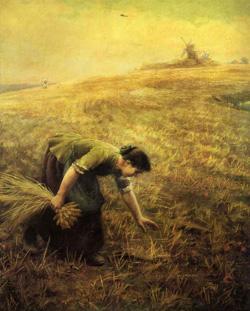
7 With her two daughters-in-law she left the place where she had been living and set out on the road that would take them back to the land of Judah. 8 Then Naomi said to her two daughters-in-law, “Go back, each of you, to your mother’s home. May the Lord show you kindness, as you have shown kindness to your dead husbands and to me. 9 May the Lord grant that each of you will find rest in the home of another husband.” Then she kissed them goodbye and they wept aloud 10 and said to her, “We will go back with you to your people.” 11 But Naomi said, “Return home, my daughters. Why would you come with me? Am I going to have any more sons, who could become your husbands? 12 Return home, my daughters; I am too old to have another husband. Even if I thought there was still hope for me—even if I had a husband tonight and then gave birth to sons— 13 would you wait until they grew up? Would you remain unmarried for them? No, my daughters. It is more bitter for me than for you, because the Lord’s hand has turned against me!” 14 At this they wept aloud again. Then Orpah kissed her mother-in-law goodbye, but Ruth clung to her. 15 “Look,” said Naomi, “your sister-in-law is going back to her people and her gods. Go back with her.” 16 But Ruth replied, “Don’t urge me to leave you or to turn back from you. Where you go I will go, and where you stay I will stay. Your people will be my people and your God my God. 17 Where you die I will die, and there I will be buried. May the Lord deal with me, be it ever so severely, if even death separates you and me.” 18 When Naomi realized that Ruth was determined to go with her, she stopped urging her. 19 So the two women went on until they came to Bethlehem. When they arrived in Bethlehem, the whole town was stirred because of them, and the women exclaimed, “Can this be Naomi?” 20 “Don’t call me Naomi,” she told them. “Call me Mara, because the Almighty has made my life very bitter. 21 I went away full, but the Lord has brought me back empty. Why call me Naomi? The Lord has afflicted me; the Almighty has brought misfortune upon me.” 22 So Naomi returned from Moab accompanied by Ruth the Moabite, her daughter-in-law, arriving in Bethlehem as the barley harvest was beginning.

Gleaning_by_Arthur_HughesBackground2https://www.biblegateway.com/resources/matthew-henry/Ruth

This short history of the domestic affairs of one particular family following the book of Judges (the events related here happening in the days of the judges), and goes before the books of Samuel, because in the closing of Ruth, we are introduced to David; yet the Jews, in their Bibles, separate it from both, and make it one of the five Megilloth, or Volumes, which they put together towards the latter end, in this order: Solomon’s Song, Ruth, Lamentations, Ecclesiastes, and Esther.

It is probable that Samuel was the penman of it. It relates not miracles nor laws, wars nor victories, nor the revolutions of states, but the affliction first and afterwards the comfort of Naomi, the conversion first and afterwards the moving up in society and importance of Ruth. Many such events have happened, which perhaps we may think as well worthy to be recorded; but these God saw fit to transmit the knowledge of to us; and even common historians think they have liberty to choose their subject. The design of this book is:

  • To lead to providence, to show us how conversant it is about our private concerns, and to teach us in them all to have an eye to it, acknowledging God in all our ways and in all events that concern us. To lead to Christ, who descended from Ruth, and part of whose genealogy concludes the book, where it is placed into Matt. 1:5
  • In the conversion of Ruth the Moabitess, and the bringing of her into the pedigree of the Messiah, we have a type of the calling of the Gentiles in due time into the fellowship of Christ Jesus our Lord.

Biblical Truth

In chapter one we have Naomi’s afflictions.

  • As a distressed housekeeper, forced by famine to relocate into the land of Moab
  • As a mournful widow and mother, mourning the death of her husband and her two sons
  • As a caring mother-in-law, wanting to show kindness to her two daughters, but at a loss as to how to do that after she returns to her own country
  • Orpah, her daughter-in-law sadly says good bye
  • Ruth decides to take Orpah with her but fearful in that decision
  • Ruth returns as a poor woman to the place of her first settlement, to be supported by the kindness of her friends

All these things were filled with sadness and seemed against her, and yet all were working for her good.

Items for Discussion

  • Society was tough on women in Old Testament times. Where have we advanced? Where have we remained archaic?
  • What were the characteristics of Ruth that made her a wonderful example of a faithful person?
  • Friends and family were critical to survival in Ruth’s day. What grade or score would you give today’s societies for honoring a commitment to support those close to them when they are in need?
  • Are there things that a community or family based support system can provide that a governmental system of support cannot?
  • What can governmental systems provide that community or family based support systems cannot?
  • To what degree is faith a component of surviving hardship and fostering generosity?


Luke 1:39-56
39 At that time Mary got ready and hurried to a town in the hill country of Judea, 40 where she entered Zechariah’s home and greeted Elizabeth. 41 When Elizabeth heard Mary’s greeting, the baby leaped in her womb, and Elizabeth was filled with the Holy Spirit. 42 In a loud voice she exclaimed: “Blessed are you among women, and blessed is the child you will bear! 43 But why am I so favored, that the mother of my Lord should come to me? 44 As soon as the sound of your greeting reached my ears, the baby in my womb leaped for joy. 45 Blessed is she who has believed that the Lord would fulfill his promises to her!”

Mary’s Song
46 And Mary said: “My soul glorifies the Lord 47 and my spirit rejoices in God my Savior, 48 for he has been mindful of the humble state of his servant. From now on all generations will call me blessed, 49 for the Mighty One has done great things for me—holy is his name. 50 His mercy extends to those who fear him, from generation to generation. 51 He has performed mighty deeds with his arm; he has scattered those who are proud in their inmost thoughts. 52 He has brought down rulers from their thrones but has lifted up the humble. 53 He has filled the hungry with good things but has sent the rich away empty. 54 He has helped his servant Israel, remembering to be merciful 55 to Abraham and his descendants forever, just as he promised our ancestors.” 56 Mary stayed with Elizabeth for about three months and then returned home.

Background3http://www.christnotes.org/commentary.php?com=mhc&b=42&c=0

Luke is generally thought to have been a physician, and a companion of the apostle Paul. The style of his writings, and his acquaintance with the Jewish rites and usages, sufficiently show that he was a Jew, while his knowledge of the Greek language and his name speak of his Gentile origin. He is first mentioned in Acts 16:10-11, as someone with Paul at Troas, where he accompanied Paul to Jerusalem, and was with him in his voyage, and in his imprisonment at Rome. This Gospel appears to be designed to supersede many defective and unauthentic narratives in circulation, and to give a genuine and inspired account of the life, miracles, and doctrines of our Lord, learned from those who heard and witnessed his discourses and miracles.

Biblical Truth

It is very good for those who have the work of grace beginning in their souls, to communicate one to another. On Mary’s arrival, Elizabeth was conscious of the Mary’s role to be the mother of the great Redeemer. At the same time Elizabeth was filled with the Holy Spirit, and under His influence declared that Mary and her expected child were most blessed and happy, as peculiarly honored from the Most High, God. Mary, animated by Elizabeth’s comments, and being also under the influence of the Holy Spirit, broke out into joy, admiration, and gratitude. She knew herself to be a sinner who needed a Savior, and that she could rejoice in God because God was interested in the salvation through the promised Messiah of her and her own baby. Those who see their need of Christ, and are desirous of living a righteousness and full life in Christ, will be filled with good things, with the best things; and they are abundantly satisfied with the blessings Christ gives. Christ will satisfy the desires of the poor in spirit who long for spiritual blessings, while the self-sufficient shall be sent away empty.

Items for Discussion

  • What similarities to you see between Ruth and Mary?
  • How did Mary handle what was a hardship in her life, single and pregnant?
  • In what ways did Elizabeth help Mary in her hardships?
  • How was Mary’s faith emboldened and supported by Elizabeth?

Discussion Challenge

  • What lesson on affliction can we pass on to those around us that is taught here by Ruth and Mary?

Will You Really Lay Down Your Life For Me?

Zechariah 9:9-111NIV New International Version Translations
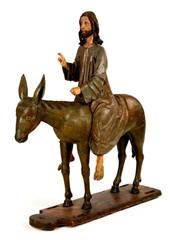
9 Rejoice greatly, Daughter Zion! Shout, Daughter Jerusalem! See, your king comes to you, righteous and victorious, lowly and riding on a donkey, on a colt, the foal of a donkey. 10 I will take away the chariots from Ephraim and the warhorses from Jerusalem, and the battle bow will be broken. He will proclaim peace to the nations. His rule will extend from sea to sea and from the River to the ends of the earth. 11 As for you, because of the blood of my covenant with you, I will free your prisoners from the waterless pit.

jesusoncoltBackground

The Hebrew word “zechariah’\” (or “Zachariah”) means “God remembers.” Zechariah was the grandson of the priest Iddo. He is known for prophesies to the people of Judah after they returned from their seventy years of exile in Babylon (Zechariah 1:1; Nehemiah 12:1, 4, 16). Zechariah’s grandfather returned from Babylon with his young grandson. They were part of the first group of Israelites allowed back, in 538 BC under the decree of Cyrus, king of Persia. Because of this family lineage, Zechariah was a priest in addition to a prophet.

The book of Zechariah contains the clearest and the largest number of messianic (about the Messiah) passages among the Minor Prophets. Many think of the book of Zechariah as a kind of miniature book of Isaiah. Zechariah pictures Christ in both His first coming (Zechariah 9:9) and His second coming (9:10–10:12). Jesus will come, according to Zechariah, as Savior, Judge, and ultimately, as the righteous King ruling His people from Jerusalem (14:8–9).

Zechariah’s prophecies are about the immediate and distant future for a people newly returned from exile. To the Israelites, Zechariah’s prophecies were a great encouragement. We can summarize his writings as follows:

  • Israel would still be judged for sin (5:1–11)
  • They would be cleansed and restored (3:1–10)
  • God would rebuild His people (1:7–17)

Zechariah ends his book by a look into the distant future, first at the rejection of the Messiah by Israel (9:1–11:17), and then at His eventual reign when Israel will finally be delivered (12:1–14:21).

Biblical Truth2http://www.easyenglish.info/bible-commentary/zechariah-lbw.htm

A foal is a young donkey. Kings of Israel rode on donkeys, but Alexander the Great rode a big horse. Perhaps this verse is meant to tell us that Jesus is not like Alexander. We are being told that God is involved. He saves the Messiah from his enemies and he raises him from the dead. And the Messiah himself will do other things. For starters, He rides into Jerusalem on a donkey. From “sea to sea” means from the Red Sea or the Dead Sea to the Mediterranean Sea. From “the river to the ends of the earth” means from somewhere south of Jerusalem to the River Euphrates in the east. Zechariah probably meant the all of the land where the Jews should have lived. This is in Exodus 23:31; Numbers 34:1-15 and Ezekiel 47:15-21. They never lived in all this land. But this was what they hoped for. We are to take great hope that in the end, Jesus will return to the earth and then God’s people will live where God wants them to live.

We are to have this hope because God’s covenant with His people. It is called the “blood of my covenant” here because the Israelites sacrificed animals to seal the covenant. God’s covenant with us started with Abraham, Genesis 15:9-11. It continued with Moses, Exodus 24:5-8. Then it happened every day in the temple in Jerusalem, Exodus 29:38-46. In the New Testament, Jesus used the phrase “blood of the covenant” to describe His death (Mark 14:24). Today, Christians remember this “blood of the covenant” in Communion. The word “testament” also means ‘*covenant’. So our Bibles have an Old Covenant and a New Covenant. God will take the prisoners away from the prison. The prison here is a deep hole in the ground. It is a sign of their place of exile. These prisoners may be the people that have not yet returned to Jerusalem.

Items for Discussion

  • Can the human spirit survive without hope? Why or why not?
  • Why would someone seal a promise with blood?
  • How do prophesies help strengthen one’s faith? When they are first heard? When they are fulfilled?
  • What was God’s promise to His people?


John 13:36-38
36 Simon Peter asked him, “Lord, where are you going?” Jesus replied, “Where I am going, you cannot follow now, but you will follow later.” 37 Peter asked, “Lord, why can’t I follow you now? I will lay down my life for you.”

Background

The opening verse of chapter 13 sets the scene for chapters 13 through 17. Love is one of the key terms in chapters 13 to 17, occurring thirty-one times in these five chapters as compared to only six times in chapters 1 through 12. We also find Jesus washing the disciples’ feet, given to us as an example of loving one another. In chapter 13, you find Christ washes the disciples’ feet. (1-17); Jesus foretells the treachery of Judas (18-30); and His command to the disciples to love one another (31-38).

Bible Truth3http://www.christnotes.org/commentary.php?com=mhc&b=43&c=13

What Christ had said concerning brotherly love, Peter overlooked, but spoke of that about that which Christ kept from them. It is common to be more eager to know about secret things, which belong to God only, than about things which God has revealed, which belong to us and our children. We all admit that it is more desirous to have our curiosity gratified, than our consciences directed; to know what is done in heaven, than what we may do to get there. It is human nature to avoid a conversation on what is plain and understood, while it is our nature to love a doubtful dispute that runs on into endless diatribe of words! We are often angered when told we cannot do something. Yet, without Christ we can do nothing. Christ knows us better than we know ourselves, and has many ways of prodding us to discover ourselves. Our task is to endeavor to keep the unity of the Spirit in the bond of peace, to love one another with a pure heart fervently, and to walk humbly with our God.

Items for Discussion

  • Why do you believe in Heaven?
  • What kind of relationship does it take to be willing to die for someone?
  • What does love have to do with someone’s willingness to die for another?
  • How does one know if they would die for Christ?

Discussion Challenge

  • How can today’s church foster more love and less hate?

God’s Gift of Grace

Psalm 107:1-91NIV New International Version Translations
1 Give thanks to the Lord, for he is good; his love endures forever. 2 Let the redeemed of the Lord tell their story—those he redeemed from the hand of the foe, 3 those he gathered from the lands, from east and west, from north and south. 4 Some wandered in desert wastelands, finding no way to a city where they could settle. 5 They were hungry and thirsty, and their lives ebbed away. 6 Then they cried out to the Lord in their trouble, and he delivered them from their distress. 7 He led them by a straight way to a city where they could settle. 8 Let them give thanks to the Lord for his unfailing love and his wonderful deeds for mankind, 9 for he satisfies the thirsty and fills the hungry with good things.

parchedearthBackground

Psalm 107 is about God’s providential care of people in distress, in banishment, and dispersion. (1-9) In captivity. (10-16) In sickness. (17-22) Danger at sea.(23-32) God’s hand is meant to be seen by his own people. (33-43)

Biblical Truth2http://www.christnotes.org/commentary.php?com=mhc&b=19&c=107

In the first nine verses of Psalm 107, there is reference to the deliverance from Egypt, and perhaps also from Babylon: but the circumstances of travelers in those countries are also noted. It is scarcely possible to conceive the horrors suffered by the hapless traveler, when crossing the trackless sands, exposed to the burning rays of the sun. The words describe their case who the Lord has redeemed from the bondage of Satan; who pass through the world as a dangerous and dreary wilderness, often ready to faint through troubles, fears, and temptations. Those who hunger and thirst after righteousness, after God, and desire communion with him, shall be filled with the goodness of his house, both in grace and glory.

Items for Discussion

  • Compare the endurance of God’s love for mankind and mankind’s love for God?
  • God’s love spans generations—how can we as God’s People make sure our love for God spans generations?
  • Why does suffering and despair focus mankind on God while affluence and success seem to insulate us from God?
  • What are the risks that affluence poses to our society?
  • What are the risks posed by suffering and fear?

Ephesians 2:1-10
1 As for you, you were dead in your transgressions and sins, 2 in which you used to live when you followed the ways of this world and of the ruler of the kingdom of the air, the spirit who is now at work in those who are disobedient. 3 All of us also lived among them at one time, gratifying the cravings of our flesh and following its desires and thoughts. Like the rest, we were by nature deserving of wrath. 4 But because of his great love for us, God, who is rich in mercy, 5 made us alive with Christ even when we were dead in transgressions—it is by grace you have been saved. 6 And God raised us up with Christ and seated us with him in the heavenly realms in Christ Jesus, 7 in order that in the coming ages he might show the incomparable riches of his grace, expressed in his kindness to us in Christ Jesus. 8 For it is by grace you have been saved, through faith—and this is not from yourselves, it is the gift of God— 9 not by works, so that no one can boast. 10 For we are God’s handiwork, created in Christ Jesus to do good works, which God prepared in advance for us to do.

Background3https://www.biblegateway.com/resources/matthew-henry/Ephesians

Some think that the letter to the Ephesians was a circular letter sent to several churches, and that the message directed to the Ephesians happened to be taken into its content and thusly named after this church. This might have become the general belief because it is the only one of all Paul’s letters that has nothing in it peculiarly adapted to the Ephesians. The message has a common message to all Christians, and especially to all who, having been Gentiles in times past, were converted to Christianity.

But then, on the other hand, the letter is expressly inscribed (Eph. 1:1) to the saints which are at Ephesus; and in the close of it he tells them that he had sent Tychicus to them, who, in 2 Tim. 4:12; he says he had sent to Ephesus. It is a letter written while Paul is in prison: and some have observed that what Paul wrote when he was a prisoner had the greatest love and respect in it when it came to God. When Paul’s problems were plentiful, his consolations and experiences were also more plentiful. We see here that when God’s people are afflicted, those who minister to them often rise to the occasion as well and their own ability to endure is subsequently enhanced.

Paul’s purpose is to settle and establish the Ephesians in the truth, and further to acquaint them with the mystery of the gospel. In the beginning he represents the great privilege of the Ephesians, who, having been in time past idolatrous heathens, were now converted to Christianity and received into covenant with God, which he illustrates from a view of their deplorable state before their conversion, Eph. 1:1-3:21. In the latter part (which we have in the Eph. 4:1-6:24) he instructs them in the principal duties of religion, both personal and relative, and exhorts and quickens them to the faithfully discharge these duties. What we find in Ephesians is a summary of the whole Christian doctrine.

Bible Truth

In the beginning two verses we have the introduction to the whole letter, which is much the same as in Paul’s other letters. Paul then gives thanks and praises to God for his inestimable blessings bestowed on the believing Ephesians, and reminds the Ephesians that they are saved by a gift of God’s Grace and the work of Christ’s sacrifice, not through any work that they may have done.

Items for Discussion

  • What do you believe the relationship is between good works and grace?
  • Why must we understand that we were lost before we can understand that we are saved?
  • Paul’s love for God was enhanced by prison, how can that be? What forces were at work here?
  • What do you think it would have been like to be a guard at the prison that held the Apostle Paul?

Discussion Challenge

  • How should the Church respond when it is confined by the world, when the Church is imprisoned by worldly sin?

Has No One Condemned You?

Psalm 1331NIV New International Version Translations
1 How good and pleasant it is when God’s people live together in unity! 2 It is like precious oil poured on the head, running down on the beard, running down on Aaron’s beard, down on the collar of his robe. 3 It is as if the dew of Hermon were falling on Mount Zion. For there the Lord bestows his blessing, even life forevermore.

aaronBackground

Psalm 133 is a Psalm of Ascent, part of a group of psalms about making a spiritual pilgrimage. Part of a journey of Ascent is coming into your own identity which involves aligning yourself with those you’re supposed to be connected with (via the Lord). It is all about unity through our Lord.

The good oil, poured on the head, descended upon the beard, Aaron’s beard into the top openings of his robes. Oil, fragrant oil, is meant as a symbol of joy and festivity. (See Psalm 45:7, Note; Isaiah 61:3.) It is also brought closely into connection with love (Song of Solomon 1:3). But while this association, the pleasure derived from the fragrance of the oil, there is a further purpose. It is the holy oil, that whose composition is described in Exodus 30:22-23. This, while the garments of all the priests were sprinkled with it (Exodus 29:21; Leviticus 8:30), was poured on the head of Aaron (Exodus 29:7; Leviticus 8:12; Leviticus 21:10), so that the description of the psalm, unpleasing as it is to our ideas of today, to saturate not only one’s head, but their face and beard, is what was done. It would run down one’s neck to the collar of the robe.

Biblical Truth

The precious oil is being used in Psalm 133 as an illustration of “brothers dwelling together in unity.” Most of us will ask how does that make sense? The answer is found in:

Exodus 30:22-29
22 Moreover, the Lord spoke to Moses, saying, 23 “Take also for yourself the finest of spices: of flowing myrrh five hundred shekels, and of fragrant cinnamon half as much, two hundred and fifty, and of fragrant cane two hundred and fifty, 24 and of cassia five hundred, according to the shekel of the sanctuary, and of olive oil a hin. 25 You shall make of these a holy anointing oil, a perfume mixture, the work of a perfumer; it shall be a holy anointing oil. 26 With it you shall anoint the tent of meeting and the ark of the testimony, 27 and the table and all its utensils, and the lampstand and its utensils, and the altar of incense, 28 and the altar of burnt offering and all its utensils, and the laver and its stand. 29 You shall also consecrate them, that they may be most holy; whatever touches them shall be holy.

So today in our world, God has put murderers together with people who are filled with hate, thieves with those who do not speak the truth, homosexuals with those who lust, one race with another race, parents with children, wealthy with the poor, and the lazy with the hard working. He has mixed “different spices” together and called it the body of Jesus Christ – the church – Christians! So what are we called to do? He calls us to live righteous lives but do so in harmony and unity.

Items for Discussion

  • Can you think of the “modern day” consecrations that take place making people, objects, physical things become holy?
  • Why are public consecrations needed by humans? Feel free to use any examples, not just Biblical.
  • Could someone be baptized in the desert where there was no water? What is lost without its symbolism?
  • What would we lose from Aaron’s anointing if God had demanded to use only the purest of olive oil?
  • What other joyful examples of unity can you think of that happen because of the diversity of the elements being brought together?
  • What happens if you separate each of the elements in the holy oil – do you think the experience would be as joyful if they were sequentially applied? (You might use as an example, the ingredients of a cake, eaten sequentially, not mixed and baked.)


John 8:1-12
1 but Jesus went to the Mount of Olives. 2 At dawn he appeared again in the temple courts, where all the people gathered around him, and he sat down to teach them. 3 The teachers of the law and the Pharisees brought in a woman caught in adultery. They made her stand before the group 4 and said to Jesus, “Teacher, this woman was caught in the act of adultery. 5 In the Law Moses commanded us to stone such women. Now what do you say?” 6 They were using this question as a trap, in order to have a basis for accusing him. But Jesus bent down and started to write on the ground with his finger. 7 When they kept on questioning him, he straightened up and said to them, “Let any one of you who is without sin be the first to throw a stone at her.” 8 Again he stooped down and wrote on the ground. 9 At this, those who heard began to go away one at a time, the older ones first, until only Jesus was left, with the woman still standing there. 10 Jesus straightened up and asked her, “Woman, where are they? Has no one condemned you?” 11 “No one, sir,” she said. “Then neither do I condemn you,” Jesus declared. “Go now and leave your life of sin.” 12 When Jesus spoke again to the people, he said, “I am the light of the world. Whoever follows me will never walk in darkness, but will have the light of life.”

Background2http://www.biblestudytools.com/commentaries/matthew-henry-complete/john/8.html

In this chapter we find Christ evading the snare which the Jews laid for him, in bringing to him a woman accused of adultery (v. 1-11). The rest of the chapter is taken up with debates between Christ and contradicting sinners, who make petty or unnecessary objections at the most gracious words that proceeded out of His mouth. It is not certain whether these disputes were the same day that the adulteress was discharged. It probably was because John mentions no other day, and takes notice (v. 2) how early Christ began that day’s work. Though those Pharisees that accused the woman had left, there were other Pharisees (v. 13) to further confront Christ.

Bible Truth3http://www.easyenglish.info/bible-commentary/john-ma-lbw.htm

The Jewish leaders still wanted a reason to arrest Jesus. So they brought a woman to him who had sex with a man who was not her husband. They had witnesses that she was guilty. She had not obeyed the 7th rule of God’s 10 Commandments (Exodus 20:14). In Moses’ Law, the punishment was death (Leviticus 20:10; Deuteronomy 22:22) for breaking this commandment. If Jesus told them to kill her, they could report him to the Roman rulers because the Romans did not allow the Jews to execute people, a right that only the Romans retained. But if Jesus told them not to kill her, he was not obeying Moses’ Law. So the Jewish leaders thought that it was not possible for Jesus to give a satisfactory answer. Whatever he said, he would be in trouble!

Jesus did not answer immediately. Instead, he bent down and he used his finger to write on the ground. It was common for teachers to write or to draw in the dust. They often did this to explain something. But John did not record what Jesus was writing. Perhaps Jesus wanted to force the Jewish leaders to repeat their question. Then perhaps they would realize that they were cruel to use the woman’s situation in this way. When Jesus finally answered them, they could not say anything bad about his reply. He told them to obey Moses’ Law and to punish the woman. So he was not saying that Moses’ Law was wrong. When a person sins, they deserve a punishment. But Jesus was also pointing out that everybody is guilty. Everybody has sinned and therefore everybody deserves punishment.

The Pharisees thought that they were less sinful than ordinary people. They were proud because they studied the Law much. They followed all the rules. But the word that Jesus used for ‘sin’ in verse 7 could refer also to bad thoughts and desires, sins of the heart and mind. So none of them could say that they had never sinned. Even their proud attitude was a sin. After Jesus had answered them, He wrote in the dust again. And again, John did not record what Jesus wrote. Some experts speculate that it was a list of the Pharisees’ own sins, or perhaps God’s 10 Commandments (Exodus 20:3-17).

Jesus’ answer had the effect that He wanted. Slowly, the leaders who had accused the woman went away. After they had gone, Jesus spoke to the woman. Of course, Jesus himself had never sinned. So, actually, only he had the right to condemn her. Instead, he forgave her. But before he let her go, Jesus warned the woman. He told her not to continue to sin. Jesus was not saying that her sin did not matter. Sin always matters, because God hates it. God will always forgive us for our sins if we are sincerely sorry. But we must not continue to sin in the same way. God will help us to defeat sin in our lives. We must ask him to do this.

(Many of the earliest copies of John’s Gospel did not include this passage (7:53-8:11). It seems that 8:12 follows 7:52 more easily. Some other copies included it, but in a different place in the Gospel. And some ancient copies of Luke’s Gospel included it. However, some copies of John’s Gospel did include it at this point in the Gospel.

While verse 12 maybe is misplaced, this passage follows John 7:52. It was the Festival of Shelters and Jesus was still teaching in the Temple. In John 1:4-9, John described Jesus as the light that gives life to everybody. In this verse, Jesus described himself as the ‘light for the world’. His sentence started with ‘I am’, which was God’s special name (Exodus 3:14). But this light does more than just guide us in the darkness. This light actually makes the darkness disappear! However, we must continue to follow Jesus all the time. Every day, we should obey him and we should learn from him.

Items for Discussion

  • What is God’s attitude toward us when we sin?
  • Why is a self-confession of our sins to our God so important?
  • There is penance and repentance – what is the difference?
  • While none deserve forgiveness, God’s forgiveness is immediate and perpetual – What should be the human response to this gift of Grace?

Discussion Challenge

  • Can you summarize what Jesus is saying to the woman in these verses? Are these commands for us today?

To Thine Own Self Be True

Isaiah 43:1-7
1 But now, this is what the Lord says—he who created you, Jacob, he who formed you, Israel: “Do not fear, for I have redeemed you; I have summoned you by name; you are mine. 2 When you pass through the waters, I will be with you; and when you pass through the rivers, they will not sweep over you. When you walk through the fire, you will not be burned; the flames will not set you ablaze. 3 For I am the Lord your God, the Holy One of Israel, your Savior; I give Egypt for your ransom, Cush and Seba in your stead. 4 Since you are precious and honored in my sight, and because I love you, I will give people in exchange for you, nations in exchange for your life. 5 Do not be afraid, for I am with you; I will bring your children from the east and gather you from the west. 6 I will say to the north, ‘Give them up!’ and to the south, ‘Do not hold them back.’ Bring my sons from afar and my daughters from the ends of the earth—7 everyone who is called by my name, whom I created for my glory, whom I formed and made.”

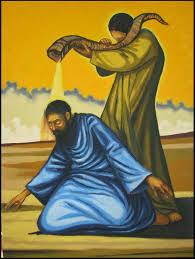
shstampsBackground

Chapter 43 of Isaiah is about: God’s unchangeable love for his people. (1-7) Apostates and idolaters addressed. (8-13) The deliverance from Babylon, and the conversion of the Gentiles. (14-21) Admonition to repent of sin. (22-28)

Biblical Truth

God’s favor and good-will to his people can be seen to give abundant comfort to all who believer. The new person we become when we have a relationship with God is of God’s own forming and not our good works. All who are “redeemed” are done so through Christ’s sacrifice on the Cross and through the shedding of His blood. This has set us apart for God’s purpose. Those that have God for them do need to fear anyone or anything. Who can be against them?

Isaiah tells the Israelites, “What are Egypt and Ethiopia, all their lives and treasures, compared with the blood of a Savior? True believers are precious in God’s sight, His delight is in them. God holds them above any other people. Isaiah reminds them that they went through fire and water, yet, while they had God with them, they did not need to fear evil. They should create the next generation and they will brought out, saved together. This is to be encouragement for all the faithful. All God’s people will be assembled from everywhere they have been scattered. And with this pleasing message, Isaiah again dissuades the people from any anxious fears.

Items for Discussion

  • What examples can you think of when it comes to redeeming things?
  • What is it that God wanted from us (our stamps)?
  • What were we to get as our reward?
  • How does our God plan to accomplish this massive and collective redemption?


Acts 4:32-5:11
4:32 All the believers were one in heart and mind. No one claimed that any of their possessions was their own, but they shared everything they had. 33 With great power the apostles continued to testify to the resurrection of the Lord Jesus. And God’s grace was so powerfully at work in them all 34 that there were no needy persons among them. For from time to time those who owned land or houses sold them, brought the money from the sales 35 and put it at the apostles’ feet, and it was distributed to anyone who had need. 36 Joseph, a Levite from Cyprus, whom the apostles called Barnabas (which means “son of encouragement”), 37 sold a field he owned and brought the money and put it at the apostles’ feet.

5:1 Now a man named Ananias, together with his wife Sapphira, also sold a piece of property. 2 With his wife’s full knowledge he kept back part of the money for himself, but brought the rest and put it at the apostles’ feet. 3 Then Peter said, “Ananias, how is it that Satan has so filled your heart that you have lied to the Holy Spirit and have kept for yourself some of the money you received for the land? 4 Didn’t it belong to you before it was sold? And after it was sold, wasn’t the money at your disposal? What made you think of doing such a thing? You have not lied just to human beings but to God.” 5 When Ananias heard this, he fell down and died. And great fear seized all who heard what had happened. 6 Then some young men came forward, wrapped up his body, and carried him out and buried him. 7 About three hours later his wife came in, not knowing what had happened. 8 Peter asked her, “Tell me, is this the price you and Ananias got for the land?” “Yes,” she said, “that is the price.” 9 Peter said to her, “How could you conspire to test the Spirit of the Lord? Listen! The feet of the men who buried your husband are at the door, and they will carry you out also.” 10 At that moment she fell down at his feet and died. Then the young men came in and, finding her dead, carried her out and buried her beside her husband. 11 Great fear seized the whole church and all who heard about these events.

Background

The book of Acts was written by Luke between 62 and 70 A.D. It provides a detailed, orderly, eyewitness account of the birth and growth of the early church and the spread of the gospel immediately after the resurrection of Jesus Christ. Luke’s writing of Acts supplies a bridge connecting the life and ministry of Jesus to the life of the church and the witness of the earliest believers. Because the book ends quite abruptly, some scholars suggest that Luke may have planned to write a third book to continue his story.

Luke was a Greek and the only Gentile Christian writer of the New Testament. He was an educated man, and we learn in Colossians 4:14 that he was a physician. Luke was not one of the 12 disciples. We know that Luke was a faithful friend and travel companion of Paul.

Acts is written to Theophilus, meaning “the one who loves God.” Historians are not sure who this Theophilus (mentioned in Luke 1:3 and Acts 1:1) was, although most likely, Theophilus was a Roman with an intense interest in the newly forming Christian faith. Luke may also have been writing in general to all those who loved God. The book is written to Gentiles as well, and all people everywhere.

Biblical Truth

The disciples loved one another. This was the blessed fruit of Christ’s dying command to his disciples, and his dying prayer for them. Thus it was then, and it will be so again, when the Holy Spirit is poured upon us from on high. The doctrine preached was the resurrection of Christ; a matter of fact, which being duly explained, was a summary of all the duties, privileges, and comforts of Christians. There were evident fruits of Christ’s grace in all they said and did. They were dead to this world. This was a great evidence of the grace of God in them. They did not take away others’ property, but they were indifferent to it. They did not call it their own; because they had, in affection, forsaken all for Christ, and were expecting to be stripped of all for belonging to him.

It is not so surprising then that they were of one heart and soul, when they sat so loose to the wealth of this world. In effect, they had all things common; for there was not any among them who lacked, care was taken for their supply. The money was laid at the apostles’ feet. Great care ought to be taken in the distribution of public charity, that it be given to such as have need, such as are not able to procure a maintenance for themselves; those who are reduced to want for well-doing, and for the testimony of a good conscience, ought to be provided for. Here is one in particular mentioned, remarkable for this generous charity; it was Barnabas. As one designed to be a preacher of the gospel, he disentangled himself from the affairs of this life. When such dispositions prevail, and are exercised according to the circumstances of the times, the testimony will have very great power upon others.

The sin of Ananias and Sapphira was, that they were ambitious of being thought of as special disciples (standing out for their charity). However, they were not true disciples. Hypocrites may deny themselves, may forego their worldly advantage in one instance, with a prospect of finding their profits or gain in something else. They were covetous of the wealth of the world, and distrustful of God and his providence. They thought they might serve both God and man. They thought to deceive the apostles. The Spirit of God in Peter discerned the principle of unbelief reigning in the heart of Ananias. But whatever Satan might suggest, he could not have filled the heart of Ananias with this wickedness had he not been consenting. The falsehood was an attempt to deceive the Spirit of truth, who so manifestly spoke and acted by the apostles. The crime of Ananias was not his retaining part of the price of the land; he might have kept it all, had he pleased; but his endeavoring to impose upon the apostles with an awful lie, from a desire to make a vain show, joined with covetousness. But if we think to swindle God, we put a fatal deception on our own souls. How sad to see those relations who should gown in the desire to help one another to that which is good, hardening one another in that which is evil! And this punishment was in reality mercy to vast numbers. It would cause strict self-examination, prayer, and dread of hypocrisy, covetousness, and vain-glory, and it should still do so. It would prevent the increase of false apostles, those in pursuit of worldly gains. Let us learn how hateful falsehood is to the God of truth, and not only shun a direct lie, but all advantages from the use of crafty expressions, and double meaning in our speech.

Items for Discussion

  • If we do not give all of our physical wealth to the Church, does this story mean we will die?
  • What motives might you have found in the hearts of Ananias and Sapphira that were displeasing to God?
  • On a more generic note, what kinds of things do we withhold from God?
  • If we withhold something, anything from God, what benefit is it for us?
  • Is the impact on others ever bad when someone is deceitful in their motives about the Gospel’s Message?

Discussion Challenge

  • What were the attributes of the early Christians in Acts that made their church, their congregation, so special?

That’s Quite the Family you have there!

Genesis 24:50-671NIV New International Version Translations
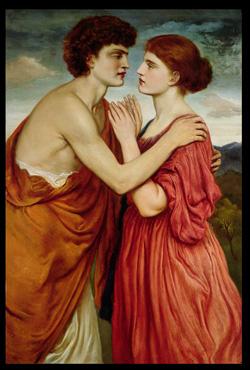
50 Laban and Bethuel answered, “This is from the Lord; we can say nothing to you one way or the other. 51 Here is Rebekah; take her and go, and let her become the wife of your master’s son, as the Lord has directed.” 52 When Abraham’s servant heard what they said, he bowed down to the ground before the Lord. 53 Then the servant brought out gold and silver jewelry and articles of clothing and gave them to Rebekah; he also gave costly gifts to her brother and to her mother. 54 Then he and the men who were with him ate and drank and spent the night there. When they got up the next morning, he said, “Send me on my way to my master.” 55 But her brother and her mother replied, “Let the young woman remain with us ten days or so; then you may go.” 56 But he said to them, “Do not detain me, now that the Lord has granted success to my journey. Send me on my way so I may go to my master.” 57 Then they said, “Let’s call the young woman and ask her about it.” 58 So they called Rebekah and asked her, “Will you go with this man?” “I will go,” she said. 59 So they sent their sister Rebekah on her way, along with her nurse and Abraham’s servant and his men. 60 And they blessed Rebekah and said to her, “Our sister, may you increase to thousands upon thousands; may your offspring possess the cities of their enemies.” 61 Then Rebekah and her attendants got ready and mounted the camels and went back with the man. So the servant took Rebekah and left. 62 Now Isaac had come from Beer Lahai Roi, for he was living in the Negev. 63 He went out to the field one evening to meditate, and as he looked up, he saw camels approaching. 64 Rebekah also looked up and saw Isaac. She got down from her camel 65 and asked the servant, “Who is that man in the field coming to meet us?” “He is my master,” the servant answered. So she took her veil and covered herself. 66 Then the servant told Isaac all he had done. 67 Isaac brought her into the tent of his mother Sarah, and he married Rebekah. So she became his wife, and he loved her; and Isaac was comforted after his mother’s death.

Isaac-RebekahBackground2https://www.biblegateway.com/resources/matthew-henry/Gen.24.1-Gen.24.67

Marriages and funerals are the changes of families, and the common news among the inhabitants of the villages. In the chapter 24, we have Abraham burying his wife and marrying his marrying his son to Rebekah. Our lesson focuses on the marriage. These stories concerning his family, with their minute circumstances, are largely related, while the histories of the kingdoms of the world then in being, with their revolutions, are buried in silence; for the Lord knows those that are his. The subjoining of Isaac’s marriage to Sarah’s funeral (with a particular reference to it, Gen. 24:67) shows us that as “one generation passes away another generation comes;” and thus the entail both of the human nature, and of the covenant, is preserved. Here we see:

  1. Abraham’s care about the marrying of his son, and the charge he gave to his servant about it, Gen. 24:1-9.
  2. His servant’s journey into Abraham’s country, to seek a wife for his young master among his own relations, Gen. 24:10-14.
  3. The kind providence which brought him acquainted with Rebekah, whose father was Isaac’s cousin, Gen. 24:15-28.
  4. The treaty of marriage with her relatives, Gen. 24:29-49.
  5. Their consent obtained, Gen. 24:50-60.
  6. The happy meeting and marriage between Isaac and Rebekah, Gen. 24:61-67).

Biblical Truth

Abraham’s servant thankfully acknowledges the good success he had met with. He was a humble man, and humble men are not ashamed to own their situation in life, whatever it may be. All our temporal concerns are sweet if intermixed with godliness. Abraham’s servant, as one that chose his work before his pleasure, was for hurrying home. Lingering and loitering is no way to become a wise and good man who is faithful to his duty. As children ought not to marry without their parents’ consent, so parents ought not to marry them without their own. Rebekah consented, not only to go, but to go at once. The goodness of Rebekah’s character shows there was nothing wrong in her answer. We may hope that she had such an idea of the religion, customs and godliness in the family she was to go to, that this made her willing to forget her own people and her father’s house. Her friends dismiss her with a suitable fond farewell, and with hearty good wishes. They blessed Rebekah. When our family members are entering into a new environment, we ought by prayer to send them with the blessing and grace of God.

Isaac was doing well by society’s standards when he met Rebekah. He went out to take the advantage of a silent evening, and a solitary place, for meditation and prayer; those divine exercises by which we converse with God and our own hearts. It does us good to be often alone, especially when our lives have been blessed with affluence and filled with daily distractions. Observe what an affectionate son Isaac was:
It was about three years since his mother died, and yet he was not, till now, comforted.

See also what an affectionate husband he was to become for his wife. Dutiful sons promise fair to be affectionate husbands. They fill their marriage with honor. This will no doubt help pass on the children, similar behavior and values.

Items for Discussion

  • What are the events that bring your family together – that is when you see those distant relatives that you have not seen for a while?
  • Why would God take a story of death and sadness and combine it with love and happiness?
  • What type of people do you think Isaac and Rebekah were that they could be promised to each other without knowing each other, yet have a happy relationship as man and wife?
  • What do you think about the servant in this passage?
  • What is different in today’s marriages?
  • Think about the blessing given to Rebekah on verse 60. What is the same, what is different than a blessing given to any bride from any religion?
  • How is today’s family unit the same or different than the one we read about in this story?


1 Peter 3:4
4 Rather, it should be that of your inner self, the unfading beauty of a gentle and quiet spirit, which is of great worth in God’s sight.

Background3http://www.easyenglish.info/bible-commentary/1peter-lbw.htm

Peter, originally named Simon, had his name changed by Jesus (John 1:42). ‘Peter’ means ‘a rock’ or ‘a stone’. Peter wrote this letter in Greek so that the good news about Jesus could spread easily. A man called Silas, sometimes called Silvanus, helped Peter to write the letter (see chapter 5:12). Peter wrote this letter about 30 years after Jesus’ resurrection.

In the first verse, Peter lists 5 countries, most are in Turkey today. On the day of Pentecost (Acts 2) people from three of these countries were visiting the city of Jerusalem. Some of these people may have become Christians there. Perhaps they went home and started new churches so Peter wrote to Jews and Gentiles who had become Christians.

Peter wrote his letter because he wanted to encourage Christians who were suffering for Christ. His message: Although Christians might suffer in this life, they will not suffer for ever. This world is not their real home. Heaven is their real home. One day they will live with God in heaven and share God’s glory.” Peter also wants his readers to understand the grace of God. He wanted them to know all that God has done for them. Peter’s motives were to encourage them to learn more about God.

This letter is very practical and the message simple. When a person becomes a Christian, their life changes. Peter tells his readers how to live a good Christian life, encouraging them to live like Jesus.

Biblical Truth

While Peter may have been addressing women, this verse is applicable to all people. A woman can make herself beautiful on the outside. Taking care of how one looks is not wrong. However, a Christian should be beautiful in their spirit too. A ‘gentle spirit’ means that they do not insist on being right. A person should not make other people do what they want to do. Christians should not argue or fight. A ‘quiet spirit’ means that we are peaceful in our inward and outward spirit. This helps other people to feel peaceful too. This is what is important to God. 1 Samuel 16:7 says that people decide what other people are like by what they look like on the outside. But God looks at their spirit. Beautiful clothes will wear out. The good things in the spirit of a person will never wear out. Therefore, these verses pertain to all people, men and women. It is not our outward appearance that will define our “beauty” but who we are on the inside. Peter tells us that a person’s beauty is defined by their gentleness, generosity, a willingness to listen and serve others, and their attitude toward others.

Items for Discussion

  • How do you judge people you meet?
  • What special tips can you offer that you have learned about recognizing good people?
  • How does our society interfere with the intent of this verse?
  • What are the attributes of a person that make them an effective disciple of Christ?

Discussion Challenge

  • How do we assure that every generation understands how to recognize the true beauty of a person?

On The Rise

Isaiah 40:27-31{ref]NIV New International Version Translations[/mfn]
27 Why do you complain, Jacob? Why do you say, Israel, “My way is hidden from the Lord; my cause is disregarded by my God”? 28 Do you not know? Have you not heard? The Lord is the everlasting God, the Creator of the ends of the earth. He will not grow tired or weary, and his understanding no one can fathom. 29 He gives strength to the weary and increases the power of the weak. 30 Even youths grow tired and weary, and young men stumble and fall; 31 but those who hope in the Lord will renew their strength. They will soar on wings like eagles; they will run and not grow weary, they will walk and not be faint.

eagleBackground

Chapter 40 begins the latter part of the prophecy of this book. In the former part the name of the prophet was frequently prefixed to the particular sermons, consisting of many burdens, many woes; this descriptions of many blessings. There was Isaiah’s description of the distress which the people of God were in brought about by the Assyrians and his prophesy of their deliverance and the captivity in Babylon and their deliverance again. However, before God sent his people into captivity he furnished them with precious promises for their support and comfort in their trouble; and we may well imagine of what great use to them the glorious, gracious, light of this prophecy was, in that cloudy and dark day, and how much it helped to dry up their tears by the rivers of Babylon.

It is the latter part we find much more; and, as if it were designed for a prophetic summary of the New Testament, it begins with that which begins the gospels, “The voice of one crying in the wilderness’’ ch. 40:3 ), and concludes with that which concludes the book of the Revelation, “The new heavens and the new earth,’’ ch. 66:22 ). We begin to see that all the mercies of God to the Jewish nation will resemble the glorious things performed by our Savior for man’s redemption, so they are by the Spirit of God expressed in such terms as to show plainly that while the prophet is speaking of the redemption of the Jews he had in his thoughts a more glorious deliverance.

And we need not look for any further accomplishment of these prophecies yet to come; for if Jesus be he, and his kingdom be it, that should come, we are to look for no other, but the carrying on and completing of the same blessed work which was begun in the first preaching and planting of Christianity in the world.

Biblical Truth

It is silly to worship false gods like the stars. Also, it is silly to think that God can forget you. If we look to the questions in verse 21, here we find answers in verses 22-23 telling us that God is greater than any other king. God will never become tired. God is also so great that we will never understand his mind. These verses end with some of the best promises in the Bible. They do not only mean when our bodies are tired. They also mean when our minds and spirits are tired too! An eagle soars, lifted by the winds he does not see or create but have been provided by our Creator. We too will be lifted by our God, by things unseen to us, so that we are no different than the eagle.

Items for Discussion

  • What are the things in our world today that make the human spirit weary?
  • What are the things in our world today that lift the human spirit, giving it strength?
  • Step back from what you have just discussed, how much of what exhausts us is something we can control?
  • Of those things that lift our spirits, what is the role of our church today to be at the forefront of those activities?
  • An eagle rides the winds aloft and does not fight contrary pressures. The eagle is a great example of “going with the flow.” How would you compare that message to a person’s daily life and the pressures of our world?


Acts 1:1-11
1 In my former book, Theophilus, I wrote about all that Jesus began to do and to teach 2 until the day he was taken up to heaven, after giving instructions through the Holy Spirit to the apostles he had chosen. 3 After his suffering, he presented himself to them and gave many convincing proofs that he was alive. He appeared to them over a period of forty days and spoke about the kingdom of God. 4 On one occasion, while he was eating with them, he gave them this command: “Do not leave Jerusalem, but wait for the gift my Father promised, which you have heard me speak about. 5 For John baptized with water, but in a few days you will be baptized with the Holy Spirit.” 6 Then they gathered around him and asked him, “Lord, are you at this time going to restore the kingdom to Israel?” 7 He said to them: “It is not for you to know the times or dates the Father has set by his own authority. 8 But you will receive power when the Holy Spirit comes on you; and you will be my witnesses in Jerusalem, and in all Judea and Samaria, and to the ends of the earth.” 9 After he said this, he was taken up before their very eyes, and a cloud hid him from their sight. 10 They were looking intently up into the sky as he was going, when suddenly two men dressed in white stood beside them. 11 “Men of Galilee,” they said, “why do you stand here looking into the sky? This same Jesus, who has been taken from you into heaven, will come back in the same way you have seen him go into heaven.”

Background

Theophilus is the name or honorary title of the person to whom the Gospel of Luke and the Acts of the Apostles are addressed (Luke 1:3, Acts 1:1). It is thought that both Luke and Acts were written by the same author, and sometimes argued that the two books might have originally been a single unified work. Both Luke and Acts were written in a refined Koine Greek, and the name “Theophilos”, as it appears in the original writings, means friend of God or (be)loved by God or loving God in the Greek language. No one knows the true identity of Theophilus and there are several conjectures and traditions around an identity. In English Theophilus is also written “Theophilos”, both a common name and an honorary title among the learned (academic) Romans and Jews of the era. Their life would coincide with the writing of Luke and the author of Acts. For our study today, who Acts was written for is not of importance other than, it was written for us today, to understand that God has provided His church all it needs to succeed.

Biblical Truth

Luke’s begins by stressing all of what Jesus began to do and to teach (v. 1). Acts also provides a forward-looking continuity with what Jesus continued to do and teach (as in 2:47; 9:34; 14:3; 16:14; 18:10). Luke begins by focusing on Jesus’ post resurrection preparation of the apostles to be authoritative guarantors of the truth of his resurrection and the gospel’s content. Luke notes here that the now risen Lord instructed the apostles who he had personally chosen through the Holy Spirit (Lk 6:13), thereby linking his words and his work with the message and mission of the church.

Jesus establishes that the apostles can be considered guarantors of the truth of the resurrection by appearing to them repeatedly over a period of forty days (Acts 1:22; 10:41-42). The many pieces of empirical evidence could lead to no other conclusion than that he was alive. During his post resurrection appearances, Jesus spoke to the apostles about the kingdom of God. The “Kingdom of God” became for Luke a phrase for the message of the early church (see 8:12; 19:8; 28:31). That message was that the final reign of God had arrived “in the events of the life, death, and resurrection of Jesus, and it was now the role of the church to proclaim these facts, to preach the Gospel of the Kingdom of God” (Is 33:22; Zech 14:9; Lk 11:20).

We also find here our basis for belief that the gospel’s key salvation event has actually happened. The empirical evidence of the empty tomb and the resurrection appearances point steadily in only one direction: Jesus is alive! We can boldly and unashamedly invite unbelievers to hear our witness and consider the evidence. That is the “Good News.”

Luke closes with Jesus’ command to wait for the Holy Spirit’s coming (1:4-5; see also Lk 24:49). Jesus gave this instruction on a number of occasions. Jesus promises that in a little while God will supply the church with all the resources it needs for fulfilling its missionary mandate. As Christians, if we have not done so, Luke calls us to take up the power that is already ours, all because Jesus’ promise was fulfilled at Pentecost.

Items for Discussion

  • The apostles are witness to the message from Christ, we are empowered – When do you feel that way?
  • What activities of the world make you feel like you have no control?
  • So it is God’s world, God is in charge, God provided us Christ to reconcile you to Him, God empowered us with the Holy Spirit to stand up against the pressures of the world-What should we be doing?
  • If someone asked you to simplify, what is the good news of the Gospel’s message-what would you tell them?

Discussion Challenge

  • If we are to ride the currents of our world’s winds, where will we take our church?
« Older posts Newer posts »

"For it is by grace you have been saved" - Ephesians 2:8-9  

Copyright: © 2001 - 2025 Lostpine

Translate »