Biblical wisdom, historical insight, and personal growth — all in one place

Category: Snapshots (Page 41 of 45)

Lament and Praise

Psalm 22:1-221NIV New International Version Translations
1 My God, my God, why have you forsaken me? Why are you so far from saving me, so far from my cries of anguish? 2 My God, I cry out by day, but you do not answer, by night, but I find no rest. 3 Yet you are enthroned as the Holy One; you are the one Israel praises. 4 In you our ancestors put their trust; they trusted and you delivered them. 5 To you they cried out and were saved; in you they trusted and were not put to shame. 6 But I am a worm and not a man, scorned by everyone, despised by the people. 7 All who see me mock me; they hurl insults, shaking their heads. 8 “He trusts in the Lord,” they say, “let the Lord rescue him. Let him deliver him, since he delights in him.” 9 Yet you brought me out of the womb; you made me trust in you, even at my mother’s breast. 10 From birth I was cast on you; from my mother’s womb you have been my God. 11 Do not be far from me, for trouble is near and there is no one to help. 12 Many bulls surround me; strong bulls of Bashan encircle me. 13 Roaring lions that tear their prey open their mouths wide against me. 14 I am poured out like water, and all my bones are out of joint. My heart has turned to wax; it has melted within me. 15 My mouth is dried up like a potsherd2a pottery fragment usually unearthed as an archaeological relic, and my tongue sticks to the roof of my mouth; you lay me in the dust of death. 16 Dogs surround me, a pack of villains encircles me; they pierce my hands and my feet. 17 All my bones are on display; people stare and gloat over me. 18 They divide my clothes among them and cast lots for my garment. 19 But you, Lord, do not be far from me. You are my strength; come quickly to help me. 20 Deliver me from the sword, my precious life from the power of the dogs. 21 Rescue me from the mouth of the lions; save me from the horns of the wild oxen. 22 I will declare your name to my people; in the assembly I will praise you.
img242Background3http://www.christnotes.org/commentary.php?b=19&c=22&com=mhc
We do not know when David wrote this psalm but the first half of the Psalm, the part this study is focused on is definitely sad. Verses 1 and 2 tell us that David was in agony. We do not know where or what the pain was. Perhaps it was all over his body. He asked God for help. God did not answer. David thinks that God has forgotten him! But David remembered in verses 3 – 5 that God always gave help. He gave help to the fathers of Israel. This means that to all the Jews that lived before David, God took care of them. This, again, made David sad. God always gave help to his people so why didn’t God give help to David? So the psalm begins, “Why have you forsaken me?”

The Spirit of Christ, which we find in the prophets, testifies in this psalm, clearly and fully, to the sufferings of Christ, and the glory that would follow. Psalm 22 is sometimes called “the Psalm of the Cross.” Here, we find David making a sorrowful complaint of God’s withdrawing. This ca be applied to any child of God, when pressed down, overwhelmed with grief and terror. Spiritual desertions are our worst afflictions. But even when we complain of our burdens, we are exercising our spiritual life. To cry out, “My God, why am I sick? Why am I poor?” This clearly shows our discontent and worldliness. But to cry out, “Why has God forsaken me?” is the language of a heart bound up in its happiness in God’s favor.

We can apply to Christ. In the first words of this complaint, he poured out his soul before God when he was upon the cross, (Matthew 27:464About three in the afternoon Jesus cried out in a loud voice, “Eli, Eli, lema sabachthani?” (which means “My God, my God, why have you forsaken me?”).). Being truly man, Christ felt a natural unwillingness to pass through these great sorrows, yet His zeal and love for His Father prevailed. Christ declared the holiness of God, His heavenly Father, in his sharpest sufferings; this declaration is a proof of it.

In these verses we have Christ suffering, and Christ praying; by which we are directed to look for crosses, and then to look up to God while we are under them. The very manner of Christ’s death is described here too. They pierced his hands and his feet, which were nailed to the accursed tree, and his whole body was left so to hang as to suffer the most severe pain and torture. His natural forces failed while being subjected to human suffering under the watchful eye of God Himself. Who then can stand before God’s anger? Who knows the power or limits of His anger? The life of the sinner is forfeited, and the life of the Sacrifice becomes the ransom for it. Our Lord Jesus was stripped, when he was crucified, that he might clothe us with the robe of his own righteousness.

Christ in his agony prayed, prayed earnestly, prayed that the cup might pass from Him. When we cannot rejoice in God as our song, we still must rely upon him as our strength; and take the comfort of spiritual supports, when we cannot have spiritual delights.

Christ closes these verses speaking as if He is already risen from the dead. The first words of the Psalm were used by Christ himself upon the cross so are the first words of the triumph that we can expressly apply to Christ (Hebrews 2:125He says, “I will declare your name to my brothers and sisters; in the assembly I will sing your praises.”). All our praises should refer to the work of redemption always remembering that the suffering of Christ was graciously accepted as a full payment for our sins. The fact that Christ was offered for sinful men and God, Himself, did not despise or abhor it as our salvation, should always be viewed as our thanksgiving. Every humble, gracious soul should be fully satisfied and happy in Christ.

It is in comfort that all should hunger and thirst after righteousness in and through Christ, not laboring for that which will never satisfy.

Items for Discussion

  • What are the kinds of life experiences might a person have that leaves them feeling God has left them, forsaken them?
  • Can you think of some positive things that have come from times of lament (times when we feel abandoned by God)?
  • Is it OK to complain to God, to ask Him whether He has abandoned you, not heard your prayers?
  • How do people overcome the feelings of being forsaken?
  • In what ways does suffering, feeling forsaken by God, affect our understanding of God’s relationship to the world?
  • How does that same suffering, affect our relationship with our God?
  • Do believers in Christ, overcome feelings like these differently than non-believers?
  • What could we conclude about David’s Psalm and its foretelling of Christ’s own words while on the Cross? What could we conclude about Christ Himself? (David preceded Christ by a 1,000 years)

Discussion Challenge

  • If Christianity cannot exist without suffering then what is our role in this world when we see suffering?
  • 1
    NIV New International Version Translations
  • 2
    a pottery fragment usually unearthed as an archaeological relic
  • 3
  • 4
    About three in the afternoon Jesus cried out in a loud voice, “Eli, Eli, lema sabachthani?” (which means “My God, my God, why have you forsaken me?”).
  • 5
    He says, “I will declare your name to my brothers and sisters; in the assembly I will sing your praises.”
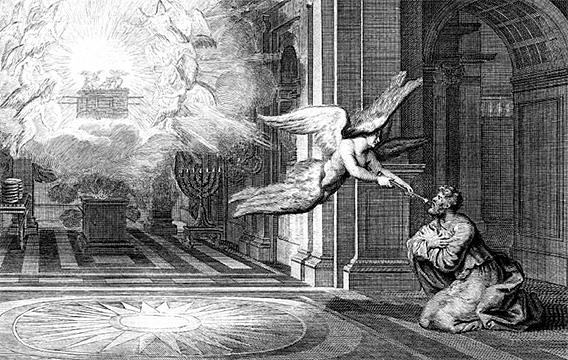

Did You Call Me?

Isaiah 6:1-81NIV New International Version Translations
1 In the year that King Uzziah died, I saw the Lord, high and exalted, seated on a throne; and the train of his robe filled the temple. 2 Above him were seraphim, each with six wings: With two wings they covered their faces, with two they covered their feet, and with two they were flying. 3 And they were calling to one another: “Holy, holy, holy is the Lord Almighty; the whole earth is full of his glory.” 4 At the sound of their voices the doorposts and thresholds shook and the temple was filled with smoke. 5 “Woe to me!” I cried. “I am ruined! For I am a man of unclean lips, and I live among a people of unclean lips, and my eyes have seen the King, the Lord Almighty.” 6 Then one of the seraphim flew to me with a live coal in his hand, which he had taken with tongs from the altar. 7 With it he touched my mouth and said, “See, this has touched your lips; your guilt is taken away and your sin atoned for.” 8 Then I heard the voice of the Lord saying, “Whom shall I send? And who will go for us?” And I said, “Here am I. Send me!”

Isaiah6Background

At the time of Isaiah’s encounter with God documented in chapter 6, he was already a prophet. God was calling him to a greater task than he had ever envisioned. Isaiah was to be given the task of preaching a message of judgment to his entire nation. The experiences Isaiah would encounter were preparation for the work ahead. Our verses will look at how God inspired the Isaiah for service. His revelation in the glory of God would be the foundation. In turn, this would lead Isaiah to a response of confession, which brought cleansing, which in turn enabled him to hear the Word of God, which carried a commission to preach the message. The verses are Isaiah telling us the story.

Biblical Truth

Verse 1 – Isaiah is tells us what he saw. Whether it was in his mind or real, we do not know. Isaiah sees God Himself. In Exodus 33:20 we read, “No man shall see me (God) and live.” From that verse, one would have believed that he would only see God when he died. But many people in the Old Testament (the first 39 books in the Bible) saw God and they stayed alive! Some examples are Abraham (Genesis 18:1-3), Jacob (Genesis 32:24-30) and Moses (Exodus 3:4). One possible explanation is in John 12:41: “Isaiah saw Jesus’ glory.” Jesus came to Earth as a baby. He was born on this Earth in Bethlehem. But he was alive before that too. Jesus is God, but people looked at him. They saw him, but they did not die!

In Isaiah’s vision, he was not in the temple, but he was outside it. We know that for two reasons:

  • Isaiah was probably not a priest. So he could not go into the actual building, the temple itself.
  • The altar in verse 6 was outside the building.

Verse 2 – A ‘seraphim’ is an angel of fire. Their wings were never still. They were covering their faces because they could not look at God. We don’t know why the seraphim were covering their feet. Notice that the seraphim had faces, hands and feet, as people have.

Verse 3 – We do not know how many seraphim there were but called to each other in pairs. In the first 39 books of the Bible, angels (seraphim) do not usually sing but declare on behalf of God. So why is God Holy?

  • God is Holy because he has not sinned.
  • God is bright, as the sun is bright. Just as people cannot look at the sun, so they cannot look directly at God.

Verse 4 – If the doorsteps shake, so will the whole house! Isaiah was perhaps near the door of the temple. The altar was near the door. When God is near, the ground often shakes. There is often smoke and fire as well. Some examples of that are in Exodus 19:18, Psalm 18:7-8 and Habakkuk 3:3-10.

Verse 5 – Isaiah cannot prophesy because his ‘lips are not clean’. He cannot even praise God together with the seraphim. Isaiah has seen the holy God. That fact of Isaiah being in God’s presents exposed Isaiah’s sinful nature to him. The king whom he saw was God himself.

Verse 6 – Isaiah was sad because his lips were not clean. He had said things he was ashamed of and knew were sinful. The seraphim used tongs to take a very hot coal from the fire. Then the seraphim touched Isaiah’s mouth with the coal. The point to remember here is that God sent the seraphim to Isaiah and God had actually showed himself to Isaiah. All through chapter 6, God is acting first!

Verse 7 – God showing two things to Isaiah.

  • God had taken away Isaiah’s feeling that he was responsible for his sins.
  • God had covered Isaiah’s sin, so that God could not see it.

Isaiah recognized his sin before God and he was forgiven. It is a two-step process or else God cannot forgive us.

Verse 8 – In verse 1, God was very high up but near enough now for Isaiah to hear him speak. That happens when God forgives us. We can hear him speak. There is nothing between God and a person whom he forgives.

Items for Discussion

  • How does God speak to us today?
  • Why do you think that the recognition of one’s sin is so important to being able to hear God?
  • What is the difference between recognizing sin and repentance?
  • What benefits can you find in the fact that God spoke to Isaiah before he repented for his sinful mouth?
  • Isaiah was transformed by forgiveness – How would you expect humans to be transformed in their own lives when they are forgiven?
  • What significance to you see in God’s use of fire to clean Isaiah’s lips?


Mark 1:16-20
16 As Jesus walked beside the Sea of Galilee, he saw Simon and his brother Andrew casting a net into the lake, for they were fishermen. 17 “Come, follow me,” Jesus said, “and I will send you out to fish for people.” 18 At once they left their nets and followed him. 19 When he had gone a little farther, he saw James son of Zebedee and his brother John in a boat, preparing their nets. 20 Without delay he called them, and they left their father Zebedee in the boat with the hired men and followed him.

Background

The Bible gives us more information about Mark than any of the other gospel writers with the exception of the apostle John. Luke mentioned Mark’s name several times in Acts. Mark’s ministry must have started at home. A young Jerusalem church met in his mother’s home. Mark also started the first missionary journey with Paul and Barnabas but ended his trip early. Mark later travelled with Barnabas to Cyprus. He became significant in the life of Paul, being one of the last people the apostle mentioned in his final letter written to Timothy.

Mark’s most significant personal connection was the one he had with Peter, making Peter Mark’s most likely source for the material in his gospel. Mark’s mother’s house was a regular enough stop for Peter that the servants recognized him by voice alone (Acts 12:12–14). And it appears that Mark was present at Gethsemane, a young man watching the arrest of Jesus from a safe distance (Mark 14:51–52). Some believe that the Last Supper took place in Mark’s home. Because of the detail and eye witness accounts, the later gospels frequently referenced accounts from Mark. Mark’s gospel was first.

Bible Truth

Jesus finds four men working as fishermen on the lake called Galilee. They had their own boats. It was a family business. In other words, their families had done this work for a long time. Then Jesus came telling the men that God had other work for them. They must leave their work, their boats and their families. The men had worked with fish. But soon, the men would work with people. Jesus would teach the men. They became his disciples his special students.

Items for Discussion

  • What do you find hard to believe about this story?
  • What things can you conclude about our Savior from this story?
  • How do you think the families of the four men must have felt about the encounter?
  • Commercial fishing is a difficult career. What made fishermen good disciples?
  • How would you know if you have had an encounter with Christ/God? In other words, how do you know if you are called?

Discussion Challenge

  • Putting both our Isaiah verses and Mark’s gospel message together, how would you summarize the role of Christians in helping others hear God’s calling? 
  • 1
    NIV New International Version Translations

The Choice Is Yours

Psalm 1141NIV New International Version Translations
1 When Israel came out of Egypt, Jacob from a people of foreign tongue, 2 Judah became God’s sanctuary, Israel his dominion. 3 The sea looked and fled, the Jordan turned back; 4 the mountains leaped like rams, the hills like lambs. 5 Why was it, sea, that you fled? Why, Jordan, did you turn back? 6 Why, mountains, did you leap like rams, you hills, like lambs? 7 Tremble, earth, at the presence of the Lord, at the presence of the God of Jacob, 8 who turned the rock into a pool, the hard rock into springs of water.

choiceBackground

This psalm is often referred to as the SONG OF THE EXODUS because of its poetry. It is hard to give credit to a human mind for the creation of this Psalm. God is spoken of as leading his people from Egypt to Canaan, and causing the whole earth to be moved at His coming. Inanimate things are represented as imitating the actions of living creatures as our Lord passes by. It is a most poetic scene: The God of Jacob is exalted as having command over the rivers, seas, and mountains, and causing all of nature to pay homage and tribute before His glorious majesty.

Biblical Truth2http://www.easyenglish.info/psalms/psalm114-taw.htm

What happened when the people of Israel left Egypt? Psalm 114 details that several things happened:

  • God led them to the Promised Land, (verse 2).
  • God led them through the Red Sea, which became dry for them, (verse 3).
  • God led them over the River Jordan. It also became dry for them, (verse 3).
  • Mountains and hills like Sinai seemed to jump like animals, (verse 4).
  • God gave them water from the rocks in dry places, (verse 8).

Items for Discussion

  • Why do you think that people today do not describe their God in this majestic and visual way? (e.g. moving mountains, separating seas, etc.)
  • Why should we believe that God did these things for the Israelites?
  • What happens to one’s faith and belief system if they believe God did not do these things? What happens if they believe God did do them?
  • Do you think that God does these things still today? Why or why not?
  • If the psalmist is describing the response of inanimate objects to God, how do you think we should be responding?


Romans 14:7-12
7 For none of us lives for ourselves alone, and none of us dies for ourselves alone. 8 If we live, we live for the Lord; and if we die, we die for the Lord. So, whether we live or die, we belong to the Lord. 9 For this very reason, Christ died and returned to life so that he might be the Lord of both the dead and the living. 10 You, then, why do you judge your brother or sister? Or why do you treat them with contempt? For we will all stand before God’s judgment seat. 11 It is written: “‘As surely as I live,’ says the Lord, ‘every knee will bow before me; every tongue will acknowledge God.’” 12 So then, each of us will give an account of ourselves to God.

Background3http://www.biblestudytools.com/commentaries/matthew-henry-complete/romans/14.html

The apostle Paul is directing our conduct of laws of justice, peacefulness, and order, to be observed by us as members of the Church. Particularly, he gives rules how to manage our different apprehensions about indifferent things, in the management of which, it seems, there was something amiss among the Roman Christians, to whom he wrote. Here in chapter 14, Paul works to fix this problem. But the rules are general, and of standing use in the church, for the preservation of that Christian love which he had so earnestly pressed in chapter 13 as the fulfilling of the law.

It is certain that nothing is more threatening, or more fatal, to Christian societies, than the contentions and divisions of their members. By these wounds the life and soul of religion expire. Now in this chapter we are furnished with the sovereign balm of Gilead; the blessed apostle prescribes like a wise physician. “Why then is not the hurt of the daughter of my people recovered,’’ but because his directions are not followed? This chapter, rightly understood, made use of, and lived up to, would set things to the proper priorities and focus, and heal us all.

Bible Truth4http://www.christnotes.org/commentary.php?com=mhc&b=45&c=14

Though some are weak, and others are strong, yet all must agree not to live to themselves. No one who has given up his name to Christ, is allowedly to be a self-seeker; that is against true Christianity. The business of our lives is not to please ourselves, but to please God. That is true Christianity, which makes Christ all in all. Though Christians are of different strength, capacities, and gifts, all are to be looking and serving, and approving themselves to Christ. He is Lord of those that are living, to rule them; of those that are dead, to revive them, and raise them up.

Christians should not judge or despise one another, because both the one and the other must shortly give an account. A believing regard to the judgment of the great day, would silence rash judgments. Let every man search his own heart and life; he that is strict in judging and humbling himself, will not be apt to judge and despise his brother. We must take heed of saying or doing things which may cause others to stumble or to fall. The one signifies a lesser, the other a greater degree of offence; that which may be an occasion of grief or of guilt to our brother. We can, however, take comfort in that Christ deals gently with those who have true grace, though they are weak in it.

Items for Discussion

  • Based on these verses, how would you expect a Christian church to resolve differences from within its body of believers?
  • What is the responsibility of a church to avoid the traps defined by Paul, not to become self-seeking?
  • How would you describe what your first “face to face” encounter with Christ will be like? Use our Scripture verse as a guide
  • What is the purpose of standing before God in judgment if we already have been forgiven for our sins?

Discussion Challenge

  • The greatest risk to a Christian is to continue to pursue a church that lives up to their own personal doctrine – What criteria should a Christian use to avoid unnecessary conflict?

Can’t Keep Quiet

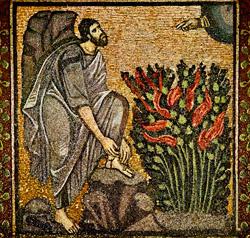
Exodus 3:1-141NIV New International Version Translations
1 Now Moses was tending the flock of Jethro his father-in-law, the priest of Midian, and he led the flock to the far side of the wilderness and came to Horeb, the mountain of God. 2 There the angel of the Lord appeared to him in flames of fire from within a bush. Moses saw that though the bush was on fire it did not burn up. 3 So Moses thought, “I will go over and see this strange sight—why the bush does not burn up.” 4 When the Lord saw that he had gone over to look, God called to him from within the bush, “Moses! Moses!” And Moses said, “Here I am.” 5 “Do not come any closer,” God said. “Take off your sandals, for the place where you are standing is holy ground.” 6 Then he said, “I am the God of your father, the God of Abraham, the God of Isaac and the God of Jacob.” At this, Moses hid his face, because he was afraid to look at God. 7 The Lord said, “I have indeed seen the misery of my people in Egypt. I have heard them crying out because of their slave drivers, and I am concerned about their suffering. 8 So I have come down to rescue them from the hand of the Egyptians and to bring them up out of that land into a good and spacious land, a land flowing with milk and honey—the home of the Canaanites, Hittites, Amorites, Perizzites, Hivites and Jebusites. 9 And now the cry of the Israelites has reached me, and I have seen the way the Egyptians are oppressing them. 10 So now, go. I am sending you to Pharaoh to bring my people the Israelites out of Egypt.” 11 But Moses said to God, “Who am I that I should go to Pharaoh and bring the Israelites out of Egypt?” 12 And God said, “I will be with you. And this will be the sign to you that it is I who have sent you: When you have brought the people out of Egypt, you will worship God on this mountain.” 13 Moses said to God, “Suppose I go to the Israelites and say to them, ‘The God of your fathers has sent me to you,’ and they ask me, ‘What is his name?’ Then what shall I tell them?” 14 God said to Moses, “I am who I am. This is what you are to say to the Israelites: ‘I am has sent me to you.’”

moses_burning_bush_bysantine_mosaicBackground2http://www.easyenglish.info/bible-commentary/exodus-1-18-lbw.htm

Exodus is one of the first 5 books of the Old Testament called ‘the Pentateuch’. It was the Greek translation that gave this book its name ‘Exodus’, meaning ‘to go out’. God helped the Israelites ‘to go out’ from Egypt. The book is in two parts:

  1. Chapters 1-18: the first part of Moses’ life; the Israelites’ troubles in Egypt; the events and the plagues that led the Israelites to leave Egypt.
  2. Chapters 19-40: how God gave the Law to Moses; how they built the special holy tent (Tabernacle); the rules for worship.

Moses was the most important person in all these events. Moses’ name appears 804 times in the Bible. It appears in the books of both the Old Testament and the New Testament. Numbers 12:3 describes Moses as ‘a very humble man. He was more humble than anyone else on the earth’. But Moses was also a great leader. He had great courage and he had a very close relationship with God.

Exodus, emphasizes that God is holy. He looks after his people but he is separate from them. The Israelites had to stay away from Mount Sinai (Exodus 19:12). Not even Moses could see God himself (Exodus 33:18-20). They used many objects when they worshipped God. And each of those objects was special and holy. Each thing reminded the Israelites that nobody should approach God in a careless way. God expected his people to be holy. ‘Be holy, because I, the LORD your God, am holy’ (Leviticus 19:2). God’s 10 commandments and the other rules are in Exodus chapters 20-23. They show what God demands from his people. He wants moral behavior all the time in people’s ordinary lives. He loves and he forgives. Also he acts to punish sin (Exodus 34:5-7). People gained a more complete knowledge about God when Jesus came to earth. Jesus showed us what God is like (John 1:14 and 14:9).

Biblical Truth3http://www.easyenglish.info/bible-commentary/exodus-1-18-lbw.htm

Verse 1 Moses was looking after the sheep that belonged to his wife’s father. During this time, God was preparing him for his new task. The mountain called Horeb was part of the mountains in the region called Sinai.

Verse 2 ‘Angel’ means ‘someone who takes messages’. ‘The LORD’s angel’ means that God was there.

Verses 2-3 Fire is very powerful and it makes things pure. So ‘fire’ was a suitable sign for God. It showed that God was present. God had come to talk to Moses.

Verse 4 God called Moses twice because he wanted to say something important to Moses.

Verse 5 The ground was holy because God was present. So Moses had to remove his shoes. That showed that he respected God.

Verse 6 God spoke about himself to Moses. God described himself as ‘your father’s God’. Some people translate that as ‘the God of your fathers’. God was telling Moses who he was. He was different from the false gods that the Egyptians worshipped. God had made a promise to Abraham when he left his home (Genesis 12:1-3). God also made a promise to Isaac and Jacob (Genesis 26:23-25 and 28:1-15). And God would take Moses back to the country that Jacob had left. God had promised Abraham that his people would live in that country.

Verse 7 repeats the words from Exodus 2:24-25. God heard the Israelites’ when they cried for him to help them. He saw what was happening to them. He cared about their miserable lives. So God decided to rescue them.

Verses 8-10 God spoke to Moses. ‘It is a rich country with plenty of milk and plenty of honey’. Those words were a promise that there was plenty to eat. Milk would come from their sheep and their goats. The people would have milk to drink. And they could make butter and cheese. In Jeremiah 32:22 and Ezekiel 20:6 we read the same words to describe the country. They describe a successful life for people who wandered about with their sheep and their goats.

Verses 11-12 In the past Moses thought that he could help his people (Exodus chapter 2). Now he protested to God that he could not do that task. And God did not deny Moses’ protest. But God promised that he would always be with Moses. God may ask someone to do a special task. But he promises that they will never be alone.

Verses 13-14 Abraham and the Israelites called God ‘El Shaddai’. That means the All-powerful God (Genesis 17:1). The people would want to know who had sent Moses. Who is that God and what is he like?

Items for Discussion

  • What do you conclude about the nature of our God from these verses?
  • Why do you think God so often chooses to use ordinary people for His great works?
  • What do you think qualified Moses for the task ahead?
  • When Moses lacked confidence, God provided assistance—How does God do that today for us?


Acts 4:13-20
13 When they saw the courage of Peter and John and realized that they were unschooled, ordinary men, they were astonished and they took note that these men had been with Jesus. 14 But since they could see the man who had been healed standing there with them, there was nothing they could say. 15 So they ordered them to withdraw from the Sanhedrin and then conferred together. 16 “What are we going to do with these men?” they asked. “Everyone living in Jerusalem knows they have performed a notable sign, and we cannot deny it. 17 But to stop this thing from spreading any further among the people, we must warn them to speak no longer to anyone in this name.” 18 Then they called them in again and commanded them not to speak or teach at all in the name of Jesus. 19 But Peter and John replied, “Which is right in God’s eyes: to listen to you, or to him? You be the judges! 20 As for us, we cannot help speaking about what we have seen and heard.”

Background4http://www.easyenglish.info/bible-commentary/acts-lbw.htm

Most people agree that Luke wrote Acts. In Acts, Luke told how the good news about Jesus Christ spread. It spread to the world beyond Jerusalem. Luke was a Gentile and a doctor (Colossians 4:14). He worked with Paul and he travelled with Paul (Philemon 1:24). Luke was very careful about what he wrote. He knew that some things were true. And he wrote only those things. At the beginning of his Gospel, he wrote this. ‘You have heard many things. I am writing this account so that you will know the truth about them’ (Luke 1:4). In Acts, he continued with this account.

Luke was travelling with Paul. Luke wrote about what happened during that time (Acts 16:10-17; 20:5-21:18; 27:1-28:16). In these verses, he used ‘we’ instead of ‘they’ or ‘he’. So, we know that Luke was there at those times.
After Luke had arrived in Jerusalem (Acts 21:17), he stayed in Judea. He stayed there for two years. Then he left to travel to Rome (Acts 27:1). He went to Rome with Paul. While Luke was in Judea, he probably spoke to other witnesses. They told him about the other events that he describes.

We look to Acts for proof of Christ’s resurrection. (1-5) Christ’s ascension. (6-11) The apostles unite in prayer. (12-14) Matthias chosen in the place of Judas. (15-26)

Bible Truth5http://www.christnotes.org/commentary.php?com=mhc&b=44&c=4

Peter being filled with the Holy Ghost, would have all to understand, that the miracle had been wrought by the name, or power, of Jesus of Nazareth, the Messiah, whom they had crucified; and this confirmed their testimony to his resurrection from the dead, which proved him to be the Messiah. These rulers must either be saved by that Jesus whom they had crucified, or they must perish for ever. The name of Jesus is given to men of every age and nation, as that whereby alone believers are saved from the wrath to come. But when covetousness, pride, or any corrupt passion, rules within, men shut their eyes, and close their hearts, in enmity against the light; considering all as ignorant and unlearned, who desire to know nothing in comparison with Christ crucified. And the followers of Christ should act so that all who converse with them, may take knowledge that they have been with Jesus. That makes them holy, heavenly, spiritual, and cheerful, and raises them above this world. All the care of the rulers is, that the doctrine of Christ spread not among the people, yet they cannot say it is false or dangerous, or of any ill tendency; and they are ashamed to own the true reason; that it testifies against their hypocrisy, wickedness, and tyranny.

Items for Discussion

  • Who in today’s world are motivated against the truth of Christ? People, groups, etc.
  • What do you think our response should be?
  • Where do you find the corrupt passion, the closed hearts, and the non-compassionate in today’s world?
  • Why is it that we should not get discouraged?

Discussion Challenge

  • Why is our personal testimony so important in building and maintaining the kingdom of God?

Getting To Know You

Psalm 19:7-141NIV New International Version Translations
7 The law of the Lord is perfect, refreshing the soul. The statutes of the Lord are trustworthy, making wise the simple. 8 The precepts of the Lord are right, giving joy to the heart. The commands of the Lord are radiant, giving light to the eyes. 9 The fear of the Lord is pure, enduring forever. The decrees of the Lord are firm, and all of them are righteous. 10 They are more precious than gold, than much pure gold; they are sweeter than honey, than honey from the honeycomb. 11 By them your servant is warned; in keeping them there is great reward. 12 But who can discern their own errors? Forgive my hidden faults. 13 Keep your servant also from willful sins; may they not rule over me. Then I will be blameless, innocent of great transgression. 14 May these words of my mouth and this meditation of my heart be pleasing in your sight, Lord, my Rock and my Redeemer.

BrazilBackground2http://www.easyenglish.info/psalms/psalm019-taw.htm

We do not know when David wrote this Psalm. Perhaps it was one morning when he had been out all night with his sheep. He saw the sunrise over Moab. What David saw spoke to him about God. David remembered the stars that he saw at night. God made the stars. In the morning David saw the sun. God made the sun. All that David saw told him about God. He heard no words, there was no language. But David knew that everything was telling him about God.

What David saw also made him think, “Am I a good or bad man?” He prayed that God would forgive him. David was, perhaps, sitting on the top of a great rock. That spoke to him about God as well! God was always like a rock to David. So David called God “My Rock”. He also called God his Redeemer.

Biblical Truth3http://www.easyenglish.info/psalms/psalm019-taw.htm

Now look at verses 7 – 11. Can you find the name “God” in it? No, because here God has a different name. Here he is the LORD. This is the name that people use when they decide to follow God. He becomes their LORD. This part of the psalm is not about the book of nature. This is really about the book that we call the Bible. For David, it was not just a picture, it was God’s Words to give us help.

So, how do we use the books about God? In the book of nature we learn how great God is. We learn that He is wonderful and the same time we are in “awe”. This makes us want to tell God that he is wonderful. We call this “worship”. The other book is the Bible. It tells us how to follow God, and make him our LORD.

Verses 12 – 14 tells us how to start following God.

Items for Discussion

  • What does it mean to call someone Lord?
  • How would you expect to be treated by a “Lord?”
  • Verses 12 through 14 are instructions on how to follow God – What do those instructions mean to you?
  • Why is it so hard to “discern our own errors?”
  • Since God already knows us, how then do we get to know God?
  • If God becomes someone’s “Lord,” what changes would you expect in their lives?


Philippians 3:4b-14
4b If someone else thinks they have reasons to put confidence in the flesh, I have more: 5 circumcised on the eighth day, of the people of Israel, of the tribe of Benjamin, a Hebrew of Hebrews; in regard to the law, a Pharisee; 6 as for zeal, persecuting the church; as for righteousness based on the law, faultless. 7 But whatever were gains to me I now consider loss for the sake of Christ. 8 What is more, I consider everything a loss because of the surpassing worth of knowing Christ Jesus my Lord, for whose sake I have lost all things. I consider them garbage, that I may gain Christ 9 and be found in him, not having a righteousness of my own that comes from the law, but that which is through faith in Christ—the righteousness that comes from God on the basis of faith. 10 I want to know Christ—yes, to know the power of his resurrection and participation in his sufferings, becoming like him in his death, 11 and so, somehow, attaining to the resurrection from the dead. 12 Not that I have already obtained all this, or have already arrived at my goal, but I press on to take hold of that for which Christ Jesus took hold of me. 13 Brothers and sisters, I do not consider myself yet to have taken hold of it. But one thing I do: Forgetting what is behind and straining toward what is ahead, 14 I press on toward the goal to win the prize for which God has called me heavenward in Christ Jesus.

Background4http://www.christnotes.org/commentary.php?com=mhc&b=50&c=0

Luke described the city called Philippi as a Roman ‘colony’ (Acts 16:12). The emperor Augustus allowed retired soldiers to live there after they had supported him in a battle in 31 BC. As a Roman colony, its citizens possessed the same rights and laws as those who lived in Italy. Paul and Silas, with Timothy and Luke, established the church there after they crossed from Asia into Europe (Acts 16:12-40). Paul visited Philippi again on his third journey (Acts 20:1-6). It was a group of Christians of whom Paul was very fond. He called its members his ‘joy and crown’ (4:1). The Christians in Philippi were not rich, but they supported Paul with more than one gift of money. They also gave money for the poor Christians in Jerusalem (2 Corinthians 8:1-5).

The Philippians also felt a very deep affection for Paul. They were interested in what he had to say to them about Christ. The scope of this letter is to confirm to them that they were part of Christ’s family of faithful followers, to encourage them to walk the gospel of Christ, to caution them against teachers who might try to modify Christ’s true message to fit Judaism, and to express gratitude for their financial support. This letter is the only one, among those written by Paul, in which no complaints against them were implied or expressed. It is filled with commendation and confidence in every part.

Bible Truth5http://www.easyenglish.info/bible-commentary/philippians-lbw.htm

Verse 7 Paul had known the Jewish religion completely. But after Christ met him, Paul gave up the advantages of his religion as worth no more than bad debts.

Verse 8 Paul had not made a sudden decision that he was sorry about afterwards. He still thought in the same way. He emphasised that he now considered ‘everything else’ as without value. To know Christ was far more valuable. To ‘know’ Christ Jesus meant more than knowledge of the facts about him. Paul meant a close personal friendship with Jesus. Paul usually wrote ‘our’ Lord. Here he said ‘my’ Lord. He was thinking how much Jesus now meant to him. ‘He loved me. And he died for my benefit’ (Galatians 2:20).

Verse 9 Paul did not possess any goodness of his own. A right relationship with God did not come by obeying the Law of Moses. It came as a gift from God that Paul accepted by faith in Jesus Christ. Paul looked forward to the day of judgment when he would be in Christ. He would be completely united with Christ in heaven.

Verse 10 His one aim was to ‘know’ Christ in this close way. He shows this in three ways:

  1. ‘The power that raised him from death’. God has raised Jesus Christ from death. Also God raises the believer together with Christ, from spiritual death to new life (Ephesians 2:5). Paul wanted to live with the power of the risen Christ in his life.
  2. To share in Christ’s pain and troubles. Pain and troubles can be spiritual, when we struggle against sin. They can also be the result of those who oppose the gospel. Paul suffered from the enemies of Christ and from the way that even Christians did not understand him. His travels also brought difficulties and dangers (2 Corinthians 11:23-29). Paul thought that his pain and troubles for Jesus were an honor because he was sharing in Christ’s work.
  3. ‘By sharing in his death’. Of course, Christians will not all die in the same way as Christ did, on a cross. This verse does not mean that. It means that they must think of themselves as dead to sin (Romans 6:11). They must ‘die’ to their own desires. ‘The people who belong to Christ Jesus have destroyed the power of their old character’ (Galatians 5:24).

Verse 11 Paul’s hope that he would rise again after his death. Paul did not doubt that he would rise from among the dead people. He knew that nothing could ever separate him from God’s love (Romans 8:38-39). As a believer, he already possessed eternal life. But there is a future resurrection in glory to which he looked forward.

Verse 12 Paul knew that he had not yet become perfect, that is, mature as a Christian. He would be like that at the final resurrection. When Christ ‘grasped’ Paul on the road to Damascus, he had a great purpose for Paul’s life (Acts 9:15-16). Paul was doing his best to ‘grasp’ and to carry out that purpose.

Verse 13 ‘My brothers and sisters’ emphasizes what Paul is going to repeat. He does not want the Christians at Philippi to believe false doctrine. Some of the Christians in Philippi said that they were already perfect. They denied that people need discipline in the Christian life. But Paul himself had not completely succeeded in the work that Christ had given him to do. And Paul knew that.

Verse 14 A runner who reached the line at the end of the race received a reward from the judge. The judge sat above the area of the race. After the race, the judge ‘called up’ the runner to receive his prize. Paul compares his call to come up to the life above to the judge’s call. Paul’s prize when he has finished his ‘race’ of faith will be perfect friendship with Christ. God will call him to enjoy the glory of heaven for ever.

Items for Discussion

  1. Why was Paul’s use of a sporting event with a prize at the end a good analogy for the Christian life?
  2. Why was it important for Paul to tell his own story to the church in Philippi?
  3. Which do you find as the greater gift, Christ’s death or resurrection? Why?
  4. Why is Paul saying not to look back but to look only forward? Don’t we learn from our mistakes?
  5. Paul seeks righteousness – What is that?
  6. Paul emphatically states his “righteousness” does not come from the law but from faith in Christ – How does that work?

Discussion Challenge

  • How do we help people get to know Christ?

What A Day

Psalm 18:1-241NIV New International Version Translations
1 I love you, Lord, my strength. 2 The Lord is my rock, my fortress and my deliverer; my God is my rock, in whom I take refuge, my shield and the horn of my salvation, my stronghold. 3 I called to the Lord, who is worthy of praise, and I have been saved from my enemies. 4 The cords of death entangled me; the torrents of destruction overwhelmed me. 5 The cords of the grave coiled around me; the snares of death confronted me. 6 In my distress I called to the Lord; I cried to my God for help. From his temple he heard my voice; my cry came before him, into his ears. 7 The earth trembled and quaked, and the foundations of the mountains shook; they trembled because he was angry. 8 Smoke rose from his nostrils; consuming fire came from his mouth, burning coals blazed out of it. 9 He parted the heavens and came down; dark clouds were under his feet. 10 He mounted the cherubim and flew; he soared on the wings of the wind. 11 He made darkness his covering, his canopy around him—the dark rain clouds of the sky. 12 Out of the brightness of his presence clouds advanced, with hailstones and bolts of lightning. 13 The Lord thundered from heaven; the voice of the Most High resounded. 14 He shot his arrows and scattered the enemy, with great bolts of lightning he routed them. 15 The valleys of the sea were exposed and the foundations of the earth laid bare at your rebuke, Lord, at the blast of breath from your nostrils. 16 He reached down from on high and took hold of me; he drew me out of deep waters. 17 He rescued me from my powerful enemy, from my foes, who were too strong for me. 18 They confronted me in the day of my disaster, but the Lord was my support. 19 He brought me out into a spacious place; he rescued me because he delighted in me. 20 The Lord has dealt with me according to my righteousness; according to the cleanness of my hands he has rewarded me. 21 For I have kept the ways of the Lord; I am not guilty of turning from my God. 22 All his laws are before me; I have not turned away from his decrees. 23 I have been blameless before him and have kept myself from sin. 24 The Lord has rewarded me according to my righteousness, according to the cleanness of my hands in his sight.

stormBackground2http://www.easyenglish.info/psalms/psalm018-taw.htm

This psalm can be found in two places in the Bible. It is here in the Book of Psalms. It is also in the second Book of Samuel. Samuel is in 2 parts. I Samuel tells the story of David before he became king of Israel. 2 Samuel tells us the story of David after he became king. 1 Samuel also tells us about the lives of Samuel the prophet and Saul the king. Why is Psalm 18 in the Book of Samuel? (2 Samuel 22) Because it is part of David’s own story of his life.

Biblical Truth

Psalm 18 describes visually how God works. David did not see God, he only saw how God gave him help. Here are some examples from our selected verses:

  • David called God a rock. God was not really a rock but when David needed help, God led David to a rock. David hid from his enemies behind the rock. So, David thought that God and the rock were one of the same. Every time David saw a rock he remembered God!
  • God sent a bad storm to harm the enemies of David. There was rain, wind, clouds, hail, thunder and lightning. To David, God was in the storm. David thought of the thunder as if God was speaking. The storm obeyed God and it destroyed the enemies of David. So, every time David saw a storm he remembered God.

Items for Discussion

  • In what ways do things like rocks and storms remind us of God?
  • According to David, how would the life we lead, the behavior we have toward God’s Laws, affect how God responds to us when we are in need?
  • Do you think that we honor this requirement of God today? Why or why not?
  • How would you expect God’s response to His people to change after Christ came?
  • What are the ways you remember God?
  • Why do people forget God?


1 Thessalonians 5:12-24
12 Now we ask you, brothers and sisters, to acknowledge those who work hard among you, who care for you in the Lord and who admonish you. 13 Hold them in the highest regard in love because of their work. Live in peace with each other. 14 And we urge you, brothers and sisters, warn those who are idle and disruptive, encourage the disheartened, help the weak, be patient with everyone. 15 Make sure that nobody pays back wrong for wrong, but always strive to do what is good for each other and for everyone else. 16 Rejoice always, 17 pray continually, 18 give thanks in all circumstances; for this is God’s will for you in Christ Jesus. 19 Do not quench the Spirit. 20 Do not treat prophecies with contempt 21 but test them all; hold on to what is good, 22 reject every kind of evil. 23 May God himself, the God of peace, sanctify you through and through. May your whole spirit, soul and body be kept blameless at the coming of our Lord Jesus Christ. 24 The one who calls you is faithful, and he will do it.

Background3http://www.christnotes.org/commentary.php?com=mhc&b=52&c=0

This epistle is generally considered to have been the first of those written by St. Paul. The occasion seems to have been the good report of the steadfastness of the church at Thessalonica in the faith of the gospel. It is full of affection and confidence, and more consolatory and practical, and less doctrinal, than some of the other epistles.

Paul warns always to be ready for the coming of Christ to judgment, which will be with suddenness and surprise. (1-11) Paul is directing us to several particular duties in our study verses. (12-22) And then concludes with prayer, greetings, and a blessing. (23-28)

Bible Truth4http://www.christnotes.org/commentary.php?com=mhc&b=52&c=5

The ministers of the gospel are described by the work of their office, which is to serve and honor the Lord. It is their duty not only to give good counsel, but also to warn the flock of dangers, and reprove for whatever may be amiss. The people should honor and love their ministers, because their business is the welfare of men’s souls. And the people should be at peace among themselves, doing all they can to guard against any differences. But love of peace must not make us wink at sin. The fearful and sorrowful spirits, should be encouraged, and a kind word may do much good. We must bear and forbear. We must be long-suffering, and keep down anger, and this to all men. Whatever man do to us, we must do well to others.

A truly religious life is a life of constant joy. And we should rejoice more, if we prayed more. Prayer will help forward all lawful business, and every good work. If we pray without ceasing, we shall not want. God designs all for our good, though we at present may not see it. Christians are said to be baptized with the Holy Ghost and with fire. God works as fire, by enlightening, enlivening, and purifying the souls of men. As fire is put out by taking away fuel, and as it is quenched by pouring water, or putting a great deal of earth upon it; so we must be careful not to quench the Holy Spirit, through our own sinful nature. Believers often hinder their growth in grace, by not giving themselves up to the spiritual affections raised in their hearts by the Holy Spirit. We must search the Scriptures. And proving all things must be to hold fast that which is good. Paul prays that they might be sanctified more perfectly, for the best are sanctified but in part while in this world; therefore we should pray for, and press toward, complete holiness.

Items for Discussion

  • Why is it hard to hold those who admonish us in high regard?
  • If a minister or teacher only provides messages of affirmation and good feelings, what is the risk to the student?
  • In verses 14 and 15, what are we called to do for those around us?
  • According to Paul, what are the attributes of peaceful co-existence?
  • What is the impact on those around us who might hear us when we are joyful and prayerful?
  • Paul calls out for everyone not to hold the teaching they hear in contempt but to test them-Why?
  • Who then (see verses 21-22) is ultimately responsible for learning about God? Why?
  • How do you test what you learn?

Discussion Challenge

  • How do we build a peaceful church?

See Him As He Is

Isaiah 40:1-51NIV New International Version Translations
1 Comfort, comfort my people, says your God. 2 Speak tenderly to Jerusalem, and cry to her that her warfare is ended, that her iniquity is pardoned, that she has received from the Lord’s hand double for all her sins. 3 A voice cries: “In the wilderness prepare the way of the Lord; make straight in the desert a highway for our God. 4 Every valley shall be lifted up, and every mountain and hill be made low; the uneven ground shall become level, and the rough places a plain. 5 And the glory of the Lord shall be revealed, and all flesh shall see it together, for the mouth of the Lord has spoken.”

straightpathsmallBackground2http://www.biblestudytools.com/commentaries/matthew-henry-complete/isaiah/40.html

This chapter begins the prophecy of from Isaiah. It appears to be divided from the former parts by the historical chapters that come between and differs in the scope and style of the being of Isaiah. Before God sent his people into captivity he furnished them with precious promises for their support and comfort in their trouble; and we may well imagine of what great use to them the glorious, gracious, light of this prophecy was, in that cloudy and dark day, and how much it helped to dry up their tears by the rivers of Babylon. Isaiah looks further yet, and to greater things; much of Christ and gospel grace we meet with in the beginning of Isaiah, but in this latter part we find much more. As if it were designed for a prophetic summary of the New Testament, it begins with that which begins the gospels, “The voice of one crying in the wilderness’’ ch. 40:3 ), and concludes with that which concludes the book of the Revelation, “The new heavens and the new earth,’’ ch. 66:22 ).

The mercies of God to the Jewish nation are similar to those glorious things performed by our Savior for man’s redemption, so they are by the Spirit of God expressed in such terms as show plainly that while the prophet is speaking of the redemption of the Jews he had in his thoughts a more glorious deliverance. Isaiah lets us look no for any further accomplishment of these prophecies. If Jesus is Jesus, and His kingdom is the kingdom we are promised, that should come. We are to look for no other. Our task is to carry on and complete of the same good work which was begun in the first preaching and planting of Christianity in the world.

Biblical Truth

Verse 1 – The Lord’s words are to ‘my people’. They are the Lord’s own special people. They belong to him by a personal covenant (see Exodus chapter 24).

Verse 2 – Enemies had ruined Jerusalem 70 years earlier. But now the people will be able to build it again (see Isaiah 44:28).

  • The verse refers to an ancient custom. If poor people were quite unable to pay a debt, they could become slaves (see 2 Kings 4:1). There were no national funds to help them. But there was one thing that a poor person could do. He could fix the final demand (bill) for the money in a public place. He hoped that some generous rich person would fold the demand in two. That is, that he would double it. Then he signed his name on the back of the demand (like a modern check). That meant that he would kindly pay the poor man’s debt.
  • So God forgives his people because of his great kindness. They could not earn their freedom by their hard labor. But God himself acts to rescue them.

Verse 3 – The New Testament declares John the Baptist to be the person who is shouting (see Matthew 3:3 and John 1:23). Of course, John’s message was not about freedom from Babylon. He lived several centuries after the Jews returned from Babylon. But John’s message was similar. His message was about the arrival of the Messiah. And the Messiah would bring about freedom from sin (verse 2).

Verses 3-4 – The Lord’s road is to be straight and level. And it is to be free from blocks in the way. When the road is ready, the Lord will definitely arrive. He will be able to travel without difficulty or problems.

Verse 5 – The Lord promises that all nations will see him in his great glory. This is the subject of Psalms 95 to 100 in particular.

Items for Discussion

  • What characteristics about our God can you discern from these verses?
  • Why is it that we cannot pay our debts?
  • What are our debts?
  • What does it mean to prepare the way for the Savior?
  • Who does the work?


1 John 3:1-3
1 See what great love the Father has lavished on us, that we should be called children of God! And that is what we are! The reason the world does not know us is that it did not know him. 2 Dear friends, now we are children of God, and what we will be has not yet been made known. But we know that when Christ appears, we shall be like him, for we shall see him as he is. 3 All who have this hope in him purify themselves, just as he is pure.

Background

The letter does not tell us who wrote it. Our tradition is that the Apostle John is the author and that it was to the churches around Ephesus. This conclusion is drawn because John was the writer of the fourth Gospel and the thought/style of this letter is similar to that of the Book of John. To examine the similarities, you can do further research here http://www.easyenglish.info/bible-commentary/1john-lbw.htm

The author prefaces this letter to believers in general, with evident testimonies to Christ, for promoting their happiness and joy, (verses 1-4) and the necessity of a life of holiness, in order to communion with God, is shown. (Verses 5-10)

Bible Truth

Verse 1 – God loves us and makes us his children. The Father’s love is great. Those who believe are his children. Because this makes God the father of all Christians, hey have been born again of God. The Father loves each one of us with a love that is so much more than any other love. Why? Because he sent his Son Jesus to die for our sins. God’s love is a love that is strange to us. It is so much better than any other love and it all comes from God’s love for us.

We are not known to the people of the world because they do not know God. They did not recognize Jesus when he was on the earth. This is why the world does not understand Christians. As a result, we do not really belong in the world. They are like strangers whose home is elsewhere.

Verse 2 – When Jesus returns, we shall be like him. Our hope is in knowing that the future will be much better even though we do not know the benefits for God’s children. But one fact is certain. We shall be like Christ, the Son of God.

Verse 3 – The word ‘hope’ does not mean that there is any doubt. The hope is that we will be like Christ. We will see him as he really is. God has promised this and he will do it. It will happen but it is in the future. We know that one day the Lord will change us. This should have an effect on us now. Each person who has this hope will turn from sin. All who have this hope in Christ will want to be more like him now.

Items for Discussion

  • When you know you are loved, how does that affect you?
  • If you knew you were not loved, how would that affect you?
  • Why is it important to get to know who Christ is?
  • Which is a greater force on changing human behavior, love or fear/hate and why?

Discussion Challenge

  • What are the ways we can help the world understand us (Christians)? 

What Wouldn’t Jesus Do?

Jeremiah 3:15-181NIV New International Version Translations
15 Then I will give you shepherds after my own heart, who will lead you with knowledge and understanding. 16 In those days, when your numbers have increased greatly in the land,” declares the Lord, “people will no longer say, ‘The ark of the covenant of the Lord.’ It will never enter their minds or be remembered; it will not be missed, nor will another one be made. 17 At that time they will call Jerusalem The Throne of the Lord, and all nations will gather in Jerusalem to honor the name of the Lord. No longer will they follow the stubbornness of their evil hearts. 18 In those days the people of Judah will join the people of Israel, and together they will come from a northern land to the land I gave your ancestors as an inheritance.

img249Background2http://www.christnotes.org/commentary.php?com=mhc&b=24&c=0

Jeremiah was a priest, a native of Anathoth, in the tribe of Benjamin. He was called to the prophetic office when very young, about seventy years after the death of Isaiah, and served for about forty years with great faithfulness, until the sins of the Jewish nation became do great that their destruction followed. The general subject of his prophecies is the idolatry and other sins of the Jews; the judgments by which they were threatened, with references to their future restoration and deliverance, and promises of the Messiah. They are remarkable for how plain and faithful his message was, his affection while carrying out his warnings, and how awful the warnings were.

Biblical Truth3http://www.christnotes.org/commentary.php?com=mhc&b=24&c=3

Here we can see God’s readiness to pardon sin, and the blessings reserved for times when Christ would come. These words were proclaimed toward the north; to Israel, the ten tribes, captive in Assyria. They were directed to the people to show them how to return. If we confess our sins, the Lord is faithful and just to forgive them. These promises are to come to pass fully in the bringing back the Jews in end times. God will graciously receive those that return to him; and by his grace, he takes them out from among the rest. The Ark of the Covenant was not found after the captivity. The whole of that dispensation was to be done away with, which took place after the multitude of believers had been greatly increased by the conversion of the Gentiles, and of the Israelites scattered among them. A happy state of the church is foretold. He can teach all to call him Father; but without thorough change of heart and life, no man can be a child of God, and we have no security if we depart from Him.

Items for Discussion

  • Why is the coming of a great shepherd such an appropriate analogy?
  • Why would/should the Ark of the Covenant become irrelevant?
  • What is the principle change in people that Jeremiah says God wants to see?
  • How would you describe an environment where rules and laws were not necessary?


John 14:18-27
18 I will not leave you as orphans; I will come to you. 19 Before long, the world will not see me anymore, but you will see me. Because I live, you also will live. 20 On that day you will realize that I am in my Father, and you are in me, and I am in you. 21 Whoever has my commands and keeps them is the one who loves me. The one who loves me will be loved by my Father, and I too will love them and show myself to them.” 22 Then Judas (not Judas Iscariot) said, “But, Lord, why do you intend to show yourself to us and not to the world?” 23 Jesus replied, “Anyone who loves me will obey my teaching. My Father will love them, and we will come to them and make our home with them. 24 Anyone who does not love me will not obey my teaching. These words you hear are not my own; they belong to the Father who sent me. 25 “All this I have spoken while still with you. 26 But the Advocate, the Holy Spirit, whom the Father will send in my name, will teach you all things and will remind you of everything I have said to you. 27 Peace I leave with you; my peace I give you. I do not give to you as the world gives. Do not let your hearts be troubled and do not be afraid.

Background4http://www.easyenglish.info/bible-commentary/john-ma-lbw.htm

John wanted his readers to believe ‘that Jesus is the Messiah, God’s Son’ (John 20:31) and that is why he wrote his Gospel. Matthew, Mark and Luke recorded many miracles in their Gospels. But John chose to record only 7 miracles. He called them ‘signs’ that Jesus is God’s Son. John also emphasized that Jesus was human. John recorded that Jesus was tired (John 4:6). John also recorded that Jesus needed food (John 4:31). Jesus was very sad when his friend Lazarus died, Jesus cried (John 11:35). On another occasion, Jesus became angry with the people who did business in the Temple (John 2:15). And John also recorded that Jesus was thirsty (John 19:28). Jesus was not half human and half God. He was completely human and completely God, too.

Many people agree that John emphasized this for a particular reason. In the early church, some people were teaching false beliefs about Jesus. One group taught that Jesus was not really God. They said that he was just a man. They believed that the Holy Spirit entered him at his baptism. But before he died, the Holy Spirit left him. Another group taught that Jesus was not really a man. They said that he did not have a physical body. They believed that he was a spirit. And they believed that he only seemed to be human. Both these groups were wrong!

John and the other disciples had lived with Jesus for about three years. John knew that Jesus was a real man. Also John had seen the miracles that Jesus did. John watched Jesus die on a cross. And John also saw Jesus after he (Jesus) had become alive again. John knew that Jesus had defeated death. John had seen Jesus rise up to heaven. So John knew that Jesus was a real man. But Jesus was and is also God’s Son and he wrote his Gospel to prove this.

Bible Truth5http://www.christnotes.org/commentary.php?com=mhc&b=43&c=14

This has to be called the “Comfort” chapter because in it Christ comforts his disciples. (1-11) He further comforts his disciples. (12-17) He still further comforts his disciples. (18-31)

Christ promises that he would continue his care of his disciples. I will not leave you orphans, or fatherless, for though I leave you, yet I leave you this comfort, I will come to you. I will come speedily to you at my resurrection. I will come daily to you in my Spirit; in the tokens of his love, and visits of his grace. I will come certainly at the end of time. Those only that see Christ with an eye of faith, shall see him forever: the world sees him no more till his second coming; but his disciples have communion with him in his absence. These mysteries will be fully known in heaven. It is a further act of grace, that they should know this, and have the comfort of it.

Having Christ’s commands, we must keep them. And having them in our heads, we must keep them in our hearts and lives. The surest evidence of our love to Christ is, obedience to the laws of Christ. There are spiritual tokens of Christ and his love given to all believers. Where sincere love to Christ is in the heart, there will be obedience. Love will be a commanding, constraining principle; and where love is, duty follows from a principle of gratitude. God will not only love obedient believers, but he will take pleasure in loving them, will rest in love to them. He will be with them as his home. These privileges are confined to those whose faith is worked by love, and whose love to Jesus leads them to keep his commandments. Such are partakers of the Holy Spirit’s new-creating grace.

To know these things for our good, we must pray for, and depend on the teaching of the Holy Spirit; thus the words of Jesus will be brought to our intellect and reason, and many difficulties be cleared up which are not plain to others. To all the believers, the Spirit of grace is given to be an aid to their memories. Therefore, by faith and prayer, we should commit the keeping of what we hear and know about Jesus. Peace is given for all good, and Christ has left us all that is really and truly good, all the promised good; peace of mind from our justification before God. This Christ calls his peace, for he is himself our Peace. The peace of God widely differs from that of Pharisees or hypocrites, as is shown by its humbling and holy effects.

Items for Discussion

  • Why is obedience easier when you love the one who is asking you to do something?
  • How do you love Jesus?
  • So what is the good news that you hear in these verses from Christ?
  • Which must come first, belief or understanding?
  • Why is the Holy Spirit critical to our happiness and understanding?
  • Describe the peace that Christ brings?
  • How would you test the peace you see to know if it is coming from Christ?

Discussion Challenge

  • If we know what Jesus would not do something, why do we do it?

We Are Sheltered By the Stars

Genesis 26:3-51NIV New International Version Translations
3 Stay in this land for a while, and I will be with you and will bless you. For to you and your descendants I will give all these lands and will confirm the oath I swore to your father Abraham. 4 I will make your descendants as numerous as the stars in the sky and will give them all these lands, and through your offspring all nations on earth will be blessed, 5 because Abraham obeyed me and did everything I required of him, keeping my commands, my decrees and my instructions.”

stars250Background

So how many stars are in the sky?2http://www.theatlantic.com/technology/archive/2013/11/how-many-stars-are-there-in-the-sky/281641/ Let’s start with the galaxies. There are, astronomers estimate, around 170 billion galaxies in the observable universe, stretching out over a radius of some 45.7 billion light-years. Those galaxies vary in terms of the number of stars they contain. Some spiral galaxies have more than a trillion stars. Some giant elliptical galaxies have 100 trillion stars. There are also tiny dwarf galaxies—tiny being, obviously, a relative term here—that have a significantly fewer number of stars. The Milky Way—our little corner of the observable universe—has, for its part, some 400 billion stars.
So! If we multiply the (estimated) average number of stars in each galaxy by the number of galaxies in the observable universe—and carry the billion, etc.—we get a rough estimate of ALL THE STARS we’re capable of observing. There are roughly a septillion stars in the observable universe. That’s 1,000,000,000,000,000,000,000,000 stars. Which is, for lack of a more fitting description … a lot of stars.

When you live outdoors, camp where there are no city lights as the Israelites and Abraham did, you understand the concept of “a lot of stars.” In Genesis 26 we are being reminded that God’s love for us is beyond our own ability to conceptualize it, “it’s a lot of love.”

Biblical Truth3http://biblehub.com/genesis/26-3.htm – Matthew Henry

Isaac both believed and depended on the Divine grant of the land of Canaan to him and his heirs. Now that there was famine in the land, Isaac still held on to God’s covenant. The real worth of God’s promises cannot be underestimated here to a believer just because he has hardships. If God decides to be with us, and we are where He (God) would have us to be, nothing but our own unbelief and distrust can prevent us from achieving a state of comfort. The obedience of Abraham to God’s command, was evidence that his faith, even as a sinner, was justified (made right) before God, and the effect of that love testifies that God approved of Abraham’s obedience and encouraged others, especially Isaac of God’s presences and love.

Items for Discussion

  • The counting of stars is fruitless as is the measuring of God’s love – So why do we rely so much on our own ability and so little on God?
  • As people’s lives move farther from the experiences of our Biblical ancestors, it is harder to understand the Bible – How do we protect ourselves from the risk of losing touch with God’s Word because our lives and environment is evolving?
  • It is clear to readers of history that God keeps His promises – Because, however, many of His promises span generations, how to we make sure our children do not lose touch with the very character of their God?
  • What are the risks within our society today that might cause our children not to know their God?


Philippians 2:12-16
12 Therefore, my dear friends, as you have always obeyed—not only in my presence, but now much more in my absence—continue to work out your salvation with fear and trembling, 13 for it is God who works in you to will and to act in order to fulfill his good purpose. 14 Do everything without grumbling or arguing, 15 so that you may become blameless and pure, “children of God without fault in a warped and crooked generation.” Then you will shine among them like stars in the sky 16 as you hold firmly to the word of life. And then I will be able to boast on the day of Christ that I did not run or labor in vain.

Background4http://www.christnotes.org/commentary.php?com=mhc&b=50&c=0

The Philippians felt a very deep affection and interest for Paul and his message. The scope of the letter is to confirm them in their faith, to encourage them to walk as the gospel of Christ teaches, to caution them against drifting backwards by changing their teachers back to the tenants of the Old Testament, and to express gratitude for their Christian bounty. This letter is the only one, among those written by Paul, in which no censures are implied or expressed. Full commendation and confidence are in every part, and the Philippians are addressed with a peculiar affection.

Paul wanted:

  1. To thank the Christians at Philippi for the gifts that they had sent him by Epaphroditus.
  2. To inform the Christians at Philippi about his own circumstances. He also wanted to tell them that Epaphroditus had recovered from his dangerous illness. He was returning to Philippi.
  3. To appeal for unity and for the end of quarrels in the church.
  4. To warn them about false Doctrine, especially that of Jewish Christians who insisted on Circumcision for Gentiles.
  5. To urge them to remain loyal to their faith and to stand firm against opponents of the Gospel’s message.

Paul was in prison when he wrote this letter. He was not sure of the result of a trial.

Bible Truth5http://www.easyenglish.info/bible-commentary/philippians-lbw.htm

Verse 12 – Paul is no longer with them. So the Christians at Philippi must trust and obey God. Paul was away from them in prison and his future was not certain. He gave this command to obey to his ‘dear friends’. They must obey God always. So they must understand and realize their own sin and weakness. They must have a true sense of the majesty and character of God. As Jesus obeyed God right to the end, so must they. Jesus is their model.

‘work out your own salvation’. Paul does not mean that the Christians at Philippi must work to earn their salvation. He is writing to those who are Christians. So they already know Christ’s salvation. It was theirs as a free gift from God (Ephesians 2:8). Paul’s word that we have translated ‘work out’ comes in the works of Strabo. He was a Greek who lived in the days of Jesus. Strabo describes how the Romans ‘worked out’ the great silver mines of Spain. In other words, they were getting all the silver that they could from the mines. So Christians must work hard to get all the wonderful riches that their salvation in Christ has for them.

‘with fear and trembling’. This does not mean the terror of a slave in front of a cruel master. It means the honor that we should give to our holy and powerful God.

Verse 13 – God’s loving purpose is that Christians should become mature in their faith. They should ‘become more and more like Christ’ (Ephesians 4:13). The Christians at Philippi needed to work at their relations with each other. God’s purpose for the Christians there was that they should agree with each other. God gives people the desire to obey him. And he makes that desire strong. He gives people the power to do his will. ‘God began this good work in you. And I am sure that he will continue it’ (Philippians 1:6). God’s grace begins a person’s salvation, but each person needs to accept this gift. God’s grace continues to work by his Holy Spirit. But Christians need to allow the Holy Spirit to work in them. Christians are responsible to work with God.

Verse 14 ‘protests’ describes the way in which the Israelites spoke to each other about Moses as their leader (Exodus 15:24). When they argued with each other, the Christians at Philippi were showing a lack of unity. They were proud of their own opinions and they were not willing to think about those of other people. Perhaps they were even trying to take their troubles to the law courts (1 Corinthians 6:1-11).

‘children of God who are not guilty’ are words that Paul used from the Greek translation of Deuteronomy 32:4. Unlike the complaining Israelites, the Christians at Philippi are true children of God. Therefore they must show that they are suitable to serve God. That is, like an animal sacrifice that must be perfect (Leviticus 1:10). They are in a world where people turn from the right way of God’s law. Christians must be like stars that light up the dark sky at night. They must show what is good and true to those in the darkness of sin.

Verse 16 – They ‘hold out’ the good news that brings life. Their behavior will show whether their faith is genuine. They must not spoil their witness to the world by protests and arguments. Paul wanted to be proud of them on the day of judgment. He did not want all his hard work to be in vain. He was like a runner in a race. The runner would be disappointed if his hard training (preparation) had brought no success.

Items for Discussion

  • How would you describe to a new Christian, the terms “with fear and trembling?”
  • We know there are more stars than anyone can count. What does Paul mean here when he says if you don’t grumble and argue, you will shine bright among the stars?
  • Why would you conclude that grumbling and arguing takes your “SHINE” away?
  • What is the evidence that your approach to no grumbling and arguing is working?

Discussion Challenge

  • With every group of humans, there is discord and disagreement. How to you hold to the spirit of Paul’s charge to us within the Christian church?

Jesus, the Hinge of History

Psalm 89:1-4
1 I will sing of the Lord’s great love forever; with my mouth I will make your faithfulness known through all generations. 2 I will declare that your love stands firm forever, that you have established your faithfulness in heaven itself. 3 You said, “I have made a covenant with my chosen one, I have sworn to David my servant, 4 ‘I will establish your line forever and make your throne firm through all generations.’”

hingeBackground

Many psalms that begin with complaint and prayer end with joy and praise, but this begins with joy and praise and ends with sad complaints and petitions; for the psalmist first recounts God’s former favors, and then with the consideration of them aggravates the present grievances. It is uncertain when it was penned; only, in general, that it was at a time when the house of David was in decline.

The psalmist, in the joyful pleasant part of the psalm, gives glory to God, and takes comfort to himself and his friends. This he does more briefly, mentioning God’s mercy and truth (v. 1) and his covenant (v. 2-4), but more largely in the following verses, wherein, 1. He adores the glory and perfection of God (v. 5-14). He pleases himself in the happiness of those that are admitted into communion with him (v. 15-18). He builds all his hope upon God’s covenant with David, as a type of Christ (v. 19-37).

In the melancholy part of the psalm he laments the present calamitous state of the prince and royal family (v. 38-45), expostulates with God upon it (v. 46-49), and then concludes with prayer for redress (v. 50, v. 51). In singing this psalm we must have high thoughts of God, a lively faith in his covenant with the Redeemer, and a sympathy with the afflicted parts of the church.

Biblical Truth

The psalmist has a very sad complaint to make of the deplorable condition of the family of David at this time, and yet he begins the psalm with songs of praise; for we must, in everything, in every state, give thanks; thus we must glorify the Lord in the fire. We think, when we are in trouble, that we get ease by complaining; but we do more—we get joy, by praising. Let our complaints therefore be turned into thanksgivings; and in these verses we find that which will be matter of praise and thanksgiving for us in the worst of times, whether upon a personal or a public account,

However it be, the everlasting God is good and true, v. 1. Though we may find it hard to reconcile present dark providences with the goodness and truth of God, yet we must abide by this principle, That God’s mercies are inexhaustible and his truth is inviolable; and these must be the matter of our joy and praise: “I will sing of the mercies of the Lord forever, sing a praising song to God’s honor, a pleasant song for my own solace, and an instructive song, for the edification of others.’’ We may be forever singing God’s mercies, and yet the subject will not be drawn dry. We must sing of God’s mercies as long as we live, train up others to sing of them when we are gone, and hope to be singing them in heaven world without end.

With my mouth, and with my pen (for by that also do we speak), will I make known thy faithfulness to all generations, assuring posterity, from my own observation and experience, that God is true to every word that he has spoken, that they may learn to put their trust in God. However it be, the everlasting covenant is firm and sure.

Items for Discussion

  • It has been said that before one dies, there are two questions a person must answer for themselves: Who is God? Who am I? How do these four verses help us to derive answers to those two questions?
  • Why is it important to learn and remember God’s history?
  • Why is it important for one’s faith walk to become a voice for God’s faithfulness?
  • Is there any promise that God cannot make or keep?
  • Why, then is it important to periodically reflect upon God’s Covenant?
  • What are the benefits of reflecting upon Christmas once a year?


Luke 2:1-7
1 In those days Caesar Augustus issued a decree that a census should be taken of the entire Roman world. 2 (This was the first census that took place while Quirinius was governor of Syria.) 3 And everyone went to their own town to register. 4 So Joseph also went up from the town of Nazareth in Galilee to Judea, to Bethlehem the town of David, because he belonged to the house and line of David. 5 He went there to register with Mary, who was pledged to be married to him and was expecting a child. 6 While they were there, the time came for the baby to be born, 7 and she gave birth to her firstborn, a son. She wrapped him in cloths and placed him in a manger, because there was no guest room available for them.

Background

The Biblical translation that we are all so familiar with states that Mary and Joseph went back to Joseph’s home city, Bethlehem to register for the census. In one of the very first translation of the Greek text to English (the Geneva Bible of 1599) we have this translation:

“And it came to pass in those days, that there came a decree from Augustus Caesar, that all the world should be taxed. (This first taxing was made when Quirinius was governor of Syria.) Therefore, went all to be taxed, every man to his own city. And Joseph also went up from Galilee out of a city called Nazareth, into Judea, unto the city of David, which is called Bethlehem (because he was of the house of David.) To be taxed with Mary that was given to him to wife, which was with child. And so it was, that while they were there, the days were accomplished that she should be delivered. And she brought forth her first begotten son, and wrapped him in swaddling clothes, and laid him in a cratch , because there was no room for them in the inn.”

Because this story is so well known to all of us, the discussion below will consider some of the differences from modern day translations so that we may better understand what life was like during the first Christmas.

Items for Discussion

  • Society has cleaned up the language, the trip to Bethlehem is for a census. What is it in the Geneva Bible that you notice about the purpose of the first trip?
  • Besides the hardships of a journey while pregnant, what other hardships would a trip like this cause?1Note: the purpose of the counting of people when far beyond headcount. The Emperor wanted to know the names of every inhabitant within the reach of the Roman Empire, their goods rated at a certain value so the Emperor might understand how rich every country, city, family and house was.
  • How would you contrast the kingdom at that time with the one the newborn Christ was about to bring into the world?
  • Why was Christ’s kingdom going to be so much better?
  • Are there similar declarations that we see today during the Christmas season?
  • How is our society the same or different today from that of the time Christ was born?
  • So why would you consider called Christ the hinge of history?

Discussion Challenge

  • What would our world be like without the first Christmas ever happening?
  • 1
    Note: the purpose of the counting of people when far beyond headcount. The Emperor wanted to know the names of every inhabitant within the reach of the Roman Empire, their goods rated at a certain value so the Emperor might understand how rich every country, city, family and house was.
« Older posts Newer posts »

"For it is by grace you have been saved" - Ephesians 2:8-9  

Copyright: © 2001 - 2025 Lostpine

Translate »