Biblical wisdom, historical insight, and personal growth — all in one place

Category: Snapshots (Page 40 of 45)

Treasures in Heaven…Priceless

Psalm 73:12; 23-261NIV New International Version Translations
12 This is what the wicked are like—always free of care, they go on amassing wealth.

23 Yet I am always with you; you hold me by my right hand. 24 You guide me with your counsel, and afterward you will take me into glory. 25 Whom have I in heaven but you? And earth has nothing I desire besides you. 26 My flesh and my heart may fail, but God is the strength of my heart and my portion forever.

TreasureChest232Background2http://en.wikipedia.org/wiki/Psalms_of_Asaph

This is a psalm by *Asaph, or one on his behalf. In the Old Testament there are three different men with the name of Asaph. The Asaph identified with these twelve Psalms is believed to be the son of Berechiah which was an ancestor of the Asaphites. The Asaphites are one of the families or guilds of musicians in the Jerusalem temple. This information is derived from books of 1 and 2 Chronicles. In the Chronicles it is said that Asaph was a descendant of Gershom the son of Levi. He is also known as one of the three Levites commissioned by David to be in charge of singing in the house of God. In 1 Chronicles 6:39 David appoints a man named Heman as the main musician or singer and Asaph as Heman’s right hand assistant and the Merarites at his left hand. Asaph is also credited with performing at the dedication of Solomon’s temple in 2 Chronicles 5:12.
The psalmist had a problem. Bad people had plenty of money and material things. Good people did not. Why? Would it be better for him to be bad? Then he went into God’s house. There he understood that bad people would die, but good people would always live with God!

Biblical Truth3http://www.easyenglish.info/psalms/psalm073-taw.htm

The answer is always the same when we ask, Why do the wicked receive worldly blessings. God knows about knows about everyone. However, we humans still ask the question, why do the godless seem to have no troubles in life and have plenty of money?
The psalmist is sorry to even ask this question (verses 21-22) and considers himself stupid, like a wild animal, only interested in keeping his stomach full. So he comes to his senses and remembers that God is with him all the time and that is the most important thing in life:

  • God would hold his hand and be his guide (verses 23-24)
  • God would take him to glory (verse 24)
  • God would give him everything on earth he needed (verses 25-26)
  • God would make him strong (verse 26)

Items for Discussion

  • Modern communication systems like Television, the Internet, Movies, Cell Phones, Instant Messaging, all make it harder not to see and envy those with wealth, those people that seem to ignore God but still succeed. How do we keep focused on God, knowing that communications are only going to get better in society and the problem only get worse?
  • What are the risks if those who are evil in society control or corrupt our communications with either untruthful messages about wealth?
  • How do we know when God is holding our hand?
  • In a world filled with the wrong advice, how do we sort out God’s advice from the static and chatter of the world?


Matthew 6:19-21
19 “Do not store up for yourselves treasures on earth, where moths and vermin destroy, and where thieves break in and steal. 20 But store up for yourselves treasures in heaven, where moths and vermin do not destroy, and where thieves do not break in and steal. 21 For where your treasure is, there your heart will be also.

Background

It is believed that Matthew wrote his Gospel while Peter and Paul were preaching at Rome 63 A.D. Matthew was also called Levi, son of Alpheus. He was a publican, or tax-gatherer, under the Romans. Of his actual life and death we know very few facts. Socrates, a writer of the fifth century, says that he went to Ethiopia, after the apostles were scattered abroad from Judea, and died a martyr in a city called Nadebbar. However, how he died is unknown.

Bible Truth

Treasures, or wealth, among people in Christ’s day generally consisted in clothes, gold, silver, gems, wine, lands, and oil. The use of the term “treasures” meant an abundance of “anything” that was held to be used for ornament or to add comfort to one’s life. This fact is one reason that the use of the word “moth” is used as a risk to one’s wealth. In our society today, we think at once of gold, and silver, land, and houses even automobiles. When a Hebrew spoke of wealth, he thought first of what would make a “display;” and included, as an essential part, splendid articles of dress. The “moth” would destroy their apparel, the “rust” their silver and gold; thus all their treasure would waste away. The word rendered “rust” signifies anything which “eats into,” and hence, anything which would consume one‘s property, and may very well mean more than the literal term “rust.”

Because the houses in Israel were frequently made of clay hardened in the sun, or of loose stones, it was comparatively easy and not uncommon, for thieves to “dig through” the wall, and carry out their theft.

So Matthew is telling us to make our provision for eternal happiness, not worldly pleasure.

We are cautioned not to expend our strength and spend our days focused on life here, but to let anxiety be focused on eternity. In Isaiah 55:2, we are reminded that In heaven nothing corrupts; nothing terminates; no enemies plunder or destroy. To have a treasure in heaven is to possess purity in this world so that eternal joy will be ours.

Items for Discussion

  • What is a treasure?
  • Is Matthew saying all treasure is bad and not worth storing up?
  • How should today’s Christian balance their treasures with their life?
  • What kind of treasure is Matthew calling on us to store up for our eternal life?
  • If we are saved by faith not good works, then why should we even worry about eternal treasures?

Discussion Challenge

  • The Christian life is one of balance, work, success, generosity, faith and forgiveness. What are the actions and duties of our lives today that grow these attributes in a balanced way?

Meeting At the Golden Gate

Ezekiel 44:1-31NIV New International Version Translations
1 Then the man brought me back to the outer gate of the sanctuary, the one facing east, and it was shut. 2 The LORD said to me, “This gate is to remain shut. It must not be opened; no one may enter through it. It is to remain shut because the LORD, the God of Israel, has entered through it. 3 The prince himself is the only one who may sit inside the gateway to eat in the presence of the LORD. He is to enter by way of the portico of the gateway and go out the same way.”

Drawing233Background

Ezekiel means ‘God gives strength. He was born in the year 627 BC and was a priest, the son of Buzi the priest. Exekiel belonged to the family of Zadok, who was a famous priest. Ezekiel went into exile at the same time as King Jehoiachin in the year 597 BC and other exiles at the river called Chebar. His home was in Tel-Abib.

All we know about Ezekiel comes from this book. It is full of his personal experiences:

  • Ezekiel shut himself in his home and bound himself. The Lord made him dumb – Ezekiel 3:24-26.
  • God told Ezekiel to lie on his right side and then on his left side for 430 days – Ezekiel 4:4-8.
  • God put a limit on Ezekiel’s food and drink during that period. And Ezekiel obeyed – Ezekiel 4:12.
  • Ezekiel had to shave his head and his beard – Ezekiel 5:1.
  • God did not permit Ezekiel to be sad at the death of his wife – Ezekiel 24:15-24.
  • Ezekiel lost his speech – Ezekiel 24:27.

God intended Ezekiel to give a message to Israel by means of his personal experiences in his life. He lived at the same time as Jeremiah the prophet but he does not mention Jeremiah. Ezekiel’s first prophecy was in the year 593 BC and he continued to prophesy for about 20 years with his last message in the year 571 BC.

The last part of the book (chapters 40-48) describes the future temple and how the tribes of Israel will divide the country.

Biblical Truth2http://www.easyenglish.info/bible-commentary/ezekiel40-48-lbw.htm

The East Gate was a special gate. The Lord had entered the temple by this gate. Only the prince could go into this gate. There he could eat bread in front of the Lord.

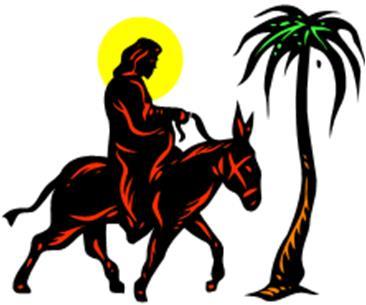
The prince will be the leader of the people. He will not be Christ because the prince needs to make a sacrifice because of his own sins (45:22). Christ does not need such a sacrifice because he has no sin. Unlike Christ, the prince has natural children (46:16). He will not be a priest but Christ will be the chief priest. Christ will be the king. So, this man will lead the people as Christ orders him. Today, however, we can see the significance of the prophecy. Christ, on Palm Sunday, road into the city through the East Gate.

The prince would be from the family of David. He will be a man who will be like David. The prince will love the Lord as David did. And he will serve the Lord as David did. God promised David that his family would rule his people (see 2 Samuel 7:16).

Items for Discussion

  • What are the places that we restrict for special people today?
  • What are the practical and ceremonial reasons for restricting access to an area in our society?
  • The metaphor of a gate is used much in Scripture. Why is it so appropriate when we consider our faith walk?
  • What symbolism might we assign to the fact that it was the “Gate?” That it faced “East?”
  • The “Prince” was a worldly leader of the people—what, if any, are the implications and/or commands that our leaders should take from the verses above?


John 10:7-10
7 Therefore Jesus said again, “I tell you the truth, I am the gate for the sheep. 8 All who ever came before me were thieves and robbers, but the sheep did not listen to them. 9 I am the gate; whoever enters through me will be saved. He will come in and go out, and find pasture. 10 The thief comes only to steal and kill and destroy; I have come that they may have life, and have it to the full.

Background

The Apostle John wanted his readers to believe ‘that Jesus is the “Messiah, God’s Son.” (John 20:31). While Matthew, Mark and Luke recorded many miracles in their Gospels, John chose to record only seven, calling them signs that Jesus is God’s Son. John also emphasized that Jesus was human. He recorded many human traits:

  • Jesus was tired (John 4:6)
  • Jesus needed food (John 4:31)
  • Jesus cried when his friend Lazarus died (John 11:35)
  • Jesus became angry with the people conducting business in the Temple (John 2:15)
  • Jesus was *thirsty (John 19:28)

John was emphasizing that Jesus was not half human and half God, He was completely human and completely God, too. John and the other disciples had lived with Jesus for about three years. John knew that Jesus was a real man. Also John had seen the miracles that Jesus did. John watched Jesus die on a cross. And John had also seen Jesus become alive again. John knew that Jesus had defeated death. And John had seen Jesus rise up to heaven.

Bible Truth3http://www.easyenglish.info/bible-commentary/john-ma-lbw.htm

Jesus said, “I am like the gate for the sheep.” This was because the shepherd was the means by which the sheep could enter the sheepfold, the place of safety and sanctuary. The point here is that Jesus is the only ways by which people can come to God. Jesus is the only way to receive salvation and to be safe from the consequences of sin.

When worldly leaders pretend to know other ways to come to God they are like thieves, stealing from us our opportunity for spending eternity with God.

Jesus gives life to us and that new life is immediate. This new life makes us content inside our minds, even when life is difficult. Think of Satan as a thief. Satan’s purpose is to spoil and to ruin lives through deception. But when we believe in Jesus, we are safe, just like the sheep in their sheepfold. Satan can never take away the eternal life that Jesus gives to us unless we let him because the power of salvation was given to Jesus by God.

Items for Discussion

  • Why is it important to understand that we can go through the “Gate” now in this world and do not have to wait until we die?”
  • What are the ways that a relationship with our Christ protects us, becomes our “Sheepfold?
  • How can you tell when you are being deceived—when you are not being shown the truth?
  • What significant to you draw from the fact that Jesus says you can come both in and out of the gate?

Discussion Challenge

  • What are the ways we can build a relationship with Christ?

Outening the Light

Jeremiah 31:31-341NIV New International Version Translations
31 “The days are coming,” declares the Lord, “when I will make a new covenant with the people of Israel and with the people of Judah. 32 It will not be like the covenant I made with their ancestors when I took them by the hand to lead them out of Egypt, because they broke my covenant, though I was a husband to them,” declares the Lord. 33 “This is the covenant I will make with the people of Israel after that time,” declares the Lord. “I will put my law in their minds and write it on their hearts. I will be their God, and they will be my people. 34 No longer will they teach their neighbor, or say to one another, ‘Know the Lord,’ because they will all know me, from the least of them to the greatest,” declares the Lord. “For I will forgive their wickedness and will remember their sins no more.””

LightBulbBackground2http://www.biblestudytools.com/commentaries/matthew-henry-complete/jeremiah/31.html

Outen is not a common word any more. It means “To put out; extinguish” and in our title, it means to put out the light. We will talk about this in our New Testament verse from John.

Chapter 31 is a continuation of chapter 30. It provides encouragement to the captives, assuring them that God would in due time restore them or their children to their own land, making them a great and happy nation once again by sending them the Messiah. It is in the Messiah’s kingdom and grace that many of these promises were to be fulfilled.

  • Restoration of peace, honor, and great plenty (v. 1-14).
  • Their sorrow for the loss of their children will end (v. 15-17).
  • If they are repent of their sins, God will graciously forgive and accept them (v. 18-20).
  • Their numbers will increase, both their children and their cattle, and not be cut off and diminished as they had been before (v. 21-30).
  • God will renew his covenant with them, and enrich it with spiritual blessings (v. 31-34).
  • God’s blessings shall be secured for them so far as to have spiritual seed of Israel secured forever (v. 35-37).
  • To show God’s commitment to them, the city of Jerusalem shall be rebuilt (v. 38-40).

It would be from the excesses of God’s great and precious promises that would become their foundation of hope and full joy. We also can apply them to ourselves today.

Biblical Truth3http://www.studylight.org/com/bnb/view.cgi?bk=23&ch=31

Verse 31: A time is foretold which shall be to the nation as was their Exodus. God, at Sinai, made a covenant with His people, to include material and spiritual blessings. It was done simply in a way that they could understand. The Church that Jeremiah would describe was to be spiritual – written in the heart – and therefore it must take the place of the former covenant Hebrews 8:13, and must last forever. The prophecy was fulfilled when those Jews who accepted Jesus of Nazareth as the Messiah, expanded the Jewish people into the Christian Church.

Verse 32: As their husband (or, “lord” (Baal, compare Hosea 2:16)) God had lawful authority over them.

Verse 33: The old law could be broken so to fix this, God gives, not a new law, but a new power to the old law. It used to be a mere code of morals, external to man, and obeyed as a duty. In Christianity, it becomes an inner force, shaping man‘s character from within.

Verse: 34: The foundation of the new covenant is the free forgiveness of sins (compare Matthew 1:21). It is the sense of this full unmerited love which so affects the heart as to make obedience from this time forward an inner necessity for each of us, not a burdensome regulation.

Items for Discussion

  • What types of covenants do people still make today?
  • Do you think we struggle with believing/accepting God’s covenant with us? Why or Why Not?
  • Read the last verse above in Jeremiah – Why is this really good news for us?
  • Why would oppressed people listen to God better than those that had been living free?
  • How do you interpret God’s promise to put His law in our minds and write His commands on our hearts?
  • What do you think God’s response is when we ignore Him in our thoughts and keep Him out of our hearts?


John 9:4-5
4 As long as it is day, we must do the works of him who sent me. Night is coming, when no one can work. 5 While I am in the world, I am the light of the world.”

Background

John in his Gospel frequently compared Jesus to a light. Here in chapter nine, we see Jesus himself use that analogy. Jesus is quite busy, first giving sight to one born blind. (1-7) followed by an account given by the same blind man. (8-12) The Pharisees question the man that had been blind. (13-17), asking questions concerning him. (18-23) The Pharisees threw the blind man out. (24-34). We hear Jesus’ words to the man that had been blind. (35-38) and finally Jesus has some not so complimentary things to say about the Pharisees. (39-41)

Bible Truth

Jesus is comparing our life to one day where during the day, in the light, we must be busy and not waste the light. There will be plenty of time to rest when our “day is done.” It is but a day with only so much light to see the work that God has laid out for us and then night will come. The approach of death should urge each of us to improve all our opportunities of doing good works and getting our own lives in good order. What good we have an opportunity to do, we should do quickly. And we are being warned that if we wait to do a good work until the time is perfect, will probably leave many a good works undone forever,

Items for Discussion

  • Did you ever have a project that was dependent upon daylight to finish and you had to work hard and fast to get done? What was it like?
  • Why is Jesus telling us to work like the day is going to end and we will run out of daylight?
  • Do you think that people spend enough time thinking about their own end?
  • What benefits if any could come from thinking about your own demise?
  • How can we use Christ’s life to help us plan and prioritize our work “in the daylight?”
  • Think back to Jeremiah – God has placed Himself in our minds and in our hearts – How does it help us work and achieve what Jesus is telling us to do in the Gospel of John?

Discussion Challenge

  • What are the things that people put off doing and how can we help them gain a sense of urgency?

Abiding In Christ

Isaiah 42:161NIV New International Version Translations
46 I will lead the blind by ways they have not known, along unfamiliar paths I will guide them; I will turn the darkness into light before them and make the rough places smooth. These are the things I will do; I will not forsake them.

Image235Background

Isaiah seems to launch out yet further into the prophecy of the Messiah and his kingdom using Cyrus as the opposite of what the Messiah will be. This prophecy as other similar prophecies of Christ, are often couched in types of other people such as David and Solomon. Here we find:

  • A prophecy of the Messiah’s coming with meekness, and, at the same time, with power to do the Messiah’s work (v. 1-4).
  • The commission, once given, coming directly from God our Father (v. 5-9).
  • The joy and rejoicing of this good news which should be our response (v. 10-12).
  • The wonderful success of the gospel’s message for the overthrow of evil (v. 13-17).
  • The rejection and ruin of the Jews for their continued unbelief (v. 18-25).

Biblical Truth

Having said in the prior verses what God would do to His enemies, God now speaks of His people. He would lead them to their own land, as a blind people that needed a guide, and would remove whatever obstacle there was in their way. Blind is applied to his people in captivity, as being ignorant, after their seventy years’ exile, to know the way to return to their own land. If we apply this to the people of God under the New Testament, as a prophecy as we are led to conclude, then it denotes that Christians will feel their need of a leader, counselor, and guide; and that God, as a military leader, will be leading them all in a way which they did not know, and remove all obstacles from their path.

When they were ignorant what course or direction to take or in a path think of, God led in a way which they did not know. They did not mark out this course for themselves; they did not develop the plans of life which they came ultimately to pursue; they have been led, by the providence of God down a different path by the Spirit of God.

Darkness, in the Scriptures, is used to describe ignorance, sin, adversity, and calamity. Here it seems to indicate that the events of life will be filled with calamities, persecutions, and trials. God is going to make those events which seemed to be adverse and calamitous, the way He furthers His own cause, and use these events to promote the spirit of the true religion, and the happiness of His people.

Items for Discussion

  • Look carefully at the verse above and pick out exactly what things God will do for someone who cannot see?
  • Who do you think the blind are and why are they blind?
  • Why do you think it might be good to sometimes compare Christ against others mentioned in Biblical history?
  • God is a mystery, we do not see Him but see His world and His influence – So why should we trust that God will do what is in the above verse?
  • There is a requirement for us to receive these benefits, to “Abide.” What does that mean to you?
    • Hints: accept or act in accordance with (a rule, decision, or recommendation); synonyms: comply with, obey, observe, follow, keep to, hold to, conform to, adhere to, stick to, stand by, act in accordance with, uphold, heed, accept, go along with, acknowledge, respect, defer.


John 15:7
7 If you remain in me and my words remain in you, ask whatever you wish, and it will be done for you.

Background

John tells us in chapter 15 and 16 what Christ was telling His disciples at the close of the last supper, the night in which he was betrayed. It can be thought of as Christ’s farewell sermon. Now that He was about to leave them, John is pointing out:

  • The apostles would be tempted to leave him, and return to their Jewish roots again; and therefore Christ tells them how necessary it is that they should by faith, adhering to him and abide in him.
  • Christ’s disciples would be tempted to grow apart one to another; and therefore He presses it upon them to love one another, and to keep up that communion when He was gone.
  • They would be tempted to shrink from their apostleship when they met with hardships; and therefore He prepared them to bear the shock of the world’s ill will against them.

There are four words to which Christ’s farewell message can be reduced; 1. Fruit (v. 1-8). Love (v. 9-17). Hatred (v. 18-25). The Comforter (v. 26, v. 27).

Bible Truth

In verse 6, Jesus warned what will happen to false Christians. But immediately, He reminded us of his wonderful promise. This promise is for all of us who remain in a close relationship with Him. He will do whatever we ask for in Hs name. And because we are united with Him, our prayers will not be selfish. We will want to ask for only those things that He wants, too. His desires will become our desires. He will grant our requests. And the things that we do on His behalf will bring great glory to God.

Items for Discussion

  • What does a Christian life look like when the person “remains in Christ?”
  • What type of life would you expect in a Christian to assure themselves that “Christ’s words remain in them?”
  • Why would the above two attributes of a Christian life, “Abiding in Christ” and “Christ’s words abiding in them” assure that our prayers were going to be answered?
  • How is Christ, in this verse, addressing one of the greatest risks to mankind, complacency within their faith?
  • Discussion Challenge
  • How does Communion help us with one’s objective to abiding in Christ?
  • 1
    NIV New International Version Translations

Going On A Piece

Isaiah 50:4-9a1NIV New International Version Translations
4 The Sovereign Lord has given me a well-instructed tongue, to know the word that sustains the weary. He wakens me morning by morning, wakens my ear to listen like one being instructed. 5 The Sovereign Lord has opened my ears; I have not been rebellious, I have not turned away. 6 I offered my back to those who beat me, my cheeks to those who pulled out my beard; I did not hide my face from mocking and spitting. 7 Because the Sovereign Lord helps me, I will not be disgraced. Therefore have I set my face like flint, and I know I will not be put to shame. 8 He who vindicates me is near. Who then will bring charges against me? Let us face each other! Who is my accuser? Let him confront me! 9 It is the Sovereign Lord who helps me. Who will condemn me?

PalmSundayBackground

In chapter 50, we find the following:

  1.  Those to whom God sends His messenger to are justly charged with bringing all the troubles they were in upon themselves because of their own willfulness and obstinacy. God would have helped them had they been worthy of deliverance, Isa. 50:1-3.
  2. He who God sends produces his own commission (Isa. 50:4), and states his own readiness to submit to all the services and sufferings he was called to in the execution of it (Isa. 50:5, 6), and assures himself that God, who sent him, would stand by him and bear him out against all opposition, Isa. 50:7-9.
  3. A message about life and death, good and evil, the blessing and the curse, comfort to desponding saints and terror to presuming sinners, Isa. 50:10, 11.
  4. Now all this seems to address two groups:
    1. To the unbelieving Jews in Babylon, who quarreled with God for his dealings with them, and to the prophet Isaiah, who, though the dead long before their captivity. Yet, by prophesying so plainly and fully, God saw fit to produce Isaiah’s credentials and to justify what Isaiah had been saying.
    2. To the unbelieving Jews in our Savior’s time, who by their own fault were rejected. Christ himself, having preached much to them and suffered much from them all while being supported by God’s divine power.

The contents of chapter 50 is telling us that Christ shows that the dereliction of the Jews is not to be blamed on Him or His ability to save them, by His obedience in the work He came to do, and by Christ’s confidence in divine assistance from God. Isaiah thus concludes with an exhortation to trust in God and not in ourselves.

Biblical Truth2http://www.easyenglish.info/bible-commentary/isaiah49-57-lbw-nh.htm

Here ‘tongue’ refers to Isaiah’s authority to speak God’s message. He qualifies to be God’s messenger, because God has taught him what to say (see Jeremiah 1:9. Ezekiel 3:27). Moreover, God had comforted Isaiah so he can also speak from personal experience (see Isaiah 40:1-2). Isaiah must listen carefully. That is, not only to hear God’s words, but also to understand God’s meaning. Isaiah is willing to suffer for God. To pull out the hairs of a man’s beard was not only painful. It was the traditional way to bring shame upon a man (see Isaiah 7:20; Isaiah 15:2; Nehemiah 13:25). Because Isaiah trusts God and knows that God will help him, shame and insult cannot hurt him.

That is why makes his face as hard as stone. Flint, was considered the hardest known material in Isaiah’s day, even harder than steel. So Isaiah challenges his listeners and says: I know that nothing and nobody can cause me shame. My defender is near me. He will prove that I am innocent. Let my accuser dare to meet us in court. Let him bring his evidence against me. Because God will help him, nobody will be able to say that he is guilty. Isaiah has complete confidence in the God’s judgment. Even though they will attack Isaiah, the attacks of those who oppose him will be too weak to succeed.

Items for Discussion

  • When you give someone advice about God, how do you know you are giving a truthful message?
  • What are we to take from verse 7 – Another way to look at this is how are we to act when sharing the gospel’s message with others?
  • What were the qualifications that Isaiah listed about himself?
  • How does suffering for your opinion or beliefs strengthen your message?


Luke 19:28-44
28 After Jesus had said this, he went on ahead, going up to Jerusalem. 29 As he approached Bethphage and Bethany at the hill called the Mount of Olives, he sent two of his disciples, saying to them, 30 “Go to the village ahead of you, and as you enter it, you will find a colt tied there, which no one has ever ridden. Untie it and bring it here. 31 If anyone asks you, ‘Why are you untying it?’ say, ‘The Lord needs it.’” 32 Those who were sent ahead went and found it just as he had told them. 33 As they were untying the colt, its owners asked them, “Why are you untying the colt?” 34 They replied, “The Lord needs it.” 35 They brought it to Jesus, threw their cloaks on the colt and put Jesus on it. 36 As he went along, people spread their cloaks on the road. 37 When he came near the place where the road goes down the Mount of Olives, the whole crowd of disciples began joyfully to praise God in loud voices for all the miracles they had seen: 38 “Blessed is the king who comes in the name of the Lord!” “Peace in heaven and glory in the highest!” 39 Some of the Pharisees in the crowd said to Jesus, “Teacher, rebuke your disciples!” 40 “I tell you,” he replied, “if they keep quiet, the stones will cry out.” 41 As he approached Jerusalem and saw the city, he wept over it 42 and said, “If you, even you, had only known on this day what would bring you peace—but now it is hidden from your eyes. 43 The days will come upon you when your enemies will build an embankment against you and encircle you and hem you in on every side. 44 They will dash you to the ground, you and the children within your walls. They will not leave one stone on another, because you did not recognize the time of God’s coming to you.”

Background

We are given the story of Palm Sunday in these verses. The story has two components: Christ enters Jerusalem on a colt, a young donkey (28-40) and Christ laments over Jerusalem. (41-48). This story of His triumphant entry into the city often overshadows the short lament that follows. William Barklay, a noted theologian, offers this insight. Christ sees into the future of this beautiful city (70 A.D.) when the Roman General Titus will lay siege to Jerusalem. Josephus, mayor of the city at the time of the siege, documents that 1.1 million people were killed of which a majority were Jewish and that 97,000 were captured and enslaved. The city was physically destroyed and looted. Prior to the siege, prophets cautioned city leaders about staying in the city stating that God wanted the people to escape to the mountains. Leaders ignored this advice and most of the deaths were due to starvation because all Titus had to do is park his army outside the city walls and wait until all of the provisions ran out. Aside from Christ’s impending death, Christ carries the burden of seeing what punishment is about to impact the Jewish nation.

Bible Truth3http://www.biblestudytools.com/commentaries/matthew-henry-complete/luke/19.html

Verses 28-40 – We have here the same account of Christ’s riding in some sort of triumph (such as it was) into Jerusalem which we had before in Matthew and Mark. Christ was coming forward and willing to suffer and die for us. Christ is entitled to a dominion over all the creatures, and may use them when and as He pleases. So Christ sent others to fetch an ass and her colt from their owner’s and master’s crib when He needed them. He did so because all the beasts of the forest are His. Because Christ has all men’s hearts both under His eye and in His hand, He could influence those to whom the ass and the colt belonged to so they would consent to their taking them away.

When Christ came to Jerusalem, God put into the hearts of the whole multitude of the disciples, not only of the twelve, but many more, that were disciples at large, to rejoice and praise God (v. 37), and the spreading of their clothes in the way (v. 36) was a common expression of joy, as at the feast of tabernacles.

Pharisees would silence the praises of Christ, but they cannot gain their point; for as God can out of stones raise up children for Abraham, so he can raise out of the mouths of those in Jerusalem perfect praise.

Verses 41-48 – The great Ambassador from heaven is here making his public entry into Jerusalem, not to be respected there, but to be rejected. Christ knew what He was throwing himself into and yet we see here instances of His love for that place and His concern for its future.

  • The tears He shed for the approaching ruin of the city (v. 41): When He came near, He marvels at the city, and then weeps over it. Probably, it was when He was coming down the descent of the hill from the mount of Olives, where He had a full view of the city, the large extent of it, and the many stately structures in it, and His eye affected His heart, and His heart His eye again.
  • There is a time of fellowship when those things which belong to our peace are known by us, and known to be good. When we enjoy the means of grace in times of plenty, and have the word of God powerfully preached to us—when the Spirit strives with us, and our own consciences are startled and awakened—then is the time of fellowship with Christ which moves us to grow in faith.
  • With those that have long neglected the time of their fellowship with Christ, if at length, if at last, in this their day, their eyes are to be opened and all will be well. No one is to be refused who come into the vineyard at the eleventh hour. But we are cautioned here. It is the amazing folly of multitudes that enjoy the means of grace, but it will be a fatal consequence to them if they do not improve their opportunities. While the things of their peace are revealed to them, their minds are not transformed. They hide their eyes from Christ’s message as if He was not worth taking notice of. They are not aware of the accepted time and the day of salvation, and to let it slip and perish through mere carelessness. None are as blind as those that will not see; nor have any the things of their peace more certainly hidden from their eyes than those that turn their back upon them.

The sin and folly of those that persist in a contempt of the gospel’s message of grace bring a great grief to Jesus, and it should the same to us. Christ looks with weeping eyes upon lost souls that continue in their sinful ways and run headlong into their own ruin. Christ rather that they would turn and live than go on and die, for He does not want any to perish.

Items for Discussion

  • The imagery of a king riding into a conquered city on a young colt symbolizes that the king brings peace. Why do you think that the same people that welcomed Christ as a king would let Him die a few days later?
  • Why were the people of Jerusalem so easily led astray by poor leadership?
  • Do these risks remain in our society today?
  • What does Jesus’ compassion for the city of Jerusalem tell you about Him?
  • If the definition of “piece” means a portion of an object or of material, produced by cutting, tearing, or breaking the whole, what do you think we should be doing with our own journeys’ in life? Hint: it also has been used as a slang expression to mean far, going further than one imagined, traveling beyond the imagined distance.

Discussion Challenge

  • How do we teach our communities and nations about both the gospel’s message of hope and message of risks of failure – failure that is to transform ourselves, our hearts, into offspring of Christ?

When Morning Rolls Around

Isaiah 53:1-121NIV New International Version Translations
1 Who has believed our message and to whom has the arm of the Lord been revealed? 2 He grew up before him like a tender shoot, and like a root out of dry ground. He had no beauty or majesty to attract us to him, nothing in his appearance that we should desire him. 3 He was despised and rejected by mankind, a man of suffering, and familiar with pain. Like one from whom people hide their faces he was despised, and we held him in low esteem. 4 Surely he took up our pain and bore our suffering, yet we considered him punished by God, stricken by him, and afflicted. 5 But he was pierced for our transgressions, he was crushed for our iniquities; the punishment that brought us peace was on him, and by his wounds we are healed. 6 We all, like sheep, have gone astray, each of us has turned to our own way; and the Lord has laid on him the iniquity of us all.7 He was oppressed and afflicted, yet he did not open his mouth; he was led like a lamb to the slaughter, and as a sheep before its shearers is silent, so he did not open his mouth. 8 By oppression and judgment he was taken away. Yet who of his generation protested? For he was cut off from the land of the living; for the transgression of my people he was punished. 9 He was assigned a grave with the wicked, and with the rich in his death, though he had done no violence, nor was any deceit in his mouth. 10 Yet it was the Lord’s will to crush him and cause him to suffer, and though the Lord makes his life an offering for sin, he will see his offspring and prolong his days, and the will of the Lord will prosper in his hand. 11 After he has suffered, he will see the light of life[d] and be satisfied; by his knowledge my righteous servant will justify many, and he will bear their iniquities. 12 Therefore I will give him a portion among the great, and he will divide the spoils with the strong, because he poured out his life unto death, and was numbered with the transgressors. For he bore the sin of many, and made intercession for the transgressors.

Morning237Background

In chapter 53, Isaiah is about to wake up both the believers and unbelievers. It is here where we will find hope in our Savior. Isaiah documents and prophesies the rejection of the Jews (1-3), the sufferings and exaltation of the Messiah (4-9), and provides for both a consolation to the believer, and warning to the unbeliever (10, 11).

Biblical Truth2http://www.easyenglish.info/bible-commentary/isaiah41-55-gc-lbw.htm

In this verse, and in many verses in the Old Testament, the Arm of the LORD is a name for the Servant, or Jesus or God’s servant, and not an abstract object. We are told why the people did not accept Christ.

  • He had an ordinary origin, even as a plant in the ground does.
  • Jesus had grown up in front of them as well as God. Jesus is part of the trinity, developing fully in full view of God.
  • Jesus did not look very special but looked ordinary, not like a king.

Our Servant was very sad, not for himself but for how the other people were. The Servant lifted our sad thoughts from us and He carried them away from us. He was suffering instead of us. This Servant died because of our sins, not His but His death was necessary because of God’s law. The wages of sin is death (Romans 6:23) and we deserve to die for our sins, but the Servant took our legal punishment. We all were responsible for His death. It was God who started this process for our salvation. God laid upon this Servant, our sins. The servant is like a young sheep that God provided as a sacrifice. When He died, Jesus carried away our sins. ‘Cut off’ means that the people in this world killed Him even though they did not understand this until Jesus died. In verse 10, we are again told that our Savior will be a servant. Isaiah tells the people ‘He will see the light’ probably emphasizing ‘He will live again.’

Items for Discussion

  • Where do you personally find the most hope, in the fact that Christ has taken upon Himself our sins or shown us that there is life beyond this earth?
  • Why is it important to remember that Christ is God?
  • Why is it equally important to remember that Christ was human?
  • If mankind is cut off from God, then how is it that we can explain Christ’s purpose for suffering? Couldn’t God have saved us without the bloodshed?
  • In what way do the gifts of free will and God’s grace work together for mankind?


Mark 16:1-8
1 When the Sabbath was over, Mary Magdalene, Mary the mother of James, and Salome bought spices so that they might go to anoint Jesus’ body. 2 Very early on the first day of the week, just after sunrise, they were on their way to the tomb 3 and they asked each other, “Who will roll the stone away from the entrance of the tomb?” 4 But when they looked up, they saw that the stone, which was very large, had been rolled away. 5 As they entered the tomb, they saw a young man dressed in a white robe sitting on the right side, and they were alarmed. 6 “Don’t be alarmed,” he said. “You are looking for Jesus the Nazarene, who was crucified. He has risen! He is not here. See the place where they laid him. 7 But go, tell his disciples and Peter, ‘He is going ahead of you into Galilee. There you will see him, just as he told you.’” 8 Trembling and bewildered, the women went out and fled from the tomb. They said nothing to anyone, because they were afraid.

Background3http://www.easyenglish.info/bible-commentary/mark-lbw.htm

In Mark’s Gospel, chapter 16 is loaded with important facts:

  • Christ’s resurrection is made known to women first and not His disciples. (1-8)
  • Christ appears to Mary Magdalene and other disciples. (9-13)
  • Christ gives His Great Commission to the apostles. (14-18)
  • And Christ’s ascension. (19, 20)

Most theologians agree that Mark was the first disciple to write a Gospel. Both Matthew and Luke seem to use what Mark wrote to help them in writing their own Gospels. It is believed that Mark completed his writing in the year 65 A.D., soon after the Apostle Peter’s death.

Bible Truth

The women close to Jesus and the disciples went out to buy special substances normally used for a burial as soon as the Sabbath ended at sunset on Saturday. The first opportunity to see what they were doing would be at dawn on Sunday morning. They remembered that there was a heavy stone at the entrance to the rock grave. It would be too heavy for them to push back. But as they arrived at the grave, they discovered that there was no problem. Someone had already rolled the stone aside. The women were astonished to find a young man in white clothes who was sitting on the right side of the cave. He was an angel and told them that they were looking in the wrong place for Jesus because He had risen.

They could see for themselves the empty place where His body had been. They knew must tell His disciples ‘and Peter’ and that they would see Jesus in Galilee. This was a special message for Peter to show that Jesus still included him in His love. Remember, Peter had denied that he knew Jesus three times. This would have given Peter the first sign of hope after his denials.

Verse 8 is a rather sudden end to Mark’s Gospel so later writers added other ends for the book. There is a short one, and a longer one. Mark may not have had time to complete his Gospel by himself. Perhaps he became ill. Perhaps he died, or the Romans killed him. It is possible, however, that Mark intended to end at verse 8. All through his Gospel, he had described how Jesus astonished people by his words and actions. Jesus’ disciples, too, had a feeling of fear. And they greatly respected Jesus for his power (4:41). The resurrection was the most astonishing event of all. Mark perhaps thought that it was not important to write about Jesus’ appearances to his disciples. He had given the most important fact, ‘He has risen.’ The fear of the women was a suitable reaction to such an astonishing act of God. The reaction of all Christians should be similar. Verse 8 therefore can be a suitable end to Mark’s Gospel.

Items for Discussion

  • How do you celebrate Easter?
  • What is the danger in letting a secular world redefine the meaning of Easter?
  • Why do you think that Jesus let the women among His followers discover His resurrection first?
  • Can Christianity survive without celebrating events like Easter and Christmas?

Discussion Challenge

  • How should the Christian community embrace Easter? Ideas: as a special day; a special week; a special season; etc.

You Better Would

2 Chronicles 7:11-121NIV New International Version Translations
11 When Solomon had finished the temple of the Lord and the royal palace, and had succeeded in carrying out all he had in mind to do in the temple of the Lord and in his own palace, 12 the Lord appeared to him at night and said: “I have heard your prayer and have chosen this place for myself as a temple for sacrifices.

Doubting ThomasBackground2http://www.biblegateway.com/resources/matthew-henry/2Chr.7.1-2Chr.7.22

In chapter 7 is God’s answer to Solomon’s prayer. This chapter includes:

  • God’s public answer by fire from heaven, which consumed the sacrifices (2 Chron. 7:1), which affected both the priests and people, 2 Chron. 7:2, 3. It was the event of God’s acceptance that encouraged the people to continue the solemnities of the feast for fourteen days, and Solomon was encouraged to pursue all his designs for the honor of God, 2 Chron. 7:4-11.
  • God’s private answer by word of mouth, in a dream or vision of the night, 2 Chron. 7:12-22.

Biblical Truth

Solomon went on in his work finishing God’s temple and prospered in all he designed for the adorning both of God’s house and his own. Scriptures lesson is that to those that begin with the service of God are likely to go on successfully in their own affairs. It was Solomon’s praise that what he undertook he went through with, and it was by the grace of God that he prospered in it. In other words, credit where credit is due.

Items for Discussion

  • When someone does not give God credit for success, how do you think it impacts the people who have been observing?
  • If our leaders remove God from their dominion, who is left to give credit to and how does this affect the people who are impacted?
  • Why are acts of humility so important to our relationship with God?
  • How do you think one’s attitude for giving credit to God affect their prayer life?
  • How do you think one’s attitude for giving credit to God affect God’s answers to prayers?


John 20:19-31
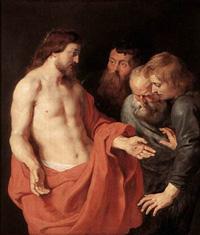
19 On the evening of that first day of the week, when the disciples were together, with the doors locked for fear of the Jewish leaders, Jesus came and stood among them and said, “Peace be with you!” 20 After he said this, he showed them his hands and side. The disciples were overjoyed when they saw the Lord. 21 Again Jesus said, “Peace be with you! As the Father has sent me, I am sending you.” 22 And with that he breathed on them and said, “Receive the Holy Spirit. 23 If you forgive anyone’s sins, their sins are forgiven; if you do not forgive them, they are not forgiven.” 24 Now Thomas (also known as Didymus), one of the Twelve, was not with the disciples when Jesus came. 25 So the other disciples told him, “We have seen the Lord!” But he said to them, “Unless I see the nail marks in his hands and put my finger where the nails were, and put my hand into his side, I will not believe.” 26 A week later his disciples were in the house again, and Thomas was with them. Though the doors were locked, Jesus came and stood among them and said, “Peace be with you!” 27 Then he said to Thomas, “Put your finger here; see my hands. Reach out your hand and put it into my side. Stop doubting and believe.” 28 Thomas said to him, “My Lord and my God!” 29 Then Jesus told him, “Because you have seen me, you have believed; blessed are those who have not seen and yet have believed.” 30 Jesus performed many other signs in the presence of his disciples, which are not recorded in this book. 31 But these are written that you may believe that Jesus is the Messiah, the Son of God, and that by believing you may have life in his name.

Background

Chapter 20 is packed with maybe the most important events of Christ’s life. The grave is found (1-10). Christ appears to Mary (11-18). Christ appears to the disciples (19-25). The unbelief of Thomas (26-29). And a Conclusion (30, 31) that changed the world.

Bible Truth

Simply stated, Christ lives! The apostle John is documenting that there were many signs and other proofs of our Lord’s resurrection. John states that these were committed to writing so that all might believe that Jesus was the promised Messiah, the Savior of sinners, and the Son of God. Most importantly, we are shown that, by this faith, each of us might obtain eternal life through Christ’s mercy, truth, and power.

Items for Discussion

  • Why does the “free will” of mankind doom humanity by separating all from God?
  • What does Christ’s death, His sacrifice, do for all mankind?
  •  Is everyone saved? Why or why not?
  • Christ lived, survived death. What impact do you see this historical event having on those who actually bore witness to a resurrected Christ?
  • So what do each of us need to do for the gift of forgiveness and the hope of an everlasting life filled with eternal joy to be ours? Think about the use of the word “would.” It is often a “conditional” word. What are Christ’s conditions?
    • Note: “You better would” is a colloquial saying referring to a way of giving advice while at the same time warning somebody that, unless they do it, something bad may happen.

Discussion Challenge

  • How do we show that Christ is alive today?

Blessed Is The Mother Who Gave You Birth

Isaiah 41:8-101NIV New International Version Translations
8 “But you, Israel, my servant, Jacob, whom I have chosen, you descendants of Abraham my friend, 9 I took you from the ends of the earth, from its farthest corners I called you. I said, ‘You are my servant’; I have chosen you and have not rejected you. 10 So do not fear, for I am with you; do not be dismayed, for I am your God. I will strengthen you and help you; I will uphold you with my righteous right hand.

mothershandsandbabyBackground

In Chapters 40 to 66, God promises comfort to his people. In fact, the word ‘comfort’ appears 13 times in these chapters. Babylon is the enemy and God’s people are prisoners in Babylon referring to the situation two centuries after Isaiah’s time. But unlike in chapters 1 to 39, Isaiah does not mention any actual events from the history of that period. So it is possible that parts of Isaiah were contributed by additional authors.

Biblical Truth

We are called to be happy servants of the Lord. God called us to be His friends, and to walk with Him in faith and holy obedience. Let us, His people who have been granted this special favor, not yield to fear. While the struggle of life may be difficult, we are assured with God’s tenderness that victory is ours because our God will protect and strengthen us. Yes, there are those that seek our ruin but we are God’s people and expected to be different, not rendering evil for evil, but waiting for God’s time.

Items for Discussion

  • What is a servant?
  • What makes a good servant?
  • Why should we, children of God, view ourselves as servants?
  • In a world where freedom is pursued at great expense and effort, why should we bother to be “good servants,” remaining patient, trusting in our God?
  • Is motherhood our society’s best example of a perfect servant? Why or why not?


Luke 11:27-28
27 As Jesus was saying these things, a woman in the crowd called out, “Blessed is the mother who gave you birth and nursed you.” 28 He replied, “Blessed rather are those who hear the word of God and obey it.”

Background

People of every age seek true happiness. We all want to be happy. Why not! Some people pursue fame, fortune or power in their quest for happiness. But Jesus, like so many times before, simplifies life. What is happiness? Simply taking time to hear God’s Word and following it.

Bible Truth

The woman in the crowd thought that it would be wonderful to be the mother of Jesus. She would be happy if her son was as great as Him. The woman assumes that Jesus’ mother must be happy because God had blessed her with such a son. While that was true, Jesus speaks of something even more important. The natural relationship of a mother and son is not as important as the blessing people will receive who hear the word of God and obey it.

Items for Discussion

  • How can we take time in our busy lives to hear God’s Word?
  • Is there a difference between hearing God’s Word and reading it?
  • Do we learn different things from each method?
  • Would a servant be more apt to take time to listen to God’s Word than a King? Why or why not?
  • So why do you think hearing God’s Word brings happiness?
  • What are the top three strengths you can see in Jesus’ mother, Mary?
  • How do you think Mary displays the “servanthood” that Jesus is calling us to?

Discussion Challenge

  • How does the Christian Church teach people to be good servants in a world filled with evil?
  • 1
    NIV New International Version Translations

The “Presents” of Christ

Psalm 66:8-201NIV New International Version Translations
8 Praise our God, all peoples, let the sound of his praise be heard; 9 he has preserved our lives and kept our feet from slipping. 10 For you, God, tested us; you refined us like silver. 11 You brought us into prison and laid burdens on our backs. 12 You let people ride over our heads; we went through fire and water, but you brought us to a place of abundance. 13 I will come to your temple with burnt offerings and fulfill my vows to you—14 vows my lips promised and my mouth spoke when I was in trouble. 15 I will sacrifice fat animals to you and an offering of rams; I will offer bulls and goats. 16 Come and hear, all you who fear God; let me tell you what he has done for me. 17 I cried out to him with my mouth; his praise was on my tongue. 18 If I had cherished sin in my heart, the Lord would not have listened; 19 but God has surely listened and has heard my prayer. 20 Praise be to God, who has not rejected my prayer or withheld his love from me!

PresentsBackground

The title of this psalm is “To the Chief Musician.” While it is a marvelous poem when read it is a beautiful song set to suitable music. We do not know for sure who its author is but there is no reason to doubt that David wrote it. It is in the Davidic style, and has nothing in it unsuited to his times.
Praise is the topic, and the lyrics for song are the Lord’s great works, His gracious benefits, His faithful deliverances, and all his dealings with His people, brought to a close by a personal testimony to special kindness received by David himself.

Biblical Truth

The holy church throughout all the world lifts up her voice, to praise the Name which is above every name and to make the praise of Jesus’ name glorious, both by our words and our deeds. We are called to remember that it is through the words and deeds of the church that others may be led to also glorify Jesus. The question then becomes what makes us do this? The answer is God’s grace which gives us a new birth, a new heart and that heart is redeemed by the death of Christ. This transformation is more wondrous than Israel’s deliverance from Egyptian bondage.

God not only preserves our temporal life, but He maintains the spiritual life which God has given to all believers. Through our trials and tribulations, we are refined, as silver is in the fire. We are reassured that the troubles of the church will certainly end well. It is through these various conflicts and troubles that a slave to sin escapes temporarily, obtaining joy and peace through their faith. It is life’s trials that pave our road into the kingdom of God.

Items for Discussion

  • How do you praise God?
  • What events spur you to praise God?
  • Are there any benefits we receive from public praise such as singing our praises out loud?
  • What is the impact of public praise on others?
  • Why are we like silver, refined by fire becoming purer and more valuable to God?
  • What is God giving us back when we praise Him with all of our hearts?


John 14:25-31
25 “All this I have spoken while still with you. 26 But the Advocate, the Holy Spirit, whom the Father will send in my name, will teach you all things and will remind you of everything I have said to you. 27 Peace I leave with you; my peace I give you. I do not give to you as the world gives. Do not let your hearts be troubled and do not be afraid. 28 “You heard me say, ‘I am going away and I am coming back to you.’ If you loved me, you would be glad that I am going to the Father, for the Father is greater than I. 29 I have told you now before it happens, so that when it does happen you will believe. 30 I will not say much more to you, for the prince of this world is coming. He has no hold over me, 31 but he comes so that the world may learn that I love the Father and do exactly what my Father has commanded me. “Come now; let us leave.

Background

In chapter 14, Christ is comforting His disciples. He is about to leave them. Over and over, Christ tells them all that is good, He is leaving them with and to make sure they remember this good, they will have the Holy Spirit as a helper. This chapter simply says, the greatest gift we received from Christ is the peace that comes from knowing we have been given a perfect example to follow and the help to remember what to do at the right time.

Bible Truth

To gain the knowledge of salvation, we must pray for, and depend on the teaching of the Holy Spirit. It is these very words of Jesus that we will remember, and many difficulties we have survived that we know were of God’s hand but were not plainly known to those around us. We have been given the Hotly Spirit to help us remember Christ. Through faith and prayer we should commit the keeping of what we hear and know to our memories. Peace has been given to us as a good thing and Christ has left us all that is really and truly good, all the promised good; peace of mind from our justification before God. This is what Christ calls His peace, for He is himself our Peace. The peace of God widely differs from that of Pharisees or hypocrites, as is shown by its humbling and changing of lives.

Christ raises the expectations of his disciples to something beyond what they thought was their greatest happiness. His time was now short and He boldly to them. Christ is reminding His disciples that when we are sick and about to die, we may not be capable of talking to those around us about our faith in Christ. Each Christian is filled with good examples and advice but we should do our best to give it while we are health. Observe the prospect Christ approaching His own painful death, not only with men but with the powers of darkness. Satan has something to confuse us with, for we have all sinned. But how could Satan cause worry and strife for Christ? Satan found nothing sinful in Christ for him to use. The best evidence of our love to the Father is, our doing as he has commanded us. Let us rejoice in Christ’s victories over Satan the prince of this world. Let us copy the example of Christ’s love and obedience.

Items for Discussion

  • Can you share any examples of how the Holy Spirit has helped you remember to do the right thing at the right time?
  • Do you think that the Holy Spirit has any barriers or limits? Why or why not?
  • Worry is a destructive force within the human body – Can you name some of the physical signs of too much worry?
  • Is all worry bad?
  • How can a Christian balance common sense cautions with confidence so that there is no destructive worry?
  • Why is Christian fellowship so important to understanding Christ’s Peace?

Discussion Challenge

  • What are the best ways to demonstrate examples of Christ’s love and obedience?

A Special Devotional

Merriam-Webster: A WILL – It is a legal declaration of a person’s wishes regarding the disposal of his or her property or estate after death; especially: a written instrument legally executed by which a person makes disposition of his or her estate to take effect after death.

Greek word: diatheôke pronounced dee-ath-ay’-kay; properly a disposition, that is, (specifically) a contract (especially a devisory will):—covenant, testament.

Hebrews 9:16-22
16In the case of a will, it is necessary to prove the death of the one who made it, 17because a will is in force only when somebody has died; it never takes effect while the one who made it is living. 18This is why even the first covenant was not put into effect without blood. 19When Moses had proclaimed every commandment of the law to all the people, he took the blood of calves, together with water, scarlet wool and branches of hyssop, and sprinkled the scroll and all the people. 20He said, “This is the blood of the covenant, which God has commanded you to keep.” 21In the same way, he sprinkled with the blood both the tabernacle and everything used in its ceremonies. 22In fact, the law requires that nearly everything be cleansed with blood and without the shedding of blood there is no forgiveness.

Another Viewpoint for this Lesson: It is through Christ’s death that we have been given access to His estate. And what are the duties of an executor? We go back to our lesson in John 14:25-31 to reread: “do exactly what my Father has commanded me.”

A Link to Christ’s Last Will and Testament

  • 1
    NIV New International Version Translations

Praying the Psalms

Psalm 421NIV New International Version Translations 
1 As the deer pants for streams of water, so my soul pants for you, my God. 2 My soul thirsts for God, for the living God. When can I go and meet with God? 3 My tears have been my food day and night, while people say to me all day long, “Where is your God?” 4 These things I remember as I pour out my soul: how I used to go to the house of God under the protection of the Mighty One with shouts of joy and praise among the festive throng. 5 Why, my soul, are you downcast? Why so disturbed within me? Put your hope in God, for I will yet praise him, my Savior and my God. 6 My soul is downcast within me; therefore I will remember you from the land of the Jordan, the heights of Hermon—from Mount Mizar. 7 Deep calls to deep in the roar of your waterfalls; all your waves and breakers have swept over me. 8 By day the Lord directs his love, at night his song is with me—a prayer to the God of my life. 9 I say to God my Rock, “Why have you forgotten me? Why must I go about mourning, oppressed by the enemy?” 10 My bones suffer mortal agony as my foes taunt me, saying to me all day long, “Where is your God?” 11 Why, my soul, are you downcast? Why so disturbed within me? Put your hope in God, for I will yet praise him, my Savior and my God.

PrayingHandsBackground

In many Hebrew manuscripts Psalms 42 and 43 constitute one psalm. The Jews made them into two psalms about 200 years before Jesus came to the earth. They did this when they translated their Bible from Hebrew into Greek. We do not know who wrote the psalm. What we do know about this person is that:

  • in the past he went to the house of God in Jerusalem (verse 4)
  • he cannot go there now (verse 2)
  • he hoped that one day he would go back to it (verse 5)
  • he was now 200 kilometers north of Jerusalem (verse 6) and
  • his enemy had taken him away from his home (Psalm 43:1).

Items for Discussion

  • What is a prayer?
    • Dictionary – noun
    • a solemn request for help or expression of thanks addressed to God
    • a religious service, especially a regular one, at which people gather in order to pray together.
    • an earnest hope or wish.
    • National Day of Prayer Task Force Definition: Prayer is dialog and relationship with God and has the power to change one heart and change an entire nation.
  • Prayer has existed since the beginning of man – So why do we pray?
  • Why is it helpful to sometimes have a guide like this psalm or other psalms to help us with our own prayers?
  • How do the visions, the metaphors, which are created by this psalm help you focus on prayer and God?
  • In what ways do we pray in the same way today (using metaphors, stories, etc.)?
  • Do you think that the many laments of the psalmist are unique or are they typical of the sufferings of people today? Why or Why not?
  • How might this psalm be used in worship?


Psalm 43
1 Vindicate me, my God, and plead my cause against an unfaithful nation. Rescue me from those who are deceitful and wicked. 2 You are God my stronghold. Why have you rejected me?
Why must I go about mourning, oppressed by the enemy? 3 Send me your light and your faithful care, let them lead me; let them bring me to your holy mountain, to the place where you dwell.
4 Then I will go to the altar of God, to God, my joy and my delight. I will praise you with the lyre, O God, my God. 5 Why, my soul, are you downcast? Why so disturbed within me? Put your hope in God, for I will yet praise him, my Savior and my God.

Items for Discussion

  • Why is it important to consider the content of Psalm 43 along with the message of Psalm 42?
    • Idea: Psalm 42 describes the problems; psalm 43 describes the desired results.
  • What are these two psalms together teaching us about our relationship God has with His people and how we should pray?
  • How do you think one’s relationship with God is affected by prayer?

Discussion Challenge

  • Prayer is the ultimate expression of hope – how do you pass hope on to the next generation?
  • 1
    NIV New International Version Translations
« Older posts Newer posts »

"For it is by grace you have been saved" - Ephesians 2:8-9  

Copyright: © 2001 - 2025 Lostpine

Translate »