Biblical wisdom, historical insight, and personal growth — all in one place

Category: Snapshots (Page 39 of 45)

Faith Before the World

1 Samuel 12:23-241NIV New International Version Translations
23 As for me, far be it from me that I should sin against the LORD by failing to pray for you. And I will teach you the way that is good and right. 24 But be sure to fear the LORD and serve him faithfully with all your heart; consider what great things he has done for you.

img223Background2http://www.easyenglish.info/bible-commentary/1sam-lbw.htm

The books of 1 and 2 Samuel used to be one book. The writer wrote the book in the Hebrew language. Many years later, men translated the Bible into the Greek language (the language of the New Testament). These men divided this book into two parts. The name of the book comes from the first important person in this book. He was Samuel the prophet. But Samuel did not write the book. He died before the end of it.

We do not know who wrote the book. The author lived after King Solomon had died in about 930 BC (930 years Before Christ). After Solomon died, the country of Israel divided into two countries, Israel and Judah. The country of Judah included the tribes of Judah and Benjamin (see 1 Kings 12:1-24). In 1 and 2 Samuel the author often refers to Judah as a country.

In those days, the kings and leaders employed writers. They wrote about the events in their country. The prophets also wrote accounts of events. 2 Samuel 1:18; 1 Kings 11:41; 14:19, 29; 1 Chronicles 27:24; 29:29 all refer to these writers and their books. The writer of 1 and 2 Samuel probably got most of his information from these accounts. The book of 1 Samuel records a major change from the time of the judges to Israel’s first king. The judges had led the Israelites for about 350 years after the death of Joshua. During this time the Israelites called their leaders ‘judges’. Samuel was the last of the judges. He was also a prophet and a priest. Samuel anointed Saul, the first king of Israel. But Saul did not obey God. So, God chose another king, David, who would obey him. 1 Samuel ends with the death of Saul. The book of 2 Samuel records the life of David as king.

Biblical Truth3http://www.biblegateway.com/resources/commentaries/Matthew-Henry/1Sam/Samuel-Reproves-People

The work of ministers is to reason with people; not only to exhort and direct, but to persuade, to convince men’s judgments, and so to gain their wills and affections. Samuel reasons of the righteous acts of the Lord. Those who follow God faithfully, he will enable to continue following him. Disobedience would certainly be the ruin of Israel. We mistake if we think that we can escape God’s justice, by trying to shake off his dominion. If we resolve that God shall not rule us, yet he will judge us. (1Sa 12:16-25)

Items for Discussion

  • What are the responsibilities of leadership?
  • What are the tools available to leaders to move people under them? Which are the most effective?
  • What are the skills necessary to reason with someone and then convince them to change behavior?
  • How does a leader demonstrate a strong faith? Is this the same as being confident?
  • Why does God want His leaders to pray for His people? Can’t they just pray for themselves?


1 Corinthians 1:1-9
1 Paul, called to be an apostle of Christ Jesus by the will of God, and our brother Sosthenes, 2 To the church of God in Corinth, to those sanctified in Christ Jesus and called to be holy, together with all those everywhere who call on the name of our Lord Jesus Christ–their Lord and ours: 3 Grace and peace to you from God our Father and the Lord Jesus Christ. 4 I always thank God for you because of his grace given you in Christ Jesus. 5 For in him you have been enriched in every way–in all your speaking and in all your knowledge– 6 because our testimony about Christ was confirmed in you. 7 Therefore you do not lack any spiritual gift as you eagerly wait for our Lord Jesus Christ to be revealed. 8 He will keep you strong to the end, so that you will be blameless on the day of our Lord Jesus Christ. 9 God, who has called you into fellowship with his Son Jesus Christ our Lord, is faithful.

Background4http://en.wikipedia.org/wiki/First_Epistle_to_the_Corinthians

The letter was written from Ephesus (16:8), a city on the west coast of today’s Turkey, about 180 miles by sea from Corinth. According to Acts of the Apostles, Paul founded the church in Corinth (Acts 18:1–17), then spent approximately three years in Ephesus (Acts 19:8, 19:10, 20:31). The letter was written during this time in Ephesus, which is usually dated as being in the range of 53 to 57 AD.

Corinth was the meeting point of many nationalities because the main current of the trade between Asia and western Europe passed through its harbors. Paul’s first visit lasted nearly two years and his converts were mainly Greeks. Some time before 2 Corinthians was written he paid them a second visit (2 Cor. 12: 14; 2 Cor. 13: 1) to check some rising disorder (2 Cor. 2: 1; 2 Cor. 13: 2), and wrote them a letter, now lost (1 Cor. 5: 9). They had also been visited by Apollos (Acts 18: 27), perhaps by Peter (1 Cor. 1: 12), and by some Jewish Christians who brought with them letters of commendation from Jerusalem (1 Cor. 1: 12; 2 Cor. 3: 1; 2 Cor. 5: 16; 2 Cor. 11: 23).

Paul wrote this letter to correct what he saw as erroneous views in the Corinthian church. Several sources informed Paul of conflicts within the church at Corinth: Apollos (Acts 19:1), a letter from the Corinthians, the “household of Chloe”, and finally Stephanas and his two friends who had visited Paul (1:11; 16:17). Paul then wrote this letter to the Corinthians, urging uniformity of belief (“that you all speak the same thing and that there be no divisions among you”, 1:10) and expounding Christian doctrine. Titus and a brother whose name is not given were probably the bearers of the letter to the church at Corinth (2 Corinthians 2:13; 8:6, 16–18).

Bible Truth5http://www.biblegateway.com/resources/commentaries/Matthew-Henry/1Cor/Salutation-Thanksgiving

The first nine verses of 1 Corinthians is a salutation and thanksgiving by the Apostle Paul. All Christians are by baptism dedicated and devoted to Christ, and are under strict obligations to be holy. But in the true church of God are all who are sanctified in Christ Jesus, called to be saints, and who call upon him as God manifest in the flesh, for all the blessings of salvation; who acknowledge and obey him as their Lord, and as Lord of all; it includes no other persons. Christians are distinguished from the profane and atheists, that they dare not live without prayer; and they are distinguished from Jews and pagans, that they call on the name of Christ. Observe how often in these verses the apostle repeats the words, Our Lord Jesus Christ. He feared not to make too frequent or too honorable mention of him.

To all who called upon Christ, the apostle gave his usual salutation, desiring, in their behalf, the pardoning mercy, sanctifying grace, and comforting peace of God, through Jesus Christ. Sinners can have no peace with God, nor any from him, but through Christ. He gives thanks for their conversion to the faith of Christ; that grace was given them by Jesus Christ. They had been enriched by him with all spiritual gifts. He speaks of utterance (the power of speaking) and knowledge. And where God has given these two gifts, he has given great power for usefulness. These were gifts of the Holy Ghost, by which God bore witness to the apostles. Those that wait for the coming of our Lord Jesus Christ, will be kept by him to the end; and those that are so, will be blameless in the day of Christ, made so by rich and free grace. How glorious are the hopes of such a privilege; to be kept by the power of Christ, from the power of our corruptions and Satan’s temptations! (1Co 1:10-16)

Items for Discussion

  • Why is it so hard to understand the message given through just answers (Paul’s letter) without knowing the questions (what the Church in Corinth was asking of Paul)?
  • This is Paul’s greeting to people he loved – What can you learn about those people and Paul from this greeting?
  • Why is it important to greet people in a positive and affirming way, even today?
  • What happens to relationships between people when the focus is only on negative things?
  • In today’s world of tweets, facebook postings and emails, what is the risks associated with the “forced brevity” or minimization that occurs?
  • If one was sharing their faith with others, what would this lesson from Paul tell us to do?

Discussion Challenge

  • If Paul were greeting new visitors to a church or to your home, how do you?


Plea for Expanded Ministries

Ezekiel 20:321NIV New International Version Translations
32 “‘You say, “We want to be like the nations, like the peoples of the world, who serve wood and stone.” But what you have in mind will never happen.’”

img224Background2http://en.wikipedia.org/wiki/Ezekiel

The author of the Book of Ezekiel is himself as Ezekiel, the son of Buzi,[Ezekiel 1:3] and resident of Anathoth. The author dates ages, prophecies and visions by making references to the lengths of time King Jehoiachin of Judah was in exile. Under the direction of Nebuchadnezzar II, Babylonian armies exiled three thousand Jews from Judah, deposing King Jehoiachin in 597 BC.

Ezekiel, at the age of 25, was among 3,000 upper class Jews who were exiled to Babylon. On the bank of the Chebar River, in Tel Abib (Mound of the Deluge), Ezekiel and his wife dwelled in their own home where exiled Jewish visitors came to seek his prophetic insights.[Ezekiel 1:1,3:15] There is no mention of him having any offspring, only that his wife died rather young, in the ninth year of exile, when Ezekiel was 34 years of age.[Ezekiel 24:1, 18]

At the age of 30, Ezekiel describes his calling to be a prophet, by going into great detail about his encounter with God and four living creatures or Cherubim with four wheels that stayed beside the creatures.[Ezekiel 1] For the next five years he incessantly prophesied and acted out the destruction of Jerusalem and its temple, which was met with some opposition. However, Ezekiel and his contemporaries like Jeremiah, another prophet who was living in Jerusalem at that time, witnessed the fulfillment of their prophecies when Jerusalem was finally sacked by the Babylonians in 587 BC. Ezekiel was 50 years old when he began to have visions of a new Temple. He served as a prophet for about 22 years until he experienced an encounter with God in April 570 BC.[Ezekiel 29:17] His time of death has not been recorded.

Biblical Truth3http://www.easyenglish.info/bible-commentary/ezekiel1-24-lbw.htm

The people had turned away from God. So, they could not expect God to listen to them. God would not answer their questions. God had delayed the punishment of the nation for so long. However, it had to happen and now was the time. The people had not repented of their sins. They had not turned back to the Lord. God loved Israel. Therefore, he would not let them be like the other nations. He would not let them be slaves to false gods. They are his people. He has an agreement with them. He is angry with them when they turn away from him. By his great power, he would scatter them across the nations. So, in a few years, the inhabitants of Jerusalem would go into exile. However, the Lord would still rule them.

Items for Discussion

  • Why would someone’s turning away from God interfere with their ability to hear God?
  • What does it take to hear God?
  • What are the modern things of “wood and stone” that people may envy today?
  • Why would people worship (or envy) inanimate objects rather than a living God?
  • How does our knowledge of the Gospel of Christ change our perspective today?


Acts 16:9-15
9 During the night Paul had a vision of a man of Macedonia standing and begging him, “Come over to Macedonia and help us.” 10 After Paul had seen the vision, we got ready at once to leave for Macedonia, concluding that God had called us to preach the gospel to them. 11 From Troas we put out to sea and sailed straight for Samothrace, and the next day we went on to Neapolis. 12 From there we traveled to Philippi, a Roman colony and the leading city of that district of Macedonia. And we stayed there several days. 13 On the Sabbath we went outside the city gate to the river, where we expected to find a place of prayer. We sat down and began to speak to the women who had gathered there. 14 One of those listening was a woman from the city of Thyatira named Lydia, a dealer in purple cloth. She was a worshiper of God. The Lord opened her heart to respond to Paul’s message. 15 When she and the members of her household were baptized, she invited us to her home. “If you consider me a believer in the Lord,” she said, “come and stay at my house.” And she persuaded us.

Background4http://www.easyenglish.info/bible-commentary/acts-lbw.htm

Most people agree that Luke wrote Acts. In Acts, he told how the good news about Jesus Christ spread to the world beyond Jerusalem. Luke was a Gentile and he was a doctor (Colossians 4:14). He worked with Paul and he travelled with Paul (Philemon 1:24). Luke was very careful about what he wrote. He knew that some things were true. And he wrote only those things. At the beginning of his Gospel, he wrote this. ‘You have heard many things. I am writing this account so that you will know the truth about them’ (Luke 1:4). In Acts, he continued with this account.

Luke was travelling with Paul. Luke wrote about what happened during that time (Acts 16:10-17; 20:5-21:18; 27:1-28:16). In these verses, he used ‘we’ instead of ‘they’ or ‘he’. So, we know that Luke was there at those times. After Luke had arrived in Jerusalem (Acts 21:17), he stayed in Judea. He stayed there for two years. Then he left to travel to Rome (Acts 27:1). He went to Rome with Paul. While Luke was in Judea, he probably spoke to other witnesses. They told him about the other events that he describes.

Luke had one main reason why he wrote this book. The good news about Jesus had travelled from Jerusalem to Rome. Luke wanted to record how that happened. Rome was the most important city in the world. Luke showed that the gospel was for all people in every nation. It was for Jews and it was also for Gentiles.

Bible Truth

“What must I do to be saved?” was the most pressing religious question of Luke’s day. People believed they were in the grip of fate. All were looking for a savior, whether through traditional animal worship, the mystery religions or cults.

So today basic question is “What must I do to put it all together? How can I gain control of my life and cope with seemingly uncontrollable forces around and within me?” The questions may be different, but the ultimate need is the same. Luke shows God’s answer in three lives that were transformed by his power at Philippi, a Roman colony.

For Lydia (16:15), personal salvation for the head of her household has spiritual implications for the rest of the members. It does not mean automatic salvation for all household members, for true salvation is grounded in a proper understanding of the gospel.

Items for Discussion

  • What do you think the most pressing questions within society today are?
  • What are the responsibilities of a head of a household?
  • Paul is often admonished for his portrayal of women-What can you discern about Lydia?
  • How does the faith of the head of a household affect the rest of the household?
  • Can you extrapolate any of Lydia’s story to the head of a company, church or country?

Discussion Challenge

  • What is the role of the Church to find opportunities to spread the Gospel’s message of hope and salvation?


The Pool of Memory

Deuteronomy 8:1-31NIV New International Version Translations
1 Be careful to follow every command I am giving you today, so that you may live and increase and may enter and possess the land the Lord promised on oath to your ancestors. 2 Remember how the Lord your God led you all the way in the wilderness these forty years, to humble and test you in order to know what was in your heart, whether or not you would keep his commands. 3 He humbled you, causing you to hunger and then feeding you with manna, which neither you nor your ancestors had known, to teach you that man does not live on bread alone but on every word that comes from the mouth of the Lord.

img225Background2http://www.easyenglish.info/bible-commentary/deuteronomy-lbw.htm

There are differing opinions about who wrote the book of Deuteronomy. Deuteronomy says that Moses wrote it. In Deuteronomy 1:5 it says, ‘Moses began to explain God’s law.’ In Deuteronomy 31:9 it says, ‘Moses wrote down this law.’ In Deuteronomy 31:24 it says, ‘Moses wrote in a book all the words of God’s laws.’ 2 Kings 14:6 refers to ‘the Book of the Law of Moses’. Then it refers to Deuteronomy 24:16. Jesus said that Moses wrote the book. (See Matthew 19:7-8 and John 5:46-47.) In Mark 12:19, the Sadducees said that Moses wrote the book. In Acts 3:22, Peter says that Moses wrote the book. Also, Paul says that in Romans 10:5, 19. The devil tempted Jesus when he was in the desert. And Jesus used the book of Deuteronomy to answer the devil.

Assuming Moses was the author, the date of the book was probably about 1406 B.C. We read this in 1 Kings 6:1. The 4th year of King Solomon’s rule was 480 years after the Israelites escaped from Egypt. We know that Solomon began to rule in 970 B.C. Therefore they escaped from Egypt in 1446 B.C. The Israelites went into the country called Canaan 40 years later. Moses wrote Deuteronomy just before then. So, the date is about 1406 B.C.

The word Deuteronomy means ‘the second law in Greek. The title in the Hebrew language is ‘these are the words’. It is a record of the covenant relationship between God and the Israelites. The book teaches people how to love God and their neighbors. There are 100 references from Deuteronomy in the New Testament. Deuteronomy is still important for Christians today, although the culture is different. The book is sometimes called ‘The Book of Covenant Life’.

Biblical Truth

Moses reminded the Israelites about what God had done in the past. Then he told them what God would do in the future. When they were in the desert, God taught them to trust him. He wanted to take away their pride, so he allowed them to have difficulties. He wanted to see if they would really trust him. God gave that food to them every day. Without it, they had nothing to eat. But God taught them that they needed more than food in order to live.

Items for Discussion

  • What do we learn when we reflect back and put things in context?
  • Why is it important for Christians today to reflect back on their God?
  • Man needs food, the soul needs God – In what way can we use the Word of God, the Bible, to feed the soul?
  • What are the benefits we receive by studying the history of our God?
  • Why do you believe that the Bible is the inspired work of God?


2 Peter 1:1-14
1 Simon Peter, a servant and apostle of Jesus Christ, To those who through the righteousness of our God and Savior Jesus Christ have received a faith as precious as ours: 2 Grace and peace be yours in abundance through the knowledge of God and of Jesus our Lord.  3 His divine power has given us everything we need for a godly life through our knowledge of him who called us by his own glory and goodness. 4 Through these he has given us his very great and precious promises, so that through them you may participate in the divine nature, having escaped the corruption in the world caused by evil desires. 5 For this very reason, make every effort to add to your faith goodness; and to goodness, knowledge; 6 and to knowledge, self-control; and to self-control, perseverance; and to perseverance, godliness; 7 and to godliness, mutual affection; and to mutual affection, love. 8 For if you possess these qualities in increasing measure, they will keep you from being ineffective and unproductive in your knowledge of our Lord Jesus Christ. 9 But whoever does not have them is nearsighted and blind, forgetting that they have been cleansed from their past sins. 10 Therefore, my brothers and sisters, make every effort to confirm your calling and election. For if you do these things, you will never stumble, 11 and you will receive a rich welcome into the eternal kingdom of our Lord and Savior Jesus Christ. 12 So I will always remind you of these things, even though you know them and are firmly established in the truth you now have. 13 I think it is right to refresh your memory as long as I live in the tent of this body, 14 because I know that I will soon put it aside, as our Lord Jesus Christ has made clear to me.

Background3http://www.easyenglish.info/bible-commentary/2peter-lbw.htm

The Apostle Peter, the fisherman, wrote this letter. His name used to be Simon, but Jesus changed it to Peter (John 1:42). He was in Rome when he wrote this letter and expected to die soon. Peter did not say where he was sending the letter. In 3:1, he referred to this letter as his ‘second letter’. We believe that 1 Peter was his first letter to these readers. So, the readers of both letters were probably the same people. They were Christians who lived in the country that we now call Turkey. Peter probably wrote this letter to both Jews and Gentiles who had become Christians.

Peter wrote this letter for three reasons:

  1. He wanted the people to be stronger Christians.
  2. He wanted to warn them about false teachers. He also wanted to remind them about the true Christian beliefs.
  3. He emphasized that Jesus Christ will return. Then God will judge wicked people. So, Christians must be ready for that day.

Bible Truth4http://www.christnotes.org/commentary.php?b=61&c=2&com=mhc

Though the way of error is a hurtful way, many are always ready to walk there. Let us be careful that we never our actions to Satan by speak poorly of the way of salvation by Jesus Christ, who is the Way, the Truth, and the Life. These seducers used fictitious words, they deceived the hearts of their followers. Such are condemned already, and the wrath of God will fall upon them. God’s usual method of proceeding is shown by examples. Angels were cast down from all their glory and dignity, for their disobedience. If creatures sin, even in heaven, must suffer in hell, it surely applies to us. Sin is the work of darkness, and darkness is the wages of sin. See how God dealt with the old world.

If the sin is universal, the punishment will likewise extend to all. If in a fruitful soil the people abound in sin, God can at once turn a fruitful land into barrenness, and a well-watered country into ashes. No plans or politics can keep off judgments from a sinful people. He who keeps fire and water from hurting his people, Isaiah 43:2, can make either destroy his enemies; they are never safe. When God sends destruction on the ungodly, he commands deliverance for the righteous. In bad company we cannot but get either guilt or grief. Let the sins of others be troubles to us.

Yet it is possible for the children of the Lord, living among the most profane, to retain their integrity; there being more power in the grace of Christ, and his dwelling in them, than in the temptations of Satan, or the example of the wicked, with all their terrors or allurements. In our intentions and inclinations to commit sin, we often meet with strange hindrances. When we intend mischief, God sends many stops to hinder us, as if to say, Take heed what you do. His wisdom and power will surely effect the purposes of his love, and the engagements of his truth; while wicked men often escape suffering here, because they are kept to the day of judgment, to be punished with the devil and his angels.

Outward temporal good things are the wages sinners expect and promise themselves. And none have more cause to tremble, than those who boldly gratify their sinful lusts, by depending on the Divine grace and mercy of our great God. There are who speak lightly of the restraints of God’s law, and deem themselves freed from its obligations to obey it. Let Christians stand at a distance from them.

Items for Discussion

  • So what are Paul’s tips on remaining strong in a corrupt world?
  • What “strange hindrances” have you experienced that have protected you from a sinful world?
  • How does a relationship with Christ help us when those around us are sinful?
  • How do we confirm our “calling and election” in a corrupt world?
  • Why is it dangerous to think that because we have nice things, an easy life, that we must be doing God’s will?

Discussion Challenge

  • How do you make the Church a sanctuary for the children of God?

Thanks A Million

Deuteronomy 8:1-31NIV New International Version Translations
1 Be careful to follow every command I am giving you today, so that you may live and increase and may enter and possess the land the Lord promised on oath to your ancestors. 2 Remember how the Lord your God led you all the way in the wilderness these forty years, to humble and test you in order to know what was in your heart, whether or not you would keep his commands. 3 He humbled you, causing you to hunger and then feeding you with manna, which neither you nor your ancestors had known, to teach you that man does not live on bread alone but on every word that comes from the mouth of the Lord.

img226Background2http://www.easyenglish.info/bible-commentary/deuteronomy-lbw.htm

There are differing opinions about who wrote the book of Deuteronomy. Deuteronomy says that Moses wrote it. In Deuteronomy 1:5 it says, ‘Moses began to explain God’s law.’ In Deuteronomy 31:9 it says, ‘Moses wrote down this law.’ In Deuteronomy 31:24 it says, ‘Moses wrote in a book all the words of God’s laws.’ 2 Kings 14:6 refers to ‘the Book of the Law of Moses’. Then it refers to Deuteronomy 24:16. Jesus said that Moses wrote the book. (See Matthew 19:7-8 and John 5:46-47.) In Mark 12:19, the Sadducees said that Moses wrote the book. In Acts 3:22, Peter says that Moses wrote the book. Also, Paul says that in Romans 10:5, 19. The devil tempted Jesus when he was in the desert. And Jesus used the book of Deuteronomy to answer the devil.

Assuming Moses was the author, the date of the book was probably about 1406 B.C. We read this in 1 Kings 6:1. The 4th year of King Solomon’s rule was 480 years after the Israelites escaped from Egypt. We know that Solomon began to rule in 970 B.C. Therefore they escaped from Egypt in 1446 B.C. The Israelites went into the country called Canaan 40 years later. Moses wrote Deuteronomy just before then. So, the date is about 1406 B.C.

The word Deuteronomy means ‘the second law in Greek. The title in the Hebrew language is ‘these are the words’. It is a record of the covenant relationship between God and the Israelites. The book teaches people how to love God and their neighbors. There are 100 references from Deuteronomy in the New Testament. Deuteronomy is still important for Christians today, although the culture is different. The book is sometimes called ‘The Book of Covenant Life’.

Biblical Truth

Moses reminded the Israelites about what God had done in the past. Then he told them what God would do in the future. When they were in the desert, God taught them to trust him. He wanted to take away their pride, so he allowed them to have difficulties. He wanted to see if they would really trust him. God gave that food to them every day. Without it, they had nothing to eat. But God taught them that they needed more than food in order to live.

Items for Discussion

  • What do we learn when we reflect back and put things in context?
  • Why is it important for Christians today to reflect back on their God?
  • Man needs food, the soul needs God – In what way can we use the Word of God, the Bible, to feed the soul?
  • What are the benefits we receive by studying the history of our God?
  • Why do you believe that the Bible is the inspired work of God?


Luke 17:11-19
11 Now on his way to Jerusalem, Jesus traveled along the border between Samaria and Galilee. 12 As he was going into a village, ten men who had leprosy met him. They stood at a distance 13 and called out in a loud voice, “Jesus, Master, have pity on us!” 14 When he saw them, he said, “Go, show yourselves to the priests.” And as they went, they were cleansed. 15 One of them, when he saw he was healed, came back, praising God in a loud voice. 16 He threw himself at Jesus’ feet and thanked him—and he was a Samaritan.17 Jesus asked, “Were not all ten cleansed? Where are the other nine? 18 Has no one returned to give praise to God except this foreigner?” 19 Then he said to him, “Rise and go; your faith has made you well.”

Background3http://www.biblegateway.com/resources/commentaries/IVP-NT/Luke/Faithful-Looking-King-Kingdom

This passage appears to be a simple healing account. But this miracle is not like most other miracles, since the healing itself is not emphasized as much as the reaction to it. As with all five miracles in the journey section, the miracle is less important than its results. Jesus heals as he continues his journey to meet his fate in Jerusalem. Luke often notes the journey’s progress, but the notes become more frequent as Jerusalem nears (9:50-52; 13:22, 33; 14:25; 17:11; 18:35; 19:1, 11, 28, 41, 44). Jesus is passing between Samaria and Galilee. Moving east to west, his journey of destiny continues. That he would meet a Samaritan in this setting is not surprising.

The lepers of ancient society were rejected. They were treated as outcasts, like many who have AIDS today (see discussion of 5:12-16). They were required to live outside the city in leper camps (Numbers 5:2-3) and were to cry out to warn others to keep away from then as they walked the streets (Lev 13:45-46).

The lessons of the healing follow. There are several points:

  1. God’s mercy should yield thanksgiving.
  2. God works through Jesus (v. 15).
  3. Getting close to God is a matter of trusting Him. One who seems far away can really be near.
  4. The outsider, the foreigner, is the most sensitive to Jesus. Those who respond to God may not be the ones we expect to respond.
  5. God’s blessing can be appreciated or underappreciated.

Bible Truth4http://www.christnotes.org/commentary.php?com=mhc&b=42&c=17

A sense of our spiritual leprosy should make us very humble whenever we draw near to Christ. It is enough to refer ourselves to the compassions of Christ, for they do not fail. We may look for God to meet us with mercy, when we are found in the way of obedience. Only one of those who were healed returned to give thanks. It becomes us, like him, to be very humble in thanksgivings, as well as in prayers. Christ noticed the one who distinguished himself, he was a Samaritan. The others only got the outward cure, he alone got the spiritual blessing.

Items for Discussion

  • Why does your family celebrate Thanksgiving?
  • What are the things that you are most thankful for?
  • Why do we need to receive mercies or blessings to be thankful?
  • Why are so many not thankful in our society today? Another way to look at it is why do so many feel entitled to the mercies and blessings they receive?
  • Why do you think that the one farthest from Christ, the Samaritan, was drawn closer to Christ and most thankful?

Discussion Challenge

  • What are the things we can do on Thanksgiving to show others the mercies and blessings of God?

The Christmas Cantata

img185Background

During the preparation for Advent and the Christmas season, many churches prepare a special service, highlighting the musical talents of their congregation. These special services are often called “A Cantata.” So here is a little history about the Cantata.

History

It does not take our Scriptures long to mention music. In Genesis 4:21 , we are introduced to Jubal and the horn and harp. God chides His people in Genesis 31:27 for not coming to Him so he could bring them joy through music. The first mention of singing, maybe our first Cantata, can be found in Exodus 15:1–18, Called the “Song of Moses and Miriam,” we find the people of Israel singing the praises of and to their God.

Cantata means “To be sung.” Not everything that is sung is classified as a cantata, however. Here are some signs that a musical service may be a cantata, and not an opera or oratorio.

The topic is all about one thing

  • It is performed before smaller audiences
  • It is not overly-dramatic
  • It is typically broken into several small sections, or movements
  • It can be performed in as little as 10 to 15 minutes

To give some perspective on other types of musical programs, we have two to compare along with a cantata:

  1. An oratorio is a large musical composition including an orchestra, a choir, and soloists. Similar to an opera, various distinguishable characters may be introduced. However, an opera is typically musical theatre, while oratorio is strictly a concert.
  2. An opera tends to deal with history and mythology, including age-old devices of romance, deception, and murder, whereas the plot of an oratorio often deals with sacred topics, making it appropriate for performance in the church. Protestant composers took their stories from the Bible, while Catholic composers looked to the lives of saints.

Because a Cantata can be similar to the oratorio and the opera, they may be hard to distinguish. Think of it this way. An opera is the big monster of vocal music. High drama; complex; long. Then comes the oratorio – opera’s little brother. They tend to be shorter, don’t have sets and staging, etc. Smaller than the oratorio is the cantata. Fewer performers and even shorter.

The cantata was hugely popular in Italy in the 1600’s. So popular that many composers wrote them as their primary work. Most of these were secular (non-church-related) pieces. Right around 1700 Germany took hold of the form, and brought it to church. The German cantatas tended to be more dramatic and more complex than the earlier Italian ones. The Christmas Cantata typically tells us about the birth of Christ.

The Christmas Story

So where is the story of Christ’s birth in the Bible? Where would a director of a cantata look?

The Gospel of Matthew
Chapter 1
18 This is how the birth of Jesus the Messiah came about: His mother Mary was pledged to be married to Joseph, but before they came together, she was found to be pregnant through the Holy Spirit. 19 Because Joseph her husband was faithful to the law, and yet did not want to expose her to public disgrace, he had in mind to divorce her quietly. 20 But after he had considered this, an angel of the Lord appeared to him in a dream and said, “Joseph son of David, do not be afraid to take Mary home as your wife, because what is conceived in her is from the Holy Spirit. 21 She will give birth to a son, and you are to give him the name Jesus, because he will save his people from their sins.” 22 All this took place to fulfill what the Lord had said through the prophet: 23 “The virgin will conceive and give birth to a son, and they will call him Immanuel” (which means “God with us”).

Chapter 2
1 After Jesus was born in Bethlehem in Judea, during the time of King Herod, Magi[a] from the east came to Jerusalem 2 and asked, “Where is the one who has been born king of the Jews? We saw his star when it rose and have come to worship him.” 3 When King Herod heard this he was disturbed, and all Jerusalem with him. 4 When he had called together all the people’s chief priests and teachers of the law, he asked them where the Messiah was to be born. 5 “In Bethlehem in Judea,” they replied, “for this is what the prophet has written: 6 “‘But you, Bethlehem, in the land of Judah, are by no means least among the rulers of Judah; for out of you will come a ruler who will shepherd my people Israel.’” 7 Then Herod called the Magi secretly and found out from them the exact time the star had appeared. 8 He sent them to Bethlehem and said, “Go and search carefully for the child. As soon as you find him, report to me, so that I too may go and worship him.” 9 After they had heard the king, they went on their way, and the star they had seen when it rose went ahead of them until it stopped over the place where the child was. 10 When they saw the star, they were overjoyed. 11 On coming to the house, they saw the child with his mother Mary, and they bowed down and worshiped him. Then they opened their treasures and presented him with gifts of gold, frankincense and myrrh. 12 And having been warned in a dream not to go back to Herod, they returned to their country by another route.

The Gospel of Mark
No reference to the Nativity story

The Gospel of Luke
Chapter 1
26 In the sixth month of Elizabeth’s pregnancy, God sent the angel Gabriel to Nazareth, a town in Galilee, 27 to a virgin pledged to be married to a man named Joseph, a descendant of David. The virgin’s name was Mary. 28 The angel went to her and said, “Greetings, you who are highly favored! The Lord is with you.” 29 Mary was greatly troubled at his words and wondered what kind of greeting this might be. 30 But the angel said to her, “Do not be afraid, Mary; you have found favor with God. 31 You will conceive and give birth to a son, and you are to call him Jesus. 32 He will be great and will be called the Son of the Most High. The Lord God will give him the throne of his father David, 33 and he will reign over Jacob’s descendants forever; his kingdom will never end.” 34 “How will this be,” Mary asked the angel, “since I am a virgin?” 35 The angel answered, “The Holy Spirit will come on you, and the power of the Most High will overshadow you. So the holy one to be born will be called[a] the Son of God. 36 Even Elizabeth your relative is going to have a child in her old age, and she who was said to be unable to conceive is in her sixth month. 37 For no word from God will ever fail.” 38 “I am the Lord’s servant,” Mary answered. “May your word to me be fulfilled.” Then the angel left her.

Chapter 2
1 In those days Caesar Augustus issued a decree that a census should be taken of the entire Roman world. 2 (This was the first census that took place while[a] Quirinius was governor of Syria.) 3 And everyone went to their own town to register.4 So Joseph also went up from the town of Nazareth in Galilee to Judea, to Bethlehem the town of David, because he belonged to the house and line of David. 5 He went there to register with Mary, who was pledged to be married to him and was expecting a child. 6 While they were there, the time came for the baby to be born 7 and she gave birth to her firstborn, a son. She wrapped him in cloths and placed him in a manger, because there was no guest room available for them.8 And there were shepherds living out in the fields nearby, keeping watch over their flocks at nigh. 9 An angel of the Lord appeared to them, and the glory of the Lord shone around them, and they were terrified. 10 But the angel said to them, “Do not be afraid. I bring you good news that will cause great joy for all the people.11 Today in the town of David a Savior has been born to you; he is the Messiah, the Lord12 This will be a sign to you: You will find a baby wrapped in cloths and lying in a manger” 13 Suddenly a great company of the heavenly host appeared with the angel, praising God and saying, 14 “Glory to God in the highest heaven, and on earth peace to those on whom his favor .” 15 When the angels went away from them into heaven, the shepherds said to one another, “Let us go over to Bethlehem and see this thing that has happened, which the Lord hs made known to us.” 6 So they hurried off and found Mary and Joseph, and the baby, who was lying in the mange 17 When they had seen him, they spread the word concerning what had been told them about this child, 18 and all who heard it were amazed at what the shepherds said to them. 19 But Mary treasured up all these things and pondered them in her heart.20 The shepherds returned, glorifying and praising God for all the things they had heard and seen, which were just as they had been told.

The Gospel of John
No reference to the Nativity story

A Quiz on the Nativity Story1https://listverse.com/2014/12/24/10-misconceptions-about-christmas-that-get-repeated-every-year/

How do you know if you are operating with a mythical view of Christ’s birth? Here’s a short quiz to help you determine your Biblical knowledge.

  1. How many wise men were there?
  2. Did the wise men visit Christ in the manger?
  3. Were the wise men kings?
  4. Were the wise men from the Orient (Eastern Asia)?
  5.  Where did the bright star appear above the Christ child?
  6. Was Christ born in December?
  7. Did it snow when Christ was born?
  8. What animals attended the birth of Christ?
  9. Did the innkeeper turn Mary and Joseph away?
  10. What was the name of the angel that stood above the stable that night?
  11. Did Mary deliver Jesus with only Joseph’s help?

If you answered “yes” to any questions which required a yes/no answer then you have a misunderstanding of the biblical account of the events surrounding the birth of Christ. Check the link in the footnotes for the answers.

Living Light

John 1:41NIV New International Version Translations
4 In him was life, and that life was the light of men. 5 The light shines in the darkness, and the darkness has not overcome it.

John 8:12
12 When Jesus spoke again to the people, he said, “I am the light of the world. Whoever follows me will never walk in darkness, but will have the light of life.”

img227Background

The Apostle John uses a comparison of God, Jesus and light. This lesson is on preparing for the Cantata, sung in preparation for Christmas. To understand what a Cantata is, you can go to a SNAPSHOT of several years ago (CLICK HERE). For this Christmas season, the music of Ruth Elaine Schram was chosen, entitled “The Living Light.” Ruth Schram wrote her first song at the age of twelve, and her first octavo was published twenty years later, in 1988. In 1992, she became a full-time composer and arranger and now has over 2,000 published works. Over seventeen million copies of her songs have been purchased in their various venues, and she has been a recipient of the ASCAP Special Award each year since 1990. In addition to her choral music for church and school choirs, her songs appear on thirty albums (four of which have been Dove Award Finalists) and numerous children’s videos, including sixteen songs on four gold videos, and four songs on one multi-platinum video. Her songs have also appeared on such diverse television shows as “The 700 Club” and HBO’s acclaimed series “The Sopranos.” Called “Ruthie,” she began piano and theory lessons at the age of five. She studied music at Lancaster Bible College and Millersville State College and taught Elementary Music in Pennsylvania for several years. She now lives in Birmingham, Alabama with her husband and two grown daughters.

“The Living Light” is a dramatic musical experience for the Christmas season tells the story of Christ’s birth and examines various reactions to His arrival. This musical is meant to be accompanied by piano. There are brief monologues for ten characters, ranging from Mary and Joseph to members of the Innkeeper’s family, interspersed among the seven songs, each offering their personal perspective on the unusual events surrounding them.
You can see videos of the actual worship services including the sermons for some of the discussion studies below. Click here to see what is available. You can enjoy the music and choir production of this Cantata.

Items for Discussion

  • What are the attributes associated with light that work so well for using it to compare Christ to it?
    • Discussion Ideas are:
      • Sustains life – like the sun
      • Those in the dark cannot hide – Light reveals truth
      • Needed for growth – e.g. photosynthesis
      • Allows us to see the actions of others
      • Overcomes darkness – the human eye can see a single candle at 10 miles
      • Learning is made much easier by sight and light
  • What do we normally associate darkness with and for what reasons?
  • Why does light offer hope and darkness foster fear?
  • Can anything good sustain itself without light?
  • How should the fact that God created light just by His command affect our relationship with God?

Discussion Challenge

  • What are the ways we can celebrate The Light at Christmas?
  • 1
    NIV New International Version Translations

Starry Night

Psalm 81NIV New International Version Translations
1 O LORD, our Lord, how majestic is your name in all the earth! You have set your glory above the heavens. 2 From the lips of children and infants you have ordained praise because of your enemies, to silence the foe and the avenger. 3 When I consider your heavens, the work of your fingers, the moon and the stars, which you have set in place, 4 what is man that you are mindful of him, the son of man that you care for him? 5 You made him a little lower than the heavenly beings and crowned him with glory and honor. 6 You made him ruler over the works of your hands; you put everything under his feet: 7 all flocks and herds, and the beasts of the field, 8 the birds of the air, and the fish of the sea, all that swim the paths of the seas. 9 O LORD, our Lord, how majestic is your name in all the earth!

img228Background

As a young man, David kept sheep. He was with his sheep on the hills at night when he saw the moon and the stars in the sky. God made them all. God was strong and powerful. But God had enemies. These enemies fought God. They also hurt the people of God. David felt very small when he looked at what God had made. David felt that he was not important. But David also knew that God would make people strong. Later David wrote Psalm 8. Perhaps it was when he lived in Gath, a Philistine city 30 kilometers west of Bethlehem.

Biblical Truth

Verse 1: Only God has true glory. He has it because he is so good. God’s glory shines from inside him. God shines brighter than the sun.

Verse 2: God has many powerful enemies. The most powerful is Satan or the Devil. He may be the avenger in the psalm. But God will win. God is more powerful than all his enemies. There are 2 pictures of children in Psalm 8:2.

  1. babies at the breast: this tells us:
    1. the love of a mother for her child is very strong
    2. the child grows strong as it feeds from its mother
  2. what children say:
    1. their words are usually true
    2. their words show what they understand

Verses 3 – 4: The night sky is so big and we are so small. Can God really see us and care for us? Yes! He remembers us and visited us when Jesus came to earth. Why did he come? The answer is in Psalm 8:5-8. This is the purpose of God for men and women. Satan stops us from doing it well. Jesus came to put things right. Jesus came on a very special visit.

Verses 5 – 9: The New Testament of the Bible repeats Psalm 8:5. It translates God (Elohim in Hebrew) as angels. An angel is a servant of God.

Items for Discussion

  • Why is it important to remember that our God not only created earth, the planet we live on, but all of the heavens too?
  • We can compare the universe to the orderly function of a perfectly designed clock, why?
  • If a clock cannot exist without a clock-maker then can the universe exist without a universe-maker?
    • Think of the concepts of purpose and design
  • What responsibilities did God give to the “son of man?”
  • Why should we be thankful that it is our Savior that was given responsibility over the earth’s creatures and not mankind?


Matthew 2:9-11
9 After they had heard the king, they went on their way, and the star they had seen in the east went ahead of them until it stopped over the place where the child was. 10 When they saw the star, they were overjoyed. 11 On coming to the house, they saw the child with his mother Mary, and they bowed down and worshiped him. Then they opened their treasures and presented him with gifts of gold and of incense and of myrrh.

Background

Let’s reread Psalm 8:3-4.God designed the heavens. This is a very important concept to our belief that the universe and all of its bodies and motion has purpose and design. Therefore, it is not impractical to conclude that God, who has a complete plan for His world, would have designed an event to foretell the birth of His son. It would be no different than a clock maker who, at the end of a specified timeframe, places a mechanism to announce the coming of the hour.

God’s Word is simple, yet profound. The sun, moon and stars already existed, and God took them and set them on their courses in order that we might recognize signs, know the seasons and be sustained night and day. Note that this work was done on the fourth day in order that the plant cycles established on day three would not perish due to perpetual darkness or light, or grow in a manner in which the Creator would be unable to declare of what He saw that “it was good”

Biblical Truth2http://reformedperspectives.org/newfiles/kno_chamblin/NT.Chamblin.Matt.2.1-23.pdf

So what was that star? The most logical explanation was that the light in the sky was a planetary conjunction. Johannes Kepler, a German astronomer (d. 1630), pointed out that in the year 7 B.C. there occurred “a conjunction of the planets Jupiter and Saturn in the zodiacal constellation Pisces [fishes], a sign sometimes connected in ancient astrology with the Hebrews.” Moreover, this astronomical phenomenon occurs only every 794 years but in that year occurred no less than three times (in May, Sept/Oct, and Nov/Dec). Alfred Edersheim points out, in The Life and Times of Jesus the Messiah, that the following year, 6 B.C., Mars joined the conjunction. Moreover, says Edersheim, “Kepler…also noticed, that when [in 1603-4] the three planets came into conjunction, a new, extraordinary, brilliant, and peculiarly colored evanescent star was visible between Jupiter and Saturn, and he suggested that a similar star had appeared under the same circumstances in the conjunction preceding the Nativity.” When we add to the above (i) that Herod the Great died in 4 B.C., and (ii) that he orders the killing of “all the boys…who were two years old and under, in accordance with the time he had learned from the Magi,” there is a fairly strong case to be made for this viewpoint.

The use of the term “stars” is important in Scripture. It is used frequently to symbolize Israel, ruling powers, and the faithful. God said to Abraham, “look now toward heaven, and tell the stars, if thou be able to number them: and he said unto him, So shall thy seed be: (Gen. 15:5). The stars are a nightly reminder to us of the reality of the promises that God made to Abraham and to us who are “heirs according to the promise” (Gal. 3:29).

Items for Discussion

  • What are some of the reasons that you can think of that would lead our God to foretell the coming of Jesus in this way?
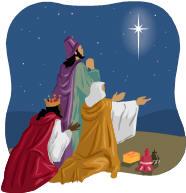
  • Our Kings of the Orient journeyed alone, without an entourage. What might be some of the reasons for their choice to “go it alone?”
  • What significance to you see in the gifts of gold, frankincense and myrrh?
  • Why do you think that mankind consistently places itself about God, a Creator who set in motion, the greatest time piece ever, the universe?

Discussion Challenge

  • How can we use the concept of the stars within our heavens to help people understand our God?


Present Imperfect

Deuteronomy 32:3-41NIV New International Version Translations
3 I will proclaim the name of the Lord. Oh, praise the greatness of our God! 4 He is the Rock, his works are perfect, and all his ways are just. A faithful God who does no wrong, upright and just is he.

img229Background

Chapter Contents are as follows: The song of Moses. (1,2) The character of God, The character of Israel. (3-6) The great things God had done for Israel. (7-14) The wickedness of Israel. (19-25) The judgments which would come upon them for their sins. (15-18) Deserved vengeance withheld. (26-38) God’s deliverance for his people. (39-43) The exhortation with which the song was delivered. (44-47) Moses to go up mount Nebo to die. (48-52)

Biblical Truth2http://www.christnotes.org/commentary.php?com=mhc&b=5&c=32

“He is a Rock.” This is the first time God is called so in Scripture. The expression denotes that the Divine power, faithfulness, and love, as revealed in Christ and the gospel, form a foundation which cannot be changed or moved, on which we may build our hopes of happiness. And under his protection we may find refuge from all our enemies, and in all our troubles; as the rocks in those countries sheltered from the burning rays of the sun, and from tempests, or were fortresses from the enemy. “His work is perfect:” that of redemption and salvation, in which there is a display of all the Divine perfection, complete in all its parts. All God’s dealings with his creatures are regulated by wisdom which cannot err, and perfect justice. He is indeed just and right; he takes care that none shall lose by him.

Items for Discussion

  • What visions come to mind when you hear our God called “The Rock.?”
  • If all God’s ways are just, then why do bad things happen to good people?
  • Why do good things happen to bad people?
  • Can mankind ever prove otherwise that God does no wrong? Why or why not?


Matthew 5:43-48
43 “You have heard that it was said, ‘Love your neighbor and hate your enemy.’ 44 But I tell you, love your enemies and pray for those who persecute you, 45 that you may be children of your Father in heaven. He causes his sun to rise on the evil and the good, and sends rain on the righteous and the unrighteous. 46 If you love those who love you, what reward will you get? Are not even the tax collectors doing that? 47 And if you greet only your own people, what are you doing more than others? Do not even pagans do that? 48 Be perfect, therefore, as your heavenly Father is perfect.

Background

Matthew collected much of what Jesus taught in the Hebrew language and wrote this gospel for the Jews. Matthew collected taxes, but he became one of Jesus’ disciples (Matthew 9:9). Matthew did not write the first book about Jesus’ life, however, this was written by Mark, using much of what Mark wrote. The Christian church put Matthew’s book first in the New Testament because Matthew often refers to the Old Testament.

Bible Truth3http://www.easyenglish.info/bible-commentary/matthew-lbw.htm

Verse 43: The Old Testament Law said that people should love their neighbors (Leviticus 19:18). There was no command to hate their enemies. But the Jews believed that they must hate God’s enemies. That would mean that they could hate their own personal enemies. To most Jews, ‘neighbor’ meant another Jew only.

Verse 44: People love in different ways. There are several different Greek words to show this. Parents love their children in a particular way. This is because they are part of a natural family. Friends love each other in a different way. But the word here is another word. This word describes how a Christian should act. He should want to be kind to other people. He may not like them. He may not want to love them. But he should still decide to love them. It may be difficult to do this. Jesus also said that Christians should pray for their enemies. God wants to help everyone and he wants to forgive everyone. Christians recognize that their enemies need God. And Christians know that God loves them too.

Verse 45: God’s gifts are for everyone. Both good and bad people receive God’s kindness. To be a true child of God means that a person will act like God the Father.

Verses 46-47: If Christians love only their friends, they are not acting like God. They would be no better than the men who collected taxes for the Romans. (People hated those men.) They would be no better than other people who do not believe God.

Verse 48: These words are like those in Leviticus 19:2: ‘You must be holy because I am holy. I am the Lord your God and I am holy.’ We should want to be like God. We need to please him in every part of our lives. To be ‘perfect’ means to have the same character that God has. If we want to become like God our Father, we must forgive people. We must forgive our enemies too. As Christians, we must love everyone. The word for “perfect” in Matthew 5:48 is “telios” and means whole, complete, mature.

Items for Discussion

  • Is Christ asking us for perfection in our relationship with people? What is He asking?
  • What makes Christians different from others and what makes Christianity distinct from any other religion?
  • What kind of prayers do you think Jesus was telling us to offer for those who persecute us?
  • Since perfection for mankind is not possible, how are we to pursue Christ’s perfection here on earth?

Discussion Challenge

  • The Church is to accept all sinners, to acknowledge that all will remain sinners – What then is the roll of the Christian Church in society?


The Courage to be Yourself

2 Samuel 22:32-341NIV New International Version Translations
32 For who is God besides the Lord? And who is the Rock except our God? 33 It is God who arms me with strength and keeps my way secure. 34 He makes my feet like the feet of a deer; he causes me to stand on the heights.

deerBackground2http://en.wikipedia.org/wiki/Books_of_Samuel

The two Books of Samuel (Hebrew: Sefer Shmuel ספר שמואל‎) are part of a series of Old Testament books (Joshua, Judges, Samuel and Kings) that constitute a theological history of the Israelites which affirms and explains God’s law for Israel under the guidance of the prophets. According to Jewish tradition the book was written by Samuel, with additions by the prophets Gad and Nathan; modern scholarly thinking is that the entire history (called the Deuteronomistic history) was composed in the period c.630–540 BCE by combining a number of independent texts of various ages.

Samuel begins with the prophet Samuel’s birth and God’s call to him as a boy. The story of the Ark of the Covenant that follows tells of Israel’s oppression by the Philistines, which brings about Samuel’s anointing of Saul as Israel’s first king. But Saul proves unworthy and God’s choice turns to David, who defeats Israel’s enemies and brings the Ark to Jerusalem. God then promises David and his successors an eternal dynasty.

Biblical Truth3http://www.easyenglish.info/bible-commentary/2samuel-lbw.htm

David described how wonderful God is. There is nobody else like him. He is the only real God. Then David described how this wonderful God helped him to win his battles. In these verses, David described how God prepared him for the battles and how God’s way is always perfect. Because God is strong, So, God could make David’s way perfect and make him strong. David had been a shepherd and grew up in the mountains so he knew the wildlife. His knowledge came from experience. He knew deer had special feet so that it can climb up and down the mountains and not slip on the rocks. Deer can even run and jump across the rocks. Because a mountain is a difficult place to walk let alone to run on, David knew that God had helped him so that he did not fail during his difficult times. David may have been referring to the times when Saul chased him and he had to escape and to live in the mountains.

Items for Discussion

  • How do life’s experiences help us build/create courage?
  • What do we learn from our failures?
  • David is bringing forward his life’s lessons in a way that helps others understand God – How can all of us do the same thing?


John 8:30-36
30 Even as he spoke, many believed in him. 31 To the Jews who had believed him, Jesus said, “If you hold to my teaching, you are really my disciples. 32 Then you will know the truth, and the truth will set you free.” 33 They answered him, “We are Abraham’s descendants and have never been slaves of anyone. How can you say that we shall be set free?” 34 Jesus replied, “Very truly I tell you, everyone who sins is a slave to sin. 35 Now a slave has no permanent place in the family, but a son belongs to it forever. 36 So if the Son sets you free, you will be free indeed.

Background

John’s Gospel was the last Gospel written, giving the Apostle the advantage to write about what had been misunderstood in previous Gospels. Since John had the advantage of being with Jesus for most of His ministry, John’s own writings include much of what he heard Jesus tell others.

John wanted his readers to believe ‘that Jesus is the *Messiah, God’s Son’ (John 20:31). Matthew, Mark and Luke recorded many miracles in their Gospels but John chose to record only seven miracles ( He called them ‘signs’). John felt that these miracles gave evidence that Jesus is God’s Son. John also emphasised that Jesus was human. John recorded that Jesus was tired (John 4:6). John also recorded that Jesus needed food (John 4:31). Jesus was very sad when his friend Lazarus died. At that time, Jesus cried (John 11:35). On another occasion, Jesus became angry with the people who did business in the *Temple (John 2:15). And John also recorded that Jesus was *thirsty (John 19:28). Jesus was not half human and half God. He was completely human and completely God, too.

John and the other disciples had lived with Jesus for about three years. John knew that Jesus was a real man. Also John had seen the miracles that Jesus did. John watched Jesus die on a cross. And John had also seen Jesus after he (Jesus) had become alive again. John knew that Jesus had defeated death and had seen Jesus rise up to heaven. So John knew that Jesus was a real man and is also God’s Son.

Bible Truth4http://www.easyenglish.info/bible-commentary/john-ma-lbw.htm

The Greek words for ‘*believed in him’ have a different meaning from the same phrase in verse 30. This is because the author wanted to distinguish between two groups of people. The people that he referred to in verse 30 were sincere. They genuinely trusted Jesus. But the people that the author referred to in verse 31 did not have such a genuine belief. They were similar to those people who believed just because of Jesus’ miracles. But Jesus did not trust those people, because they did not really want to obey him (John 2:23-25). Some people today are like this group of people in verse 31. They may say that they are *Christians. They may attend a church. But their faith is not very important to them. Jesus is not the most important person in their lives. They may agree with the things that Jesus taught. But they do not allow this to affect their attitudes or their behavior in their daily lives.

So Jesus spoke to this group of people next. He told them what to do if they really wanted to be his disciples. They could not just agree with his message. That was not enough. They had to obey him. They had to do what he said all the time. His words had to guide them in every part of their daily lives. How is it that we know the Truth? This knowledge comes when we follow Jesus. When we are freed from the results of our sins and the ultimate eternal death that befalls an unrepentant man, we are guided on a path to eternal life with God. We begin to see the ways in which we deceive ourselves. Through Christ’s example, we learn how Satan and other people can deceive us.

This is called freedom, a freedom that Jesus gives to us is real freedom. While we cannot do just what we want, it is the freedom to serve God. Then, we can become the kind of people that God created us to be. The people did not understand what Jesus meant since the Romans ruled them. Yet, they were not slaves. They were proud because they were God’s chosen people. However, Jesus pointed out that they were really slaves, not because of other people, but because of sin.

Sin controls people. It guides what they do. It affects how they behave. Because of this, it causes people to act as if they were its slaves. So if sin is so bad, how can we stop it? Only Jesus is God’s Son (John 1:18). Only Jesus can stop sin’s power over a person. Only He can say that they are not slaves anymore. And only Jesus has the authority to let them join God’s family. Jesus is pointing out that slaves do not belong to a family in the same way as a son. Slaves have no permanent place in the family. But a son is a real member of the family. A son knows that he belongs there always. And so, a son feels security about the future. When we accept Jesus as our Savior, we become part of God’s family.

Items for Discussion

  • Have you ever joined a group only to find that you could not become accepted be those who were already members?
  • Did that change over time and what or how did you help change their attitude toward you?
  • What are the responsibilities of being a family member? How does this differ between just joining a group as a member?
  • Why is Christ the only way to join God’s family?

Discussion Challenge

  • What is the responsibility of a Christian body (a church) to help visitors and new members become part of the family?


You Can Stop When You Wish

Proverbs 3:5-61NIV New International Version Translations
5 Trust in the Lord with all your heart and lean not on your own understanding; 6 in all your ways submit to him, and he will make your paths straight.

Drawing231Background

Proverbs are somewhat different in that the writings represent wisdom and sound advice, not commands. Solomon who is recorded in our Scriptures as the wisest man to ever live, is credited with passing on his wisdom in Proverbs. Some think that Solomon whose court had many children from his many wives and concubines wanted to leave a lasting legacy of his “good advice” for his heirs.

Chapter 3 presents both an argument to persuade us to be religious and for directions on how to accomplish this. Matthew Henry summarizes this chapter as follows:

  1. We must be constant to our duty to God because that is the way to be happy (v. 1-4).
  2. We must live a life of dependence upon God because that is the way to be safe (v. 5).
  3. We must keep up the fear of God because that is the way to be healthful (v. 7, v. 8).
  4. We must serve God with our resources because that is the way to be rich (v. 9, v. 10).
  5. We must bear our afflictions well because that is the way to set them aside (v. 11, v. 12).
  6. We must take pains to obtain wisdom because that is the way to gain wisdom, and to receive benefits from wisdom (v. 13-20).
  7. We must always govern ourselves by the rules of wisdom, of right reason and religion, because that is the way to be free of stress and concern (v. 21-26).
  8. We must do all the good we can, and not to hurt our neighbors, because mankind is both just and unjust, charitable and uncharitable, humble and haughty, yet all receive the blessings and judgment of God (v. 27-35)

Biblical Truth2http://www.easyenglish.info/bible-commentary/proverbs1-9-lbw.htm

These verses are to help us when we worry about the future. People trust many things. Some trust money. Some trust governments. Other people trust luck or fate. You might trust your family or your church. Sometimes all these things will fail. But God never fails. ‘God is like a fortress. We are safe with him, because He is strong. He is always with us. He protects us whenever there are troubles.’ (Psalm 46:1)

Perhaps you trust God sometimes, but not at other times. Some people become Christians, but do not trust God with their whole hearts. God is part of their lives, but only part. Maybe they want God at home, but not at work.
God wants our whole hearts. We should always desire His wisdom. He wants us to live as Christians both at work and at home. We must trust God, even when fife is difficult. God encourages us to trust him in everything.

God is wiser than we are. While we may know many things, God knows everything. We must not be proud. We must not imagine that we are ever wiser than God.

The future is unknown to us. But God knows the future so He is able to lead us. Only God can guide us. We should trust Him, and not our own ideas. So we should pray to God about our lives and ask for help and guidance.

Solomon reminds us that life is like a journey. We shall have many experiences. Some experiences will be good. Other experiences will be bad. Wherever we are, we should think about God. We should remember God’s place in our lives. If life is like a journey and only God knows the path, we must follow God since only He knows the right path. His way is the right way. And when we error, God will clear the path for us to follow.

Items for Discussion

  • How does a person build trust in something?
  • What is the impact of being observant on our trust in something?
  • So can a person build trust in God?
  • Why is human understanding always flawed?
  • Why is submission part of being trustful of our God?
  • How can God make our “paths straight?”


Philippians 4:13
13 I can do all this through him who gives me strength.

Background

The Philippians felt a very deep interest in the teachings of the Apostle Paul. This letter was written to confirm their faith, to encourage them to walk in the Gospel of Christ, to caution them against forcing their teachers to follow the Jewish religion, and to express gratitude for their Christian benefits. This letter is the only one, among those written by Paul, in which he expresses no censures to them. The letter is filled with positive feedback and serves to build their confidence.

Paul urges the Philippians to stand fast in the Lord. (1) He gives specific directions to some, and to all in general. (2-9) He expresses contentment in every condition of life. (10-19) He concludes with prayer to God the Father, and his usual blessing. (20-23).

Bible Truth

Contentment cannot be achieved by an effort of will. Humans cannot be free from every emotion. The Apostle Paul knew that to be content was a gift from God. Christ had given Paul the strength to accept both pleasant and difficult circumstances. We, therefore, can only become content within Christ.

Items for Discussion

  • How does “being content” create strength?
  • How does our world work against contentment?
  • In what way is one’s happiness tied to one’s ability to be content?
  • What is the impact of contentment on mankind’s sinful nature?
  • Does “being content” mean accepting mediocrity? Why or Why Not?
  • What is the greatest strength Christ gives us?

Discussion Challenge

  • How does the Christian Church evolve, work to become stronger and better, yet remain content to be led by Christ?
« Older posts Newer posts »

"For it is by grace you have been saved" - Ephesians 2:8-9  

Copyright: © 2001 - 2025 Lostpine

Translate »