Biblical wisdom, historical insight, and personal growth — all in one place

Category: Snapshots (Page 38 of 45)

On The Way

Isaiah 30:18-211NIV New International Version Translations
18 Yet the Lord longs to be gracious to you; therefore he will rise up to show you compassion. For the Lord is a God of justice. Blessed are all who wait for him! 19 People of Zion, who live in Jerusalem, you will weep no more. How gracious he will be when you cry for help! As soon as he hears, he will answer you. 20 Although the Lord gives you the bread of adversity and the water of affliction, your teachers will be hidden no more; with your own eyes you will see them. 21 Whether you turn to the right or to the left, your ears will hear a voice behind you, saying, “This is the way; walk in it.”

img212Background

Isaiah prophesied in the reigns of Uzziah, Jotham, Ahaz, and Hezekiah. He has been called the evangelical prophet, on account of his numerous and full prophesies concerning the coming and character, the ministry and preaching, the sufferings and death of the Messiah, and the extent and continuance of Christ’s kingdom. Under the veil of the deliverance from Babylon, Isaiah points to a much greater deliverance, which was to be effected by the Messiah; and seldom does he mention the one, without alluding at the same time to the other. Isaiah is often so enthralled with the prospect of the more distant deliverance that he often loses sight of that which was nearer, and dwells on the Messiah’s person, office, character, and kingdom.

The Jewish nation is rebuked for seeking aid from Egypt. Isaiah denounces their reliance on Egypt rather than on God because had prohibited such alliances with heathen nations. (1-7) There is judgment from God as a consequence of their contempt for His Word. (8-18) However, Isaiah reminds the Israelites of God’s mercies to his church. (19-26).

Biblical Truths2http://www.easyenglish.info/bible-commentary/isaiah28-33-gc-lbw.htm

Verses 18-19: The words “yet” and ‘therefore’ appear in verse 18. That is similar to verse 16, where ‘therefore’ appeared two times. In verse 16, those words have a connection with judgment and punishment. But after that, God will give to his people kindness and love (verse 18). Verses 18 and 19 start a new section about God’s love for his people. The word ‘kind’ in these verses really means ‘kind when he does not have to be kind’. Christians call that sort of kindness ‘grace’. And because the LORD gives grace, they describe him as ‘gracious’. These verses are probably about the LORD’s return to the Earth. They are a promise for the future!

Verse 20: We need bread and water every day. So, in the past, the Jews needed trouble and pain every day as a punishment. But things will be different! Their Teacher (another name for God) will not hide. He will answer their prayers (verse 19). Some, however, think that the word teacher should be plural, ‘teachers’. Then it would not be a name for God, but it would be a name for his prophets.

Verse 21: The LORD will be close enough so that people can see him with their eyes (verse 20). And he will be close enough so that they can hear him with their ears. The word ‘message’ here links with ‘message’ in verse 12. The people did not listen to it then. But in the future, they will listen. Here we read, ‘This is the way.’ It links with the first part of verse 11.

Items for Discussion

  • What are the ways that God directs our path through life?
  • In verse 21, we are told that any choice is the correct one – what criteria is assumed for this to be true?
  • Why is the “correct path” not always the easiest path?
  • How do we know that we are on the path for our life that God wants us to be on?
  • How can we be on a wrong path?


John 14:1-6
1 “Do not let your hearts be troubled. You believe in God; believe also in me. 2 My Father’s house has many rooms; if that were not so, would I have told you that I am going there to prepare a place for you? 3 And if I go and prepare a place for you, I will come back and take you to be with me that you also may be where I am. 4 You know the way to the place where I am going.” 5 Thomas said to him, “Lord, we don’t know where you are going, so how can we know the way?” 6 Jesus answered, “I am the way and the truth and the life. No one comes to the Father except through me.

Background3http://www.easyenglish.info/bible-commentary/john-ma-lbw.htm

In many ways, John’s Gospel is different from the other three Gospels. John did not include any stories about Jesus’ birth or his baptism. John only recorded 7 miracles, which he called ‘signs’. John did not include any parables but John recorded many long speeches that Jesus made. John knew about the other three Gospels. But when he read them, John had not yet written his Gospel. He was still just talking to people about his life with Jesus. John agreed that the other Gospels were true accounts.

Jesus was already preaching before King Herod put John the Baptist in prison. The other Gospels did not include an account of this. They recorded much about what Jesus did in Galilee. Also, they recorded what Jesus did in Jerusalem just before his death. But Jesus went to Jerusalem at other times, too. So John provided the facts that were missing from the other Gospels. He used information that they did not have. John’s account did not disagree with the other Gospels. It added different information, so that we can understand more about Jesus.

John also included many physical details. For example, the loaves that Jesus used to feed 5000 people were ‘barley loaves’ (John 6:9). He recorded the distance that the disciples had travelled across the lake (John 6:19). And he remembered how the smell of the perfume filled the house at Bethany (John 11:32). These details do not seem important. But they are memories of a person who was present at these events. So John’s Gospel is not just a spiritual book. It is the personal account of someone who had seen these events.

Bible Truth

Verses 1-3 There are only a few verses in the Bible that describe life after death. We do not know all the details about eternal life. But these verses contain wonderful promises about heaven. There will be room for everybody who believes in Jesus. And he will prepare a place for each one of us. Christians do not need to be afraid of death. This is because it will be the beginning of a wonderful new life with Jesus. We know that this is true. He has told us that it is true. We just have to believe him and to trust him. That is all that we need to do.

Verses 4-5 Thomas said the same thing that many people say. Thomas did not know the exact nature of the place where Jesus was going. So Thomas did not understand how he could get there. But Jesus was not referring to a physical journey. He was referring to a spiritual journey which leads to God.

Verse 6 · Jesus himself is the way that we follow to reach God. In other words, he is the only way that we can come to God. There is no other way. Some people say that other religions lead to God, too. This is not true. People cannot come to God by means of a religion, anyway. The only way to God is by means of a person: God’s Son, the Lord Jesus Christ. When we believe in him, we are following the way to eternal life with God. This way is available to every person on the earth. But each person is free to choose it or to reject it.

  • Jesus called himself ‘the truth’ because he does more than just to tell us the truth about God. He actually is that truth! ‘The truth’ is not an idea. It is a person: Jesus Christ, God’s Son.
  • Jesus is also ‘the life’. He does not just give us life. He shares his life, which is God’s life, with us. When we follow Jesus, we join our human lives with the eternal life of God’s Son.

These words of Jesus are very important. Jesus was not like any other leader of the world’s major religions. He was much more than a great moral teacher. He did not just point towards God. Jesus was ‘the way, the truth and the life’. And Jesus is still ‘the way, the truth and the life’ today.

Items for Discussion

  • Do you believe that Jesus is the only way to salvation? Why?
  • Why is the “way” so difficult?
  • Using the word “truth,” how does Jesus represent the truth about God?
  • What are the risks of a journey that is not based on truth?
  • In what ways does Jesus share His life with us today?
  • Why is so important for each of us to share our life with Christ with others?

Discussion Challenge

  • How does someone become a beacon that points to Christ?

The Great Awakening

Lamentations 3:52-581NIV New International Version Translations
52 Those who were my enemies without cause hunted me like a bird. 53 They tried to end my life in a pit and threw stones at me; 54 the waters closed over my head, and I thought I was about to perish. 55 I called on your name, Lord, from the depths of the pit. 56 You heard my plea: “Do not close your ears to my cry for relief.” 57 You came near when I called you, and you said, “Do not fear.” 58 You, Lord, took up my case; you redeemed my life.

img213Background2http://www.christnotes.org/commentary.php?com=mhc&b=25&c=0

Jeremiah is the author of the Lamentations. The book was not written until after the destruction of Jerusalem by the Chaldeans. Nebuchadnezzar II laid siege to Jerusalem, culminating in the destruction of the city and its temple in 587 BC. Lamentations leads us to consider sin as the cause of all our calamities, and under trials of life, to exercise submission, repentance, faith, and prayer, with the hope of promised deliverance through God’s mercy.

Biblical Truths

Verse 52 This is probably the prophet speaking of his personal sorrows.

Verse 53 It appears that Jeremiah’s life was threatened by his enemies casting him into a cistern, and covering the opening with a stone.

Verse 54 Is a figurative expression for great mental trouble.

Verses 55-66 Represent a prayer for deliverance and for vengeance upon his enemies.

  • Lamentations 3:55: Out of the low dungeon – Jeremiah 38:6 adds more: “6 So they took Jeremiah and put him into the cistern of Malkijah, the king’s son, which was in the courtyard of the guard. They lowered Jeremiah by ropes into the cistern; it had no water in it, only mud, and Jeremiah sank down into the mud.”
  • Lamentations 3:56: Jeremiah rejoices that God hears his prayer – He sends Ebedmelech to deliver pull him out of the cistern.
  • Lamentations 3:58: God now appears as the prophet‘s next of kin, pleading the lawsuits of his soul, i. e. the controversies which concern his salvation. and rescuing his life, defending Jeremiah against his enemies.

Items for Discussion

  • Why does it take a crisis to wake people up and call on God for help?
  • If God is the judge, what type of attorney and qualifications/experience would be most comforting to you?
  • Why can’t we defend ourselves before God?
  • Why is Christ the perfect attorney for mankind?
  • What kinds of witnesses would you like to have who would testify on your behalf?


John 20:1-18
1 Early on the first day of the week, while it was still dark, Mary Magdalene went to the tomb and saw that the stone had been removed from the entrance. 2 So she came running to Simon Peter and the other disciple, the one Jesus loved, and said, “They have taken the Lord out of the tomb, and we don’t know where they have put him!” 3 So Peter and the other disciple started for the tomb. 4 Both were running, but the other disciple outran Peter and reached the tomb first. 5 He bent over and looked in at the strips of linen lying there but did not go in. 6 Then Simon Peter came along behind him and went straight into the tomb. He saw the strips of linen lying there, 7 as well as the cloth that had been wrapped around Jesus’ head. The cloth was still lying in its place, separate from the linen. 8 Finally the other disciple, who had reached the tomb first, also went inside. He saw and believed. 9 (They still did not understand from Scripture that Jesus had to rise from the dead.) 10 Then the disciples went back to where they were staying. 11 Now Mary stood outside the tomb crying. As she wept, she bent over to look into the tomb 12 and saw two angels in white, seated where Jesus’ body had been, one at the head and the other at the foot. 13 They asked her, “Woman, why are you crying?” “They have taken my Lord away,” she said, “and I don’t know where they have put him.” 14 At this, she turned around and saw Jesus standing there, but she did not realize that it was Jesus. 15 He asked her, “Woman, why are you crying? Who is it you are looking for?” Thinking he was the gardener, she said, “Sir, if you have carried him away, tell me where you have put him, and I will get him.” 16 Jesus said to her, “Mary.” She turned toward him and cried out in Aramaic, “Rabboni!” (which means “Teacher”). 17 Jesus said, “Do not hold on to me, for I have not yet ascended to the Father. Go instead to my brothers and tell them, ‘I am ascending to my Father and your Father, to my God and your God.’” 18 Mary Magdalene went to the disciples with the news: “I have seen the Lord!” And she told them that he had said these things to her.

Background

This is probably the best known story of our Lord and Saviour, his resurrection after He was crucified. The Apostle John was there. He is giving us a personal accounting of what happened. In these verses we learn that Christ’s tomb is found empty. (1-10) Christ appears to Mary. (11-18) He appears to the disciples. (19-25) The unbelief of Thomas. (26-29). It is in Chapter 20 that John tells us why he wrote the Gospel, John wanted his readers to believe ‘that Jesus is the Messiah, God’s Son’ (John 20:31).

Bible Truth3http://www.easyenglish.info/bible-commentary/john-ma-lbw.htm

Verse 1 This is the second reference to Mary from Magdala in John’s Gospel. The other Gospels tell more about her. Jesus made 7 evil spirits leave her. She became his loyal follower. She was probably the leader of the group of women who travelled with Jesus and his disciples. These women paid for the things that they all needed. They looked after Jesus and his disciples in a practical way. Mary from Magdala was present when Jesus died on the cross. The other Gospels tell us that some other women went with Mary to Jesus’ grave.
Verses 2-10 Mary was not expecting Jesus to become alive again. When she saw the open entrance, it upset her. She thought that somebody had moved the stone in order to remove Jesus’ body. So she ran to Peter and the other disciple to tell them. They ran to the grave themselves to see what had happened. The other disciple, ‘whom Jesus loved’, is probably John himself. See John 13:23. When he arrived, the other disciple did not rush inside. He just looked in. He saw the position of the cloths. It seemed as if Jesus’ body had just passed through them. If somebody had stolen the body, they would not have left the cloths like this. But Peter rushed inside first. And he did not seem to realize the importance of these details.

When the other disciple saw the position of the cloths, he ‘believed’ (verse 8). He did not believe that Jesus’ spirit had gone to heaven. This disciple believed that Jesus’ body had actually become alive again. But it was a new kind of life, because his body was able to pass through material. It was not the same as when Lazarus became alive again. Lazarus’s body was the same as before. And his body would become old and he would die in the end. But Jesus’ body was not the same as it was before. He would never die again. Both Jesus and the scriptures said that after his death, Jesus would become alive again. But the disciples had not realized what this meant before. They had not expected the grave to be empty. But the evidence for Jesus’ resurrection was in the scriptures and in the empty grave. The other disciple examined the evidence and he believed! Jesus’ resurrection proved that he was really God’s Son. He had defeated even death. For Christians, death is not the end, but the beginning of a new life with God.This passage is strong proof that the story is a true record of real events. John recorded that a woman first saw Jesus alive again. If he had made up the story, he would not have written this. This was because, legally, there had to be two male witnesses to an event. Then people would believe that it had really happened. They did not allow female witnesses in a court of law.

Verses 11-16 Mary was crying. And she could not stop. Even when she saw the angels, she did not stop. She did not understand what had happened. She had expected to see Jesus’ body in the grave. But it had gone. She certainly did not expect to see Jesus alive. Perhaps her tears made it difficult to see. Perhaps it was still dark. Whatever the reason, she did not recognize Jesus until he said her name. Then she recognized him. He used the Aramaic form of her name. And she answered him in Aramaic. It was the familiar language that Jesus and his disciples spoke. The author John wrote his Gospel in Greek. But he recorded the actual Aramaic words that Jesus and Mary used. This emphasized how personal this meeting was. John was very careful to include these details. He was repeating the report of somebody who was actually present there. Jesus knows us all personally. He knows each one of us by our name. When we pray, he speaks to us in our mind and our spirit. Like Mary, we will recognize his voice (John 10:1-6). And we must answer him. He is our Teacher, our Lord, and our King.

Verses 17-18 Jesus had not become alive again so that he could remain on the earth. He had not returned to life so that he could stay with his disciples. He knew that, soon, he had to return to heaven. Then the Holy Spirit could come, as Jesus had promised (John 14:15-31). So he could not stay with Mary in the garden. Mary had to leave too. She had an important message to give to the disciples. Jesus was alive! She had seen him. Jesus had called his disciples ‘friends’ rather than ‘servants’ (John 15:14-15). But in verse 17, he called them ‘brothers’. Because of his death and resurrection, they had become God’s children. God was their Father, too. But he was their Father in a different way from the way that he was Jesus’ Father. This is because Jesus, the Son, has always existed with his Father and the Holy Spirit. Jesus is also God. But everybody who believes in him receives the right to be called God’s child. God adopts such people into his family.

Items for Discussion

  • If Good Friday represents the gift of forgiveness from God, what should Easter, the day of resurrection represent to all humans?
  • What evidence have you personally found in Scriptures that Christ overcame death?
  • Why is it not possible to understand God without understanding who Christ is?
  • Which do you personally consider the greater of gifts, the forgiveness of sin (the cross) or the proof of everlasting life (the resurrection)?

Discussion Challenge

  • How will you celebrate Easter so that your friends, family and neighbors get to know Christ better? 

The Great Omission

Jeremiah 26:1-31NIV New International Version Translations
1 Early in the reign of Jehoiakim son of Josiah king of Judah, this word came from the Lord: 2 “This is what the Lord says: Stand in the courtyard of the Lord’s house and speak to all the people of the towns of Judah who come to worship in the house of the Lord. Tell them everything I command you; do not omit a word. 3 Perhaps they will listen and each will turn from their evil ways. Then I will relent and not inflict on them the disaster I was planning because of the evil they have done.

img214Background2http://www.christnotes.org/commentary.php?com=mhc&b=24&c=26

Jeremiah was by birth a priest, and lived in Anathoth, a village in the tribe of Benjamin, about three miles north of Jerusalem. His call to the prophetic office came in the 13th year of Josiah. It was a time when danger was once again gathering around the little kingdom of Judah, and to Jeremiah was assigned a more directly political position than to any other of the prophets.

Chapter 26 of Jeremiah, the Prophet, contains: The destruction of the temple and city foretold. (1-6) Jeremiah’s life is threatened. (7-15) He is defended by the elders. (16-24).

Biblical Truths

If we are to be God’s ambassadors, we must not seek to please men, or to save ourselves from harm. Our God is gracious and waits for us. Jeremiah is telling the Israelites that if they continue in their disobedience, it will ruin their city and temple.

Items for Discussion

  • Why do you think that God tells Jeremiah to go to the “House of the Lord” and tell those who he finds about what God commands? Why not everyone?
  • What types of extra expectations does God place on those who proclaim Him as their God?
  • What do you think about God’s statement that He inflicts disaster in response to evil behavior?
  • Can you speculate what the evil ways were at that time in history and whether those types of behavior still exist today?
  • What is the key puzzle piece in this story? What should we learn today from it?


Matthew 12:38-41
38 Then some of the Pharisees and teachers of the law said to him, “Teacher, we want to see a sign from you.” 39 He answered, “A wicked and adulterous generation asks for a sign! But none will be given it except the sign of the prophet Jonah. 40 For as Jonah was three days and three nights in the belly of a huge fish, so the Son of Man will be three days and three nights in the heart of the earth. 41 The men of Nineveh will stand up at the judgment with this generation and condemn it; for they repented at the preaching of Jonah, and now something greater than Jonah is here.

Background

Matthew wrote his Gospel specifically for the Jewish people. This book contains much of what Jesus taught. So the early Christians gave Matthew’s name to the whole book. Matthew collected taxes, but he became one of Jesus’ 12 special friends (Matthew 9:9). It is not the first book written about Jesus’ life. Mark’s Gospel was first and Matthew uses much of what Mark wrote. Matthew’s Gospel is first because Matthew often refers to the Old Testament.

Bible Truth3http://www.studylight.org/com/bnb/view.cgi?bk=39&ch=12

See Luke 11:16, Luke 11:29-32. A “sign” commonly signifies a miracle – that is, a sign that God was with the person or had sent them. Luke adds that this was done “tempting him;” that is, trying him, doubting if he had the power to do it. If these persons had been present with Him for any considerable time, they had already seen sufficient proofs that He was what who He claimed to be. They might have been, however, those who had recently come to know Jesus, and then the emphasis must be laid on “we” – we, as well as the others, would see proof that you are the Christ. In either case it was a temptation. If they had not seen him work a miracle, they still should have believed it by the testimony of others.

Items for Discussion

  • How would you tell if you saw a miracle?
  • The Jews wanted dramatic signs – What is the problem with always wanting to see God in these dramatic ways?
  • Should we believe that “literally, Jonah spent three days in the belly of a whale?
  • Luke describes this event differently, he is not referencing Jonah in a whale but the fact that Jesus will be in the belly of the earth. Jesus was buried only for two days, not three like Jonah. So what could Jesus have meant by His comparison to the sign being Jonah?4Jonah was the sign to the Israelites and “Jesus is God’s sign” to the world now – William Barclay
  • How should we respond to Jesus being our “miracle or sign?”

Discussion Challenge

  • What is our role in helping those around us understand that it is “Christ” who we should be observing to understand our God and that we cannot leave Him out?

Glimpses of Truth

Isaiah 45:18-191NIV New International Version Translations
18 For this is what the Lord says—he who created the heavens, he is God; he who fashioned and made the earth, he founded it; he did not create it to be empty, but formed it to be inhabited—he says: “I am the Lord, and there is no other. 19 I have not spoken in secret, from somewhere in a land of darkness; I have not said to Jacob’s descendants, ‘Seek me in vain.’ I, the Lord, speak the truth; I declare what is right.

img215Background2http://www.christnotes.org/commentary.php?com=mhc&b=23&c=0

Isaiah prophesied in the reigns of Uzziah, Jotham, Ahaz, and Hezekiah. He has been well called the evangelical prophet, on account of his numerous and full prophesies concerning the coming and character, the ministry and preaching, the sufferings and death of the Messiah, and the extent and continuance of his kingdom. Under the veil of the deliverance from Babylon, Isaiah points to a much greater deliverance, which was to be effected by the Messiah; and seldom does he mention the one, without alluding at the same time to the other; Isaiah is so often enthralled with the prospect of the more distant and permanent deliverance that he often loses sight of that which is nearer to him. It is through Isaiah that we learn the Messiah’s person, office, character, and kingdom.

Biblical Truths

There is a world without end; and it will treat us with happiness or pain. However, in our world is the Lord we serve and trust. Regardless of how we are treated by the world, He remains God alone. All that God has said is plain, satisfactory, and just. As God in his Word calls us to seek after Him, so God never denies us the opportunity to believe in our prayers, or to be disappointed in our hope. God promises us that He will grant us sufficient grace and comfort and provide satisfaction to our soul regardless of how the world treats us.

Items for Discussion

  • What is truth?
  • Is it absolute?
  • What happens if our faith in God is not “absolute?”
  • What are the other God’s that our world wants us to believe in?
  • God has told us who He is – Why is it important for us to know Him?


Romans 12:1-12
1 Therefore, I urge you, brothers and sisters, in view of God’s mercy, to offer your bodies as a living sacrifice, holy and pleasing to God—this is your true and proper worship. 2 Do not conform to the pattern of this world, but be transformed by the renewing of your mind. Then you will be able to test and approve what God’s will is—his good, pleasing and perfect will. 3 For by the grace given me I say to every one of you: Do not think of yourself more highly than you ought, but rather think of yourself with sober judgment, in accordance with the faith God has distributed to each of you. 4 For just as each of us has one body with many members, and these members do not all have the same function, 5 so in Christ we, though many, form one body, and each member belongs to all the others. 6 We have different gifts, according to the grace given to each of us. If your gift is prophesying, then prophesy in accordance with your faith; 7 if it is serving, then serve; if it is teaching, then teach; 8 if it is to encourage, then give encouragement; if it is giving, then give generously; if it is to lead, do it diligently; if it is to show mercy, do it cheerfully. 9 Love must be sincere. Hate what is evil; cling to what is good. 10 Be devoted to one another in love. Honor one another above yourselves. 11 Never be lacking in zeal, but keep your spiritual fervor, serving the Lord. 12 Be joyful in hope, patient in affliction, faithful in prayer.

Background3http://www.easyenglish.info/bible-commentary/romans-lbw.htm

Rome was the most important city in the world at the time of Paul. It had a vast army controlling all the countries that surround the Mediterranean Sea. The rulers of Rome were extremely powerful and wealthy and, as a result, employed many people. Paul had not visited Rome at the time when he wrote this letter. While Paul wrote most of his letters to churches that he himself had established, the church at Rome was different. There were already many Christians in Rome long before Paul arrived there.

We find the following in Paul’s Letter to the Romans:

  • Paul dictated his letter to Tertius (Romans 16:22). Paul wrote it during his stay in Corinth, probably about 57 A.D..
  • Paul established churches in many cities. But he was careful not to upset anyone else’s work (Romans 15:20). However, the church in Rome was not the result of the work of any one particular person. So Paul would not be upsetting anyone’s work if he visited Rome. And for many years, Paul had wanted to visit the Christians in Rome. He had completed his work in the east. There were elders (leaders in the church) to take care of the new churches. Paul wanted to visit Rome on his way to Spain (Romans 15:23-24).

There were several reasons for the letter:

  1. to prepare the church in Rome for his visit.
  2. to give a clear explanation of the gospel.
  3. to give the truth about the Christian faith to any Christians in Rome who had false ideas about it.
  4. to give practical advice about how Christians should behave towards each other (chapters 14-15).
  5. to give practical advice about how Christians should behave towards their rulers (Romans 13:1-7).
  6. to unite Jewish and Gentile Christians. In many churches, there had been serious arguments between Jewish Christians and Gentile Christians. The Jewish Christians said that God had given his law in the Bible. So they told the Gentile Christians to obey it. But the Gentile Christians said that God had given them freedom. So, they did not want to obey any Jewish rules or traditions.
  7. to urge the Christians in Rome to help Paul in his work. He might need their help in order to continue his journey to Spain (Romans 15:24). And he needed the Christians in Rome to support and to encourage him by their prayers (Romans 15:30-32).

Bible Truth4http://www.christnotes.org/commentary.php?b=45&c=12&com=mhc

The Apostle Paul appeals to the Romans, as his brethren in Christ, by the mercies of God, to present their bodies as a living sacrifice to Him. This is a powerful appeal. We receive from the Lord every day the fruits of His mercy. We are to render ourselves; all we are, all we have, all we can do: and after all, what return is it for such very rich blessings?

Conversion and sanctification are the renewing of the mind; a change, not of the substance, but of the qualities of the soul. The progress of sanctification, dying to sin more and more, and living to righteousness more and more, is the carrying on this renewing work, until it is perfected in glorification. The great enemy to this renewal is conformity to this world. The work of the Holy Spirit first begins in understanding, and is carried on to the will, affections, and conversation, until there is a change of the whole body into the likeness of God, in knowledge, righteousness, and true holiness. Thus, to be a godly person, is to give up ourselves to God.

Pride is a sin in us by nature; we need to be cautioned and armed against it. All the saints make up one body in Christ, who is the Head of the body, and the common Center of their unity. In the spiritual body, some are fitted for and called to one sort of work; others for another sort of work. We are to do all the good we can, one to another, and for the common benefit. If we duly thought about the powers we have, and how far we fail properly to improve them, it would humble us. Whatever our gifts or situations may be, let us try to employ ourselves humbly, diligently, cheerfully, and in simplicity; not seeking our own credit or profit, but the good of many, for this world and that which is to come.

The professed love of Christians to each other should be sincere, free from deceit, and unmeaning and deceitful compliments. Depending on Divine grace, we must detest and dread all evil, and love and delight in whatever is kind and useful. We must not only do that which is good, but it must become part of us. All our duty towards one another is summed up in one word, love. This denotes the love of parents to their children; which is more tender and natural than any other; unforced, unconstrained. And love to God and man, with zeal for the gospel, will make the wise Christian diligent in all his worldly business, and in gaining superior skill.

God must be served with spirit but under the influences of the Holy Spirit. Christ, therefore, is honored by our hope and trust in Him, especially when we rejoice in that hope. He is served, not only by working for Him, but by sitting still quietly, when he calls us to suffer. Patience for God’s sake, is to be truly holy. Those that rejoice in hope, are likely to be patient in tribulation. We should not be cold in the duty of prayer, or grow weary of it. Not only must there be kindness to friends and brethren, but Christians must not harbor anger against enemies. It is but mock love, which rests in words of kindness, while our brethren need real supplies, and it is in our power to furnish them.

Items for Discussion

  • We are called to love our enemies – How do you love those who seek to hurt us?
  • What is the difference between tolerance and anger?
  • What can you tell about a person’s character who is prideful of themselves and what they have accomplished?
  • How should love and justice work together?
  • In what way does hope help to overcome the pains and suffering of this world?
  • Do you know your spiritual gifts? How did you find them?
  • How are we called to use our gifts?

Discussion Challenge

  • How does a church, congregation or family help itself understand that “God is Truth?”

Stirring Things Up

Psalm 671NIV New International Version Translations
1 May God be gracious to us and bless us and make his face shine on us—2 so that your ways may be known on earth, your salvation among all nations. 3 May the peoples praise you, God; may all the peoples praise you. 4 May the nations be glad and sing for joy, for you rule the peoples with equity and guide the nations of the earth. 5 May the peoples praise you, God; may all the peoples praise you. 6 The land yields its harvest; God, our God, blesses us. 7 May God bless us still, so that all the ends of the earth will fear him.

img216Background2http://www.easyenglish.info/psalms/psalm067-taw.htm

We do not know who wrote this Psalm, or when. It uses two ideas from the Old Testament, one is from the Book of Numbers. The other is from the Book of Genesis. Here is Numbers 6:24-26. They are words that God spoke to Moses, for Moses to tell the people.

Who does God (and Moses) mean by “you” in these verses from Numbers is the question for today? In the beginning, it was the Israelites, the people that Moses led from Egypt to the Promised Land of Israel. But if we read Genesis 12:3 we find that God said to Abram (Abraham), “Because of you I will bless all the families on the earth”. This means everybody! So Christians believe that in Psalm 67 God is saying, “When people see the good things that I have done for my people, they will become my servants too!” Therefore, we should consider Psalm 67 a prayer for the enlargement of Christ’s kingdom.

Biblical Truths3http://www.christnotes.org/commentary.php?com=mhc&b=19&c=67

All our happiness comes from God’s mercy; therefore the first thing prayed for is, God be merciful to us, to us sinners, and pardon our sins. Pardon is conveyed by God’s blessing, and secured in His blessing. If we, by faith, walk with God, we may hope that his face will shine on us. The psalmist passes on to a prayer for the conversion of the Gentiles, which shows that the Old Testament saints desired that their advantages might also be enjoyed by others. And many Scripture prophecies and promises are wrapped up in prayers: the answer to the prayer of the church is as sure as the performance of God’s promises.

The joy wished to the nations, is a holy joy. Let them be glad that by His providence the Lord will overrule the affairs of earthly kingdoms; even the kingdoms of this world will become the kingdom of the Lord, and of his Christ. Then is declared a joyful prospect of all good when God does this. The success of the gospel brings outward mercies with it; righteousness exalts a nation. The blessing of the Lord sweetens all our creature-comforts to us, and makes them comforts indeed. All the world will be brought to worship Him. When the Gospel begins to spread, it will go forward more and more, until it reaches to the ends of the earth.

It is good to cast our lot with those that are the blessed of the Lord. If nothing had been spoken in Scripture respecting the conversion of the heathen, we might think it vain to attempt so as a hopeless work. But when we see with what confidence it is declared in the Scriptures, we may engage in missionary labors, assured that God will fulfill His own word. People cannot learn unless they are taught. We are to go forward in the strength of the Lord, and look to Him to accompany God’ Word and the Holy Ghost. It will be then that Satan’s kingdom will be destroyed, and the kingdom of our Redeemer established.

Items for Discussion

  • What exactly does the Psalmist tell us will reach to the ends of the earth? Why is this significant?
  • What are the ways that knowledge of our God spread around the world?
  • How does Satan try to stop this?
  • What should our role be in God’s plans?


John 5:1-9
1 Sometime later, Jesus went up to Jerusalem for one of the Jewish festivals. 2 Now there is in Jerusalem near the Sheep Gate a pool, which in Aramaic is called Bethesda and which is surrounded by five covered colonnades. 3 Here a great number of disabled people used to lie—the blind, the lame, the paralyzed and they waited for the moving of the waters. 4 From time to time an angel of the Lord would come down and stir up the waters. The first one into the pool after each such disturbance would be cured of whatever disease they had.4Some manuscripts include here, wholly or in part, this section and some do not. 5 One who was there had been an invalid for thirty-eight years. 6 When Jesus saw him lying there and learned that he had been in this condition for a long time, he asked him, “Do you want to get well?” 7“Sir,” the invalid replied, “I have no one to help me into the pool when the water is stirred. While I am trying to get in, someone else goes down ahead of me.” 8 Then Jesus said to him, “Get up! Pick up your mat and walk.” 9 At once the man was cured; he picked up his mat and walked. The day on which this took place was a Sabbath,

Background5http://www.christnotes.org/commentary.php?com=mhc&b=43&c=0

The apostle and evangelist, John, seems to have been the youngest of the twelve. He was especially favored with our Lord’s regard and confidence, so as to be spoken of as the disciple whom Jesus loved. He was very sincerely attached to his Master. He exercised his ministry at Jerusalem with much success, and outlived the destruction of that city, agreeably to Christ’s prediction, John 21:22. History relates that after the death of Christ’s mother, John resided chiefly at Ephesus. Towards the close of Domitian’s reign he was banished to the isle of Patmos, where he wrote his Revelation. On the accession of Nerva, he was set free, and returned to Ephesus, where it is thought he wrote his Gospel and Epistles, about 97 A.D., and died soon after.

The design of this Gospel appears to be to convey to the Christian world, just a summary of the real nature, office, and character of that Divine Teacher, who came to instruct and to redeem mankind. For this purpose, John was directed to select for his narrative, those passages of our Savior’s life, which most clearly displayed His Divine power and authority; and those of His discourses, in which he spoke most plainly of His own nature, and of the power of His death, as an atonement for the sins of the world. By omitting, or only briefly mentioning, the events recorded by the other apostles, John gave testimony that their narratives are true, and left room for the doctrinal statements already mentioned, and for particulars omitted in the other Gospels, many of which are exceedingly important.

Bible Truth6http://www.christnotes.org/commentary.php?b=43&c=5&com=mhc

We are all by nature impotent folk in spiritual things, blind, tired and withered in spirit; but God has made full provision for our cure, if we want it. An angel went down and stirred the water; and whatever disease it was, this water cured it. However, the cure was given only to the first person that stepped in. This teaches us to be careful, that we let not an opportunity to slip by since it may never return. The man had lost the use of his limbs thirty-eight years. Christ singled this man out from the rest of the people at the pool. Those long in affliction, may comfort themselves that God keeps account of our prayers for a very long time.

Observe, this man speaks of the unkindness of those about him, but does so without any anger. As we should be thankful, so we should be patient. Our Lord Jesus cures him, although the man neither asked or thought of it. Arise, and walk. God’s command, Turn and live. What a joyful surprise to the poor invalid, to find himself of a sudden so strong, so able to help himself. So must the proof of our spiritual cure be that we rise and walk in the Spirit. Christ has healed our spiritual diseases so let us go wherever He sends us, and take up whatever He lays upon us; and walk before Him.

Items for Discussion

  • What do you think about the fact that the pool at Bethesda and the Angel in the Pool had been coming long before Jesus entered the picture?
  • What lesson do you think God was teaching us by only curing the first person into the pool?
  • What lesson was Jesus teaching us by curing the man on the Sabbath?
  • Why do you think that Jesus asked the man a very obvious question, “Do you want to get well?”
  • Are there “Pools of Bethesda” in our world today?

Discussion Challenge

  • What is the role of the Church today with regard to people like the man at the pool?

Bridge or Barrier

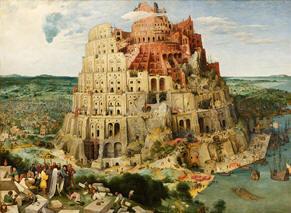
Genesis 11:1-91NIV New International Version Translations
1 Now the whole world had one language and a common speech. 2 As people moved eastward, they found a plain in Shinar and settled there. 3 They said to each other, “Come, let’s make bricks and bake them thoroughly.” They used brick instead of stone, and tar for mortar. 4 Then they said, “Come, let us build ourselves a city, with a tower that reaches to the heavens, so that we may make a name for ourselves; otherwise we will be scattered over the face of the whole earth.” 5 But the Lord came down to see the city and the tower the people were building. 6 The Lord said, “If as one people speaking the same language they have begun to do this, then nothing they plan to do will be impossible for them. 7 Come, let us go down and confuse their language so they will not understand each other.” 8 So the Lord scattered them from there over all the earth, and they stopped building the city. 9 That is why it was called Babel—because there the Lord confused the language of the whole world. From there the Lord scattered them over the face of the whole earth.

img217Background2http://www.christnotes.org/commentary.php?com=mhc&b=1&c=0

Genesis is a name taken from the Greek, and signifies “the book of generation or production;” it is properly so called, as containing an account of the origin of all things. There is no other history so old. There is nothing in the most ancient book which exists that contradicts it; while many things recorded by the oldest heathen writers, or to be traced in the customs of different nations, confirm what is related in the book of Genesis. Chapter 11 covers the distinction between the sons of God and the sons of men when men began to multiply, their presumptuous design, to build a city and a tower, ver. 1 – 4, the dispersion of the sons of men at Babel, ver. 1 – 9 and the righteous judgment of God upon them in His disappointment by confounding their language, and so scattering them, ver. 5 – 9.

Biblical Truths3http://www.easyenglish.info/bible-commentary/genesis-mwks1-lbw.htm

All the people spoke the same language because they were all Noah’s descendants and they wanted to live together. They were proud. They wanted to be more powerful so they built a great city. But God had not told people to live together. He told them to move across the world (Genesis 9:1) so that the whole world would have inhabitants. So the people were not obeying God’s commands. In fact, they were trying to oppose God. God did not allow them to continue the construction of that city. He confused their languages and he ended their unity. They could not talk with each other. So they had to move to different places.

In verse 5, the Lord shows how great He is. People thought that they could reach up to the sky. Because they thought that God was in the sky. But God came down to the earth to see their tower. When we compare the tower with God, we quickly see it was very small and not very important. It is God who makes people great. We cannot make ourselves great in God’s opinion. People think that they are great and powerful. But God is in control. He confused their language and he scattered them. So, he stopped the people before they could become more evil. He stopped them before they could make more trouble.

Items for Discussion

  • Why was God angry that the people were attempting to build a tower to reach Him?
  • What were the advantages to God had the people obeyed His original command to disperse throughout the world?
  • In what way is the role of the Christian Church the same today?
  • How has the role of the Church changed?
  • How does God “confound the plans of cities and countries” today in order to see His plan is being followed?
  • Why couldn’t the people see the futility in their plan to build a tower?
  • Are there things we do today in our society that are as futile?


Acts 2:1-12
1 When the day of Pentecost came, they were all together in one place. 2 Suddenly a sound like the blowing of a violent wind came from heaven and filled the whole house where they were sitting. 3 They saw what seemed to be tongues of fire that separated and came to rest on each of them. 4 All of them were filled with the Holy Spirit and began to speak in other tongues as the Spirit enabled them. 5 Now there were staying in Jerusalem God-fearing Jews from every nation under heaven. 6 When they heard this sound, a crowd came together in bewilderment, because each one heard their own language being spoken. 7 Utterly amazed, they asked: “Aren’t all these who are speaking Galileans? 8 Then how is it that each of us hears them in our native language? 9 Parthians, Medes and Elamites; residents of Mesopotamia, Judea and Cappadocia, Pontus and Asia, 10 Phrygia and Pamphylia, Egypt and the parts of Libya near Cyrene; visitors from Rome 11 (both Jews and converts to Judaism); Cretans and Arabs—we hear them declaring the wonders of God in our own tongues!” 12 Amazed and perplexed, they asked one another, “What does this mean?”

Background4http://www.easyenglish.info/bible-commentary/acts-lbw.htm & 5http://www.biblegateway.com/resources/commentaries/IVP-NT/Acts/Pentecost

Most people agree that Luke wrote Acts. In Acts, he told how the good news about Jesus Christ spread. It spread to the world beyond Jerusalem. Luke was a Gentile and he was a doctor (Colossians 4:14). He worked with Paul and he travelled with Paul (Philemon 1:24). Luke was very careful about what he wrote. He knew that some things were true. And he wrote only those things. At the beginning of his Gospel, he wrote this. ‘You have heard many things. I am writing this account so that you will know the truth about them’ (Luke 1:4). In Acts, he continued with this account. Luke was travelling with Paul. Luke wrote about what happened during that time (Acts 16:10-17; 20:5-21:18; 27:1-28:16). In these verses, he used ‘we’ instead of ‘they’ or ‘he’. So, we know that Luke was there at those times. After Luke had arrived in Jerusalem (Acts 21:17), he stayed in Judea. He stayed there for two years. Then he left to travel to Rome (Acts 27:1). He went to Rome with Paul. While Luke was in Judea, he probably spoke to other witnesses. They told him about the other events that he describes.

Luke had several reasons why he wrote Acts. People were telling false stories about Christians. They were afraid that Christians wanted to make trouble. Luke wanted the Roman rulers to know that this was not true. Christians helped other people to behave well. He wanted to show that to the rulers. It was good for the Roman government. Luke wrote about many miracles. God gave to Christians the power to cure people, for example. Also, God rescued Peter from prison by a miracle. So, anyone who opposed the Christians was opposing God. He also wanted to show to the Jews that the Christian faith was not a separate religion. Instead, it made Judaism complete, because Jesus is the Messiah. However, Luke had one main reason why he wrote this book. The good news about Jesus had travelled from Jerusalem to Rome. Luke wanted to record how that happened. Rome was the most important city in the world. Luke showed that the gospel was for all people in every nation. It was for Jews and it was also for Gentiles.

In the twentieth century Pentecost has become a source of confusion, embarrassment or division for Christians, even as it has become a curiosity, if not an object of ridicule, for non-Christians. What is repeatable–and what is unrepeatable–of that miraculous outpouring of the Spirit and speaking in tongues? Luke helps us sort through our various reactions so Pentecost can become the comfort and the challenge it was meant to be. Peter’s speech speaks to the cause and significance of the event.

Bible Truth6http://www.easyenglish.info/bible-commentary/acts-lbw.htm

Verse 1 The day called Pentecost was an important day for the Jews. It came 50 days after the Passover. Many Jews had grown plants for food. Then on Pentecost day, they gave the best ones to God. They also remembered how God had given the Law to them. On this special Pentecost, God gave the Holy Spirit. Now, the Holy Spirit lives in every Christian. The Holy Spirit helps us to obey God’s rules. The Holy Spirit helps us to do the things that God wants.

Verse 2 Everyone knew when the Holy Spirit came. Luke says that it was ‘as if a very strong wind was blowing’. In the Bible, writers often use the word ‘wind’ to describe the Spirit’s power. (Look at Ezekiel 37:9-14, for example.)

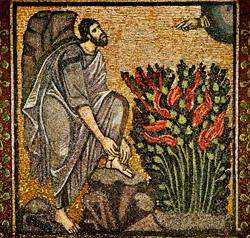
Verse 3 First, they heard the Holy Spirit. Next, they saw something. It was ‘tongues that seemed like fire’. In the book called Exodus, we read that Moses saw a very special bush. We know that God was in the bush. We know it because the bush was burning all the time (Exodus 3:2-5). We can see that God was here in Acts too, because of the fire.

Verse 4 The words ‘different languages’ here can also be ‘other tongues’. People do not always agree about what this means. The disciples spoke in foreign languages. This was so that all the foreign visitors in Jerusalem could understand them. There were many foreign visitors in Jerusalem on that day. So, by means of those foreign languages, these visitors could understand the disciples when they spoke about God. Paul writes about the gift called ‘tongues’ in 1 Corinthians chapters 12 and 14.

Verse 5 ‘Every nation in the world’ means every nation where there were Jews. These Jews had travelled to Jerusalem because it was Pentecost.

Verse 6 A large crowd came together because of the noise. The believers came out into the street. Perhaps they were going to the Temple.

Verses 7-8 People from Galilee spoke in an unusual way. People from other places could not always understand them. But now, these disciples from Galilee were speaking in different languages. Everyone could understand what the disciples were saying.

Verses 9-11 More Jews lived in other countries than in Judea. Their enemies had taken them there more than 500 years earlier. This list shows that many Jews from many different nations were in Jerusalem. They all heard about the wonderful things that God had done on this special Pentecost day. They would go back to their countries and they would tell other people. The other people in the world were beginning to hear the good news about Jesus.

Verses 12 Luke says that they could not explain what was happening. He says it several times. But some people tried to explain things in their own way. Holy Spirit comes with power, people do not always understand this event. They do not always understand what is happening.

Items for Discussion

  • What is your personal opinion on “speaking in tongues?
  • Think back to Genesis and the Tower of Babel—why do you think God went through so much, first to take away common language and then to fix the problem of a multi-lingual world?
  • Using what you know about your experience with the Holy Spirit, how could two people of different languages understand each other?
  • Why is it so important for people of different cultures and languages to communicate about God and their faith?
  • What are the ways that two people could share Christ without the necessity of a common language?

Discussion Challenge

  • What are the ways that a person who does not speak the native tongue spoken in a church understand that you are worshiping God?

This Is My Story – What’s Yours?

Exodus 19:8-91NIV New International Version Translations
8 The people all responded together, “We will do everything the Lord has said.” So Moses brought their answer back to the Lord. 9 The Lord said to Moses, “I am going to come to you in a dense cloud, so that the people will hear me speaking with you and will always put their trust in you.” Then Moses told the Lord what the people had said.

moses_burning_bush_bysantine_mosaicBackground2http://www.easyenglish.info/bible-commentary/exodus-1-18-lbw.htm

Exodus is one of the first 5 books of the Old Testament which are often called the Torah or the Pentateuch. The Greek translation gave this book its name Exodus, meaning “to go out”. It is written in two parts:

  1. Chapters 1-18: the first part of Moses’ life; the Israelites’ troubles in Egypt; the events and the plagues that led the Israelites to leave Egypt.
  2. Chapters 19-40: how God gave the Law to Moses; how they built the special holy tent (Tabernacle); the rules for worship.

Moses was the most important person in all these events. He was the main person who recorded the events. Exodus 24:4 has these words. ‘Then Moses wrote down everything that the LORD had said.’ Later, when Joshua built an altar, he followed Moses’ instructions for it (Joshua 8:31).

Moses’ name appears 804 times in the Bible. It appears in the books of both the Old Testament and the New Testament. Numbers 12:3 describes Moses as ‘a very humble man. He was more humble than anyone else on the earth’. But Moses was also a great leader. He had great courage and he had a very close relationship with God. Without Moses, the Israelites might not have escaped from Egypt and reached the Promised Land.

God had prepared Moses and chose Moses to act on His behalf (Exodus 3:8-10). God does never changes, and He carries out His promises. This book, Exodus, emphasizes that God is holy. He looks after his people but He is separate from them. The Israelites had to stay away from Mount Sinai (Exodus 19:12). Not even Moses could see God Himself (Exodus 33:18-20). They used many objects when they worshipped God. And each of those objects was special and holy. Each thing reminded the Israelites that nobody should approach God in a careless way. God expected His people to be holy. ‘Be holy, because I, the LORD your God, am holy’ (Leviticus 19:2). God’s 10 commandments and the other rules are in Exodus chapters 20-23. They show what God demands from his people. He wants moral behavior all the time in people’s ordinary lives.

Biblical Truths3http://www.easyenglish.info/bible-commentary/exodus-1-18-lbw.htm

Verse 8 All the Israelites promised that they would obey God. They wanted him to be their God. They did not know yet all that a holy nation needed to do. Soon they did wrong things. So they did not obey God (Exodus 32:1-4).

Verse 9 A dense cloud was a sign that God was present with them. The people would learn to have confidence in Moses as their leader.

Items for Discussion

  • Why was Moses a great leader?
  • For Moses, God used a cloud to signal His presence. How do you think God does that today for His leaders?
  • God chose to help Moses by building confidence in their new leader. Can great leaders be successful without God’s help?
  • Why should leaders also be great teachers?
  • What are God’s expectations for us in choosing and/or following our leaders?


1 Corinthians 13:12-13
12 For now we see only a reflection as in a mirror; then we shall see face to face. Now I know in part; then I shall know fully, even as I am fully known. 13 And now these three remain: faith, hope and love. But the greatest of these is love.

Background

Corinth was an important city located on a very narrow section of land (called an ‘isthmus’) in the southern part of Greece. It was also the capital city of the region called Achaia. It’s importance for commerce was facilitated by two harbors. The harbor on the east coast was 4 miles (6 km) from the harbor on the west coast. Today a canal joins the two harbors. In Paul’s time, people pulled small boats across from one harbor to the other one. They dragged them on a kind of ship railway. Porters carried goods from large boats to the other side. They put the goods on a different boat. The journey would otherwise have been over two hundred miles round a very dangerous part of the sea.

As a busy trading center, Corinth was a good place for the Gospel to spread. Merchants and travellers could hear the message and take it with them. There were many different people in Corinth. There were Romans because it was a Roman colony. There were Greeks, Jews, people from Asia and from further east. There were rich people and many slaves. There was also a temple to Aphrodite, the Greek female god of love. There were thousands of prostitutes in the city. Many of them belonged to this temple. Corinth became well-known for bad sexual behavior. To live ‘like a Corinthian’ meant to become a drunk often or to visit prostitutes.

Bible Truth4http://www.easyenglish.info/bible-commentary/1-corinthians-lbw.htm

Verse 12 Paul uses two examples to show what he means:

Corinth was famous for good mirrors. They did not have clear glass then, so they made them out of metal. But highly polished metal is not as good as a modern glass mirror. It would reflect the image of a person, but not a perfect image. John said, ‘We know that when Jesus appears, we shall be like him. Because we shall see Him as he is’ (1 John 3:2). God already knows us completely. In the next age, we shall understand God’s ways. We cannot understand them completely in this life.

Verse 13 Faith, hope and love seem to have been a well-known group of qualities. Paul speaks about them in other letters. For example, 1 Thessalonians 1:3; Colossians 1:4-5. These three words explain the whole of the Christian life in this world. Christians have ‘faith’ that God will forgive them because of Christ’s sacrifice. They have ‘hope’ for the future, because of Christ’s resurrection. They live a life of faith and hope among Christian brothers and sisters whom they ‘love’. Of these three, only love will remain into eternity. Faith will no longer be necessary. Hope will become knowledge. Love is the greatest, because God himself is love (1 John 4:8). A friendship with Him will never end, but it will continue into eternity.

Items for Discussion

  • Knowing what you now know about the city of Corinth, why do you think Paul would use an analogy of looking in a mirror to understand Christ?
  • Our world, as with the world of Corinth, seems to always get “love” wrong – How would you describe the love that Paul is referring to?
  • When we share the Gospel’s message, which is the most important, stories of stalwart faith, of unending hope or bountiful love?
  • When corruption surrounds us, why are ”faith, hope and love” so important?
  • Why will only “love” exist in eternity?

Discussion Challenge

  • So what is your story? Your faith walk; The hope you carry with you; and the love of God you have experience?

Creator God – Creating Still

Genesis 1:31-2:11NIV New International Version Translations
1:31 God saw all that he had made, and it was very good. And there was evening, and there was morning—the sixth day. 2:1 Thus the heavens and the earth were completed in all their vast array.

Background2http://www.easyenglish.info/bible-commentary/genesis-mwks-lbw.htm

This world was, in the beginning of time, created by a Being of infinite wisdom and power, who was himself before all time, and all worlds. And it is here in Genesis that gives us a surer and better, a more satisfying and useful knowledge of the origin of the universe, than all the volumes of the philosophers ever written.

We do not know who wrote the Book of Genesis when it was written. There is a tradition that Moses was the author. Even the oldest books in the Bible refer to it (for example, Exodus 3:15; Job 28:25-29). It’s author was not merely collecting ancient stories or recording ancient history. In fact, Genesis is a very careful account, which teaches the main principles in the Bible. The author describes the nature of God. The author explains God’s plan for a perfect world. The author describes sin and sacrifice. He speaks about God’s promise to forgive. And, he speaks about God’s promise to send Jesus. The Bible teaches that the author was not merely setting out his own ideas. Instead, the author was inspired by the Holy Spirit.

Biblical Truth

Verse 1:31 It was really ‘very good’. God is perfect. And everything that God made was perfect. It was exactly as He had planned.

Verse 2:1 God completed His creation. However, He is still working. He has not stopped. But it is different work. He now looks after all that He created.

Items for Discussion

  • When mankind reflects back upon his work, what does he see?
  • Why is it good to periodically reflect back to see our work?
  • God is not through with the Universe – In what visible ways is He still working?
  • Why do you think that God did not just create the perfect Universe – Something that never changes, is steadfast, fixed and perfect?
  • Why are we, as people of God, better off in a world that He is still working on?


Mark 2:1-12
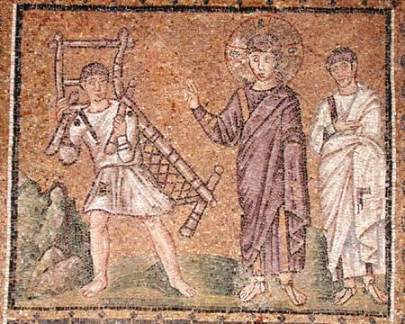
1 A few days later, when Jesus again entered Capernaum, the people heard that he had come home. 2 They gathered in such large numbers that there was no room left, not even outside the door, and he preached the word to them. 3 Some men came, bringing to him a paralyzed man, carried by four of them. 4 Since they could not get him to Jesus because of the crowd, they made an opening in the roof above Jesus by digging through it and then lowered the mat the man was lying on. 5 When Jesus saw their faith, he said to the paralyzed man, “Son, your sins are forgiven.” 6 Now some teachers of the law were sitting there, thinking to themselves, 7 “Why does this fellow talk like that? He’s blaspheming! Who can forgive sins but God alone?” 8 Immediately Jesus knew in his spirit that this was what they were thinking in their hearts, and he said to them, “Why are you thinking these things? 9 Which is easier: to say to this paralyzed man, ‘Your sins are forgiven,’ or to say, ‘Get up, take your mat and walk’? 10 But I want you to know that the Son of Man has authority on earth to forgive sins.” So he said to the man, 11 “I tell you, get up, take your mat and go home.” 12 He got up, took his mat and walked out in full view of them all. This amazed everyone and they praised God, saying, “We have never seen anything like this!”

Background

In these verses, we find Christ’s healing a man that was sick of a palsy, an illness that affects the movement of all or parts of a body’s muscles. Mark, the author, wanted to show that Jesus was the “Son of God.” So he emphasised how the crowds and the disciples were very often astonished at Jesus’ actions. Jesus made the storm on the lake become calm (4:41). Then the disciples asked, ‘Who is this?’ They had a feeling of fear. And they greatly respected Jesus. Evil spirits recognized who Jesus was. Mark also records that (3:11; 5:7). At the same time, Mark shows that Jesus was really human. He was ‘the carpenter’ (6:3). He became tired and he became asleep (4:38). He had human feelings. He felt sad (6:34), and he was angry at wrong ideas and actions (3:5; 11:15-17).

There are details that are only in Mark’s Gospel. They give us the idea that someone had been an eye-witness. In the account of the storm on the lake, “there were other boats with him.” Jesus was “in the back of the boat with his head on a cushion” (4:35, 38). The groups of people were sitting on the “green’ grass” (6:39). On the road to Jerusalem, Jesus was walking “ahead of them” (10:32). Jesus “took the children into his arms” (10:16). The blind man “threw off his coat” (10:50).

Bible Truth3http://www.easyenglish.info/bible-commentary/mark-lbw.htm

Verse 1 The words “at home” show that it was probably Peter’s own house.

Verse 4 The roof was flat. People made it out of sticks. And they covered it with earth that the sun had baked hard. There were stone steps outside to reach the roof.

Verse 5 Jesus knew the faith of the four men. They had shown faith when they carried the man to Jesus. They did not give up when they could not get through the door. Some people do become ill when they have done wrong things. Their guilty conscience affects their body. But a person may suffer because of no fault of his own. However, many people believe that all disease is a punishment from God for sin. Jesus did not believe this (John 9:2-3; Luke 13:1-5). The man who could not walk may have agreed with the wrong idea. For whatever reason, he felt guilty. He needed to know that God had forgiven him. Only then, would he be able to recover.

Verses 6-7 The Scribes may have come to examine what Jesus was teaching. They were accusing Jesus of insulting God. They were right to think that only God can forgive sins. But they were wrong about Jesus. He had God’s authority.

Verses 8-9 It would be easy to say, “You are free from your sins.” But it would be more difficult to prove. If the man could walk again, that would prove the truth of Jesus’ words.

Verses 10-11 Jesus used the title “Son of Man” for himself many times. It can mean ‘a man’. It would emphasize that Jesus was really human. It was also the title of a powerful person. That person would come in order to establish a kingdom. And that kingdom would never end (Daniel 7:13-14). The name might almost mean “Messiah.” Jesus used the title to describe himself, but he did not say ‘Messiah’. He showed his authority in the words “I tell you,” and by brief commands, ‘Stand up. Take your mat. Go home.’

Verse 12 More than once, Mark describes how Jesus’ words and actions astonished people (1:22, 27).

Items for Discussion

  • What was it that caused Jesus to respond to the man in this story?
  • Describe why you would call those who were involved with the man in need, faithful?
  • Why would you call the sick man faithful?
  • Why was it so important to demonstrate a miracle in this story?
  • Do we still, today, assign sickness to sinfulness? Are there examples in our society?
  • What have you learned about faithfulness through this story?

Discussion Challenge

  • How do we as a society, help ourselves, our families, our neighbors grow in their faith?

It is Better to Receive than to Give

Deuteronomy 15:7-141NIV New International Version Translations
7 If anyone is poor among your fellow Israelites in any of the towns of the land the Lord your God is giving you, do not be hardhearted or tightfisted toward them. 8 Rather, be openhanded and freely lend them whatever they need. 9 Be careful not to harbor this wicked thought: “The seventh year, the year for canceling debts, is near,” so that you do not show ill will toward the needy among your fellow Israelites and give them nothing. They may then appeal to the Lord against you, and you will be found guilty of sin. 10 Give generously to them and do so without a grudging heart; then because of this the Lord your God will bless you in all your work and in everything you put your hand to. 11 There will always be poor people in the land. Therefore I command you to be openhanded toward your fellow Israelites who are poor and needy in your land. 12 If any of your people—Hebrew men or women—sell themselves to you and serve you six years, in the seventh year you must let them go free. 13 And when you release them, do not send them away empty-handed. 14 Supply them liberally from your flock, your threshing floor and your winepress. Give to them as the Lord your God has blessed you.

img221Background2http://www.easyenglish.info/bible-commentary/deuteronomy-lbw.htm

The word Deuteronomy means ‘the second law’. This translates the Greek title of the book. The title in the Hebrew language is ‘these are the words’. The book does not just repeat earlier laws. It is a record of the covenant relationship between God and the Israelites. The book teaches people how to love God and their neighbors. There are 100 references from Deuteronomy in the New Testament. Deuteronomy is still important for Christians today, although the culture is different. The book is sometimes called ‘The Book of Covenant Life’.

In Deuteronomy 15, the law concerning Hebrew servants is repeated. There is an addition, requiring the masters to put some small stock into their servants’ hands to set up with for themselves, when sent out of their servitude, wherein they had received no wages. We may expect family blessings, the springs of family prosperity, when we make conscience of our duty to our family relations. We are to remember that we are debtors to Divine justice, and have nothing to pay with. That we are slaves, poor, and perishing. But the Lord Jesus Christ, by becoming poor, and by shedding his blood, has made a full and free provision for the payment of our debts, the ransom of our souls, and the supply of all our wants. When the gospel is clearly preached, the acceptable year of the Lord is proclaimed; the year of release of our debts, of the deliverance of our souls, and of obtaining rest in him. And as faith in Christ and love to him prevail, they will triumph over the selfishness of the heart, and over the unkindness of the world, doing away the excuses that rise from unbelief, distrust, and covetousness. (De 15:19-23)

Biblical Truth

If we obey God, we will be generous to people. Jesus said to his followers, ‘Love your enemies. Do good things to them. Lend and do not expect anything back.’ (See Luke 6:35.) 1 John 3:17 tells us this. ‘Let us suppose that a rich person does not help his poor neighbor. We cannot say that the love of God is in the rich person.’ The writer of Deuteronomy knew that Israelites would not obey God. Therefore, there would always be poor people (verse 11). However, there would also be opportunities to help them.

This law is about Israelites who were slaves. To be a slave was not a bad thing for the Israelites. They had to look after their slaves well. And the Israelites had to respect their slaves. Slaves served other people in order to pay their debts. When their owners freed them, the owners gave them generous gifts. That would help them in their new lives. And it would remind their owners about what God had done. God had freed the Israelites when they were slaves in Egypt.

Items for Discussion

  • How do you feel the idea of forgiving debt every seven years would work in today’s society?
  • Why does God tell us there will always be poor?
  • What is generosity?
  • Do poor exist because man is not generous enough?
  • Why should receiving generosity generate the response of a more generous heart?
  • Are we compelled to give to those who do not deserve our generosity? Why or why not?


2 Corinthians 9:6-15
6 Remember this: Whoever sows sparingly will also reap sparingly, and whoever sows generously will also reap generously. 7 Each of you should give what you have decided in your heart to give, not reluctantly or under compulsion, for God loves a cheerful giver. 8 And God is able to bless you abundantly, so that in all things at all times, having all that you need, you will abound in every good work. 9 As it is written: “They have freely scattered their gifts to the poor; their righteousness endures forever.” 10 Now he who supplies seed to the sower and bread for food will also supply and increase your store of seed and will enlarge the harvest of your righteousness. 11 You will be enriched in every way so that you can be generous on every occasion, and through us your generosity will result in thanksgiving to God. 12 This service that you perform is not only supplying the needs of the Lord’s people but is also overflowing in many expressions of thanks to God. 13 Because of the service by which you have proved yourselves, others will praise God for the obedience that accompanies your confession of the gospel of Christ, and for your generosity in sharing with them and with everyone else. 14 And in their prayers for you their hearts will go out to you, because of the surpassing grace God has given you. 15 Thanks be to God for his indescribable gift!

Background

In this chapter Paul seems to excuse his earnestness in pressing the Corinthians to the duty of charity (v. 1-5), and proceeds to give directions about the acceptable way and manner of performing it, namely, bountifully, deliberately, and freely; and gives good encouragement for so doing.

Bible Truth3http://www.biblestudytools.com/commentaries/matthew-henry-complete/2-corinthians/9.html

We are given proper directions about the right and acceptable manner of bestowing charity; and it is of great concernment that we not only do what is required, but do it as is commanded. Now, as to the manner in which the Paul would have the Corinthians give, observe the following:

  1. It should be bountiful
  2. Works of charity, like other good works, should be done with thought and design
  3. It should be freely, whatever we give, be it more or less: Not grudgingly, nor of necessity, but cheerfully

Items for Discussion

  • Who are the most generous people?
  • What generosity is the most potent; that which is instinctive, learned, or commanded?
  • Why do you think that generosity brings back gifts?
  • Paul says that the generous receive both physical gifts as well as spiritual gifts – Name as many kinds of both types of gifts as you can think of?

Discussion Challenge

  • What measures of generosity should a church use to grade itself on how well it is meeting God’s expectations? Think in both what it gives and what it receives.


We Love To Tell The Story

Psalm 461NIV New International Version Translations
1 God is our refuge and strength, an ever-present help in trouble. 2 Therefore we will not fear, though the earth give way and the mountains fall into the heart of the sea, 3 though its waters roar and foam and the mountains quake with their surging. 4 There is a river whose streams make glad the city of God, the holy place where the Most High dwells. 5 God is within her, she will not fall; God will help her at break of day. 6 Nations are in uproar, kingdoms fall; he lifts his voice, the earth melts. 7 The Lord Almighty is with us; the God of Jacob is our fortress. 8 Come and see what the Lord has done, the desolations he has brought on the earth. 9 He makes wars cease to the ends of the earth. He breaks the bow and shatters the spear; he burns the shields with fire. 10 He says, “Be still, and know that I am God; I will be exalted among the nations, I will be exalted in the earth.” 11 The Lord Almighty is with us; the God of Jacob is our fortress.

img222Background2http://www.easyenglish.info/psalms/psalm046-048-taw.htm

The Story of Psalms 46, 47 and 48: We do not know who wrote these 3 psalms or when they were written. What we do know is that something happened that saved the city of Jerusalem. What was it? We are not sure, but many Christians and Jews think that it was when Sennacherib attacked Jerusalem in 701 BC. God protected the city. One night, 185 000 Assyrian soldiers died. We do not know why. It was a strange illness, but we do not know what it was. This is found in 2 Kings 19:34-36. If Psalms 46-48 are from this date, then perhaps the author was the prophet Isaiah. Many of the words in these psalms are also words that Isaiah used in his book. What is more important, however, is that they tell us that God can protect His city. The city of Jerusalem represents a picture of God’s people.

Biblical Truth3http://www.biblegateway.com/resources/commentaries/Matthew-Henry/Ps/Confidence-God-2244

This psalm encourages us to hope and trust in God; in his power and providence, and His gracious presence with His church in the worst of times. We may apply it to spiritual enemies, and the encouragement we have that, through Christ, we shall be conquerors over them. He is a Help, a present Help, a Help found, one whom we have found to be so; a Help at hand, one that is always near; we cannot desire a better, nor shall we ever find the like in any creature. Let those be troubled at the troubling of the waters, who build their confidence on a floating foundation; but let not those be alarmed who are led to the Rock, and there find firm footing. Here is joy to the church, even in sorrowful times. The river alludes to the graces and consolations of the Holy Spirit, which flow through every part of the church, and through God’s sacred ordinances, gladdening the heart of every believer. It is promised that the church shall not be moved. If God be in our hearts, by his word dwelling richly in us, we shall be established, we shall be helped; let us trust and not be afraid. (Ps 46:6-11)

Items for Discussion

  • Why are people so reluctant to give credit to God for His protection?
  • If God protects us from our enemies, how does God protect us from ourselves?
  • How do we sort out our enemies when many of them all claim to be listening to God? Could we be their enemy?
  • Does this earth have any hope that does not include God? Why or Why not?
  • What is the responsibility of the following to protect a nation?
    • Leaders
    • People
    • Churches


Romans 1:15-16
15 That is why I am so eager to preach the gospel also to you who are in Rome. 16 For I am not ashamed of the gospel, because it is the power of God that brings salvation to everyone who believes: first to the Jew, then to the Gentile.

Background4http://www.easyenglish.info/bible-commentary/romans-lbw.htm

Paul dictated his letter to Tertius (Romans 16:22) during his stay in Corinth, probably about 57 A.D.. Paul established churches in many cities, but he was careful not to upset anyone else’s work (Romans 15:20). However, the church in Rome was not the result of the work of any one particular person. So Paul would not be upsetting anyone’s work if he visited Rome. And for many years, Paul had wanted to visit the Christians in Rome. He had completed his work in the east. There were elders to take care of the new churches. Paul wanted to make this visit to Rome on his way to Spain (Romans 15:23-24).

There were several reasons for the letter:

  • to prepare the church in Rome for his visit.
  • to give a clear explanation of the gospel.
  • to give the truth about the Christian faith to any Christians in Rome who had false ideas about it.
  • to give practical advice about how Christians should behave towards each other (chapters 14-15).
  • to give practical advice about how Christians should behave towards their rulers (Romans 13:1-7).
  • to unite Jewish and Gentile Christians. In many churches, there had been serious arguments between Jewish Christians and Gentile Christians. The Jewish Christians said that God had given his law in the Bible. So they told the Gentile Christians to obey it. But the Gentile Christians said that God had given them freedom. So, they did not want to obey any Jewish rules or traditions.
  • to urge the Christians in Rome to help Paul in his work. He might need their help in order to continue his journey to Spain (Romans 15:24). And he needed the Christians in Rome to support and to encourage him by their prayers (Romans 15:30-32).

Bible Truth

Paul’s words about the gospel were bold and clear. Whatever other people said, Paul would declare the gospel’s message. The gospel is essential because it is God’s message. It is a message for everyone, from every nation. And the gospel is essential because it is powerful. It changes people’s lives. It causes people who were God’s enemies to become God’s friends. There are other important messages that Christians teach. But the gospel is the most important message. It is the message about how people can become real Christians. It is the message about what Jesus achieved by his death and resurrection.

So what is the gospel’s message:

  1. Everyone has done wrong things (called sin) against God (Romans 3:23). We all deserve God’s punishment (Romans 6:23). And we cannot save ourselves from that punishment by our own efforts. We cannot even save ourselves by good works or by religion (Romans 3:20). So our situation is hopeless. But God did not leave us in our hopeless state.
  2. God sent his son, Jesus, to this world (John 3:16). Jesus lived a perfect life, without any sin (Hebrews 4:15). He deserved no punishment. But when Jesus died on the cross, he suffered the punishment for our sins (Galatians 3:13; Romans 5:8; Romans 5:18). But we cannot benefit from his death if we do nothing.
  3. We must be humble. God will forgive us if we confess our evil deeds (sin) to him (Acts 3:19). We must invite him into our lives. And we must simply trust him. Then God will change our lives (2 Corinthians 5:17). Repentance, as it is called, requires us to change the direction of our lives. This cannot be done alone but with God’s help, completes the hope of salvation.

Items for Discussion

  • Why are Christians reluctant to share the gospel’s message?
  • How can you tell the gospel’s message without quoting references to Scripture?
  • What are the reasons that you have heard people give for not believing in the gospel’s message?

Discussion Challenge

  • How do you equip the people of the church to be effective witnesses of the message of hope and salvation?
« Older posts Newer posts »

"For it is by grace you have been saved" - Ephesians 2:8-9  

Copyright: © 2001 - 2025 Lostpine

Translate »