Biblical wisdom, historical insight, and personal growth — all in one place

Category: Snapshots (Page 37 of 45)

Who Wrote The Book of Love

Psalm 151NIV New International Version Translations
1 Lord, who may dwell in your sacred tent? Who may live on your holy mountain? 2 The one whose walk is blameless, who does what is righteous, who speaks the truth from their heart; 3 whose tongue utters no slander, who does no wrong to a neighbor, and casts no slur on others; 4 who despises a vile person but honors those who fear the Lord; who keeps an oath even when it hurts, and does not change their mind; 5 who lends money to the poor without interest; who does not accept a bribe against the innocent. Whoever does these things will never be shaken.

img202Background2http://www.easyenglish.info/psalms/psalm015-taw.htm

David had a house in Jerusalem for the LORD. It was a tent, made from goat skins. (Look at the end of Psalm 4) Holy means very, very good. Only God is really holy. David called his tent the house of the LORD and believed that God lived in it. Because of this, David made the entire made the hill of Zion holy too. People that loved the LORD came to his house. They asked, “Who can come into the house of the LORD?” The answer is in verses 2-5. A priest of the LORD probably said it. Psalm 15 says the same things today. If we want to live with the LORD, we must obey verses 2-5. Because God loves us, he will give us help. If we do not obey a rule, we must tell God that we are sorry. He will forgive us.

Biblical Truths

The verbs in Psalm 15:2 are different from those in Psalm 15:3-5. The words in verse 2 tell us what believers are like on the inside. Verses 3-5 tells us what believers are like on the outside. This is what everyone sees. There is no temple today. Soldiers destroyed it about 2000 years ago. Jesus told his friends that he would make them another house. It will be in heaven. Christians believe that Psalm 15 is about that house in heaven.

Items for Discussion

  • What is the behavior that David states will be in God’s good graces?
  • Are some of these things impossible to do, even if one believes deeply in our God? Which ones?
  • What is the difference between someone’s faith on the inside (their heart) and on the outside (their behavior)?
  • How does our faith in Christ help us with this Psalm?
  • Is it easier or harder to follow this Psalm if you exercise love for those around you? Why or why not?


Mark 12:28-34
28 One of the teachers of the law came and heard them debating. Noticing that Jesus had given them a good answer, he asked him, “Of all the commandments, which is the most important?” 29 “The most important one,” answered Jesus, “is this: ‘Hear, O Israel: The Lord our God, the Lord is one. 30 Love the Lord your God with all your heart and with all your soul and with all your mind and with all your strength.’ 31 The second is this: ‘Love your neighbor as yourself.’ There is no commandment greater than these.” 32 “Well said, teacher,” the man replied. “You are right in saying that God is one and there is no other but him. 33 To love him with all your heart, with all your understanding and with all your strength, and to love your neighbor as yourself is more important than all burnt offerings and sacrifices.” 34 When Jesus saw that he had answered wisely, he said to him, “You are not far from the kingdom of God.” And from then on no one dared ask him any more questions.

Background3http://www.easyenglish.info/bible-commentary/mark-lbw.htm

Mark was a sister’s son to Barnabas, Col 4:10; and Ac 12:12 shows that he was the son of Mary, a devoutly religious woman living in Jerusalem, at whose house the apostles and first Christians assembled. From Peter’s calling him his son, 1Pe 5:13, the Mark is supposed to have been converted by Most writers agree that Mark was the first person to write a Gospel. Both Matthew and Luke seem to use what is in Mark. Mark perhaps completed it in the year 65, soon after Peter’s death. Mark wanted to show that Jesus was the ‘Son of God’. So he emphasizes how the crowds and the disciples were very often astonished at Jesus’ actions. Jesus made the storm on the lake become calm (4:41). Then the disciples asked, ‘Who is this?’ They had a feeling of fear. And they greatly respected Jesus. Evil spirits recognized who Jesus was. Mark also records that (3:11; 5:7). At the same time, Mark shows that Jesus was really human. He was ‘the carpenter’ (6:3). He became tired and he became asleep (4:38). He had human feelings. He felt sad (6:34), and he was angry at wrong ideas and actions (3:5; 11:15-17).

There are details that are only in Mark’s Gospel. They give us the idea that someone had been an eye-witness. In the account of the storm on the lake, ‘there were other boats with him’. Jesus was ‘in the back of the boat with his head on a cushion’ (4:35, 38). The groups of people were sitting on the ‘green’ grass (6:39). On the road to Jerusalem, Jesus was walking ‘ahead of them’ (10:32). Jesus ‘took the children into his arms’ (10:16). The blind man ‘threw off his coat’ (10:50). Mark records some of the actual Aramaic words that Jesus used. He gave James and John the name ‘Boanerges’ (3:17). He raised Jairus’s daughter with the words ‘Talitha cumi’ (5:41). He said ‘Ephphatha’ to the deaf man (7:34). He called his Father ‘Abba’ (14:36). The cry from the cross was in Aramaic (15:34).

Mark shows how the crowds, the disciples and Jesus’ own family did not understand Jesus. The religious leaders opposed him. Most people had the wrong idea about what the Messiah should be like. Christians were suffering for their faith when Mark wrote. He showed them that Jesus suffered. He suffered in the plan of God and he made the Scriptures come true. Mark uses the word ‘immediately’ very many times. He wants to emphasize the power of Jesus, whose command always brought a quick result (1:20, 42; 2:12; 5:42). It is also as if he is anxious to reach the end of the story. He cannot wait to tell everyone about the death and resurrection of Jesus. Mark knew that these two events were ‘good news’ for everyone. When Jesus suffered, it made it possible for God to save people. ‘The Son of Man did not come for people to serve him. Instead, he came to serve other people. He came to give his life as the price to make many people free’ (10:45).

Christ showed us in parables, that he would lay aside the Jewish church. It is sad to think what base usage God’s faithful ministers have met with in all ages, from those who have enjoyed the privileges of the church, but have not brought forth fruit answerable. God sent his Son, his Well-beloved; and it might be expected that he whom their Master loved, they also should respect and love; but instead of honoring him because he was the Son and Heir, they therefore hated him. But the exaltation of Christ was the Lord’s doing; and it is his doing to exalt him in our hearts, and to set up his throne there; and if this be done, it cannot but be marvelous in our eyes. The Scriptures, and faithful preachers, and the coming of Christ in the flesh, call on us to render due praise to God in our lives. Let sinners beware of a proud, carnal spirit; if they revile or despise the preachers of Christ, they would have done so their Master, had they lived when he was upon earth.

Bible Truth4http://www.christnotes.org/commentary.php?com=mhc&b=41&c=12

Those who sincerely desire to be taught their duty, Christ will guide in judgment, and teach his way. He tells the scribe that the great commandment, which indeed includes all, is, that of loving God with all our hearts. Wherever this is the ruling principle in the soul, there is a disposition to every other duty. Loving God with all our heart, will engage us to everything by which he will be pleased. The sacrifices only represented the atonements for men’s transgressions of the moral law; they were of no power except as they expressed repentance and faith in the promised Savior, and as they led to moral obedience. And because we have not thus loved God and man, but the very reverse, therefore we are condemned sinners; we need repentance, and we need mercy. Christ approved what the scribe said, and encouraged him. He stood fair for further advance; for this knowledge of the law leads to conviction of sin, to repentance, to discovery of our need of mercy, and understanding the way of justification by Christ.

Items for Discussion

  • Why is it so hard to love those around us like Christ requires us to do?
  • Can you love mankind as we are asked to do without loving God?
  • How is service to our God and Love for each other interlinked?
  • How do we exercise love for those who behave in a detestable way?
  • How would Christ’s greatest commandment relate to God’s own “Ten Commandments?”
  • In what way does a repentant heart demonstrate Christ’s greatest commandment?

Discussion Challenge

  • How can the Church teach its members to love one another with all their heart soul and strength?

With A Heart That Is Full

1 Chronicles 16:30-341NIV New International Version Translations
30 Tremble before him, all the earth! The world is firmly established; it cannot be moved. 31 Let the heavens rejoice, let the earth be glad; let them say among the nations, “The Lord reigns!” 32 Let the sea resound, and all that is in it; let the fields be jubilant, and everything in them! 33 Let the trees of the forest sing, let them sing for joy before the Lord, for he comes to judge the earth. 34 Give thanks to the Lord, for he is good; his love endures forever.

img203Background2http://www.christnotes.org/commentary.php?com=mhc&b=13&c=0

The books of Chronicles are basically repetitions of what is in the books of Samuel and of the Kings, yet there are some excellent useful things in them which we do not find elsewhere. The FIRST BOOK traces the rise of the Jewish people from Adam, and afterward gives an account of the reign of David. In the SECOND BOOK the narrative is continued, and relates the progress and end of the kingdom of Judah.

Biblical Truths3http://www.easyenglish.info/bible-commentary/1chronicles-lbw.htm

The LORD made the skies and the earth. He is the king of all that he has made. So, all people should give to him the honor that he deserves. They should worship him and they should bring gifts to him. All that God has made should shout for joy. The skies, the earth, the sea, the fields and the forests will all sing for joy. The LORD will come and he will be the judge of the world. He will be the judge of all people. They will all have to give an account of their lives to God. So, he will reward or punish them. God is good and he loves his people. He will always love them. Therefore, they thank him and they praise him.

Items for Discussion

  • The title of this study is most interesting because it asks what should our hearts, that is the very character and nature of who we are, be founded upon -– How does our faith affect our beliefs?
  • Why should “fear of the Lord” be such an important part of our faith?
  • What attributes of behavior would we expect to see if our hearts were founded upon God?
  • How do we express confidence in what we believe?
  • Re-read verses 32 and 33 – Do you interpret the verses literally, figuratively and what do you think the author of Chronicles is trying to tell us?


Philippians 4:5-7
5 Let your gentleness be evident to all. The Lord is near. 6 Do not be anxious about anything, but in every situation, by prayer and petition, with thanksgiving, present your requests to God. 7 And the peace of God, which transcends all understanding, will guard your hearts and your minds in Christ Jesus.

Background4http://www.christnotes.org/commentary.php?com=mhc&b=50&c=0

The Letter to Philippi is also called the Letter of Joy. The Philippians felt a very deep interest for the apostle. The scope of the epistle is to confirm them in the faith, to encourage them to live in a way that was becoming of the gospel of Christ, to caution them against forcing their teachers back to the Jewish faith, and to express gratitude for their Christian bounty. This epistle is the only one, among those written by Paul, in which no official expression of disapproval or condemnation is implied or expressed. Full commendation and confidence are expressed throughout and the Philippians are addressed with affection.

Bible Truth5http://www.easyenglish.info/bible-commentary/philippians-lbw.htm

Verse 5 Christians should behave towards other people with mercy, patience and understanding love. The Lord is near might mean:

  • The Lord is always close to them.
  • The Lord knows everything that a Christian does.
  • The Lord is coming again soon.

These words encourage Christians to remember the love with which God deals with them. They hope that God will deal with them with sympathy. So they should be gentle towards other people who make mistakes.

Verse 6 The Lord is near might also introduce the words Do not worry about anything. These words will remind Christians that the Lord is always with them. And they will meet him when he returns. Christians should pray about everything. They should pray:

  • that God will forgive them for the past
  • about what they need now, both for the body and for the spirit
  • for God to guide them in the future.

God’s love desires what is best for us. His wisdom knows what is best. His power can cause what is best for us to happen. Every prayer should include thanks. We should be grateful that God wants to listen. We should believe that he will give us the best answer.

Verse 7 The result of prayer is that we will have God’s peace in our hearts. God’s peace will be like a soldier who is on guard duty in our hearts. The peace that God gives will protect our thoughts and desires. That is because God has united us to Christ Jesus. This peace is far beyond anything that human beings can understand. Human people can never produce this peace, however much they try. Good ideas will never free a Christian from worry in the way that God’s peace does. It is also far beyond anything that we can understand. God is able to do so much more than we could ever ask. He is able to do so very much more than we could even think (Ephesians 3:20). Christ ‘loves us more than anyone can ever really know (Ephesians 3:19).

Items for Discussion

  • How does the Christian balance confidence that God is in charge with the understanding that we are also held accountable for our actions?
  • Why should every prayer we make include a thank you to God?
  • Do you think we live in a world that values peace – why or why not?
  • We are called to gentleness – why is this so important to Christianity?
  • Why should God’s people, when all around them is going wrong, feel confident?
  • Confidence does not mean inaction – how should the Christian respond when the world around them is without peace?

Discussion Challenge

  • How do you help the Christian Church be a respite for peace when the world around them is filled with hate? 

The Story of the Shepherd’s Fields

Isaiah 12:2-61NIV New International Version Translations
2 Surely God is my salvation; I will trust and not be afraid. The Lord, the Lord himself, is my strength and my defense; he has become my salvation.” 3 With joy you will draw water from the wells of salvation. 4 In that day you will say: “Give praise to the Lord, proclaim his name; make known among the nations what he has done, and proclaim that his name is exalted. 5 Sing to the Lord, for he has done glorious things; let this be known to all the world. 6 Shout aloud and sing for joy, people of Zion, for great is the Holy One of Israel among you.”

img204Background2http://www.christnotes.org/commentary.php?com=mhc&b=23&c=0

Isaiah prophesied in the reigns of Uzziah, Jotham, Ahaz, and Hezekiah. He has been well called the evangelical prophet, on account of his numerous and full prophesies concerning the coming and character, the ministry and preaching, the sufferings and death of the Messiah, and the extent and continuance of his kingdom. Under the veil of the deliverance from Babylon, Isaiah points to a much greater deliverance, which was to be effected by the Messiah; and seldom does he mention the one, without alluding at the same time to the other; no, he is often so much enraptured with the prospect of the more distant deliverance, as to lose sight of that which was nearer, and to dwell on the Messiah’s person, office, character, and kingdom.

Biblical Truths3http://www.easyenglish.info/bible-commentary/isaiah10-20-lbw-nh.htm

The prior verse, one, tells us that the punishment to Israel is now over. So God’s anger has ended, as he promised (see 10:25).

Verse 2 – One of Isaiah’s important messages to his hearers is ‘Do not be afraid!’ (see 7:4; 8:12; 10:24; 37:6; 40:9; 44:8).

  • Somebody who has known personally God’s rescue is confident. That person knows that he can trust God completely. There is no need whatever to be afraid.

Verses 4-6 – To tell other people about one’s own experience of God is a great way to praise him.

Items for Discussion

  • How would you tell someone the difference between “fear God” and what Isaiah is telling us, “Do not be afraid!”?
  • How are love and the lack of fear interrelated?
  • What does the lack of fear Isaiah is talking about tell us about one’s faithfulness?
  • Is all fear bad?
  • What is the “call to action” that Isaiah is giving all people?
  • Why should this be important during the Advent and Christmas season?


Luke 2:8-10
8 And there were shepherds living out in the fields nearby, keeping watch over their flocks at night. 9 An angel of the Lord appeared to them, and the glory of the Lord shone around them, and they were terrified. 10 But the angel said to them, “Do not be afraid. I bring you good news that will cause great joy for all the people.

Background4http://www.easyenglish.info/bible-commentary/luke1-4-im-lbw.htm

The Gospel of Luke does not mention Luke by name as the author. But few people doubt that Luke did write this book. Also, he wrote the Book of Acts. He sent both books to the same person called Theophilus (Luke 1:3 and Acts 1:1). Luke was not a Jew. We know this from Colossians 4:11-14. Paul names the three Jews who were with him in Rome. Luke was not one of them but he was with Paul there. All the other writers of the New Testament were Jews.

Luke travelled with Paul on some of his journeys. The evidence for this is that, in several places in Acts, Luke uses the words, ‘we’ or ‘us’. Luke was a medical doctor by profession (Colossians 4:14). There is a tradition that he was born in the city called Antioch in Syria.

Luke was not one of the original disciples of Christ. But he studied the accounts of Christ’s life that were available to him. And he talked with those people who had been with Jesus. Some of the detail shows that probably Luke spoke with Mary the mother of Jesus. We do not know whether Luke wrote this book in Israel, Rome, or somewhere else. And we do not know where he sent it. He probably wrote it sometime between 59 AD and 63 AD.

Luke’s purpose was to write a good and true account of the life of Jesus. This Gospel tells the story of Jesus from the time before he was born. And it ends when Jesus ascended into heaven. Luke wanted Theophilus and all people to know the truth about Jesus. Luke shows that Jesus was a real man. In addition, he shows that Jesus was the Son of God.

Bible Truth

Verses 8-10 Shepherds kept their sheep in the open fields near Bethlehem from about April to November. They may have kept the sheep in the fields later than this if the weather was not too cold. They had to guard their sheep from wild animals and from thieves. So, the shepherds watched in turn through the night to protect their sheep. Probably they kept these sheep near Bethlehem to be sacrifices in the temple.

Suddenly, light replaced the darkness of the night. An angel appeared and with him the glory of the Lord came. This sight frightened the shepherds. The angel told them about the birth of our Savior. This is the good news that would give great joy to all people.

Items for Discussion

  • What are the characteristics of a shepherd?
  • How are these characteristics similar or different than those of a “good king?
  • Why do people respond with fear first when they are surprised by something they cannot understand?
  • How do you think the people of today would respond to the same scene, “Angels in the sky?”
  • How do you think television, video games, movies, etc. affect one’s response to paranormal activities such as were witnessed by the shepherds?
  • In today’s world, how does God get our attention?

Discussion Challenge

  • How can the holidays be used to share the good news of Christ in your family?

The Story of the Stable

Micah 5:2-5a1NIV New International Version Translations
2 “But you, Bethlehem Ephrathah, though you are small among the clans of Judah, out of you will come for me one who will be ruler over Israel, whose origins are from of old, from ancient times.” 3 Therefore Israel will be abandoned until the time when she who is in labor bears a son, and the rest of his brothers return to join the Israelites. 4 He will stand and shepherd his flock in the strength of the Lord, in the majesty of the name of the Lord his God. And they will live securely, for then his greatness will reach to the ends of the earth. 5a And he will be our peace when the Assyrians invade our land and march through our fortresses.

img205Background2http://bible.org/seriespage/micah

The author of the book is “Micah of Moresheth” (1:1). The word “micah” means “Who is like Yahweh?” Micah’s hometown of Moresheth is probably the same town identified later as Moresheth-gath in the Shephelah (rolling hills) of Judah. This village was one of many that was captured by Sennacherib in his attack on Judah in 701 BC. (cf. Micah 1:14). Moresheth was an important city which guarded a key route into the hill country of Judah south of Jerusalem. Because of its importance it was fortified by Rehoboam as a defensive center (2Ch 11:5-12) Nothing else is known about Micah, but we can surmise that Micah may have actually prophesied during the invasion and witnessed the destruction of his own hometown by Sennecharib. He probably saw his relatives killed and hauled off into slavery.

Micah prophesied during “the days of Jotham, Ahaz and Hezekiah” (1:1). We know that Jotham began a co-regency with his father Uzziah (Azariah) in 750 B.C. and he assumed sole authority when his father died in 739 B.C. (The year Isaiah was called as a prophet). Hezekiah began ruling with his father Ahaz in 735 B.C. and he assumed sole authority when his father died in 715 B.C. Hezekiah continued his reign until 686 B.C. Thus Micah’s ministry extended no longer than 750-686 B.C.

Micah prophesied during a period of upheaval and crisis. The reign of Ahaz brought spiritual lethargy, apostasy and hypocrisy. The people still worshipped Yahweh, but it was ritual without life-changing reality. Their treatment of fellow Israelites violated the basic tenants of the Mosaic covenant as they failed to practice justice, or covenant loyalty-love and their pursuit of idolatry revealed their failure to walk humbly before Yahweh.

Micah’s purpose in writing was to show Judah that a necessary product of her covenant relationship to God was to be just and holy. His focus on God’s justice was to remind the people that God would judge them for their sin and disobedience (chaps 1-3) but that he would ultimately establish a kingdom whose king would reign in righteousness (chaps 4-5). He convicts Israel and Judah of their sin (in the lawsuit 6-7) and sentences them to judgment.

Biblical Truths3http://www.biblestudytools.com/commentaries/geneva-study-bible/micah/micah-5.html

The Jews divided their country that for every thousand there was a chief captain: and because Bethlehem was not able to make a thousand, Micah calls it little. But yet God will raise up his captain and governor in it. (See Matthew 2:6) He shows that the coming of Christ and all his ways were appointed by God from all eternity. Micah compares the Jews to women with child, who for a time would have great sorrows, but eventually they would have a comfortable deliverance; ( John 16:21 ).

Why is this? Because Christ’s kingdom will be stable and everlasting, and his people, the Gentiles as well as the Jews, will dwell in safety. And this man, Christ, will be the peace, when the Assyrian’s come into the land.

Items for Discussion

  • What are the dangers in “ritualistic worship?”
  • How do those with faith that a God exists maintain a humble heart?
  • What do you think Micah meant when he said that our Savior would be our source of peace when the invasion comes?
  • Why is it important to keep the meaning of Christmas pure to the message that Micah is giving?
  • How do you think Micah’s message is being distorted today?


Luke 2:15-16
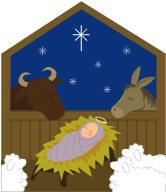
15 When the angels had left them and gone into heaven, the shepherds said to one another, “Let’s go to Bethlehem and see this thing that has happened, which the Lord has told us about.” 16 So they hurried off and found Mary and Joseph, and the baby, who was lying in the manger.

Background4http://www.biblegateway.com/resources/commentaries/IVP-NT/Luke/Birth-Jesus

If ever there was an opportunity for God to enact his plan with a majestic flourish, it was at Jesus’ birth. But God did not presume upon humanity when he stepped in to redeem it. There was no pretense in this arrival. Rather, God chose to identify in the humblest way with those made in his image. The story of Jesus’ birth in Luke mixes praise with simplicity. Its contrast to the birth of John the Baptist is remarkable. John’s birth was announced in the capital, at the temple, in the center of the Jewish nation. But Jesus arrives in rural anonymity. John is the child of a priest and his righteous wife; Jesus belongs to Jews of average social status.

Yet it is Jesus’ birth that draws an angelic host. Once again, appearances are deceiving. As humble as the setting is, his birth is accompanied by the attention of the heavenly host. The shepherds who are privileged to share in the moment become bearers of a story full of wonder. Jesus’ birth is more than a cosmic event; it is the arrival of divine activity that should provoke joy, reflection and attentiveness. That is why Mary ponders these events and the shepherds return glorifying God.( See the Birth 2:1-7)

Bible Truth5http://www.easyenglish.info/bible-commentary/luke1-4-im-lbw.htm

The angels left the shepherds and the shepherds did not doubt the truth of the angel’s words. They left their sheep and they went to find Jesus. They did not delay but they went quickly. It seems that they knew Bethlehem well. They had to look for a baby, with cloths round it, which was in a box for animal food. And they soon found Mary, Joseph and the baby. Everything was as the angel had told them. They saw the Christ who would save his people from their sins. The shepherds told everyone what the angel had said about the baby. Probably the angel said a lot more to them than we have in this record. What they said astonished all who heard them.

Items for Discussion

  • Why do you think that the shepherds believed what the angel had told them?
  • Why do you think God decided to use a human process, birth, and a human image a baby to save His people? Why not an angel?
  • What are the benefits of humility?
  • What makes you believe the Christmas Story?

Discussion Challenge

  • What do you find amazing about the birth of Christ? Why not share your amazement with someone this Christmas season.

Giving It All Away

Psalm 51:1-101NIV New International Version Translations
1 Have mercy on me, O God, according to your unfailing love; according to your great compassion blot out my transgressions. 2 Wash away all my iniquity and cleanse me from my sin. 3 For I know my transgressions, and my sin is always before me. 4 Against you, you only, have I sinned and done what is evil in your sight; so you are right in your verdict and justified when you judge. 5 Surely I was sinful at birth, sinful from the time my mother conceived me. 6 Yet you desired faithfulness even in the womb; you taught me wisdom in that secret place. 7 Cleanse me with hyssop, and I will be clean; wash me, and I will be whiter than snow. 8 Let me hear joy and gladness; let the bones you have crushed rejoice. 9 Hide your face from my sins and blot out all my iniquity. 10 Create in me a pure heart, O God, and renew a steadfast spirit within me.

img206Background

This psalm is entitled “For the director of music. A psalm of David. When the prophet Nathan came to him after David had committed adultery with Bathsheba.” David prays for mercy, humbly confessing and lamenting his sins. (1-6) He pleads for pardon, that he may promote the glory of God and the conversion of sinners. (7-15) God is pleased with a contrite heart, A prayer for the prosperity of Jerusalem. (16-19)

Biblical Truths2http://www.christnotes.org/commentary.php?com=mhc&b=19&c=51

David, being convinced of his sin, poured out his soul to God in prayer for mercy and grace. He knows that should backsliding children return, but to the Lord their God, who alone can heal them? David drew up, by Divine teaching, an account of the workings of his heart toward God. Those that truly repent of their sins, will not be ashamed to own their repentance. Also, he instructs others what to do, and what to say. David had not only done much, but suffered much in the cause of God; yet he flees to God’s infinite mercy, and depends upon that alone for pardon and peace. He begs the pardon of sin. The blood of Christ, sprinkled upon the conscience, blots out the transgression, and, having reconciled us to God, reconciles us to ourselves. The believer longs to have the whole debt of his sins blotted out, and every stain cleansed; he would be thoroughly washed from all his sins; but the hypocrite always has some secret reserve, and would have some favorite lust spared. David had such a deep sense of his sin, that he was continually thinking of it, with sorrow and shame. His sin was committed against God, whose truth we deny by willful sin; with him we deal deceitfully. And the truly penitent will ever trace back the streams of actual sin to the fountain of original depravity. He confesses his original corruption. This is that foolishness which is bound in the heart of a child, that proneness to evil, and that backwardness to good, which is the burden of the regenerate, and the ruin of the unregenerate. He is encouraged, in his repentance, to hope that God would graciously accept him. God desires truth in the inward part; to this God looks, in a returning sinner. Where there is truth, God will give wisdom. Those who sincerely endeavor to do their duty shall be taught their duty; but they will expect good only from Divine grace overcoming their corrupt nature.

Purge me with hyssop, with the blood of Christ applied to my soul by a lively faith, as the water of purification was sprinkled with a bunch of hyssop. The blood of Christ is called the blood of sprinkling, Hebrews 12:24. If this blood of Christ, which cleanses from all sin, cleanse us from our sin, then we shall be clean indeed, Hebrews 10:2. He asks not to be comforted, till he is first cleansed; if sin, the bitter root of sorrow, be taken away, he can pray in faith, Let me have a well-grounded peace, of thy creating, so that the bones broken by convictions may rejoice, may be comforted. Hide thy face from my sins; blot out all mine iniquities out of thy book; blot them out, as a cloud is blotted out and dispelled by the beams of the sun. And the believer desires renewal to holiness as much as the joy of salvation. David now saw, more than ever, what an unclean heart he had, and sadly laments it; but he sees it is not in his own power to amend it, and therefore begs God would create in him a clean heart. When the sinner feels this change is necessary, and reads the promise of God to that purpose, he begins to ask it.

Items for Discussion

  • David sees that repentance is not only being sorry but asking God for help in a transformation. What are the characteristics of human beings that interfere with gaining an understanding as David has gained?
  • Why must mankind understand that everyone is corrupt by their nature?
  • Why would mankind then need God to overcome corruption?
  • As societies today seek to eliminate God from government, what risks do you see based on this Psalm?
  • What evidence would you expect to see in a leader who has become, like David, transformed by God? Read Colossians 3:9-17 and compare your list.


Colossians 3:9-17
9 Do not lie to each other, since you have taken off your old self with its practices 10 and have put on the new self, which is being renewed in knowledge in the image of its Creator. 11 Here there is no Gentile or Jew, circumcised or uncircumcised, barbarian, Scythian, slave or free, but Christ is all, and is in all. 12 Therefore, as God’s chosen people, holy and dearly loved, clothe yourselves with compassion, kindness, humility, gentleness and patience. 13 Bear with each other and forgive one another if any of you has a grievance against someone. Forgive as the Lord forgave you. 14 And over all these virtues put on love, which binds them all together in perfect unity. 15 Let the peace of Christ rule in your hearts, since as members of one body you were called to peace. And be thankful. 16 Let the message of Christ dwell among you richly as you teach and admonish one another with all wisdom through psalms, hymns, and songs from the Spirit, singing to God with gratitude in your hearts. 17 And whatever you do, whether in word or deed, do it all in the name of the Lord Jesus, giving thanks to God the Father through him.

Background3http://www.easyenglish.info/bible-commentary/col-lbw.htm

Paul wrote this letter while he was in prison (Colossians 4:3). He was probably in Rome (Acts 28:16, 30-31). If he was, he wrote it about 60 years after Jesus’ birth. Paul wrote to the Christians who lived in Colossae. It was 160 kilometres (100 miles) east of Ephesus, in the valley of the river Lycus. Today this area is part of Turkey. The main roads for trade went past Colossae. It was a large and wealthy city for many centuries. But Laodicea (16 kilometres or 10 miles away) and Hierapolis (21 kilometres or 16 miles away) grew to be larger and more important cities. When Paul wrote this letter, Colossae had become a small town and no longer very important. Epaphras was a man who lived in Colossae (1:7; 4:12-13). There he preached the good news about Jesus. The people who became Christians formed the church at Colossae. Most of them were Gentiles.

Epaphras visited Paul in prison and told him about the young church that was at Colossae. The Christians who lived there had begun to listen to false teachers. Paul was worried that the Christians would turn away from the true gospel. Even today many false teachers do not seem to deny the gospel message. Instead, they slightly change it. Often they teach extra things or add rules to the gospel. Paul wrote to the Christians at Colossae to remind them about Jesus Christ and about his true message. Paul emphasised that Christ is superior. Paul wrote more about Christ in this letter than in any other of his letters. He reminded the Christians that their past life had gone. Christ was now their life. Christ had made them free from rules and evil powers. Paul then went on to teach the Christians how to live this new life.

Bible Truth4http://www.biblegateway.com/resources/commentaries/IVP-NT/Col/Communitys-Conversion-Virtue

The tone of Paul’s moral advice changes from negative to positive encouragement as he shifts his attention from pagan vice to Christian virtue. This shift of emphasis reflects the natural movement of conversion out of darkness into light. Paul addresses the community as a “new self” because with Christ they have put to death the “old self” and have risen to newness of life. In this passage Paul defines Christian character rather than prescribes rules to obey. For him, morality is a matter of what sort of person one becomes in Christ, where one “puts on” the capacity for doing the good that God has willed. Therefore, believers are transformed by the working of divine grace into people who have the character to do God’s will. This new character results in and is clearly demonstrated by transformed relationships within the church (3:12-17) and the home (3:18–4:1). Being Holy (3:12-13).

Items for Discussion

  • How do you know that your life is pleasing to God?
  • When you hear about what God wants from your life, how do you know that this is true?
  • What transformations would you expect to make as you transition from an “old self” to a “new self.”
  • What factors do you believe inhibit people from transforming their lives?
  • Is unity with others part of a transformation?
  • How does Paul describe the process of transformation into unity?

Discussion Challenge

  • How would you measure yourself, your family, your church and your community against Paul’s description of a “new self”? How can you help the transformation?

Will It Matter In A Year?

Habakkuk 3:21NIV New International Version Translations
2 Lord, I have heard of your fame; I stand in awe of your deeds, Lord. Repeat them in our day, in our time make them known; in wrath remember mercy.

Habakkuk_PesherBackground

Habakkuk is clearly a prophecy to the destruction of Judea and Jerusalem for the sins of the people, and the consolation of the faithful under national calamities. The Habakkuk Commentary or Pesher Habakkuk, labeled 1QpHab (Cave 1, Qumran, pesher, Habakkuk) was among the original seven Dead Sea Scrolls discovered in 1947 and published in 1951. Due to its early discovery and rapid publication, as well as its relatively pristine preservation, This scroll is one of the most frequently researched and analyzed of the several hundred now known to exist.

Biblical Truths2http://www.christnotes.org/commentary.php?b=35&c=3&com=mhc

The words used here are for an act of devotion. The Lord would revive his work among the people in the midst of the years of adversity. This may be applied to every season when the church, or believers, suffer under afflictions and trials. Mercy is what we must flee to for refuge, and rely upon as our only plea. We must not say, Remember our merit, but, Lord, remember Your own mercy.

Items for Discussion

  • In what ways does this devotion from Habakkuk speak to today’s Christians?
  • Why would someone know the deeds of the Lord?
  • How would or should this knowledge help someone during tough times?
  • When we consider God’s wrath, our visions are frightening – Where in Habakkuk’s words is their comfort?


2 Peter 3:8-10
8 But do not forget this one thing, dear friends: With the Lord a day is like a thousand years, and a thousand years are like a day. 9 The Lord is not slow in keeping his promise, as some understand slowness. Instead he is patient with you, not wanting anyone to perish, but everyone to come to repentance. 10 But the day of the Lord will come like a thief. The heavens will disappear with a roar; the elements will be destroyed by fire, and the earth and everything done in it will be laid bare.

Background

Peter (Simon) wrote this letter. Simon had his own business, fishing. But Jesus called Simon to be a disciple. Jesus gave him the name Peter, which means a ‘rock’. Peter was in Rome when he wrote this letter. He expected to die soon. Peter died on a cross about 35 years after Jesus’ ascension. During this time Nero ruled in Rome and was killing Christians.

Peter did not say where he was sending the letter. In 3:1, he referred to this letter as his ‘second letter’. We believe that 1 Peter was his first letter to these readers. So, the readers of both letters were probably the same people. They were Christians who lived in the country that we now call Turkey. Peter probably wrote this letter to both Jews and Gentiles who had become Christians.

Peter wrote this letter for three reasons:

  1.  He wanted the people to be stronger Christians.
  2.  He wanted to warn them about false teachers. He also wanted to remind them about the true Christian beliefs.
  3.  He emphasised that Jesus Christ will return. Then God will judge wicked people. So, Christians must be ready for that day.

Bible Truth3http://www.easyenglish.info/bible-commentary/2peter-lbw.htm

Verse 8: In verse 5, the false teachers did not remember what God had done in the past. But in verse 8, Peter did not want his ‘dear friends’ to forget what God had done. The Lord’s time is not the same as time in this world. To the Lord, 1000 years in this world may be like a day (Psalm 90:4). This is often hard for people to understand. But God is the ruler of time. A person may think that a period is a very long time. But it may be a very short time to God. People like things to happen quickly. But sometimes nothing seems to happen. This does not mean that God has forgotten.

Verse 9: God will always keep his promises. Many people thought that Jesus should have returned already. But Peter explained that God is willing to wait. He is not slow, as people may think. But he is patient. God loves everyone. He sent Jesus to free people from their sins (John 3:16). God is waiting because he does not want anyone to die. He ‘desires that all people… will come to know the truth about Jesus’ (1 Timothy 2:4). God wants all people to turn back from their wrong ways. He wants to give people more time to obey him.

Verse 10: Jesus will not continue to wait forever. Jesus said that people would not know when would return (Luke 12:39-40). People do not expect a thief to come suddenly to their house in the middle of the night. In a similar way, Jesus will suddenly return to this world. God will not give people any more time to obey him. Instead, Jesus will come to judge them.

Items for Discussion

  • Why is the history of our God so important to learn?
  • Where do we learn God’s history?
  • If God’s horizon is long and wide and His patience near infinite, how should we interpret verse 10?
  • Is the modern day church and the modern day Christian prepared for a sudden return of Christ?
    • If so, what have they done to prepare?
    • If not, what should they be doing to prepare?

Discussion Challenge

  • Verse 10, if interpreted literally, can be very frightening and establish a sense of urgency – How can the modern church of today help elevate the priority that Peter seems to be placing in these verses?

Crossroads

Ecclesiastes 3:1-131NIV New International Version Translations
1 There is a time for everything, and a season for every activity under the heavens: 2 a time to be born and a time to die, a time to plant and a time to uproot, 3 a time to kill and a time to heal, a time to tear down and a time to build, 4 a time to weep and a time to laugh, a time to mourn and a time to dance, 5 a time to scatter stones and a time to gather them, a time to embrace and a time to refrain from embracing, 6 a time to search and a time to give up, a time to keep and a time to throw away, 7 a time to tear and a time to mend, a time to be silent and a time to speak, 8 a time to love and a time to hate, a time for war and a time for peace. 9 What do workers gain from their toil? 10 I have seen the burden God has laid on the human race. 11 He has made everything beautiful in its time. He has also set eternity in the human heart; yet no one can fathom what God has done from beginning to end. 12 I know that there is nothing better for people than to be happy and to do good while they live. 13 That each of them may eat and drink, and find satisfaction in all their toil—this is the gift of God.

img208Background2http://www.christnotes.org/commentary.php?com=mhc&b=21&c=0

The name of this book signifies “The Preacher.” The wisdom of God here preaches to us, speaking by Solomon, who it is evident was the author. At the close of his life, being made sensible of his sin and folly, he recorded here his experience for the benefit of others, as the book of his repentance; and he pronounced all earthly good to be “vanity and vexation of spirit.” It convinces us of the vanity of the world, and that it cannot make us happy; of the vileness of sin, and its certain tendency to make us miserable. It shows that no created good can satisfy the soul, and that happiness is to be found in God alone; and this doctrine must, under the blessed Spirit’s teaching, lead the heart to Christ Jesus.

Biblical Truths3http://www.christnotes.org/commentary.php?com=mhc&b=21&c=3

To expect unchanging happiness in a changing world, must end in disappointment. To bring ourselves to our state in life, is our duty and wisdom in this world. God’s whole plan for the government of the world will be found altogether wise, just, and good. Then let us seize the favorable opportunity for every good purpose and work. The time to die is fast approaching. Thus labor and sorrow fill the world. This is given us, that we may always have something to do; none were sent into the world to be idle.

Everything is as God made it; not as it appears to us. We have the world so much in our hearts, are so taken up with thoughts and cares of worldly things, that we have neither time nor spirit to see God’s hand in them. The world has not only gained possession of the heart, but has formed thoughts against the beauty of God’s works. We mistake if we think we were born for ourselves; no, it is our business to do good in this life, which is short and uncertain; we have but little time to be doing good, therefore we should redeem time. Satisfaction with Divine Providence, is having faith that all things work together for good to them that love him. God does all, that men should fear before him. The world, as it has been, is, and will be. There has no change befallen us, nor has any temptation by it taken us, but such as is common to men.

Items for Discussion

  • So what do you see as the good news and the bad news about Solomon’s advice to us?
  • What causes humankind not to see the futility of the pursuit of the world?
  • Where do you see hope in Solomon’s comments?
  • Solomon sees life as a gift from God – What is unique about the concept of a gift?
  • How should we to respond to the inevitabilities of life according to Solomon?
  • Why should we listen to Solomon and take his advice?


Luke 2:21-35
21 On the eighth day, when it was time to circumcise the child, he was named Jesus, the name the angel had given him before he was conceived. 22 When the time came for the purification rites required by the Law of Moses, Joseph and Mary took him to Jerusalem to present him to the Lord 23 (as it is written in the Law of the Lord, “Every firstborn male is to be consecrated to the Lord”), 24 and to offer a sacrifice in keeping with what is said in the Law of the Lord: “a pair of doves or two young pigeons.” 25 Now there was a man in Jerusalem called Simeon, who was righteous and devout. He was waiting for the consolation of Israel, and the Holy Spirit was on him. 26 It had been revealed to him by the Holy Spirit that he would not die before he had seen the Lord’s Messiah. 27 Moved by the Spirit, he went into the temple courts. When the parents brought in the child Jesus to do for him what the custom of the Law required, 28 Simeon took him in his arms and praised God, saying: 29 “Sovereign Lord, as you have promised, you may now dismiss your servant in peace. 30 For my eyes have seen your salvation, 31 which you have prepared in the sight of all nations: 32 a light for revelation to the Gentiles, and the glory of your people Israel.” 33 The child’s father and mother marveled at what was said about him. 34 Then Simeon blessed them and said to Mary, his mother: “This child is destined to cause the falling and rising of many in Israel, and to be a sign that will be spoken against, 35 so that the thoughts of many hearts will be revealed. And a sword will pierce your own soul too.”

Background4http://www.christnotes.org/commentary.php?b=42&c=2&com=mhc

In chapter 2 of the Gospel of Luke, we find the following: The birth of Christ. (1-7) It is made known to the shepherds. (8-20) Christ presented in the temple. (21-24) Simeon prophesies concerning Jesus. (25-35) Anna prophesies concerning him. (36-40) Christ with the learned men in the temple. (41-52).

Bible Truth5http://www.christnotes.org/commentary.php?b=42&c=2&com=mhc

Our Lord Jesus was not born in sin, and did not need that humiliation of a corrupt nature, or that renewal into holiness, which were signified by circumcision. This requirement was, in his case, a pledge of his future perfect obedience to the whole law, in the midst of sufferings and temptations, even unto death for us. At the end of forty days, Mary went up to the temple to offer the appointed sacrifices for her purification. Joseph also presented the holy child Jesus, because, as a first-born son, he was to be presented to the Lord, and redeemed according to the law. Let us present our children to the Lord who gave them to us, beseeching him to redeem them from sin and death, and make them holy to himself.

The same Spirit that provided for the support of Simeon’s hope, provided for his joy. Those who would see Christ must go to his temple. Here is a confession of his faith, that this Child in his arms was the Savior, the salvation itself, the salvation of God’s appointing. He bids farewell to this world. How poor does this world look to one that has Christ in his arms, and salvation in his view! See here, how comfortable is the death of a good man; he departs in peace with God, peace with his own conscience, in peace with death. Those that have welcomed Christ, may welcome death. Joseph and Mary marveled at the things which were spoken of this Child. Simeon shows them likewise, what reason they had to rejoice with trembling. And Jesus, his doctrine, and people, are still spoken against; his truth and holiness are still denied and blasphemed; his preached word is still the touchstone of men’s characters. The secret good affections in the minds of some, will be revealed by their embracing Christ; the secret corruptions of others will be revealed by their enmity to Christ. Men will be judged by the thoughts of their hearts concerning Christ. He shall be a suffering Jesus; his mother shall suffer with him, because of the nearness of her relation and affection.

Items for Discussion

  • Where is the emphasis placed in today’s society on our children?
  • If education is a critical part of the formation of a person, why then have we as a society been so quiet during the stripping of faith building from our educational system?
  • What has taken the place with our children to supplement faith building for our youth?
  • How is this working out?
  • Matthew Henry is very blunt when he says that “Men [men, women and children] will be judged by the thoughts of their hearts concerning Christ.” How do we help our society become concerned over what is an “eternal” issue?
  • Do you think we are at a crossroads of no return – why or why not?

Discussion Challenge

  • What are the things in today’s society that we must do to teach you?

Start Shining

Genesis 27:22-341NIV New International Version Translations
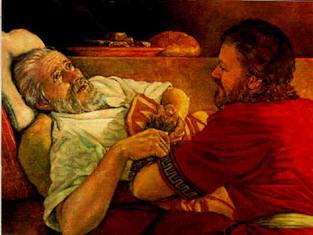
22 Jacob went close to his father Isaac, who touched him and said, “The voice is the voice of Jacob, but the hands are the hands of Esau.” 23 He did not recognize him, for his hands were hairy like those of his brother Esau; so he proceeded to bless him. 24 “Are you really my son Esau?” he asked. “I am,” he replied. 25 Then he said, “My son, bring me some of your game to eat, so that I may give you my blessing.” Jacob brought it to him and he ate; and he brought some wine and he drank. 26 Then his father Isaac said to him, “Come here, my son, and kiss me.” 27 So he went to him and kissed him. When Isaac caught the smell of his clothes, he blessed him and said, “Ah, the smell of my son is like the smell of a field that the Lord has blessed. 28 May God give you heaven’s dew and earth’s richness—an abundance of grain and new wine. 29 May nations serve you and peoples bow down to you. Be lord over your brothers, and may the sons of your mother bow down to you. May those who curse you be cursed and those who bless you be blessed.” 30 After Isaac finished blessing him, and Jacob had scarcely left his father’s presence, his brother Esau came in from hunting. 31 He too prepared some tasty food and brought it to his father. Then he said to him, “My father, please sit up and eat some of my game, so that you may give me your blessing.” 32 His father Isaac asked him, “Who are you?” “I am your son,” he answered, “your firstborn, Esau.” 33 Isaac trembled violently and said, “Who was it, then, that hunted game and brought it to me? I ate it just before you came and I blessed him—and indeed he will be blessed!” 34 When Esau heard his father’s words, he burst out with a loud and bitter cry and said to his father, “Bless me—me too, my father!”

img209Background2http://www.easyenglish.info/bible-commentary/genesis-part3-lbw.htm

In ancient times, before a father died, he gave blessings to his sons. The blessing to his oldest son was the most important one. It showed clearly that he had the right of the oldest son. So Isaac intended to give his blessing to Esau. But God had said that the older son would serve the younger one. (See Genesis 25:23.) And Esau had made a firm promise to give his right of the oldest son to Jacob. (See Genesis 25:33.) But Isaac did not agree with that. He still intended to give his blessing to Esau. Isaac lived for more than 20 years after this time. Jacob stayed in Paddan-aram for 20 years. (See Genesis 31:41.) And Isaac did not die until Jacob had returned. (See Genesis 35:29.)

Biblical Truths

Verse 22 – Because Isaac was so old, he could not hear clearly. He thought that the voice was Jacob’s voice. But he was not certain. However, he felt the goat’s skin on Jacob’s hands. So he was certain that the hands were hairy. Therefore, he believed that it was Esau. When Jacob came close to Isaac, Isaac smelled his clothes. (See verse 27.) They were Esau’s clothes, which Jacob was wearing. (See verse 15.) So Isaac was certain that it was Esau.

Verse 28 – The country where Isaac lived, Canaan, had very little rain for a part of each year. So at that time, dew was very important.

Verse 29 – ‘Let nations bend themselves down in front of you.’ This shows that you are their master. It shows that they give honor to you. And it shows that they are not your enemies.
‘Be a ruler over your brothers clearly gave the right of the oldest son. Isaac believed that he gave this right to Esau. Actually, he gave it to Jacob. Genesis does not tell us that Jacob had any other brother except Esau. So perhaps ‘your brothers’ means ‘your brother and your other relatives’.

Verse 33 – When a father gave his *blessing to his son, that blessing was true. God showed to the father what he should say. Therefore, the father could not change it.

Additional commentary from Matthew Henry3http://www.christnotes.org/commentary.php?com=mhc&b=1&c=27

When Esau understood that Jacob had got the blessing, he cried with a great and exceeding bitter cry. The day is coming, when those that now make light of the blessings of the covenant, and sell their title to spiritual blessings for things which have no value, will, in vain, ask urgently for them. Isaac, when he finally made sense of the deceit practiced on him, also trembled exceedingly. Those who follow the choice of their own affections, rather than the Divine Will of God, get themselves into a quandary. Soon Isaac recovers, and confirms the blessing he had given to Jacob, saying, I have blessed him, and he shall be blessed.

Those who part with their wisdom and grace, their faith and a good conscience, for the honors, wealth, or pleasures of this world, however they feign a zeal for the blessing, have judged themselves unworthy of it, and their doom shall be accordingly. A common blessing was bestowed upon Esau. This he desired. Faint desires of happiness, without right choice of the end, and right use of the means, deceive many of us into our own ruin. Multitudes go to hell with their mouths full of good wishes. The great difference is, that there is nothing in Esau’s blessing which points at Christ; and without that, the riches of the earth, and the plunder of the field, will be of little importance. Thus Isaac, by faith, blessed both his sons, according to their own faith as it should be.

Items for Discussion

  • What do you think it means when you accept the Covenant from God?
  • What does the term “receive a blessing” mean to you?
    • (Ref: a ceremony in which an ordained person invokes or claims to bestow divine help4Encarta Dictionary Online)
  • Where in our society today do we still give blessings?
  • What part of receiving a blessing is internal, in other words, up to you?
  • How can you tell if you or others have accepted the promises from God?


Hebrews 12:12-17
12 Therefore, strengthen your feeble arms and weak knees. 13 “Make level paths for your feet, “so that the lame may not be disabled, but rather healed. 14 Make every effort to live in peace with everyone and to be holy; without holiness no one will see the Lord. 15 See to it that no one falls short of the grace of God and that no bitter root grows up to cause trouble and defile many. 16 See that no one is sexually immoral, or is godless like Esau, who for a single meal sold his inheritance rights as the oldest son. 17 Afterward, as you know, when he wanted to inherit this blessing, he was rejected. Even though he sought the blessing with tears, he could not change what he had done.

Background5http://www.easyenglish.info/bible-commentary/hebrews-lbw.htm

The author of this book does not tell us his name. All that we know is that *Timothy was a friend of both the writer and the readers (13:23). While the first readers were probably Christian Jews, the author did not write for all Jews. He wrote to a group, whom he knew well, that had become Christian. The book shows that they were not strong in their belief. They were in danger of going back to their old religion. The writer argues from the Old Testament to keep them trusting in Jesus.

From early times the church believed that the readers lived in Jerusalem. The title, the letter to the Hebrews, could show that they were Jews in Israel who spoke Hebrew. Many Jews who did not live in Israel spoke *Greek. Another suggestion is that the readers lived in Rome. There is in fact so little evidence in the book itself that we have to say that we do not know where the readers were living.

A bishop of Rome named Clement knew this letter and used it in his own writing. He wrote in about AD 96. The author of the letter to the Hebrews wrote his letter before then. From what is in the book we could argue that the Jews were still carrying on the temple ceremonies in Jerusalem. We know that the *Romans destroyed the temple in AD 70. If the date of writing was later, the author would have noted that event. So the date of the letter was probably before AD 70.

The Christian Jews had to make a choice. They could not continue in Judaism and be Christians. They must decide which way to go. It was either to go back to being Jews or to go on to be Christians. It seems that their nation had now turned against Christians. They could not now go to the temple as the Jews would not let them. The writer tries to show his readers that the right choice was to continue to trust in Jesus. That was much better than all the ceremonies of their former religion, which Jesus had replaced.

The way the author has written the book is not like any other book in the New Testament. We call it a letter, but it does not start like one. It does finish like a letter, but the author does not give us his name. The writer knows the readers and is eager to see them again (13:19, 23). He thinks well of them (6:9), but they should by now have been able to teach (5:12). He knows all about their past and their needs. The way he writes is almost like a speech or a lesson. He cares about his friends and wants to advise them in the choices they have to make.

Bible Truth6http://www.christnotes.org/commentary.php?b=58&c=12&com=mhc

A burden of affliction is apt to make the Christian’s hands hang down, and his knees grow feeble, to dispirit him and discourage him; but against this he must strive, that he may better run his spiritual race and course. Faith and patience enable believers to follow peace and holiness, as a man follows his calling constantly, diligently, and with pleasure. Peace with men, of all sects and parties, will be favorable to our pursuit of holiness. But peace and holiness go together; there can a right and just peace without holiness. Where persons fail of having the true grace of God, corruption will prevail and break forth. We are called to beware of any lust in the heart, which seems to be dead, but could spring up, cause trouble and disturb the whole body.

“Falling away from Christ” means that we prefer the delights of the flesh to the blessing of God, and give up our heavenly inheritance, as Esau did. But sinners will not always the capacity and access to their thoughts of the Divine blessing and inheritance as they now have. It may be man’s disposition to desire the blessing, but at the same time, to despise the means whereby the blessing is to be gained. God will neither cut the means from the blessing, or join the blessing with the satisfaction of the man’s lusts. Here, God’s mercy and blessing were not sought after carefully and, therefore, cannot be obtained.

Items for Discussion

  • What are the ways we are pulled by the world away from Christ?
  • What kind of criteria is being brought forward by the author of Hebrews to prepare the Christians for the receipt of God’s Blessings?
  • How do you personally keep your spirits up and attitude positive when everything around you is going wrong?
  • What would the benefits be of a positive attitude when afflicted?
  • How does temptation use discourse and negativity to weaken people?

Discussion Challenge

  • Read Hebrews 12:14 again: How do we as a church, become holy people?
    • We live in a world in which there is so much disagreement. Even in the church there are often quarrels. We have a duty to try to live without quarrels. We are to try to be in unity with all people. That means both with those who trust God, as we do, and with those who do not. It may not always be possible, but we are not to be the cause of trouble. The writer of Hebrews tells us to be holy as well. The meaning of the word ‘holy’ has as its base that we belong to God alone. He is to be the Master of all that we do. We should always live as God wants us to live. Only those who are holy will see God. No person can make himself or herself holy. It is God who makes us holy, when we obey him and trust in Jesus.

It’s Easy Once You Know The Secret

Isaiah 28:161NIV New International Version Translations
16 So this is what the Sovereign Lord says: “See, I lay a stone in Zion, a tested stone, a precious cornerstone for a sure foundation; the one who relies on it will never be stricken with panic.

img210Background2http://www.christnotes.org/commentary.php?com=mhc&b=23&c=0

Isaiah prophesied in the reigns of Uzziah, Jotham, Ahaz, and Hezekiah. He has been called the evangelical prophet, on account of his numerous and full prophesies concerning the coming and character, the ministry and preaching, the sufferings and death of the Messiah, and the extent and continuance of Christ’s kingdom. Under the veil of the deliverance from Babylon, Isaiah points to a much greater deliverance, which was to be effected by the Messiah; and seldom does he mention the one, without alluding at the same time to the other. Isaiah is often so enthralled with the prospect of the more distant deliverance that he often loses sight of that which was nearer, and dwells on the Messiah’s person, office, character, and kingdom.

Chapter 28 discusses the desolations of Samaria. (1-4) The prosperity of Judah; with reproofs for sinfulness and unbelief. (5-15) Christ is pointed out as the sure Foundation for all believers. (16-22) God’s dealings with his people. (23-29).

Biblical Truths3http://www.christnotes.org/commentary.php?com=mhc&b=23&c=28

Here is a promise of Christ, as the only foundation of hope for escaping the wrath to come. This foundation was laid in God’s house, in the eternal counsels of God. This foundation is a stone, firm and able to support his church. It is a tried stone, a chosen stone, approved of God, and never failed any who made trial of it. A cornerstone, binding together the whole building, and bearing the whole weight; precious in the sight of the Lord, and of every believer; a sure foundation on which to build. And he who in any age or nation shall believe this testimony, and rest all his hopes, and his never-dying soul on this foundation, shall never be confounded. The right effect of faith in Christ is, to quiet and calm the soul, till events shall be timed by Him, who has all times in his own hand and power.

Whatever men trust to for justification, except the righteousness of Christ; or for wisdom, strength, and holiness, except the influences of the Holy Ghost; or for happiness, except the favor of God; that protection in which they thought to shelter themselves, will prove not enough to answer the intention. Those who rest in a righteousness of their own, will have deceived themselves: the bed is too short, the covering too narrow. God will be glorified in the fulfilling of his counsels. If those that profess to be members of God’s church, make themselves like Philistines and Canaanites, they must expect to be dealt with as such. Then dare not to ridicule the reproofs of God’s word, or the approaches of His judgments.

Items for Discussion

  • The cornerstone (or foundation stone) concept is derived from the first stone set in the construction of a masonry foundation, important since all other stones will be set in reference to this stone, thus determining the position of the entire structure. How is a cornerstone similar to that of our Christ?
  • What is a capstone?
  • How is Christ also like a capstone?
  • Using both the cornerstone and capstone, how would you describe the purpose of Christ?
  • How would you explain to someone the idea that Christ is the foundation of your salvation?


Romans 10:8-13
8 But what does it say? “The word is near you; it is in your mouth and in your heart,” that is, the message concerning faith that we proclaim: 9 If you declare with your mouth, “Jesus is Lord,” and believe in your heart that God raised him from the dead, you will be saved. 10 For it is with your heart that you believe and are justified, and it is with your mouth that you profess your faith and are saved. 11 As Scripture says, “Anyone who believes in him will never be put to shame.” 12 For there is no difference between Jew and Gentile—the same Lord is Lord of all and richly blesses all who call on him, 13 for, “Everyone who calls on the name of the Lord will be saved.”

Background4http://www.christnotes.org/commentary.php?b=45&c=1&com=mhc

The doctrine of which the apostle Paul wrote, set forth the fulfilment of the promises by the prophets. It spoke of the Son of God, even Jesus the Saviour, the promised Messiah, who came from David as to his human nature, but was also declared to be the Son of God, by the Divine power which raised him from the dead. The Christian profession does not consist in a factual knowledge or blind faith, much less in perversion of God’s Word. A profession of faith means obedience. And all those, and those only, are brought to obedience of the faith, who are effectually called of Jesus Christ. This is simply stated, the secret to salvation.

Bible Truth5http://www.easyenglish.info/bible-commentary/romans-lbw.htm

Verses 8-11 The message that the apostles preached was about trust in Christ and his resurrection. In other words, it was about faith. And God would save people who have faith in Christ. They would have a right relationship with God. God would make them righteous. He would give them the Holy Spirit. And God’s Spirit would teach them how to live in a manner that pleases God.

Their relationship with God would not depend on the law. It would depend on Christ, who made the law complete. By his death, Christ did everything that the law orders to make people righteous. And by his resurrection, we too receive a new life. (See Romans 6:1-8.) That is why Paul emphasizes Christ’s death and resurrection here.

Paul tells the people to declare, ‘Jesus is Lord.’ The word ‘Lord’ has two meanings. Slaves would call their master, ‘Lord’. The word shows that the slave intends to obey his master. In the same manner, Christians should obey Jesus completely (John 13:13-16) as their Master. But the word ‘Lord’ is also a translation of God’s most sacred name. So Paul was emphasizing that Jesus is God. And Paul said that this belief was essential for Christians to declare.

In verse 9, Paul is describing the moment when a person becomes a real Christian. For the first time, that person has real faith in God. That person believes in his or her heart. It is not sufficient simply to say the words without faith. But if that person is sincere, God will give faith to that person (Matthew 7:7-8). And the actual words that a person speaks at that moment do not always need to be these words. But these are good words to say.
In fact, ‘Jesus is Lord’ was the earliest form of creed. People would declare in public, ‘Jesus is Lord’ at their baptism. Afterwards, they would continue to tell other people about their faith (1 Peter 3:15). Christ will never disappoint anyone (Isaiah 28:16). He will save everyone who trusts him.

Verses 12-13 Christ is Lord of both Jews and Gentiles. Christ offers salvation to everyone. He will save everyone who asks him. Paul uses words from Joel 2:32 to emphasize this. Peter used the same words at the end of his speech on the day called Pentecost (Acts 2:21).

Items for Discussion

  • Is the Apostle Paul telling us that to be saved, one must believe in Christ?
  • So what does it mean to “Believe in Christ?”
  • What is the difference in one’s faith walk between their “Verbal” profession of faith and their “Heart-filled” profession of faith?
  • Why are we called to do both?
  • Why is it so important to declare “Jesus as Lord?”
  • How do you personally draw comfort in verse 13’s message from Paul?

Discussion Challenge

  • How should a group gathered as Christians declare “Jesus as their Lord?”

A Feast In Exile

Isaiah 55:1-131NIV New International Version Translations
1 “Come, all you who are thirsty, come to the waters; and you who have no money, come, buy and eat! Come, buy wine and milk without money and without cost. 2 Why spend money on what is not bread, and your labor on what does not satisfy? Listen, listen to me, and eat what is good, and you will delight in the richest of fare. 3 Give ear and come to me; listen, that you may live. I will make an everlasting covenant with you, my faithful love promised to David. 4 See, I have made him a witness to the peoples, a ruler and commander of the peoples. 5 Surely you will summon nations you know not, and nations you do not know will come running to you, because of the Lord your God, the Holy One of Israel, for he has endowed you with splendor.” 6 Seek the Lord while he may be found; call on him while he is near.7 Let the wicked forsake their ways and the unrighteous their thoughts. Let them turn to the Lord, and he will have mercy on them, and to our God, for he will freely pardon. 8 “For my thoughts are not your thoughts, neither are your ways my ways,” declares the Lord. 9 “As the heavens are higher than the earth, so are my ways higher than your ways and my thoughts than your thoughts.10 As the rain and the snow come down from heaven, and do not return to it without watering the earth and making it bud and flourish, so that it yields seed for the sower and bread for the eater, 11 so is my word that goes out from my mouth: It will not return to me empty, but will accomplish what I desire and achieve the purpose for which I sent it. 12 You will go out in joy and be led forth in peace; the mountains and hills will burst into song before you, and all the trees of the field will clap their hands. 13 Instead of the thornbush will grow the juniper, and instead of briers the myrtle will grow. This will be for the Lord’s renown, for an everlasting sign, that will endure forever.”

img211Background2http://www.christnotes.org/commentary.php?com=mhc&b=23&c=0

Isaiah prophesied in the reigns of Uzziah, Jotham, Ahaz, and Hezekiah. He has been called the evangelical prophet, on account of his numerous and full prophesies concerning the coming and character, the ministry and preaching, the sufferings and death of the Messiah, and the extent and continuance of Christ’s kingdom. Under the veil of the deliverance from Babylon, Isaiah points to a much greater deliverance, which was to be effected by the Messiah; and seldom does he mention the one, without alluding at the same time to the other. Isaiah is often so enthralled with the prospect of the more distant deliverance that he often loses sight of that which was nearer, and dwells on the Messiah’s person, office, character, and kingdom.

Chapter 55 discusses our invitation to receive freely the blessings of the Savior. (1-5) and God’s gracious offers of pardon and peace. (6-13)

Biblical Truths3http://www.easyenglish.info/bible-commentary/isaiah49-57-lbw-nh.htm

Verses 1-2: The word pictures of familiar things to eat and to drink show God’s great care for his people. His free gifts truly satisfy what people need.

Verse 3: The Lord will repeat the covenant that he made with David long ago (see 2 Samuel 7:8-12 and Psalm 89:33-37). This time the covenant will not be with David’s family (see 2 Samuel 7:16), but with the whole nation of Israel.

Verse 4-5: David’s extraordinary defeat of much greater armies was evidence to the nations of the power of David’s God (see Psalm 18:43-45).

Verse 6: God is not a distant God. People can easily reach him. He is close to them. He hears their prayers.

Verse 7: God tells evil people to repent and to return to God and to live in His way. Then God will forgive them completely.

Verse 8: God’s plans are totally different in nature from human plans. There is no certainty that human plans will succeed. But there is no doubt that God will carry out his plans perfectly.

Verse 9: God uses ‘sky’ and ‘earth’ as picture words to show how different are God’s actions from human actions

  • The sky is far above the earth. And God’s plans are much more wonderful than any human plan.

Verses 10-11: God’s kind purposes are for the benefit of all people. That is why he carries out his purposes.

  • See Isaiah 40:8 for another passage about the nature and effect of God’s word.

Verses 12-13: The state of the people of God’s relationship with the Lord also affects all that he has created. The negative effect appeared as early as the events soon after God created the world (see Genesis 3:17-18).
It is not just the people themselves who sing on their journey home. Isaiah describes how mountains, hills and even trees join in. The people now have a right relationship with God. And this fact affects everything that surrounds them.

Items for Discussion

  • God describes a different way to satisfy thirst and hunger – How is this different from physical thirst and hunger?
  • We live in a time when social programs abound to remove many of the physical distresses of poverty – How do the social programs of the “church” differ from those of government?
  • Why is God’s “bread” truly filling to the “human?”
  • What are God’s expectations (our behavior) that He assigned to His Covenant? In other words, what is our responsibility to receive His blessings?
  • When we translate God’s model of generosity to our society today, what would you expect to see?
  • Where is today’s society failing?


Luke 13:1-9
1 Now there were some present at that time who told Jesus about the Galileans whose blood Pilate had mixed with their sacrifices. 2 Jesus answered, “Do you think that these Galileans were worse sinners than all the other Galileans because they suffered this way? 3 I tell you, no! But unless you repent, you too will all perish. 4 Or those eighteen who died when the tower in Siloam fell on them—do you think they were more guilty than all the others living in Jerusalem? 5 I tell you, no! But unless you repent, you too will all perish.” 6 Then he told this parable: “A man had a fig tree growing in his vineyard, and he went to look for fruit on it but did not find any. 7 So he said to the man who took care of the vineyard, ‘For three years now I’ve been coming to look for fruit on this fig tree and haven’t found any. Cut it down! Why should it use up the soil?’ 8 “‘Sir,’ the man replied, ‘leave it alone for one more year, and I’ll dig around it and fertilize it. 9 If it bears fruit next year, fine! If not, then cut it down.’”

Background4http://www.christnotes.org/commentary.php?com=mhc&b=42&c=0

The Apostle Luke is believed to have been a physician, and a companion of the apostle Paul. The style of his writings, and his acquaintance with the Jewish rites and usages, sufficiently show that he was a Jew, while his knowledge of the Greek language and his name, speak to his Gentile origin. He is first mentioned Acts 16,10 and 11 as being with Paul at Troas, where he travelled with Paul to Jerusalem, and was with him in his voyage, and in his imprisonment at Rome. This Gospel appears to be designed to supersede many defective and unauthentic narratives in circulation at that time, and to give a genuine and inspired account of the life, miracles, and doctrines of our Lord, learned from those who heard and witnessed his discourses and miracles.

Bible Truth5http://www.christnotes.org/commentary.php?com=mhc&b=42&c=13

Mention is made to Christ of the death of some Galileans. This tragic story is briefly related here. In Christ’s reply he speaks of another event, which, like it, gave an instance of people taken away by sudden death. Towers, that are built for safety, often prove to be men’s destruction. He cautioned his hearers not to blame great sufferers, as if they were therefore to be accounted great sinners. As no place or employment can secure from the stroke of death, we should consider the sudden removal of others as warnings to ourselves. On these accounts Christ founded a call to repentance. The same Jesus that bids us to repent, for the kingdom of heaven is at hand, bids us to also repent, for otherwise we shall perish.

This parable of the barren fig-tree is intended to enforce the warning given just before: the barren tree, except if it brings forth fruit, will be cut down. This parable in the first place refers to the nation and people of the Jews. Yet it is, without doubt, for awakening all that enjoy the means of grace, and the privileges of the visible church. When God has borne long, we may hope that he will bear with us yet a little longer, but we cannot expect that he will bear always.

Items for Discussion

  • What are several characteristics about our God that become apparent after reading Christ’s Words in the Gospel according to Luke?
  • Using the characteristics of our God you just discussed, how would you describe a repentance that God would approve of?
  • If a tree is cut down which bears no fruit, then in what way should we as a people, church or nation, bear fruit so that we are not the tree to be cut down and discarded?
  • How would you measure our “fruit”?

Discussion Challenge

  • How does the Church today help its members “bear fruit” that God approves of?
« Older posts Newer posts »

"For it is by grace you have been saved" - Ephesians 2:8-9  

Copyright: © 2001 - 2025 Lostpine

Translate »