Biblical wisdom, historical insight, and personal growth — all in one place

Category: Snapshots (Page 31 of 45)

Unrelenting Love of God

Hosea 11:1-111NIV New International Version Translations
1 “When Israel was a child, I loved him, and out of Egypt I called my son. 2 But the more I called Israel, the further they went from me. They sacrificed to the Baals and they burned incense to images. 3 It was I who taught Ephraim to walk, taking them by the arms; but they did not realize it was I who healed them. 4 I led them with cords of human kindness, with ties of love; I lifted the yoke from their neck and bent down to feed them. 5 “Will they not return to Egypt and will not Assyria rule over them because they refuse to repent? 6 Swords will flash in their cities, will destroy the bars of their gates and put an end to their plans. 7 My people are determined to turn from me. Even if they call to the Most High, he will by no means exalt them. 8 “How can I give you up, Ephraim? How can I hand you over, Israel? How can I treat you like Admah? How can I make you like Zeboiim? My heart is changed within me; all my compassion is aroused. 9 I will not carry out my fierce anger, nor will I turn and devastate Ephraim. For I am God, and not man—the Holy One among you. I will not come in wrath. 10 They will follow the LORD; he will roar like a lion. When he roars, his children will come trembling from the west. 11 They will come trembling like birds from Egypt, like doves from Assyria. I will settle them in their homes,” declares the LORD.

clip_image138Background2http://www.easyenglish.info/bible-commentary/hosea-lbw.htm

Hosea wrote in the middle of the eighth century BC (Before Christ). He gave most of his messages to Israel, the country in the north. But some of the messages were for Judah, the country in the south. The book has many curses and blessings, but there are many more curses than blessings. If we want to understand this book, we need to understand the covenant at Sinai. The curses and blessings of Hosea are connected to this covenant. Hosea’s job was to tell his people that there was danger. God was going to make sure that Israel kept his covenant. Hosea said that God was going to punish his people. It is the same message that many of the prophets gave before the exile. In most of the book, Hosea says that Israel will have death and illness. He also says that another nation will destroy Israel and take them away. When these things have happened, God will be able to bless Israel again. It is important that we understand what these promises mean. Israel will not be able to avoid God’s anger. Israel has broken the covenant and so the curses are going to happen soon.

Only a few people in Israel were loyal to God at this time. More people in Judah were loyal to God. Israel was a strong and rich country. The people of Israel were good at fighting wars. Because of this, people from Israel met people from other countries. This meant that Israel knew about other peoples’ gods. They forgot the commandments of Sinai. In the past, there was a group of kings that started with Jehu in 842 BC. This group of kings ended with the death of Jeroboam 2nd (793 – 753 BC). But, after he died, there were six more kings in Israel. It was a difficult time. Other leaders in the country killed these kings. Also, there was a war between Assyria and Israel. In 734 BC, Israel became a much smaller country. This was the beginning of the end for Israel. Then, in 722 BC, Assyria destroyed Israel.

We are not sure where Hosea gave his messages. Maybe it was in Samaria and Bethel. None of the messages has dates. Hosea might have known Amos, who was older than he was. Amos also wrote messages to Israel. We do not know if Hosea spoke his messages to people. The message of 5:1-7 suggests that he did. We know very little about Hosea and his family. Hosea tells us very few things about himself.

Hosea believed that it is important to know God as a person. People have called him the Saint John of the Old Testament (OT). Hosea does not want the peoples’ sacrifices to be empty. This is when the person who offers the sacrifice is not sincere. He wants their sacrifices to help them to know God in a true way.

Bible Truths3http://www.easyenglish.info/bible-commentary/hosea-lbw.htm

In chapter 11, God looks to the past in Israel’s life. In verse 1, God remembers what has happened to Israel when she was a child. God spoke to Moses when he began his journey to Egypt. God said, ‘Israel is my first son … let my son go’ (Exodus 4:22-23). It is when Israel became free. There are other places in the Old Testament where God describes himself as a father (Isaiah 1:2; Jeremiah 3:19). The word ‘call’ in verse 1 can mean different things in the OT. It can mean that God wanted to bring the people of Israel together. The life of Jesus did this completely.

But Israel did not want to listen to God’s call (verse 2). She showed this by her worship of the Baals and of other false gods. Israel chose new idols. They broke the first rule of the covenant. This was, ‘You will have no other gods but me’ (Exodus 20:3).

In verse 3, there is a beautiful picture of a father. Israel was like a small child whom God helped to walk. It was God who did this. Israel could not see that. When the people of Israel grew up, they did not want to live like true sons.

In verse 4, the picture changes a little. It is not clear what the verse means. Perhaps the verse means that God is like a farmer. He wants to be sure that his animals are well. He wants to be sure that they have enough food. This is the same way that God fed Israel in the desert (Exodus 16).

But in verse 5 the idea changes. Hosea tells Israel about exile again. The word ‘Egypt’ means the enemy. Assyria is the country that will take them into exile. Israel will not be a nation on its own. In 5:13 and 10:6 Hosea called the king of Assyria a ‘great king’. Soon this king will make sure that Israel cannot choose where she lives. Israel did not thank God for what he had done for her. This was her sin.

Assyria will win against Israel in a war (verse 6). The people of Israel will not be safe. The walls of their cities will come down. The sword of the enemy will become the sword of God. He uses the sword to keep his covenant. The people will find it difficult to live without God. They will not want to turn away from him (verse 7). Then they will want to come back to God. But he will not listen. It will be too late.

In verse 8 there is a change in ideas. Again, there is hope for Israel. In exile, Israel will turn back to God. God is a God of mercy. He does not want to punish Israel too much. He could never let other nations win against Israel. Admah and Zeboiim were cities that were near Sodom and Gomorrah (Genesis 10:19). God destroyed Admah and Zeboiim when he destroyed Sodom and Gomorrah (Genesis 19:24-25). This was when he was very angry. But God says that he will change his mind.

There is not a man anywhere who is completely true (verse 9). But God is not like this. He will be true to the love that he has shown to Israel in the past. This is the only place in Hosea where we see the word ‘holy’. We see the word 26 times in Isaiah. God is different from men. He acts in different ways. This is not a promise for the people who are living with Hosea. It is a promise for the children of these people. God’s ‘anger’ is the right attitude for him to show. This is when the people have done wrong things. But, because he loved them, he wanted them to repent. Then he could forgive them.

In the future, Israel will return to God (verse 10). Then they will be able to return from exile. God himself will tell everyone when this moment comes. He will make sure that everyone hears. Perhaps the lion means that God is calling people to hear his judgement (Amos 1:2, Joel 3:16). The west means the islands of the sea. It also means the land near the sea.

Israel will hurry home (verse 11). Birds can travel fast. Hosea uses the picture of a bird in a good way. (In 7:11 the dove meant that Israel was silly.) The people will ‘fly’ back to their homes. Nothing will stop them. The promise of 2:25 will happen – ‘I will plant many seeds in the land’. But Israel’s true return will only happen because of Christ. He begins and finishes the new covenant.

Items for Discussion

  • How do parents handle a child that is constantly misbehaving?
  • Can you change behaviour without discipline?
  • Hosea believed that it is important to know God as a person. How do people get to know God?
  • Does a relationship with someone help with understanding discipline?
  • What type of discipline destroys relationships and what kind strengthens them?
  • Is God being unfair when good people are disciplined along with those who deserve it?


John 3:16-17
16 “For God so loved the world that he gave his one and only Son, that whoever believes in him shall not perish but have eternal life. 17 For God did not send his Son into the world to condemn the world, but to save the world through him.

Background4http://www.easyenglish.info/bible-commentary/john-ma-lbw.htm

Most people agree that John, Jesus’ disciple, wrote the 4th Gospel. John’s father was called Zebedee. And John had a brother called James, who became also one of Jesus’ disciples (Matthew 4:21; Mark 1:19-20; Luke 5:10). The family fished on Lake Galilee. Zebedee owned a boat. He employed men to help with his business.

Jesus called John and James: the ‘sons of thunder’. Thunder is the loud noise that we hear during a storm. Perhaps he gave them this name because they became angry quickly. For example, they wanted God to destroy a village in Samaria. This was because the people there had not wanted Jesus to enter the village (Luke 9:52-56).

Simon Peter, who was their partner in the business, became also a disciple of Jesus (Luke 5:1-11). Simon Peter, James and John were Jesus’ special friends. They were the only disciples with Jesus when he raised Jairus’ daughter from death (Mark 5:37). On another occasion, Jesus took Simon Peter, James and John up a mountain. There, they saw him as he talked with Moses and Elijah. They heard God’s voice. God said that Jesus was his Son. And they must listen to Jesus (Mark 9:2-12). And on the night before Jesus died, John and Simon Peter made the arrangements for the Passover meal (Luke 22:8).

So John knew Jesus very well. John did not refer to himself by his name in his Gospel. However, there are many references to ‘the disciple whom Jesus loved’. John did not mention this disciple’s name. Many people think that this disciple was John.

John wrote this Gospel about AD 85-90 but not later than AD 100. John was a very old man then. It is possible that he dictated his Gospel to another person. This was usual in the first century AD. Paul dictated some of his letters to his churches.

Biblical Truths

Verse 16 This is probably the most famous verse in the Bible. It expresses in only a few words what Christians believe. It tells us the main reason why God sent his Son to die on our behalf. There are several reasons why God did this.

He did it because he is fair. If people do wrong things, they deserve a punishment. So Jesus suffered our punishment in our place.

He did it because he is holy. God cannot accept us, because we sin. But Jesus, who never sinned, took our place. He died instead of us. When we believe this, we receive Jesus’ righteousness as our own. So when God looks at us, he chooses to see Jesus’ righteousness instead of our sin.

But this verse emphasises the main reason why God sent Jesus to die. It was because God loved us all so much.

Love is more than just one of God’s qualities. His nature is love. God does everything because he loves. God’s love always reaches out to us, the people that he has made. God’s love is never selfish. He gave to us the most precious thing that he had: his only Son.

‘Eternal life’ does not mean just life that continues without an end. Many people have miserable lives. Many people are poor, or hungry, or ill; or they suffer with pain. It would be bad if this kind of life continued without an end. But eternal life means the wonderful life that God gives to us by means of Jesus. He gives it to us now. It is our promise that we will live forever, even after our death. In eternal life, there is no more death, or disease. There is no enemy or sin. Bad things do not happen. Our life on the earth is only a short part of our life with God. After we die, we will live this wonderful life with him always.

Eternal life is God’s free gift to us. We cannot earn it. There is only one way to receive it. We must believe in Jesus. ‘To believe in’ means more than just to know that Jesus is God. Even the devil knows that! (For example, Luke 4:33-34; James 2:19.) It means that we must trust Jesus completely. Only Jesus can save us from the results of our sins. We must let him rule every part of our lives completely. He has a plan for each one of us. We must believe that all his words in the Bible are true. We must obey him. We must believe that he gives us the power to change our characters. He will make us become more like him, if we let him.

Verses 17 God sent Jesus to rescue us from the results of our sins. He did not send Jesus to punish us.

Items for Discussion

  • What are the attributes of love?
  • What kind of earthly examples can you think of that demonstrate the power of love?
  • What creates the very nature of love in a person?
  • Can a person be happy in this world without love? (It can be of people, professions, projects, pursuits, etc.)
  • Do you think that women or men have a stronger sense of love, a capacity to meet the attributes you described above? Explain your opinion.
  • How is love changed when there is no relationship with God?
  • What changes in a person when they know how to love?

Discussion Challenge

  • How should any group of Christians demonstration John 3:16 and 17?

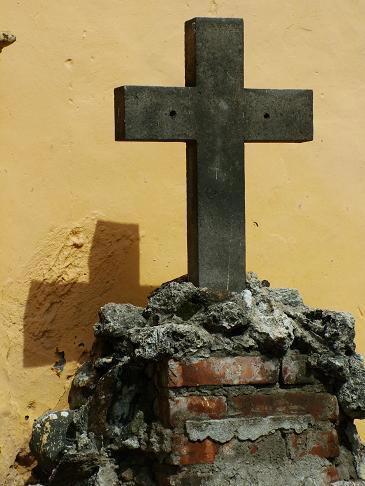
The Shadow of the Cross

Isaiah 50:4-9a1NIV New International Version Translations
4 The Sovereign LORD has given me an instructed tongue, to know the word that sustains the weary. He wakens me morning by morning, wakens my ear to listen like one being taught. 5 The Sovereign LORD has opened my ears, and I have not been rebellious; I have not drawn back. 6 I offered my back to those who beat me, my cheeks to those who pulled out my beard; I did not hide my face from mocking and spitting. 7 Because the Sovereign LORD helps me, I will not be disgraced. Therefore have I set my face like flint, and I know I will not be put to shame. 8 He who vindicates me is near. Who then will bring charges against me? Let us face each other! Who is my accuser? Let him confront me! 9 It is the Sovereign LORD who helps me. Who is he that will condemn me?

img139Background2http://en.wikipedia.org/wiki/Book_of_Isaiah

The 66 chapters of Isaiah consist primarily of prophecies of Babylon, Assyria, Philistia, Moab, Syria, Israel (the northern kingdom), Ethiopia, Egypt, Arabia, and Phoenicia. The prophecies concerning them can be summarized as saying that God is the God of the whole earth, and that nations which think of themselves as secure in their own power might well be conquered by other nations, at God’s command.

The authorship of the first 39 chapters are typically assigned to Isaiah without controversy, with the remaining chapters assigned to one or more scribes working in Isaiah’s tradition. Chapters 40 to 66 have been called “The Book of Comfort.” In the first eight chapters of this book of comfort, Isaiah prophesies the deliverance of the Jews from the hands of the Babylonians and restoration of Israel as a unified nation in the land promised to them by God. Isaiah reaffirms that the Jews are indeed the chosen people of God in chapter 44 and that Yahweh is the only God for the Jews (and the only God of the universe) as he will show his power over the mighty rulers of Babylon in due time in chapter 46. In chapter 45:1, the Persian ruler Cyrus is named as the person of power who will overthrow the Babylonians and allow the return of Israel to their original land.

The remaining chapters of the book contain prophecies of the future glory of Zion. A “suffering servant” is referred to (esp. ch. 53). Rabbinic Judaism understands this as a metaphor for Israel; Christians see it as referring to the Messiah. Although there is still the mention of judgment of false worshippers and idolaters (65 & 66), the book ends with a message of hope of a righteous ruler who extends salvation to his righteous subjects living in the Lord’s kingdom on earth.

Bible Truths3http://www.christnotes.org/commentary.php?com=mhc&b=23&c=50 Matthew Henry’s Commentary

Taken from Matthew Henry’s Commentary: As Jesus was God and man in one person, we find him sometimes speaking, or spoken of, as the Lord God; at other times, as man and the servant of Jehovah. He was to declare the truths which comfort the broken, contrite heart, those weary of sin, harassed with afflictions. And as the Holy Spirit was upon him, that he might speak as never man spoke; so the same Divine influence daily wakened him to pray, to preach the gospel, and to receive and deliver the whole will of the Father. The Father justified the Son when he accepted the satisfaction he made for the sin of man. Christ speaks in the name of all believers. Who dares to be an enemy to those unto whom he is a Friend? or who will contend with those whom he is an Advocate? Thus St. Paul applies it, Romans 8:33.

4http://www.easyenglish.info/bible-commentary/isaiah49-57-lbw-nh.htmVerse 4 – Here ‘tongue’ is a picture word, to refer to the Servant’s authority to speak God’s message. The Servant qualifies to be God’s messenger, because God has taught him what to say (see Jeremiah 1:9. Ezekiel 3:27). Moreover, God had comforted his special Servant. So the Servant can also speak from personal experience (see Isaiah 40:1-2).

Verse 5 – The Servant must listen carefully. That is, not only to hear God’s words, but also to understand God’s meaning.

Verse 6 – The Servant was willing to suffer.

Verse 7 – The Servant concentrates his mind on the Lord. That action gives the Servant the determination that he needs to carry on the Lord’s work. That determination is the meaning of the word picture about stone.

Verse 8 – The language of a court of law shows the Servant’s attitude. He has complete confidence in the Lord’s judgement.

Verse 9 – The attacks of those who oppose the Servant are too weak to succeed. Old clothes that insects have spoiled will fall to pieces. And the accuser’s arguments have no more substance than those old clothes. To pull out the hairs of a man’s beard was not only painful. It was the traditional way to bring shame upon a man (see Isaiah 7:20; Isaiah 15:2; Nehemiah 13:25).

Note: at the time in history when Isaiah lived, flint was one of the, if not the hardest of substances known. It would cut iron. It is a metaphor as to Christ’s commitment to His Father and an example to us all.

Items for Discussion

  • Compare the attitude described by Isaiah. Is Isaiah describing Christ? If so, in what ways?
  • Why would a servant be willing to suffer but not a king?
  • How was the attitude of the servant described by Isaiah a perfect description of humility?
  • What benefits did our world receive by Christ coming as a servant instead of a worldly king?


Mark 11:1-11
1 As they approached Jerusalem and came to Bethphage and Bethany at the Mount of Olives, Jesus sent two of his disciples, 2 saying to them, “Go to the village ahead of you, and just as you enter it, you will find a colt tied there, which no one has ever ridden. Untie it and bring it here. 3 If anyone asks you, ‘Why are you doing this?’ tell him, ‘The Lord needs it and will send it back here shortly.'” 4 They went and found a colt outside in the street, tied at a doorway. As they untied it, 5 some people standing there asked, “What are you doing, untying that colt?” 6 They answered as Jesus had told them to, and the people let them go. 7 When they brought the colt to Jesus and threw their cloaks over it, he sat on it. 8 Many people spread their cloaks on the road, while others spread branches they had cut in the fields. 9 Those who went ahead and those who followed shouted, “Hosanna!” “Blessed is he who comes in the name of the Lord!” 10 “Blessed is the coming kingdom of our father David!” “Hosanna in the highest!” 11 Jesus entered Jerusalem and went to the temple. He looked around at everything, but since it was already late, he went out to Bethany with the Twelve.

Background5http://www.americanbible.org/absport/news/item.php?id=92

There are several characteristics that make the Gospel of Mark unique. Too often, these special characteristics are overlooked because Mark is read in light of the other synoptic gospels (Matthew and Luke), or John, or even the letters of Paul.

Although still debated by some, the consensus among the majority of biblical scholars is that the Gospel of Mark was the first of the canonical Gospels to appear. Consequently, it served as a source for the authors of Matthew and Luke when they wrote their Gospels. Moreover, although the Gospel of Mark was probably not the first Christian text to be labeled as “gospel,” it is likely the first gospel to utilize a narrative structure (versus, for example, a “sayings” gospel).

The author of Mark places sharp emphasis on the humanity of Jesus. This is best seen perhaps with respect to Jesus’ suffering. In fact, the suffering of Jesus is the key to understanding Jesus’ true identity as the Messiah, Son of God, and Son of Man (see e.g., 8:31-33; ; and 10:33-34, et al.).

In Mark, faith is a gift of God; characters in the narrative either have it or they don’t. Furthermore, miracles do not lead to faith (compare the Gospel According to John), but rather, faith is required in order that miracles can take place (see e.g., 6:1-6).

Many readers of Mark have recognized for a long time the negative manner in which Mark portrays the disciples (including the authors of Matthew and Luke who “corrected” Mark’s treatment in various ways). The disciples in Mark come across as dimwitted, misguided, and selfish, rather than as Jesus’ privileged associates and great apostles of the church. There are a number of ways to interpret this. For instance, perhaps Mark meant to depict them as “fallible followers” and thus give his readers hope when they struggle to understand and follow Jesus. On the other hand, the author of Mark may well have had an axe to grind with the leaders of the church in his day.

Readers of Mark have also noticed Jesus’ frequent commands to silence and his efforts to hide his identity. This motif has often been referred to as the “Messianic secret.” Whether it is a historical representation or a literary construction of the author is a matter of debate. Regardless of which position one takes, however, the theme poses interesting challenges for interpretation. One important outcome of the Messianic secret in Mark is that it allows for a provocative use of irony on the part of the author. Since the reader does, in fact, know who Jesus really is, she/he can immediately grasp the ironic twist when, for instance, Jesus is identified on the cross as the “King of the Jews.”

Biblical Truths6http://www.christnotes.org/commentary.php?b=42&c=4&com=mhc Matthew Henry Concise Commentary

A new part of Mark’s Gospel begins here. Jesus enters Jerusalem as the Messiah. He teaches in the Temple and he argues with the religious authorities.

Verse 1 Bethphage and Bethany were two villages near each other on the slope of the Mount of Olives. Bethany was about two miles from Jerusalem. It was the village where Martha, Mary and Lazarus lived. They were friends of Jesus.

Verses 2-3 We think that Jesus made arrangements about the donkey some time before. We know from John’s Gospel that he made more than one visit to Jerusalem. Jesus spoke about ‘how often’ he would have gathered the people of Jerusalem to himself (Matthew 23:37). ‘The Lord needs it’ was the special sign to the owner that Jesus’ disciples were not stealing the animal. A donkey was the animal that a king used. That is why Jesus chose to ride on one. When a king went to war, he rode on a horse. A donkey showed that the king came in peace. Jesus made the words of Zechariah (9:9) come true. ‘Your king comes to you – – -. He is riding on a donkey.’ Because the young donkey had never carried anyone before, it was suitable for a holy purpose. It was like a young cow that had to be perfect for a sacrifice (Numbers 19:2).

Verses 7-8 The crowd were probably following a custom when they spread their clothes on the road. John’s Gospel says that they carried ‘palm’ branches (John 12:13)

Verses 9-10 ‘Hosanna’ is a word to praise God. It means ‘Please save us now’. It would be an appeal to God to save his people from their enemies. The word comes from Psalm 118:25. ‘Blessed is the man who comes’ was a welcome for people who were coming to a special day in Jerusalem. ‘The man who comes’ was also another name for the Messiah. The crowd was not shouting ‘Hosanna’ only as a cry of praise. They were asking God to save his people from the Romans now that their Messiah had come. Jesus showed that he rode in peace. But they did not understand. (A palm is a kind of tree.) So Christians call the day Palm Sunday.

Verse 11 Jesus rode down the Mount of Olives. He crossed the Kidron valley and he went into Jerusalem. He looked round at everything in the Temple. He was deciding what to do there next. But he went to Bethany, where he probably stayed with his friends. He could be quiet and he could gain strength from God. His friends would encourage him.

Items for Discussion

  • Think about the entrance Jesus makes into Jerusalem and his death only a few days later. How could a crowd of people turn on Him so fast?
  • How did the mistaken understanding of Christ’s kingship play a role in their change with regard to Christ?
  • Where do you see the “humanity” of Christ in these verses?
  • Where do you see the “God” in these verses?
  • How is Christ demonstrating His servanthood?

Discussion Challenge

  • Where are we, the modern church of today, still like the people of Jerusalem?

Why Not Me?

Psalm 301NIV New International Version Translations
1 I will exalt you, O LORD, for you lifted me out of the depths and did not let my enemies gloat over me. 2 O LORD my God, I called to you for help and you healed me. 3 O LORD, you brought me up from the grave; you spared me from going down into the pit. 4 Sing to the LORD, you saints of his; praise his holy name. 5 For his anger lasts only a moment, but his favor lasts a lifetime; weeping may remain for a night, but rejoicing comes in the morning. 6 When I felt secure, I said, “I will never be shaken.” 7 O LORD, when you favored me, you made my mountain stand firm; but when you hid your face, I was dismayed. 8 To you, O LORD, I called; to the Lord I cried for mercy: 9 “What gain is there in my destruction, in my going down into the pit? Will the dust praise you? Will it proclaim your faithfulness? 10 Hear, O LORD, and be merciful to me; O LORD, be my help.” 11 You turned my wailing into dancing; you removed my sackcloth and clothed me with joy, 12 that my heart may sing to you and not be silent. O LORD my God, I will give you thanks forever.

clip_image141Background2http://www.easyenglish.info/psalms/psalm030-taw.htm

We do not know when David wrote Psalm 30. Perhaps he had been very ill. He asked God to make him well again and God did. Perhaps all his people, the Jews, were ill: after they prayed, they all became well again.

We also do not know why Psalm 30 was “a song for blessing the house,” the title given to it. We do know that the Jews used it when they cleaned the house of God in Jerusalem, about 200 years before Jesus came to earth. That was after Antiochus Epiphanes had made it dirty in the eyes of God. Antiochus was a Greek ruler. He wanted to stop the Jews worshipping God because Antiochus thought that he was a god and should worship him.

Psalm 30 is often used when God answers us after we pray to him.

Bible Truths3http://www.christnotes.org/commentary.php?b=19&c=30&com=mhc

Psalm 30:1-5 – The great things the Lord has done for us, both by his providence and by his grace, bind us in gratitude to do all we can to advance his kingdom among men, though the most we can do is but little. God’s saints in heaven sing to him; why should not those on earth do the same? Not one of all God’s perfections carries in it more terror to the wicked, or more comfort to the godly, than his holiness. It is a good sign that we are in some measure partakers of his holiness, if we can heartily rejoice at the remembrance of it. Our happiness is bound up in the Divine favor; if we have that, we have enough, whatever else we want; but as long as God’s anger continues, so long the saints’ weeping continues.

Psalm 30:6-12 – When things are well with us, we are very apt to think that they will always be so. When we see our mistake, it becomes us to think with shame upon our carnal security as our folly. If God hide his face, a good man is troubled, though no other calamity befalls him. But if God, in wisdom and justice, turn from us, it will be the greatest folly if we turn from him. No; let us learn to pray in the dark. The sanctified spirit, which returns to God, shall praise him, shall be still praising him; but the services of God’s house cannot be performed by the dust; it cannot praise him; there is none of that device or working in the grave, for it is the land of silence. We ask aright for life, when we do so that we may live to praise him. In due time God delivered the psalmist out of his troubles. Our tongue is our glory, and never more so than when employed in praising God. He would persevere to the end in praise, hoping that he should shortly be where this would be the everlasting work. But let all beware of carnal security. Neither outward prosperity, nor inward peace, here, are sure and lasting. The Lord, in his favor, has fixed the believer’s safety firm as the deep-rooted mountains, but he must expect to meet with temptations and afflictions. When we grow careless, we fall into sin, the Lord hides his face, our comforts droop, and troubles assail us.

Items for Discussion

  • What are your fears about God?
  • When God is visibly present in your life, how do you change and how do you acknowledge Him?
  • David seems to be negotiating with God. Can we change God’s mind?
  • Where did David see hope?
  • How is this reinforced by our knowledge today of what is in the New Testament?


Acts 9:1-20
1 Meanwhile, Saul was still breathing out murderous threats against the Lord’s disciples. He went to the high priest 2 and asked him for letters to the synagogues in Damascus, so that if he found any there who belonged to the Way, whether men or women, he might take them as prisoners to Jerusalem. 3 As he neared Damascus on his journey, suddenly a light from heaven flashed around him. 4 He fell to the ground and heard a voice say to him, “Saul, Saul, why do you persecute me?” 5 “Who are you, Lord?” Saul asked. “I am Jesus, whom you are persecuting,” he replied. 6 “Now get up and go into the city, and you will be told what you must do.” 7 The men traveling with Saul stood there speechless; they heard the sound but did not see anyone. 8 Saul got up from the ground, but when he opened his eyes he could see nothing. So they led him by the hand into Damascus. 9 For three days he was blind, and did not eat or drink anything. 10 In Damascus there was a disciple named Ananias. The Lord called to him in a vision, “Ananias!” “Yes, Lord,” he answered. 11 The Lord told him, “Go to the house of Judas on Straight Street and ask for a man from Tarsus named Saul, for he is praying. 12 In a vision he has seen a man named Ananias come and place his hands on him to restore his sight.” 13 “Lord,” Ananias answered, “I have heard many reports about this man and all the harm he has done to your saints in Jerusalem. 14 And he has come here with authority from the chief priests to arrest all who call on your name.” 15 But the Lord said to Ananias, “Go! This man is my chosen instrument to carry my name before the Gentiles and their kings and before the people of Israel. 16I will show him how much he must suffer for my name.” 17 Then Ananias went to the house and entered it. Placing his hands on Saul, he said, “Brother Saul, the Lord—Jesus, who appeared to you on the road as you were coming here—has sent me so that you may see again and be filled with the Holy Spirit.” 18 Immediately, something like scales fell from Saul’s eyes, and he could see again. He got up and was baptized, 19 and after taking some food, he regained his strength. Saul spent several days with the disciples in Damascus. 20At once he began to preach in the synagogues that Jesus is the Son of God.

Background4http://www.abu.nb.ca/ecm/Acts00b.htm

The book of Acts has traditionally been called the Acts of the Apostles and this can be a bit confusing because the contents is not about all the apostles, but primarily on the life of Peter (Chapters 1-12) and Paul (Chapters 13-28). Rather than a history book it is more in line with a biography. Luke gives a record of the life and events of the early Church for a period of about sixty to sixty five years. It continues from where the gospels end (Matthew 28:19-20).

The book of Acts opens with instructions to the Disciples to wait in Jerusalem for the Holy Spirit. These instructions become the theme of the book of Acts and give us a clue to how the spread of Christianity would take place. The purpose of Acts is to show the spread of the Gospel throughout the then known world (Acts 1:1-8).

The disciples were to be witnesses. In the first twelve chapters the focus is on the Gospel going forth under Peter’s direction in Jerusalem. There the ministry was directed mainly among the Jews in Jerusalem. Then the life and ministry of the Apostle Paul is stressed in his missionary activities outside of the boarders of Israel. He is known as the Apostle to the Gentiles.

Without the Book of Acts there would be a large part of the events of the early Church missing. As is evident from a reading of the book the content is not merely historical but biographical in nature. Acts throws light on the life of God’s people.

Biblical Truths5http://www.easyenglish.info/bible-commentary/acts-lbw.htm

Verses 1-2 Saul had watched Stephen die. He had seen that Stephen was brave and good. Stephen did not hate the people who were killing him. He asked God to forgive them. But Saul was still angry. He wanted to destroy the church completely now. He did not want to destroy it just in Jerusalem. He wanted to destroy it in the city called Damascus, too. Damascus was in Syria, a country in the north. The Sanhedrin did not have any political power there. But the Romans allowed the Sanhedrin to arrest Jews in other countries. Then the Sanhedrin had to bring those Jews back to Jerusalem. Saul knew that some believers had escaped to Damascus after Stephen’s death. Many Jews lived in Damascus already. It would take about a week to walk there. But Saul wanted to go. So, he needed letters from the high priest. The letters would show that he had authority from the high priest.

‘The Way’ was the name for the new faith. That name appears several times in Acts. For example, it appears in Acts 19:9, 23; 22:4; 24:14, 22. The early Christians used it. The name shows that they followed the way by which people receive salvation.

Verses 3-6 Saul hated all Christians. He was very angry. Later, he said this about himself. He said, ‘I was very angry with them. I even went to foreign cities in order to persecute them’ (Acts 26:11). Then something special happened on the Damascus road. Luke included the story about that three times in Acts. Paul himself told the story twice, in his speeches (Acts 22:6-16; 26:12-18). But here, the story is in Luke’s own words.

We know that it happened at about noon (Acts 22:6). The light from heaven was brighter than the sun (Acts 26:13). It was so bright that Saul could not see. The force from the light was so strong that it knocked him down. He realised that the voice was from God. But the voice asked Saul a question, and that question confused him. He thought that he was working for God. That is why it confused him. So, he asked who was speaking. The answer was a shock to him. Now he knew that Jesus really was alive. What the believers said about Jesus was true! When Saul persecuted them, he was persecuting Jesus. Whenever Christians suffer, Jesus feels their pain, too.

Saul had always done what he wanted. He had told other people what to do. Now, the Lord Jesus said that Saul must go into the city. Someone else would tell him what to do now. Before, Saul had opposed Jesus. But now, he would obey Jesus for the rest of his life. This was not because Jesus had forced him. It was because Saul wanted to serve Jesus now. Now he knew that Jesus really is God’s Son.

Verse 7 The men with Saul were officers from the Sanhedrin.

Verses 8-9 Jesus Christ had appeared in front of Saul. It was not a dream. Saul had seen a bright light. This was Christ’s glory. He had heard Christ’s voice. Jesus Christ had shown to Saul that he (Jesus) was alive. Jesus had appeared in front of the other apostles. Now he had appeared in front of Saul. Saul would become an apostle, too (1 Corinthians 15:8-9). Saul had hated Christians and he had persecuted them. It did not seem possible that Saul could become an apostle. But God’s grace had made it possible.

  • This can encourage us. We must pray for people who hate us. And we must bless people who hurt us. We must pray for leaders who persecute Christians. Jesus changed Saul. Jesus can do anything.
  • But Saul needed help. He was blind. His companions led him into Damascus. He could not see for three days. He did not eat and he did not drink. Probably he was thinking about many things.

Verses 10-14 Many believers had escaped from Jerusalem. Ananias was one such believer. Luke tells us more about him in Acts 22:12. But Ananias knew that Saul had persecuted Christians in Jerusalem. He also knew why Saul had come to Damascus. Saul had come to arrest believers! People had told Ananias some very bad things about Saul. Ananias was probably very afraid of him.

The Lord was telling Ananias to go to Saul. (We can see from verse 17 that the Lord was Jesus.) Ananias was probably surprised. He thought that Saul was an enemy, who was powerful and dangerous. The Lord said, ‘Go to the street called Straight Street’ (verse 11). Straight Street was very long. It went across Damascus from the east to the west.

Ananias used the words ‘anyone who calls on your name’ (verse 14). This means anyone who believes in Jesus and also trusts in him. So, that person calls to Jesus for help. Those words are like the words that the prophet Joel wrote. Also Peter said similar words in Acts 2:21. ‘Then, the Lord will save whoever calls to him for help.’

Verses 15-16 Saul was a very clever man. He had gone to a school for rabbis. He was a citizen of Rome. People respected him. He spoke well in public. He also travelled a lot, so he was used to that too. Jesus had chosen him for a special job. He would tell many people in different countries about the good news. But it would not always be easy. Saul would suffer because he followed Jesus. This was not a punishment. Everyone who follows Jesus must be willing to suffer. Jesus himself warned us that people would persecute believers (for example, Luke 21:12-19).

Verses 17-19 Ananias obeyed immediately. He found Saul. When he greeted Saul, he called Saul ‘brother’. Ananias showed that he forgave Saul. He welcomed Saul and he accepted Saul into God’s family. Saul had already seen Ananias in a vision (verse 12). So, he was expecting Ananias to come. Saul knew again that Jesus had chosen him. Ananias put his hands on Saul. Then Saul could see again. The Holy Spirit filled him. Then Saul received baptism in water, probably from Ananias.

The believers in Samaria also received baptism in water. But they received it first, before the Holy Spirit filled them (Acts 8:16-17). For them, those two events happened in a different order. That did not matter. But it mattered that the believers were sincere. This was more important than the order in which the two events happened.

Saul could not have served Jesus without the Holy Spirit in him. God would help Saul by means of the Spirit. And God would guide him by the Spirit. Saul received spiritual strength. And he ate again; so then he had strength in his body, too.

Verses 20 How Saul had changed! He was telling the Jews that Jesus was the Messiah. Saul had hated Christians because they believed this. So, it should not surprise us that people were confused. But Saul had met Jesus himself. Now he was certain that Jesus was the Messiah.

Items for Discussion

  • What encounters have you had in life that generated a change in direction, a different attitude?
  • Some encounters are fearful and abrupt and others are calm and slow. What are the benefits of fear and shock?
  • Why do you think Jesus used such a dramatic and forceful way to reach Saul (Paul)?
  • How does one’s free impact their ability to respond to an encounter?
  • Why was Paul (Saul) to become such an effective apostle of Christ?
  • What do you think of Ananias and his role in Paul’s conversion to an effective disciple of Christ?
  • How did Paul turn what was originally his weakness toward God into a strength?
  • How does this apply to any Christian?

Discussion Challenge

  • Have you ever thought about why God has made His presence known in your life?

Tell Us!

Psalm 231NIV New International Version Translations
1 The LORD is my shepherd, I shall not be in want. 2 He makes me lie down in green pastures, he leads me beside quiet waters, 3 he restores my soul. He guides me in paths of righteousness for his name’s sake. 4 Even though I walk through the valley of the shadow of death, I will fear no evil, for you are with me; your rod and your staff, they comfort me. 5 You prepare a table before me in the presence of my enemies. You anoint my head with oil; my cup overflows. 6 Surely goodness and love will follow me all the days of my life, and I will dwell in the house of the LORD forever.

clip_image142Background2http://www.ccel.org/ccel/calvin/calcom08.xxix.html

This psalm is neither intermingled with prayers, nor does it complain of miseries for the purpose of obtaining relief; but it contains simply a thanksgiving, from which it appears that it was composed when David had obtained peaceable possession of the kingdom, and lived in prosperity, and in the enjoyment of all he could desire. That he might not, therefore, in the time of his great prosperity, be like worldly men, who, when they seem to themselves to be fortunate, bury God in forgetfulness, and luxuriously plunge themselves into their pleasures, he delights himself in God, the author of all the blessings which he enjoyed. And he not only acknowledges that the state of tranquillity in which he now lives, and his exemption from all inconveniences and troubles, is owing to the goodness of God; but he also trusts that through his providence he will continue happy even to the close of his life, and for this end that he may employ himself in his pure worship.

Bible Truths3http://www.easyenglish.info/psalms/psalm023-taw.htm

Verses 1–2: God is like a shepherd. In Israel, sheep followed their shepherd. The David, who wrote Psalm 23 said:

  • he makes me to lie down in green fields: these were fields where the grass was new. Grass is a plant that grows in fields. Cows and sheep eat grass. Green fields means that the sheep would find plenty to eat. And they would sleep easily.
  • he leads me to waters where I can rest: this was the best water. It was probably a well, not a river.

The shepherd leads the sheep to all that they need: food, rest and water. Jesus leads his people to all that they need. Remember – what we NEED is not always what we WANT.

Verses 3–4: God is like a guide. We do not know who led David to Barzillai, the place we believe David was talking about in this Psalm. There was a guide. Just as the old shepherd Barzillai made David think about God, so the guide made David think about God. Some Christians think verses 3 and 4 are also about the shepherd and his sheep. Others think that it is about a guide. That guide led David through the wild places to where Barzillai lived. Either of the two ideas are true. GOD IS LIKE A GUIDE. GOD IS ALSO LIKE A SHEPHERD. The valley of the River Jabbok was very dark. But with God as guide and shepherd David was safe. God brought David through the shadow of death. He will do the same for us – if we believe in Jesus. It is a great help to know that:

  • Jesus died and God raised him from the dead
  • if we believe in Jesus God will raise us from the dead

Verses 5–6: God is like a friend. Psalm 23:1-4 is about life on earth. Psalm 23:5-6 is about life in heaven. People that believe in Jesus will go there. In the psalm, Barzillai made a great dinner for David. He poured oil, from plants, on David’s head. This was usual in those days. He gave David wine to drink. While it made David feel very happy, it also made David think this: I WILL ALWAYS LIVE WITH GOD. It is the same for us. If we believe in Jesus we can say, “I will always live in the house of the LORD.” And of course, the house of the LORD is in heaven.

Items for Discussion

  • What do you think “heaven” will be like?
  • Do you think that some will have it “better” in heaven than others?
  • If you had to write a psalm today, what would you use in place of:
    • a shepherd
    • green pastures
    • quiet waters
    • a rod and a staff
    • enemies
    • oil for anointing
  • How is the promise of David’s psalm still so comforting in today’s world?

David is talking about a guide named Barzillai who led him to the green valley – Who are the “guides” in your own life today and how do they offer “guidance?”


John 10:22-30
22 Then came the Feast of Dedication at Jerusalem. It was winter, 23 and Jesus was in the temple area walking in Solomon’s Colonnade. 24 The Jews gathered around him, saying, “How long will you keep us in suspense? If you are the Christ, tell us plainly.” 25 Jesus answered, “I did tell you, but you do not believe. The miracles I do in my Father’s name speak for me, 26 but you do not believe because you are not my sheep. 27 My sheep listen to my voice; I know them, and they follow me. 28 I give them eternal life, and they shall never perish; no one can snatch them out of my hand. 29 My Father, who has given them to me, is greater than all; no one can snatch them out of my Father’s hand. 30 I and the Father are one.”

Background4http://www.christnotes.org/commentary.php?com=mhc&b=43&c=10 Matthew Henry’s Commentary

So much of John’s Gospel focused on the last few days of Christ’s life. Like someone about to leave, Christ focused His message on the important points, the points that would empower His disciples.

Matthew Henry says about these verses, “All who have anything to say to Christ, may find him in the temple. Christ would make us to believe; we make ourselves doubt. The Jews understood his meaning, but could not form his words into a full charge against him. He described the gracious disposition and happy state of his sheep; they heard and believed his word, followed him as his faithful disciples, and none of them should perish; for the Son and the Father were one. Thus he was able to defend his sheep against all their enemies, which proves that he claimed Divine power and perfection equally with the Father.”

Biblical Truths5http://www.easyenglish.info/bible-commentary/john-ma-lbw.htm

Verses 22-23 Hanukkah is a festival that happens every year in December. At this festival, Jews remember the events that had happened in Jerusalem 200 years before. A foreign king called Antiochus Epiphanes had defeated the Jews. This king wanted to destroy the Jewish religion. So he made the Jews leave the Temple. He and his people used the Temple to worship false gods. They even sacrificed a pig to their gods there. (A pig was an unclean animal to the Jews.) This event upset the Jews very much and it made them angry. One of their leaders, Judas Maccabeus, fought against Antiochus Epiphanes and his people. Judas Maccabeus defeated them and he made them leave the Temple. Then the Jews made the Temple clean again and they offered proper sacrifices to God.

So at Hanukkah, Jews remember when Judas Maccabeus got the Temple back from their enemies.

Verse 24 There were probably two main reasons why the Jewish leaders asked Jesus this question. Perhaps, some of them really wanted to know if Jesus was the Messiah. They believed that the Messiah would defeat the Romans. Then, the Jews could rule their own land again. However, their idea of what the Messiah would do was wrong. Jesus had not come to defeat human enemies. He had come to save people from the results of sin. But probably the other leaders wanted Jesus to say something against the law; either their own Law or Roman law. Then they would have a reason to arrest him.

Verse 25 But Jesus refused to answer them with a ‘yes’ or ‘no’. Instead, he spoke about the miracles as evidence of who he was.

Verses 26-29 Then Jesus spoke again about the idea of the shepherd and the sheep (verses 1-21). Jesus’ sheep meant all those people who believed in him. But the Jewish leaders did not believe him. They would not even believe when they saw the miracles. So they were not his sheep.

Then, Jesus made a wonderful promise to everybody who believes in him. He promised that he would always look after them. They would be with him always. Even death could not separate them from him (also see Romans 8:35-39).

This promise is for all Christians. It is for us today. When we belong to Jesus, nobody can take us away from him. The devil can never take away our gift of eternal life. Although our bodies may suffer, our spirits are safe. Like a shepherd with his sheep, Jesus protects us. He keeps us close to him. But we must listen to him when we pray. We must trust him and we must follow him. We must obey him always.
Jesus was able to promise all this because God, his Father, has given us to him. There is nobody more powerful than God.

Verse 30 Jesus is in complete unity with his Father, God. They share the same thoughts and desires. They agree about everything. They share exactly the same qualities.

The meaning of Jesus’ words in verse 30 was clear to his audience. His words would remind this Jewish audience about Deuteronomy 6:4. ‘Listen, all you who are Israelites! The Lord our God, the Lord is One (one God).’ So Jesus was saying that he is God. Certainly, that is what the Jewish leaders understood. The punishment for anyone who said such a thing was death. People would throw stones at the guilty person until that person was dead (Leviticus 24:16). The Jewish leaders were so angry that they wanted to do this immediately. What Jesus said was true. He was and he is God. But the Jewish leaders did not believe him.

Items for Discussion

  • If Christ was among us today, in a physical sense, how would you know it was Him?
  • What would the characteristics of Christ be that you would recognize first?
  • How do the “False Prophets” of today counterfeit these characteristics?
  • What would Christ think of our leaders today? Would He treat them as He did in our Bible Verse? If so, why? If not, why not?
  • How do we give ourselves and our families the basic understanding to “recognize Christ?”

Discussion Challenge

  • How do we practice the skills to recognize Christ? 

Heal Us!

Psalm 671NIV New International Version Translations
1 May God be gracious to us and bless us and make his face shine upon us, Selah 2 that your ways may be known on earth, your salvation among all nations. 3 May the peoples praise you, O God; may all the peoples praise you. 4 May the nations be glad and sing for joy, for you rule the peoples justly and guide the nations of the earth. Selah 5 May the peoples praise you, O God; may all the peoples praise you. 6 Then the land will yield its harvest, and God, our God, will bless us. 7 God will bless us, and all the ends of the earth will fear him.

clip_image143Background2http://www.easyenglish.info/psalms/psalm067-taw.htm

We do not know who wrote this psalm, or when. It uses two ideas from the Old Testament, one is from the Book of Numbers. The other is from the Book of Genesis. Here is Numbers 6:24-26. They are words that God spoke to Moses, for Moses to tell the people. SELAH is a word often used in the psalms; we do not know what it means, probably stop and think, or pray, or make music.

Looking further at Numbers

  • v24 The LORD bless you and keep you.
  • v25 The LORD make his face to shine on you, and be gracious to you.
  • v26 The LORD lift up his face on you, and give you peace.

Who does God (and Moses) mean by “you” in these verses from Numbers? In the beginning, it was the Israelites, the people that Moses led from Egypt to the Promised Land of Israel. But if we read Genesis 12:3 we find that God said to Abram (who became Abraham), “Because of you I will bless all the families on the earth”. This means everybody! So Christians believe that in Psalm 67 God is saying this. “When people see the good things that I have done for my people, they will become my servants too!”

Bible Truths

Before verse 1 it says that the music leader must use stringed instruments.

Verse 1: There are three words or groups of words in this verse that are very important. They are:

  • Be gracious: this means “be kind when you do not have to be kind”. God should punish (hurt) us because we do not obey his rules (sin). Because he is gracious, he does not do this. He gives us time to say that we are sorry. If we do this, then he forgives us.
  • Bless us: this means “give good things to us”. In the Old Testament, the things are “harvest things”. When you plant a seed, it grows into something. A seed in a woman grows into a baby. The right sort of seed in the ground grows into something that you can eat. When God blesses someone, it means that they have a lot of children and plenty to eat. The fruits that grow in the ground we call the “harvest”. So, this verse asks God to give us children and food … and plenty of other things also!
  • Make your face to shine: this means the same as “be gracious and bless”. It is an example of Hebrew poetry. The two parts of the verse mean the same. When God is angry he looks away from us. When he is not angry he looks towards us.

Verse 2: If the “us” in verse 1 means the Israelites, verse 2 means that when God blesses the Israelites, then the whole world will know about God. It will also know that he can save them too. “Save” here means “make safe while we live on this earth, and after we die”.

Verse 3: This verse is a “refrain” or “chorus”. It comes again in verse 5, and in a different way in verse 7.

Verse 4: Again we find the idea that we found in verse 2. If people see that God is good to the Israelites, then he will be good to everyone! “People” in this verse probably means “God’s people, the Israelites”. “The nations” are people from other countries that are not Israelites. The word “joy” means what you feel deep inside you when you are very happy.

Verse 5: This repeats verse 3. We call this kind of repeat in a song a “refrain” or “chorus”.

Verse 6: In Hebrew poetry, the two parts of a verse often mean the same. Here is another good example. Remember, there was one in verse 1. “Bless” means “Give a harvest” – either children, or fruit, or many other things.

Verse 7: God does many things that show that he is very powerful. This makes many people afraid. If people love God, they are not afraid in a bad way, but in a good way. We call this being “in awe” of God. Awe is a good sort of fear! Fear is another word for “being afraid”.

Items for Discussion

  • Why is it so important to assign our salvation to the doings of a gracious God?
  • How would you personally know when God’s face is shining upon you?

This psalm seems to be saying that we have a God for all people – Compare these two ideas:

  • All people should be made to believe in one God.
  • All people should believe in one God.
  • Which do you think is described by this psalm?
  • This psalm has pauses, SELAH, in it. Why should we periodically interrupt our praises and pause?


John 5:1-9
1 Some time later, Jesus went up to Jerusalem for a feast of the Jews. 2 Now there is in Jerusalem near the Sheep Gate a pool, which in Aramaic is called Bethesda and which is surrounded by five covered colonnades. 3 Here a great number of disabled people used to lie—the blind, the lame, the paralyzed. 43Some manuscripts include here, wholly or in part, “paralyzed—and they waited for the moving of the waters. 4 From time to time an angel of the Lord would come down and stir up the waters. The first one into the pool after each such disturbance would be cured of whatever disease they had.” 5 One who was there had been an invalid for thirty-eight years. 6 When Jesus saw him lying there and learned that he had been in this condition for a long time, he asked him, “Do you want to get well?” 7 “Sir,” the invalid replied, “I have no one to help me into the pool when the water is stirred. While I am trying to get in, someone else goes down ahead of me.” 8 Then Jesus said to him, “Get up! Pick up your mat and walk.” 9 At once the man was cured; he picked up his mat and walked. The day on which this took place was a Sabbath,

Background4http://www.bible-truth.org/JohnChapter5.html

We must remember that the Gospel of John is not a Synoptic Gospel and only covers about twenty two days in the life of Christ. The Synoptic Gospels cover most of the events of Jesus’ three and a half years ministry, however that was not God’s intent in inspiring John to pen this Gospel. Chapter Five begins stating that there was a feast of the Jews and that Jesus went up to Jerusalem. The Synoptic Gospels do not tell us much about Jesus’ trips to Judaea, but John specifically mentions three trips there to observe the Passover. John 2:13, 23 mentions the first Passover He observed in Jerusalem. John 5:1, although not specifically named, probably records the second and John 6:4, records the third Passover. His last Passover is record in John 13:1 just before His crucifixion.

Biblical Truths5http://www.easyenglish.info/bible-commentary/john-ma-lbw.htm

Verse 1 All adult Jewish males had to go to three festivals. These festivals were called the Passover, Pentecost and the Festival of Shelters. Many experts on the New Testament think that John was referring to Pentecost in this verse. In his Gospel, John showed that Jesus attended these special Jewish festivals. Jesus followed the rules about this. It is clear that he loved to worship God with his own people.

Verse 2 The pool called Bethzatha was well-known. People believed that the water there had the power to cure people. The pool was in the city, near to the hill where the Temple was. Archaeologists have uncovered it in recent times. So we know that John’s description of it is accurate.

Verses 3-4 After John wrote his Gospel, people made copies of it. Then, people made copies of these copies. And that is why we can read the Gospel today. This is how all ancient books have come to us. The New Testament books are some of the most accurate ancient books that we have. Experts know this because they compare all the different copies of the New Testament books. People made these copies at different times and in different places. But they are almost completely the same. This proves that they are accurate copies of the original books.

However, sometimes some copies leave a verse out, or have extra verses. Verse 4 is an extra verse that appears in some copies of John’s Gospel. The verse is: ‘They were waiting for the water to move. Sometimes, an angel of the Lord came down. The angel would stir the water. After this, the first person to get in the pool became well again.’ This extra verse is not in our NIV translation. The point here was the reason why so many sick people were lying near to the pool. They believed that miracles could happen there.

Verses 5-7 But Jesus did not cure all these people. Instead, he spoke to just one man. Jesus knew what was inside the man’s heart. He knew that the man had faith.

Jesus asked the man if he wanted to be well. This seems like a strange question, because the man had been ill for 38 years. But Jesus wanted to get the man’s attention. He wanted the man to look at him. This was necessary to make the man’s faith become alive. Then, Jesus could cure him. This reminds us about how we make our faith become alive. We must look towards Jesus on the cross. We do not do this with our physical sight. We do it in our hearts and our spirits (see note on John 3:14-15).

Verses 8-9 Jesus told the man to do what seemed to be an impossible thing. He told him to stand up. The man had been ill for 38 years and probably he was lying down during all that time. But nothing is impossible for God. The man got up and he began to walk immediately!

The people who were watching would have been very surprised. But the Jewish leaders were angry. This was because the man was carrying his mat on the Sabbath. This was not wrong in God’s Law. God had simply told the Jews that they must not work on the Sabbath. It was a special, holy day (Exodus 20:8-10). But the Jewish leaders had added many extra rules about the Sabbath. These rules explained what ‘work’ meant. The scribes had a list of 39 different types of work. The man was carrying his mat. This was a type of work.

Items for Discussion

  • How is it that you “look at Christ” that is visualize Him in your mind; in your heart?
  • What does the fact that the man still had faith after 38 years say about his heart toward God?
  • Compare the heart of this man towards God to the hearts of the leaders that would later be angry that Christ healed and the man carried his mat on the Sabbath?
  • We have a lot of rules in our Christian Churches. How do we guard our hearts against having them become focused on the wrong things?
  • Using a pool as a metaphor, how would you describe those waiting today at the “pool” to be cured?
  • Do you think that society has focused on the wrong things, looked away from Christ when it comes to those in need?

Discussion Challenge

  • If the modern church today is a well with people around it waiting for a “cure,” how should we be responding; what should we be doing?

Inspire Us!

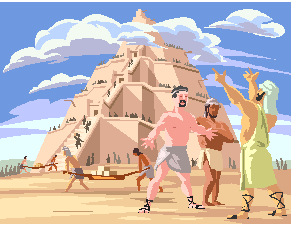
Genesis 11:1-91NIV New International Version Translations
1 Now the whole world had one language and a common speech. 2 As men moved eastward, they found a plain in Shinar and settled there. 3 They said to each other, “Come, let’s make bricks and bake them thoroughly.” They used brick instead of stone, and tar for mortar. 4 Then they said, “Come, let us build ourselves a city, with a tower that reaches to the heavens, so that we may make a name for ourselves and not be scattered over the face of the whole earth.” 5 But the LORD came down to see the city and the tower that the men were building. 6 The LORD said, “If as one people speaking the same language they have begun to do this, then nothing they plan to do will be impossible for them. 7 Come, let us go down and confuse their language so they will not understand each other.” 8 So the LORD scattered them from there over all the earth, and they stopped building the city. 9 That is why it was called Babel—because there the LORD confused the language of the whole world. From there the LORD scattered them over the face of the whole earth.

Background2http://www.easyenglish.info/psalms/psalm067-taw.htm

To frame these verses in Genesis, consider that we have just ended the story of Noah and the Great Flood. God has saved his family, made a covenant with Noah, and given Noah a command to spread out and begin a new world. Chapter 11, we again see the disobedient children of God.

Bible Truths3http://www.easyenglish.info/bible-commentary/genesis-mwks1-lbw.htm

All the people spoke the same language because they were all Noah’s descendants. And they wanted to live together. They were proud. They wanted to be more powerful. So they built a great city. But God had not told people to live together. He told them to move across the world (Genesis 9:1) so that the whole world would have inhabitants. So the people were not obeying God’s commands. They were trying to oppose God.

God did not allow them to continue the construction of that city. He confused their languages and he ended their unity. They could not talk with each other. So they had to move to different places.

Items for Discussion

  • Why do you think God chose to confuse mankind by creating so many languages? Wouldn’t it have been much easier for Jesus and the Disciples if there was only one language to deal with?
  • God was trying to get their attention in a strange way – What offense might the Babylonians have been committing that God was responding to?
    • Explore the idea that the offense of the builders was that they were no longer trying to serve God and were instead trying to bring God down to the level of sinful humanity
  • How does modern society today, try to bring God down to our level?
  • How might God try to accomplish the same thing, to stop us? Would He still use confusion and frustration?
  • Can mankind stop God’s plans? If not, why do men try? If so, how do men influence God to allow it?


Acts 2:1-21
1 When the day of Pentecost came, they were all together in one place. 2 Suddenly a sound like the blowing of a violent wind came from heaven and filled the whole house where they were sitting. 3 They saw what seemed to be tongues of fire that separated and came to rest on each of them. 4 All of them were filled with the Holy Spirit and began to speak in other tongues as the Spirit enabled them. 5 Now there were staying in Jerusalem God-fearing Jews from every nation under heaven. 6 When they heard this sound, a crowd came together in bewilderment, because each one heard them speaking in his own language. 7 Utterly amazed, they asked: “Are not all these men who are speaking Galileans? 8 Then how is it that each of us hears them in his own native language? 9 Parthians, Medes and Elamites; residents of Mesopotamia, Judea and Cappadocia, Pontus and Asia, 10 Phrygia and Pamphylia, Egypt and the parts of Libya near Cyrene; visitors from Rome 11 (both Jews and converts to Judaism); Cretans and Arabs-we hear them declaring the wonders of God in our own tongues!” 12 Amazed and perplexed, they asked one another, “What does this mean?” 13 Some, however, made fun of them and said, “They have had too much wine. ” 14 Then Peter stood up with the Eleven, raised his voice and addressed the crowd: “Fellow Jews and all of you who live in Jerusalem, let me explain this to you; listen carefully to what I say. 15 These men are not drunk, as you suppose. It’s only nine in the morning! 16 No, this is what was spoken by the prophet Joel: 17 ” ‘In the last days, God says, I will pour out my Spirit on all people. Your sons and daughters will prophesy, your young men will see visions, your old men will dream dreams. 18 Even on my servants, both men and women, I will pour out my Spirit in those days, and they will prophesy. 19 I will show wonders in the heaven above and signs on the earth below, blood and fire and billows of smoke. 20 The sun will be turned to darkness and the moon to blood before the coming of the great and glorious day of the Lord. 21 And everyone who calls on the name of the Lord will be saved.’

Background4http://www.easyenglish.info/bible-commentary/acts-lbw.htm

Luke probably had several reasons why he wrote Acts. People were telling false stories about Christians. They were afraid that Christians wanted to cause trouble. Luke wanted the Roman rulers to know that this was not true. Christians helped other people to behave well. He wanted to show that to the rulers. It was good for the Roman government.

Luke also wrote about many miracles. God gave Christians the power to cure people, for example. Also, God rescued Peter from prison by a miracle. So, anyone who opposed the Christians was opposing God. He also wanted to show the Jews that the Christian faith was not a separate religion. Instead, it made Judaism complete, because Jesus is the Messiah.

However, Luke had one main reason why he wrote this book. The good news about Jesus had traveled from Jerusalem to Rome. Luke wanted to record how that happened. Rome was the most important city in the world. Luke showed that the gospel was for all people in every nation. It was for Jews and it was also for Gentiles.

If you are interested in looking at the original Greek words and definitions used in our Scripture verses, you can find an analysis at the following link: http://www.lectionarystudies.com/studyot/studyn/pentecostotn.html

Biblical Truths5http://www.easyenglish.info/bible-commentary/acts-lbw.htm

Verse 1 The day called Pentecost was an important day for the Jews. It came 50 days after the Passover. Many Jews had grown plants for food. Then on Pentecost day, they gave the best ones to God. They also remembered how God had given the Law to them. On this special Pentecost, God gave the Holy Spirit. Now, the Holy Spirit lives in every Christian. The Holy Spirit helps us to obey God’s rules. The Holy Spirit helps us to do the things that God wants.

Verse 2 Everyone knew when the Holy Spirit came. Luke says that it was ‘as if a very strong wind was blowing’. In the Bible, writers often use the word ‘wind’ to describe the Spirit’s power. (Look at Ezekiel 37:9-14, for example.)

Verse 3 First, they heard the Holy Spirit. Next, they saw something. It was ‘tongues that seemed like fire’. In the book called Exodus, we read that Moses saw a very special bush. We know that God was in the bush. We know it because the bush was burning all the time (Exodus 3:2-5). We can see that God was here in Acts too, because of the fire.

Verse 4 The words ‘different languages’ here can also be ‘other tongues’. People do not always agree about what this means. The disciples spoke in foreign languages. This was so that all the foreign visitors in Jerusalem could understand them. Some people think that Luke is describing the gift called ‘tongues’ They think that the disciples spoke in foreign languages because this was a special day. There were many foreign visitors in Jerusalem on that day. So, using those foreign languages, these visitors could understand the disciples when they spoke about God.

Verse 5 ‘Every nation in the world’ means every nation where there were Jews. These Jews had traveled to Jerusalem because it was Pentecost.

Verse 6 A large crowd came together because of the noise. The believers came out into the street. Perhaps they were going to the Temple.

Verses 7-8 People from Galilee spoke unusually. People from other places could not always understand them. But now, these disciples from Galilee were speaking in different languages. Everyone could understand what the disciples were saying.

Verses 9-11 More Jews lived in other countries than in Judea. Their enemies had taken them there more than 500 years earlier. This list shows that many Jews from many different nations were in Jerusalem. They all heard about the wonderful things that God had done on this special Pentecost day. They would go back to their countries and they would tell other people. The other people in the world were beginning to hear the good news about Jesus.

Verses 12-13 Luke says that they could not explain what was happening. He says it several times. But some people tried to explain things in their way. They said that the disciples had drunk too much wine. It is the same nowadays, too. When the Holy Spirit comes with power, people do not always understand this event. They do not always understand what is happening.

Verses 17-18 Peter spoke verses from the book called Joel (Joel 2:28-32). They describe the Day of the Lord. For Jews, this meant the day when God would change the world. They believed that God would give power to Israel then. It would also be a day when God would bring terrible judgment. The Jews divided time into two ages. ‘The Present Age’ was completely evil. There was also the ‘Age that would Come’. This was the time when God would rule over all. The Day of the Lord separated the two ages. These strange events at Pentecost happened because God was sending his Holy Spirit to people. The Greek word for ‘send out’ here also means ‘pour out’. This was the beginning of the ‘last period’ before Jesus returned. ‘Last period’ can also mean ‘last days’ in Greek.

Verses 19-20 A few weeks earlier, people in Jerusalem had seen that the sun had become dark. This happened in the afternoon when Jesus died on the cross. Maybe the moon had also appeared to be red in the dark sky. Or perhaps these events may still happen in the future.

Verse 21 People cannot save themselves from God’s judgement. But God will save anyone who calls to him. But the person must want God to help him or her.

Items for Discussion

  • What similarities do you see between the story of the Tower of Babel and the coming of the Holy Spirit?
  • How would the stories in this study affect your opinion as to whether God is active and alive in the world today?
  • How did the gift of the Holy Spirit ensure God’s message would spread?
  • How was this the perfect gift to accomplish God’s plan?
  • What gifts do you think the people of those times would have asked for?
  • How do these stories reinforce why faith is such an important component of believing in God?

Discussion Challenge

  • What are the modern-day stories that inspire us?

The Only Person Able to Solve the Problem

Psalm 96:1-91NIV New International Version Translations
1 Sing to the LORD a new song; sing to the LORD, all the earth. 2 Sing to the LORD, praise his name; proclaim his salvation day after day. 3 Declare his glory among the nations, his marvelous deeds among all peoples. 4 For great is the LORD and most worthy of praise; he is to be feared above all gods. 5 For all the gods of the nations are idols, but the LORD made the heavens. 6 Splendor and majesty are before him; strength and glory are in his sanctuary. 7 Ascribe to the LORD, O families of nations, ascribe to the LORD glory and strength. 8 Ascribe to the LORD the glory due his name; bring an offering and come into his courts. 9 Worship the LORD in the splendor of his holiness; tremble before him, all the earth.

clip_image145Background2http://www.easyenglish.info/psalms/psalm096-taw.rtf

King David used this psalm when he brought the Ark of the Covenant into Jerusalem. This ceremony gave the Jews help in remembering their past. After David died, his son Solomon built a temple for the Ark. This became the house of God in Jerusalem. Then the Jews kept the Ark in the temple. But 400 years later enemies destroyed the temple. After 70 years, the Jews built it again. They changed the psalm a bit, to the psalm as we know it. This psalm was used it in their new temple. David’s original psalm is in 1 Chronicles 16:23-33.

Bible Truths

Verses 1 – 3, the *LORD’s people must tell everybody about him. God’s people agree (or made a covenant) to love him, work for him and obey him. So, LORD is the Covenant Name of God. But, in verses 1 and 3, “all the world” and “every nation” must sing to the LORD. A nation is a country with a government. This means that some people from every country have agreed to love, work for and obey him. “He has made us safe”, in verse 2, tell us about the date of the psalm. Bible students suggest three dates:

  1. after David made his country safe, about 1000 B.C.
  2. in the time of Isaiah, after Assyria failed to destroy Jerusalem, about 700 B.C.
  3. after the exile, when the *Jews came home from Babylon, about 500 B.C.

The exile was when the Babylonians took the Jews away from Judah. They took them to Babylon. They were there from 606-536 B.C. B.C. means “years Before Christ came to the earth”. Most Bible students think that David wrote the psalm, but that someone re-wrote it (changed it) after the exile. In verse 3, “wonderful things” are things that surprise us. They make us think, “How did God do that?”

Verses 4 – 6, the *LORD is greater than all the gods of the earth. There are many gods in the world, but they are all false gods. Isaiah tells us that men “make a god”, (Isaiah 44:15). There is only one God who really is alive, “the LORD (that) made everything”, verse 5. Men did not make him; he made men! Verses 4-6 tell more about God. They tell us that:

  1. he is great, so we should praise him. “Praise him” means “tell him that he is great”.
  2. we need not be afraid of other gods, but we should be afraid of God.
  3. he is a great king. This is why the psalm is “a royal psalm”
  4. he is strong and powerful.
  5. he is also beautiful. God’s house, the temple, was beautiful. This made people think that God was beautiful also. The same is true in many of our churches. Because they are beautiful, they make us remember that God is beautiful.

But God will still be beautiful when there are no more church buildings!

Verses 7 – 9, everyone on earth must say that the LORD is great. The “families of *nations” in verse 7 makes us think that all people are as one big family. This is true because God made everybody. But the psalmist does not mean this. He means that all the people that love, work for and obey God are as one big family.

Items for Discussion

  • Why do you think that mankind always tries to create a god as an idol, a physical thing?
  • Do you think that mankind has a “built in sense” that there is a God?
  • When given a choice, some people choose to believe in something dead, others something alive – why?
  • What do you think is the big draw toward idolatry?
  • Where do you see the “family of God” alive and well in our world?
  • How does idolatry impact that “family of God”?
  • What proof do you see that we have a “living God?”


Luke 7:1-10
1 When Jesus had finished saying all this in the hearing of the people, he entered Capernaum. 2 There a centurion’s servant, whom his master valued highly, was sick and about to die. 3 The centurion heard of Jesus and sent some elders of the Jews to him, asking him to come and heal his servant. 4 When they came to Jesus, they pleaded earnestly with him, “This man deserves to have you do this, 5 because he loves our nation and has built our synagogue.” 6 So Jesus went with them. He was not far from the house when the centurion sent friends to say to him: “Lord, don’t trouble yourself, for I do not deserve to have you come under my roof. 7 That is why I did not even consider myself worthy to come to you. But say the word, and my servant will be healed. 8 For I myself am a man under authority, with soldiers under me. I tell this one, ‘Go,’ and he goes; and that one, ‘Come,’ and he comes. I say to my servant, ‘Do this,’ and he does it.” 9 When Jesus heard this, he was amazed at him, and turning to the crowd following him, he said, “I tell you, I have not found such great faith even in Israel.” 10 Then the men who had been sent returned to the house and found the servant well.

Background

The Roman infantry, centurions initially commanded a centuria or “century”, which means company or tribe. Centuries, or Centuriae, developed from the Roman Tribal system could contain anywhere from 80 to 100 men. Later, generals further manipulated these numbers with double and half-strength units.

Centurions would gradually rise in seniority, commanding centuries with higher precedence, until commanding the senior century and therefore the entire military unit called a cohort. The very best centurions were then promoted to become centurions in the First Cohort, called Primi Ordines, commanding one of the ten centuries and also taking on a staff role. The most senior centurion of the legion was the Primus Pilus who commanded the first century. All centurions, however senior, had their own allocated century or group of men.

Centurions had to be literate, have connections (letters of recommendation), be at least 30 years of age, and had already served a few years in the military. The centurion in the infantry was chosen for his size, strength and dexterity in throwing his missile weapons and for his skill in the use of his sword and shield; in short for his expertness in all the exercises. He was to be vigilant, temperate, active and read to execute the orders he receives rather than to talk or question those orders; Strict in exercising and keeping up proper discipline among his soldiers, in obliging them to appear clean and well-dressed and to have their arms constantly rubbed and bright. The centurion was the best of the best.

Biblical Truths

In Jesus’ time the Jews hated the Romans because they represented everything they stood against — including foreign domination and pagan beliefs and practices. The question we study is why did Jesus not only warmly receive a Roman centurion but praise him as a model of faith and confidence in God? In the Roman world the position of centurion was very important. He was an officer in charge of a hundred soldiers. In a certain sense, he was the backbone of the Roman army, the cement which held the army together.

The centurion who approached Jesus was not only courageous, but faith-filled as well. He risked the ridicule of his peers by seeking help from an itinerant preacher from Galilee, and well as mockery from the Jews. Nonetheless, he approached Jesus with confidence and humility. He was an extraordinary man because he loved his slave. In the Roman world slaves were treated more like animals rather than people. The centurion was also an extraordinary man of faith. He wanted Jesus to heal his beloved slave. Jesus commends him for his faith and immediately grants him his request.

Items for Discussion

  • What is faith?
  • How do you see the centurion’s skills as a soldier helping him in his faith walk?
  • Why are peoples so unwilling to suffer ridiculing in the practice of their faith?
  • What do you think the impact was on others who observed this? The slave, the centurion’s troops, bystanders?
  • Based on this story, how would you describe bravery?
  • If we have faith and believe in a “living God” then why are so many people reluctant to seek help from Him?

Discussion Challenge

  • How do we help our congregation and families approach Jesus as the centurion did? 

The Small House At Nain

Psalm 301NIV New International Version Translations
1 I will exalt you, O LORD, for you lifted me out of the depths and did not let my enemies gloat over me. 2 O LORD my God, I called to you for help and you healed me. 3 O LORD, you brought me up from the grave; you spared me from going down into the pit. 4 Sing to the LORD, you saints of his; praise his holy name. 5 For his anger lasts only a moment, but his favor lasts a lifetime; weeping may remain for a night, but rejoicing comes in the morning. 6 When I felt secure, I said, “I will never be shaken.” 7 O LORD, when you favored me, you made my mountain stand firm; but when you hid your face, I was dismayed. 8 To you, O LORD, I called; to the Lord I cried for mercy: 9 “What gain is there in my destruction, in my going down into the pit? Will the dust praise you? Will it proclaim your faithfulness? 10 Hear, O LORD, and be merciful to me; O LORD, be my help.” 11 You turned my wailing into dancing; you removed my sackcloth and clothed me with joy, 12 that my heart may sing to you and not be silent. O LORD my God, I will give you thanks forever.

clip_image146Background2http://www.easyenglish.info/psalms/psalm030-taw.rtf

We do not know when David wrote Psalm 30. Perhaps he had been very ill. He asked God to make him well again and God did. Perhaps all his people, the Jews, were ill: after they prayed, they all became well again.

We do not know why Psalm 30 was “a song for blessing the house”. We do know that the Jews used it when they cleaned the house of God in Jerusalem, about 200 years before Jesus came to earth. That was after a very bad man called Antiochus Epiphanes had polluted it. Polluted in this sense means “made it dirty in the eyes of God”. Antiochus was a Greek ruler. He wanted to stop the Jews worshipping God. “Worshipping” means “telling someone how much you love them because they are so great”. Antiochus thought that he was a god. He thought that people should worship him.

The Jews also used Psalm 31 in the “Feast of Tabernacles”. This was a party they held every October when they picked the fruits. For a few days they lived in tents made from animal skins. So they remembered that they had lived in tents after they came out from Egypt, more than 1000 years before. They also remembered that God had fed them then.

This Psalm celebrates when God answers us after we pray to him.

Bible Truths

Verses 1 – 5: David was very ill. He thought that he was going to die. He prayed to God. God made him well again. David did not go to Sheol where he would not be able to praise God. So he asks everyone that believes in God to praise God with him. God was angry for a short time, but now he is not angry with David.

Verse 6 – 7: David thought that he had made himself safe. God used his illness to show David that this was not true. It was only God that made David safe. “The mountain” is a strange word here. Perhaps it means the life that David built up; or it may mean the mountain in Jerusalem where David put the house of God. This was a tent which we call the Tabernacle.

Verses 8 – 10: David tells us what he said when he prayed to God. The Pit is a part of Sheol. The Jews thought that only the very bad people went there. They never came out.

Verses 11 – 12: David is now very happy. “Sad clothes” in Hebrew is “sackcloth”. Sackcloth was used to make bags for carrying things in. It did not make good clothes. The Jews wore sackcloth when they were very, very sad. “My heart will sing” means that everything in me wants to praise God.

Items for Discussion

  • Where do you think our attitudes come from that cause us to segregate items into ones which are polluted and those which are clean?
  • Why do some have a sense for cleanliness and some no concern (think physical cleanliness here)?
  • How do you feel when someone cleans up after you?
  • How is the attribute of humility fostered by the act of wearing sack cloth?
  • Have you ever associated a problem to God’s desire to get your attention?
  • How would praising God help restore our sense of cleanliness?


Luke 7:11-173http://www.easyenglish.info/bible-commentary/luke-lbw.htm
11 Soon afterward, Jesus went to a town called Nain, and his disciples and a large crowd went along with him. 12 As he approached the town gate, a dead person was being carried out—the only son of his mother, and she was a widow. And a large crowd from the town was with her. 13 When the Lord saw her, his heart went out to her and he said, “Don’t cry.” 14 Then he went up and touched the coffin, and those carrying it stood still. He said, “Young man, I say to you, get up!” 15 The dead man sat up and began to talk, and Jesus gave him back to his mother. 16 They were all filled with awe and praised God. “A great prophet has appeared among us,” they said. “God has come to help his people.” 17 This news about Jesus spread throughout Judea[a] and the surrounding country.

Background

Luke wrote two books of the New Testament (NT). Luke’s Gospel tells the story of the life and work of Jesus. Luke’s second book, Acts, continues the story after Jesus went back to heaven. The two books amount to a quarter of the NT. This is even more than Paul wrote.

Luke was a doctor (Colossians 4:14). He was often Paul’s companion in his travels. The book of Acts contains passages in which the author includes himself as a companion of Paul (‘we’ in Acts 16:10-17; 20:5-21:18; 27:1-28:16). Luke shared Paul’s work (Philemon, verse 24). He was a loyal friend. In prison, Paul says, ‘only Luke is with me’ (2 Timothy 4:11).

Luke was a Gentile. He came from Antioch, which was an important town in Syria.

Biblical Truths

Verse 12 – Nain was a town with a wall round it. Jesus arrived at the gate in the wall. The widow had no other members of her family. Her son had provided her income and he protected her. He could not do that anymore because her son was now dead. Her family would not continue. Now, her husband was dead and her son was dead. She probably doubted whether God loved her. The large crowd with her was showing its sympathy for the death of her son.

Verse 14 – When Jesus touched the coffin he made himself ‘unclean’. Nobody had asked Jesus to help. Jesus acted because he had a lot of love.

Verse 15 – When the young man spoke everyone knew that he had come back to life. Jesus gave an order. That order defeated death, at once and completely.

Verse 16 – The crowd recognised that Jesus had used God’s power. So they called him ‘a great prophet’. They were perhaps thinking of Elijah and Elisha. These two prophets of the past had also made dead people come back to life (1 Kings 17:17-23; 2 Kings 4:17-37)

Items for Discussion

  • Jesus chose a helpless widow and a small town for this act. Would a miracle in Jerusalem in a public place with an important person been more effective for establishing His authority?
  • Where do you think the idea of touching a coffin would make you unclean comes from (think of more the personal point of views rather than Jewish law)?
  • How is the heart of the widow different than the heart of a rich person?
  • How did Jesus save two lives here?
  • Where do we fall short in this world in following Jesus’ lead of helping the helpless?

Discussion Challenge

  • How do we create a sense of mission in the body of the church?

A Picture is Worth a Thousand Words – Jesus Prayed

Isaiah 56:4-71NIV New International Version Translations
4 For this is what the LORD says: “To the eunuchs who keep my Sabbaths, who choose what pleases me and hold fast to my covenant-5 to them I will give within my temple and its walls a memorial and a name better than sons and daughters; I will give them an everlasting name that will not be cut off. 6 And foreigners who bind themselves to the LORD to serve him, to love the name of the LORD, and to worship him, all who keep the Sabbath without desecrating it and who hold fast to my covenant-7 these I will bring to my holy mountain and give them joy in my house of prayer. Their burnt offerings and sacrifices will be accepted on my altar; for my house will be called a house of prayer for all nations.”

clip_image147Background2http://en.wikipedia.org/wiki/Isaiah

Isaiah prophesied during the reigns of Uzziah (or Azariah), Jotham, Ahaz, and Hezekiah (1:1), the kings of Judah. Uzziah reigned fifty-two years in the middle of the 8th century BC, and Isaiah must have begun his career a few years before Uzziah’s death, probably in the 740s BC. He lived till the fourteenth year of Hezekiah (who died 698 BC, and may have been contemporary for some years with Manasseh. Thus Isaiah may have prophesied for the long period of at least forty-four years.

In early youth Isaiah may have been moved by the invasion of Israel by the Assyrian monarch Tiglath-Pileser III (2 Kings 15:19); and again, twenty years later, when he had already entered on his office, by the invasion of Tiglath-Pileser and his career of conquest. Ahaz, king of Judah, at this crisis refused to co-operate with the kings of Israel and Syria in opposition to the Assyrians, and was on that account attacked and defeated by Rezin of Damascus and Pekah of Israel (2 Kings 16:5; 2 Chronicles 28:5-6). Ahaz, thus humbled, sided with Assyria, and sought the aid of Tiglath-Pileser against Israel and Syria. The consequence was that Rezin and Pekah were conquered and many of the people carried captive to Assyria (2 Kings 15:29, 16:9; 1 Chronicles 5:26).

Soon after this Shalmaneser V determined wholly to subdue the kingdom of Israel, Samaria was taken and destroyed (722 BC). So long as Ahaz reigned, the kingdom of Judah was unmolested by the Assyrian power; but on his accession to the throne, Hezekiah, who was encouraged to rebel “against the king of Assyria” (2 Kings 18:7), entered into an alliance with the king of Egypt (Isaiah 30:2-4). This led the king of Assyria to threaten the king of Judah, and at length to invade the land. Sennacherib (701 BC) led a powerful army into Judah. Hezekiah was reduced to despair, and submitted to the Assyrians (2 Kings 18:14-16). But after a brief interval war broke out again, and again Sennacherib led an army into Judah, one detachment of which threatened Jerusalem (Isaiah 36:2-22; 37:8). Isaiah on that occasion encouraged Hezekiah to resist the Assyrians (37:1-7), whereupon Sennacherib sent a threatening letter to Hezekiah, which he “spread before the LORD” (37:14).

According to the account in Kings (and its derivative account in Chronicles) the judgment of God now fell on the Assyrian army and wiped out 180,000 of its men. “Like Xerxes in Greece, Sennacherib never recovered from the shock of the disaster in Judah. He made no more expeditions against either southern Palestine or Egypt.”

The remaining years of Hezekiah’s reign were peaceful (2 Chr 32:23-29). Isaiah probably lived to its close, and possibly into the reign of Manasseh, but the time and manner of his death are not specified in either the Bible or recorded history. There is a tradition (reported in both the Martyrdom of Isaiah and the Lives of the Prophets) that he suffered martyrdom by Manasseh due to pagan reaction.

Bible Truths3http://www.easyenglish.info/bible-commentary/isaiah49-57-lbw-nh.htm

Verse 4 – The word ‘eunuch’ is used to describe one who does not marry, so as to be free to serve God (see Matthew 19:12).

  • Isaiah 54:1-3 contains a similar promise for women without children. Men and women do not need to have families in order to receive a relationship with God. and that relationship with God will satisfy completely.
  • This promise for eunuchs was very special. Under the laws of Moses, a eunuch could not join God’s people during public worship (Deuteronomy 23:1). And a eunuch could not enter the Temple area. But now, God promises a new relationship with people. Because of that new relationship, foreigners may join the Lord’s people. And, because of that relationship, a eunuch too can know a complete relationship with God.

Verse 5 – The Jews considered that to have a large family was a sign of God’s pleasure (see Psalm 127:3-5).

  • In the original language, the word ‘honour’ here translates the very common word for ‘open hand’. This meaning suggests that God gives generously and without limit as the reward for people’s trust.
  • The word ‘name’ here means a great honour.

Verse 7 – Jesus refers to the Temple as the ‘House for Prayer for all nations’ (see Mark 11:17).

Items for Discussion

  • In what ways does the notion that families (children, marriage) interfere with the role of keeping God’s covenant?
  • In what ways does the notion of families support God’s covenant?
  • God appears to be very inclusive in these Old Testament verses. Where has today’s religion fallen short of inclusiveness?
  • God asks us not to desecrate worship. How can we inadvertently do that today?
  • What are the benefits to God and to mankind of prayer?
  • No religion, no belief in God can survive without prayer. Why?


Luke 11:1-13
1 One day Jesus was praying in a certain place. When he finished, one of his disciples said to him, “Lord, teach us to pray, just as John taught his disciples.” 2 He said to them, “When you pray, say: ” ‘Father, hallowed be your name, your kingdom come. 3 Give us each day our daily bread. 4 Forgive us our sins, for we also forgive everyone who sins against us. And lead us not into temptation.’ ” 5 Then he said to them, “Suppose one of you has a friend, and he goes to him at midnight and says, ‘Friend, lend me three loaves of bread, 6 because a friend of mine on a journey has come to me, and I have nothing to set before him.’ 7 “Then the one inside answers, ‘Don’t bother me. The door is already locked, and my children are with me in bed. I can’t get up and give you anything.’ 8 I tell you, though he will not get up and give him the bread because he is his friend, yet because of the man’s boldness he will get up and give him as much as he needs. 9 “So I say to you, ask, and it will be given to you; seek, and you will find; knock, and it will be opened to you. 10 “For everyone who asks, receives; and he who seeks, finds; and to him who knocks, it will be opened. 11 “Now suppose one of you fathers is asked by his son for a fish; he will not give him a snake instead of a fish, will he? 12 “Or if he is asked for an egg, he will not give him a scorpion, will he? 13 “If you then, being evil, know how to give good gifts to your children, how much more will your heavenly Father give the Holy Spirit to those who ask Him?”

Background

Luke wrote two books of the New Testament (NT). Luke’s Gospel tells the story of the life and work of Jesus. Luke’s second book, Acts, continues the story after Jesus went back to heaven. The two books amount to a quarter of the NT. This is even more than Paul wrote.

Luke was a doctor (Colossians 4:14). He was often Paul’s companion in his travels. The book of Acts contains passages in which the author includes himself as a companion of Paul (‘we’ in Acts 16:10-17; 20:5-21:18; 27:1-28:16). Luke shared Paul’s work (Philemon, verse 24). He was a loyal friend. In prison, Paul says, ‘only Luke is with me’ (2 Timothy 4:11).

Luke was a Gentile. He came from Antioch, which was an important town in Syria.

Biblical Truths4http://www.easyenglish.info/bible-commentary/luke-lbw.htm

Jesus gave the disciples a prayer to use. There is a longer record of it in Matthew 6:9-13. Matthew writes that Jesus said, ‘Pray like this’. Therefore, it is a model for other prayers as well. The first three parts put God first. The next three parts speak of what people need. These prayers ask God to do three things:

  1. to provide what we need for the present time,
  2. to forgive us for what we have done wrong in the past,
  3. to guide us in the future.

Verse 1 Jesus wanted the disciples to talk to God as ‘Father’. Christians are members of God’s family. The word ‘Father’ reminds them that they have a relationship with him. They love and trust him.

Verse 2 ‘May we respect your name and keep it holy’. We should not use the name ‘God’ in a negative way. But Jesus meant more than this. In Hebrew, the ‘name’ of someone means his or her whole character. Disciples should give honour to God. Then they should help other people to understand God’s character. They should not do or say anything that would give people a wrong impression of God.

‘May your kingdom come’. This prayer asks that more and more people will accept Jesus as their king. When God’s kingdom is complete, Satan’s power will end. Disciples help God’s kingdom to grow.

Verse 3 People depend on God for food. Jesus wants his disciples to pray for their food each day. They should remember how God gave the Israelites their food (‘manna’) each day in the desert (Exodus 16). They should not worry about the future. The word ‘us’ reminds people that they are part of a great family. Their demands must not be selfish. Spiritual food is important too. People need to learn more and more about God and his purpose Then their spiritual life will be healthy.

Verse 4 Sin separates every person from God, who is holy. Therefore, we need God to forgive us. A person should forgive other people. If they do not, then God will not forgive them. Satan tries to lead people to do wrong things. God does not try to make anyone do anything wrong. God’s disciples ask him to help them to avoid difficult situations. Some situations might be too hard a test for their faith.

Verse 5 The visitor arrived at midnight. He had travelled later in the day when it was cooler. He avoided the heat at midday. This was a common practice. Three small loaves would be enough food for this guest.

Verse 7 The man in the house and his family would be sleeping together on mats on a platform. The animals would be on the floor near the door. He would wake them all, if he got up.

Verse 8 The man got up at last. He did not want the man at the door to continue to bother him. God is different. He is always ready and willing to listen to his children’s prayers. He will answer them when they make their requests. The parable encourages disciples to continue to pray and not to give up.

Verses 11-12 A fisherman sometimes found a water snake in his net. When a scorpion rolled itself up, it was like the shape of an egg.

Verse 13 Human fathers can do wrong. But they would not give their children anything that would hurt them. God, the Father in heaven, has no sin. He has known perfectly what is best for his children. He has perfect power to supply it. Therefore, he can be far more generous than a human father can. Luke says that God will give the Holy Spirit. He is the best gift, from whom everything good comes.

Items for Discussion

  • This may very well be the perfect prayer, why?
  • What can we learn from this prayer that can be applied to our prayer life?
  • Why is the parent child relationship described by Jesus so helpful in understanding who are God is and what He is like?
  • What is missing from this model prayer?
  • Is there any prayer that is wrong?
  • Jesus uses three types of requests that are to be given to God: asking, seeking and knocking – How would you describe each of those with respect to prayers?

Discussion Challenge

  • How do you grow the prayer life of those in our congregation, community, families, etc?

A Picture is Worth a Thousand Words – Jesus Wept

Psalm 116:1-91NIV New International Version Translations
1 I love the LORD, for he heard my voice; he heard my cry for mercy. 2 Because he turned his ear to me, I will call on him as long as I live. 3 The cords of death entangled me, the anguish of the grave came upon me; I was overcome by trouble and sorrow. 4 Then I called on the name of the LORD : “O LORD, save me!” 5 The LORD is gracious and righteous; our God is full of compassion. 6 The LORD protects the simple-hearted; when I was in great need, he saved me. 7 Be at rest once more, O my soul, for the LORD has been good to you. 8 For you, O LORD, have delivered my soul from death, my eyes from tears, my feet from stumbling, 9 that I may walk before the LORD in the land of the living.

Background2http://www.christnotes.org/commentary.php?b=19&c=116&com=mhc

We have many reasons for loving the Lord but are most affected by his loving-kindness when relieved of deep distress. When a poor sinner is awakened to a sense of his state, and fears that he must soon sink under the just wrath of God, then he finds trouble and sorrow. But let all such call upon the Lord to deliver their souls, and they will find him gracious and true to his promise. Neither ignorance nor guilt will hinder their salvation when they put their trust in the Lord. Let us all speak of God as we have found him; and have we ever found him otherwise than just and good? It is of his mercies that we are not consumed. Let those who labor and are heavily laden come to him, that they may find rest to their souls; and if at all drawn from their rest, let them haste to return, remembering how bountifully the Lord has dealt with them. We should deem ourselves bound to walk in his presence. It is a great mercy to be kept from being swallowed up with over-much sorrow. It is a great mercy for God to hold us by the right hand so that we are not overcome and overthrown by a temptation. But when we enter the heavenly rest, deliverance from sin and sorrow will be complete; we shall behold the glory of the Lord, and walk in his presence with delight we cannot now conceive.

Bible Truths3http://www.easyenglish.info/psalms/psalm116-taw.htm

Verses 1 – 4 tell us that the psalmist nearly died … but God saved him. In verse 1, the Hebrew Bible says, “he hears my voice and my cries”. This tells us that the psalmist cried aloud when he prayed. And in verse 2, the Hebrew Bible says, “God turns his ear to me”. This is a Hebrew way to say, “God listens to me”. Hebrew is the language that the psalmist spoke. Sheol is in verse 3. Jews believed that they went to Sheol when they died. But the psalmist did not want to go to Sheol. He did not want to die. So he prayed, “LORD, please save me!” (verse 4). “Save” here means “save me from death”. It is not the same “save” that Christians now use. Christians mean “save me from hell when I die”. Hell is a bad place where God sends bad people.

Verses 5 – 7 tell us about God. He loves people, and he is kind and good to them, (verse 5). He gives them help when they need it, (verse 6). “He saved me” here means “saved from dying”, not “saved from hell”. The words “me” in verses 4 and 8, and “myself” in verse 7, are all the same in Hebrew. It is the Hebrew word “nafeshi“. It means “the part of me that stays alive when my body dies”. Some people translate it as “my soul”. So another translation of the beginning of verse 7 is “My soul, go back to your rest”. Before God saved him, the psalmist could not rest, or sleep at night. Now he can … he is safe! We can also translate the end of verse 4 as “LORD, save my soul”.

Verses 8 – 9 tell us more about what God did. Again, we can translate the beginning of verse 8 as “Yes, you saved my soul from death”. “LORD” is not in the Hebrew Bible. It is there to give us help to understand the verse. “Serve” in verse 9 means “do what God tells me to do”. The psalmist can now be God’s servant on earth, not in Sheol. Again, Sheol is not in the Hebrew Bible. It gives us help to remember what God saved the psalmist from.

Items for Discussion

  • The psalmist comes to recognize that he will eventually come to judgment – Can someone be saved without coming to this conclusion?
  • The psalmist almost died – Does it take the “proximity” of death to make someone think about salvation? Why or why not?
  • How do you visualize hell or Sheol as the Israelites called it?
  • What is wrong with the argument that we have a good and loving God so He will not let anyone anguish in a place like hell forever?


John 11:17-44
17 On his arrival, Jesus found that Lazarus had already been in the tomb for four days. 18 Bethany was less than two miles from Jerusalem, 19 and many Jews had come to Martha and Mary to comfort them in the loss of their brother. 20 When Martha heard that Jesus was coming, she went out to meet him, but Mary stayed at home. 21 “Lord,” Martha said to Jesus, “if you had been here, my brother would not have died. 22 But I know that even now God will give you whatever you ask.” 23 Jesus said to her, “Your brother will rise again.” 24 Martha answered, “I know he will rise again in the resurrection at the last day.” 25 Jesus said to her, “I am the resurrection and the life. He who believes in me will live, even though he dies; 26 and whoever lives and believes in me will never die. Do you believe this?” 27 “Yes, Lord,” she told him, “I believe that you are the Christ, the Son of God, who was to come into the world.” 28 And after she had said this, she went back and called her sister Mary aside. “The Teacher is here,” she said, “and is asking for you.” 29 When Mary heard this, she got up quickly and went to him. 30 Now Jesus had not yet entered the village, but was still at the place where Martha had met him. 31 When the Jews who had been with Mary in the house, comforting her, noticed how quickly she got up and went out, they followed her, supposing she was going to the tomb to mourn there. 32 When Mary reached the place where Jesus was and saw him, she fell at his feet and said, “Lord, if you had been here, my brother would not have died.” 33 When Jesus saw her weeping, and the Jews who had come along with her also weeping, he was deeply moved in spirit and troubled. 34 “Where have you laid him?” he asked. “Come and see, Lord,” they replied. 35 Jesus wept. 36 Then the Jews said, “See how he loved him!” 37 But some of them said, “Could not he who opened the eyes of the blind man have kept this man from dying?” 38 Jesus, once more deeply moved, came to the tomb. It was a cave with a stone laid across the entrance. 39 “Take away the stone,” he said. “But, Lord,” said Martha, the sister of the dead man, “by this time there is a bad odor, for he has been there four days.” 40 Then Jesus said, “Did I not tell you that if you believed, you would see the glory of God?” 41 So they took away the stone. Then Jesus looked up and said, “Father, I thank you that you have heard me. 42 I knew that you always hear me, but I said this for the benefit of the people standing here, that they may believe that you sent me.” 43 When he had said this, Jesus called in a loud voice, “Lazarus, come out!” 44The dead man came out, his hands and feet wrapped with strips of linen, and a cloth around his face. Jesus said to them, “Take off the grave clothes and let him go.”

Background4http://www.easyenglish.info/bible-commentary/john-ma-lbw.htm

In many ways, John’s Gospel is different from the other three Gospels. John did not include any stories about Jesus’ birth or his baptism. John only recorded 7 miracles, which he called ‘signs’. John did not include any parables (stories that Jesus told to teach something about God). But John recorded many long speeches that Jesus made.

The writer Eusebius (about AD 260-339) believed that John knew about the other three Gospels. But when he read them, John had not yet written his Gospel. He was still just talking to people about his life with Jesus. John agreed that the other Gospels were true accounts.

But Jesus was already preaching before King Herod put John the Baptist in prison. The other Gospels did not include an account of this. They recorded much about what Jesus did in Galilee. Also, they recorded what Jesus did in Jerusalem just before his death. But Jesus went to Jerusalem at other times, too. So John provided the facts that were missing from the other Gospels. He used information that they did not have. John’s account did not disagree with the other Gospels. It added different information so that we can understand more about Jesus.

The second-century writer, Clement, from Alexandria, called John’s Gospel a ‘spiritual Gospel’. In some ways, he was right. John did not record just facts about Jesus. John had thought much about what Jesus had said. And John had thought much about the miracles that he had seen. He wanted to explain the spiritual meaning of Jesus’ words and acts.

But John also included many physical details. For example, the loaves that Jesus used to feed 5000 people were ‘barley loaves’ (John 6:9). He recorded the distance that the disciples had travelled across the lake (John 6:19). And he remembered how the smell of the perfume filled the house at Bethany (John 11:32). These details do not seem important. But they are memories of a person who was present at these events. So John’s Gospel is not just a spiritual book. It is the personal account of someone who had seen these events.

Biblical Truths5http://www.ccel.org/ccel/henry/mhc5.iv.xii.html

Here we have the history of that illustrious miracle which Christ wrought a little before his death—the raising of Lazarus to life, which is recorded only by this evangelist; for the other three confine themselves to what Christ did in Galilee, where he resided most, and scarcely ever carried their history into Jerusalem till the passion-week: whereas John’s memoirs relate chiefly to what passed at Jerusalem; this passage therefore was reserved for his pen. Some suggest that, when the other evangelists wrote, Lazarus was alive, and it would not well agree either with his safety or with his humility to have it recorded till now when it is supposed he was dead. It is more largely recorded than any other of Christ’s miracles, not only because there are many circumstances of it so very instructive and the miracle of itself so great a proof of Christ’s mission, but because it was an earnest of that which was to be the crowning proof of all—Christ’s own resurrection. Here is a summary of the chapter:

  • The tidings sent to our Lord Jesus of the sickness of Lazarus, and his entertainment of those tidings, ver. 1-16.
  • The visit he made to Lazarus’s relations when he had heard of his death, and their entertainment of the visit, ver. 17-32.
  • The miracle wrought in the raising of Lazarus from the dead, ver. 33-44.
  • The effect wrought by this miracle upon others, ver. 45-57.

Items for Discussion

  • John admits that there wasn’t room enough to record all the events of Jesus’ life (see John 21:25) – So given the limited space, why did God, through John, made sure that we knew that Jesus wept?
  • Jesus wept at a time when Mary and others were weeping (John 11:33-35) – Isaiah told us that this would be (Isaiah 53:4) – How would the foretelling of Christ’s tears serve to help others in the future?
  • Look at these facts: Jesus knew, even Martha knew that Jesus could have prevented the death of Lazarus. Jesus did not have to wait until He was with Lazarus to raise him from the dead. So why did he cry?
  • What can we tell about Jesus if he could cry?
  • Why should this be important to any of us?
  • So why should we care that Jesus was both God and a person like us?
  • If Jesus could not experience the emotions of tears and crying, how would His role as an intermediary for mankind be impacted?
  • What is accomplished when we share grief or joy with others?

Discussion Challenge

  • If we believe that Jesus knows our joy, pain, and sorrow, how should we respond to others?

Note: The Bible (NIV) has the word cry – 217 times, cried – 94 times, weep – 48 times, weeping – 56 times, and wept – 53 times. That is a total of 468 times. The word “joy,” was used only 218 times, only half as much. God knows that life in the World is hard and He gave us an understanding Savior, Jesus, to help us every day of our lives.

Another full study can be found on this subject in Studies under Who Was Jesus Really?

« Older posts Newer posts »

"For it is by grace you have been saved" - Ephesians 2:8-9  

Copyright: © 2001 - 2025 Lostpine

Translate »