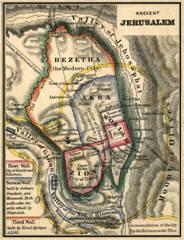
Biblical wisdom, historical insight, and personal growth — all in one place

Category: Snapshots (Page 29 of 45)

The Spirit Of Truth

Joel 2:28-321NIV New International Version Translations
28 “And afterward, I will pour out my Spirit on all people. Your sons and daughters will prophesy, your old men will dream dreams, your young men will see visions. 29 Even on my servants, both men and women, I will pour out my Spirit in those days. 30 I will show wonders in the heavens and on the earth, blood and fire and billows of smoke. 31 The sun will be turned to darkness and the moon to blood before the coming of the great and dreadful day of the LORD. 32 And everyone who calls on the name of the LORD will be saved; for on Mount Zion and in Jerusalem there will be deliverance, as the LORD has said, among the survivors whom the LORD calls.

clip_image118Background2http://mb-soft.com/believe/txs/joel.htm

The Book of Joel, a prophetic book of the Old Testament of the Bible, derives its name from the prophet Joel. Nothing other than his name is known about the prophet. The date of composition was probably between 400 and 350 BC, although some scholars place it much earlier (9th – 7th century BC). Joel was probably a resident in Judah, as his commission was to that people. He makes frequent mention of Judah and Jerusalem (1:14; 2:1, 15, 32; 3:1, 12, 17, 20, 21). He probably flourished in the reign of Uzziah (about B.C. 800), and was contemporary with Amos and Isaiah. The contents of this book are, (1.) A prophecy of a great public calamity then impending over the land, consisting of a want of water and an extraordinary plague of locusts (1:1-2:11). (2.) The prophet then calls on his countrymen to repent and to turn to God, assuring them of his readiness to forgive (2:12-17), and foretelling the restoration of the land to its accustomed fruitfulness (18-26). (3.) Then follows a Messianic prophecy, quoted by Peter (Acts 2:39). (4.) Finally, the prophet foretells portents and judgments as destined to fall on the enemies of God (ch. 3, but in the Hebrew text 4).

Biblical Truths3http://www.christnotes.org/commentary.php?b=29&c=2&com=mhc Matthew Henry Commentaries

The promise began to be fulfilled on the day of Pentecost, when the Holy Spirit was poured out, and it was continued in the converting grace and miraculous gifts conferred on both Jews and Gentiles. The judgments of God upon a sinful world, only go before the judgment of the world in the last day. Calling on God supposes knowledge of him, faith in him, desire toward him, dependence on him, and, as evidence of the sincerity of all this, conscientious obedience to him. Those only shall be delivered in the great day, who are now effectually called from sin to God, from self to Christ, from things below to things above.

Items for Discussion

  • What do you imagine the “last days” of this earth will be like?
  • What parts of our society will imagine a period of judgment and what parts will not?
  • While judgment of any kind is frightening, what hope are we offered by Joel?
  • Look at the last verse (32) – why is this perspective uniquely Christian?


John 16:5-15
5 “Now I am going to him who sent me, yet none of you asks me, ‘Where are you going?’ 6 Because I have said these things, you are filled with grief. 7 But I tell you the truth: It is for your good that I am going away. Unless I go away, the Counselor will not come to you; but if I go, I will send him to you. 8 When he comes, he will convict the world of guilt in regard to sin and righteousness and judgment: 9 in regard to sin, because men do not believe in me; 10 in regard to righteousness, because I am going to the Father, where you can see me no longer; 11 and in regard to judgment, because the prince of this world now stands condemned. 12 “I have much more to say to you, more than you can now bear. 13 But when he, the Spirit of truth, comes, he will guide you into all truth. He will not speak on his own; he will speak only what he hears, and he will tell you what is yet to come. 14 He will bring glory to me by taking from what is mine and making it known to you. 15 All that belongs to the Father is mine. That is why I said the Spirit will take from what is mine and make it known to you.

Background

John was writing his eye-witness account of Jesus some thirty years later than the other three accounts, possibly around 95 AD. There had been time for growth, reflection and observation. Many thousands of Christians had by then lost their lives for their faith in the Lord Jesus, both in Rome and in Jerusalem. John himself had been in prison and was now in exile, the last of Jesus’ twelve apostles to remain alive. John too, had much time to think about what he had witnessed and observe how others misunderstood Christ’s ministry.

John’s account is therefore characteristically different, spending more time on details of conversations, looking in depth at a few selected encounters of people with the Lord Jesus. John uses these episodes as ‘signs’: to show Jesus’ power as the Son of God and to point people to the truth and reality of His claims, rather than seeking to put forward a theological argument.

Biblical Truths4http://www.studylight.org/com/bnn/view.cgi?book=joh&chapter=016 Barnes Notes

Please check Barnes Notes for a complete review of the Scripture verses. For this study, please look at the following:

Verse 7. It is expedient for you, The reason why it was expedient for them that he should go away, he states to be, that in this way only would the Comforter be granted to them. Still, it may be asked why the presence of the Holy Spirit was more valuable to them than that of the Savior himself? To this it may be answered,

  1. That by his departure, his death, and ascension–by having these great facts before their eyes–they would be led by the Holy Spirit to see more fully the design of his coming than they would by his presence. While he was with them, notwithstanding the plainest teaching, their minds were filled with prejudice and error. They still adhered to the expectation of a temporal kingdom, and were unwilling to believe that he was to die. When he should have actually left them they could no longer doubt on this subject, and would be prepared to understand why he came. And this was done. See the Acts of the Apostles everywhere. It is often needful that God should visit us with severe affliction before our pride will be humbled and we are willing to understand the plainest truths.
  2. While on the earth the Lord Jesus could be bodily present but in one place at one time. Yet, in order to secure the great design of saving men, it was needful that there should be some agent who could be in all places, who could attend all ministers, and who could, at the same time, apply the work of Christ to men in all parts of the earth.
  3. It was an evident arrangement in the great plan of redemption that each of the persons of the Trinity should perform a part. As it was not the work of the Spirit to make an atonement, so it was not the work of the Savior to apply it. And until the Lord Jesus had performed this great work, the way was not open for the Holy Spirit to descend to perform his part of the great plan yet, when the Savior had completed his portion of the work and had left the earth, the Spirit would carry forward the same plan and apply it to men.
  4. It was to be expected that far more signal success would attend the preaching of the gospel when the atonement was actually made than before. It was the office of the Spirit to carry forward the work only when the Savior had died and ascended; and this was actually the case. See Acts chapter 2. Hence it was expedient that the Lord Jesus should go away, that the Spirit might descend and apply the work to sinners. The departure of the Lord Jesus was to the apostles a source of deep affliction, but had they seen the whole case they would not have been thus afflicted. So God often takes away from us one blessing that he may bestow a greater. All afflictions, if received in a proper manner, is of this description; and could the afflicted people of God always see the whole case as God sees it, they would think and feel, as he does, that it was best for them to be thus afflicted.

Items for Discussion

Verse 7 seems to answer the question, why do we have a Holy Spirit? Review this and answer the following:

  • What does Jesus mean by it is “Expedient for us?”
  • What would it be like to call the world to Christianity without the Holy Spirit?
  • Why do you think Jesus describes the Holy Spirit as Counselor?
  • How does the Spirit reveal to us what we need to know and when we need to know it?
  • Can you think of examples?

Discussion Challenge

  • How should the church celebrate the coming of the Holy Spirit?

Even Wind and Sea Obey

Psalm 9:9-201NIV New International Version Translations
9 The LORD is a refuge for the oppressed, a stronghold in times of trouble. 10 Those who know your name will trust in you, for you, LORD, have never forsaken those who seek you. 11 Sing praises to the LORD, enthroned in Zion; proclaim among the nations what he has done. 12 For he who avenges blood remembers; he does not ignore the cry of the afflicted. 13 O LORD, see how my enemies persecute me! Have mercy and lift me up from the gates of death, 14 that I may declare your praises in the gates of the Daughter of Zion and there rejoice in your salvation. 15 The nations have fallen into the pit they have dug; their feet are caught in the net they have hidden. 16 The LORD is known by his justice; the wicked are ensnared by the work of their hands. 17 The wicked return to the grave, all the nations that forget God. 18 But the needy will not always be forgotten, nor the hope of the afflicted ever perish. 19 Arise, O LORD, let not man triumph; let the nations be judged in your presence. 20S trike them with terror, O LORD; let the nations know they are but men.

clip_image119Background2http://www.easyenglish.info/psalms/psalm009n010-taw.htm

David probably wrote Psalms 9 and 10 as one psalm. The Jews thought that he wrote it after he killed Goliath. The first part says that God beat the foreign enemy (Psalm 9). The second part says that wicked men in Israel are making the helpless into oppressed people. (Psalm 10) The reasons for thinking that it was one psalm are:

  • Psalm 10 has no words at the top about David or music. This is not usual in a psalm by David.
  • Hebrew words that David did not often use are in Psalms 9 and 10.
  • Psalms 9 and 10 make one acrostic.

Acrostic psalms use the Hebrew alphabet. The first bit starts with the first letter. The second bit starts with the second letter. This happens until the alphabet finishes. Look at Psalm 9 on the next page and you will understand. We have used English letters. These are not the same as Hebrew ones. After a time some of the letters became lost or mixed up! Also, the Jews decided to make them into 2 psalms. Some Christians have put them back together as one psalm, for example, some Roman Catholics.

It is difficult to write an acrostic psalm. The words sometimes go in a strange order. This makes them hard to understand. It may give you help if you change the order of the words. In verse 3 you could say “My enemies went back” instead of “Back my enemies went”. It means the same.

Biblical Truths3http://www.easyenglish.info/psalms/psalm009n010-taw.htm

Psalm 9: 7 – 10: God is always ruling the world. Sometimes it is hard to believe this, but it is true. Sometimes we must wait a long time for his righteous judgments. Righteous here means this: the judgments of God are the best judgments. While we wait for his judgments, what can we do? Psalm 9:9-10 tells us! We can:

  • Look for the LORD: if we do this, the LORD will find us!
  • Trust in the LORD: if we do this the LORD will give us help
  • hide in the LORD: if we do this, the LORD will make us safe

Psalm 9: 11 – 14: When God finds us, gives us help and makes us safe, that is not the end. We must:

  • always give praises to the LORD: on our own, and in Church
  • tell people about God: our family, our friends, those we work with

Many people will not like this! As they made life difficult for David, so they will for us. So we must pray, ‘Have mercy on me, LORD’. These are the words that some Churches still pray in Greek: KYRIE ELEISON. God’s mercy is when he is loving and kind to us, and not angry.

Psalm 9: 15 – 20: In Psalm 9:6 we read, ‘You killed them’. In Psalm 9:15-16 we read how God does this. Often, people kill themselves, or each other! The plan that they made to kill their enemies kills them. They go to Sheol. The Jews thought that Sheol was a dark place. It was under the ground. The psalm finishes by telling us 2 things:

  • God will remember the oppressed, even if they have to wait a long time
  • God will teach men and women that they are only human, it is only God that is really powerful

Items for Discussion

  • What can we learn about our God from David’s description of his Lord?
  • From what you can remember about European histories, who were the “lords?” How did subjects behave?
  • Why would this Psalm, if David really wrote this right after killing Goliath, have significance to the Israelites?
  • Read Verse 16 – What are some modern day examples of this in action?
  • What cautions should government (our leaders) take from this Psalm?

Mark 4:3-41
3 “Listen! A farmer went out to sow his seed. 4 As he was scattering the seed, some fell along the path, and the birds came and ate it up. 5 Some fell on rocky places, where it did not have much soil. It sprang up quickly, because the soil was shallow. 6 But when the sun came up, the plants were scorched, and they withered because they had no root. 7 Other seed fell among thorns, which grew up and choked the plants, so that they did not bear grain. 8 Still other seed fell on good soil. It came up, grew and produced a crop, multiplying thirty, sixty, or even a hundred times.” 9 Then Jesus said, “He who has ears to hear, let him hear.” 10 When he was alone, the Twelve and the others around him asked him about the parables. 11 He told them, “The secret of the kingdom of God has been given to you. But to those on the outside everything is said in parables 12 so that, “‘they may be ever seeing but never perceiving, and ever hearing but never understanding; otherwise they might turn and be forgiven!’” 13 Then Jesus said to them, “Don’t you understand this parable? How then will you understand any parable? 14 The farmer sows the word. 15 Some people are like seed along the path, where the word is sown. As soon as they hear it, Satan comes and takes away the word that was sown in them. 16 Others, like seed sown on rocky places, hear the word and at once receive it with joy. 17 But since they have no root, they last only a short time. When trouble or persecution comes because of the word, they quickly fall away. 18 Still others, like seed sown among thorns, hear the word; 19 but the worries of this life, the deceitfulness of wealth and the desires for other things come in and choke the word, making it unfruitful. 20 Others, like seed sown on good soil, hear the word, accept it, and produce a crop—thirty, sixty or even a hundred times what was sown.” 21 He said to them, “Do you bring in a lamp to put it under a bowl or a bed? Instead, don’t you put it on its stand? 22 For whatever is hidden is meant to be disclosed, and whatever is concealed is meant to be brought out into the open. 23 If anyone has ears to hear, let him hear.” 24 “Consider carefully what you hear,” he continued. “With the measure you use, it will be measured to you—and even more. 25 Whoever has will be given more; whoever does not have, even what he has will be taken from him.” 26 He also said, “This is what the kingdom of God is like. A man scatters seed on the ground. 27 Night and day, whether he sleeps or gets up, the seed sprouts and grows, though he does not know how. 28 All by itself the soil produces grain—first the stalk, then the head, then the full kernel in the head. 29 As soon as the grain is ripe, he puts the sickle to it, because the harvest has come.” 30 Again he said, “What shall we say the kingdom of God is like, or what parable shall we use to describe it? 31 It is like a mustard seed, which is the smallest seed you plant in the ground. 32 Yet when planted, it grows and becomes the largest of all garden plants, with such big branches that the birds of the air can perch in its shade.” 33 With many similar parables Jesus spoke the word to them, as much as they could understand. 34 He did not say anything to them without using a parable. But when he was alone with his own disciples, he explained everything. 35 That day when evening came, he said to his disciples, “Let us go over to the other side.” 36 Leaving the crowd behind, they took him along, just as he was, in the boat. There were also other boats with him. 37 A furious squall came up, and the waves broke over the boat, so that it was nearly swamped. 38 Jesus was in the stern, sleeping on a cushion. The disciples woke him and said to him, “Teacher, don’t you care if we drown?” 39 He got up, rebuked the wind and said to the waves, “Quiet! Be still!” Then the wind died down and it was completely calm. 40 He said to his disciples, “Why are you so afraid? Do you still have no faith?” 41 They were terrified and asked each other, “Who is this? Even the wind and the waves obey him!”

Background4http://en.wikipedia.org/wiki/Gospel_of_Mark

The Gospel of Mark (literally “the good news according to Mark”) is the second of the four canonical gospels in the New Testament but is believed by most modern scholars to be the first gospel written, on which the other two synoptic gospels, Matthew and Luke, were partially based. It was written anonymously but has been traditionally ascribed to Mark the Evangelist (also known as John Mark), a cousin of Barnabas. However, there are pieces of evidence that may confirm that the author of the Gospel of Mark was a disciple of Peter. The gospel narrates the life of Jesus of Nazareth from his baptism by John the Baptist to the resurrection, but it concentrates particularly on the last week of his life (chapters 11-16, the trip to Jerusalem). Its swift narrative portrays Jesus as a heroic man of action, an exorcist, a healer and miracle worker. It calls him the Son of Man, the Son of God, and the Christ (the Greek translation of Messiah).

Two important themes of Mark are the Messianic secret and the obtuseness of the disciples. In Mark, Jesus often commands secrecy regarding aspects of his identity and certain actions. Jesus uses parables to explain his message and fulfill prophecy (4:10-12). At times, the disciples have trouble understanding the parables, but Jesus explains what they mean, in secret (4:13-20, 4:33-34). They also fail to understand the implication of the miracles that he performs before them.

Biblical Truths

The parables of Jesus, found in the synoptic gospels, embody much of Jesus’ teaching. Jesus’ parables are quite simple, memorable stories, often with humble imagery, each with a single message. Jesus, for example, likened the Kingdom of God to leaven (an image usually meant as corruption) or a mustard seed. Like his aphorisms, Jesus’ parables were often surprising and paradoxical. The parable of the good Samaritan, for example, turned expectations on their head with the despised Samaritan proving to be the wounded man’s neighbor. The parables were simple and memorable enough to survive in an oral tradition before being written down years after Jesus’ death.


No.
Parable.
 Matthew
 Mark
Luke
 1  Lamp Under a Basket  5:14-16  4:21,22  8:16,17 – 11:33-36
2  A Wise Man Builds on Rock and a Fool on Sand  7:24-27  6:47-49
3  New Cloth on and Old Garment  9:16  2:21  5:36
4  New Wine in Old Wineskins  9:17 2:22 5:37,38
5  The Sower  13:3-23 4:2-20 8:4-15
6 The Tares (weeds)  13:24-30
7 The Mustard Seed  13:31,32 4:30-32 13:18,19
8 The Leaven  13:33 13:20,21
9 The Hidden Treasure  13:44
10 The Pearl of Great Price  13:45,46
11 The Dragnet  13:47-50
12 The Householder  13:52
13 The Lost Sheep  18:12-14 15:3-7
14 The Unforgiving Servant  18:23-35
15 The Workers in the Vineyard  20:1-16
16 The Two Sons 21:28-32
17 The Wicked Tenants  21:33-45 12:1-12 20:9-19
18 The Wedding Feast  22:2-14 14:16-24
19 The Fig Tree 24:32-44 13:28-32 21:29-33
20 The Ten Virgins  25:1-13
21 The Talents  25:14-30
22 The Growing Seed  4:26-29
23 The Watchful Porter 13:33-37
24 The Creditor and Two Debtors  7:41-43
25 The Good Samaritan  10:30-37
26 A Friend in Need  11:5-13
27 The Rich Fool  12:16-21
28 The Faithful and Wise Servant  12:35-40
29 Faithful and Wicked Steward  24:45-51 12″42-48
30 The Barren Fig Tree 13:6-9
31 The Lower Seat 14″7-11
32 Building a Tower and Making War  14:25-35
33 The Lost Coin 15:8-10
34 The Lost Son 15″11-32
35 The Shrewd Manager  16:1-13
36 The Rich Man and Lazarus 16:19-31
37 Unprofitable Servants 17:7-10
38 The Persistent Widow 18:1-8
39 The Pharisee and the Tax Collector  18:9-14
40 The Minas (Pounds) 19:11-27

Items for Discussion

  • What are parables?
  • Why would Jesus have chosen to teach using parables that so many, including the disciples struggled to understand?
  • Which are your favorites?
  • Why are parables so effective?
  • How do we use them today to teach others?

Discussion Challenge

  • Christ was the ultimate teacher – How can families and churches use His model of teaching to teach other life skills to those around us?

And Heeeeer’s Johnie

Psalm 481NIV New International Version Translations
1 Great is the LORD, and most worthy of praise, in the city of our God, his holy mountain. 2 It is beautiful in its loftiness, the joy of the whole earth. Like the utmost heights of Zaphon is Mount Zion, the city of the Great King. 3 God is in her citadels; he has shown himself to be her fortress. 4 When the kings joined forces, when they advanced together, 5 they saw her and were astounded; they fled in terror. 6 Trembling seized them there, pain like that of a woman in labor. 7 You destroyed them like ships of Tarshish shattered by an east wind. 8 As we have heard, so have we seen in the city of the LORD Almighty, in the city of our God: God makes her secure forever. 9 Within your temple, O God, we meditate on your unfailing love. 10 Like your name, O God, your praise reaches to the ends of the earth; your right hand is filled with righteousness. 11 Mount Zion rejoices, the villages of Judah are glad because of your judgments. 12 Walk about Zion, go around her, count her towers, 13 consider well her ramparts, view her citadels, that you may tell of them to the next generation. 14 For this God is our God forever and ever; he will be our guide even to the end.

clip_image120Introduction2http://www.calvin.edu/about/about_jc.htm

This Sunday’s sermon is being given in part with a visitor portraying John Calvin. This Sunday has been set aside to celebrate Calvin’s birthday. Here is a brief biography:

  • Born July 10, 1509 in Noyon, France, Jean Calvin was raised in a staunch Roman Catholic family. The local bishop employed Calvin’s father as an administrator in the town’s cathedral. The father, in turn, wanted John to become a priest. Because of close ties with the bishop and his noble family, John’s playmates and classmates in Noyon (and later in Paris) were aristocratic and culturally influential in his early life.

At the age of 14 Calvin went to Paris to study at the College de Marche in preparation for university study. His studies consisted of seven subjects: grammar, rhetoric, logic, arithmetic, geometry, astronomy, and music. Toward the end of 1523 Calvin transferred to the more famous College Montaigu. While in Paris he changed his name to its Latin form, Ioannis Calvinus, which in French became Jean Calvin. During this time, Calvin’s education was paid for in part by income from a couple of small parishes. So although the new theological teachings of individuals like Luther and Jacques Lefevre d’Etaples were spreading throughout Paris, Calvin was closely tied to the Roman Church. However, by 1527 Calvin had developed friendships with individuals who were reform-minded. These contacts set the stage for Calvin’s eventual switch to the Reformed faith. Also, at this time Calvin’s father advised him to study law rather than theology.

By 1528 Calvin moved to Orleans to study civil law. The following years found Calvin studying in various places and under various scholars, as he received a humanist education. By 1532 Calvin finished his law studies and also published his first book, a commentary on De Clementia by the Roman philosopher, Seneca. The following year Calvin fled Paris because of contacts with individuals who through lectures and writings opposed the Roman Catholic Church. It is thought that in 1533 Calvin experienced the sudden and unexpected conversion that he writes about in his foreword to his commentary on the Psalms.

For the next three years, Calvin lived in various places outside of France under various names. He studied on his own, preached, and began work on his first edition of the Institutes—an instant best seller. By 1536 Calvin had disengaged himself from the Roman Catholic Church and made plans to permanently leave France and go to Strasbourg. However, war had broken out between Francis I and Charles V, so Calvin decided to make a one-night detour to Geneva.

But Calvin’s fame in Geneva preceded him. Farel, a local reformer, invited him to stay in Geneva and threatened him with God’s anger if he did not. Thus began a long, difficult, yet ultimately fruitful relationship with that city. He began as a lecturer and preacher, but by 1538 was asked to leave because of theological conflicts. He went to Strasbourg until 1541. His stay there as a pastor to French refugees was so peaceful and happy that when in 1541 the Council of Geneva requested that he return to Geneva, he was emotionally torn. He wanted to stay in Strasbourg but felt a responsibility to return to Geneva. He did so and remained in Geneva until his death May 27, 1564. Those years were filled with lecturing, preaching, and the writing of commentaries, treatises, and various editions of the Institutes of the Christian Religion.

Background of Psalm 483http://www.easyenglish.info/psalms/psalm046-048-taw.htm

We do not know who wrote Psalms 46, 47 and 48. We do not know when their author wrote them. What we do know is that something happened that saved the city of Jerusalem. What was it? We are not sure, but many Christians and Jews think that it was when Sennacherib attacked Jerusalem. This was in 701 BC. Sennacherib was the king of Assyria. Assyria was a strong country, and an enemy of Jerusalem. Assyria attacked Jerusalem in 701 BC. But God protected the city. One night, 185 000 Assyrian soldiers died. We do not know why. It was a strange illness, but we do not know what it was. This is what the Bible says in 2 Kings 19:34-36.

Biblical Truths4http://www.christnotes.org/commentary.php?b=29&c=2&com=mhc Matthew Henry Commentaries

Verses 1 – 2 The holy mountain is Mount Zion, where they built the temple. But, in this psalm, the holy mountain is all the city of Jerusalem. They had built it on the edge of high land, so when you came to it, it looked beautiful. The High Place of Zaphar was where all old religions thought that their god came to the earth. The psalmist is saying that there is only one Zaphar, and only one God: Jerusalem is the real Zaphar, and the *LORD is the real God.

Verses 3 – 8 The kings in verse 4 were the leaders of the Assyrian army. (Look at The Story of Psalms 46, 47 and 48 together.) They attacked Jerusalem, but God kept his city safe, and the people that were in it. The kings saw something that frightened them away. We do not know what it was. Perhaps it was the 185 000 dead bodies! God did this just as easily as he could send a wind to destroy a ship! Tarshish was a place in Spain that had the biggest ships in the world at that time. The people living in Jerusalem saw that what they had heard was true: God will keep his people safe! But they must believe in him, obey him and love him. Later, when the Jews did not do these things, God did not keep their city safe.

Verses 9 – 13 After the war was over, the psalmist tells the people to remember what happened. They were to look at all the places that God had made safe. Then they could tell their children what had happened, and the places where it had happened. This would help their children to believe, obey and love God also. The Bible teaches us that it is important to tell our children what God has done for us.

Verse 14 “God will be our guide until we die” means that he will lead if we will follow him. “*or ever and ever” means “always”. After we die, we will be with God if we believe, obey and love him.

Items for Discussion

  • On this 4th of July weekend, the Psalm is about divine intervention-How do you view “divine intervention” with regard to a country, to a family or to a person?
  • History seems to be written by the actions of a few people-How has the reformation impacted Christianity?
  • Why is the human memory so short? God does wonderful things and the next generation seems to forget.
  • How is this Psalm relevant today?


Mark 6:1-13
1 Jesus left there and went to his hometown, accompanied by his disciples. 2 When the Sabbath came, he began to teach in the synagogue, and many who heard him were amazed. “Where did this man get these things?” they asked. “What’s this wisdom that has been given him, that he even does miracles! 3 Isn’t this the carpenter? Isn’t this Mary’s son and the brother of James, Joseph,[a] Judas and Simon? Aren’t his sisters here with us?” And they took offense at him. 4 Jesus said to them, “Only in his hometown, among his relatives and in his own house is a prophet without honor.” 5 He could not do any miracles there, except lay his hands on a few sick people and heal them. 6 And he was amazed at their lack of faith. Then Jesus went around teaching from village to village. 7 Calling the Twelve to him, he sent them out two by two and gave them authority over evil spirits. 8 These were his instructions: “Take nothing for the journey except a staff—no bread, no bag, no money in your belts. 9 Wear sandals but not an extra tunic. 10 Whenever you enter a house, stay there until you leave that town. 11 And if any place will not welcome you or listen to you, shake the dust off your feet when you leave, as a testimony against them.” 12 They went out and preached that people should repent. 13 They drove out many demons and anointed many sick people with oil and healed them.

Background5http://en.wikipedia.org/wiki/Gospel_of_Mark

The Gospel of Mark (literally “the good news according to Mark”) is the second of the four canonical gospels in the New Testament but is believed by most modern scholars to be the first gospel written, on which the other two synoptic gospels, Matthew and Luke, were partially based. It was written anonymously but has been traditionally ascribed to Mark the Evangelist (also known as John Mark), a cousin of Barnabas. However, there are pieces of evidence that may confirm that the author of the Gospel of Mark was a disciple of Peter. The gospel narrates the life of Jesus of Nazareth from his baptism by John the Baptist to the resurrection (or to the empty tomb in the shorter recension), but it concentrates particularly on the last week of his life (chapters 11-16, the trip to Jerusalem). Its swift narrative portrays Jesus as a heroic man of action, an exorcist, a healer and miracle worker. It calls him the Son of Man, the Son of God, and the Christ (the Greek translation of Messiah).

Two important themes of Mark are the Messianic secret and the obtuseness of the disciples. In Mark, Jesus often commands secrecy regarding aspects of his identity and certain actions. Jesus uses parables to explain his message and fulfill prophecy (4:10-12). At times, the disciples have trouble understanding the parables, but Jesus explains what they mean, in secret (4:13-20, 4:33-34). They also fail to understand the implication of the miracles that he performs before them.

Following Augustine of Hippo, see also Augustinian hypothesis, the Gospel of Mark was traditionally believed by Christian churches to be based on the Gospel of Matthew, an epitome, and accordingly, it is placed after that gospel in most Bibles. However, most contemporary scholars regard it as the earliest of the canonical gospels (c 70). According to the two-source hypothesis, it was one source for material in the other synoptic gospels, Matthew and Luke.

Biblical Truths6http://www.studylight.org/com/bnn/view.cgi?book=mr&chapter=006 Barnes Notes

Verse 7. By two and two. In order that they might support and encourage each other in their work. Amidst the trials and opposition which they would meet with, mutual counsel and aid would greatly lighten their burdens, and alleviate their calamities. Mutual counsel might also contribute to their success, and lead to united plans to advance the kingdom of the Redeemer. Jesus here, as in all the work of religion, consulted at the same time the happiness and usefulness of his disciples. Nor are they ever separated. Whatever contributes to the usefulness of the people, produces also their happiness; or, in other words, the secret of being happy, is to be useful.

Verses 8-11. See “Matthew 10:9” and Matthew 10:10-15. In Matthew 10:5, they were commanded not to go among the Gentiles or Samaritans. Mark omits that direction, perhaps, because he was writing for the Gentiles, and the direction might create unnecessary difficulty or offence. Perhaps he omits it also because the command was given for a temporary purpose, and was not in force at tile time of his writing.

Verse 12. Preached that men should repent. See the nature of repentance explained in Matthew 3:2. They were now called upon to repent, and reform their lives, because sin was evil; because the Messiah had come to preach forgiveness to the penitent; and because at his presence it was fit that the nation should turn from its sins, and prepare to receive him.

Verse 13. Cast out many devils. See Barnes “Matthew 4:24”.

And anointed with oil, etc. Anointing with oil was in common use among the Jews in cases of sickness. It was supposed to have a mild, soothing, and alleviating effect on the body. In James 5:14, the elders of the church, in connection with prayers, were directed also to anoint the sick with oil. It was also used in wounds. The good Samaritan poured in oil and wine into the wounds of the waylaid Jew, Luke 10:34. Josephus says, that in the last sickness of Herod, his physicians commanded him to be anointed with oil. It need not be supposed, however, that the apostles used oil for mere medical purposes. It was used, probably, like the imposition of hands, or like our Savior’s anointing the eyes of the blind with clay, merely as a sign, in expectation of imparting that aid and comfort from God which was sought, and which was represented by the natural, soothing, and gentle effect of oil.

Items for Discussion

  • To what degree is the cooperation of followers, their beliefs and faith, having on the success of Jesus’ miracles?
  • The interplay of belief and faith on healing – Does it mean Jesus will not heal those who are not involved, we must heal ourselves through our faith or a combination of both?
  • Why is Jesus not being rude when He says don’t stay in someone’s home if you are not welcome?
  • What does this say about Christianity and one’s salvation?

Discussion Challenge

  • Why is it important that the church today celebrate people like John Calvin?

Did You See That?! – The Miracle of Sight

Psalm 1461NIV New International Version Translations
1 Praise the LORD. Praise the LORD, O my soul. 2 I will praise the LORD all my life; I will sing praise to my God as long as I live. 3 Do not put your trust in princes, in mortal men, who cannot save. 4 When their spirit departs, they return to the ground; on that very day their plans come to nothing. 5 Blessed is he whose help is the God of Jacob, whose hope is in the LORD his God, 6 the Maker of heaven and earth, the sea, and everything in them—the LORD, who remains faithful forever. 7 He upholds the cause of the oppressed and gives food to the hungry. The LORD sets prisoners free, 8 the LORD gives sight to the blind, the LORD lifts up those who are bowed down, the LORD loves the righteous. 9 The LORD watches over the alien and sustains the fatherless and the widow, but he frustrates the ways of the wicked. 10 The LORD reigns forever, your God, O Zion, for all generations. Praise the LORD.

clip_image121Background2http://www.easyenglish.info/psalms/psalm146-taw.htm

Bible students call the last 5 psalms The Hallelujah Psalms. This is because they all start and end with the Hebrew word “Hallelujah”. The Jews spoke the Hebrew language and wrote their psalms in Hebrew. “Halel” means “praise”, or “tell someone that they are very great”. The “u” means “you” … all of you! “Jah” is one of God’s names. Most Bibles translate it LORD with 4 capital letters. It has a meaning and a use. The meaning may be that he will always be alive. The use is as a covenant name. A covenant is when two people (or groups of people) agree. Here, God agrees to love and give help to his people. And his people agree to love and obey him. Bible translators do not often translate the word “hallelujah” into another language. Usually we spell it “hallelujah”, but the Hebrew word is “hallelujah”.

We do not know who wrote Psalms 146-150. And we do not know when they wrote them. Most Bible students think that the psalmist wrote them for the new temple in Jerusalem. The psalmist was the person that wrote the psalms. For half of the psalms David was the psalmist. But there were many other psalmists, most of them after David died. Some Bible students think that maybe Ezra or Nehemiah was the psalmist for Psalms 146-150. The temple was God’s house in Jerusalem. Enemies destroyed it 600 years before Jesus came to the earth. But 70 years after the army of Babylon destroyed it, the Jews built it again. They made the Book of Psalms at this time to use in the new temple.

Biblical Truths3http://www.easyenglish.info/psalms/psalm146-taw.htm

Verses 1-2. Many Bibles translate “myself” as “soul”. The soul is the part of us that lives when our bodies die. We say “praises” when we praise someone, (or tell them that they are very great).

Verses 3-4 tell us not to trust in human leaders. “Trust (in) someone” means “believe that someone will do as they have promised”. In the psalmist’s time, “leaders” meant kings and rulers. For us it means everyone with authority. Many leaders do what they have promised. But some do not. But none of them can give us help after we die. Only God can do that. That is why we must trust only in God. In verse 3, the psalmist maybe thought “save” meant “give help while we are alive”. Now, for Christians, it means “give help after we die”. It means that God will save us so that our souls will not die.

Verses 5-6 The God of Jacob may mean the God of the people of Israel; but it may mean just the God of the man Jacob. But that God is the LORD. He gives help to people that ask him for it.

Verses 7-9. Oppressed people are people that stronger people are not kind to. The stronger people make the weaker people work for them. They do not pay them much money for the work. Also, the oppressed people are not free to do what they want to do. So, they are often hungry. And they feel that life is like being in a prison. A blind person cannot see. But God will help people like this, if they ask him. In verse 8, the word “righteous” here means God’s people. The word “righteous” itself means “very, very good”. Only God is really righteous. But he says his own people are righteous too. He makes them righteous because he is with them. In verse 9, “protects strangers” means “does not let anyone hurt strangers”. These strangers were people from foreign countries. They lived in the country round Jerusalem. Today we would call them aliens or perhaps refugees. God also protects children that have no fathers. And he protects widows (women whose husbands have died). God does not protect, or send help, to wicked people. Wicked people are very, very bad people.

Verse 10. The LORD will always be king! Again, for Christians this means something else than it does for the psalmist. Jesus is the Lord who will always be king. Zion could be a name for his new people, the Church. Jesus will come back to the earth as king, one day. Then everybody will see that this psalm is true.

Items for Discussion

  • Where does this Psalm tell us that God focuses His attention?
  • If we were to re-prioritize the Christian church to these same areas, what would you expect to see from a congregation?
  • Why should this Psalm give us hope?


John 9
1 As he went along, he saw a man blind from birth. 2 His disciples asked him, “Rabbi, who sinned, this man or his parents, that he was born blind?” 3 “Neither this man nor his parents sinned,” said Jesus, “but this happened so that the work of God might be displayed in his life. 4 As long as it is day, we must do the work of him who sent me. Night is coming, when no one can work. 5 While I am in the world, I am the light of the world.” 6 Having said this, he spit on the ground, made some mud with the saliva, and put it on the man’s eyes. 7 “Go,” he told him, “wash in the Pool of Siloam” (this word means Sent). So the man went and washed, and came home seeing. 8 His neighbors and those who had formerly seen him begging asked, “Isn’t this the same man who used to sit and beg?” 9 Some claimed that he was. Others said, “No, he only looks like him.” But he himself insisted, “I am the man.” 10 “How then were your eyes opened?” they demanded. 11 He replied, “The man they call Jesus made some mud and put it on my eyes. He told me to go to Siloam and wash. So I went and washed, and then I could see.” 12″Where is this man?” they asked him. “I don’t know,” he said. 13 They brought to the Pharisees the man who had been blind. 14 Now the day on which Jesus had made the mud and opened the man’s eyes was a Sabbath. 15 Therefore the Pharisees also asked him how he had received his sight. “He put mud on my eyes,” the man replied, “and I washed, and now I see.” 16 Some of the Pharisees said, “This man is not from God, for he does not keep the Sabbath.” But others asked, “How can a sinner do such miraculous signs?” So they were divided. 17 Finally they turned again to the blind man, “What have you to say about him? It was your eyes he opened.” The man replied, “He is a prophet.” 18 The Jews still did not believe that he had been blind and had received his sight until they sent for the man’s parents. 19 “Is this your son?” they asked. “Is this the one you say was born blind? How is it that now he can see?” 20 “We know he is our son,” the parents answered, “and we know he was born blind. 21 But how he can see now, or who opened his eyes, we don’t know. Ask him. He is of age; he will speak for himself.” 22 His parents said this because they were afraid of the Jews, for already the Jews had decided that anyone who acknowledged that Jesus was the Christ would be put out of the synagogue.  23 That was why his parents said, “He is of age; ask him.” 24 A second time they summoned the man who had been blind. “Give glory to God,” they said. “We know this man is a sinner.” 25 He replied, “Whether he is a sinner or not, I don’t know. One thing I do know. I was blind but now I see!” 26 Then they asked him, “What did he do to you? How did he open your eyes?” 27 He answered, “I have told you already and you did not listen. Why do you want to hear it again? Do you want to become his disciples, too?” 28 Then they hurled insults at him and said, “You are this fellow’s disciple! We are disciples of Moses! 29 We know that God spoke to Moses, but as for this fellow, we don’t even know where he comes from.” 30 The man answered, “Now that is remarkable! You don’t know where he comes from, yet he opened my eyes. 31 We know that God does not listen to sinners. He listens to the godly man who does his will. 32 Nobody has ever heard of opening the eyes of a man born blind. 33 If this man were not from God, he could do nothing.” 34 To this they replied, “You were steeped in sin at birth; how dare you lecture us!” And they threw him out. 35 Jesus heard that they had thrown him out, and when he found him, he said, “Do you believe in the Son of Man?” 36 “Who is he, sir?” the man asked. “Tell me so that I may believe in him.” 37 Jesus said, “You have now seen him; in fact, he is the one speaking with you.” 38 Then the man said, “Lord, I believe,” and he worshiped him. 39 Jesus said, “For judgment I have come into this world, so that the blind will see and those who see will become blind.” 40 Some Pharisees who were with him heard him say this and asked, “What? Are we blind too?” 41 Jesus said, “If you were blind, you would not be guilty of sin; but now that you claim you can see, your guilt remains.

Background4http://www.christnotes.org/commentary.php?b=43&c=9&com=mhc

Christ give sight to one born blind. (1-7) The account given by the blind man. (8-12) The Pharisees question the man that had been blind. (13-17) They ask concerning him. (18-23) They cast him out. (24-34) Christ’s words to the man that had been blind. (35-38) He reproves the Pharisees. (39-41)

Biblical Truths5http://www.christnotes.org/commentary.php?com=drby&b=43&c=9

Chapter 9 opens with the case of a man that gives rise to a question from the disciples, in relation to the government of God in Israel. Was it his parents’ sin that brought this visitation on their child, according to the principles God had given them in Exodus? Or was it his own sin, known to God though not manifested to men, that had procured him this judgment? The Lord replies, that the man’s condition did not depend on the government of God with respect to the sin either of himself or of his parents. His case was but the misery which gave room for the mighty operation of God in grace. It is the contrast that we have continually seen; but here it is in order to set forth the works of God.

God acts. It is not only that which He is, nor even simply an object of faith. The presence of Jesus on earth made it day. It was therefore the time of work to do the works of Him that sent Him. But He who works here, works by means that teach us the union which exists between an object of faith and the power of God who works. He makes clay with His spittle and the earth, and puts it on the eyes of the man who was born blind. As a figure, it pointed to the humanity of Christ in earthly humiliation and lowliness, presented to the eyes of men, but with divine efficacy of life in Him. Did they see any more? If possible, their eyes were the more completely closed. Still the object was there; it touched their eyes, and they could not see it. The blind man then washes in the pool that was called “Sent,” and is enabled to see clearly. The power of the Spirit and of the word, making Christ known as the One sent by the Father, gives him sight. It is the history of divine teaching in the heart of man. Christ, as man, touches us. We are absolutely blind, we see nothing. The Spirit of God acts, Christ being there before our eyes; and we see plainly.

The people are astonished and know not what to think. The Pharisees oppose. Again the Sabbath is in question. They find (it is always the story) good reasons for condemning Him who bestowed sight, in their pretended zeal for God’s glory. There was positive proof that the man was born blind, that he now saw, that Jesus had done it. The parents testify to the only thing that was important on their part. As to who it was that had given him sight, others knew more than they; but their fears bring out in evidence, that it was a settled thing to cast out, not only Jesus, but all who should confess Him. Thus the Jewish leaders brought the thing to a decisive point. They not only rejected Christ, but they cast out from the privileges of Israel, as to their ordinary worship, those who confessed Him. Their hostility distinguished the manifested remnant and put them apart; and that, by using confession of Christ as a touchstone. This was deciding their own fate, and judging their own condition.

Items for Discussion

  • What is Christ saying about a parents sins and how they affect a child?
  • How does accountability and responsibility impact a child when the parents do sin?
  • What is Christ saying about the blindness of the Pharisees?
  • How does the world demonstrate this same blindness today?
  • Look at verse 39 – Is this saying that some will be spiritually blind no matter what they see?
  • How was the guilt being generated that Christ talks about in verse 41?
  • This parable is teaching us lessons, can you find what they are?
  • As a church, how can we model what Christ is teaching here?

Discussion Challenge

  • What are the miracles happening today?

Did You See That?! – A Miracle of Jesus

Isaiah 29:13-191NIV New International Version Translations
13 The Lord says: “These people come near to me with their mouth and honor me with their lips, but their hearts are far from me. Their worship of me is based on merely human rules they have been taught. 14 Therefore once more I will astound these people with wonder upon wonder; the wisdom of the wise will perish, the intelligence of the intelligent will vanish.” 15 Woe to those who go to great depths to hide their plans from the LORD, who do their work in darkness and think, “Who sees us? Who will know?” 16 You turn things upside down, as if the potter were thought to be like the clay! Shall what is formed say to the one who formed it, “You did not make me”? Can the pot say to the potter, “You know nothing”? 17 In a very short time, will not Lebanon be turned into a fertile field and the fertile field seem like a forest? 18 In that day the deaf will hear the words of the scroll, and out of gloom and darkness the eyes of the blind will see. 19 Once more the humble will rejoice in the LORD; the needy will rejoice in the Holy One of Israel.

clip_image122Background2http://en.wikipedia.org/wiki/Book_of_Isaiah

The Book of Isaiah (Hebrew: Sefer Y’sha’yah ‎) is a book of the Bible traditionally attributed to the Prophet Isaiah, who lived in the second half of the 8th century BC. In the first 39 chapters, Isaiah prophesies doom for a sinful Judah and for all the nations of the world that oppose God. The last 27 chapters prophesy the restoration of the nation of Israel. This section includes the Songs of the Suffering Servant.

Contemporary scholars generally consider most of the first 39 chapters of Isaiah to originate with the historical Isaiah himself. The later part of the book, known as Deutero-Isaiah (or Second Isaiah), is said to derive from a later author or authors. Deutero-Isaiah includes prophecies of a new creation in God’s glorious future kingdom.

Biblical Truths3http://www.ao.net/~fmoeller/isa28-29.htm

Verse 13: Precept: This is further warning against rote learning of religious ritual and dead formalism without a fervent inner love of God that is real in ones heart. See above in 29:10-13.

Verse 14: a marvelous work: The work referred to is the coming deliverance of the city of Jerusalem that is described prophetically in chapters 30 to 33 and historically in chapters 36 and 37. It is indeed a marvelous wonder and had received the space in scripture that such an event is worthy of. It is recorded in many places in Isaiah as those mentioned here as well as chapters 10 and 22 and in 1 Kings and 2 Chronicles where great space is given to the miracle. God indeed directly intervened in historical time with a great wonder. It is we believers who do not see it in the proportion of the wonder that it was.

Verses 15 – 24: The conclusion: The coming siege of Jerusalem will result in a revival of knowledge of God and in the faith in the purpose of God. The same thing happens in all God’s dealings with men. They are not able to hide their unbelief. In spite of them there are days of blessings coming in the future that God has promised. Evil men just as Sennacherib will disappear and their hopes will have been frustrated. The innocent who now suffer will have their faith in God justified and just as God led and blessed Abraham so will he now deliver the house of Israel from the hands of the Assyrians. When those who have endured this siege see the next generation they will remember God’s goodness and even the doubters will come to faith and study to know more about God.

Items for Discussion

  • Who ultimately wins and why?
  • How are these passages in Isaiah a description of today’s events?
  • Can the people of today take hope in God in the same way as Isaiah’s time?
  • What role does humility play?
  • What should God’s people do?


Mark 7:31-37
31 Then Jesus left the vicinity of Tyre and went through Sidon, down to the Sea of Galilee and into the region of the Decapolis. 32 There some people brought to him a man who was deaf and could hardly talk, and they begged Jesus to place his hand on him. 33 After he took him aside, away from the crowd, Jesus put his fingers into the man’s ears. Then he spit and touched the man’s tongue. 34 He looked up to heaven and with a deep sigh said to him, “Ephphatha!” (which means “Be opened!”). 35 At this, the man’s ears were opened, his tongue was loosened and he began to speak plainly. 36 Jesus commanded them not to tell anyone. But the more he did so, the more they kept talking about it. 37 People were overwhelmed with amazement. “He has done everything well,” they said. “He even makes the deaf hear and the mute speak.”

Background4http://www.studylight.org/com/bnn/view.cgi?book=mr&chapter=001

Of Mark, the writer of this gospel, little is certainly known. He is commonly supposed to be the same that is several times mentioned in the New Testament. He was not an apostle, or companion of the Lord Jesus, during his ministry, though some of the Fathers affirm that he was one of the seventy disciples. This is improbable, as he is mentioned by Peter (1 Peter 5:13) as his son; from which it is supposed that he was converted by the instrumentality of Peter.

From the New Testament, we learn that he was sister’s son to Barnabas, (Colossians 4:10;) and that his mother’s name was Mary, a pious woman in Jerusalem, at whose house the apostles and primitive Christians often assembled, Acts 12:12.

His Hebrew name was John, (Acts 12:12,) and it is probable that he adopted a name better known, or more familiar, when he visited the Gentiles, a practice not uncommon in that age. He was at first the companion of Paul and Barnabas, in their journeys to propagate Christianity, Acts 13:5. He chose not to attend them through their whole journey, but left them in Pamphylia, and probably returned to Jerusalem, Acts 15:38. Probably at this time he was the companion of Peter, and travelled with him to Babylon, 1 Peter 5:13. Afterwards he went with Barnabas to Cyprus, Acts 15:39. Subsequently he went to Rome, at the express desire of Paul, in company with Timothy, 2 Timothy 4:11. He remained at Rome while Paul was a captive there, but how long is uncertain, Colossians 4:10; Philemon 1:24. From Eusebius, Epiphanius, and Jerome, we hear that Mark went from Rome to Alexandria, in Egypt, where he planted a church, and died and was buried in the eighth year of the reign of Nero, A.D. 64.

The time when this gospel was written is not certainly known. It is supposed to have been between the years 56 and 63. It is allowed by all that it was written at Rome; of course, it was during the latter years of his life, after the apostles had left Judea, Mark 16:20. Mark was, for a considerable time, the companion of Peter. Though he had not himself been with the Savior in his ministry, yet, from his long acquaintance with Peter, he was familiar with the events of his life, and with his instructions. The uniform testimony of the Fathers is, that he was the interpreter of Peter, and that he wrote this Gospel under the eye of Peter, and with his approbation. It has come down to us, therefore, with the sanction of Peter’s authority. Its right to a place among the inspired books has never been questioned. That it was written by Mark; that it was with Peter’s approbation; that it was a record of the facts which Peter stated in his ministry; and that it was, therefore, an inspired book has never been questioned.

Biblical Truths5http://www.christnotes.org/commentary.php?com=drby&b=43&c=9

Encounters with Jesus are typically life-changing experiences, for the disciples as well as those He helped. What is interesting is that no matter how much Jesus told the crowd to be quiet about what He had done, they always told someone else. Jesus’ instructions were incompatible with their own joy. Jesus was being practical and humble but those around Him were astonished and could not keep quiet.

Wherever Jesus went and not matter what situation confronted Him, everything he touched became like new. Jesus had just traveled over 60 miles from another city/country of Tyre. He went away to get a break and spend time just with His disciples. But His miracles followed Him there too. It didn’t seem to matter who came to Him for help. Those that came were sad, broken, and despondent and had serious physical impairments. Many of them had to be ‘brought.’ Perhaps they didn’t know about Jesus’ ability to help them, or perhaps they just couldn’t come. This is the case with this man in the story. “They brought to Him one who was deaf and spoke with difficulty.” Could there be a more difficult case? This man probably could not have understood what others were trying to tell him about Jesus. One other point, the problems with this man were such that everyone would know if he got well or not.

One could speculate whether the crowd saw this man laying by the roadside and wondered whether he could be helped by Jesus or that they were just testing out Jesus to see what He really could do. Jesus, however, knew several things about this man.

  • First, this case would be difficult. We can see Jesus’ elaborate healing measures.
  • Second, Jesus resisted ‘impressing’ the crowd. He healed privately.
  • Third, Jesus cared about the person and not His own reputation. He told the crowd not to say anything.

Jesus refused to take the regular healing measures. Jesus shattered the simple ‘lay the hands on’ means of healing this time. He stuck His fingers in the person’s actual ears and with His spit touched the tongue of the man. Finally, He called to God and commanded, “Be opened.” This might seem a bit strange to us today, but the crowd was very surprised at Jesus’ immediate success of healing that man. The crowd summed it up, “He has done all things well; He makes even the deaf to hear, and the dumb to speak.” Confidence in Jesus began to grow and grow. With this miracle, one could see the crowd thinking who they could bring to Jesus to be healed.

Items for Discussion

  • What is unique about deafness, deafness from birth as compared to other infirmities such as blindness?
  • What does this miracle tell us about Jesus?
  • Why do you think Jesus keeps telling people not to tell anyone every time he performs a healing-they don’t seem to listen?
  • What do you think the role of humility is with respect to a Christian (see Moses)?
  • How does humility make one more effective in accomplishing things?
  • Nothing is given to us in Scripture about the deaf man but mostly about the crowd-why might the crowd be the focus of this miracle?

Discussion Challenge

  • How do we bring more people in need to Christ for healing?

Did You See That?! – The First Miracle of Jesus

Psalm 77:11-141NIV New International Version Translations
11 I will remember the deeds of the LORD; yes, I will remember your miracles of long ago. 12 I will meditate on all your works and consider all your mighty deeds. 13 Your ways, O God, are holy. What god is so great as our God? 14You are the God who performs miracles; you display your power among the peoples.

clip_image123Background2http://www.biblestudyguide.org/comment/calvin/comm_vol10/htm/xii.htm

Whoever was the penman of this psalm, the Holy Spirit seems, by his mouth, to have dictated a common form of prayer for the Church in her afflictions, that even under the most cruel persecutions the faithful might not fail to address their prayers to heaven. It is not the private grief of some particular individual which is here expressed, but the lamentations and groanings of the chosen people. The faithful celebrate the deliverance which had been once wrought for them, and which was a testimony of God’s everlasting grace, to animate and strengthen themselves to engage in the exercise of prayer with the greater earnestness.

Biblical Truths3http://www.easyenglish.info/psalms/psalm077-taw.htm

Verse 2 The Jews lifted their hands to God when they prayed.

Verse 3 We do not know what the trouble was.

Verse 4 This means that the psalmist cannot sleep and does not know what to pray.

Verses 7 – 9 Here are 6 questions which the psalmist asked. They mean “Will God ever help us again?” Often, we ask these questions. Did the psalmist get an answer to them?

Verses 10 – 14:

  • The psalmist answers his own questions. First, he remembers the things that God has done, verses 10-12. He remembers that God is a GOD OF MIRACLES. This means that God does things that nobody else can do, as when he led his people through the Red Sea.
  • Then he remembers who God is and what he can still do. God is holy, God is great, God is very powerful. God saves people. GOD DOES MIRACLES, verses 13-14.

Items for Discussion

  • What can we learn if we use the psalmist’s prayer as a model for ourselves?
  • Can you think of some of the great miracles from God in the Old Testament?
  • In what way does the Old Testament and its miracles from God help us to understand Jesus?
  • What is it about human nature that in spite of witnessing miracles, humans slip back to a lack of faithfulness?
  • Would more miracles today, big ones and visible ones, help people believe in our God?


John 2:1-11
1 On the third day a wedding took place at Cana in Galilee. Jesus’ mother was there, 2 and Jesus and his disciples had also been invited to the wedding. 3 When the wine was gone, Jesus’ mother said to him, “They have no more wine.” 4 “Dear woman, why do you involve me?” Jesus replied, “My time has not yet come.” 5 His mother said to the servants, “Do whatever he tells you.” 6 Nearby stood six stone water jars, the kind used by the Jews for ceremonial washing, each holding from twenty to thirty gallons. 7 Jesus said to the servants, “Fill the jars with water”; so they filled them to the brim. 8 Then he told them, “Now draw some out and take it to the master of the banquet.” They did so, 9 and the master of the banquet tasted the water that had been turned into wine. He did not realize where it had come from, though the servants who had drawn the water knew. Then he called the bridegroom aside 10 and said, “Everyone brings out the choice wine first and then the cheaper wine after the guests have had too much to drink; but you have saved the best till now.” 11 This, the first of his miraculous signs, Jesus performed in Cana of Galilee. He thus revealed his glory, and his disciples put their faith in him.

Background

The Gospel of John records Christ’s first miracle, which John refers to as a “sign.” He focuses upon the little known village of “Cana in Galilee,” an otherwise insignificant town located some 8 miles northeast of Nazareth in the despised region known as Galilee.

The setting for this first miracle was a “wedding” to which Jesus and His “disciples” had been invited. Presumably, the disciples mentioned here are those introduced earlier: Andrew, Simon Peter, Philip, Nathanael, and the other unnamed disciple of 1:35. Verse 1 indicates that Jesus’ “mother” Mary was also present. That she alone is mentioned is probably indicative of the fact that Joseph was dead. It is also possible that she was in some way related to the bride or groom, and may have been serving in some official capacity as an assistant to the wedding director. Such weddings usually began on Wednesdays with the actual feast lasting for seven days. During this period guests would be arriving each day bring gifts and entering into the joy of the occasion. John records that this particular wedding occurred on the “third day.”

Biblical Truths4http://www.founders.org/ss/091502.htm

Verse 3 records that in the course of the celebration “the wine was gone.” This was a most difficult situation for the young couple, and may indicate that they were from poor families. “Wine,” here meaning the fermented fruit of the vine, was not only considered a staple food item, but was also frequently used in times of joy and celebration. To run short at such a moment was certainly a major social calamity and profound embarrassment.

At this moment, Jesus’ mother came to Him and announced, “They have no more wine.” Clearly she was concerned for the young couple, and she also believed that her Son could in some way intervene in the situation. Did she expect a miracle? Or did she simply cry out in distress not knowing how Jesus would come to their aid? Since this is identified as his “first miraculous sign” (v. 11), it is doubtful that Mary had previously witnessed Christ’s supernatural power.

In verse 4 Jesus’ reply to His mother is, on the surface, sharp and cutting:

  • “Dear woman”- This term, roughly equivalent to our “lady,” was not in itself out of order or unnecessarily harsh. It was actually a term of respect used in the company of persons of distinction. It is the same word used in 19:26 when our Lord addressed His mother from the cross, “Woman, behold your Son.” Perhaps Jesus used it here in this way to communicate to her that no longer was she to “think of Him as being merely her son, but rather, she will now be called upon to see Him as her Lord and Savior!
  • “why do you involve me?”- This phrase is indeed quite strong in nature. It was a common way of rebuking one who was not minding his/her own business. The use of this phrase reveals the seriousness of the hour.
  • “My time has not yet come”- This saying of Jesus occurs with great frequency in the Gospel of John. It typically refers to the time of His atoning death upon the cross and His subsequent exaltation. Yet, here it clearly speaks of the hour of the beginning of His glorious ministry.

In verse 5 the mother of the Lord turns to the “servants” and orders them to “Do whatever He tells you.” This demonstrates that she now understood that she must simply submit to the plan and will of God as it was being worked out in her Son’s life. Thus, she was confident that, though she did not know how Jesus would intervene in this particular situation, He would do only that which would bring glory to God and result in His praise.

The miracle begins to unfold in verse 6 with John’s notation that standing nearby were “six stone water jars,” or large containers used for the ritual cleansing of the hands before a meal (which the Pharisees studiously observed!). Each stone jar had a capacity of “twenty to thirty gallons,” or some 180 gallons in all. It is clear that John gives us such detail in order to highlight the magnitude and scope of the miracle that was about to occur before the crowd at the feast.

In verse 7 Jesus issues a command to have the jars filled up with water. John records that the servants “filled them to the brim.” That is, they were so filled in order to demonstrate that they contained nothing but water, and nothing else could be added. This fact would also serve to display the reality and power of the miracle that was soon to come.

Next, in verse 8, the Lord issues a second command to the obedient servants. He tells them to “draw some out and take to the master of the banquet.” The headwaiter was the man who functioned as the superintendent of the dining room. It was his responsibility to arrange the couches for the comfort of the guests, and to taste the wine and other food to ensure its quality. John again records that the servants “took it to him” in obedience to the word of Jesus.

In verses 8-10 the miracle unfolds. After the servants drew water out of one of the jars and took it to the headwaiter a miraculous change had occurred. The water had “turned into wine.” Not knowing its origin, the “master of the banquet” summoned the “bridegroom” and praised him for setting aside customary practice and saving “the best [wine] till now” (v. 10).

According to verse 11, the miraculous display of Jesus’ sovereign power “revealed his glory” to His disciples, and served to strengthen their “faith in him.” While Christ’s glory would be ultimately revealed at the cross, every step along the course of his ministry was an adumbration of that glory.

Items for Discussion

  • What are the positive reasons that you can think of for Christ to demonstrate His powers at a wedding?
  •  What does this miracle tell us about the nature and character of Christ?
  • What do these verses tell us about Christ and His relationship with his mother?
  • Since this was the first miracle for Christ, what significance can you place around the fact that He chose wine to demonstrate His powers? Hint: think of what the Old Testament associated wine with.
  • What significance can you find in the fact that the wine was the “BEST WINE?”

Discussion Challenge

  • How can people of God celebrate the miracles of God and Jesus every day?

Lost Then Found

Micah 6:6-81NIV New International Version Translations
 6 With what shall I come before the LORD and bow down before the exalted God? Shall I come before him with burnt offerings, with calves a year old? 7 Will the LORD be pleased with thousands of rams, with ten thousand rivers of oil? Shall I offer my firstborn for my transgression, the fruit of my body for the sin of my soul? 8 He has shown all you people what is good. And what does the LORD require of you? To act justly and to love mercy and to walk humbly with your God.

clip_image124A

2009 Mission Trip Participants – Columbus, MS

Background2http://www.christnotes.org/commentary.php?com=mhc&b=33&c=6

These verses seem to contain the substance of Balak’s consultation with Balaam how to obtain the favor of Israel’s God. Deep conviction of guilt and wrath will put men upon careful inquiries after peace and pardon, and then there begins to be some ground for hope of them. In order to God’s being pleased with us, our care must be for an interest in the atonement of Christ, and that the sin by which we displease him may be taken away. What will be a satisfaction to God’s justice? In whose name must we come, as we have nothing to plead as our own? In what righteousness shall we appear before him? The proposals betray ignorance, though they show zeal. They offer that which is very rich and costly. Those who are fully convinced of sin, and of their misery and danger by reason of it, would give all the world, if they had it, for peace and pardon. Yet they do not offer a right. The sacrifices had value from their reference to Christ; it was impossible that the blood of bulls and goats should take away sin. And all proposals of peace, except those according to the gospel, are absurd. They could not answer the demands of Divine justice, nor satisfy the wrong done to the honor of God by sin, nor would they serve at all in place of holiness of the heart and reformation of the life. Men will part with anything rather than their sins; but they part with nothing so as to be accepted of God, unless they do part with their sins. Moral duties are commanded because they are good for man. In keeping God’s commandments there is a great reward, as well as after keeping them. God has not only made it known, but made it plain. The good which God requires of us is, not the paying a price for the pardon of sin and acceptance with God, but love to himself; and what is there unreasonable, or hard, in this? Every thought within us must be brought down, to be brought into obedience to God, if we would walk comfortably with him. We must do this as penitent sinners, in dependence on the Redeemer and his atonement. Blessed be the Lord that he is ever ready to give his grace to the humble, waiting penitent.

Biblical Truths

These verses from Micah were the mainstay of the Mission Trip to Columbus Mississippi. There were two principal themes:

  • The Serenity Prayer and the movie, the Wizard of Oz. Here is how this verse tied in.
    GOD, grant me the Serenity to accept the things I cannot change. Another way to describe serenity is to call it peace. Peace of mind yes, but let’s think peace of “the heart.” Our hearts can love, hate, race with joy, beat rapidly in fear. Yes, the heart, your heart knows the frustration of trying to change something that you cannot change. What we have here is the perfect example of HEART. In modern day terms, we are told by the TINMAN that it is foolish to beat your head against the wall, spit into the wind, or to try to change the unchangeable. The TINMAN knew that with his new perfect HEART, he was still created to be a TINMAN; he would remain a TINMAN. He could never stand in the rain but this never diminished his ability to help Dorothy find her way home.
  • Courage to change the things I can. We all love the LION – Our stately king of the jungle who was afraid of his own shadow or was it tail. Yet, the LION stepped up in time and showed bravery that he did not know he had. The LION knew when to stand up, when to be counted and when to save the day. Without courage, you cannot be a Christian. It is a “jungle out there.” What kind of courage will prepare you for the future? Well, no human in history had more courage than Christ!
  • and the Wisdom to know the difference. What we have here is the perfect example of Godly wisdom. In modern day terms, we are told by the SCARECROW that it is not who you are that is important. It is not what you are made of that will make a difference. It is your knowledge and discernment that will be remembered as the true measure of a person. The SCARECROW knew that with his perfect wisdom, he was still stuffed with straw, still had raggedy clothes and had a complexion like “burlap.” But he became the most famous scarecrow in history, knowing when and where to apply those skills of his newly acquired wisdom for the betterment of the others in his group.
    Do you know who wrote the Serenity Prayer? It was a theologian named Reinhold Niebuhr – born in Wright City, Mo., on June 21, 1892, the son of an immigrant German Evangelical and Reformed minister. After receiving his Master of Arts degree from Yale in 1915, he left the academic world to take his first and only pastorate – a small mission church in Detroit, where he remained until 1928. In Beyond Tragedy (1937), a series of essays that originally had been sermons, Niebuhr reasserted his life-long belief, the centrality of human sinfulness, which he used in explaining and understanding the human predicament and offered Christ’s crucifixion as the most profound means of transcending that human condition.

So how is it that we can pull together The Wizard of Oz and Niebuhr’s Serenity Prayer?

  1. We cannot change the human heart. It is perversely sinful. It is the “human condition” that Niebuhr spoke about so often. But Christ can give us a new heart. Only Christ can change our “human condition.”
  2. We waste our courage if it is expelled on defending the myths of the world. What is bravery if you lose your soul? But if you have the courage to stand for Christ, you can gain everything.

And what about wisdom? Is all of Solomon’s wisdom, the wisest man to ever live, equivalent to one person’s trust and belief in Christ? Do you have the courage to trust and believe in Christ? The wisdom that Christ brings with salvation is eternal and perfect. Will you believe in Christ when others mock you? When money and success stand in front of you, will your heart remember what Christ did for you?

His health seriously impaired by a stroke in 1952, Niebuhr was forced to limit his activities. He died in Stockbridge, Mass., on June 1, 1971. He was one of the major spokesmen for Protestant theology in the 20th century. I want you to take his gift of the serenity prayer with you from this trip and I want you to take one more gift with you. This one is from Christ Himself, from your Savior.

Here is Niebuhr’s entire Serenity Prayer:

GOD, grant me the Serenity
to accept the things
I cannot change,
Courage to change the
things I can,
and the Wisdom
to know the difference.

Living one day at a time;
Enjoying one moment at a time;
Accepting hardship as the
pathway to peace.

Taking, as He did, this
sinful world as it is,
not as I would have it.

Trusting that He will make
all things right if I
surrender to His Will;

That I may be reasonably happy
in this life, and supremely
happy with Him forever in
the next.

Now Micah asks the million dollar question, “God, what do you want of me?” And God answers:

  • To act justly – that is courage to do what is right (the Lion)
  • To love mercy – to have a heart for those in need (the Tin Man)
  • To walk humbly with your Lord – that is the ultimate wisdom one can posses (the Scarecrow)

Items for Discussion

  • How did the theme help you see the message in Micah?
  • In what way is this similar to using parables to teach with?


John 1:2-6
2 This one who is life itself was revealed to us, and we have seen him. And now we testify and proclaim to you that he is the one who is eternal life. He was with the Father, and then he was revealed to us. 3 We proclaim to you what we ourselves have actually seen and heard so that you may have fellowship with us. And our fellowship is with the Father and with his Son, Jesus Christ. 4 We are writing these things so that you may fully share our joy. 5 This is the message we heard from Jesus and now declare to you: God is light, and there is no darkness in him at all. 6 So we are lying if we say we have fellowship with God but go on living in spiritual darkness; we are not practicing the truth.

clip_image124B

2009 Mission Trip Cross built of personalized nails, signed by participants

Background3http://www.easyenglish.info/bible-commentary/3john-lbw.htm

The author of this letter was the apostle John. He also wrote 1 John and 2 John. He called himself ‘the elder’ when he wrote to his friend Gaius. John had written a letter to the church where Diotrephes was a leader. In that letter, John had told the church about some men who were coming to teach. He wanted the church to help them. But the church had not received the letter. Perhaps Diotrephes had kept or destroyed that letter. Diotrephes would not help the teachers. He also did not allow other church members to help them. Gaius was a friend of John. In the past, Gaius had been kind to the travellers who came to teach. They stayed in his home while they taught in his town. Afterwards they told their own churches how good Gaius had been.

John now wrote to ask Gaius to continue this good work. He told Gaius that this is right. We should help Christian teachers who come to us. As we help them, we are workers with them. And we join in with their good work. But the behaviour of Diotrephes was bad. Then John told Gaius that Demetrius was a good man. Perhaps Demetrius brought this letter to Gaius. Demetrius might also be one of the teachers that John sent to that place.

Biblical Truths

Verse 2: John prayed to God for his dear friend. John wanted all things to go well for Gaius. He wanted the best for his friend. He prayed that Gaius would have good health. This does not mean that Gaius was sick. It was a normal greeting to wish good health. Gaius was a good Christian man. His inner life was healthy. He was alive with God in his spirit. Gaius knew and loved the Lord. And Gaius lived daily with God. John prayed that Gaius would also be healthy in his body.

Verse 3: There were Christians who travelled to the churches to teach. John may have sent these Christians on their journeys. They may even have stayed in Gaius’s house. When they returned to John they told him about Gaius. What these Christians said made John happy. They told him what he already knew about Gaius. But to hear their report gave John much joy. These Christians told John that Gaius was loyal to the truth of the gospel. He lived in the truth. His life showed that he believed the Lord Jesus Christ. Gaius was living as a real Christian should live.

Verse 4: In fact, Gaius was not John’s child. But John described Gaius as if Gaius was John’s own child. Maybe John led Gaius to believe in the Lord Jesus. Nothing gave John more pleasure than when his children were living in the truth. To live in the truth is more than to agree with it. It means to allow the truth to affect every part of the life. The truth is that Jesus Christ is Lord. To live in that truth is to live as God wants us to live. As an elder, John cared for many Christians. He saw himself as a father to them. They seemed to him like his children. Many of these people became Christians because of John’s work.

Verse 5: My dear friend, you are so loyal in the work that you do for other Christians. You help them even if they are strangers to you.

Verse 6: Some of these have spoken about your love in the church. You will do well if, as God’s servant, you provide for them. And you should give them all that they need for their journey.

Items for Discussion

  • In the closing services each mission trip attendee was given a nail to make their mark on and then lay it at the foot of a cross. What significance does this have for you?
  • The nails appeared in the cross as a symbol of Christ’s work for us – Why is this symbolism so effective for learning what our faith is about?

Discussion Challenge

  • How do you bring this modern day parable alive in the church every day?

Take Thou Our Hearts Dear Lord!

Psalm 841NIV New International Version Translations
1 How lovely is your dwelling place, LORD Almighty! 2 My soul yearns, even faints, for the courts of the LORD; my heart and my flesh cry out for the living God. 3 Even the sparrow has found home, and the swallow a nest for herself, where she may have her young—a place near your altar, LORD Almighty, my King and my God. 4 Blessed are those who dwell in your house; they are ever praising you. 5 Blessed are those whose strength is in you, whose hearts are set on pilgrimage. 6 As they pass through the Valley of Baka, they make it a place of springs; the autumn rains also cover it with pools. 7 They go from strength to strength, till each appears before God in Zion. 8 Hear my prayer, LORD God Almighty; listen to me, God of Jacob. 9 Look on our shield, O God; look with favor on your anointed one. 10 Better is one day in your courts than a thousand elsewhere; I would rather be a doorkeeper in the house of my God than dwell in the tents of the wicked. 11 For the LORD God is a sun and shield; the LORD bestows favor and honor; no good thing does he withhold from those whose walk is blameless. 12 LORD Almighty, blessed are those who trust in you.

clip_image125Background2http://www.easyenglish.info/psalms/psalm084-taw.htm

We do not know who wrote Psalm 84. Some Bible students think that it was the same person that wrote Psalms 42 and 43. We call that person “the psalmist”. The psalmist is far from the Temple in Jerusalem. He wants to be one of the people that visit the Temple. We call these people “pilgrims”. Even if he could be for one day in the temple courts, that would be better than a thousand days anywhere else.

Biblical Truths

Study the psalm in 4 parts:

  1. Verses 1 – 4 tell us that many people love the temple, including the psalmist.
  2. Verses 5 – 7 tell us about pilgrims to Zion.
  3. Verses 8 – 9 The psalmist prays for the king.
  4. Verses 10 – 12 tell us about God.

In this psalm, there are several names for God, and several names for the temple. The names of God include:

LORD of (huge) armies. These armies are millions of angels that live with God in heaven. LORD is the covenant name of God. People that agree to love and obey him use it. The Hebrew words for “LORD of (very big) armies” are “Yahweh Sabaoth”. Our translation keeps the word “Sabaoth” in Psalm 80, but uses “(huge) armies” here.

  • Living God. This means that God will always be alive and that he makes everything else alive also.
  • King. This is not the king of Israel, as it is in verse 9, it is God.
  • God of Jacob. Jacob is another name for Israel.
  • other names for the temple are:
    • the place where the LORD lives
    • your house
    • God’s house

The psalmist says in verse 3 that small birds can live in the temple. But the psalmist is far away, verse 2. If it is the same psalmist as in Psalms 42 and 43, then he is hundreds of kilometres away! When he thinks about it, it makes him feel weak. In verses 5 – 7, he tells us about the pilgrims to Jerusalem. They may come on long journeys, but they really want to come to Zion. The “dry valley” in verse 4 is “Baca Valley” in Hebrew. The Baca is a tree that lives in dry places. We do not know where this Baca Valley was. But the dry place did not stop the pilgrims. They found water there, maybe the autumn rains. Christians have always believed that this verse means: when life is difficult, God will send help.

In verse 3, the psalmist calls God his or her king. But in verses 8 and 9 the psalmist prays for another king. It is the king of Israel that lives in Jerusalem. He calls this king “a shield”. The king stops other countries hurting his people. The word is not “king”, but is “messiah” in Hebrew. It means “anointed”. “Anointed” means “oil poured on”. This is how they made kings long ago. All the Kings of Israel were messiahs, but Jesus is the Great Messiah! He is our king … if we trust in him. Then we will be very happy, verse 12. Verse 11 does not say that God is the sun, but a sun. This means that God is like a sun. He is not the sun that we see in the sky!

Items for Discussion

  • Many people find comfort in going to church and worshiping. What do you think made the temple such a special place for the Israelites?
  • Many religions, including Christians, take pilgrimages to special places-what do you think draws them to these places?
  • What are the ways that we can take the comforts we gained by visiting a church and extend them to our homes, our selves so when others are with us, in our homes and with our persons, they feel the same things as if in church?
  • What are the risks associated with replacing church with other places?


Ephesians 6:10-20
10 Finally, be strong in the Lord and in his mighty power. 11 Put on the full armor of God, so that you can take your stand against the devil’s schemes. 12 For our struggle is not against flesh and blood, but against the rulers, against the authorities, against the powers of this dark world and against the spiritual forces of evil in the heavenly realms. 13 Therefore put on the full armor of God, so that when the day of evil comes, you may be able to stand your ground, and after you have done everything, to stand. 14 Stand firm then, with the belt of truth buckled around your waist, with the breastplate of righteousness in place, 15 and with your feet fitted with the readiness that comes from the gospel of peace. 16In addition to all this, take up the shield of faith, with which you can extinguish all the flaming arrows of the evil one. 17 Take the helmet of salvation and the sword of the Spirit, which is the word of God. 18 And pray in the Spirit on all occasions with all kinds of prayers and requests. With this in mind, be alert and always keep on praying for all the Lord’s people. 19 Pray also for me, that whenever I speak, words may be given me so that I will fearlessly make known the mystery of the gospel, 20 for which I am an ambassador in chains. Pray that I may declare it fearlessly, as I should.

Background3http://www.easyenglish.info/bible-commentary/eph-lbw.htm

The apostle Paul wrote this letter when he was in a prison in Rome. He wrote it to people in the town called Ephesus. This was about 61 years after the birth of Christ.

At one time, Greek leaders had ruled Ephesus. Now the Romans ruled the city. It was the capital of the Roman region called Asia. It was a busy port and the centre of much trade. The temple of the goddess (female god) Diana (or Artemis) was there. The business people sold models of Diana’s temple there. But Paul’s preaching affected their trade. This caused confusion and trouble in the city (Acts 19:23-41).

This letter is different from other letters by Paul. The main differences are:

  1. he does not give any special greetings;
  2. he does not send a message to any one particular person;
  3. he does not talk about special problems.

Paul wrote the letter to encourage the personal faith of the Christians. It gives teaching, prayers and great praises to God. It is about God’s Son, Jesus Christ. He came to our world in order to put right all the things that had gone wrong. Paul makes clear that Christ is the head of the church. He will work out his purposes in and by the church.

Biblical Truths4http://www.ccel.org/ccel/wesley/notes.i.xi.vii.html From John Wesley

10. Brethren – This is the only place in this epistle where he uses this compellation5the act of addressing a person.. Soldiers frequently use it to each other in the field. Be strong – Nothing less will suffice for such a fight: to be weak, and remain so, is the way to perish. In the power of his might – A very uncommon expression, plainly denoting what great assistance we need as if his might would not do, it must be the powerful exertion of his might.

11. Put on the whole armor of God – The Greek word means a complete suit of armor. Believers are said to put on the girdle, breastplate, shoes; to take the shield of faith, and sword of the Spirit. The whole armor – As if the armor would scarce do, it must be the whole armor. This is repeated, ver. 13, because of the strength and subtlety of our adversaries, and because of an “evil day” of sore trial being at hand.

12. For our wrestling is not only, not chiefly, against flesh and blood – Weak men, or fleshly appetites. But against principalities, against powers – The mighty princes of all the infernal legions. And great is their power, and that likewise of those legions whom they command. Against the rulers of the world – Perhaps these principalities and powers remain mostly in the citadel of their kingdom of darkness. But there are other evil spirits who range abroad, to whom the provinces of the world are committed. Of the darkness – This is chiefly spiritual darkness. Of this age – Which prevails during the present state of things. Against wicked spirits – Who continually oppose faith, love, holiness, either by force or fraud; and labor to infuse unbelief, pride, idolatry malice, envy, anger, hatred. In heavenly places – Which were once their abode, and which they still aspire to, as far as they are permitted.

13. In the evil day – The war is perpetual; but the fight is one day less, another more, violent. The evil day is either at the approach of death, or in life; may be longer or shorter and admits of numberless varieties. And having done all, to stand – That ye may still keep on your armor, still stand upon your guard, still watch and pray; and thus ye will be enabled to endure unto the end, and stand with joy before the face of the Son of Man.

14. Having your loins girt about – That ye may be ready for every motion. With truth – Not only with the truths of the gospel, but with “truth in the inward parts;” for without this all our knowledge of divine truth will prove but a poor girdle “in the evil day.” So our Lord is described, , 5. And as a girded man is always ready to go on, so this seems to intimate an obedient heart, a ready will. Our Lord adds to the loins girded, the lights burning; showing that watching and ready obedience are the inseparable companions of faith and love. And having on the breastplate of righteousness – The righteousness of a spotless purity, in which Christ will present us faultless before God, through the merit of his own blood. With this breastplate our Lord is described, Isaiah lix, 17. In the breast is the seat of conscience, which is guarded by righteousness. No armor for the back is mentioned. We are always to face our enemies.

15. And your feet shod with the preparation of the gospel – Let this be always ready to direct and confirm you in every step. This part of the armor, for the feet, is needful, considering what a journey we have to go; what a race to run. Our feet must be so shod, that our footsteps slip not. To order our life and conversation aright, we are prepared by the gospel blessing, the peace and love of God ruling in the heart. By this only can we tread the rough ways, surmount our difficulties, and hold out to the end.

16. Above or over all – As a sort of universal covering to every other part of the armor itself, continually exercise a strong and lively faith. This you may use as a shield, which will quench all the fiery darts, the furious temptations, violent and sudden injections of the devil.

17. And take for an helmet the hope of salvation. The head is that part which is most carefully to be defended. One stroke here may prove fatal. The armor for this is the hope of salvation. The lowest degree of this hope is a confidence that God will work the whole work of faith in us; the highest is a full assurance of future glory, added to the experimental knowledge of pardoning love. Armed with this helmet, the hope of the joy set before him, Christ “endured the cross, and despised the shame,” Heb. xii, 2. And the sword of the Spirit, the word of God – This Satan cannot withstand, when it is edged and wielded by faith. Till now our armor has been only defensive. But we are to attack Satan, as well as secure ourselves; the shield in one hand, and the sword in the other. Whoever fights with the powers of hell will need both. He that is covered with armor from head to foot, and neglects this, will be foiled after all. This whole description shows us how great a thing it is to be a Christian. The want of any one thing makes him incomplete. Though he has his loins girt with truth, righteousness for a breastplate, his feet shod with the preparation of the gospel, the shield of faith, the helmet of salvation, and the sword of the Spirit; yet one thing he wants after all. What is that? It follows,

18. Praying always – At all times, and on every occasion, in midst of all employments, inwardly praying without ceasing. By the Spirit – Through the influence of the Holy Spirit. With all prayer – With all sort of prayer, public, private, mental, vocal. Some are careful in respect of one kind of prayer, and negligent in others. If we would have the petitions we ask, let us use all. Some there are who use only mental prayer or ejaculations, and think they are in a state of grace, and use a way of worship, far superior to any other: but such only fancy themselves to be above what is really above them; it requiring far more grace to be enabled to pour out a fervent and continued prayer, than to offer up mental aspirations. And supplication – Repeating and urging our prayer, as Christ did in the garden. And watching – Inwardly attending on God, to know his will, to gain power to do it, and to attain to the blessings we desire. With all perseverance – Continuing to the end in this holy exercise. And supplication for all the saints – Wrestling in fervent, continued intercession for others, especially for the faithful, that they may do all the will of God, and be steadfast to the end. Perhap

19. By the opening my mouth – Removing every inward and every outward hindrance. This may be why we receive few answers to prayer, because we do not intercede enough for others.

20. An ambassador in bonds – The ambassadors of men usually appear in great pomp. How differently does the ambassador of Christ appear!

Items for Discussion

  • What armor do we still use today? Think about sports, law enforcement, the military, etc.
  • Is armor perfect protection?
  • Take each of the items of armor, faith, truth, righteousness, salvation, the Spirit, the Gospel and prayer; discuss how each is effective in protection and see if you can tie your comments to Paul’s examples of real armor in our verse?

Discussion Challenge

  • How does a church become effective in equipping it’s members with armor?

All Work and No Play

Psalm 1251NIV New International Version Translations
1 Those who trust in the LORD are like Mount Zion, which cannot be shaken but endures forever. 2 As the mountains surround Jerusalem, so the LORD surrounds his people both now and forevermore. 3 The scepter of the wicked will not remain over the land allotted to the righteous, for then the righteous might use their hands to do evil. 4 Do good, O LORD, to those who are good, to those who are upright in heart. 5 But those who turn to crooked ways the LORD will banish with the evildoers. Peace be upon Israel.

clip_image126Background2http://www.easyenglish.info/psalms/psalm125-taw.htm

Psalm 125 tells us that wicked people were trying to rule Israel. The psalmist believed that God would not let this happen. God was all round (or always near) his people, as the mountains were all round Jerusalem. Jerusalem was on a mountain called Zion. The psalmist prays that God will not wait too long to send help. If he did, good people might start to do bad things. The psalm is called “We will not be moved”. This means “Nobody will move us”, or “Nobody will make us think something else”.

Biblical Truths

Verse 1: “Trust in the LORD” means “believe that the *LORD will give you help”. “LORD” is the covenant name for God. A covenant is when people agree to do something. Here, God agrees to give help to his people. They agree to love and obey him. The mountain called Zion was in the city of Jerusalem. Zion is also another name for Jerusalem.

Verse 2: “All round” here means “always near”. The mountains are always near Jerusalem.

Verses 3 – 4: “Righteous” and “upright in their hearts” mean the same. “Righteous” means “very, very good”. Only God is really *righteous, but he calls his people righteous too. This is because he is near to them.

Verse 5: “At peace”, means “not at war”.

Items for Discussion

  • Mountains near Jerusalem were a constant reminder of the nature of God, close, solid, never changing. Do you think that people who live in areas that are new, frequently changing due to storms or weather, or other factors different than Scripture are at a disadvantage or advantage in understanding the character of their God?
  • What is faith?
  • What experiences build one’s faith?
  • What experiences cause someone to “not be moved” as the Psalm states?
  • Why, when someone’s faith is weakened, do they migrate to the “bad” rather than to the “good” works?


James 2:12-14
12 Speak and act as those who are going to be judged by the law that gives freedom, 13 because judgment without mercy will be shown to anyone who has not been merciful. Mercy triumphs over judgment. 14 What good is it, my brothers and sisters, if people claim to have faith but have no deeds? Can such faith save them?

Galatians 2:16
16 know that a person is not justified by observing the law, but by faith in Jesus Christ. So we, too, have put our faith in Christ Jesus that we may be justified by faith in Christ and not by observing the law, because by observing the law no one will be justified.

Romans 3:28
28 For we maintain that a person is justified by faith apart from observing the law.

Background3http://www.studylight.org/com/bnn/view.cgi?book=jas&chapter=002

James, chapter 2 is made up of three parts, or three subjects are discussed:

  1. The duty of impartiality in the treatment of others, verses 1-9. There was to be no favoritism on account of rank, birth, wealth, or apparel. The case to which the apostle refers for an illustration of this, is that where two persons should come into an assembly of Christian worshippers, one elegantly dressed, and the other meanly clad, and they should show special favor to the former, and should assign to the latter a more humble place.
  2. The duty of yielding obedience to the whole law in order to have evidence of true religion, verses 10-13. This subject seems to have been introduced in accordance with the general principles and aims of James, that religion consists in obeying the law of God, and that there can be none when this is not done. It is not improbable that, among those to whom he wrote, there were some who denied this, or who had embraced some views of religion which led them to doubt it.
  3. The subject of justification, showing that works are necessary in order that a man may be justified, or esteemed righteous before God, James 2:14-26. The object here is to show that in fact no one can be regarded as truly righteous before God who does not lead an upright life; and that if a man professes to have faith, and has not works, he cannot be justified; or that if he have real faith, it will be shown by his works. If it is not shown by works corresponding to its nature, it will be certain that there is no true religion, or that his professed faith is worth nothing.

Biblical Truths

James: The “standpoint” from which James views the subject, is not that faith is unnecessary or worthless, or that a man is not justified by faith rather than by his own works, in the sense of its being the ground of acceptance with God; or, in other words, the place where the apostle takes his position, and which is the point from which he views the subject, is not before a man is justified, to inquire in what way he may be accepted of God, but it is after the act of justification by faith, to show that if faith does not lead to good works it is “dead,” or is of no value; and that in fact, therefore, the evidence of justification is to be found in good living, and that when this is not manifest, all a man’s professed religion is worth nothing.

Galatians: We who are Jews by nature, or by birth. This did not mean that all the Jews knew this, or that someone who was a Jew knew that justification, faith and works were interrelated as a matter of course, for many Jews were ignorant of it. It meant that the persons referred to, those who had been born Jews, and who had been converted to Christianity, had had an opportunity to learn and understand this, which the Gentiles had not. This gospel had been preached to them, and they had professedly embraced it. They were not left to the gross darkness and ignorance on this subject which pervaded the heathen world, and they had had a better opportunity to learn it than the converts from the Gentiles. They ought, therefore, to act in a manner becoming their superior light, and to show in all their conduct that they fully believed that a man could not be justified by obedience to the law of Moses.

Romans: Paul did not mean that Christianity does not produce good works, or that they who are justified will not obey the law, and be holy; but that no righteousness of their own will be the ground of their justification. They are sinners; and as such can have no claim to be treated as righteous. God has devised a plan by which they may be pardoned and saved; and that is by faith alone. This is the grand peculiarity of the Christian religion. Paul urges this as much as any other writer in the New Testament that works are not to be relied on as a ground of justification; but that he did not mean to teach that they are not to be performed by Christians.

Items for Discussion

  • So how would you explain which comes first, a chicken (good works) or the egg (faith)?
  • How is this principle different in other religions?
  • Where do we as Christians go wrong with this concept?
  • How should the church uphold and teach what James and Paul were trying to tell us?
  • Why is this concept important?

Discussion Challenge

  • How do children learn this?

Who’s The Greatest Of Them All?

Psalm 11NIV New International Version Translations  Psalm Title: The Way to Happiness
1 God blesses those people who refuse evil advice and won’t follow sinners or join in sneering at God. 2 Instead, the Law of the LORD makes them happy, and they think about it day and night. 3 They are like trees growing beside a stream, trees that produce fruit in season and always have leaves. Those people succeed in everything they do. 4 That isn’t true of those who are evil, because they are like straw blown by the wind. 5 Sinners won’t have an excuse on the day of judgment, and they won’t have a place with the people of God. 6 The LORD protects everyone who follows him, but the wicked follow a road that leads to ruin.

clip_image127Background2http://www.easyenglish.info/psalms/psalm001-taw.htm

We do not know who wrote Psalm 1. It was probably a special start to the Book of Psalms. It tells us about two groups of people:

  • verses 1 – 3: friends of God, he calls them righteous
  • verses 4 – 6: enemies of God, we call them godless

Look after Psalm 5 to learn what the word “righteous” means. (We say it “ry-chus”.)
In Psalm 1, life is like a way or a road. The man that walks on the way with God becomes happy. The end is heaven. The enemy of God walks on a different road. He will never be really happy. The end is not heaven, but a very bad place that we call hell.

Biblical Truths3http://www.easyenglish.info/bible-commentary/mark-lbw.htm

Verse 1: This tells us how to become really happy. We will:

  • not do what the godless say
  • not go where sinners are
  • not scorn what God teaches

Verse 2: This tells us more about the really happy man. The word “repeats” here means “talks to himself but not very loud”. He remembers words from the Bible.

Verse 3: These are some of the words that he might say from the Bible, from the Books of Jeremiah, Ezekiel and Joshua. They tell us that he:

  • drinks the water that God offers
  • brings fruit to God
  • is strong in times of trouble

Verse 37 ‘In my name’ means ‘with my authority and for me’. Humble service is service to Jesus himself. ‘As you did it to one of the least …. you did it to me’ (Matthew 25:40). Jesus was working for God, who had sent him. Therefore, whenever people serve him, they are serving God.

There were already arguments in the early church about leadership when Mark was writing his book. Mark probably recorded this incident for that reason.

Items for Discussion

  • Where does humanity’s drive to know or become the “greatest” come from?
  • Where do you see it in today’s society?
  • Who do we hold up today as the “great” people?
  • What role do you see for humility in helping teach someone about Christ?
  • Why is it so hard to be last so that we are first?
  • Can we ever be last (or first on God’s scale) without Christ? Why?
  • If we are to look into the “mirror, mirror on the wall” what should we see in order to fulfill the lesson that Christ was teaching in Mark?


Mark 9:30-37
30 They left that place and passed through Galilee. Jesus did not want anyone to know where they were, 31 because he was teaching his disciples. He said to them, “The Son of Man is going to be betrayed into the hands of men. They will kill him, and after three days he will rise.” 32 But they did not understand what he meant and were afraid to ask him about it. 33 They came to Capernaum. When he was in the house, he asked them, “What were you arguing about on the road?” 34 But they kept quiet because on the way they had argued about who was the greatest. 35 Sitting down, Jesus called the Twelve and said, “If anyone wants to be first, he must be the very last, and the servant of all.” 36 He took a little child and had him stand among them. Taking him in his arms, he said to them, 37″Whoever welcomes one of these little children in my name welcomes me; and whoever welcomes me does not welcome me but the one who sent me.”

Background4http://www.michaelturton.com/Mark/GMark_intro.html

The text of the Gospel of Mark is not viewed as impressive on its face. The Greek is often appears awkward and was smoothed out by later writers who used Mark as a source text. Events occur without apparent reason, in fulfillment of a design not clearly expressed in the text. Characters pop into existence for a verse or two, and then fade away. Many locations mentioned by Mark do not appear to have existed at the time the Gospel was written, and the travels of Jesus in Mark sometimes seem to run counter to common sense. All this is enhanced by the numerous clarifications and additions made to the text by scribes who tried to alter what they perceived as errors and misunderstandings.

Despite this, the brief Gospel of Mark, just 16 short chapters accounting for 25 or so pages in English, is perhaps the single greatest piece of literature ever written. The other canonical gospel writers all incorporated the Gospel of Mark into their own works, giving it tremendous influence over the subsequent history of Christianity, and later, of the world. Over the last two centuries, as scholars began to recognize the importance of the Gospel of Mark to the development of the Christian canon, scholarly interest in the Gospel has grown exponentially.

Biblical Truths

Verses 30-31 The period when Jesus was teaching publicly in Galilee was over. He wanted to avoid crowds so that he could train his disciples. ‘Handover’ means that someone would make it possible for the authorities to arrest Jesus. The words ‘hand over’ might also mean that God would allow Jesus to die. That was the only means by which God could save people.

Verse 32 The disciples were too frightened to ask Jesus to explain. On a previous occasion, Jesus had told them that he would suffer. They had opposed the idea then and Jesus had blamed them. Perhaps they did not want to risk such a severe reply again (8:32-33). They might also have learned something worse, and perhaps they preferred not to know.

Verses 33-34 Perhaps some of the disciples were jealous of the three men who had been alone on the mountain with Jesus. But they were all still thinking about a political kingdom in which Jesus would give them important places.  Jesus had taught them that he would suffer. And he would die. But that had not changed their wrong idea about the Messiah’s purpose. The disciples kept quiet because they were ashamed to tell Jesus.

Verse 35 Jewish teachers sat to teach their pupils. The fact that Jesus sat down showed that he was going to teach his disciples. If they wanted greatness in his kingdom, they must not try to take the most important place. They must not be proud and expect to be the masters. They must be willing to serve everyone.

Verse 36 In order to emphasise this need for service, Jesus acted a parable. He used a little child as an example. The Aramaic word ‘talya’ can mean both ‘child’ and ‘servant’. Children have no power and they have to depend on the help of adults. The disciples must serve even little children. But ‘children’ includes all people who are weak and in need of help. Paul said, ‘As for the man who is weak in faith, give him a welcome’ (Romans 14:1).

Verse 37 ‘In my name’ means ‘with my authority and for me’. Humble service is service to Jesus himself. ‘As you did it to one of the least …. you did it to me’ (Matthew 25:40). Jesus was working for God, who had sent him. Therefore, whenever people serve him, they are serving God.

There were already arguments in the early church about leadership when Mark was writing his book. Mark probably recorded this incident for that reason.

Items for Discussion

  • Where does humanity’s drive to know or become the “greatest” come from?
  • Where do you see it in today’s society?
  • Who do we hold up today as the “great” people?
  • What role do you see for humility in helping teach someone about Christ?
  • Why is it so hard to be last so that we are first?
  • Can we ever be last (or first on God’s scale) without Christ? Why?
  • If we are to look into the “mirror, mirror on the wall” what should we see in order to fulfill the lesson that Christ was teaching in Mark?

Discussion Challenge

  • How does a body of Christian believers support the process of teaching that last place as Christ defines it is really first place?
« Older posts Newer posts »

"For it is by grace you have been saved" - Ephesians 2:8-9  

Copyright: © 2001 - 2025 Lostpine

Translate »