Biblical wisdom, historical insight, and personal growth — all in one place

Category: Snapshots (Page 24 of 45)

Affirming What We Believe – Blessed Trinity

Isaiah 63:8-101NIV New International Version Translations
8 He said, “Surely they are my people, sons who will not be false to me”; and so he became their Savior. 9 In all their distress he too was distressed, and the angel of his presence saved them. In his love and mercy he redeemed them; he lifted them up and carried them all the days of old. 10 Yet they rebelled and grieved his Holy Spirit. So he turned and became their enemy and he himself fought against them.

clip_image045Background2http://en.wikipedia.org/wiki/Book_of_Isaiah

The 66 chapters of Isaiah consist primarily of prophecies of the judgments awaiting nations that are persecuting Judah. These nations include Babylon, Assyria, Philistia, Moab, Syria, Israel (the northern kingdom), Ethiopia, Egypt, Arabia, and Phoenicia. The prophecies concerning them can be summarized as saying that God is the God of the whole earth, and that nations which think of themselves as secure in their own power might well be conquered by other nations, at God’s command.

The judgments, however, are not only against those who persecute Isaiah’s country, Judah. Chapters 1-5 and 28-29 prophesy judgment against Judah itself. Judah thinks itself safe because of its covenant relationship with God. However, God tells Judah (through Isaiah) that the covenant cannot protect them when they have broken it by idolatry, the worship of other gods, and by acts of injustice and cruelty, which oppose God’s law.

Some exceptions to this overall foretelling of doom do occur, throughout the early chapters of the book. Chapter 6 describes Isaiah’s call to be a prophet of God. Chapters 35-39 provide historical material about King Hezekiah and his triumph of faith in God.

Chapters 24-34, while too complex to characterize easily, are primarily concerned with prophecies of a “Messiah,” a person anointed or given power by God, and of the Messiah’s kingdom, where justice and righteousness will reign. This section is seen by Jews as describing an actual king, a descendant of their great king, David, who will make Judah a great kingdom and Jerusalem a truly holy city. It is traditionally seen by Christians as describing Jesus, who was, according to Christian genealogy, descended from David, and who began a non-political kingdom of justice which will one day encompass the whole earth. A number of modern scholars believe that it describes, in somewhat idealized terms, King Hezekiah, who was a descendant of David, and who tried to make Jerusalem into a holy city.

The prophecy continues with what some have called “The Book of Comfort” which begins in chapter 40 and completes the writing. In the first eight chapters of this book of comfort, Isaiah prophesies the deliverance of the Jews from the hands of the Babylonians and restoration of Israel as a unified nation in the land promised to them by God. Isaiah reaffirms that the Jews are indeed the chosen people of God in chapter 44 and that Yahweh is the only God for the Jews (and only the God of the Jews) as he will show his power over the gods of Babylon in due time in chapter 46. It is of much interest to note that in chapter 45:1, the Persian ruler Cyrus is named as the person of power who will overthrow the Babylonians and allow the return of Israel to their original land.

The remaining chapters of the book contain prophecies of the future glory of Zion under the rule of a righteous servant (52 & 54). There is a very complex prophecy about this servant that is written in a very poetic language. Although there is still the mention of judgment of false worshippers and idolaters (65 & 66), the book ends with a message of hope of a righteous ruler who extends salvation to his righteous subjects living in the Lord’s kingdom on earth.

Biblical Truths3Generally taken from http://www.bbnradio.org/wcm4/bbnmedia/WTBTDetails/tabid/611/View/Chapter/ItemID/158/Default.aspx

Here are the places in the Bible in which the three members of the Godhead are mentioned together:

  • Isaiah 48:16; 63:8-10
  • Matthew 3:16, 17; 28:19
  • Luke 1:35
  • John 15:26; 14:26
  • 1 Corinthians 12:4-6
  • 2 Corinthians 13:14
  • Ephesians 2:18; 3:1-5, 14-17; 4:4-6; 5:18-20
  • 1 Peter 1:2
  • Jude 20, 21
A Scriptural Summary
a. Three Are Recognized as God.

(1) The Father is recognized as God. “To all that be in Rome, beloved of God, called to be saints: Grace to you and peace from God our Father, and the Lord Jesus Christ” (Rom. 1:7). See also John 6:27; I Peter 1:2.
(2) The Son is recognized as God. “Unto the Son he saith, Thy Throne, O God, is for ever and ever: a scepter of righteousness is the scepter of thy kingdom” (Heb. 1:8); “We should live soberly, righteously, and godly . . . looking for that blessed hope, and the glorious appearing of the great God and our Savior Jesus Christ” (Titus 2:12, 13).
(3) The Holy Spirit is recognized as God. “Peter said, Ananias, why hath Satan filled thine heart to lie to the Holy Ghost, and to keep back part of the price of the land? Whiles it remained, was it not thine own? And after it was sold, was it not in thine own power? Why hast thou conceived this thing in thine heart? thou hast not lied unto men, but unto God” (Acts 5:3, 4).

b. Three Are Described as Distinct Persons.

(1) Father and Son Are Persons Distinct From Each Other.
(a) Christ Distinguishes the Father From Himself. “As the Father hath life in himself; so hath he given to the Son to have life in himself; and hath given him authority to execute judgment also, because he is the Son of man” (John 5:26, 27). See also John 5:32.
(b) Father arid Son are Distinguished as the Begetter and the Begotten. See John 3:16.
(c) Father and Son are distinguished as the Sender and the Sent. “When the fulness of the time was come, God sent forth his Son, made of a woman, made under the law” (Gal. 4:4). See also John 10:36.
(2) Father and Son Are Persons Distinguished from the Holy Spirit.
(a) The Son Distinguishes the Holy Spirit From Himself and the Father. “I will pray the Father, and he shall give you another Comforter, that he may abide with you for ever; even the Spirit of truth; whom the world cannot receive, because it seeth him not, neither knoweth him: but ye know him; for he dwelleth with you, and shall be in you” (John 14:16, 17).
(b) The Spirit Proceeds From the Father. “When the Comforter is come, whom I will send unto you from the Father, even the Spirit of truth, which proceedeth from the Father, he shall testify of me” (John 15:26).
(c) The Spirit Is Sent by the Father and the Son. “The Comforter, which is the Holy Ghost, whom the Father will send in my name, he shall teach you all things, and bring all things to your remembrance, whatsoever I have said unto von” (John 14:26); “When the Comforter is come, whom I will send unto you from the Father, even the Spirit of truth, which proceedeth from the Father, he shall testify of me” (John 15:26).

c. These Three Persons Are Equal.

(1) The Father is not God as such, for God is Father, Son and Holy Ghost (Holy Spirit).
(2) The Son is not God as such, for God is Father, Son and Holy Ghost (Holy Spirit).
(3) The Holy Spirit is not God as such, for God is Father, Son and Holy Ghost (Holy Spirit).

Items for Discussion

  • What does the Trinity mean to you?
  • We believe that the Godhead eternally exists in three persons, the Father, the Son, and the Holy Spirit; and that these three are one God, having precisely the same nature, attributes and perfections, and are worthy of precisely the same homage, confidence and obedience. (Genesis 1:26; 3:22; 11:6-8; Isaiah 63:8-10; Matthew 28:19,20; Mark 12:29; Hebrews 1:1-3; Acts 5:3,4; 2 Corinthians 13:14; Revelation 1:4-6)
  • If God is three persons, who raised Jesus from the dead? Jesus Himself, God or the Holy Spirit?
    • The Father: Romans 6:4
    • The Son: John 2:19, 21
    • The Holy Spirit: Romans 8:11
    • God: Acts 3:26; 1 Thessalonians 1:10; Acts 17:31
  • Why is it important to discuss the Trinity and to believe in the Trinity?


2 Corinthians 13:14
14 May the grace of the Lord Jesus Christ, and the love of God, and the fellowship of the Holy Spirit be with you all.

Background

In Paul’s second letter to the Corinthians he again refers himself as an apostle of Christ Jesus by the will of God and reassures the people of Corinth will not have another painful visit but what he has to say is not to cause pain but to reassure them the love he has for them. It was shorter in length in comparison to the first and a little confusing if the reader is unaware of the social, religious, and economic situation of the community. Paul felt the situation in Corinth was still complicated and felt attacked. Some challenged his authority as an apostle and compares the level of difficulty to other cities he has visited who had embraced it, like the Galatians. He is criticized for the way he speaks and writes and finds it just to defend himself with some of his important teachings. He states the importance of forgiving others, and God’s new agreement that comes from the Spirit of the living God (2 Cor. 3:3), and the importance of being a person of Christ and giving generously to God’s people in Jerusalem, and ends with his own experience how God changed his life (Sandmel, 1979).

Biblical Truths and Theology4Barnes Notes – http://www.studylight.org/com/bnn/view.cgi?book=2co&chapter=013

Verse 14. The grace of the Lord Jesus Christ. This verse contains what is usually called the apostolic benediction the form which has been so long, and which is almost so universally used, in dismissing religious assemblies. It is properly a prayer; and it is evident that the optative \~eih\~, “May the grace,” etc., is to be supplied. It is the expression of a desire that the favors here referred to may descend on all for whom they are thus invoked.

And the love of God. May the love of God towards you be manifest. This must refer peculiarly to the Father, as the Son and the Holy Spirit are mentioned in the other members of the sentence. The “love of God” here referred to is the manifestation of his goodness and flavor in the pardon of sin, in the communication of his grace, in the comforts and consolations which he imparts to his people, in all that constitutes an expression of love. The love of God brings salvation; imparts comfort; pardons sin; sanctifies the soul; fills the heart with joy and peace; and Paul here prays that all the blessings which are the fruit of that love may be with them.

And the communion of the Holy Ghost. The word communion (\~koinwnia\~) means, properly, participation, fellowship, or having anything in common, Acts 2:42; Romans 15:26; 1 Corinthians 1:9; 10:16; 2 Corinthians 6:14; 8:4; 9:13; Galatians 2:9; Ephesians 3:9; 1 John 1:3. This is also a wish or prayer of the apostle Paul; and the desire is either that they might partake of the views and feelings of the Holy Ghost–that is, that they might have fellowship with him–or that they might all in common partake of the gifts and graces which the Spirit of God imparts, lie gives love, joy, peace, longsuffering, gentleness, goodness, faith, (Galatians 5:22,) as well as miraculous endowments; and Paul prays that these things might be imparted freely to all the church in common, that all might participate in them, all might share them.

Items for Discussion

  • This is the last communication in writing to the Church in Corinth. Why do you think that Paul ends his letter in this way?
    • Think about how the Church was struggling and the benefits of a common belief structure.
  • Can a church exist when people believe in different things?
  • How does the statement of faith that we say in our worship help our church today?
  • A statement of faith is much like a check list. Where do we use check lists in our lives? How does this help us?

Discussion Challenge

  • What happens when a church starts to vary its tenants or principles to suit society’s goals like growth, contemporary style, generational alignment, etc.?

Affirming What We Believe – Creator of the Rolling Spheres

Job 38:1-71Affirming What We Believe – Creator of the Rolling Spheres
1 Then the LORD answered Job out of the storm. He said: 2 “Who is this that darkens my counsel with words without knowledge? 3 Brace yourself like a man; I will question you, and you shall answer me. 4 “Where were you when I laid the earth’s foundation? Tell me, if you understand. 5 Who marked off its dimensions? Surely you know! Who stretched a measuring line across it? 6 On what were its footings set, or who laid its cornerstone—7 while the morning stars sang together and all the angels shouted for joy?

clip_image044Background2http://en.wikipedia.org/wiki/Book_of_Isaiah

Job is a didactic poem (containing a political or moral message) set in prose. Another name for Job is Jobab. Genesis 36:33 identifies a Jobab, as a descendant of Esau, a king of Edom. The Book of Job has been called the most difficult book of the Bible. The book attempts to reconcile the co-existence of evil and God and address the problem of evil.

In chapter one, Job, living in The Land of Uz, is described as a man of great probity, virtue, and piety. He possesses much livestock and many servants. He has seven sons and three daughters and is respected by all people on both sides of the Euphrates. After his sons have a feast, Job purifies them and offers burnt sacrifices so that God may pardon any faults the boys may have committed during the festivities. This attests to Job’s righteousness.

God permits “the Satan” to put the virtue of Job to the test, at first by giving him power over his property, but forbidding him to touch his person. Satan began by taking away all of Job’s riches, his livestock, his house, his servants, and his children; a series of messengers informs him that they have perished in various disasters.

Job rends (to tear as a sign of anger, grief, or despair) his clothes, shaves his head, and falls down upon the ground saying, “Naked I came from my mother’s womb, And naked shall I return there. The Lord gave, and the Lord has taken away; Blessed be the name of the Lord.”

As Job endures these calamities without reproaching Divine Providence, the Satan solicits permission to afflict his person as well, and God says, “Behold he is in your hand, but don’t touch his life.” Satan, therefore, smites him with dreadful boils, and Job, seated in ashes, scrapes off the corruption with a pot shard (a fragment of broken pottery). His wife wants him to “curse God, and die” but Job answers “Shall we receive good at the hand of God, and shall we not receive evil?”

In the meantime, only three of Job’s friends come to visit him in his misfortune — Eliphaz the Temanite, Bildad the Shuhite, and Zophar the Naamathite. A fourth, Elihu the Buzite, first begins talking in chapter 32 and bears a distinguished part in the dialogue; his arrival is not explained. The friends spend a week sitting on the ground with Job, without speaking, until Job at last breaks his silence and complains of his misery.

Biblical Truths and Theology3Commentary Critical and Explanatory on the Whole Bible, Jamieson, Robert (1802-1880)

1. Jehovah appears unexpectedly in a whirlwind (already gathering Job 37:1, 2), the symbol of “judgment” (Ps 50:3, 4, &c.), to which Job had challenged Him. He asks him now to get himself ready for the contest. Can he explain the phenomena of God’s natural government? How can he, then, hope to understand the principles of His moral government? God thus confirms Elihu’s sentiment, that submission to, not reasonings on, God’s ways is man’s part. This and the disciplinary design of trial to the godly is the great lesson of this book. He does not solve the difficulty by reference to future retribution: for this was not the immediate question; glimpses of that truth were already given in the fourteenth and nineteenth chapters, the full revelation of it being reserved for Gospel times. Yet even now we need to learn the lesson taught by Elihu and God in Job.

2. this—Job.

counsel—impugning My divine wisdom in the providential arrangements of the universe. Such “words” (including those of the friends) rather obscure, than throw light on My ways. God is about to be Job’s Vindicator, but must first bring him to a right state of mind for receiving relief.

3. a man—hero, ready for battle (1Co 16:13), as he had wished (Job 9:35; 13:22; 31:37). The robe, usually worn flowing, was girt up by a girdle when men ran, labored, or fought (1Pe 1:13).

4. To understand the cause of things, man should have been present at their origin. The finite creature cannot fathom the infinite wisdom of the Creator (Job 28:12; 15:7, 8).

hast—”knowest.”

understanding—(Pr 4:1).

5. measures—of its proportions. Image from an architect’s plans of a building.

line—of measurement (Isa 28:17). The earth is formed on an all-wise plan.

6. foundations—not “sockets,” as Margin.

fastened—literally, “made to sink,” as a foundation-stone let down till it settles firmly in the clay (Job 26:7). Gravitation makes and keeps the earth a sphere.

7. So at the founding of Zerubbabel’s temple (Ezr 3:10-13). So hereafter at the completion of the Church, the temple of the Holy Ghost (Zec 4:7); as at its foundation (Lu 2:13, 14).

morning stars—especially beautiful. The creation morn is appropriately associated with these, it being the commencement of this world’s day. The stars are figuratively said to sing God’s praises, as in Ps 19:1; 148:3. They are symbols of the angels, bearing the same relation to our earth, as angels do to us. Therefore they answer to “sons of God,” or angels, in the parallel. See on Job 25:5.

Items for Discussion

  • What is God’s argument or point in His discourse with Job?
  • Why would Job need to understand this before he could comprehend God’s judgment?
  • If God is so difficult to understand, why do we try so hard?
  • Will we ever understand God fully?
  • When you see the planets, the stars, the rest of the heavens all in their order, how does this help or hurt your understanding of your God?
  • What connection do you think God’s mystery is to faith?


Romans 8:15-17
15 For you did not receive a spirit that makes you a slave again to fear, but you received the Spirit of sonship. And by him we cry, “Abba, Father.” 16 The Spirit himself testifies with our spirit that we are God’s children. 17 Now if we are children, then we are heirs—heirs of God and co-heirs with Christ, if indeed we share in his sufferings in order that we may also share in his glory.

Biblical Truths4Barnes Notes

Verse 15. The spirit of bondage. The spirit that binds you; or the spirit of a slave, that produces only fear. The slave is under constant fear and alarm. But the spirit of religion is that of freedom and of confidence; the spirit of children, and not of slaves

Again to fear. That you should again be afraid, or be subjected to servile fear. This implies that in their former state, under the law, they were in a state of servitude, and that the tendency of it was merely to produce alarm. Every sinner is subject to such fear. He has everything of which to be alarmed. God is angry with him; his conscience will trouble him; and he has everything to apprehend in death and in eternity. But it is not so with the Christian. Comp. 2 Timothy 1:7.

The Spirit of adoption. The feeling of affection, love, and confidence which pertains to children; not the servile, trembling spirit of slaves, but the temper and affectionate regard of sons. Adoption is the taking and treating a stranger as one’s own child. It is applied to Christians because God treats them as his children; he receives them into this relation, though they were by nature strangers and enemies. It implies,

(1.) that we by nature had no claim on him;

(2.) that, therefore, the act is one of mere kindness–of pure, sovereign love;

(3.) that we are now under his protection and care; and

(4.) that we are bound to manifest towards him the spirit of children, and yield to him obedience. See Barnes “John 1:12”. Comp. Galatians 4:5; Ephesians 1:5. It is for this that Christians are so often called the sons of God.

Whereby we cry. As children who need protection and help. This evinces the habitual spirit of a child of God; a disposition,

(1.) to express towards him the feelings due to a father;

(2.) to call upon him– to address him in the language of affection and endearing confidence;

(3.) to seek his protection and aid.

Abba. This word is Chaldee–(\^CHALDEE\^)–and means father. Why the apostle repeats the word in a different language is not known. The Syriac reads it, “By which we call the Father our Father.” It is probable that the repetition here denotes merely intensity, and is designed to denote the interest with which a Christian dwells on the name, in the spirit of an affectionate, tender child. It is not unusual to repeat such terms of affection. Comp. Matthew 7:22; Psalms 8:1. This is an evidence of piety that is easily applied. He that can in sincerity and with ardent affection apply this term to God, addressing him with a filial spirit as his Father, has the spirit of a Christian. Every child of God has this spirit; and he that has it not is a stranger to piety.

Verse 16. The Spirit The Holy Spirit. That the Holy Spirit here is intended is evident,

(1.) because this is the natural meaning of the expression;

(2.) because it is of the Holy Spirit that the apostle is mainly treating here;

(3.) because it would be an unnatural and forced construction to say of the temper of adoption that it bore witness.

Bare witness. Testifies, gives evidence.

With our spirit. To our minds. This pertains to the adoption; and it means, that the Holy Spirit furnishes evidence to our minds that we are adopted into the family of God. This effect is not unfrequently attributed to the Holy Spirit, 2 Corinthians 1:22; 1 John 5:10,11; 1 Corinthians 2:12. If it be asked how this is done, I answer, It is not by any revelation of new truth; it is not by inspiration; it is not always by assurance; it is not by a mere persuasion that we are elected to eternal life; but it is by producing in us the appropriate effects of his influence. It is his to renew the heart; to sanctify the soul; to produce “love, joy, peace, long-suffering, gentleness, goodness, faith, meekness, temperance,” Galatians 5:22,23. If a man has these, he has evidence of the witnessing of the Spirit with his spirit. If not, he has no such evidence. And the way, therefore, to ascertain whether we have this witnessing of the Spirit, is by an honest and prayerful inquiry whether these fruits of the Spirit actually exist in our minds. If they do, the evidence is clear. If not, all vain confidence of good estate; all visions, and raptures, and fancied revelations, will be mere delusions. It may be added, that the effect of these fruits of the Spirit on the mind is to produce a calm and heavenly frame; and in that frame, when attended with the appropriate fruits of the Spirit in a holy life, we may rejoice as an evidence of piety.

That we are the children of God. That we are adopted into his family. “witness with our spirit” 2 Corinthians 1:22; 1 John 4:13

Verse 17. And if children. If adopted into his family.

Then heirs. That is, he will treat us as sons. An heir is one who succeeds to an estate. The meaning here is, that if we sustain the relation of sons to God that we shall be treated as such, and admitted to share his favors. An adopted son comes in for a part of the inheritance, Numbers 27.

Heirs of God. This expression means, that we shall be partakers of that inheritance which God confers on his people. That inheritance is his favor here, and eternal life hereafter. This is an honor infinitely higher than to be heir to the most princely earthly inheritance; or than to be the adopted son of the most magnificent earthly monarch.

And joint-heirs with Christ. Christ is by eminence The Son of God. As such, he is heir to the full honors and glory of heaven. Christians are united to him; they are his friends; and they are thus represented as destined to partake with him of his glory. They are the sons of God in a different sense from what he is; he by his nature and high relation, they by adoption; but still the idea of sonship exists in both; and hence both will partake in the glories of the eternal inheritance. Comp. Philippians 2:; 8,; 9; Hebrews 2:; 9,10. The connection between Christ and Christians is often referred to in the New Testament. The fact that they are united here is often alleged as a reason why they will be in glory. John 14:19, “Because I live, ye shall live also.” 2 Timothy 2:11,12, “For if we be dead with him, we shall also live with him; if we suffer, we shall also reign with him.” Revelation 3:21, “To him that overcome will I grant to sit with me in my throne,” etc. John 17:22-24.

If so be. If this condition exist. We shall not be treated as co-heirs with him, unless we here give evidence that we are united to him.

That we suffer with him. Greek, “If we suffer together, that we may also be glorified together.” If we suffer in his cause; bear afflictions as he did; are persecuted and tried for the same thing; and thus show that we are united to him. It does not mean that we suffer to the same extent that he did, but we may imitate him in the kind of our sufferings, and in the spirit with which they are borne; and thus show that we are united to him.

That we may be also glorified together. If united in the same kind of sufferings, there is propriety in being united in destiny beyond the scenes of all suffering, the kingdom of blessedness and love.

Items for Discussion

  • Through what mechanisms does one inherit the rights and property of others?
  • What responsibilities, if any, go with an inheritance?
  • Examine two aspects of inheritance: debt and riches. What happens to each after probate?
  • Why would Paul use inheritance to discuss Jesus and the Holy Spirit?

Discussion Challenge

  • If we as Christians inherited Christ’s estate, then what do we have today?

The Exact Imprint of God

Psalm 421NIV New International Version Translations
1 As the deer pants for streams of water, so my soul pants for you, O God. 2 My soul thirsts for God, for the living God. When can I go and meet with God? 3 My tears have been my food day and night, while men say to me all day long, “Where is your God?” 4 These things I remember as I pour out my soul: how I used to go with the multitude, leading the procession to the house of God, with shouts of joy and thanksgiving among the festive throng. 5 Why are you downcast, O my soul? Why so disturbed within me? Put your hope in God, for I will yet praise him, my Savior and 6 my God. My soul is downcast within me; therefore I will remember you from the land of the Jordan, the heights of Hermon—from Mount Mizar. 7 Deep calls to deep in the roar of your waterfalls; all your waves and breakers have swept over me. 8 By day the LORD directs his love, at night his song is with me—a prayer to the God of my life. 9 I say to God my Rock, “Why have you forgotten me? Why must I go about mourning, oppressed by the enemy?” 10 My bones suffer mortal agony as my foes taunt me, saying to me all day long, “Where is your God?” 11 Why are you downcast, O my soul? Why so disturbed within me? Put your hope in God, for I will yet praise him, my Savior and my God.

clip_image043Background

To the chief Musician, Maschil, for the sons of Korah. Dedicated to the Master of Music, this Psalm is worthy of his office; he who can sing best can have nothing better to sing. It is called, Maschil, or an instructive ode; and full as it is of deep experimental expressions, it is eminently calculated to instruct those pilgrims whose road to heaven is of the same trying kind as David’s was. It is always edifying to listen to the experience of a thoroughly gracious and much afflicted saint. Although David is not mentioned as the author, this Psalm must be the offspring of his pen, it bears the marks of his style and experience in every letter.

It is the cry of a man far removed from the outward ordinances and worship of God, sighing for the long loved house of his God; and at the same time it is the voice of a spiritual believer, under depressions, longing for the renewal of the divine presence, struggling with doubts and fears, but yet holding his ground by faith in the living God. Most of the Lord’s family has sailed on the sea which is here so graphically described. It is probable that David’s flight from Absalom may have been the occasion for composing this Maschil.
The structure of the song directs us to consider it in two parts which end with the same refrain; Ps 42:1-5 and then Ps 42:6-11.

Biblical Truths

Verses 1 – 2: The hart, or male deer, is thirsty. It is in a desert place where there is no water. It cries while it looks for water. The psalmist says that he is like the hart. The psalmist is the person that wrote the psalm. His enemy has taken him through a desert where he saw the thirsty animal. The psalmist is thirsty too. But he is not thirsty for water, but for God. His body is not thirsty, but his soul inside him is thirsty. He is a hostage so that he cannot go to the temple and see God. In the psalm, “not seeing God” means “not worshipping God”. He did not really see God, he only saw the place where he believed that God lived.

Verses 3 – 4: His enemies laugh at him and ask, “Where is your God?” They are saying, “God is not with you now”. The psalmist remembers how he worshipped God in the temple. There were crowds of people there. They all worshipped God with singing and dancing. It was like a great party or festival. But now he thought that his enemies were right: he had left God in Jerusalem.

Verse 5: The psalmist tells his soul that although he is sad and restless he will still hope in God. Our soul is that part of us that makes us feel happy or sad. It will still live when our bodies die. Jesus repeated some of these words the week before he died. They are at the top of the psalm. They are not quite the same because Jesus repeated words from the Greek Old Testament, not the Hebrew Old Testament. People made this about 200 years before Jesus came to the earth. Many Jews lived in Egypt where they spoke Greek, not Hebrew. So they translated their Bible (our Old Testament) into Greek. This is the Bible that most of the New Testament quotations are in. A quotation is when someone repeats words from another book. The words are not always the same in the Greek and Hebrew Bibles. Both sets of words are true!

Verses 6 – 7: In verses 1 – 5 the psalmist was in dry country, what we call a desert. Now, in verses 6-11, we are in a different country. There is a river and mountains. Where are we? 200 kilometres north of Jerusalem is a group of mountains called the Hermons. Maybe they called one of the hills Mizar, we are not sure. But we do know that the River Jordan started in the Hermons. When it rained a lot the river ran over the rocks and made waterfalls. In places, it was very deep. When he saw the deep water, it made the psalmist think of his life. He felt that his enemy was pushing him along like the water would push him if he fell in! The Hermons were in Israel, where Jehoash was king. Jehoash may have taken the psalmist hostage in Jerusalem. Then he took him through the deserts of Judah to the hills of Israel.

If this is true, an interesting thing may have happened. In the chapter of Kings that tells us the story of Jehoash (2 Kings 14) we read about a man called Jonah. Maybe Jonah knew Psalm 42. He repeated a bit of verse 7 when the fish swallowed him. You will find it in the book of Jonah, chapter 2. Did Jonah learn the psalm from the hostage? Jonah did live in Israel!

Verse 8: This is the turning-point of the psalm. A turning-point is when something changes. You will see two important changes in this verse. First, he calls God by the name LORD. Only God’s friends did this in the Old Testament. What happened to make him do this? Everywhere else he used the name God. We believe that what happened was this. He found God was with him in the Hermons. God did not only live in Jerusalem. God was everywhere!

Verses 9 – 10: But there were still questions. (A question is something that you ask.) He asked why God had forgotten him and why he was so sad. He asked why God let his enemies hurt him. And the enemies asked the same question as in verse 3, ‘Where is your God?’ But things are different now. The psalmist is sure that God is with him and he hopes that things will get better.

Verse 11: So he repeats verse 5. But this time we think that he said it with more belief that it was true. Another way to say this is that he was more sure of it.

Verses 5 and 11 and verse 5 of Psalm 43 are all exactly the same. We think that this is a good reason for thinking that they are really two parts of one psalm.

Items for Discussion

  • What are the things that mankind longs for, like the “deer for water?”
  • Of those things you can think of, which ones are really satisfying?
  • Have you ever really missed worship so much that you could see yourself as “panting like a deer?”
  • Why do many in the modern generation of Christians miss the experience that David is expressing in this psalm?
  • Where do you see the connection between worship and faith?


Hebrews 1:1-4
1 In the past God spoke to our forefathers through the prophets at many times and in various ways, 2 but in these last days he has spoken to us by his Son, whom he appointed heir of all things, and through whom he made the universe. 3 The Son is the radiance of God’s glory and the exact representation of his being, sustaining all things by his powerful word. After he had provided purification for sins, he sat down at the right hand of the Majesty in heaven. 4 So he became as much superior to the angels as the name he has inherited is superior to theirs.

Background

There is much discussion over the authorship of Hebrews. Traditionally, it is given to the Apostle Paul. Many scholars believe the letter was written to prevent apostasy. (Apostasy is the abandonment of a political or religious belief.) Some have interpreted apostasy to mean a number of different things, such as a group of Christians in one sect leaving for another more conservative sect, one in which the letter’s author disapproves. Some have seen apostasy as a move from the Christian assembly to pagan ritual. In light of a possibly Jewish-Christian audience, the apostasy in this sense may be in regard to Jewish-Christians leaving the Christian assembly to return to the synagogue. In light of Pauline doctrine, the epistle dissuades non-Jewish Christians from feeling a need to convert to Judaism. Therefore the author writes, “Let us hold fast to our confession” (Heb 4:14).

Biblical Truths

Hebrews affirms special creation. It affirms that God by His Son, Jesus Christ, made the worlds. “God…hath in these last days spoken unto us by his Son…by whom also he made the worlds” (Hebrews 1:1-2). The epistle also states that the worlds themselves do not provide the evidence of how God formed them. “Through faith we understand that the worlds were framed by the Word of God, so that things which are seen were not made of things which do appear” (Hebrews 11:3).

Items for Discussion

  • How has your view of Jesus changed over your life?
  • What does “made the universe” imply about the Son?
  • In the OT, how much of God’s glory were we able to see? Why is it important to us that Jesus is the “radiance of God’s glory” and “exact representation of God’s being?”
  • How was purification of sin accomplished in the Jewish tradition? Why is Jesus’ role as one who provides “purification for sin” so important?
  • What are the attributes mentioned in Hebrews about Jesus?
  • What aspect of Jesus Christ discussed in this passage is the most meaningful to you?

Discussion Challenge

  • How can our church offer the fulfilling of the “thirst” that David so longed for?
  • 1
    NIV New International Version Translations

The Birth of Freedom

Psalm 72:1-2; 11-191NIV New International Version Translations
1 Endow the king with your justice, O God, the royal son with your righteousness. 2 He will judge your people in righteousness, your afflicted ones with justice……11 All kings will bow down to him and all nations will serve him. 12 For he will deliver the needy who cry out, the afflicted who have no one to help. 13 He will take pity on the weak and the needy and save the needy from death. 14 He will rescue them from oppression and violence, for precious is their blood in his sight. 15 Long may he live! May gold from Sheba be given him. May people ever pray for him and bless him all day long. 16 Let grain abound throughout the land; on the tops of the hills may it sway. Let its fruit flourish like Lebanon; let it thrive like the grass of the field. 17 May his name endure forever; may it continue as long as the sun. All nations will be blessed through him, and they will call him blessed. 18 Praise be to the LORD God, the God of Israel, who alone does marvelous deeds. 19 Praise be to his glorious name forever; may the whole earth be filled with his glory. Amen and Amen.

clip_image042Background2http://www.easyenglish.info/psalms/psalm072-taw.htm

This psalm is about the best king that there can ever be! Maybe David wrote it for (or about) his son, Solomon; or maybe it is by Solomon. Christians have always believed that there is only one king it can really be about: Jesus!

Biblical Truths

There are two important words in this part of the psalm:

  • righteousness means goodness, or being very, very good (verses 1, 2, 3). In verse 1 we see that it is God’s righteousness that the king has. In verse 7 the good people he rules will have it, and also be righteous.
  • justice means fairness, or being fair (verses 1, 2).

In verse 1 the king and the king’s son are the same person.

  • the person in need (verses 12, 13). “In need” is an English way (or idiom) to say people that need money, food, clothes or a home.
  • the poor (verse 12, also verses 2 and 4). This means more than people with not much money. It also means people that rich and powerful people oppress. Oppress means that they are cruel (very *unkind) to them. They make them work so that the rich and powerful people get more money and the poor get very little money.
  • save (verses 12, 13, also verse 4). These words are not all the same in Hebrew, but all mean “save” or “rescue” (“take you away from someone hurting you”) One of the Hebrew words is YOSHEA, which in Greek became JESUS!

There is a special word that comes 4 times in this part of the psalm: bless (verses 15, 17, 18 and 19). There is no English word that means the same as the Hebrew “bless” (baruch). It means more than “say and do good things to”. Also, it does not have the same meaning when:

  • God blesses us (which means we will have many children, so will our animals, our plants will grow well and we will have much money, houses and fields)
  • We bless God (which means we say how good, great and glorious he is, in other words, we praise him). “Glorious” is the adjective (a word that describes) from “glory”. “Glory” means “shining as the sun”.

In verse 16 grain is what we make bread with. In Lebanon, all the plants grew well. In verse 17 “for ever” means “always” … even after we die!

Items for Discussion

  • What is it about mankind that seems to want to be led by a king?
  • What should the relationship be like between a good king and good subjects?
  • In the cases where people rose up and defeated their king, what were the typical reasons?
  • In what ways is our God not like mankind’s kings?
  • What is God’s greatest attribute that makes Him a great king? Your opinion


Luke 1:34-35
34 “How will this be,” Mary asked the angel, “since I am a virgin?” 35 The angel answered, “The Holy Spirit will come upon you, and the power of the Most High will overshadow you. So the holy one to be born will be called the Son of God.

Background

The Gospel of Luke (literally, according to Luke; is a synoptic Gospel, and the third and longest of the four canonical Gospels of the New Testament, which narrates a story of Jesus’ life, death, and resurrection. The author was also the author of Acts of the Apostles. Like the other canonical gospels, the gospel originally circulated anonymously. Since at least the 2nd century, authorship has been ascribed to the Luke named in Colossians 4:14, a doctor and disciple of Paul.

Estimates on when it was written range from c. 50 to c. 100. Traditionally, Christians believe that Luke wrote under the direction, if not at the dictation, of Paul. Conservative scholars suggest this would place it as having been written before Acts, with Acts being composed around 63 or 64. Consequently, the tradition is that this Gospel was written about 60 or 63, when Luke may have been at Caesarea in attendance on Paul, who was then a prisoner. If the alternate conjecture is correct, that it was written at Rome during Paul’s imprisonment there, then it would date earlier, 50–60. Additionally, Acts does not contain the martyrdom of Paul (c. 62), so conservative scholars suggest Luke-Acts were written before this.

Biblical Truths3http://www.studylight.org/com/bnn/view.cgi?book=lu&chapter=001

Verse 35. The Holy Spirit will come upon you. See Matthew 1:20.

The power of the Most High. This evidently means that the body of Jesus would be created by the direct power of God. It was not by ordinary generation; but, as the Messiah came to redeem sinners–to make atonement for others, and not for himself–it was necessary that his human nature should be pure, and free from the corruption of the fall. God therefore prepared him a body by direct creation that should be pure and holy. See Hebrews 10:5.

The holy one. That holy progeny or child.

Will be called the Son of God. This is spoken in reference to the human nature of Christ, and this passage proves, beyond controversy, that one reason why Jesus was called the Son of God was because he was begotten in a supernatural manner. He is also called the Son of God on account of his resurrection, Romans 1:4;; Acts 13:33; Psalms 2:7.

Items for Discussion

  • Our faith asks us to believe in many difficult things like the virgin birth. What are some of the other things we Presbyterians believe in that others are skeptical about?
  • How do you personally rationalize the virgin birth (no wrong answers here, just personal thoughts)?
  • Could the Savior, Jesus, have been born of an ordinary conception (a man and woman) and still been our Savior?
  • When we accept the virgin birth, what kinds of benefits do we receive in our faith walk?
  • What about Mary, Christ’s mother, declares her a very special person and validates her virgin status?

Discussion Challenge

  • Why is our belief in the virgin birth tied so closely to our salvation?

The People You Thought You Knew – Adam & Eve

Genesis 3:1-131NIV New International Version Translations
1 Now the serpent was more crafty than any of the wild animals the LORD God had made. He said to the woman, “Did God really say, ‘You must not eat from any tree in the garden’?” 2 The woman said to the serpent, “We may eat fruit from the trees in the garden, 3 but God did say, ‘You must not eat fruit from the tree that is in the middle of the garden, and you must not touch it, or you will die.’” 4 “You will not surely die,” the serpent said to the woman. 5 “For God knows that when you eat of it your eyes will be opened, and you will be like God, knowing good and evil.” 6 When the woman saw that the fruit of the tree was good for food and pleasing to the eye, and also desirable for gaining wisdom, she took some and ate it. She also gave some to her husband, who was with her, and he ate it. 7 Then the eyes of both of them were opened, and they realized they were naked; so they sewed fig leaves together and made coverings for themselves. 8 Then the man and his wife heard the sound of the LORD God as he was walking in the garden in the cool of the day, and they hid from the LORD God among the trees of the garden. 9 But the LORD God called to the man, “Where are you?” 10 He answered, “I heard you in the garden, and I was afraid because I was naked; so I hid.” 11 And he said, “Who told you that you were naked? Have you eaten from the tree that I commanded you not to eat from?” 12 The man said, “The woman you put here with me—she gave me some fruit from the tree, and I ate it.” 13 Then the LORD God said to the woman, “What is this you have done?”

clip_image041Background2www.wikipedia.org

Genesis (Hebrew: בראשית, Greek: Γένεσις, meaning “birth”, “creation”, “cause”, “beginning”, “source” or “origin”) is the first book of the Torah, the Tanakh, and the Old Testament. In Hebrew, it is called בראשית (B’reshit or Bərêšîth), after the first word of the text in Hebrew (meaning “in the beginning”). This is in line with the pattern of naming the other four books of the Pentateuch. As Jewish tradition considers it to have been written by Moses, it is sometimes also called The First Book of Moses.

Genesis contains the historical presupposition and basis of the national religious ideas and institutions of Israel, and serves as an introduction to its history, laws, and customs. It is the composition of a writer (or set of writers, who has recounted the traditions of the Israelites, combining them into a uniform work, while preserving the textual and formal peculiarities incident to their difference in origin and mode of transmission.

Biblical Truths

Up until Chapter 3, there was Adam, Eve, God and His non-specific creatures. Genesis 3:1 introduces another player in the form of one of the creatures—the serpent. The serpent spoke in outright contradiction to God’s word. Eve knew and practiced God’s Word but an appealing promise caught her off guard. We are told that their eyes were opened (Genesis 3:7). They got to know good and evil and in that sense became like God. (3:22) so the serpent’s promise came true…..but they got MORE: While God has knowledge of good and evil, evil never has a controlling part. This shows God’s remarkable will and holiness. But for man, this knowledge of good and evil came with subject to the control of evil, loss of rulership to Satan and loss of the very ideal of life as God designed it.

Items for Discussion

The point of these verses is to underscore the order of priority of man’s loyalty in relationships:

  1. Unique Personal Relationship of God to man
  2. Relationship of man to His wife preceding all other ‘inter-human’ relationships
  3. Relationship of man to other creatures under God’s sovereignty
    1. Where does the radical interpretation of the above point go wrong? What is the correct way?
    2. How do the new feelings of guilt, shame, the general loss of innocence take over?
      1. Knew they were naked (Genesis 3:7 compare with Genesis 2:25)
      2. They were ashamed at least they were honest about that (unlike the nudist proponents). Tried to make clothes to cover up their nakedness–but inadequate clothing. (Genesis 3:21); God had to provide better clothing.
      3. Hiding from God’s presence (Genesis 3:8 -10)
        They had to hide (if not brazen) because of sin. Sin does not make us want to go to God as it brings a fear of God’s presence (distinct from the healthy fear that aspires into God’s presence).
      4. Passing the Blame (Genesis 3:12)
      5. ‘Buck-passing’ or ‘clever’ denial man’s personal responsibility to trust and obey God. Does God buy it? Compare this to his faculties in naming the living creatures and the woman.
      6. Deceived and Excuses (Genesis 3:13)
      7. The woman also passes the buck but at least admits that she was deceived—-only after the deception had worked it’s end—too late after the fact.
  4. How does each of these negatively affect the Christian faith walk?
    1. In choosing to ignore God while exercising their free will, Adam and Eve suffered the very consequences of God’s warning. Man is responsible to God irrespective of which way he exercise his free will. We have only two free choices:
    2. Trust Him enough to obey Him; or (2) be so consumed by our own desires as to ignore God’s Word.
  5. Read John 17:17 – What does God never ask us to do?
    1. In making decisions- small or great, God never asks us to put His clearly defined will and principles aside to obtain His promises.
  6. How does this last point align with the radical interpretations of God by many religions?


James 1:12-16
12 Blessed is the man who perseveres under trial, because when he has stood the test, he will receive the crown of life that God has promised to those who love him. 13 When tempted, no one should say, “God is tempting me.” For God cannot be tempted by evil, nor does he tempt anyone; 14 but each one is tempted when, by his own evil desire, he is dragged away and enticed. 15 Then, after desire has conceived, it gives birth to sin; and sin, when it is full-grown, gives birth to death. 16 Don’t be deceived, my dear brothers. 17 Every good and perfect gift is from above, coming down from the Father of the heavenly lights, who does not change like shifting shadows. 18 He chose to give us birth through the word of truth, that we might be a kind of firstfruits of all he created.

Background

The book of James is sometimes viewed as controversial because of its emphasis on “good works.” However, the Christian interpretation is perhaps best understood through the analogy of motion. In both the physical realm as well as the spiritual realm, where there is life there will be motion. When a person becomes a Christian, new life begins, and inevitably that life must express itself through “spiritual motion,” or good deeds. In James’ words, “What good is it … if a man claims to have faith but has no deeds?” (2:14) Movement does not cause life, but it does inevitably follow life. It is a sure sign that life is present. Similarly, genuine faith in Christ should always result in actions that demonstrate faith.

James is not writing about how to become a Christian, but rather how to act like one. Having all the correct beliefs about God will hardly suffice: even demons believe in God. Real, life-giving faith should produce motion, and James minces no words in describing the specific spiritual actions expected of Christians. Christian thinkers, notably Martin Luther, have struggled to reconcile the message of James with that of Paul, who so firmly warned against slavish legalism. But Paul never belittled holy living. When he wrote to carousers, such as his letter to the Corinthians, he railed against immorality as strongly as James. James had a simple philosophy: “Do not merely listen to the word …. Do what it says.” (1:22)

Biblical Truths3Barnes Notes: http://www.studylight.org/com/bnn/view.cgi?book=jas&chapter=001

The general subject of temptation or trial, James 1:1-15. It is evident that those to whom the epistle was directed were, at that time, suffering in some form, or that they were called to pass through temptations, and that they needed counsel and support. They were in danger of sinking in despondency; of murmuring and complaining, and of charging God as the author of temptation and of sin. This part of the chapter comprises the following topics:

The salutation, James 1:1.

The subject of temptations or trials. They were to regard it, not as a subject of sorrow, but of gladness and joy, that they were called to pass through trials; for, if borne in a proper manner, they would produce the grace of patience–and this was to be regarded as an object worth being secured, even by much suffering, James 1:2-4.

If in their trials they felt that they had lacked the wisdom which they needed to enable them to bear them in a proper manner, they had the privilege of looking to God, and seeking it at his hand. This was a privilege conceded to all; and if it were asked in faith, without any wavering, it would certainly be granted, James 1:5-7.

The importance and value of stability, especially in trials; of being firm in principle, and of having one single great aim in life. A man who wavered in his faith would waver in everything, James 1:8.

An encouragement to those who, in the trials which they experienced, passed through rapid changes of circumstances. Whatever those changes were, they were to rejoice in them as ordered by the Lord. They were to remember the essential instability of all earthly things. The rich especially, who were most disposed to murmur and complain when their circumstances were changed, were to remember how the burning heat blasts the beauty of the flower, and that in like manner all worldly splendor must fade away, James 1:9-11.

Every man is blessed who endures trials in a proper manner, for such an endurance of trial will be connected with a rich reward –the crown of life, James 1:12.

In their trials, however; in the allurements to sin which might be set before them; in the temptations to apostatize, or to do anything wrong, which might be connected with their suffering condition, they were to be careful never to charge temptation, as such, on God. They were never to allow their minds to feel for a moment that he allured them to sin, or placed an inducement of any kind before them to do wrong. Everything of that kind, every disposition to commit sin, originated in their own hearts, and they should never allow themselves to charge it on God, James 1:13-15.

Items for Discussion

  • When has a trial been good for you personally?
  • How would you describe the difference between temptation and sin?
  • Why should we care that we are God’s firstfruits?
  • Think about the concept of free will – why are we better with it rather than without it?
  • If something good comes to a Godless person, is that still God providing Him blessings?

Discussion Challenge

  • Why is Christ the only answer to sin?


The People You Thought You Knew – Abraham & Sarah

Genesis 18:1-151NIV New International Version Translations
1 The LORD appeared to Abraham near the great trees of Mamre while he was sitting at the entrance to his tent in the heat of the day. 2 Abraham looked up and saw three men standing nearby. When he saw them, he hurried from the entrance of his tent to meet them and bowed low to the ground. 3 He said, “If I have found favor in your eyes, my lord, do not pass your servant by. 4 Let a little water be brought, and then you may all wash your feet and rest under this tree. 5 Let me get you something to eat, so you can be refreshed and then go on your way—now that you have come to your servant.” “Very well,” they answered, “do as you say.” 6 So Abraham hurried into the tent to Sarah. “Quick,” he said, “get three seahs of fine flour and knead it and bake some bread.” 7 Then he ran to the herd and selected a choice, tender calf and gave it to a servant, who hurried to prepare it. 8 He then brought some curds and milk and the calf that had been prepared, and set these before them. While they ate, he stood near them under a tree. 9 “Where is your wife Sarah?” they asked him. “There, in the tent,” he said. 10 Then the LORD said, “I will surely return to you about this time next year, and Sarah your wife will have a son.” Now Sarah was listening at the entrance to the tent, which was behind him. 11 Abraham and Sarah were already old and well advanced in years, and Sarah was past the age of childbearing. 12 So Sarah laughed to herself as she thought, “After I am worn out and my master is old, will I now have this pleasure?” 13 Then the LORD said to Abraham, “Why did Sarah laugh and say, ‘Will I really have a child, now that I am old?’ 14 Is anything too hard for the LORD? I will return to you at the appointed time next year and Sarah will have a son.” 15 Sarah was afraid, so she lied and said, “I did not laugh.” But he said, “Yes, you did laugh.”

clip_image040Background2www.wikipedia.org

Genesis (Hebrew: בראשית, Greek: Γένεσις, meaning “birth”, “creation”, “cause”, “beginning”, “source” or “origin”) is the first book of the Torah, the Tanakh, and the Old Testament. In Hebrew, it is called בראשית (B’reshit or Bərêšîth), after the first word of the text in Hebrew (meaning “in the beginning”). This is in line with the pattern of naming the other four books of the Pentateuch. As Jewish tradition considers it to have been written by Moses, it is sometimes also called The First Book of Moses.

Genesis contains the historical presupposition and basis of the national religious ideas and institutions of Israel, and serves as an introduction to its history, laws, and customs. It is the composition of a writer (or set of writers, who has recounted the traditions of the Israelites, combining them into a uniform work, while preserving the textual and formal peculiarities incident to their difference in origin and mode of transmission.

Biblical Truths3http://www.bible.org/page.php?page_id=4518

Genesis 18:1-15, Abraham experiences intimacy with God and once again discovers that God is a loving and patient God that reaffirms His covenant. We will learn from Abraham and Sarah’s reactions the proper way to react to God.

Respond to God’s intimate care (18:1-8). In chapter 17, the Lord had appeared to Abraham for the first time in thirteen years (17:1).4 Now, just a short time later, God appears again. The Lord is encouraging Abraham with His presence and friendship. The text says that the Lord (Yahweh) appeared to Abraham “in the heat of the day.” It was siesta time in the hot East and Abraham was resting at the door of his tent. Abraham did not see his three guests walking from a distance, they just appeared.

Many Bible students don’t believe that Abraham recognized the identity of the three men. However, Abraham responded by running to meet them and bowing himself to the earth (18:2). Even though the ancient Middle East was known for its hospitality, it is not unlikely that the 100-year-old Abraham would have responded with such fervor. Abraham addresses one of the men as “my lord.” Unfortunately, this translation “my lord” is misleading, since the Hebrew text refers to a title for God (cf. 18:27, 31). The Hebrew reads adonay (“LORD”) not adoni (“lord” or “sir”). The ESV, NKJV, and KJV translate this title correctly. Finally, Abraham says, “if now I have found favor in your sight.” In the Scriptures, this is always spoken to one of a higher rank. These may be clues all point that to the fact that Abraham recognized the Lord (cf. 12:7, 17:1).

It could be assumed that this might have been God, in the person of Jesus Christ, appearing to Abraham before He took on flesh and was born at Bethlehem. The Bible teaches that no man has ever seen God the Father (John 1:18; 1 Tim 6:16). Therefore, if God appeared to someone in human form in the Old Testament, it makes sense that it was the second person of the Trinity, the God-man that we know as Jesus Christ.

Abraham responds with one of the greatest lines in Scripture: “My lord, if now I have found favor in your sight, please do not pass your servant by” (18:3). He was eager to encounter and experience God. He wanted God to remain with him so he said, “Please do not pass your servant by.” This is precisely how the church should respond when Jesus knocks to be invited in for fellowship (Matt 25:31-46; John 6:53-58; Rev 3:20; 19:7). We ought to be receptive and responsive to His visitation. God is sovereign. He does visit His people. He fulfills His plan and program. The only question is: Will He pass us by or will He come down and visit us? Typically, God only stays where He is wanted. He is not like a visiting in-law that forces his way into our home and then wears out his welcome. He wants to visit those that seek Him and desire Him.

In 18:4-8, Abraham responds to the Lord with great zeal. He says, “‘Please let a little water be brought and wash your feet, and rest yourselves under the tree; and I will bring a piece of bread, that you may refresh yourselves; after that you may go on, since you have visited your servant.’ And they said, ‘So do, as you have said.’ So Abraham hurried into the tent to Sarah, and said, ‘Quickly, prepare three measures of fine flour, knead it and make bread cakes.’ Abraham also ran to the herd, and took a tender and choice calf and gave it to the servant, and he hurried to prepare it. He took curds [yogurt] and milk and the calf which he had prepared, and placed it before them; and he was standing by them under the tree as they ate.” Abraham jumps to provide service and care for his guests. He prepares a basin for them to wash their feet and he promises them that he will bring “a piece of bread” (18:5). The Hebrew word translated “bread” (lehem) can refer either to bread specifically or to food in general. Based on Abraham’s directions to Sarah in 18:6, bread was certainly involved, but 18:7 indicates that Abraham had a more elaborate meal in mind.

As this section unfolds, there is a striking emphasis on worship. [These principles are also relevant to hospitality.] Abraham demonstrates worship in three ways: (1) speed, (2) selection, and (3) service. First, we will look at speed. When Abraham saw the men, “he ran from the tent door to meet them and bowed himself to the earth” (18:2). The text goes on to say that Abraham “hurried” into the tent to delegate the orders to Sarah (18:6). In effect, Abraham says, “Come on in, I’ll wash your feet. I’ll feed you a meal. Rest with us. I will take care of you.” But he has nothing prepared for these unexpected guests. So Abraham hurried into the tent and said to Sarah, “Quickly, prepare three measures of fine flour, knead it and make bread cakes.” Like a wonderful, loving wife, she does just that. In the very next verse, Abraham “ran” to his servant to have the best meal possible prepared (18:7).

Not only was Abraham a man of speed but also he was a man of selection. Abraham prepared the best available food for his guests (18:6-8). He didn’t hold back his first fruits for his family; rather he gave of his wealth to others. He was a man of great generosity. The feast that Abraham had prepared could have fed a small army. The ingredients for the bread cakes, “three measures of fine flour,” are equivalent to about thirty quarts of flour, which would make a lot of bread. Depending on the breed of cow, the calf butchered for the meal could produce up to 100 pounds or more of tender veal.

Lastly, Abraham was willing to provide service. We know Abraham had 318 men in his household who were his servants (14:14), but here he himself becomes personally involved. He does not “pass the buck,”—he hastens to do this himself. Abraham sought the rest and refreshment of his company (18:4-5). He was after their best interests. So much so that Abraham was willing to make himself available to these men as a waiter (“and he was standing by them under the tree as they ate,” 18:8).

Throughout their encounter, the Lord treated Abraham as His friend. He shared an intimate occasion with him—a common meal. This was a unique privilege for Abraham. It was the only case before the incarnation in which Jesus ate food set before Him. There were certainly many other occasions on which the Lord appeared to people and they offered Him food. However, on all those occasions He turned the food into a sacrifice. But with Abraham, He enjoyed a special relationship. He sat down at the table and ate with him. God reveals Himself to those who desire Him.

Items for Discussion

  • How do most people respond to unannounced guests?
  • What was unusual about how Abraham responded?
  • What makes you think that Abraham knew the visitors and also thought they were very special?
  • What similarities do you see between Abraham’s visit and how we worship God each Sunday?
  • What parallels do you see between Abraham’s behavior and how we should behave about God and Christ?
  • What comfort should each of us receive knowing that God wanted to have a very personal relationship with Abraham and Sarah?


James 1:5-6
5 If any of you lacks wisdom, he should ask God, who gives generously to all without finding fault, and it will be given to him. 6 But when he asks, he must believe and not doubt, because he who doubts is like a wave of the sea, blown and tossed by the wind.

Background

The book of James is sometimes viewed as controversial because of its emphasis on “good works.” However, the Christian interpretation is perhaps best understood through the analogy of motion. In both the physical realm as well as the spiritual realm, where there is life there will be motion. When a person becomes a Christian, new life begins, and inevitably that life must express itself through “spiritual motion,” or good deeds. In James’ words, “What good is it … if a man claims to have faith but has no deeds?” (2:14) Movement does not cause life, but it does inevitably follow life. It is a sure sign that life is present. Similarly, genuine faith in Christ should always result in actions that demonstrate faith.

James is not writing about how to become a Christian, but rather how to act like one. Having all the correct beliefs about God will hardly suffice: even demons believe in God. Real, life-giving faith should produce motion, and James minces no words in describing the specific spiritual actions expected of Christians. Christian thinkers, notably Martin Luther, have struggled to reconcile the message of James with that of Paul, who so firmly warned against slavish legalism. But Paul never belittled holy living. When he wrote to carousers, such as his letter to the Corinthians, he railed against immorality as strongly as James. James had a simple philosophy: “Do not merely listen to the word …. Do what it says.” (1:22)

Biblical Truths4Barnes Notes: http://www.studylight.org/com/bnn/view.cgi?book=jas&chapter=001

Verse 5. If any of you lack wisdom. Probably this refers particularly to the kind of wisdom which they would need in their trials, to enable them to bear them in a proper manner; for there is nothing in which Christians more feel the need of heavenly wisdom than in regard to the manner in which they should bear trials, and what they should do in the perplexities, and disappointments, and bereavements that come upon them: but the language employed is so general, that what is here said may be applied to the need of wisdom in all respects. The particular kind of wisdom which we need in trials is to enable us to understand their design and tendency; to perform our duty under them, or the new duties which may grow out of them; to learn the lessons which God designs to teach, for he always designs to teach us some valuable lessons by affliction; and to cultivate such views and feelings as are appropriate under the peculiar forms of trial which are brought upon us, to find out the sins for which we have been afflicted, and to learn how we may avoid them in time to come. We are in great danger of going wrong when we are afflicted; of complaining and murmuring; of evincing a spirit of in submission, and of losing the benefits which we might have obtained if we had submitted to the trial in a proper manner. So in all things we “lack wisdom.” We are shortsighted; we have hearts prone to sin; and there are great and important matters pertaining to duty and salvation on which we cannot but feel that we need heavenly guidance.

Let him ask of God. That is, for the specific wisdom which he needs; the very wisdom which is necessary for him in the particular case. It is proper to bear the very case before God; to make mention of the specific want; to ask of God to guide us in the very matter where we feel so much embarrassment. It is one of the privileges of Christians, that they may not only go to God and ask him for that general wisdom which is needful for them in life, but that whenever a particular emergency arises, a case of perplexity and difficulty in regard to duty, they may bring that particular thing before his throne, with the assurance that he will guide them. Compare Psalms 25:9;; Isaiah 37:14; Joel 2:17.

That giveth to all men liberally. The word men here is supplied by the translators, but not improperly, though the promise should be regarded as restricted to those who ask. The object of the writer was to encourage those who felt their need of wisdom, to go and ask it of God; and it would not contribute anything to furnish such a specific encouragement to say of God that he gives to all men liberally whether they ask or not. In the Scriptures, the promise of Divine aid is always limited to the desire. No blessing is promised to man that is not sought; no man can feel that he has a right to hope for the favor of God, who does not value it enough to pray for it; no one ought to obtain it, who does not prize it enough to ask for it. Compare Matthew 7:7-8. The word rendered liberally, (\~aplwv\~,) means, properly, simply; that is, in simplicity, sincerity, reality. It occurs nowhere else in the New Testament, though the corresponding noun occurs in Romans 12:8;; 2 Corinthians 1:12;; 11:3, rendered simplicity; in 2 Corinthians 8:2; 2 Corinthians 9:13, rendered liberality and liberal; 2 Corinthians 9:11, rendered bountifulness; and Ephesians 6:5;; Colossians 3:22, rendered singleness, scil., of the heart. The idea seems to be that of openness, frankness, generosity; the absence of all that is sordid and contracted; where there is the manifestation of generous feeling, and liberal conduct, In a higher sense than in the case of any man, all that is excellent in these things is to be found in God; and we may therefore come to him feeling that in his heart there is more that is noble and generous in bestowing favors than in any other being. There is nothing that is stinted and close; there is no partiality; there is no withholding of his favor because we are poor, and unlettered, and unknown.

And upbraideth not. Does not reproach, rebuke, or treat harshly. He does not coldly repel us, if we come and ask what we need, though we do it often and with importunity. Compare Luke 18:1-7. The proper meaning of the Greek word is to rail at, reproach, revile, chide; and the object here is probably to place the manner in which God bestows his favors in contrast with what sometimes occurs among men. He does not reproach or chide us for our past conduct; for our foolishness; for our importunity in asking. He permits us to come in the most free manner, and meets us with a spirit of entire kindness, and with promptness in granting our requests. We are not always sure, when we ask a favor of a man, that we shall not encounter something that will be repulsive, or that will mortify us; we are certain, however, when we ask a favor of God, that we shall never be reproached in an unfeeling manner, or meet with a harsh response.

And it shall be given him. Compare Jeremiah 29:12-13, “Then shall ye call upon me, and go and pray unto me, and I will hearken unto you. And ye shall seek me, and find me, when ye shall search for me with your whole heart.” See also Matthew 7:7-8; 21:22; Mark 11:24; 1 John 3:22;; 5:14. This promise, in regard to the wisdom that may be necessary for us, is absolute; and we may be sure that if it be asked in a proper manner it will be granted us. There can be no doubt that it is one of the things which God is able to impart; which will be for our own good; and which, therefore, he is ever ready to bestow. About many things there might be doubt whether, if they were granted, they would be for our real welfare, and therefore there may be a doubt whether it would be consistent for God to bestow them; but there can be no such doubt about wisdom. That is always for our good; and we may be sure, therefore, that we shall obtain that, if the request be made with a right spirit. If it be asked in what may expect he will bestow it on us, it may be replied,

That it is through his word–by enabling us to see clearly the meaning of the sacred volume, and to understand the directions which he has there given to guide us;

  1. by the secret influences of his Spirit
    1. suggesting to us the way in which we should go, and
    2. inclining us to do that which is prudent and wise; and,
  2. by the events of his Providence making plain to us the path of duty, and removing the obstructions which may be in our path. It is easy for God to guide his people; and they who “watch daily at the gates, and wait at the posts of the doors” of wisdom, (Proverbs 8:34,) will not be in danger of going astray, Psalms 25:9.

Verse 6. But let him ask in faith. See the passages referred to in James 1:5. See Barnes “Matthew 7:7”, and See Barnes “Hebrews 11:6” to obtain any favor from God if there is not faith; and where, as in regard to the wisdom necessary to guide us, we are sure that it is in accordance with his will to grant it to us, we may come to him with the utmost confidence, the most entire assurance, that it will be granted. In this case, we should come to God without a doubt that, if we ask with a proper spirit, the very thing that we ask will be bestowed on us. We cannot in all other cases be so sure that what we ask will be for our good, or that it will be in accordance with his will to bestow it; and hence we cannot in such cases come with the same kind of faith. We can then only come with unwavering confidence in God, that he will do what is right and best; and that if he sees that what we ask will be for our good, he will bestow it upon us. Here, however, nothing prevents our coming with the assurance that the very thing which we ask will be conferred on us. Nothing wavering. \~mhden diakrinomenov\~. “Doubting or hesitating as to nothing, or in no respect.” See Acts 20:20;; 11:12. In regard to the matter under consideration, there is to be no hesitancy, no doubting, no vacillation of the mind. We are to come to God with the utmost confidence and assurance.

For he that wavereth, is like a wave of the sea, etc. The propriety and beauty of this comparison will be seen at once. The wave of the sea has no stability. It is at the mercy of every wind, and seems to be driven and tossed every way. So he that comes to God with unsettled convictions and hopes, is liable to be driven about by every new feeling that may spring up in the mind. At one moment, hope and faith impel him to come to God; then the mind is at once filled with uncertainty and doubt, and the soul is agitated and restless as the ocean. Compare Isaiah 57:20. Hope on the one hand, and the fear of not obtaining the favor which is desired on the other, keep the mind restless and discomposed.

Items for Discussion

  • What are the hardest challenges to trusting someone?
  • James tells us to ask but trust – why do both of these (asking and trusting) go together? Why not just ask or why not just trust?
  • What destroys trust?
  • Is there anything that can destroy one’s trust in God? If so, how would we as Christians counsel someone who has given up trusting God?
  • Why is it so important to trust that the story of Abraham and Sarah is true?
  • Do you have a “Abraham/Sarah story to share?

Discussion Challenge

  • How do we prepare our church so that when guests arrive, we are as welcoming as Abraham and Sarah were to their guests?

The People You Thought You Knew – Jacob

Genesis 32:22-321The People You Thought You Knew – Jacob
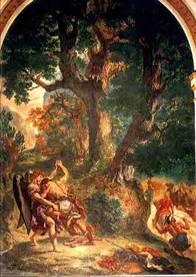
22 That night Jacob got up and took his two wives, his two maidservants and his eleven sons and crossed the ford of the Jabbok. 23 After he had sent them across the stream, he sent over all his possessions. 24 So Jacob was left alone, and a man wrestled with him till daybreak. 25 When the man saw that he could not overpower him, he touched the socket of Jacob’s hip so that his hip was wrenched as he wrestled with the man. 26 Then the man said, “Let me go, for it is daybreak.” But Jacob replied, “I will not let you go unless you bless me.” 27 The man asked him, “What is your name?” “Jacob,” he answered. 28 Then the man said, “Your name will no longer be Jacob, but Israel, because you have struggled with God and with men and have overcome.” 29 Jacob said, “Please tell me your name.” But he replied, “Why do you ask my name?” Then he blessed him there. 30 So Jacob called the place Peniel, saying, “It is because I saw God face to face, and yet my life was spared.” 31 The sun rose above him as he passed Peniel, and he was limping because of his hip. 32 Therefore to this day the Israelites do not eat the tendon attached to the socket of the hip, because the socket of Jacob’s hip was touched near the tendon.

clip_image039Background2www.wikipedia.org

Genesis (Hebrew: בראשית, Greek: Γένεσις, meaning “birth”, “creation”, “cause”, “beginning”, “source” or “origin”) is the first book of the Torah, the Tanakh, and the Old Testament. In Hebrew, it is called בראשית (B’reshit or Bərêšîth), after the first word of the text in Hebrew (meaning “in the beginning”). This is in line with the pattern of naming the other four books of the Pentateuch. As Jewish tradition considers it to have been written by Moses, it is sometimes also called The First Book of Moses.

Genesis contains the historical presupposition and basis of the national religious ideas and institutions of Israel, and serves as an introduction to its history, laws, and customs. It is the composition of a writer (or set of writers, who has recounted the traditions of the Israelites, combining them into a uniform work, while preserving the textual and formal peculiarities incident to their difference in origin and mode of transmission.

Biblical Truths3http://www.hope.edu/bandstra/RTOT/CH2/CH2_2C.HTM

Jacob separated himself from his flocks and family and remained on the far side of the Jabbok river. Should Jacob’s behavior be construed as an act of cowardice, or did he just need time to contemplate his future? This may have been part of a scheme to distance himself from Esau, using his dependents and estate as buffers. Perhaps he sought again to call on God for help (see 32:9-12). It may have been both. In any case, the aloneness of Jacob here at Penuel matches his aloneness at Bethel at the beginning of his journey. Both leaving and returning, Jacob met his God alone.

Instead of being alone, Jacob found himself wrestling with “a man.” The assailant is called a man, but as the story develops it becomes clear that it is Elohim (A name for God in the Hebrew Scriptures. [Hebrew ’ĕlōhîm , pl. of ’ĕlōah , God.]) Himself. Jacob, whose name means “heel-grabber,” hence “trickster,” undergoes a name change to Israel, which means “wrestles with God.” By giving an account of his dual name Jacob/Israel, the Elohist identifies Jacob as the patriarch of the nation of Israel. Again, the story is both personal and national.

Penuel (with an alternate spelling Peniel) literally means “face of God,” because there Jacob saw God directly. A recurring theme in the Elohist is that one cannot look at God and live (see also Moses at the burning bush in Exodus 3). This reinforces the utter powerfulness of Elohim. Yet Jacob saw the face of God and lived–a sign that indeed he was blessed.

The final note in verse 32 is introduced by “Therefore to this day,” indicating that this version of the story was written down later than the event itself, namely, when Israelites were around. Apparently this story, however old the core of it may have been, was appropriated at a later time and was used to explain the Jewish avoidance of eating the thigh muscle, identified in Jewish tradition with the sciatic nerve.

The meaning of the story is elusive. Yet at the very least it serves to characterize Jacob as persistent, even relentless, in his pursuit for blessing. Taken together with the other Jacob stories, this story says Jacob would stop at nothing to secure a personal advantage. Jacob never waited for his destiny. He made it happen. Single-mindedly and often deviously he pursued the divine blessing. Divine destiny and human response are united in one action sequence in the Jacob cycle.

Items for Discussion

  • How is Jacob’s wrestling match like spiritual warfare today?
  • Do you think that Jacob actually won against God? (see verse 28)
  • If there is spiritual warfare and real warfare, how is each won? In other words, what would the effective strategies look like?
  • What did Jacob recognize that resulted in his victory?
  • What is the lesson for us in that same struggle?


2 Corinthians 5:16-18
16 So from now on we regard no one from a worldly point of view. Though we once regarded Christ in this way, we do so no longer. 17 Therefore, if anyone is in Christ, he is a new creation; the old has gone, the new has come! 18 All this is from God, who reconciled us to himself through Christ and gave us the ministry of reconciliation: …

Background4http://en.wikipedia.org/wiki/Second_Epistle_to_the_Corinthians

While there is little doubt among scholars that Paul is the author, there is discussion over whether the letter was originally one letter or a combination of two or more of Paul’s letters. Although the New Testament only contains two letters to the Corinthians, the evidence from the letters themselves is that he may have written at least four:

  • 1 Cor 5:9 (“I have written you in my letter not to associate with sexually immoral people”, NIV) refers to an early letter, sometimes called the “warning letter”.
  • 1 Corinthians
  • Paul refers to an earlier “letter of tears” in 2 Corinthians 2:3-4 and 7:8. 1 Corinthians does not match that description; so this “letter of tears” might be between 1 Corinthians and 2 Corinthians.
  • 2 Corinthians

Most of this discussion is centered around the abrupt change of tone from being previously harmonious to bitterly reproachful in 2 Corinthians 10-13 leading many to speculate that chapters 10-13 form part of the “letter of tears” which were in some way tagged on to Paul’s main letter. For the purpose of this study, we will assume only two letters and not address this controversy.

Biblical Truths5http://www.searchgodsword.org/com/bcc/view.cgi?book=2co&chapter=005

Verse 16

Know no man after the flesh …
The new manner of life for Christians follows the principle laid down here. “They no longer measure men by human standards of race, natural gifts, social standing, or possessions.” No sooner had Paul written this than he remembered how, before his conversion, he had measured the Christ himself by those very standards. This he at once confessed and repudiated.

Even though we have known Christ after the flesh …
Regarding the meaning that Paul, as a disciple of Gamaliel, might have had some association with Jesus during his ministry; although this was by no means impossible, it is clear that Paul’s meaning here is that:

  • Prior to his conversion, his knowledge of Christ had been after the flesh, formed in accordance with external and mistaken standards; but his conversion had meant the transformation of his knowledge of Christ.

Yet now we know him so no more …
Paul no longer judged Christ after the false and artificial standards of the Pharisaical class to which he had once belonged.

Verse 17

In Christ …
Paul used this expression, or its equivalent, 169 times! Paul had just written that all people are dead spiritually, a deadness that shall never abate unless they are risen again IN CHRIST. In Christ, a new spiritual life is given to the convert; in Christ all of his previous sins are cancelled; in Christ he is endowed with the Holy Spirit; in Christ a new and glorious life begins; in Christ old values are rejected, old standards repudiated, and old lusts are crucified; in Christ are “all spiritual blessings” (Ephesians 1:3); out of Christ, there is nothing but death, remorse, hopelessness and condemnation; in Christ there is the life eternal!

Verse 18

All things are of God …
The marvelous blessings “in Christ” are of God, as Paul would explain a moment later, because God was in Christ, Christ being called GOD no less than ten times in the Greek New Testament. It was the Second Person of the Godhead, however, who entered earth life as a man, bore the sins of the whole world and offered himself upon Calvary as a propitiation for the sins of the whole world.

Who reconciled us …
People are the ones who need to be reconciled; and this thought is again implied here.

And gave unto us …
This is a reference to the apostles of Christ, to whom was committed the ministry of reconciliation, meaning the glad news of the redemption available to every man “in Christ.” In a far lesser sense, every Christian is also a custodian of the good news; but in the original and plenary sense, this applies only to the apostles of Christ.

Items for Discussion

  • How has accepting Christ made you different?
  • Why do you think that your faith in someone whom you have never physically met can influence your life the way it does?
  • What is the best part about the “Good News” that you like to share?
  • How do you interpret the use of the word, reconciliation?

Discussion Challenge

  • What good news does our church share without the use of words?

His Utmost!

Psalm 851NIV New International Version Translations
1 You showed favor to your land, O LORD; you restored the fortunes of Jacob. 2 You forgave the iniquity of your people and covered all their sins. 3 You set aside all your wrath and turned from your fierce anger. 4 Restore us again, O God our Savior, and put away your displeasure toward us. 5 Will you be angry with us forever? Will you prolong your anger through all generations? 6 Will you not revive us again, that your people may rejoice in you? 7 Show us your unfailing love, O LORD, and grant us your salvation. 8 I will listen to what God the LORD will say; he promises peace to his people, his saints—but let them not return to folly. 9 Surely his salvation is near those who fear him, that his glory may dwell in our land. 10 Love and faithfulness meet together; righteousness and peace kiss each other. 11 Faithfulness springs forth from the earth, and righteousness looks down from heaven. 12 The LORD will indeed give what is good, and our land will yield its harvest. 13 Righteousness goes before him and prepares the way for his steps.

clip_image038Background2http://encarta.msn.com/encyclopedia_761554526/Psalms.html

Psalms (Greek, “song”), is book of the Old Testament, a collection of 150 hymns or poems known also as the Psalter. The book is divided into five sections (each one marked at the end by a doxology: Psalms 41:13, 72:18-20, 89:52, 106:48, 150), perhaps in imitation of the Pentateuch, the first five books of the Old Testament. The Hebrew title of the book is Tehillim (Praises or Songs of Praise). Psalms is the first book in the Writings, the third part of the Hebrew canon. It is found between the books of Job and Proverbs in Christian versions of the Bible.

Some of the Psalms appear to have been written for individual recital, others for recital by the congregation. Many of them were written by professional musicians and include musical directions for instrumental performers. A few directions, such as the congregational response “Praise the Lord,” or “Hallelujah,” are still understood and used liturgically.

The text attributes 74 psalms to the Hebrew king David, 12 psalms to his son and successor Solomon, and 1 to Moses; 32 psalms are identified with other individuals, but the rest are anonymous. The most widely accepted view of their date of composition holds that the collection reflects a long period, from the Exodus about 1300 BC to the immediate postexilic period after 538 BC.

Biblical Truths3http://mhc.biblecommenter.com/psalms/85.htm

Matthew Henry:
85:1-7 The sense of present afflictions should not do away the remembrance of former mercies. The favour of God is the fountain of happiness to nations, as well as to particular persons. When God forgives sin, he covers it; and when he covers the sin of his people, he covers it all. See what the pardon of sin is. In compassion to us, when Christ our Intercessor has stood before thee, thou hast turned away thine anger. When we are reconciled to God, then, and not till then, we may expect the comfort of his being reconciled to us. He shows mercy to those to whom he grants salvation; for salvation is of mere mercy. The Lord’s people may expect sharp and tedious afflictions when they commit sin; but when they return to him with humble prayer, he will make them again to rejoice in him.

85:8-13 Sooner or later, God will speak peace to his people. If he do not command outward peace, yet he will suggest inward peace; speaking to their hearts by his Spirit. Peace is spoken only to those who turn from sin. All sin is folly, especially backsliding; it is the greatest folly to return to sin. Surely God’s salvation is nigh, whatever our difficulties and distresses are. Also, his honour is secured, that glory may dwell in our land. And the truth of the promises is shown by the Divine mercy in sending the Redeemer. The Divine justice is now satisfied by the great atonement. Christ, the way, truth, and life, sprang out of the earth when he took our nature upon him, and Divine justice looked upon him well pleased and satisfied. For his sake all good things, especially his Holy Spirit, are given to those who ask him. Through Christ, the pardoned sinner becomes fruitful in good works, and by looking to and trusting in the Saviour’s righteousness, finds his feet set in the way of his steps. Righteousness is a sure guide, both in meeting God, and in following him

Charles H. Spurgeon:
It is the prayer of a patriot for his afflicted country, in which he pleads the Lord’s former mercies, and by faith foresees brighter days. We believe that David wrote it, but many question that assertion. Certain interpreters appear to grudge the psalmist David the authorship of any of the psalms, and refer the sacred songs by wholesale to the times of Hezekiah, Josiah, the Captivity, and the Maccabees. It is remarkable that, as a rule, the more skeptical a writer is, the more resolute is he to have done with David; while the purely evangelic annotators are for the most part content to leave the royal poet in the chair of authorship. The charms of a new theory also operate greatly upon writers who would have nothing at all to say if they did not invent a novel hypothesis, and twist the language of the psalm in order to justify it. The present psalm has of course been referred to the Captivity, the critics could not resist the temptation to do that, though, for our part we see no need to do so: it is true a captivity is mentioned in Ps 85:1, but that does not necessitate the nation’s having been carried away into exile, since Job’s captivity was turned, and yet he had never left his native land: moreover, the text speaks of the captivity of Jacob as brought back, but had it referred to the Babylonian emigration, it would have spoken of Judah; for Jacob or Israel, as such, did not return. The first verse in speaking of “the land” proves that the author was not an exile. Our own belief is that David penned this national hymn when the land was oppressed by the Philistines, and in the spirit of prophecy he foretold the peaceful years of his own reign and the repose of the rule of Solomon, the psalm having all along an inner sense of which Jesus and his salvation are the key. The presence of Jesus the Savior reconciles earth and heaven, and secures to us the golden age, the balmy days of universal peace.

Items for Discussion

  • In what way can you relate our country today and the feelings of the Psalmist over his land?
  • What are the causes that we deal with today that make us feel like we are captives in our own land?
  • How is the Psalmist trying to change the situation?
  • If God is the only answer that the Psalmist suggests can change things, what does that say to how we should view our leaders and their abilities?
  • In what way has the Christian community let down our current leaders of our country?


Hebrews 2:14-15
14 Since the children have flesh and blood, he too shared in their humanity so that by his death he might destroy him who holds the power of death—that is, the devil—15 and free those who all their lives were held in slavery by their fear of death.

Background4http://en.wikipedia.org/wiki/Epistle_to_the_Hebrews

Although the author is unknown, Hebrews has been dated to shortly after the Pauline epistles were collected and began to circulate, c. 95. Most scholars today believe the document was written to prevent apostasy. (Apostasy is the abandonment of a political or religious belief.) Some have interpreted apostasy to mean a number of different things, such as a group of Christians in one sect leaving for another more conservative sect, one in which the author disapproves. Some have seen apostasy as a move from the Christian assembly to pagan ritual. In light of a possibly Jewish-Christian audience, the apostasy in this sense may be in regard to Jewish-Christians leaving the Christian assembly to return to the synagogue. In light of Pauline doctrine, the epistle dissuades non-Jewish Christians from feeling a need to convert to Judaism. Therefore the author writes, “Let us hold fast to our confession” (Heb 4:14).

The Bible’s Epistle to the Hebrews affirms special creation. It affirms that God by His Son, Jesus Christ, made the worlds. “God…hath in these last days spoken unto us by his Son…by whom also he made the worlds” (Hebrews 1:1-2). The epistle also states that the worlds themselves do not provide the evidence of how God formed them. “Through faith we understand that the worlds were framed by the Word of God, so that things which are seen were not made of things which do appear” (Hebrews 11:3).

Biblical Truths

The notes below provide comparative translations. It is provided to let you see what type of study material is available on the Internet. This is but a small portion of the information available on the links in the footnotes. This lesson takes us back to the original Greek writing to fully understand God’s Word.

Verse 145http://preceptaustin.org/hebrews_214-15.htm#2:14

Greek: epei oun ta paidia kekoinoneken (3SRAI) haimatos kai sarkos kai autos paraplesios meteschen (3SAAI) ton auton hina dia tou thanatou katargese (3SAAS) ton to kratos echonta (PAPMSA) tou thanatou tout estin (3SPAI) ton diabolon

Amplified: Since, therefore, [these His] children share in flesh and blood [in the physical nature of human beings], He [Himself] in a similar manner partook of the same [nature], that by [going through] death He might bring to nought and make of no effect him who had the power of death–that is, the devil– (Amplified Bible – Lockman)

Barclay: The children then have a common flesh and blood and he completely shared in them, so that, by that death of his, he might bring to nothing him who has the power of death, (Westminster Press)

NLT: Because God’s children are human beings–made of flesh and blood–Jesus also became flesh and blood by being born in human form. For only as a human being could he die, and only by dying could he break the power of the Devil, who had the power of death. (NLT – Tyndale House)

Phillips: Since, then, “the children” have a common physical nature as human beings, he also became a human being, so that by going through death as a man he might destroy him who had the power of death, that is, the devil (Phillips: Touchstone)

Wuest: Therefore, since the children share in common with one another blood and flesh, He Himself also partook with them in the same, in order that through the aforementioned death He might bring to naught the one having the dominion of death, that is, the Devil. (Erdmans)

Young’s Literal: Seeing, then, the children have partaken of flesh and blood, he himself also in like manner did take part of the same, that through death he might destroy him having the power of death — that is, the devil—

Verse 156http://preceptaustin.org/hebrews_214-15.htm#2:15

Greek: kai apallaxo (3SAAS) toutous hosoi phobo thanatou dia pantos tou zon (PAN) enochoi esan (3PIAI) douleias

Amplified: And also that He might deliver and completely set free all those who through the [haunting] fear of death were held in bondage throughout the whole course of their lives. (Amplified Bible – Lockman)

Barclay: and might set free all those who, for fear of death, were all their lives liable to a slave’s existence. (Westminster Press)

NLT: Only in this way could he deliver those who have lived all their lives as slaves to the fear of dying. (NLT – Tyndale House)

Phillips: and might also set free those who lived their whole lives a prey to the fear of death. (Phillips: Touchstone)

Wuest: And effect the release of those who by reason of fear of death through the entire course of their lives were held in bondage. (Erdmans)

Young’s Literal: and might deliver those, whoever, with fear of death, throughout all their life, were subjects of bondage,

Items for Discussion

  • What two things did Jesus’ becoming human and dying accomplish?
  • We often talk about Jesus as both human and God – What part of that knowledge do you find most comforting?
  • Let’s build a list of the benefits of Jesus being both man and God, human and supernatural in His composition?
  • When looking at the world that does not believe in Christ as a savior, what items in that list do you think are the greatest losses to their faith walk?
  • How does the knowledge and belief in Christ help us with our battle described in Psalm 85, being captives in our own land?

Discussion Challenge

  • What can we do today to bring God back to our nation and our church so we no longer feel like captives in our own land?

Affirming What We Believe – Christ Victorious

Psalm 107:1-9, 431NIV New International Version Translations
1 Give thanks to the LORD, for he is good; his love endures forever. 2 Let the redeemed of the LORD say this—those he redeemed from the hand of the foe, 3 those he gathered from the lands, from east and west, from north and south. 4 Some wandered in desert wastelands, finding no way to a city where they could settle. 5 They were hungry and thirsty, and their lives ebbed away. 6 Then they cried out to the LORD in their trouble, and he delivered them from their distress. 7 He led them by a straight way to a city where they could settle. 8 Let them give thanks to the LORD for his unfailing love and his wonderful deeds for men, 9 for he satisfies the thirsty and fills the hungry with good things. ….43 Whoever is wise, let him heed these things and consider the great love of the LORD.

clip_image037Background2Matthew Henry Commentaries

Verse 1-9 – In these verses there is reference to the deliverance from Egypt, and perhaps that from Babylon: but the circumstances of travelers in those countries are also noted. It is scarcely possible to conceive the horrors suffered by the hapless traveler, when crossing the trackless sands, exposed to the burning rays of the sum. The words describe their case that the Lord has redeemed from the bondage of Satan; who passes through the world as a dangerous and dreary wilderness, often ready to faint through troubles, fears, and temptations. Those who hunger and thirst after righteousness, after God, and communion with him, shall be filled with the goodness of his house, both in grace and glory.

Biblical Truths3http://www.processandfaith.org/lectionary/YearC/2006-2007/2007-08-05.shtml

Psalm 107 begins with the most basic biblical affirmation possible: That God is good. What might seem self-evident to many, to others it is not obvious that God is good. There is so much evil and darkness in the world, and sometimes the forces of death seem so overwhelming, that God’s goodness becomes problematic. The problem of evil is theological at its base and the problem of whether the universe is ultimately a friendly place or a hostile place is a basic philosophical question. The death of a child; the destruction of dreams and life by natural forces such as tornadoes and earthquakes; deliberate acts of evil of one against many–all stack up powerfully against a good God. If one argues for the goodness of God based on evidence, the case is difficult to make. Yet, that is precisely the argument the Psalmist makes.

The Psalm begins by giving thanks to this God because this God is good. The goodness of God is evidenced by the quality of love. The Psalm calls attention to a list of loving acts. God delivers in times of distress, hunger and fear. The wise person is the one who pays attention to these acts of God.

The text continues with the theme of the nature of God as love. In this case, God is seen as parent. God is portrayed in a state of anxiety over the waywardness of the child. God loves the child and is therefore committed to the child no matter what the child’s behavior might be. Any parent who has a troubled teenager knows the anxiety of the text. The trouble relationship between parent and child is one of the basic forms of anxiety that love produces. Rarely in the Bible do we get such a glimpse into the Divine agony caused by taking the risk of love. God is torn between anger and compassion.

Items for Discussion

  • How do you personally explain the love/anger relationship between a parent and a child?
  • Can a child anger a parent so much that the parent stops loving them?
  • What are the ways that we learn about our God? Experiences, books, others, etc. What have you learned about the character of our God?
  • Why is the paid of distress such a great teacher and relationship builder? Think about between people, between a person and God.
  • Why is the analogy of wondering in a desert so perfect for describing mankind’s search for God today?


Ephesians 1:18-20
18 I pray also that the eyes of your heart may be enlightened in order that you may know the hope to which he has called you, the riches of his glorious inheritance in the saints, 19 and his incomparably great power for us who believe. That power is like the working of his mighty strength, 20 which he exerted in Christ when he raised him from the dead and seated him at his right hand in the heavenly realms,

Background4Barnes Notes

This Epistle purports to have been written to the “saints at Ephesus, and to the faithful in Christ Jesus,” though, as we shall see, the fact of its having been directed to the church at Ephesus has been called in question. Assuming now that it was sent to Ephesus, it is of importance to have a general view of the situation of that city, of the character of its people, and of the time and manner in which the gospel was introduced there, in order to a correct understanding of the epistle.

Ephesus was a celebrated city of Ionia in Asia Minor, and was about 40 miles south of Smyrna, and near the mouth of the river Cayster. The river, though inferior in beauty to the Meander, which flows south of it, waters a fertile vale of the ancient Ionia. Ionia was the most beautiful and fertile part of Asia Minor; was settled almost wholly by Greek colonies; and embosomed Pergamos, Smyrna, Ephesus, and Miletus. The climate of Ionia is represented as remarkably mild, and the air as pure and sweet and this region became early celebrated for everything that constitutes softness and effeminacy in life. Its people were distinguished for amiableness and refinement of manners; and also for luxury, for music and dancing, and for the seductive arts that lead to vicious indulgence. Numerous festivals occupied them at home, or attracted them to neighboring cities, where the men appeared in magnificent habits and the women in all the elegance of female ornament, and with all the desire of pleasure.

There is an extensive introduction to Ephesus that can be found at the Internet link http://www.studylight.org/com/bnn/view.cgi?book=eph&chapter=001

Biblical Truths

Verse 18. The eyes of your understanding being enlightened. The construction here in the Greek is, probably, “that he may give you (\~dwh\~, Ephesians 1:17) the Spirit of wisdom, etc.–eyes of the understanding enlightened,” etc. Or the phrase, “the eyes of your understanding are being enlightened,” may be in the accusative absolute, which Koppe and Bloomfield prefer. The phrase, “the eyes of the understanding,” is a figure that is common in all languages. Thus Philo says, “What the eye is to the body, that is the mind to the soul.” Comp. Matthew 6:22. The eye is the instrument by which we see; and, in like manner, the understanding is that by which we perceive truth. The idea here is, that Paul not only wished their hearts to be right, but he wished their understanding to be right also. Religion has much to do in enlightening the mind. Indeed, its effect there is not less striking and decisive than it is on the heart. The understanding has been blinded by sin. The views which men entertain of themselves and of God are narrow and wrong. The understanding is enfeebled and perverted by the practice of sin. It is limited in its operations by the necessity of the case, and by the impossibility of fully comprehending the great truths which pertain to the Divine administration. One of the first effects of true religion is on the understanding. It enlarges its views of truth; gives it more exalted conceptions of God; corrects its errors; raises it up towards the great Fountain of love. And nowhere is the effect of the true religion more apparent than in shedding light on the intellect of the world, and restoring the weak and perverted mind to a just view of the proportion of things, and to the true knowledge of God.

That ye may know what is the hope of his calling. What is the full import of that hope to which he has called and invited you by his Spirit and his promises. The meaning here is, that it would be an inestimable privilege to be made fully acquainted with the benefits of the Christian hope, and to be permitted to understand fully what Christians have a right to expect in the world of glory. This is the first thing which the apostle desires they should fully understand.

And what the riches of the glory of his inheritance. This is the second thing which Paul wishes them to understand. There is a force in this language which can be found, perhaps, nowhere else than in the writings of Paul. His mind is full, and language is burdened and borne down under the weight of his thoughts. See Barnes “2 Corinthians 4:17”. On the word “riches” here used the phrase “riches of glory” means glorious wealth; or, as we would say, “how rich and glorious!” The meaning is, that there is an abundance –an infinitude of wealth. It is not such a possession as man may be heir to in this world, which is always limited from the necessity of the case, and which cannot be enjoyed long; it is infinite and inexhaustible. The “inheritance” here referred to is eternal life.

In the saints. Among the saints.

Verse 19. And what is the exceeding greatness of his power. On the language here used, See Barnes “2 Corinthians 4:17”. There is much emphasis and energy of expression here, as if the apostle were laboring under the greatness of his theme, and wanted words to express the magnitude of his conception. This is the third thing which he was particularly desirous they should know–that they should be fully acquainted with the power of God in the salvation of men. He refers not merely to the power which he had evinced in their salvation, but also to what the gospel was able to accomplish, and which they might yet experience. The “power” referred to here, as exercised towards believers, does not refer to one thing merely. It is the whole series of the acts of power towards Christians which results from the work of the Redeemer. There was power exerted in their conversion. There would be power exerted in keeping them. There would be power in raising them up from the dead, and exalting them with Christ to heaven. The religion which they professed was a religion of power. In all the forms and stages of it, the power of God was manifested towards them, and would be until they reached their final inheritance.

According to the working of his mighty power. The might of his power. This should be taken with the clause in the following verse, “which he wrought in Christ;” and the meaning is, that the power which God has exerted in us is in accordance with the power which was shown in raising up the Lord Jesus. It was the proper result of that, and was power of a similar kind. The same power is requisite to convert a sinner which is demanded in raising the dead. Neither will be accomplished but by omnipotence, See Barnes “Ephesians 2:5”; and the apostle wished that they should be fully apprised of this fact, and of the vast power which God had put forth in raising them up from the death of sin. To illustrate this sentiment is one of his designs in the following verses; and hence he goes on to show that men, before their conversion, were “dead in trespasses and sins;” that they had no spiritual life; that they were the “children of wrath;” that they were raised up from their death in sin by the same power which raised the Lord Jesus from the grave, and that they were wholly saved by grace, Ephesians 2:1-10. In order to set this idea of the power which God had put forth in their regeneration in the strongest light, he goes into a magnificent description of the resurrection and exaltation of the Lord Jesus, and shows how that was connected with the renewing of Christians. God had set him over all things. He had put all things under his feet, and had made principalities and dominions everywhere subject to him. In this whole passage, Ephesians 1:19-23; 2:1-10, the main thing to be illustrated is the POWER which God has shown in renewing and saving his people; and the leading sentiment is, that the SAME power is evinced in that which was required to raise up the Lord Jesus from the dead, and to exalt him over the universe.

Verse 20. Which he wrought in Christ. Which he exerted in relation to the Lord Jesus when he was dead. The power which was then exerted was as great as that of creation. It was imparting life to a cold and “mangled” frame. It was to open again the arteries and veins, and teach the heart to beat and the lungs to heave. It was to diffuse vital warmth through the rigid muscles, and to communicate to the body the active functions of life. It is impossible to conceive of a more direct exertion of power than in raising up the dead; and there is no more striking illustration of the nature of conversion than such a resurrection.

And set him at his own right hand. The idea is, that great power was displayed by this, and that a similar exhibition is made when man is renewed and exalted to the high honor of being made an heir of God. On the fact that Jesus was received to the right hand of God.

In the heavenly places. See Barnes “Ephesians 1:3”. The phrase here evidently means in heaven itself.

Items for Discussion

  • What do you think Heaven is like?
  • What about life’s experiences gives you faith that life after death is real?
  • If God wanted to prove to humanity that He exists and that life after death exists, what methods besides Christ could He have used?
  • With Ephesus being the kind of city it was, does this help or hurt Paul’s argument for faith in Christ?
  • Many believe in God – Many believe in the afterlife – Why is Christ and our faith in Him paramount to establishing a relationship with God?

Discussion Challenge

  • In a world filled with distractions, how do we keep our children’s and our own eye on the ball (getting to the next world with Christ)?

Our Guide to the Truth!

Psalm 81:10-161NIV New International Version Translations
10 I am the LORD your God, who brought you up out of Egypt. Open wide your mouth and I will fill it. 11 “But my people would not listen to me; Israel would not submit to me. 12 So I gave them over to their stubborn hearts to follow their own devices. 13 “If my people would but listen to me, if Israel would follow my ways, 14 how quickly would I subdue their enemies and turn my hand against their foes! 15 Those who hate the LORD would cringe before him, and their punishment would last forever. 16 But you would be fed with the finest of wheat; with honey from the rock I would satisfy you.”

Clip_image036Background2C.H. Spurgeon

Very little is known of the meaning of the title. If it is intended to indicate a vintage song, it speaks well for the piety of the people for whom it was written; it is feared that in few places even in Christian countries would holy hymns be thought suitable to be sung in connection with the winepress. When the bells upon the horses shall be holiness unto the Lord, then shall the juice of the grape gush forth to the accompaniment of sacred song. A Psalm of Asaph. This poet here again dwells upon the history of his country; his great forte seems to be rehearsing the past in admonitory psalmody. He is the poet of the history and politics of Israel. A truly national songster, at once pious and patriotic.

Biblical Truths3http://www.churchplantingvillage.net/atf/cf/{087EF6B4-D6E5-4BBF-BED1-7983D360F394}/16psalms.pdf

Asaph exhorts Israel to praise God for delivering them from Egypt, complains about Israel’s ingratitude, and portrays Israel’s forfeited blessings.

I. THE PSALMIST EXHORTS ISRAEL TO REJOICE (81:1-4)

A. How? (81:1-2): Everyone should praise God for his strength through singing, accompanied by tambourine, lyre, and the harp.

B. When? (81:3-4): The law of God requires praise during Israel’s scheduled feasts.

II. THE PSALMIST EXHORTS ISRAEL TO REMEMBER (81:5-16)

A. What God has already done (81:5-7)

1. He brought them out of Egypt (81:5-6): He set them free from slavery and relieved their burden.

2. He brought them through the desert (81:7): He answered them from a thundercloud when they complained of no water.

B. What God desires to do (81:8-16)

1. If they will listen and obey (81:8-10, 16)

a. Fill their lives with blessing (81:10, 16): He will fill their mouth with good things.

b. Subdue their enemies (81:13-15): Their foes would cringe before God.

2. If they do not listen (81:11-12): Because of Israel’s rebellion, God will give them over to their own evil devices.

Items for Discussion

  • Read verse 12 and discuss what this seems to be telling us?
  • Can you remember who in the New Testament reminds us of this same thing?
  • Based on this Psalm, why is a stubborn heart so dangerous?
  • How does being stubborn hurt us in our own daily life with family, friends, co-workers?
  • This Psalm reminds us of both God’s passion for us and the passion that we must have for God. Are there dangers in too much passion? (ideas: is stubbornness a form of passion gone wild?)
  • What is our role in this psalm and what is God’s role?


John 16:12-15
12 “I have much more to say to you, more than you can now bear. 13 But when he, the Spirit of truth, comes, he will guide you into all truth. He will not speak on his own; he will speak only what he hears, and he will tell you what is yet to come. 14 He will bring glory to me by taking from what is mine and making it known to you. 15 All that belongs to the Father is mine. That is why I said the Spirit will take from what is mine and make it known to you. 16“In a little while you will see me no more, and then after a little while you will see me.”

Background4Matthew Henry Commentaries: http://www.ccel.org/ccel/henry/mhc5.John.i.html

It is not material to enquire when and where this gospel was written; we are sure that it was given by inspiration of God to John, the brother of James, one of the twelve apostles, distinguished by the honorable character of that disciple whom Jesus loved, one of the first three of the worthies of the Son of David, whom he took to be the witnesses of his retirements, particularly of his transfiguration and his agony. The ancients tell us that John lived longest of all the twelve apostles, and was the only one of them that died a natural death, all the rest suffering martyrdom; and some of them say that he wrote this gospel at Ephesus, at the request of the ministers of the several churches of Asia, in opposition to the heresy of Corinthus and the Ebionites, who held that our Lord was a mere man. It seems most probable that he wrote it before his banishment into the isle of Patmos, for there he wrote his Apocalypse, the close of which seems designed for the closing up of the canon of scripture; and, if so, this gospel was not written after. I cannot therefore give credit to those later fathers, who say that he wrote it in his banishment, or after his return from it, many years after the destruction of Jerusalem; when he was ninety years old, saith one of them; when he was a hundred, saith another of them. However, it is clear that he wrote last of the four evangelists, and, comparing his gospel with theirs, we may observe, 1. That he relates what they had omitted; he brings up the rear, and his gospel is as the rearward or gathering host; it gleans up what they has passed by. Thus there was a later collection of Solomon’s wise sayings (Prov. xxv. 1), and yet far short of what he delivered, 1 Kings iv. 32. 2. That he gives us more of the mystery of that of which the other evangelists gave us only the history. It was necessary that the matters of fact should be first settled, which was done in their declarations of those things which Jesus began both to do and teach, Luke i. 1; Acts i. 1. But, this being done out of the mouth of two or three witnesses, John goes on to perfection (Heb. vi. 1), not laying again the foundation, but building upon it, leading us more within the veil. Some of the ancients observe that the other evangelists wrote more of the ta somatika—the bodily things of Christ; but John writes of the ta pneumatika—the spiritual things of the gospel, the life and soul of it; therefore some have called this gospel the key of the evangelists. Here is it that a door is opened in heaven, and the first voice we hear is, Come up hither, come up higher. Some of the ancients, that supposed the four living creatures in John’s vision to represent the for evangelists, make John himself to be the flying eagle, so high does he soar, and so clearly does he see into divine and heavenly things.

Bible Truths5Barnes Notes: http://www.studylight.org/com/bnn/view.cgi?book=joh&chapter=16

Verse 12. I have yet many things to say. There were many things pertaining to the work of the Spirit and the establishment of religion which might be said. Jesus had given them the outline; he had presented to them the great doctrines of the system, but he had not gone into details. These were things which they could not then bear. They were still full of Jewish prejudices, and were not prepared for a full development of his plans. Probably he refers here to the great changes which were to take place in the Jewish system–the abolition of sacrifices and the priest-hood, the change of the Sabbath, the rejection of the Jewish nation. For these doctrines they were not prepared, but they would in due time be taught them by the Holy Spirit.

Verse 13. The Spirit of truth. So called because he would teach them all needful truth.

Will guide you into all truth. That is, truth which pertained to the establishment of the Christian system, which they were not then prepared to hear. We may here remark that this is a full promise that they would be inspired and guided in founding the new church; and we may observe that the plan of the Savior was replete with wisdom. Though they had been long with him, yet they were not prepared then to hear of the changes that were to occur; but his death would open their eyes, and the Holy Spirit, making use of the striking and impressive scenes of his death and ascension, would carry forward with vast rapidity their views of the nature of the Christian scheme. Perhaps in the few days that elapsed, of which we have a record in the first and second chapters of the Acts of the Apostles, they learned more of the true nature of the Christian plan than they would have done in months or years even under the teaching of Jesus himself. The more we study the plan of Christ, the more shall we admire the profound wisdom of the Christian scheme, and see that it was eminently fitted to the great design of its Founder –to introduce it in such a manner as to make on man the deepest impression of its wisdom and its truth.

Not speak of himself. Not as prompted by himself. He shall declare what is communicated to him. Whatsoever he shall hear. What he shall receive of the Father and the Son; represented by hearing, because in this way instruction is commonly received.

Things to come. Probably this means the meaning of things which were to take place after the time when he was speaking to them –to wit, the design of his death, and the nature of the changes which were to take place in the Jewish nation. It is also true that the apostles were inspired by the Holy Spirit to predict future events which would take place in the church and the world.

Verse 14. Shall glorify me. Shall honor me. The nature of his influence shall be such as to exalt my character and work in view of the mind.

Shall receive of mine. Literally, “shall take of or from me.” He shall receive his commission and instructions as an ambassador from me, to do my will and complete my work.

Shall show it. Shall announce or communicate it to you. This is always the work of the Spirit. All serious impressions produced by him lead to the Lord Jesus (1 Corinthians 12:3), and by this we may easily test our feelings. If we have been truly convicted of sin and renewed by the Holy Ghost, the tendency of all his influences has been to lead us to the Savior; to show us our need of him; to reveal to us the loveliness of his character, and the fitness of his work to our wants; and to incline us to cast our eternal interests on his almighty arm, and commit all to his hands.

Verse 15. All things. See Matthew 28:18; 11:27. No one could have said this who was not equal with the Father. The union was so intimate, though mysterious, that it might with propriety be said that whatever was done in relation to the Son, was also done in regard to the Father. See John 14:9.

Verse 16. A little while His death would occur in a short time. It took place the next day. See John 16:19.

Ye shall not see me. That is, he would be concealed from their view in the tomb.

And again a little while. After three days he would rise again and appear to their view.

Because I go. Because it is a part of the plan that I should ascend to God, it is necessary that I should rise from the grave, and then you will see me, and have evidence that I am still your Friend. Comp. John 7:33. Here are three important events foretold for the consolation of the disciples, yet they were stated in such a manner that, in their circumstances and with their prejudices, it appeared difficult to understand him.

Items for Discussion

  • Can God be deduced or figured out? Why or why not?
  • Can God be discovered? If yes, how?
  • Can you find the struggle that the apostles were having in this text/message from Jesus?
  • Why was it so hard to grasp the concept of the Holy Spirit?
  • Why do so many people believe in God, sort of believe in Jesus as at least a prophet but fail to embrace the Holy Spirit?
  • Why is the Holy Spirit so important to the Christian Church?
  • Can a Christian survive in this world without the presence of the Holy Spirit?

Discussion Challenge

  • How can our church bring more empowerment of the Holy Spirit into worship but not cross the line and become reliant on emotions and feelings?
« Older posts Newer posts »

"For it is by grace you have been saved" - Ephesians 2:8-9  

Copyright: © 2001 - 2025 Lostpine

Translate »