Biblical wisdom, historical insight, and personal growth — all in one place

Category: Snapshots (Page 20 of 45)

A Small Piece of Paper

Psalm 96:1-9[ref]NIV New International Version Translations[/ref]
1 Sing to the LORD a new song; sing to the LORD, all the earth. 2 Sing to the LORD, praise his name; proclaim his salvation day after day. 3 Declare his glory among the nations, his marvelous deeds among all peoples. 4 For great is the LORD and most worthy of praise; he is to be feared above all gods. 5 For all the gods of the nations are idols, but the LORD made the heavens. 6 Splendor and majesty are before him; strength and glory are in his sanctuary. 7 Ascribe to the LORD, O families of nations, ascribe to the LORD glory and strength. 8 Ascribe to the LORD the glory due his name; bring an offering and come into his courts. 9 Worship the LORD in the splendor of his holiness; tremble before him, all the earth.

clip_image092Background[ref]Matthew Henry’s Commentary[/ref]

This psalm is written by David in reference to the bringing up of the ark to the city of David. It was designed to celebrate the glories of God’s kingdom, especially the accession of the Gentiles to it. It contains a call given to all people to praise God, to worship him, and give glory to him, as a great and glorious God, ver. 1-9. Further, a notice is given to all people of God’s universal government and judgment, which ought to be the matter of universal joy, ver. 10-13. In singing this psalm our hearts should be filled with great and high thoughts of the glory of God and the grace of the gospel, and with an entire satisfaction in Christ’s sovereign dominion and in the expectation of the judgment to come.

Biblical Truths

Ps 96:1-The prophet shows that the time will come, that all nations will have opportunity to praise the Lord for the revealing of his gospel.

Ps 96:4-Seeing he will reveal himself to all nations contrary to their own expectation, they should all worship him contrary to their own imaginations, and only as he has appointed.

Ps 96:5-Then the idols or whatever did not make the heavens, are not God.

Ps 96:6-God cannot be known but by his strength and glory, the signs of which appear in His sanctuary.

Ps 96:7-As by experience you see that it is only due to Him.

Ps 96:8-By offering up yourselves wholly to God, declares that you worship Him only.

Items for Discussion

  • How you believe that God reveals to nations, His Kingdom?
  • Is this real evidence, substantial enough to be held up in a modern court of law or subjective circumstantial evidence?
  • As Christians, what is our role in assisting God’s revelation to the world?
  • What is our church’s role in revealing God?
  • Where is the church ineffective?
  • Where is the church most effective?


I John 2:12-13
12 I write to you, dear children, because your sins have been forgiven on account of his name. 13 I write to you, fathers, because you have known him who is from the beginning. I write to you, young men, because you have overcome the evil one. I write to you, dear children, because you have known the Father.

Background

I JOHN IS A “LAST HOUR” EPISTLE to help us know God. Forty times some form of the word “to know” occurs in it. In the Greek New Testament, 25 of these come from the word ginósko which we learn means “to know” by acquiring knowledge, or by learning. 15 times the word comes from oída which means “to know” in a more absolute way. It is the kind of knowledge more like an instinct, or an idea that bursts upon the mind pure and unaffected by outward observance. Strangely—or maybe wonderfully—ginósko occurs more prominently in the first part of the Epistle. As we draw toward its conclusion, it is oída that finds almost exclusive use. The knowledge that is acquired about God and His Beloved Son develops from a knowledge that comes on by learning into a knowledge that is absolute.

I John covers three specific subjects: Christ, anti-Christ and love. Through Christ we know God. Anti-Christ and the spirits that work with him oppose this. Knowing God is to know love, pure and absolute. The Epistle is intended to help strengthen our God consciousness and our self-conscience.

Biblical Truths

John makes a distinction between children, young men, and fathers. The distinction is very revealing. Spiritual children are focused on overcoming sin and they have come to see God as their Father. This is good, but it is just the first stage of maturity. Young men are focused on overcoming the evil one and they are becoming strong, as John further reveals. They are enjoying flexing their spiritual muscles. This is a definite advancement from the child stage. Spiritual fathers, however, are known by their knowledge of “Him who is from the beginning.”

John writes to both children and fathers “because you know Him”, but what they know of Him is quite different. Children know Him only as Father and they are still focused on forgiveness of sins. Fathers are advanced in knowledge of God until they are described as “knowing Him who is from the beginning.” This highest level of maturity is marked by a deep knowledge of God.

The fathers that John writes to are being transformed into God’s image from having spent much time beholding Him. This deeper conformity to God is evidenced in a greater glory resting upon these mature ones as is stated in I Corinthians 3:18. We are “being transformed into the same image from glory to glory.” Those who have long gazed upon the face of God have attained to the greatest glory.

Items for Discussion

  • What do you think that John was trying to emphasize when he referred to those he was writing as children?
  • Do you think that the world is aware of an “evil one” or infatuated by an “evil one?”
  • How did your relationship with God change as you matured in both your own faith as well as physically, becoming an adult?
  • As an adult, what advice do you have for a child? For a younger adult with respect to their faith walk?
  • How do letters communicate differently than direct mouth to mouth communications?
  • How have the following changed our communications? For the better or for the worse?
    • Electronic Email?
    • Smart Phones?
    • Television and video?
    • The entertainment industry?
    • The news media?
    • The Internet?
  • Have the above list of changes made God’s revelation of His power and kingdom easier or harder?

Discussion Challenge

  • What is the role of a Church in the three phases of Christian maturity? Childhood; adolescence; and adulthood?


Porters, Redcaps and Bellhops

Psalm 90:1-6[ref]NIV New International Version Translations[/ref]
1 Lord, you have been our dwelling place throughout all generations. 2 Before the mountains were born or you brought forth the earth and the world, from everlasting to everlasting you are God. 3 You turn men back to dust, saying, “Return to dust, O sons of men.” 4 For a thousand years in your sight are like a day that has just gone by, or like a watch in the night. 5 You sweep men away in the sleep of death; they are like the new grass of the morning—6 though in the morning it springs up new, by evening it is dry and withered.

clip_image091Background[ref]Matthew Henry’s Commentary[/ref]

Psalm was probably written as early as the deliverance of the Israelites out of Egypt. This psalm was penned by Moses (as appears by the title), the most ancient penman of sacred writings. We have other examples from Moses on record as praising songs and even an instructing song. This psalm is entitled a prayer of Moses. Where, and in what volume, it was preserved from Moses’ time till the collection of psalms was published, is uncertain; but, being divinely inspired, it was under a special protection: perhaps it was written in the book of Jasher, or the book of the wars of the Lord.

Moses taught the people of Israel to pray, and put words into their mouths which they might make use of in turning to the Lord. Moses is here called the man of God, because he was a prophet, the father of prophets, and an eminent type of the great prophet. But this Psalm is of a different nature from others written by Moses because it is called a prayer. It is believed that this Psalm was written on the occasion of the sentence passed upon Israel in the wilderness for their unbelief, murmuring, and rebellion, that their carcasses should fall in the wilderness, that they should be wasted away by a series of miseries for thirty-eight years together, and that none of them that were then of age should enter Canaan.

We find the story to which this psalm seems to refer in Numbers 14:1-45. Probably Moses wrote this prayer to be used daily, either by the people in their tents, or, at least, by the priests in the tabernacle-service, during their tedious fatigue in the wilderness. In the Psalm:

  1. Moses comforts himself and his people with the eternity of God and their interest in him, verses 1, 2.
  2. He humbles himself and his people with the consideration of the frailty of man, verses 3-6.
  3. He submits himself and his people to the righteous sentence of God passed upon them, verses 7-11.
  4. He commits himself and his people to God by prayer for divine mercy and grace, and the return of God’s favor, verses 12-17.

Though it was written for this particular occasion, it is very applicable to the frailty of human life in general, and, in singing it, we may easily apply it to the years of our passage through the wilderness of this world, and it furnishes us with meditations and prayers very suitable to the solemnity of a funeral.

Biblical Truths

Verse 1: Now that they have fallen under God’s displeasure, and He threatened to abandon them, they plead his former kindnesses to their ancestors. Canaan was a land of pilgrimage to their fathers the patriarchs, who dwelt there in tabernacles; but then God was their habitation, and, wherever they went, they were at home, at rest, in him. Egypt had been a land of bondage to them for many years, but even then God was their refuge; and in him that poor oppressed people lived and were kept in being. Note, True believers are at home in God, and that is their comfort in reference to all the toils and tribulations they meet with in this world. In him we may repose and shelter ourselves as in our dwelling-place.

Verse 2: God, whose existence has neither its commencement nor its period with time, is not measured by the successions and revolutions of it, but who is the same yesterday, to-day, and for ever, without beginning of days, or end of life, or change of time. Note, against all the grievances that arise from our own mortality, and the mortality of our friends, we may take comfort from God’s immortality. We are dying creatures, and all our comforts in the world are dying comforts, but God is an ever living God, and those shall find him so who have him for theirs.

Verse 3: When God is, by sickness or other afflictions, turning men to destruction, he does thereby call men to return to him, that is, to repent of their sins and live a new life. When God is threatening to turn men to destruction, to bring them to death, and they have received a sentence of death within themselves, sometimes he wonderfully restores them. When God turns men to destruction, it is according to the general sentence passed upon all, which is this, “Return, you children of men, one, as well as another, return to your first principles; let the body return to the earth as it was (dust to dust, Genesis 3:19) and let the soul return to God who gave it,” (Ecclesiastes 12:7).

Verse 4: Some of the patriarchs lived nearly a thousand years; Moses knew this very well, and had recorded it: but what is their long life to God’s eternal life? “A thousand years, to us, are a long period, which we cannot expect to survive. A thousand years are nothing to God’s eternity; they are less than a day, than an hour, to a thousand years.

Verse 5: To see the frailty of man, and his vanity even at his best just look upon all the children of men and we see:

  1. That their life is a dying life:
  2. That it is a dreaming life.
  3. That it is a short and transient life.

Items for Discussion

  • What are the barriers to accepting the inevitability of death?
  • Must a Christian accept that death is inevitable to be a Christian?
  • What is the fallacy of the notion that our next generation will not age, disease will be conquered and no one will ever die?
  • What is the impact of movies, video games, etc. on our children’s view of death?
  • Can games actually help a child understand the mortality?
  • How does one’s mortality (knows one is mortal) help them live a better life?Galatians 6:2


Galatians 6:2
1 Brothers, if someone is caught in a sin, you who are spiritual should restore him gently. But watch yourself, or you also may be tempted. 2 Carry each other’s burdens, and in this way you will fulfill the law of Christ. 3 If anyone thinks he is something when he is nothing, he deceives himself. 4 Each one should test his own actions. Then he can take pride in himself, without comparing himself to somebody else, 5 for each one should carry his own load.

Background

Chapter 6 of Galatians chiefly consists of two parts. In the former the Apostle Paul gives us several plain and practical directions, which more especially tend to instruct Christians in their duty to one another, and to promote the communion of saints in love, verses 1-10. In the latter he revives the main design of the epistle, which was to fortify the Galatians against the arts of their humanizing teachers, and confirm them in the truth and liberty of the gospel, for which purpose Paul:

  1. Gives them the true character of these teachers, and shows them from what motives, and with what views, they acted, verses 11-14. And,
  2. On the other hand he acquaints them with his own temper and behavior. From both these they might easily see how little reason they had to slight him, and to fall in with them. And then he concludes the epistle with a solemn benediction.

Biblical Truths

Verse 1: We are here taught to deal tenderly with those who are overtaken in a fault. The duty we are directed to–to restore and bring them to repentance. The original word, katartizete, signifies to set in joint, as a dislocated bone; accordingly we should endeavor to set the dislocation again, to bring them to back by convincing them of their sin and error, persuading them to return to their duty, comforting them in a sense of pardoning mercy. This is to be done: With the spirit of meekness; not in wrath and passion, as those who triumph in a brother’s falls, but with meekness, as those who rather mourn for them. A very good reason why this should be done with meekness is because none of us know but it may some time or other be our turn for such compassion.

Verse 2: We are here directed to bear one another’s burdens. This verse ties nicely with verse 1 referring to exercise forbearance and compassion towards one another. It directs us to sympathize with one another under the various trials and troubles that we may meet with, and to be ready to afford each other the comfort and counsel, the help and assistance, which our circumstances may require. The Apostle Paul adds, by way of motive, that so we shall fulfill the law of Christ.

Note, though as Christians we are freed from the Law of Moses, yet we are under the law of Christ; and therefore, instead of laying unnecessary burdens upon others (as those who urged the observance of Moses’ law did), it much more becomes us to fulfill the law of Christ by bearing one another’s burdens. The Apostle Paul being aware how great a hindrance pride would be to the mutual condescension and sympathy which he had been recommending, and that a conceit of ourselves would dispose us to censure our brethren instead of bearing with their infirmities. Our goal therefore is to endeavor to restore them when overtaken with a fault.

Verse 3: Cautions against a man to think himself to be something–to entertain a fond opinion of his own sufficiency, to look upon himself as wiser and better than other men, and as fit to dictate and prescribe to them–when in truth he is nothing, has nothing of substance or solidity in him, or that can be a ground of the confidence and superiority which he assumes. To dissuade us from giving way to this temper Paul tells us that such a person only deceives himself. While he imposes upon others, by pretending to what he has not, he puts the greatest deception upon himself, and sooner or later will feel the effects of it. This attitude never gains him that esteem, either with God or good men, which he is ready to expect; he is neither the freer from mistakes nor will he be the more secure against temptations for the good opinion he has of his own sufficiency, but rather the more liable to fall into them, and to be overcome by them.

Verse 4: We are advised to prove our own work. By our own work is chiefly meant our own actions or behavior. Paul directs us to prove, that is seriously and impartially to examine them by the rule of God’s word, to see whether or not they are agreeable to it, and therefore such as God and conscience do approve. This Paul represents as the duty of every man; instead of being forward to judge and censure others, it would much more become us to search and try our own ways; our business lies more at home than abroad, with ourselves than with other men.

Items for Discussion

  • How can you identify the works that God has designed for you?
  • How would you define the word “burden?” What would a “heavy burden” be?
  • What do you do if you see a fellow believer struggling under one of these heavy burdens?
  • In the restoration process, there must be discipline and repentance, but those who are spiritual should aim to restore that person with gentleness. What do you do when a brother or sister fails because of sin? Do you go to them and try to restore them? Do you bear one another’s burdens?

Discussion Challenge

  • Describe the people, their relationships, there attitudes, their lifestyles, of a church that can live up to the Apostle Paul’s challenge to the Galatians. Where can we do better?

Bringing Up Baby!

Psalm 78:1-7
1 O my people, hear my teaching; listen to the words of my mouth. 2 I will open my mouth in parables, I will utter hidden things, things from of old—3 what we have heard and known, what our fathers have told us. 4 We will not hide them from their children; we will tell the next generation the praiseworthy deeds of the LORD, his power, and the wonders he has done. 5 He decreed statutes for Jacob and established the law in Israel, which he commanded our forefathers to teach their children, 6 so the next generation would know them, even the children yet to be born, and they in turn would tell their children. 7 Then they would put their trust in God and would not forget his deeds but would keep his commands.

clip_image090Background

This psalm is historical; it is a narrative of the great mercies God had bestowed upon Israel, the great sins provoked God, and the many actions by God brought about by His displeasure lead to their suffering for their sins. The psalmist began Psalm 78 to relate God’s wonders of old, for encouragement in a difficult time; to teach the church, and enlarges much upon it, showing not only how good God had been to them, which was an earnest of further finishing mercy, but how basely they had conducted themselves towards God, which justified God in correcting them as he did at this time, and forbade all complaints.[ref]From Matthew Henry’s Commentary[/ref]

Biblical Truths

These are called dark and deep sayings, because they are to be looked into carefully. The law of God was given to Israel with a particular charge to teach it diligently to their children, that the church may abide for ever. Also, that the providences of God, both in mercy and in judgment, might encourage them to conform to the will of God. The works of God work to strengthen our resolution to keep his commandments. Hypocrisy is the high road to apostasy (the renunciation of a religious or political belief or allegiance); those that do not set their hearts right, will not be steadfast with God. Many parents, by negligence and wickedness, become murderers of their children. But young persons, though they are bound to submit in all things lawful, must not obey sinful orders, or copy sinful examples.

Items for Discussion

  • What are the many ways faith, Christianity, the belief in God is passed on to the next generation?
  • What role does history play in teaching Christianity?
  • Who are the enemies today that seek to prohibit the next generation from being faithful followers?
  • Do minority interest groups, those who are small in number, have too much power today in our society?
  • If so, how are they best kept in check? If not, should the majority be making better progress toward expanding Christianity?
  • How do we hide our faith and God from our children?
  • How can we teach those who are yet to be born? (See verse 6)


I Corinthians 13
1 If I speak in the tongues of men and of angels, but have not love, I am only a resounding gong or a clanging cymbal. 2 If I have the gift of prophecy and can fathom all mysteries and all knowledge, and if I have a faith that can move mountains, but have not love, I am nothing. 3 If I give all I possess to the poor and surrender my body to the flames, but have not love, I gain nothing. 4 Love is patient, love is kind. It does not envy, it does not boast, it is not proud. 5 It is not rude, it is not self-seeking, it is not easily angered, it keeps no record of wrongs. 6 Love does not delight in evil but rejoices with the truth. 7 It always protects, always trusts, always hopes, always perseveres. 8 Love never fails. But where there are prophecies, they will cease; where there are tongues, they will be stilled; where there is knowledge, it will pass away. 9 For we know in part and we prophesy in part, 10 but when perfection comes, the imperfect disappears. 11 When I was a child, I talked like a child, I thought like a child, I reasoned like a child. When I became a man, I put childish ways behind me. 12 Now we see but a poor reflection as in a mirror; then we shall see face to face. Now I know in part; then I shall know fully, even as I am fully known. 13 And now these three remain: faith, hope and love. But the greatest of these is love.

Background

This letter was written by Paul to the church in Corinth in response to questions plaguing their congregation. As a quick reminder, Corinth was a wealthy city strategically positioned on an isthmus that guided the wealthy trade through its gates. Affluence spawned numerous pagan churches.

Biblical Truths

In this letter, Paul extols the high status of charity—Charity, a pure love, excels and exceeds almost all else. In this chapter the apostle goes on to show more particularly what that more excellent way was of which he had just before been speaking. He recommends it first, by showing the necessity and importance of it (ver. 1-3); by giving a description of its properties and fruits (ver. 4-7); and by showing how much it excels the best of gifts and other graces, by its continuance, when they shall be no longer in being, or of any use (ver. 8, to the end).

Items for Discussion

  • In what ways does affluence and abundance help charity? Hurt charity?
  • Paul wants us to prefer the gifts of charity over worldly gifts. What gets in our way of honoring Paul’s desire for us?
  • In what ways does the world misunderstand Paul’s definition for love?
  • How is love tied to passing one’s faith on to the next generation?
  • Paul lists three priorities: faith, hope and love. Why are these important to the next generation?
  • Why are they important to this generation?
  • What evidence do you see that our church understands Paul’s definition for love?

Discussion Challenge

  • If we are dissatisfied with the next generation’s grasp of Christianity, do we blame ourselves for failing to pass on a pure faith or our children for their inability to grasp the faith of their parents?

There is a WAIT on My Shoulders

Psalm 40:1-5[ref]NIV New International Version Translations[/ref]
1 I waited patiently for the LORD; he turned to me and heard my cry. 2 He lifted me out of the slimy pit, out of the mud and mire; he set my feet on a rock and gave me a firm place to stand. 3 He put a new song in my mouth, a hymn of praise to our God. Many will see and fear and put their trust in the LORD. 4 Blessed is the man who makes the LORD his trust, who does not look to the proud, to those who turn aside to false gods. 5 Many, O LORD my God, are the wonders you have done. The things you planned for us no one can recount to you; were I to speak and tell of them, they would be too many to declare.

clip_image089Background

In this Psalm a celebration of God’s deliverance is followed by a profession of devotion to His service. It is followed by a prayer for relief from imminent dangers, the overthrow of enemies and the rejoicing of sympathizing friends. The Psalm describes David’s feelings in suffering and joy. Paul quotes this Psalm several times in his writings.

Biblical Truths

Just think of all the tight spots that David had faced in his life. He had battled wild animals when tending sheep as a young boy. He had fought and killed Goliath, the giant of the Philistines, with a slingshot and a river stone. King Saul had tried to kill him, and repeatedly David escaped Saul’s armies. He had led the armies of Israel against larger foes and won. But as David cries out to God in this Psalm, he’s stuck in the filthy mud, unable to free himself, and with no way to get out. There is nothing dramatic, nothing with sharp teeth or sharpened metal, just sticky, plentiful, deep mud.

We don’t know what it was that David metaphorically calls a “slimy pit,” but there are several possibilities that all work well. Most scholars believe his sins had caught up with him, possibly still concerning his ill-gotten wife Bathsheba. Other scholars believe that David was at the end of his rope in frustrations and disappointments — in a phrase, he was “burned out.” Still others read the phrase and speculate about depression. It doesn’t matter, because David wrote this psalm about anything in our life that brings us down, holds us back, and takes away our hope.

Look what God does! When we give up fighting the mud ourselves, and give the problem over to God, God kneels down beside us to help us out. From slippery, sticky, bottomless swamps, God brushes us off and sets us back on solid ground. God doesn’t just fix the problem; God makes us better than new with a new song on our lips, so that we can praise God with enthusiasm for our rescue. And the blessings! David tells us that they multiply, blossom, and defy our ability to count them, when we open ourselves up in obedience and humility to God.

Items for Discussion

  • We are all in some sort of “slimy pits” from time to time, and we so often find a way to slosh our way back to more solid ground and continue trudging on. What are the slimy pits of life that people face today?
  • What are the “slimy pits” that children face?
  • How do people slosh their way back to solid ground without God in their life?
  • What is the role of the Church in this “sloshing” process?
  • Can people be fully restored without God in their life?


Luke 1:39-56
39 At that time Mary got ready and hurried to a town in the hill country of Judea, 40 where she entered Zechariah’s home and greeted Elizabeth. 41 When Elizabeth heard Mary’s greeting, the baby leaped in her womb, and Elizabeth was filled with the Holy Spirit. 42 In a loud voice she exclaimed: “Blessed are you among women, and blessed is the child you will bear! 43 But why am I so favored, that the mother of my Lord should come to me? 44 As soon as the sound of your greeting reached my ears, the baby in my womb leaped for joy. 45 Blessed is she who has believed that what the Lord has said to her will be accomplished!” 46 And Mary said: “My soul glorifies the Lord 47 and my spirit rejoices in God my Savior, 48 for he has been mindful of the humble state of his servant. From now on all generations will call me blessed, 49 for the Mighty One has done great things for me—holy is his name. 50 His mercy extends to those who fear him, from generation to generation. 51 He has performed mighty deeds with his arm; he has scattered those who are proud in their inmost thoughts. 52 He has brought down rulers from their thrones but has lifted up the humble. 53 He has filled the hungry with good things but has sent the rich away empty. 54 He has helped his servant Israel, remembering to be merciful 55 to Abraham and his descendants forever, even as he said to our fathers.” 56 Mary stayed with Elizabeth for about three months and then returned home.

Background[ref]“The Worship of Two Women” (Luke 1:39-56), By: Bob Deffinbaugh , Th.M., www.bible.org[/ref]

When one thinks of the women of the ancient world, our first emotional response is usually pity. This would even be true in the Jewish world of those days when our Lord added humanity to His deity and manifested Himself to men. There was so much that women could not do, or at least were not allowed to do. We might suspect that the limitations of biblical revelation, compounded by those of the culture, would have made womanhood a curse. The men assumed the leadership roles, especially in spiritual matters. The women seemed only fit for fixing meals and bearing children. Perhaps a few women, “blessed” by financial prosperity and social standing, may have been able to enjoy some of the benefits of the male world.

While there is some truth in the rather dismal picture which is portrayed above, it is not utterly so. You need only read the final chapter of the book of Proverbs to see that women, at least biblically, were given great privileges and responsibilities. The degree to which women were degraded was that to which their husbands and their culture accepted and was not based on any Biblical principles.

Luke is well-known for his high regard for women and for the prominence which he gives them in this account. We find the first instance of his highlighting of women in this text in the first chapter of Luke’s gospel, where the spotlight is directed toward two godly women. The two women are Elizabeth, the soon-to-be mother of John the Baptist, and Mary, the mother-to-be of Messiah, were truly great and godly women. Both were humble women of no social or economic standing. Elizabeth was the wife of an obscure priest. Both she and Zacharias were country people, who lived in an unnamed village in the hill country of Judah. They bore the added social stigma of having no children. No doubt in the minds of some they were being punished by God for some sin. Mary, too, was a humble peasant girl. She did not have any social standing due to her parentage or class, or even the dignity of Elizabeth and Zacharias’ age. Yet the worship of both of these women is such that they are models for all true disciples of our Lord.

Biblical Truths

There are those who have distorted the truth of God’s word about Mary, and rather than regarding her blessed above all women, have honored her as above mankind, worshipping her and praying to her as though she were on the level of deity, or even above Messiah. This is clearly seen to be contrary to the teaching of our text. We are, however, called to see this woman as a model disciple. Let us consider some of the ways in which Mary provides us with a model of discipleship. The title commonly given to this Latin text (Luke 1:46-55) has been called the Song of Mary (also the “Magnificat”).

  1. Mary is a model disciple in her faith in the word of God, and in her submission to the will of God. Mary is not a model for disciples in being the mother of Messiah. It is true that Elizabeth blessed Mary as the mother of her Lord (1:42), and that future generations will bless her as such also (1:48). While this is true, this must be kept in its proper perspective. Our Lord was careful to show that being obedient to God’s will and His word were more important than being humanly related to Him (Mark 3:31-35; cf. Matt. 12:46-50; Luke 8:19-21; Luke 11:27-28; Luke 1:45).
  2. Mary is a model disciple in the depth of her familiarity with the word of God. One cannot read the “Magnificat” of Mary without realizing that she has drawn deeply from the terminology and the theology of the Old Testament. Not only does she think biblically, she also expresses herself in biblical terms.
  3. Mary is a model disciple in her grasp of the grace of God, and in her gratitude toward God for bestowing grace on her. If there is any one concept which captures the spirit and the essence of God’s dealings with men it is the concept of grace. Mary’s “Magnificat” reveals the depth of her grasp of God’s grace, which is not only shown to her, but to all the people of God, and from generation to generation.
  4. Mary is a model disciple in grasp of the social implications of the gospel. Peter momentarily forgot that the gospel is inseparably linked with certain social obligations, and thus Paul had to rebuke him (cf. Gal. 2:11-21). Mary understood that the good news of Messiah’s coming would result in great social reversals. In His ministry the Lord Jesus would expand on he social themes of Mary’s “Magnificat” (Luke 6:20-21a; 24-25; cf. James 2:1-13).
  5. Mary is a model disciple in her grasp of the purposes and promises of God. Mary’s “Magnificat” focuses on much more than just her own blessing in the bearing of Messiah. Indeed, she does not focus on the child, per se, but on the results of the coming of Messiah. We know now that this includes both His first and His second comings. Mary has a great breadth of understanding. She looks backward, to the covenants which God has made with Abraham and with His people in the Old Testament. She looks forward to the ultimate righteousness which will be established when Messiah reigns on the throne of David. Mary has a good sense of history and a broad grasp of God’s purposes and promises.
  6. Mary is a model disciple in her evident reflection and meditation on the things of God. All that we see in these few phrases of praise points to the fact that Mary meditated on the word and on the works of God.
  7. Mary is a model disciple in that her praise was not only a personal expression of worship, but also was edifying to Elizabeth. We are led to the conclusion that Mary’s praise was spoken in the hearing of Elizabeth, just as Elizabeth’s praise was spoken to God, but for Mary’s benefit. In both cases, the praise of God spoken before others was done in such a way as to edify and encourage those who heard.

Items for Discussion

  • Mary is no doubt the number two person in the New Testament. Why do you think God chose to tell us about Christ’s mother in such detail instead of Christ’s father?
  • What is your favorite Bible story about Jesus and Mary?
  • How does understanding who Christ’s mother is and what she believed in help us understand who Christ is?
  • What characteristic within Christ would we loose sight of if we did not know His mother?
  • How is your faith walk made stronger by knowing Christ’s mother?

Discussion Challenge

  • Mary’s life may exemplify the relationship between faith and patience. How should our church keep Mary’s character alive without placing undue focus on Mary herself?

The Sequel That Improves On the Original

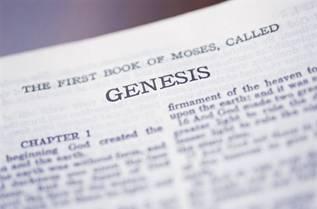
Genesis 1:1[ref]New International Version Translations[/ref]
1 In the beginning God created the heavens and the earth.

clip_image088Background

Genesis (Greek: Γένεσις, having the meanings of “birth”, “creation”, “cause”, “beginning”, “source” and “origin”), also called The First Book of Moses, is the first book of Torah (five books of Moses), and is the first book of the Tanakh, part of the Hebrew Bible; it is also the first book of the Christian Old Testament.

In Hebrew, it is called בראשׁית (Bereshit or Bərêšîth), after the first word of the text in Hebrew (meaning “in the beginning of”). This is in line with the pattern of naming the other five books of the Pentateuch.

Biblical Truths[ref]Matthew Henry’s Commentary[/ref]

In this verse we begin the work of creation in its epitome and in its embryo.

In, v. 1, we find, to our comfort, the first article of our creed, that God the Father Almighty is the Maker of heaven and earth, and as such we believe in him. Observe, in this verse, four things:

  1. The effect produced–the heaven and the earth, that is, the world, including the whole frame and furniture of the universe, the world and all things therein. There are phenomena in nature which cannot be solved, secrets which cannot be fathomed nor accounted for. But from what we see of heaven and earth we may easily enough infer the eternal power and Godhead of the great Creator, and may furnish ourselves with abundant matter for his praises. And let our make and place, as men, remind us of our duty as Christians, which is always to keep heaven in our eye and the earth under our feet.
  2. The author and cause of this great work–GOD. The Hebrew word is Elohim, which bespeaks, [1.] The power of God the Creator. El signifies the strong God; and what less than almighty strength could bring all things out of nothing?
  3. The manner in which this work was affected: God created it, that is, made it out of nothing. There was not any pre-existent matter out of which the world was produced.
  4.  When this work was produced: In the beginning, that is, in the beginning of time, when that clock was first set a going: time began with the production of those beings that are measured by time. Before the beginning of time there was none but that Infinite Being that inhabits eternity. Let us learn hence, (1.) That atheism is folly, and atheists are the greatest fools in nature; for they see there is a world that could not make itself, and yet they will not own there is a God that made it. Doubtless, they are without excuse, but the god of this world has blinded their minds. (2.) That God is sovereign Lord of all by an incontestable right. If he is the Creator, no doubt he is the owner and possessor of heaven and earth. (3.) That with God all things are possible, and therefore happy are the people that have him for their God, and whose help and hope stand in his name. (4.) That the God we serve is worthy of, and yet is exalted far above, all blessing and praise. If he made the world, he needs not our services, nor can be benefited by them, and yet he justly requires them, and deserves our praise. If all is of him, all must be to him.

Items for Discussion

  • What evidence in our world do you see that proves Genesis 1:1?
  • Is this meant to be taken literally or figuratively?
  • Why to atheists have such a hard time with Biblical messages like Genesis 1:1?
  • What do you see happening to mankind if we forget this verse?


John 1:6-8; 19-28
6 There came a man who was sent from God; his name was John. 7 He came as a witness to testify concerning that light, so that through him all men might believe. 8 He himself was not the light; he came only as a witness to the light

19 Now this was John’s testimony when the Jews of Jerusalem sent priests and Levites to ask him who he was. 20 He did not fail to confess, but confessed freely, “I am not the Christ.” 21 They asked him, “Then who are you? Are you Elijah?” He said, “I am not.” “Are you the Prophet?” He answered, “No.” 22 Finally they said, “Who are you? Give us an answer to take back to those who sent us. What do you say about yourself?” 23 John replied in the words of Isaiah the prophet, “I am the voice of one calling in the desert, ‘Make straight the way for the Lord.’ “24 Now some Pharisees who had been sent 25 questioned him, “Why then do you baptize if you are not the Christ, nor Elijah, nor the Prophet?” 26 “I baptize with water,” John replied, “But among you stands one you do not know. 27 He is the one who comes after me, the thongs of whose sandals I am not worthy to untie.” 28 This all happened at Bethany on the other side of the Jordan, where John was baptizing.

Background

The Gospel of John is the fourth gospel in the sequence of the canon as printed in the New Testament. Like the other three gospels, it contains an account of the life of Jesus. While some controversy has recently emerged as to the author of this gospel, it is generally agreed to be the Apostle John. Scholars place the gospel anywhere between AD 65 and 85. The text itself states only that the Fourth Gospel was written by an anonymous follower of Jesus referred to as the Beloved Disciple. John would have written this gospel, late in life (90 to 100 years of age), while living in Ephesus.

Biblical Truths

John the Baptist baptized Jesus. The synoptic Gospels all say so and the kerygma in Acts connects the beginning of Jesus’ ministry with John’s baptizing. But although Mark seems to find it quite right that Jesus of Nazareth should have been among those who heeded John’s preaching, the three other evangelists appear concerned over the suggestion that Jesus was in some way a disciple of this other preacher.

In Matthew’s account, John himself raised the issue and makes clear that he knows who is greater: “I ought to be the one baptized by you.” Luke offers us another perspective, providing the story in which John is destined from before birth to be the prophet for his younger cousin. Matthew tells of Jesus explaining the baptism as a “fulfilling of all righteousness,” and Luke describes the baptism as an occasion of Jesus’ solidarity with others and his devotion to God.

The fourth evangelist, however, does not offer an explanation; in fact, he depicts no baptism at all. Instead John the Baptist speaks to the superior authority and divine agency of Jesus. The baptizer does not baptize Jesus but attests to his identity as the Christ and the Lamb of God. “[John] himself was not the light, but he came to testify to the light.” He is explicit both about his own non-messianic status and about the identity of the one who is anointed.

Messianic ambitions for ourselves and messianic expectations of others are not just the quaint delusions of people certified as mentally ill. They are found in us and around us as we seek too much from others or wish to be too much to them. In this context we should remember Johns pointing away from himself and to Jesus. We are not, any nor all of us, the Messiah. That position has already been filled. To let Jesus be our Christ, our anointed savior and rescuer must be our goal. In John’s Gospel, this needed humility is worked by focusing on the person of the beloved Jesus, the revelation that he is the Truth and the Way and the Life. He is the light to which both John the Baptist and John the evangelist were sent to testify.

Items for Discussion

  • In what ways do we, today, forget that we are not the end all, the Messiah?
  • How is the healthy message of humility and servitude to Christ being overwritten by the modern world?
  • In what ways does this attitude creep into the Christian church?
  • How does one practice humility?
  • How does one teach humility?
  • Can we have too much humility?

Discussion Challenge

  • If there is such a thing as a proper balance of appreciation, satisfaction, ego and humility, then how do we know when we have it?

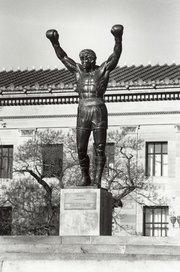
Rocky Would Have Made Them Take The Stairs

Exodus 20:1-11[ref]NIV New International Version Translations[/ref]
1 And God spoke all these words: 2 “I am the Lord your God, who brought you out of Egypt, out of the land of slavery. 3 “You shall have no other gods before me. 4 “You shall not make for yourself an idol in the form of anything in heaven above or on the earth beneath or in the waters below. 5 You shall not bow down to them or worship them; for I, the Lord your God, am a jealous God, punishing the children for the sin of the fathers to the third and fourth generation of those who hate me, 6 but showing love to a thousand generations of those who love me and keep my commandments. 7 “You shall not misuse the name of the Lord your God, for the Lord will not hold anyone guiltless who misuses his name. 8 “Remember the Sabbath day by keeping it holy. 9 Six days you shall labor and do all your work, 10 but the seventh day is a Sabbath to the Lord your God. On it you shall not do any work, neither you, nor your son or daughter, nor your manservant or maidservant, nor your animals, nor the alien within your gates. 11 For in six days the Lord made the heavens and the earth, the sea, and all that is in them, but he rested on the seventh day. Therefore the Lord blessed the Sabbath day and made it holy.

clip_image087Background

Exodus is the second of the Torah, also known as the Five Books of Moses. Genesis ends with the death of Joseph and Exodus begins with Joseph’s sons and highlights the growth of the people of Israel in population. Our area of Scripture highlights the first Moses went up Mount Sinai and got the Ten Commandments on two tablets of Stone.

Biblical Truths

Here we find the basis for God’s Law. It is simple in form and laid out in ten principles:

  1. You shall have no other gods before me
  2. You shall not make for yourself an idol
  3. You shall not misuse the name of the LORD your God
  4. Remember the Sabbath day by keeping it holy
  5. Honor your father and mother
  6. You shall not murder.
  7. You shall not commit adultery.
  8. You shall not steal.
  9. You shall not give false testimony against your neighbor.
  10.  You shall not covet your neighbor’s house. You shall not covet your neighbor’s wife, or his manservant or maidservant, his ox or donkey, or anything that belongs to your neighbor.

Items for Discussion

  • Look at each of the Ten Commandments one at a time. Discuss the following for each:
    • Why would God give us this Command? (Think benefits)
    • Is there any confusion in the nature and meaning of the command?
    • Assuming society in general is not interested in keeping these, how has society tried to redefine them and make them weaker?


Acts 1:6-11
6 So when they met together, they asked him, “Lord, are you at this time going to restore the kingdom to Israel?” 7 He said to them: “It is not for you to know the times or dates the Father has set by his own authority. 8 But you will receive power when the Holy Spirit comes on you; and you will be my witnesses in Jerusalem, and in all Judea and Samaria, and to the ends of the earth.” 9 After he said this, he was taken up before their very eyes, and a cloud hid him from their sight. 10 They were looking intently up into the sky as he was going, when suddenly two men dressed in white stood beside them. 1 1“Men of Galilee,” they said, “why do you stand here looking into the sky? This same Jesus, who has been taken from you into heaven, will come back in the same way you have seen him go into heaven.”

Background

The Book of Acts can be thought of as the second volume of a two volume set. Volume one is the Gospel of Luke. The Apostle Luke is credited as the author of Acts. Its full title is “The Acts of the Apostles.” Interestingly, however, Luke concentrates his writing on only two of the Apostles, Peter and Paul.

Biblical Truths

In chapters 1 through to 5, Luke deals with the birth of the church. In chapter 1 he covers the period from Jesus’ crucifixion leading up to the Day of Pentecost (50 days from the first Sunday after the Passover). After a prologue, v1-5, he narrates the ascension, v6-11, and then the events in the upper room prior to Pentecost. These passages are appropriately named “the ascension.

v6-7. The disciples dream of the day when the nation of Israel will be reestablished as it was in the days of Solomon. They dream of themselves as the chief executives in the new kingdom, cf. Mk.10:35ff. Yet, the future state of the nation Israel is not their worry. It remains in the sovereign will of God, cf. Mk.13:32. In fact, Jesus is non committal over Israel’s future, although he knows only too well that things are about to be put right. Israel will soon be judged. As for the timing of the coming days, it is not for the disciples to know. Their focus must be on a spiritual kingdom “not of this world”.

v8. The special task given the apostles by Christ is to proclaim the gospel, the message of God’s sovereign grace in Christ. Christ’s kingdom is realized when this message is proclaimed, heard, and acted on in repentance. They must proclaim this message from Jerusalem to the ends of the earth. To carry on this work, the work Christ himself was engaged in, they will be “anointed” as Christ was anointed. They will receive an empowering of the Holy Spirit to enable them to carry out the work of witness-bearing.

v9. A cloud surrounds Jesus and he disappears from the apostles’ sight. The cloud might have moved upward (v10), or just dissolved. This event establishes the celebration of Ascension in the Church Year (40 days after Easter). Although we celebrate Christ’s entry into glory and the taking up of his heavenly reign, in reality his resurrection establishes his rule at the right hand of the Father. Christ rises to reign in glory. His appearances to the disciples over the last 40 days are theophanies – manifestations of divine glory.

v10. The disciples naturally look upward for Jesus, seeing he was leaving the earth. When the cloud cleared, two angelic messengers stood before them. “Dressed in white”, “in dazzling apparel”, Lk.24:4.

v11. The angels, following their prime directive, convey a message to the disciples. Jesus now leaves in cloud and glory; in like manner he will return. What of his coming back? Is this his Second Coming or the coming of the Holy Spirit? Either way, the disciples will experience his presence through the Holy Spirit. His present glorious reign will energize his people through the filling of the Holy Spirit. He “ascended far above all the heavens, that he might fill all things”, Eph.4:10. The apostles then hurry back to Jerusalem to wait for the promised anointing.

Items for Discussion

  • These are some of the very last words we have directly from Christ. What relevance should we assign to them?
  • Matters of churchmanship, denominational doctrines, social justice issues, church growth, church versus state relations and the like, all pale before a far greater purpose. How is it that we serve this higher purpose?
  • There will be times when we can support this greater purpose personally. When we cannot, how can we still remain engaged and provide support?
  • In what way has Christ assured the success of His instructions to the Apostles?

Discussion Challenges

  • What is the significance of Christ’s ascension today?

Free To Value Others

Exodus 20:17[ref]NIV New International Version translations[/ref]
17 “You shall not covet your neighbor’s house. You shall not covet your neighbor’s wife, or his manservant or maidservant, his ox or donkey, or anything that belongs to your neighbor.”

clip_image086Background

Exodus is the name given to the second book of the Pentateuch (q.v.). It means “departure” or “outgoing.” This name was adopted in the Latin translation, and thence passed into other languages. The Hebrews called it by the first words, according to their custom, Ve-eleh shemoth (i.e., “and these are the names”). It contains:

  1. An account of the increase and growth of the Israelites in Egypt (ch. 1)
  2. Preparations for their departure out of Egypt (2-12:36).
  3. Their journeying from Egypt to Sinai (12:37-19:2).
  4. The giving of the law and the establishment of the institutions by which the organization of the people was completed, the theocracy, “a kingdom of priest and an holy nation” (19:3-ch. 40).

The time comprised in this book, from the death of Joseph to the erection of the tabernacle in the wilderness, is about one hundred and forty-five years, on the supposition that the four hundred and thirty years (12:40) are to be computed from the time of the promises made to Abraham (Gal. 3:17).

The authorship of this book, as well as of that of the other books of the Pentateuch, is to be ascribed to Moses. The unanimous voice of tradition and all internal evidences abundantly support this opinion.

Biblical Truths

Here, “house” is the equivalent of household. God lists the remaining items so we clearly understand what He means by “house.” In Deuteronomy 5:21, “wife”—or “spouse,” since a woman can covet too—is moved to first position as the very crown of one’s possessions, and “field” is included as the Israelites were soon to settle in the Promised Land.

One Bible commentator said all public crime would cease if this one law was kept. Another said every sin against one’s neighbor springs from the breaking of this commandment, whether of word or deed. Between the two wordings in Exodus and Deuteronomy, a sevenfold guarding of another’s interests shows the underlying concept of outgoing concern. In this command we step from the outer world of word and deed into the secret place where all good and evil begins, the heart (Matthew 15:18-19). This inner man determines a person’s destiny.

Even when coveting falls short of directly breaking another commandment, it can damage both persons and principles. When a person covets what is another’s, even though he may not actually lift a hand to take it, he robs virtue of its real meaning and makes obedience a hollow, mechanical activity. Any wife who has caught her husband gazing lustfully on another woman knows what this means. It kills trust in the relationship. At such a point, lust is already destroying.

Covetousness is an insatiable desire for worldly gain and lies at the heart of where most sin originates. Of all the commandments, the tenth especially emphasizes man’s relationship to man, which is readily seen in the repeated phrase “your neighbor’s.” It protects the interests of others in seven major areas listed individually within the commandment.

Items for Discussion

  • It is not wrong to want something. When does a legitimate want become a coveted sin?
  • What is the real danger is covetousness?
  • How should we value our accomplishments, both physical possessions as well as the more esoteric such as education, good looks, a trim body, so that we do not become possessed by them?
  • Can someone cause another to covet?
  • What are the typical results of covetousness?
  • What is the opposite of covetousness? (See Proverbs 21:26; 22:9)
  • What should we pursue instead? (See Matthew 6:19-21; I Timothy 6:10-11)


Acts 2:1-13
1 When the day of Pentecost came, they were all together in one place. 2 Suddenly a sound like the blowing of a violent wind came from heaven and filled the whole house where they were sitting. 3 They saw what seemed to be tongues of fire that separated and came to rest on each of them. 4 All of them were filled with the Holy Spirit and began to speak in other tongues as the Spirit enabled them. 5 Now there were staying in Jerusalem God-fearing Jews from every nation under heaven. 6 When they heard this sound, a crowd came together in bewilderment, because each one heard them speaking in his own language. 7 Utterly amazed, they asked: “Are not all these men who are speaking Galileans? 8 Then how is it that each of us hears them in his own native language? 9 Parthians, Medes and Elamites; residents of Mesopotamia, Judea and Cappadocia, Pontus and Asia, 10 Phrygia and Pamphylia, Egypt and the parts of Libya near Cyrene; visitors from Rome 11 (both Jews and converts to Judaism); Cretans and Arabs—we hear them declaring the wonders of God in our own tongues!” 12 Amazed and perplexed, they asked one another, “What does this mean?” 13 Some, however, made fun of them and said, “They have had too much wine.”

Background

Roman law required written documents, containing all the pertinent background regarding a case, to precede an appellant’s appearance before Caesar. There are some scholars who suspect that the two volumes penned by Luke were to comply with those requirements in preparation for Paul’s trial in Rome. The traditional title of this book is, in some respects, a misnomer: it primarily deals with the “acts” of Peter (Chapters 1-12) and Paul (Chapters 13-28). It really should be called “The Acts of the Holy Spirit.” Jesus had indicated that the next phase of God’s program would be “The Comforter’s”:

Among the pivotal passages are several that have significance far beyond the immediate narrative. Perhaps foremost of these is Chapter 2, in which we see the fulfillment of the prophetic significance of the Hag Shavout, “The Feast of Weeks” (or “Pentecost”), in the outpouring of the Holy Spirit, generally regarded as the birth of the Church. Another chapter with special revelations is Chapter 7, where young Stephen gives a review of the Old Testament to the most august body of the Jews, the Sanhedrin. One other is the famous “Council of Jerusalem” in Acts 15, at which James adjudicates the debate over what a Gentile must do to be saved. It is also significant in underscoring that God is not finished with Israel.

Biblical Truths

At the Pentecost of Sinai, in the Old Testament, and the Pentecost of Jerusalem, in the New, where the two grand manifestations of God, the legal and the evangelical; the one from the mountain, and the other from heaven; the terrible, and the merciful one. They were all with one accord in one place – So here was a conjunction of company, minds, and place; the whole hundred and twenty being present and it filled all the house – That is, all that part of the temple where they were sitting.

And there appeared distinct tongues, as of fire – That is, small flames of fire. This is all which the phrase, tongues of fire, means in the language of the seventy. Yet it might intimate God’s touching their tongues as it were (together with their hearts) with Divine fire: his giving them such words as were active and penetrating, even as flaming fire. They began to speak with other tongues – The miracle was not in the ears of the hearers, (as some have unaccountably supposed,) but in the mouth of the speakers. And this family praising God together, with the tongues of the entire world, was an earnest that the whole world should in due time praise God in their various tongues. As the Spirit gave them utterance – Moses, the type of the law, was of a slow tongue; but the Gospel speaks with a fiery and flaming one. Present were:

  1. Judea – The dialect of which greatly differed from that of Galilee. Asia – The country strictly so called.
  2. Roman sojourners – Born at Rome, but now living at Jerusalem. These seem to have come to Jerusalem after those who are above mentioned. All of them were partly Jews by birth, and partly proselytes.
  3. Cretans – One island seems to be mentioned for all. The wonderful works of God – Probably those which related to the miracles, death, resurrection, and ascension of Christ, together with the effusion of his Spirit, as a fulfillment of his promises, and the glorious dispensations of Gospel grace.

They were all amazed but others mocking – The world begins with mocking, thence proceeds to caviling, Ac 4:7; to threats, 4:17; to imprisoning, Ac 5:18; blows, 5:40; to slaughter, Ac 7:58. These mockers appear to have been some of the natives of Judea, and inhabitants of Jerusalem, (who understood only the dialect of the country,) by the apostle’s immediately directing his discourse to them in the next verse. They are full of sweet wine – So the Greek word properly signifies. There was no new wine so early in the year as Pentecost. Thus natural men are quick to ascribe supernatural things to mere natural causes; and many times as offensively and unskillfully as in this case.

Items for Discussion

  • Do you personally believe in the miracle of tongues?
  • What is the Scriptural evidence that we are to look for should we encounter this miracle?
  • If you believe that the Holy Spirit can inspire someone, what would the skills be that someone would need to be a great evangelist?
  • Have you ever found yourself operating at a higher level of skill that you contributed to God’s or the Holy Spirit’s help?
  • Why is mockery so effective in stopping someone’s attempt to do something?
  • When does humor become a form of mockery?

Discussion Challenge

  • How can this Church help advance the skills of others so that they can become proficient at spreading the Good News??


The Person of Jesus

Isaiah 53:2[ref]NIV New International Version Translations[/ref]
2 He grew up before him like a tender shoot, and like a root out of dry ground. He had no beauty or majesty to attract us to him, nothing in his appearance that we should desire him.

clip_image085Background

Among the great prophetic visionaries was Isaiah, who was active during an extraordinarily lengthy period, extending from the reign of King Uzziah to that of King Hezekiah, who both ruled in Judah. Here in Isaiah’s great vision we see some of the early prophesies of our Messiah.

Isaiah was witness to one of the most turbulent periods in the history of Jerusalem, from both the religious and the political standpoint. Because of his social status he took an active and in some cases central part in the course of events. But his position did not prevent him from criticize the corruption which had permeated the ruling class and the aristocracy’s lack of attention toward the downtrodden.

Isaiah is the most “political” of the prophets. In the face of the expansionist Assyrian empire he counseled a passive political and military response. He put his faith in divine salvation, which would certainly follow from a necessary change in the moral leadership and in the people’s spiritual tenacity. Although he stood by King Hezekiah, Isaiah objected to his attempts to forge alliances with Egypt and with the envoys of the Babylonian king Merodach-baladan as a wedge against the Assyrians. Such efforts, the prophet said, demonstrated a lack of faith in God.

Biblical Truths

It’s always interesting to look at artist’s interpretations or cinematic versions. For all that the scriptures tell us of Jesus; they don’t tell us what he looked like. We only have one verse that speaks of the physical appearance of Jesus, and all it tells us is what he didn’t look like: “He has no stately form or majesty that we should look upon him, nor appearance that we should be attracted to him” (Isaiah 53:2). In other words, his appearance was rather ordinary. That’s all we’re told. It must, then, be an important point.

A tender shoot is a suckling on a trunk that sucks life from the tree. That’s how Jesus was viewed—as leading a renegade movement that threatened the Jewish establishment. Parched ground is a place where you don’t expect a root. Jesus came from what was deemed the “parched ground” of Nazareth (John 1:46), Galilee (John 7:52) and a carpenter (Matthew 13:55).

Items for Discussion

  • What can we tell about how someone looks? How they are dressed? Their physical traits?
  • What features would you expect to find in a top male Hollywood movie star?
  • Have you every wondered what Jesus looked like?
  • The only verse in the entire Bible dedicated to how Jesus looks is telling us how he didn’t look. Why would all of Scripture leave so few clues?
  • What is so extraordinary about being ordinary?
  • What is the point being made here?


Colossians 2:8-9
8 See to it that no one takes you captive through hollow and deceptive philosophy, which depends on human tradition and the basic principles of this world rather than on Christ. 9 For in Christ all the fullness of the Deity lives in bodily form, 10 and you have been given fullness in Christ, who is the head over every power and authority. 11 In him you were also circumcised, in the putting off of the sinful nature, not with a circumcision done by the hands of men but with the circumcision done by Christ, 12 having been buried with him in baptism and raised with him through your faith in the power of God, who raised him from the dead.

Background

Colossae was located twelve miles from Laodicea and about a hundred miles east of Ephesus in the valley of the Lycus River. Colossae was on the main trade route and had a diverse population of Greeks, Jews and Phrygians. The mixture of backgrounds made the city an interesting cultural center where all sorts of new ideas and doctrines from the East were discussed and considered. Because of these ungodly influences, the Colossian church was faced with the creeping influence of false teaching. Paul’s letter stresses the true gospel: Jesus is absolutely central. The Colossian church was founded by Epaphras, one of Paul’s converts. Paul’s letter was written from prison around 62 A.D.

Biblical Truths

In the main body of his letter, Paul reminds his readers of the essential ingredients of the gospel (1:12-23) they first heard from Epaphras (1:6-7), and has defended his authority to admonish and teach his readers in its light (1:24–2:3). Having laid this foundation, the apostle is now ready to attend to the situation that has occasioned his correspondence–the false teaching that threatens the faith of the Colossian believers.
Paul’s response to false teaching typically contains two parts:

  1. First, he identifies the theological errors present in a particular congregation and draws out their negative implications for faith and life. For Paul, the problem with bad ideas is that they result in distorted notions of Christ and what it means to follow him.
  2. Second, he argues against these errors in light of the foundational convictions of his gospel ministry. This, then, is the fabric of Paul’s letter-writing: to clarify a problem along with its spiritual and moral consequences and to articulate the proper response to it in light of the readers’ own understanding of the “word of truth.”

According to Paul, wisdom, whether true or false, is measured by its results. Wisdom is true if it produces a community that worships and bears witness to God in its shared life. Spiritual well-being must be aimed toward getting into the proper place (“in Christ”), where God’s grace empowers growth and worship (see 2:7). Relying on carefully thought-out ideas or rules of abstinence rather than on what God has already accomplished for us in Christ is at least imprudent, because it imperils the present results of Christ’s work in us.

Items for Discussion

  • How do you know what I teach and discuss is correct?
  • What is the influence of location on a church and its philosophies?
  • What harm is done by teachings that are not fundamentally correct?
  • What responsibilities lay with a teacher?
  • What responsibilities lay with a student?
  • Why is it so important not to rely on human knowledge but, instead, to rely on faith in Christ?

Discussion Challenge

  • What are the responsibilities of a church to train and test its teachers for accuracy in the foundations of their views?

The Promise of Jesus

John 3:16-17[ref]NIV New International Version Translations[/ref]
16 “For God so loved the world that he gave his one and only Son, that whoever believes in him shall not perish but have eternal life. 17 For God did not send his Son into the world to condemn the world, but to save the world through him.

clip_image084Background

The gospel of John is dated somewhere between AD 65 and 85. The text itself states only that the Gospel was written by an anonymous follower of Jesus referred to as the Beloved Disciple, traditionally identified with John the Apostle, believed to have lived at the end of his life at Ephesus. The dating is important since John is agreed to be the last of the canonical Gospels to have been written down and thus marks the end-date of their composition. Most of the Gospel’s message centers around the last days of Christ’s life. For the Christian, it represents a summary of what is important about their faith.

Biblical Truths[ref]From Albert Barnes’ Notes on the New Testament; pastor of the First Presbyterian Church in Philadelphia during the middle of the nineteenth century.[/ref]

Verse 16. For God so loved. This does not mean that God approved the conduct of men, but that he had benevolent feelings toward them, or was earnestly desirous of their happiness. God hates wickedness, but he still desires the happiness of those who are sinful. He hates the sin, but loves the sinner.

The world. All mankind. It does not mean any particular part of the world, but man as man–the race that had rebelled and that deserved to die. See John 6:33; 17:21. His love for the world, or for all mankind, in giving his Son, was shown by these circumstances:

  1. The entire world was in ruin, and exposed to the wrath of God.
  2. All men were in a hopeless condition.
  3. God gave his Son. Man had no claim on him; it was a gift–an undeserved gift.
  4. He gave him up to extreme sufferings, even the bitter pains of death on the cross.
  5. It was for the entire world. He tasted “death for every man,” Hebrews 2:9. He “died for all,” 2 Corinthians 5:15. “He is the propitiation for the sins of the whole world,” 1 John 2:2.

That he gave. It was a free and unmerited gift. Man had no claim; and when there was no eye to pity or arm to save, it pleased God to give his Son into the hands of men to die in their stead, Galatians 1:4; Romans 8:32; Luke 22:19. It was the mere movement of love; the expression of eternal compassion, and of a desire that sinners should not perish forever.

His only-begotten Son. This is the highest expression of love of which we can conceive. A parent who should give up his only son to die for others who are guilty–if this could or might be done–would show higher love than could be manifested in any other way. So it shows the depth of the love of God, that he was willing to give his only Son into the hands of sinful men that he might be slain, and thus redeem them from eternal sorrow.

Verse 17. To condemn the world. Not to judge, or pronounce sentence on mankind. God might justly have sent him for this. Man deserved condemnation, and it would have been right to have pronounced it; but God was willing that there should be an offer of pardon, and the sentence of condemnation was delayed. But, although Jesus did not come then to condemn mankind, yet the time is coming when he will return to judge the living and the dead, Acts 17:31; 2 Corinthians 5:10; Matthew 25:31-46.

Items for Discussion

  • Read John 9:39: This verse says Christ came for judgment. John 3:17, however, tells us that Christ came because of God’s love. Are these in conflict?
  • What happens when someone is confronted (their soul) with Christ?
  • What happens to the person who sees Christ’s love for what it really is (God’s Definition)?
  • What does Christ’s love mean to those who reject Him? (What do they love?)
  • What is harder to accept, forgiveness or judgment? Explain!
  • Can salvation exist without Christ?
  • If someone never knew about Jesus, how would you teach them who he was?

Discussion Challenge

  • Where is Jesus in our Church?

Who Is The Greatest?

Psalm 128[ref]NIV New International Version Translations[/ref]
1 Blessed are all who fear the LORD, who walk in his ways. 2 You will eat the fruit of your labor; blessings and prosperity will be yours. 3 Your wife will be like a fruitful vine within your house; your sons will be like olive shoots around your table. 4 Thus is the man blessed who fears the LORD. 5 May the LORD bless you from Zion all the days of your life; may you see the prosperity of Jerusalem, 6 and may you live to see your children’s children. Peace be upon Israel.

clip_image083Background

PSALM 128, like all of the Songs of Ascents, focuses attention on Israel’s restoration to fellowship with Jehovah and rehabilitation in the land of the fathers. It begins with the following prayer: “Blessed are all who fear the LORD, who walk in his ways.” This pronouncement pertains to material blessings.

Untold blessings were promised to Israel when they came out of Egypt if only they would be faithful and true to God. At Sinai God made wonderful and unparalleled promises to the nation if only it as a group would be faithful and true to Him. On this point one should study carefully Exodus, chapter 23:20-33. This promise was given at Mount Sinai and means exactly what it says. Palestine would have been a modern Utopia, “Paradise Regained,” if only the people had hearkened to the voice of God.

Biblical Truths

Verse 1: “who fear” means “a bit afraid of someone that you love”. People “fear” God because he is so great. They love him. But they know that he is very powerful. “LORD” is a special name for God. It is his covenant name. A covenant is when people agree to do something. Here, God agrees to send his people help. His people agree to love and obey him. “Walk in his ways” is a Jewish way to say “obey his rules”.

Verse 3: Both word-pictures mean that you will have many children. You will if you “walk in his ways”! A vine is a tree. It grows a fruit called the grape. An olive tree grows a fruit called the olive. An olive tree has many branches.

Verse 4: “Thus is the man blessed” in verse 4 is a good example of the word “bless”. It means “have many children”. It can also mean that your animals will have many young animals. And your plants will have many fruits on them. If you obey God, good things will happen to you! Good things will come from your work (verse 2). And good things will happen to your family (verse 3) and to Jerusalem (verse 5).

Verse 5: The Jews believed that God lived in Jerusalem. God is “the LORD of Zion”. Zion is the hill in the middle of Jerusalem. Solomon built God’s house, the temple, on the hill of Zion. For many Christians, Jerusalem is like a picture of the Church or a picture of heaven.

Verse 6: “Peace” is when people do not fight each other. Jesus taught us that there is a special peace. Only Jesus can give it to us. It means that we do not fight God. Instead, we always obey him. Also, God does not hurt us because we have not obeyed him. Israel, like Jerusalem in verse 5, is a picture of God’s people. For Jews, it means Jews; for Christians it means Christians.

Items for Discussion

  • What are the promises of God that are mentioned in Psalm 128?
  • Which ones are “of the world,” that is, things we can enjoy now?
  • God seems to be saying if we listen to Him and obey Him, He will provide us with blessings NOW. Why then do so many people ignore God if you get to have the good things now?
  • How do people learn to “fear the Lord?”
  • How do we teach our children (the next generation) to “fear the Lord” but not become a fearful generation? (Is it not the goal to raise a hopeful generation?)


Matthew 18:1-6
1 At that time the disciples came to Jesus and asked, “Who is the greatest in the kingdom of heaven?” 2 He called a little child and had him stand among them. 3 And he said: “I tell you the truth, unless you change and become like little children, you will never enter the kingdom of heaven. 4 Therefore, whoever humbles himself like this child is the greatest in the kingdom of heaven. 5 “And whoever welcomes a little child like this in my name welcomes me. 6 But if anyone causes one of these little ones who believe in me to sin, it would be better for him to have a large millstone hung around his neck and to be drowned in the depths of the sea.

Background[ref]Wikipedia[/ref]

The authorship of this Gospel is traditionally ascribed to St. Matthew, a tax collector who became an apostle of Jesus. For convenience, the book can be divided into its four structurally distinct sections: Two introductory sections; the main section, which can be further broken into five sections, each with a narrative component followed by a long discourse of Jesus, and finally the Passion and Resurrection section.

  1. Containing the genealogy, the birth, and the infancy of Jesus (1; 2).
  2. The discourses and actions of John the Baptist preparatory to Christ’s public ministry (3; 4:11).
  3. The discourses and actions of Christ in Galilee (4:12–20:16).
  4. The Sermon on the Mount- Concerning morality (Ch. 5-7)
  5. The Missionary Discourse- Concerning the mission Jesus gave his disciples. (Ch. 10)
  6. The Parable Discourse- Stories that teach about the Kingdom of Heaven (Ch. 13)
  7. The “Church Order” Discourse- Concerning relationships among Christians. (Ch. 18)
  8. The Eschatological Discourse also called the Olivet Discourse- Concerning his Second Coming and the end of the age. (Ch. 24-25)
  9. The sufferings, death and Resurrection of Jesus, the Great Commission (20:17–28).

The one aim pervading the book is to show that Jesus of Nazareth was the promised Messiah — he “of whom Moses in the law and the prophets did write” — and that in him the ancient prophecies had their fulfillment. This book is full of allusions to passages of the Old Testament which the book interprets as predicting and foreshadowing Jesus’ life and mission. This Gospel contains no fewer than sixty-five references to the Old Testament, forty-three of these being direct verbal citations, thus greatly outnumbering those found in the other Gospels. The main feature of this Gospel may be expressed in the motto “I am not come to destroy, but to fulfill” (Matthew 5:17).

This Gospel sets forth a view of Jesus as Christ and portrays him as an heir to King David’s throne.

The cast of thought and the forms of expression employed by the writer show that this Gospel was written by Jewish Christians of Judea.

Biblical Truths[ref]Albert Barnes’ Notes[/ref]

In Matthew 18:1-5, our Divine Lord Jesus Christ shows a beautiful example of the virtue of humility. He calls His disciples to a childlike faith, humility, and obedience.

Verses 1-6. See also Mark 9:33-41; Luke 9:46-60. By the kingdom of heaven they meant the kingdom which they supposed he was about to set up– his kingdom as the Messiah. They asked the question because they supposed, in accordance with the common expectation of the Jews, that he was about to set up a temporal kingdom of great splendor; and they wished to know who should have the principal offices and posts of honor and profit. This was among them a frequent subject of inquiry and controversy.

Verses 2-3. Change means, to change or turn from one habit of life, or set of opinions, to another, James 5:19; Luke 22:32. See also Matthew 7:6; 16:23; Luke 7:9, etc., where the same word is used in the original. It is sometimes referred to that great change called the new birth, or regeneration, Psalms 51:13; Isaiah 9:5; Acts 3:19 but not always. It is a general word, meaning any change. It means that their opinions and feelings about the kingdom of the Messiah must be changed. They had supposed that he was to be a temporal Prince. They expected that he would reign as other kings did. They supposed he would have his great officers of state, as other monarchs had. And they were ambitiously inquiring who should hold the highest offices; Jesus told them they were wrong in their views and expectations. No such things would take place. From these notions they must be turned, changed, or converted, or they could have no part in his kingdom. These ideas did not fit at all the nature of his kingdom.

And become as little children. Children are, to a great extent, destitute of ambition, pride, and haughtiness. They are characteristically humble and teachable. By requiring his disciples to be like them, he did not intend to express any opinion about the native moral character of children, but simply that in these respects they should become like them. They should lay aside their ambitious views, and pride, and be willing to occupy their proper station–a very lowly one. Mark 9:35 says that Jesus, before he placed the little child in the midst of them, told them that “if any man desire to be first, the same shall be last of all, and servant of all.” That is, he shall be the most distinguished Christian who is the most humble, and who is willing to be esteemed least, and last of all. To esteem ourselves as God esteems us is humility. And it cannot be degrading to think of ourselves as we are. But pride, or an attempt to be thought of more importance than we are, is foolish, wicked, and degrading.

Verse 4. That is, shall be the most eminent Christian; shall have most of the true spirit of religion.

Verse 5. That is, whoso shall receive and love one with a spirit like this child–one who is humble, meek, unambitious, or a real Christian.

Mark 9:38 and Luke 9:49 add a conversation that took place on this occasion, that has been omitted by Matthew. John told him that they had seen one casting out devils in his name, and they forbade him, because he followed not with them. Jesus replied, that he should not have been forbidden, for there was no one who could work a miracle in his name that could lightly speak evil of him. That is, though he did not attend them, though he had not joined himself to their society, yet he could not really be opposed to him. Indeed they should have remembered, that the power to work a miracle must always come from the same source, that is, God; and that he that had the ability given him to work a miracle, and that did it in the name of Christ, must be a real friend to him. It is probable from this that the power of working miracles in the name of Christ was given to many who did not attend on his ministry.

Items for Discussion

  • If Jesus is calling us to become children to enter heaven (the entrance requirements) then why do we convert our children through confirmation classes, Bible classes, and the like so they will be saved? Children are already children.
  • If we are to regress to enter heaven, then exactly what is salvation based on? (Knowledge, use of gifts, love of God, purity of faith, etc.)
  • Why is this concept of becoming childlike (as Christ defines it) so hard for adults to do?
  • What would the difference be between childlike behavior and childlike humility?

Discussion Challenge

  • Children are, to a great extent, destitute of ambition, pride, and haughtiness. They are characteristically humble and teachable. How does a church bring these attributes back to the adults that make up its congregation?
« Older posts Newer posts »

"For it is by grace you have been saved" - Ephesians 2:8-9  

Copyright: © 2001 - 2025 Lostpine

Translate »