Biblical wisdom, historical insight, and personal growth — all in one place

Category: Snapshots (Page 14 of 45)

God Knows Us – God Calls Us

1 Samuel 3:1-201NIV New International Version Translations
1 The boy Samuel ministered before the Lord under Eli. In those days the word of the Lord was rare; there were not many visions. 2 One night Eli, whose eyes were becoming so weak that he could barely see, was lying down in his usual place. 3 The lamp of God had not yet gone out, and Samuel was lying down in the house of the Lord, where the ark of God was. 4 Then the Lord called Samuel. Samuel answered, “Here I am.” 5 And he ran to Eli and said, “Here I am; you called me.” But Eli said, “I did not call; go back and lie down.” So he went and lay down. 6 Again the Lord called, “Samuel!” And Samuel got up and went to Eli and said, “Here I am; you called me.” “My son,” Eli said, “I did not call; go back and lie down.” 7 Now Samuel did not yet know the Lord: The word of the Lord had not yet been revealed to him. 8 A third time the Lord called, “Samuel!” And Samuel got up and went to Eli and said, “Here I am; you called me.” Then Eli realized that the Lord was calling the boy. 9 So Eli told Samuel, “Go and lie down, and if he calls you, say, ‘Speak, Lord, for your servant is listening.’” So Samuel went and lay down in his place. 10 The Lord came and stood there, calling as at the other times, “Samuel! Samuel!” Then Samuel said, “Speak, for your servant is listening.” 11 And the Lord said to Samuel: “See, I am about to do something in Israel that will make the ears of everyone who hears about it tingle. 12 At that time I will carry out against Eli everything I spoke against his family—from beginning to end. 13 For I told him that I would judge his family forever because of the sin he knew about; his sons blasphemed God, and he failed to restrain them. 14 Therefore I swore to the house of Eli, ‘The guilt of Eli’s house will never be atoned for by sacrifice or offering.’” 15 Samuel lay down until morning and then opened the doors of the house of the Lord. He was afraid to tell Eli the vision, 16 but Eli called him and said, “Samuel, my son.” Samuel answered, “Here I am.” 17 “What was it he said to you?” Eli asked. “Do not hide it from me. May God deal with you, be it ever so severely, if you hide from me anything he told you.” 18 So Samuel told him everything, hiding nothing from him. Then Eli said, “He is the Lord; let him do what is good in his eyes.” 19 The Lord was with Samuel as he grew up, and he let none of Samuel’s words fall to the ground. 20 And all Israel from Dan to Beersheba recognized that Samuel was attested as a prophet of the Lord.
Background

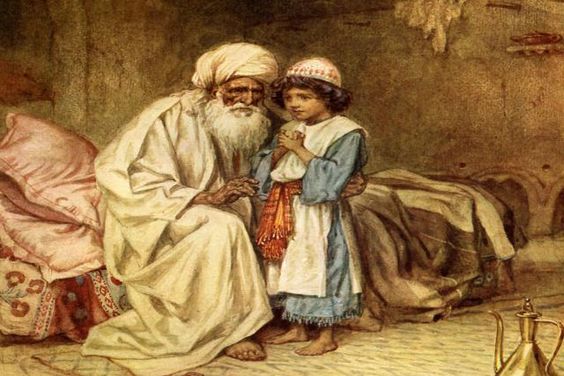
In the prior chapter,  Samuel was just a young priest, a role because he was a Levite by birth. In chapter 3, Samuel is a young prophet, who by an extraordinary manner, finds God revealing Himself to him and through Samuel, reviving, if not starting a  prophecy in Israel.

  1. God’s first manifestation of Himself in an extraordinary manner to Samuel (v. 1-10).
  2. The message God sent to Eli (v. 11-14).
  3. The faithful delivery of that message to Eli, and Samuel’s  submission to the righteousness of God in it (v. 15-18).
  4. The establishment of Samuel to be a prophet in Israel (v. 19-21).

The call of Divine grace from God will always be made effective. God will repeat His call until it is so, until we come to the call. Eli, perceiving that it was the voice of God that Samuel heard, instructed him what to say. Though it was a disgrace to Eli, for God’s call to be directed to Samuel instead of Eli, Eli responded unselfishly with instructions on how to receive God’s call.  Our message here is that while we may be older, each of us has the responsibility to help those who are younger, who are growing in the knowledge of God to do so.

Eli knew the sin in his  own heart as often  we are conscious of ourselves! Those who do not restrain the sins of others, when it is in their power to do it, make themselves partakers of the guilt, and will be charged by God as if we joined in . In his remarkable answer, Eli acknowledging that God had a right to do as He saw fit. The meekness, patience, and humility contained in Eli’s words, show that he was truly repentant; he accepted the punishment of his sin.

God will graciously repeat His visits to those who receive them and increase their wisdom and grace. Early faith will be the greatest honor of young people. Those who honor God, God will honor.  Young children are capable of understanding religion. Samuel is a proof that their waiting upon the Lord will be pleasing to God.

Items for Discussion

  • How would you recognize a call from God?
  • Why do you think it is easier to listen to God when you are young?
  • What are the best tools and methods for helping our youth recognize God’s calling to them?
  • In our society today, what are the threats against our youth that interfere with their “listening?”


John 1:45-51
45 Philip found Nathanael and told him, “We have found the one Moses wrote about in the Law, and about whom the prophets also wrote—Jesus of Nazareth, the son of Joseph.” 46 “Nazareth! Can anything good come from there?” Nathanael asked. “Come and see,” said Philip. 47 When Jesus saw Nathanael approaching, he said of him, “Here truly is an Israelite in whom there is no deceit.” 48 “How do you know me?” Nathanael asked. Jesus answered, “I saw you while you were still under the fig tree before Philip called you.” 49 Then Nathanael declared, “Rabbi, you are the Son of God; you are the king of Israel.” 50 Jesus said, “You believe[a] because I told you I saw you under the fig tree. You will see greater things than that.” 51 He then added, “Very truly I tell you, you will see ‘heaven open, and the angels of God ascending and descending on’ the Son of Man.”

Background

Here we find Philip who was very excited because he had found the Messiah. But Nathanael was surprised that Jesus was from Nazareth. Nathanael was from Cana, a town near to Nazareth. We do not really know why Nathanael was not impressed with the city of Nazareth. People often assign a level of importance to a person based on where they live.

Philip did not try to argue with Nathanael, but instead, invited Nathanael to see Jesus for himself. We can learn from this. We cannot persuade people to become Christians. We can argue with them about religion. But it is better just to tell the good news about Jesus. We can tell people what Jesus has done on our behalf personally. We can tell them that we know Jesus as our friend. We can invite them to believe in Jesus.

Jesus had never met Nathanael but knew about him. He knew Nathanael’s character and attitudes. Jesus knows everything about us, too. He knows the good things and the bad things about us. We cannot hide anything from Jesus. It is amazing that even though our true character, flaws and all are known to our Savior, He loves us, still wants us to be His friends and to follow Him.

Why the story about a fig tree? Fig trees have many leaves, so they provide much shade. People often sat under a fig tree during the heat of the day. There, they would think about God and the Scriptures. This was a common custom. Probably, Nathanael was doing this before Philip found him. Nathanael was surprised that Jesus knew this. It convinced Nathanael that Jesus was God’s Son and Israel’s king.

In verse 51 we have what may be a reference to Jacob’s dream (Genesis 28:12). In this dream, Jacob saw a ladder that reached from earth to heaven. God’s angels were going up and down on this ladder. Jesus is reminding us that He is like this ladder, because He connects people to God. He opened the way to God. He did this by means of His death. What Jesus is not telling us is that angels would actually climb on Him. Jesus meant that we can speak to God only by means of Himself. Jesus is the only real connection between heaven and earth because sin has ruined our relationship with God.

Items for Discussion

  • Apologetics, the practice of discussing one’s faith often becomes contentious. What personal methods and ideas have you found that people should avoid?
  • Have you found an effective way to share your faith with others? Please share.
  • Where or what are your “fig trees,” the places you reflect upon God and His Word?
  • If you had to pick a few components of an effective statement of faith, what would you include?
  • What impresses you most about this encounter between Nathanael and Jesus?

Discussion Challenge

  • How can we become more effective ambassadors for Christ?
  • 1
    NIV New International Version Translations
The Message of the Magi

Isaiah 9:2-111NIV New International Version Translations

2 The people walking in darkness have seen a great light; on those living in the land of deep darkness a light has dawned. 3 You have enlarged the nation and increased their joy; they rejoice before you as people rejoice at the harvest, as warriors rejoice when dividing the plunder. 4 For as in the day of Midian’s defeat, you have shattered the yoke that burdens them, the bar across their shoulders, the rod of their oppressor. 5 Every warrior’s boot used in battle and every garment rolled in blood will be destined for burning, will be fuel for the fire. 6 For to us a child is born, to us a son is given, and the government will be on his shoulders. And he will be called Wonderful Counselor, Mighty God, Everlasting Father, Prince of Peace. 7 Of the greatness of his government and peace there will be no end. He will reign on David’s throne and over his kingdom, establishing and upholding it with justice and righteousness from that time on and forever. The zeal of the Lord Almighty will accomplish this.  8 The Lord has sent a message against Jacob; it will fall on Israel. 9 All the people will know it—Ephraim and the inhabitants of Samaria—who say with pride and arrogance of heart, 10 “The bricks have fallen down, but we will rebuild with dressed stone; the fig trees have been felled, but we will replace them with cedars.” 11 But the Lord has strengthened Rezin’s foes against them and has spurred their enemies on.

Background

The people of Israel walking in darkness is a powerful  and frightening description. It describes the feelings of people who had long been prisoners in a foreign land. They could see no possible hope ever again.  Isaiah, however, gives them relief, lifts from their hearts their heavy weight of despair and lack of hope. While centuries earlier, God’s people had been slaves of another enemy, Midian, for 7 years. God, then, appointed Gideon, a most unlikely hero, to free them (see Judges 7:15-25). It was such a wonderful surprise that the nation long remembered the story. Isaiah himself mentions it twice more (see 10:26 and 60:6).

God allows Isaiah to glimpse what the arrival of the Messiah (Christ) will mean. The Messiah will be born as a child. That is, he is human but He is also the holy Son of God. The Messiah comes to be our ruler, that is, our King. His names cover the whole of our lives:

  • Wonderful Counselor – Christ is all Wisdom (see 1 Corinthians 1:30);
  • Mighty God – Christ is all Power (see Philippians 4:13);
  • Everlasting Father – Christ is all Love (see John 14:21);
  • Prince of Peace – Christ is all Calm (see Philippians 4:7).

But the present situation in Israel was not good and the people were not happy. God was  angry because the evil behaviour of the inhabitants.  Samaria is  just another name for the northern part of Israel. The Northern Kingdom consisted of 10 of the tribes (excluding Judah and Benjamin). It lasted for about 210 years until it was destroyed by Assyria in 722 BC. Its capital was Samaria. Every king of Israel had been evil. In the northern kingdom there were 9 dynasties (family lines of kings) and 19 kings in all. An average of 11 years to a reign. 8 of these kings met death by violence. King Rezin, responsible for Israel’s captivity resided in the Syrian capital of Samaria. God was going to take care of him by emboldening Rezin’s enemies.

Items for Discussion

  • What are some of the periods of our own country’s history that the people lacked optimism and hope?
  • What are the elements of a people (nation) that brings them hope?
  • How has our God handled evil nations and leaders in the past?
  • Why do you think that God’s history is dependable, that is, we can count on God doing similar things?


Matthew 2:10-11
10 When they saw the star, they were overjoyed. 11 On coming to the house, they saw the child with his mother Mary, and they bowed down and worshiped him. Then they opened their treasures and presented him with gifts of gold, frankincense and myrrh.

Background

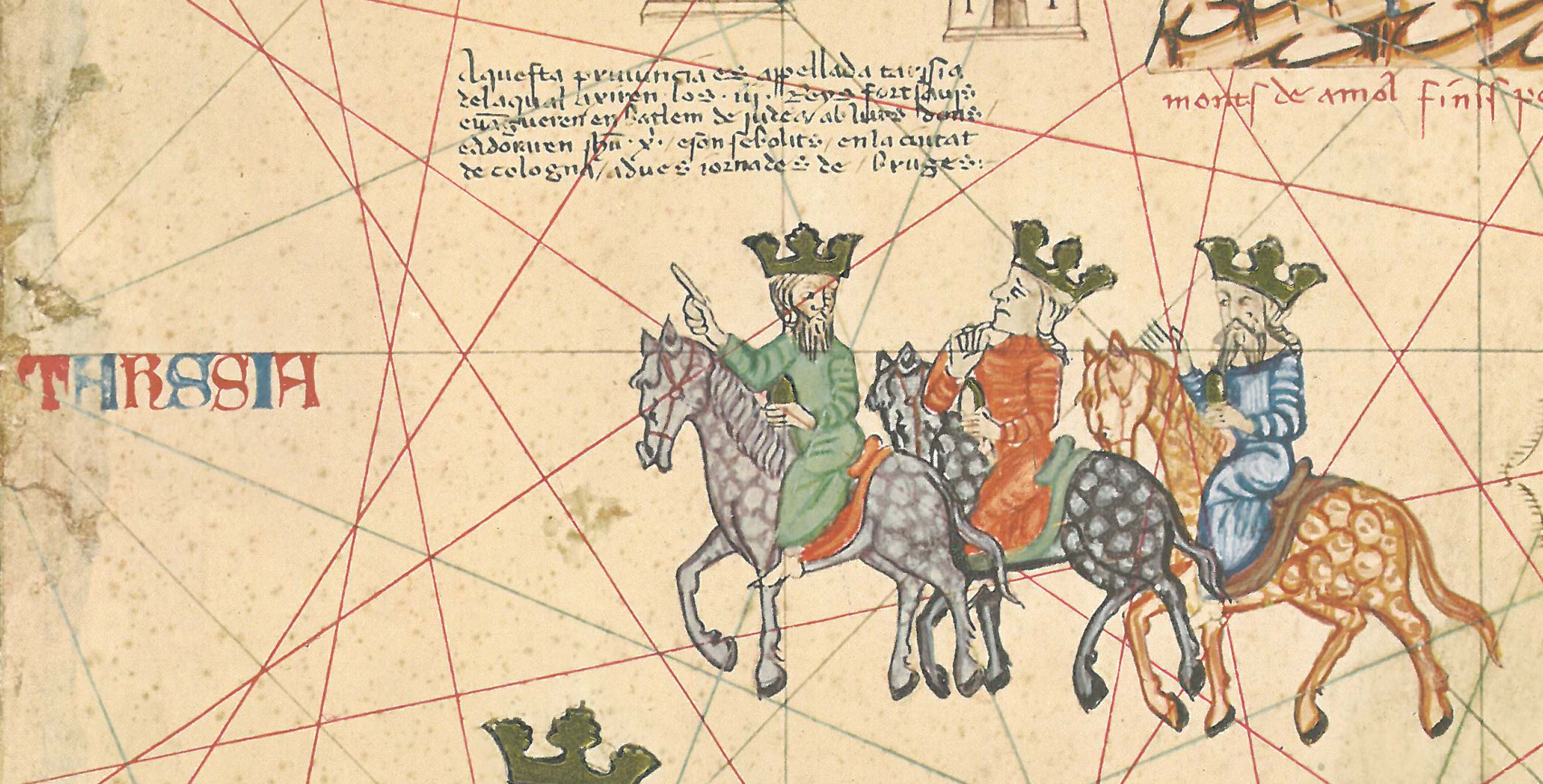
The Magi are also called kings and wise men. The term refers to the Persian priestly caste of Zoroastrianism. As part of their religion, these priests paid particular attention to the stars and gained an international reputation for astrology, which was at that time highly regarded as a science. Their religious practices and use of astrology caused derivatives of the term Magi to be applied  later to the occult in general and led to the English term magic, although Zoroastrianism was in fact strongly opposed to sorcery.  The star, most probably, was in fact an alignment of multiple celestial bodies.  Movements often appear because of a term, retrograde2http://www.telegraph.co.uk/topics/christmas/8211389/Star-of-Bethlehem-may-have-been-caused-by-movement-of-planet-Jupiter-scientist-claims.html, the orbiting of of circular or elliptical paths, canted on an angle and then transposed over each other.  Astronomers use the term to refer to the occasional stopping or backwards motion of the planets as seen in Earth’s sky. When used in this way, retrograde motion is entirely an illusion caused by the moving Earth passing the outer planets in their orbits. When multiple objects align, they can appear to move, stop and even grow brighter. We must always remember that the universe is a design and even the alignment of stars and planets were part of God’s overall purpose. God knew the exact period in history to align constellations, stars and planets so that the magi would see the bright light in the sky and become part of Christ’s story.

The magi would have been experts in celestial happenings.  They would have known what constellations were  showing and when an abnormality was occuring. So to add them to this story, we must believe that there was a “star-like” event that spurred their journey, only to be confirmed by their own observations.

So what must we conclude:

  1. That the birth of Jesus was a special and great event, worthy of the divine purpose to have  directed these men to find the place of his nativity.
  2. Like the Magi, God will guide those who are disposed to find Christ. Even as the star would appear and disappear,  God will direct us in the way to His Son.
  3. Our being led to Christ should fill us with joy. He is the way, the truth, and the life; the Saviour, the friend, the all in all; there is no other way of life, and there is no peace to the soul until He is found. When we are guided to him, therefore, our hearts should overflow with joy and praise; and we should humbly and thankfully follow every direction that leads to the Son of God, John 12:35-36.

Happiness is an emotion in which one experiences feelings ranging from contentment and satisfaction to bliss and intense pleasure. It generally comes from earthly experiences, material objects and is temporary. We can effect our happiness.  Joy, however,  is a stronger, less common feeling than happiness. Witnessing or achieving selflessness to the point of personal sacrifice frequently triggers this emotion. Joyful experiences are generally a surprize, connected to God or other people not under our control. Joy brings with it inward peace and contentment. It is  a byproduct of a moral lifestyle and is lasting.

Items for Discussion

  • What led you to search for Christ?
  • How can we aid others in their search for Christ?
  • What about our world and universe leads you to believe that the star of Bethlehem was real?
  • What do the Magi add to the Christmas story? In other words, why do we know about them?
  • What were the magi trying to tell us by their selection of gifts?

Discussion Challenge

  • How is your personal history with Christmas and Christ like the Star that led the Magi to Christ?

The Story of Sheperds

Psalm 231NIV New International Version Translations
1 The Lord is my shepherd, I lack nothing. 2 He makes me lie down in green pastures, he leads me beside quiet waters, 3 he refreshes my soul. He guides me along the right paths for his name’s sake. 4 Even though I walk through the darkest valley, I will fear no evil, for you are with me; your rod and your staff, they comfort me. 5 You prepare a table before me in the presence of my enemies. You anoint my head with oil; my cup overflows. 6 Surely your goodness and love will follow me all the days of my life, and I will dwell in the house of the Lord forever.

Background

This is the most beloved of all the Psalms and probably the most familiar passage in the Old Testament. We often consider it as it is, but today let’s look at it through the lens of.Christian faith, especially thinking about the New Testament event of the angels giving the good news of Jesus’ birth to the shepherds of Bethlehem.

First, it is fair to think that this was probably the favorite Psalm of those shepherds. Indeed, it is more than likely that they would have sung it as part of their way of passing the time while they watched the sheep. Certainly they would have identified with it, since they would have appreciated the comparison between the Lord’s care for them and their own care for their sheep. Next, we want to observe that the shepherds of Bethlehem would have found the work that God does for his flock included elements
that are highlighted in this Psalm. The providence of God is like the care that the shepherds have to be sure that the sheep do not go hungry, and do not go thirsty. The sheep are not finding the green pastures and still waters on their own. The Lord leads them there.

We also want to point out that the shepherds knew the right paths for their sheep. Places where they could walk without fear. Even the darkest places. Just think how comforting it would have been for the Bethlehem shepherds to know just what kind of compassion and attention God provided-the same as they did. The prepared table shows planning and anticipation. The shepherds would not have wanted to leave anything to chance. They would have wanted the sheep to have what the needed when it was time. The overwhelming sense of the Psalm is that they do not need to worry, but trust in the Lord.

Items for Discussion

  • What would you say the “job description” of a good shepherd would include?
  • If you were a shepherd, what things about this Psalm would you like best?
  • Does this Psalm say that there will be no enemies or hard times?
  • What is the Shepherd’s role when enemies are around and when hard times come?
  • What are the benefits of being one of the sheep of the Lord’s flock?

Luke 2:8-19
8 And there were shepherds living out in the fields nearby, keeping watch over their flocks at night. 9 An angel of the Lord appeared to them, and the glory of the Lord shone around them, and they were terrified. 10 But the angel said to them, “Do not be afraid. I bring you good news that will cause great joy for all the people. 11 Today in the town of David a Savior has been born to you; he is the Messiah, the Lord. 12 This will be a sign to you: You will find a baby wrapped in cloths and lying in a manger.” 13 Suddenly a great company of the heavenly host appeared with the angel, praising God and saying, 14 “Glory to God in the highest heaven, and on earth peace to those on whom his favor rests.” 15 When the angels had left them and gone into heaven, the shepherds said to one another, “Let’s go to Bethlehem and see this thing that has happened, which the Lord has told us about.” 16 So they hurried off and found Mary and Joseph, and the baby, who was lying in the manger. 17 When they had seen him, they spread the word concerning what had been told them about this child, 18 and all who heard it were amazed at what the shepherds said to them. 19 But Mary treasured up all these things and pondered them in her heart.

Background

Today, let’s focus on the shepherds and their roles in the Christmas story. Their first role was caring for the sheep. Watching over them. Making sure they were safe and secure. This took skill, time, effort and attention. You could not have been a sloppy or distracted shepherd very long, because your sheep would have been neglected and fallen prey to all kinds of dangers. Watching and waiting is a good thing, when you are a shepherd.

The second role was to pay attention. To listen to what the angels told them. It would have been very hard not to pay attention, with something so remarkable and out of the ordinary happening right before their eyes. Even so, we sense that they were good, active listeners, so that they not only heard what the angels said, they also took it to heart.

Third, the shepherds talked it over among themselves. We may miss this if we hurry through the passage. They said to one another, “Let us go now to Bethlehem and see this thing that has taken place, which the Lord has made known to us.” There was conversion, and consensus, before they acted.

Next, they went. They acted on what the angels said and on their own resolve. They put the experience into action. Once there, they told their story. They realized they were the only ones who COULD tell the story. And-as they did – people were amazed – and Mary treasured and pondered all they said.

Items for Discussion

  • How are we like the shepherds?
  • Has God done something good in our lives? If so, please give some examples.
  • Are we to do something with that, something that might be like what the shepherds did?
  • Who will it help, and how, if we do tell the story? What if we don’t?

Discussion Challenge

  • Where are the places and how will you tell “your Christmas Story” this year?


  • 1
    NIV New International Version Translations

Telling the Story

Isaiah 40:1-81NIV New International Version Translations

1 Comfort, comfort my people, says your God. 2 Speak tenderly to Jerusalem, and proclaim to her that her hard service has been completed, that her sin has been paid for, that she has received from the Lord’s hand double for all her sins. 3 A voice of one calling: “In the wilderness prepare the way for the Lord; make straight in the desert a highway for our God. 4 Every valley shall be raised up, every mountain and hill made low; the rough ground shall become level, the rugged places a plain. 5 And the glory of the Lord will be revealed, and all people will see it together. For the mouth of the Lord has spoken.” 6 A voice says, “Cry out.” And I said, “What shall I cry?” “All people are like grass, and all their faithfulness is like the flowers of the field. 7 The grass withers and the flowers fall, because the breath of the Lord blows on them. Surely the people are grass. 8 The grass withers and the flowers fall, but the word of our God endures forever.”

Background

Chapter 40 begins what is known as the second book of Isaiah. It appears to be separated from the first 39 chapters by about 150 years of time. This is determined also by the scope and style of the first 39 chapters. In the beginning chapters, Isaiah’s name was frequently prefixed to the particular sermons, besides the general title (as ch. 2:1 ; 7:3; 13:1) and is written as if it is one continued discourse. There the distress which the people of God were in by the Assyrian, and their deliverance out of that, were chiefly prophesied. Before God sent his people into captivity He gave them precious promises for their support and comfort in their troubles.

Now the people begin to look further yet to greater things; Christ. It is in second Isaiah, this latter part, we find much more, a prophetic summary of the New Testament. The story here begins with “The voice of one crying in the wilderness’’ ch. 40:3 ), and concludes with the book of the Revelation, “The new heavens and the new earth,’’ ch. 66:22 ).

If not Isaiah, then who was the message in Second Isaiah written for? Hebrew translations use plural words indicating that it was a group, a remnant within God’s people still living with their captives. While God is providing a message of comfort and hope, He is also giving this unknown group instructions on the future.

Items for Discussion

  • This is the time we hear much of the Christmas Story.  It begins with the foretelling of Jesus – Where do you begin your story of Christ?
  • How do you interpret Verse 6?
  • What impact do you think there was on the attitudes of the generations held in captivity for 150 years?
  • What was the “Comfort” that God wanted his people to spread?
  • What is your Christmas Story that you tell to your children, family and friends?
  • How do you include Christ into your traditions of the Christmas?
  • Who do you think Second Isaiah was written for? back then – today?


Luke 6:43-45
43 “No good tree bears bad fruit, nor does a bad tree bear good fruit. 44 Each tree is recognized by its own fruit. People do not pick figs from thornbushes, or grapes from briers. 45 A good man brings good things out of the good stored up in his heart, and an evil man brings evil things out of the evil stored up in his heart. For the mouth speaks what the heart is full of.

Background

One of the styles that made Christ such a good teacher is that when He gave examples, it was easy to apply them.  This one is quite simple: we ought to be very careful when we blame others because we all need forgiveness ourselves. If we are of a giving and a forgiving spirit, we will reap the benefit. Although full and exact returns to us do not come in this world, it is the pursuit of the world yet to come that should be our goal. Those who follow the worldly crowds to do evil, which in turn, leads to their destruction.

The tree is known by its fruits and so may the word of Christ be grafted in our hearts. It should be our Christian goal to be fruitful in every good word and work.  Experience tells us that what the mouth commonly speaks, generally agrees with what is most in the heart. Those who work for their souls with an eternal view, not focused on short term profits, will profit during trying times.  These are the words of Christ. Those who place their hope on Christ will find they are safe, being protected by the power of Christ and shall never perish.

Items for Discussion

  • Why is the heart and mind so closely tied with how one acts?
  • How does the world perpetuate the problems of what is in people’s hearts today?
  • Can you do anything to change a person’s heart?
  • How does the Christmas Story help spread the Good News of the Gospel and change people’s hearts?

Discussion Challenge

  • What are the ways a Church can stay focused on the true story of Christmas?
  • 1
    NIV New International Version Translations

Was There Someone With Us

Nahum 1:71NIV New International Version Translations

7 The Lord is good, a refuge in times of trouble. He cares for those who trust in him,

Background

Nahum is the seventh of the books of the minor prophets.  The Hebrew name “Nahum” means “comfort” or “consolation.” The theme of the prophecy is the fate and destruction of Nineveh, the one-time capital city of the mighty Assyrian empire, which had destroyed Israel and taken many inhabitants of the land captive  in 722 B.C..

The message was proclaimed to Judah  in Nahum 1:15  and not to the 10 tribes of Israel who were already in captivity. Nahum’s announcement was a “comfort” to the inhabitants of Judah, as it predicted the downfall of Assyria, a savage and cruel enemy of Israel and Judah.

His message was simple, the  Lord is good.  In the midst of God’s judgment He remembers mercy even when threatening judgement. Those that trust in God should not be alarmed at even God’s threats. They will be spared from wrath for the Lord their God knows those who trust in Him.

Items for Discussion

  • When someone is in distress, what do you do to bring comfort to them?
  • Why should people fear God’s judgement?
  • Why should those who trust God not fear judgement?


Luke 17:11-19
11 Now on his way to Jerusalem, Jesus traveled along the border between Samaria and Galilee. 12 As he was going into a village, ten men who had leprosy[a] met him. They stood at a distance 13 and called out in a loud voice, “Jesus, Master, have pity on us!” 14 When he saw them, he said, “Go, show yourselves to the priests.” And as they went, they were cleansed. 15 One of them, when he saw he was healed, came back, praising God in a loud voice. 16 He threw himself at Jesus’ feet and thanked him—and he was a Samaritan. 17 Jesus asked, “Were not all ten cleansed? Where are the other nine? 18 Has no one returned to give praise to God except this foreigner?” 19 Then he said to him, “Rise and go; your faith has made you well.”

Background

Jesus was on his way to Jerusalem where he would be crucified. At this point in His journey He was on the border between Samaria and Galilee. The exact route that Jesus took is not clear to us. He started the journey on the road through Samaria (9:51-56), which was the shorter route. But the last part of his journey seems to have been through Perea (Matthew 19:1, Mark 10:1). Perea is on the east side of the river Jordan. From there, he went through Jericho (19:1). The most likely explanation is that Luke did not put these events in order of time.

Here Jesus encounters lepers. By law they had to keep at a distance from other people. So, these 10 lepers had to cry out with loud voices. They asked Jesus to pity them. They may have expected to receive a gift of food or money. They did not ask him to cure them.  Jesus told them to go to the priests. The priests would examine the lepers. The priests would decide whether the disease had gone or not (Leviticus chapter 14). The lepers obeyed Jesus and they went. That showed that they were trusting Jesus to cure them. Then as they went, Jesus cured them of the disease.

One of the lepers came back to thank Jesus. He did not first go to the priest to check that he was free of the disease. He knew that Jesus had cured him. He praised God in a loud voice. The other 9 did not come back. This man was a Samaritan. In normal circumstances the Jews and the Samaritans would stay away from each other. But this Samaritan leper was with Jewish lepers. Unlike them, he could not go to the Jewish priests. So instead this Samaritan returned to give honor and thanks to Jesus, a Jew. He was the last one that we would expect to thank Jesus. But he was the only one.

Jesus expressed surprise that only this foreigner had returned to give God thanks. God had cured 10 men; they all should be very grateful to God. But the other 9 men were not praising God for the wonderful thing that he had done for them. Jesus told the Samaritan to get up and to go on his way. The other lepers had believed and Jesus had cured them. But Jesus told the Samaritan that his faith had made him well. This must mean more than what the other lepers had received. Jesus had cured their bodies. But Jesus made this man whole. Maybe this man received the greatest gift, the salvation that Jesus preached.

Items for Discussion

  • What exactly is trust?
  • If you had to give an example of trust to someone, something that involved your own life, what would it be?
  • Have you ever had to trust in something in the middle of what seemed like a crisis or disaster?
  • What do you think about the 9 lepers who never came back to thank Jesus?
  • Do we do the same thing today as Christians? Can you give examples?
  • Why did the Samaritan gain more from his encounter with Jesus?

Discussion Challenge

  • How do we as a church show people it is OK to trust God, even when things are going badly?
  • 1
    NIV New International Version Translations
Being and Believing

Jeremiah 23:23-241NIV New International Version Translations
23 Am I only a God nearby,” declares the Lord, “and not a God far away? 24 Who can hide in secret places so that I cannot see them?” declares the Lord. “Do not I fill heaven and earth?” declares the Lord.

Let’s add a little more of Jerramiah for a better perspective.

25 “I have heard what the prophets say who prophesy lies in my name. They say, ‘I had a dream! I had a dream!’ 26 How long will this continue in the hearts of these lying prophets, who prophesy the delusions of their own minds? 27 They think the dreams they tell one another will make my people forget my name, just as their ancestors forgot my name through Baal worship. 28 Let the prophet who has a dream recount the dream, but let the one who has my word speak it faithfully. For what has straw to do with grain?” declares the Lord. 29 “Is not my word like fire,” declares the Lord, “and like a hammer that breaks a rock in pieces? 30 “Therefore,” declares the Lord, “I am against the prophets who steal from one another words supposedly from me.

Background

We find our prophet Jeremiah beginning this chapter with hope, telling the people that they had bad leadership but that God would restore a king that would be fair. The current priests and prophets of Judah are corrupt. He is telling the people not to listen to those who corrupt God’s word and make false promises. Taking us up to his declaration to the people by quoting God Himself and drawing attention that the prophets leading the people did not know God and the people should know this by the messages themselves.

Our study verses now go to the heart of the matter. Nobody can hide from the LORD. Both Amos, the prophet, (Amos 9:1-4) and Jeremiah said that nobody can escape from the LORD’s punishment.  God then declares that He is near to His people but also He is above everyone and everything else. God can reach the furthest places in both on the earth and in space. So God knows what people are saying and He knows what they are doing. So obviously, God knows the truth about the false prophets. Keep in perspective that Jeremiah is a prophet warning the people of Israel.

Items for Discussion

  • “Fake News” has been around for a long time.  Who will God hold accountable for the lack of truth?
  • What do you do to fact check what you hear?
  • If the people must sort out the fake news of the day, where should people go to sort out God’s Truth?
  • How did the birth and growth of Christianity work to sort out Truthful messages from God?


Matthew 23:12
12 For those who exalt themselves will be humbled, and those who humble themselves will be exalted.

Background

In chapter 23, Matthew is quoting Jesus. While translations vary slightly the meaning of Matthew 23:12 is that man should humble himself before God. Nothing’s more hateful in God’s sight than pride. Jesus was speaking out in this particular bible verse about the sins of religious leaders and the Pharisees. In today’s world, people, especially leaders, often find themselves at the centers of terrible scandals involving  money and sex. Sounds like current news headlines.

Items for Discussion

  • What is humility?
  • If you think back on the history of Christianity, what are the times of great humility and times of great pride?
  • Why is humility such an important trait in a Christian or Christian church?
  • Can you teach people to be humble? How?
  • How might we be teaching people to be prideful, just the opposite of what Jesus wanted?
  • Can you be a Christian without humility?

Discussion Challenge

  • What are the tests a Christian can apply to sort out God’s Truth in all they hear?
  • 1
    NIV New International Version Translations
Life Is In The Narrative

Exodus 17:1-71NIV New International Version Translations
1 The whole Israelite community set out from the Desert of Sin, traveling from place to place as the Lord commanded. They camped at Rephidim, but there was no water for the people to drink. 2 So they quarreled with Moses and said, “Give us water to drink.” Moses replied, “Why do you quarrel with me? Why do you put the Lord to the test?” 3 But the people were thirsty for water there, and they grumbled against Moses. They said, “Why did you bring us up out of Egypt to make us and our children and livestock die of thirst?” 4 Then Moses cried out to the Lord, “What am I to do with these people? They are almost ready to stone me.” 5 The Lord answered Moses, “Go out in front of the people. Take with you some of the elders of Israel and take in your hand the staff with which you struck the Nile, and go. 6 I will stand there before you by the rock at Horeb. Strike the rock, and water will come out of it for the people to drink.” So Moses did this in the sight of the elders of Israel. 7 And he called the place Massah and Meribah because the Israelites quarreled and because they tested the Lord saying, “Is the Lord among us or not?”

Background

The wilderness of Sin Exodus 16:1 properly speaking ends here, the sandstone ceases, and is replaced by granite.  It is thought that Rephidim was located at Feiran, the base of Mount Serbal, or at the pass of El Watiyeh.  This part of the Exodus story emphasizes the general characteristic of the Israelites that the miracles, which always met each need as they arose, failed to produce a habit of faith in them. So as the the severity of this trial, their anguish of thirst in the burning desert, impacted their conduct.

The children of Israel journeyed according to the commandment of God, led by the pillar of cloud and fire, yet they came to a place where there was no water for them to drink. They began to question whether God was with them or not. This is called their “tempting God,” which signifies distrust of God after they had received past proofs of His power and goodness.

The Arab tradition is that Moses was led to a rock located in Wady Feiran. Horeb was actually a name given to the whole desert of Sinai . It is questioned whether the water supply actually ceased or this story is documenting that the wants of the Israelites were always supplied by God and the Rock is a symbol for God who was always with them.

We find that in spite of years of manna, provisions from God, the Israelites were “putting their God to the test,” something that both the Old and New Testament warns against. Matthew 4:7 Jesus said to him, “On the other hand, it is written, `YOU SHALL NOT PUT THE LORD YOUR GOD TO THE TEST.’ ” So this story by Moses in intended to show us that although we may meet with troubles, which Providence brings us into, those troubles are merely a trial of our faith, and that for God, the purposes are for His glorification and yes, for our relief too.

Items for Discussion

  • What are the attributes of mankind that seem to let time erase the many examples of God’s interaction with our lives and let doubt and fear take the place of faithfulness?
  • In what ways did God show His power and His pity?
  • By the time the Israelites arrived at Rephidim, there was a new generation of people following Moses. What risks are there in not passing on our “faithfulness” to the next generation?
  • As soon as there was a problem about water, the people accused Moses, saying that they wanted to kill him, his family and livestock. This was after all that Moses had done for them.  What examples can you see that we have today showing the thanklessness of people to those that help them?
  • Why is it important not to forget this story?


Acts 9:1-12
1 Meanwhile, Saul was still breathing out murderous threats against the Lord’s disciples. He went to the high priest 2 and asked him for letters to the synagogues in Damascus, so that if he found any there who belonged to the Way, whether men or women, he might take them as prisoners to Jerusalem. 3 As he neared Damascus on his journey, suddenly a light from heaven flashed around him. 4 He fell to the ground and heard a voice say to him, “Saul, Saul, why do you persecute me?” 5 “Who are you, Lord?” Saul asked. “I am Jesus, whom you are persecuting,” he replied. 6 “Now get up and go into the city, and you will be told what you must do.” 7 The men traveling with Saul stood there speechless; they heard the sound but did not see anyone. 8 Saul got up from the ground, but when he opened his eyes he could see nothing. So they led him by the hand into Damascus. 9 For three days he was blind, and did not eat or drink anything. 10 In Damascus there was a disciple named Ananias. The Lord called to him in a vision, “Ananias!” “Yes, Lord,” he answered. 11 The Lord told him, “Go to the house of Judas on Straight Street and ask for a man from Tarsus named Saul, for he is praying. 12 In a vision he has seen a man named Ananias come and place his hands on him to restore his sight.”

Background

This may be one of the most famous narratives in the New Testament, the conversion of Saul of Tarsus to Paul the Apostle. Saul was ill informed about his God. One of the more amazing parts of this story is that Saul (Paul) thought he ought to do all he could against the name of Christ, and actually thought he was doing God a good service by his behavior. This story should give us hope that there can be a renewing grace so strong that it can convert the greatest of sinners. Even more hope should come from the fact that Saul was pardoned by his God for the greatest of sins.

Once confronted by Christ, Saul submitted without reserve, wanting to know what the Lord Jesus would have him to do. Christ’s discoveries of Himself to poor souls are always humbling experiences. For three days Saul took no food, and it pleased God to leave him for that time without relief. His sins were now set in order before him; he was in the dark concerning his own spiritual state, and wounded in spirit for his sin. When a sinner is brought to a proper sense of his own state and conduct, the only course of action is to cast himself wholly on the mercy of the Saviour, asking what He would have Him to do.

Like Moses, God will direct the humbled sinner. The journey to believing is not always directly to joy and peace. Many will bear witness that without sorrows and distress of one’s conscience, we never really engage our souls to know Christ.

Items for Discussion

  • Why did Paul think his actions were the right course to follow?
  • How do people today make that same mistake?
  • Why would God have temporarily blinded Paul and force him into isolation?
  • What kinds of Damascus experiences do people still have today?
  • How was Ananias an example of the way Christians should respond to someone going through a “Damascus Experience?”

Discussion Challenge

  • We define Narrative as “a spoken or written account of connected events; a story. What are the stories that must be told regarding your encounters with Christ?
    • Elements of a good personal narrative:
      • What were things like before?
      • Why did you think you were right?
      • What happened to make you aware of Christ?
      • How did you handle your “blind time?”
      • Where did you go to learn more?
      • Did you have an Ananias?
      • What is your life like now and how is it different than before?
  • 1
    NIV New International Version Translations

Is Your Jar Empty or Full?

Genesis 33:18-201NIV New International Version Translations
18 After Jacob came from Paddan Aram, he arrived safely at the city of Shechem in Canaan and camped within sight of the city. 19 For a hundred pieces of silver, he bought from the sons of Hamor, the father of Shechem, the plot of ground where he pitched his tent. 20 There he set up an altar and called it El Elohe Israel

Background

And Jacob came to Shalem, a city of Shechem – Or rather he came safe, or in peace, to the city of Shechem. After a perilous journey, in which he had met with many difficulties, he came safe at last, into Canaan.

Shalem–that is, “peace”; and the meaning may be that Jacob came into Canaan, arriving safe and sound at the city Shechem–a tribute to Him who had promised such a return (compare Genesis 28:15 ). But most writers take Shalem as a proper name–a city of Shechem, and the site is marked by one of the little villages about two miles to the northeast. A little farther in the valley below Shechem “he bought a parcel of a field,” thus being the first of the patriarchs who became a proprietor of land in Canaan. One hundred pieces of money-Literally, “Iambs”; probably a coin with the figure of a lamb on it.

He erected an altar -tn thankfulness to God for the good hand of his providence over him. So that he might keep up religion, and the worship of God in his family. He dedicated this altar to the honor of EI­ Elohe-Israel, God – the God of Israel: to the honor of God in general, the only living and true God, the Best of beings, the First of causes: and to the honor of the God of Israel, as a God in covenant with him. God had lately called him by the name of Israel; and now he calls God the God of Israel; though he be called a prince with God, God shall still be a prince with him, his Lord and his God.

A beautiful proof of his personal piety, a most suitable conclusion to his journey, and a lasting memorial of a distinguished favor in the name “God, the God of IsraeL” Wherever we pitch a tent, God shall have an altar. El-Elohe-lsrael=That is God, the God of Israel

Items for Discussion

  • Jacob was on a journey to Canaan the promised land. Why was this journey important to him?
  • Is it important to us?
  • When he got there, he bought some land. What does this tell us about Jacob?
  • Jacob built an altar there. Why?

It is said Jacob also built a well there. The well appears in our New Testament lesson.

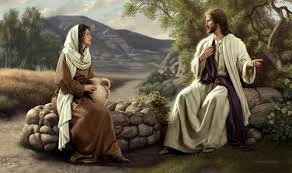
John 4:4-26
4 Now he had to go through Samaria. 5 So he came to a town in Samaria called Sychar, near the plot of ground Jacob had given to his son Joseph.  6 Jacob’s well was there, and Jesus, tired as he was from the journey, sat down by the well. It was about noon. 7 When a Samaritan woman came to draw water, Jesus said to her, “Will you give me a drink?” 8 (His disciples had gone into the town to buy food.) 9 The Samaritan woman said to him, “You are a Jew and I am a Samaritan woman. How can you ask me for a drink?” (For Jews do not associate with Samaritans.) 10 Jesus answered her, “If you knew the gift of God and who it is that asks you for a drink, you would have asked him and he would have given you living water.” 11 “Sir,” the woman said, “you have nothing to draw with and the well is deep. Where can you get this living water? 12 Are you greater than our father Jacob, who gave us the well and drank from it himself, as did also his sons and his livestock?” 13 Jesus answered, “Everyone who drinks this water will be thirsty again, 14 but whoever drinks the water I give them will never thirst. Indeed, the water I give them will become in them a spring of water welling up to eternal life.” 15 The woman said to him, “Sir, give me this water so that I won’t get thirsty and have to keep coming here to draw water.” 16 He told her, “Go, call your husband and come back.” 17 “I have no husband,” she replied. Jesus said to her, “You are right when you say you have no husband. 18 The fact is, you have had five husbands, and the man you now have is not your husband. What you have just said is quite true.” 19 “Sir,” the woman said, “I can see that you are a prophet. 20 Our ancestors worshiped on this mountain, but you Jews claim that the place where we must worship is in Jerusalem.” 21 “Woman,” Jesus replied, “believe me, a time is coming when you will worship the Father neither on this mountain nor in Jerusalem. 22 You Samaritans worship what you do not know; we worship what we do know, for salvation is from the Jews. 23 Yet a time is coming and has now come when the true worshipers will worship the Father in the Spirit and in truth, for they are the kind of worshipers the Father seeks. 24 God is spirit, and his worshipers must worship in the Spirit and in truth.” 25 The woman said, “I know that Messiah” (called Christ) “is coming. When he comes, he will explain everything to us.” 26 Then Jesus declared, “I, the one speaking to you—I am he.”

Background

Jesus has been in Judea, ministering with his disciples. But the Pharisees in Jerusalem have been closely monitoring the revival meetings taking place near the Judean capital. More and more people are flocking to Jesus, so the religious protectors of the status quo are making it more dangerous for Jesus in Judea. It is time to return to his native Galilee. Now he had to go through Samaria.

There were three routes between Galilee and Jerusalem. (1) Along the coast, (2) along the Jordan valley, or (3) along the central ridge road that wound north through the passes in the mountains. The latter was the fastest and most direct, though it required travelling through Samaria. Antagonism between the Jews and Samaritans sometimes caused tension along this route.

Sychar, probably on the site of the present-day town of Aschar, is near the ancient ruins of Shechem. (See our Old Testament lesson). Jacob’s well still exists there, fed by springs and dug out to a depth of more than 100 feet. It was doubtless dug on the land Jacob purchased from the leader of the nearby city of Shechem. As it was right alongside the main road, Jesus stopped there to rest at noon (lithe sixth hour”) while his disciples went into town to buy some food.

Jesus is “tired from the journey” This reminds us that Jesus is fully human, as well as fully divine. A tired Jesus is sitting at the well, waiting for the disciples, when a woman appears. Jesus’ request for a drink of water was strange at several levels. 1. Gender difference. In that culture men didn’t usually initiate a conversation with women they didn’t know. 2. Religious difference, as the woman herself observes (4:9). Jews considered Samaritans to be unclean. 3. The Woman’s Status. As the story develops, we find that the woman had had five men and was living with a sixth.

She doesn’t refuse Jesus’ request but she wonders aloud why he would go against the social norms to ask her for a drink. Jesus ignores her lack of understanding, but continues to explain the gift he is talking about. He compares literal water with spiritual water.

Jesus makes to statements about this water: They will never thirst. They will have eternal life.

Items for Discussion

  • Why do you think Jesus went against the social norms to communicate with the woman?
  • Why do we hesitate to go against social norms to share the good news?
  • How do we balance our need to obey God and our need to live peaceably in our culture?
  • Jesus’ words to the woman in verses 10-13 seem to imply that all people are spiritually thirsty.
  • Does the woman seem spiritually thirsty at this point?
  • What caused her deep thirst to surface?
  • What does this teach us about our own witness?

Discussion Challenge

  • How do we recognize when someone is “Spiritually Dehydrated?”
  • 1
    NIV New International Version Translations

Doing What He Tells Us

Exodus 3:1-51NIV New International Version Translations
1 Now Moses was tending the flock of Jethro his father-in-law, the priest of Midian, and he led the flock to the far side of the wilderness and came to Horeb, the mountain of God. 2 There the angel of the Lord appeared to him in flames of fire from within a bush. Moses saw that though the bush was on fire it did not burn up. 3 So Moses thought, “I will go over and see this strange sight—why the bush does not burn up.” 4 When the Lord saw that he had gone over to look, God called to him from within the bush, “Moses! Moses!” And Moses said, “Here I am.” 5 “Do not come any closer,” God said. “Take off your sandals, for the place where you are standing is holy ground.”

Background

Exodus is one of the first 5 books of the Old Testament. We call these 5 books together as ‘the Pentateuch’. The Greek translation gave this book its name ‘Exodus’,  ‘to go out’. God helped the Israelites ‘to go out’ from Egypt. Chapters 1-18 are about Moses’ life; the Israelites’ troubles in Egypt; the events and the plagues that led the Israelites to leave Egypt. The remaining chapters, 19-40 about how God gave the Law to Moses; how they built the Tabernacle; and the rules for worship.

Bible Truths and Theology2http://www.christianity.com/bible/commentary.php?com=mhc&b=2&c=3

The years of the life of Moses are divided into three forties; the first forty he spent as a prince in Pharaoh’s court, the second as a shepherd in Midian, the third as a king in Jeshurun. How changeable is the life of man! The first appearance of God to Moses, found him tending sheep. This seems a poor employment for a man of his education. Yet we find Moses satisfied with it. Through the experiences, learns meekness and contentment, for which Moses is given more credit for than all of his education.

Satan loves to find us idle; God is pleased when he finds us employed. Being alone, is a good for our communion with God. To his great surprise, Moses saw a bush burning without fire to light it. The bush burned, and yet did not burn away. Today we hold this as an emblem of the church in bondage in Egypt. And it reminds us of the church in every age, under its severest persecutions but always kept by the presence of God from being destroyed. Fire is an emblem, in Scripture, of the Divine holiness and justice, also of the afflictions and trials with which God proves and purifies his people, and even of that baptism of the Holy Spirit, by which sins are consumed, and the soul changed into the Divine nature and image of God.

God gave Moses a gracious call,and Moses was quick to  return an answer. Those that would have conversation with God, must always be ready for our encounter but even more ready for His glory, even when we see it in a bush.  For Moses, taking off his sandals was a token of respect and submission. By this, God instructed Moses as to another world, and strengthened his belief of a future state.

Items for Discussion

  • This is a study about listening to God – Specifically what did God Instruct Moses to do and why do you think God gave those instructions?
  • What purpose would you conclude came from Moses obeying God’s instructions?
  • How was this encounter a life-changing moment for Moses?
  • What does the Burning Bush tell us about our God?

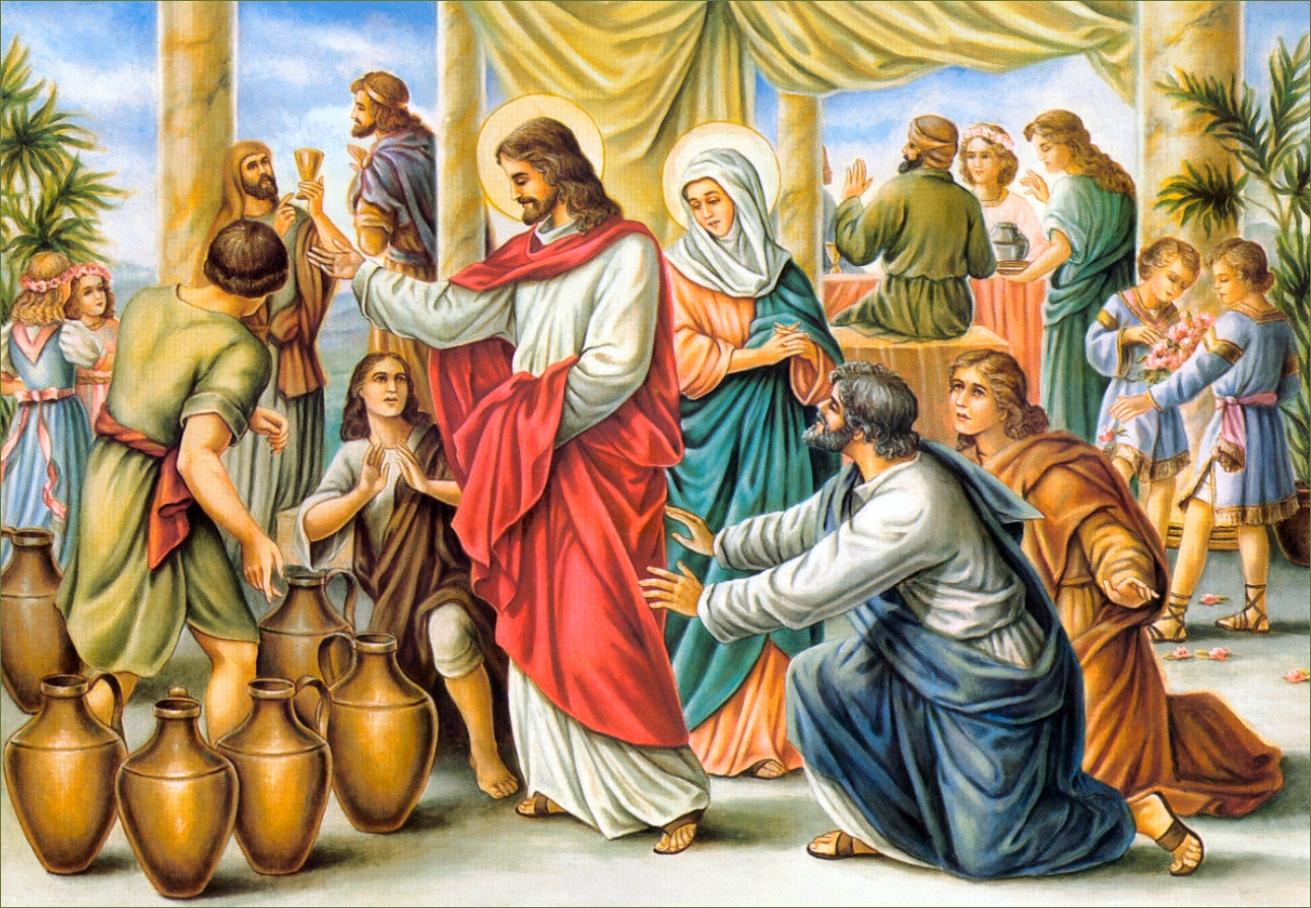
John 2:1-11
1 On the third day a wedding took place at Cana in Galilee. Jesus’ mother was there, 2 and Jesus and his disciples had also been invited to the wedding. 3 When the wine was gone, Jesus’ mother said to him, “They have no more wine.” 4 “Woman, why do you involve me?” Jesus replied. “My hour has not yet come.” 5 His mother said to the servants, “Do whatever he tells you.” 6 Nearby stood six stone water jars, the kind used by the Jews for ceremonial washing, each holding from twenty to thirty gallons. 7 Jesus said to the servants, “Fill the jars with water”; so they filled them to the brim. 8 Then he told them, “Now draw some out and take it to the master of the banquet.” They did so, 9 and the master of the banquet tasted the water that had been turned into wine. He did not realize where it had come from, though the servants who had drawn the water knew. Then he called the bridegroom aside 10 and said, “Everyone brings out the choice wine first and then the cheaper wine after the guests have had too much to drink; but you have saved the best till now.” 11 What Jesus did here in Cana of Galilee was the first of the signs through which he revealed his glory; and his disciples believed in him.

Background

In the ending of chapter one we had an account of the first disciples Jesus called, Andrew and Peter, Philip and Nathanael. These were the firstfruits to God and to the Lamb, Rev. 14:4 . Now, in chapter two, we have the account of the first miracle which Jesus turned water into wine at a wedding in Cana of Galilee (v. 1-11).

Bible Truths and Theology3https://www.easyenglish.bible/bible-commentary/john-ma-lbw.htm

Weddings are special occasions. After the ceremony, the people have a party.  In Jesus’ day, the party continued for a week. The guests ate and drank together. Everyone was very happy. But if there was not enough food or drink for the week, the bride and the bridegroom felt great shame. It was their duty to provide plenty of food and drink for all of the guests. It seems that Mary, Jesus’ mother, was a special guest at this wedding. There is a tradition that the bridegroom is the Apostle John himself. This tradition also recorded that his mother Salome was Mary’s sister. We do not know if this is true. But Mary had some responsibility for the wedding, because she worried about the wine. And she had the authority to give orders to the servants.

We assume that Jesus’ father Joseph had died. This would explain why Jesus was living with his mother and his brothers until he was 30 years old. As the oldest son, it was his duty to look after the whole family. So Mary expected that Jesus would help her to get some more wine. Then the party could continue. And the bride and the bridegroom would not be ashamed. But Jesus was thinking about other things. He said, ‘My time has not come yet’ (verse 4). He was the Messiah, but he had not shown this yet. So ‘my time’ could refer to the time when he would do this.  Mary was sure that Jesus would help. So she told the servants to obey his instructions.

John was not writing only for the benefit of the Jews but also for the benefit of the Gentiles. So he explained why there were pots of water in the house. The Jews believed that to touch certain things made people unclean inside their hearts and spirits. So they washed their hands before and during a meal to make themselves clean again. Jesus told the servants to fill the pots with water. Then he told them to take out some water. And he told them to give it to the host. The word ‘host’ here means the man who was responsible for the party. He was like a chief waiter. Jesus had made the water change. It had become wine!

The servants obeyed Jesus’ strange instructions. However, they did not know what would happen. Sometimes, we do not understand why Jesus asks us to do a certain thing. But when we obey him, something wonderful happens.

People always drank the best wine first at a wedding. But Jesus’ wine was even better! So the host thought that the people had been drinking the cheaper wine first instead. This miracle showed that Jesus had power over nature. It showed that he spoke with authority. And wonderful things happened when people obeyed him.

Items for Discussion

  • Why do you think Jesus chose a wedding as the site for His first miracle?
  • What would have happened if the servabts did not follow Jesus’ instructions?
  • Mary, Jesus’ mother, did not take any excuses.  She knew Jesus would respond to her request.  What about that dialogue between Jesus and Mary can use when we might disagree with someone who asks us for something but we disagree?
  • Who are the people in our world today that deserve the same respect Mary received from Jesus?

Discussion Challenge

  • What do you think both God and Jesus is telling the Church today?

Go, Love, Serve

Jonah 1:1-61NIV New International Version Translations
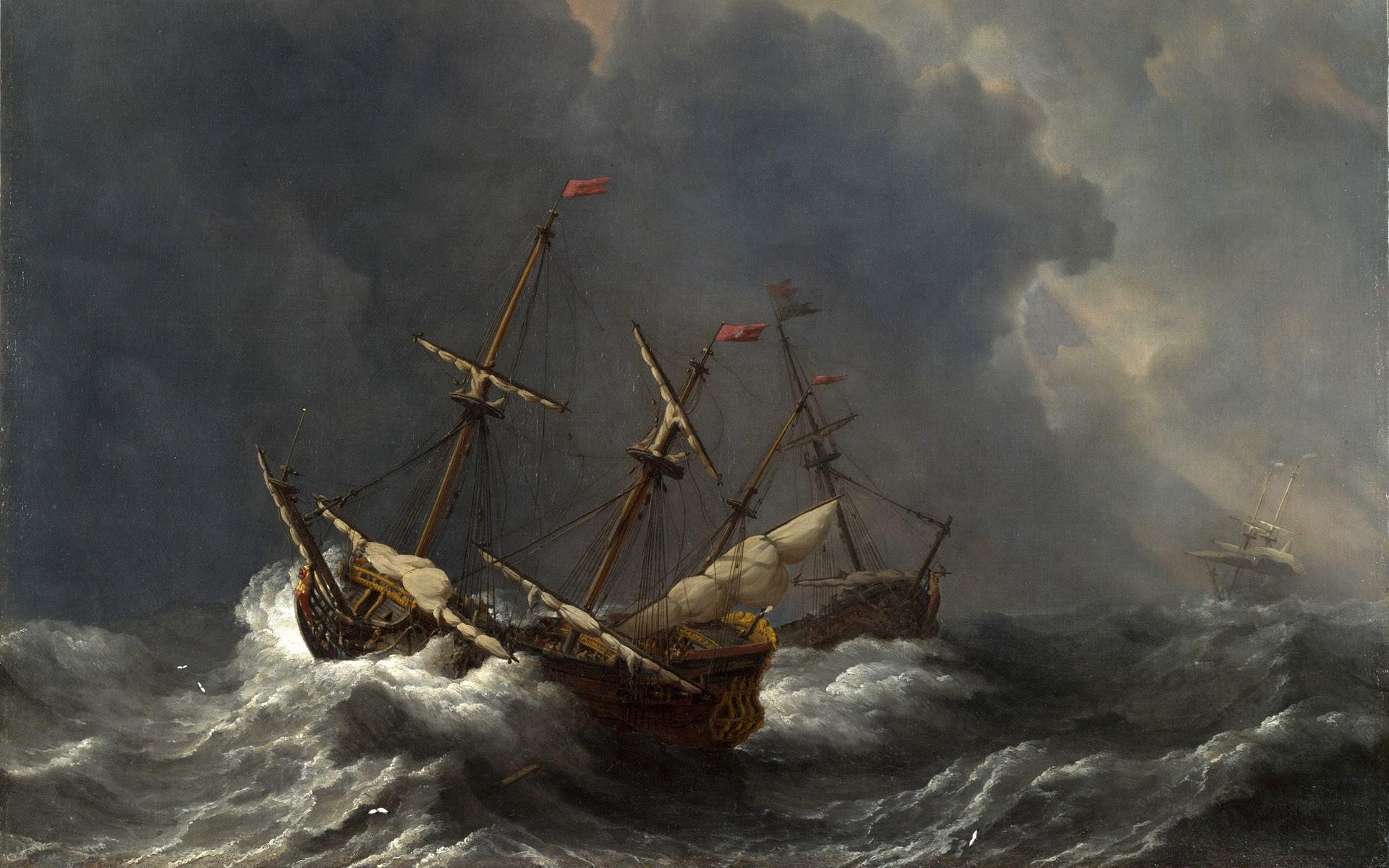
1 The word of the Lord came to Jonah son of Amittai: 2 “Go to the great city of Nineveh and preach against it, because its wickedness has come up before me.” 3 But Jonah ran away from the Lord and headed for Tarshish. He went down to Joppa, where he found a ship bound for that port. After paying the fare, he went aboard and sailed for Tarshish to flee from the Lord. 4 Then the Lord sent a great wind on the sea, and such a violent storm arose that the ship threatened to break up. 5 All the sailors were afraid and each cried out to his own god. And they threw the cargo into the sea to lighten the ship. But Jonah had gone below deck, where he lay down and fell into a deep sleep. 6 The captain went to him and said, “How can you sleep? Get up and call on your god! Maybe he will take notice of us so that we will not perish.”

Background2https://www.easyenglish.bible/bible-commentary/jonah-lbw.htm

The book of Jonah does not say who wrote it and it is unlikely that Jonah was the author because the story is not very favorable towards Jonah. No writer in the Bible tells such a bad story about himself. Jonah was a prophet in the land of Israel about 800-750 BC. During this time, Israel shared its northern border with Syria. When the army of Syria defeated the army of Israel in war, it took some of Israel’s land. Then the army of the country of Assyria defeated Syria in war, which made Syria weak. Then Jeroboam (king of Israel 793-753 BC) was able to get his land back. Jonah had said that God would cause this to happen (2 Kings 14:25).

However, when the people of Israel won battles against their enemies, they became proud of their power. The people forgot the special relationship that Israel had with God. They thought that God might be angry with other nations, but not angry with Israel. Israel was God’s special people! It was at this time that the Lord sent Jonah to the city of Nineveh, the capital of the land of Assyria. God wanted Jonah to warn the people of Nineveh that He was going to punish them soon because of their evil lives. But God cared even for the Assyrian people in Nineveh. This means that God cares for everybody. Jonah expected God to punish the bad people of Nineveh, not to be kind to them. God shows Jonah that his thoughts are wrong. The people of Israel should care for everyone and everything that God has made.

Bible Truths and Theology

God chases after Jonah and even sends a mighty storm. Sin brings storms and tempests into the soul, into the family, into churches and nations; it is a disquieting, disturbing thing. Having called upon their gods for help, the sailors did what they could to help themselves.  Isn’t it interesting that the sailors would be willing to part with  wealth, pleasure, and honor,  but make a shipwreck of their faith and a good conscience, and ruin their souls for ever!

Jonah was fast asleep. Sin is stupefying, and we are to take heed  because any time our hearts are hardened by the deceitfulness of sin, we become ignorant to it. Why do men sleep on in sin even when the word of God and the convictions of their own consciences, warn them to wake up and call on the Lord? Should we not warn each other to awake, to arise, to call upon our God,  so He will deliver us? The sailors concluded the storm was a messenger of Divine justice sent to someone in that ship. Whatever evil is upon us at any time, there is a cause for it and each must pray, Lord, show me what I must do.

The the sailors then blamed Jonah. God has many ways of bringing to light hidden sins and sinners, and making known that folly which was thought to be hidden from the eyes of all living. Yes, God wakes up Jonah to the fact that he was disobeying God and trying to run away.

Items for Discussion

  • How do you take the story of Jonah, literally or figuratively?
  • How do people run away from sinfulness?
  • What are our responsibilities when we see someone who is not following God’s commands?
  • Why does peril, a dangerous condition, bring one to recognize their own sinfulness?
  • What lessons would this story teach someone?
  • How would you use this story to help youth understand their God?


1 Corinthians 12:14-20
14 Even so the body is not made up of one part but of many. 15 Now if the foot should say, “Because I am not a hand, I do not belong to the body,” it would not for that reason stop being part of the body. 16 And if the ear should say, “Because I am not an eye, I do not belong to the body,” it would not for that reason stop being part of the body. 17 If the whole body were an eye, where would the sense of hearing be? If the whole body were an ear, where would the sense of smell be? 18 But in fact God has placed the parts in the body, every one of them, just as he wanted them to be. 19 If they were all one part, where would the body be? 20 As it is, there are many parts, but one body.

Background3http://www.biblestudytools.com/commentaries/matthew-henry-complete/1-corinthians/12.html

In chapter 12 the apostle Paul:

  1. Considers the case of spiritual gifts, which were very plentifully poured out on the Corinthian church. He considers their origin, that they are from God; their variety and use, that they were all intended for one and the same general end, the advancement of Christianity and the church’s edification (v. 1-11).
  2. He illustrates this by an allusion to a human body, in which all the members have a mutual relation and subserviency, and each has its proper place and use (v. 12-26).
  3. He tells us that the church is the body of Christ, and the members are variously gifted for the benefit of the whole body, and each particular member (v. 27-30). And then,
  4. Closes with an discussion to seek something more beneficial than even these gifts (v. 31).

Bible Truths and Theology

Some Christians in Corinth thought that they were superior to other people because their gifts were easier to see and other people noticed them. Other people thought that they had no gifts or they thought that their gifts were less important. So there was false pride in the church making some people jealous.

Using a human body to explain, the Apostle Paul points out that a human body is only healthy if all the parts work together. Every part is essential. Each limb is important. It would be stupid for the foot to be jealous of the hand. The word for ‘foot’ in Greek is very similar to the word for ‘ear’. So, Paul chose the ear as his second example. Both the ears and the eyes are important parts of the body. One without the other would stop the body from being whole. Paul shows that there would be no sense if a body had only one part. God has created a body with many different parts. But it is still one body.

Items for Discussion

  • What do we lose when a church is not unified in its mission?
  • So how is the concept of many gifts and talents different than a single common mission or goal?
  • What benefits come from diversity of members?
  • When we send our youth out into our communities to work together to help those in need, what benefits to the youth receive?
  • What is the major benefit of learning your Spiritual Gifts early in life?
  • So what was Jonah’s Spiritual Gift(s)?

Discussion Challenge

  • How should the Christian Church help its followers discover their Spiritual Gifts?

You can find a list of Spiritual Gifts here at: http://giftstest.com/allgifts

« Older posts Newer posts »

"For it is by grace you have been saved" - Ephesians 2:8-9  

Copyright: © 2001 - 2025 Lostpine

Translate »