Inspiration for Today's World

Category: Snapshots (Page 12 of 45)

And There You Have It

Isaiah 43:19
19 See, I am doing a new thing! Now it springs up; do you not perceive it? I am making a way in the wilderness and streams in the wasteland.

Background

As a quick reminder, Isaiah 43 is in the beginning of what is called the second book of Isaiah.  Written long after Isaiah’s death, the general belief is that Isaiah’s followers, a remnant of believers, were responsible for the expansion of clarity on what Isaiah taught and foretold.

These verses begin with the foretelling of a new thing from God, something that has not yet occurred, some unheard of and wonderful event, that will far surpass all that God had formerly done.  This new thing will spring up as the grass does from the earth or like buds that come forth, opening leaves and flowers. The verse paints a beautiful picture in describing the manner in which the events of Divine Providence will come to pass.

The verse ends with a description of the care which God would show in protecting His people, and providing for them in guiding them to their native land.  It shows God’s love for us.

Items for Discussion

  • God is still guiding His people through a wilderness – What is our wilderness today and how does God guide us?
  • What new things does God still do in the world today?
  • In what ways are you still surprised by God today?


2 Corinthians 5:14-17
14 For Christ’s love compels us, because we are convinced that one died for all, and therefore all died. 15 And he died for all, that those who live should no longer live for themselves but for him who died for them and was raised again. 16 So from now on we regard no one from a worldly point of view. Though we once regarded Christ in this way, we do so no longer. 17 Therefore, if anyone is in Christ, the new creation has come: The old has gone, the new is here!

Background

Paul’s letters to the Corinthians are not without their controversies.  The general consensus is that there was a prior letter to both 1st and 2nd Corinthians but this letter is lost. There are also those who believe that the composite of both 1st and 2nd Corinthians are actually 4 separate letters. What is important to understand is that Paul is primarily responding to problems in the new church in Corinth.  What we have are Paul’s answers, what we do not have were the questions that Paul was attempting to answer.

In our study verses,  we can see that Christ’s love for Paul directed all that he did. Paul was also sure that Christ’s death was for all of us. Because of this inclusion, we too have all died.  As a result, the people who trust Christ, receive eternal life.  Christ’s death and our inclusion means we no longer live for us but instead, live for Jesus. He died for us and also rose for us.  Although Jesus’s death and resurrection was for all mankind, Jesus did not rescue everyone. His death made it possible for everyone to have his or her sins forgiven. However, it only rescued those from sin who believe in Christ.  This means, those who live do not live to please themselves but live to please the one who died for them.

The Apostle Paul is telling us not to make an opinion about somebody’s value in the way that the world does. The world used to think about Christ in that way. We should do not do it that way any more.  Paul used to estimate Christ’s value in the same way as everyone else. Jesus said that He came from God. However, people did not believe Him. so they killed Him. After his experience on the road to Damascus, Paul changed his ideas. When a person trusts Christ, he is completely different. The old life is gone and he new life has begun. It is as if God begins to build their new house (see verse 1).  God has removed everything on His side that separated Him from His people.

The death of Christ satisfied the demands of God’s justice. Jesus took the punishment for people’s sin. The death of Jesus also took away the anger of God against sin. After people trust Jesus, God no longer keeps a list of their sins. Now Paul’s task was to tell people how they can become friends with God again. He asks them again and again to let God change them. Paul speaks of an exchange. Although Jesus did not sin, he took our sins anyway. Jesus gave us His goodness instead so that we could have a relationship with God again.

Items for Discussion

  • The separation  from God through man’s sin is a hard concept to understand.  Most people who believe in a deity believe in a benevolent creator. What should a Christian expect after they place their faith and trust in Christ?
  • Think of a friend that you totally disagree with. Pick religion, politics, any topic.  What do these verses tell us about how we should interact and on what levels with that person?
  • How would you describe to a close non-Christian friend, what it means to turn your life over to Christ?
  • What does it mean to be “friends with God?”
  • The verses of salvation are not complex, why do you think so many people struggle with it?

Discussion Challenge

  • How does the modern church today teach the “love of Christ?”
 

Fear, Hear, See, Speak, Be the Good

Genesis 1:26-311NIV New International Version Translations
26 Then God said, “Let us make mankind in our image, in our likeness, so that they may rule over the fish in the sea and the birds in the sky, over the livestock and all the wild animals, and over all the creatures that move along the ground.” 27 So God created mankind in his own image, in the image of God he created them; male and female he created them. 28 God blessed them and said to them, “Be fruitful and increase in number; fill the earth and subdue it. Rule over the fish in the sea and the birds in the sky and over every living creature that moves on the ground.” 29 Then God said, “I give you every seed-bearing plant on the face of the whole earth and every tree that has fruit with seed in it. They will be yours for food. 30 And to all the beasts of the earth and all the birds in the sky and all the creatures that move along the ground—everything that has the breath of life in it—I give every green plant for food.” And it was so. 31 God saw all that he had made, and it was very good. And there was evening, and there was morning—the sixth day.

Background

The creation of man and women is, of course, a good thing.  None of us would be even studying together Genesis had we not even been created.  This particular Sunday is called “Youth Sunday” in our church.  We will hear from our young adults about a mission trip where they spent one week in New Orleans helping those in need.  To help us prepare for their message, we can look at a few important facts about mankind’s creation.

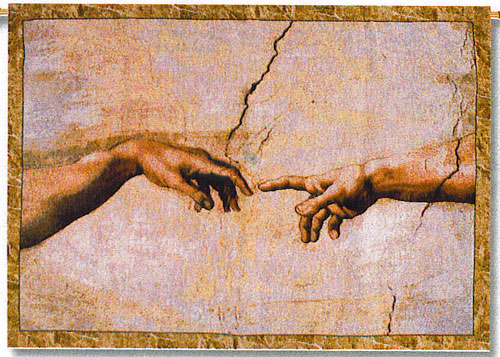
God created the heavens and the earth, and all life in six days, while He rested on the seventh day. Man is pictured as the crown of God’s creation. In order to maintain a chronological format, only a very general description of man’s creation is given in verses 26-31. Man is the last of God’s creatures. The whole account builds up to man’s creation. An important distinction is made here, man alone is created in the image of God. While there is considerable discussion as to what this means, several things are implied in the text itself. Man is created in the image and likeness of God in his sexuality.

And God created man in His own image, in the image of God He created him; male and female He created them (Genesis 1:27). This is not to say that God is male or female, but that God is both unity and diversity. Man and woman in marriage become one and yet they are distinct. Unity in diversity as reflected in man’s relationship with his wife reflects one facet of God’s person-hood.

Also, man somehow is like God in that which distinguished him from the animal world. Man, as distinct from animals, is made in the image and likeness of God. What distinguishes man from animal must therefore be a part of His reflection of God. Man’s ability to reason, to communicate, and to make moral decisions must be a part of this distinction.

Further, man reflects God in the fact that man rules over creation. God is the Sovereign Ruler of the universe. He has delegated a small portion of His authority to man in the rule of creation. In this sense, too, man reflects God.

Notice as well that it is man and woman who rule. Sorry guys, men don’t have exclusive rights in this area.

The word “them” in verse 27 refers to man and his wife, not just the males. While Adam has the function of headship (as evidenced by his priority in creation, in verses 36-38, Adam becomes the source of his wife,  and his naming of Eve. Eve’s task was to be a helper to her husband. In this sense both are to rule over God’s creation.

Items for Discussion

  • What is your definition of “GOOD?”
  • Should we fear Good and why or why not? Or another way to look at this: How would you feel if you gave a gift to someone you love and they didn’t care about it at all?
  • Where is it that people can “hear” the Good, God’s good?
  • How is it that we see Good, not just any good but God’s good?
  • If men and women are to reflect God, how is it that the “Mirror” comes to be?


1 Thessalonians 5:11-18
11 Therefore encourage one another and build each other up, just as in fact you are doing. 12 Now we ask you, brothers and sisters, to acknowledge those who work hard among you, who care for you in the Lord and who admonish you. 13 Hold them in the highest regard in love because of their work. Live in peace with each other. 14 And we urge you, brothers and sisters, warn those who are idle and disruptive, encourage the disheartened, help the weak, be patient with everyone. 15 Make sure that nobody pays back wrong for wrong, but always strive to do what is good for each other and for everyone else. 16 Rejoice always, 17 pray continually, 18 give thanks in all circumstances; for this is God’s will for you in Christ Jesus.

Background2https://www.easyenglish.bible/bible-commentary/1thess-lbw.htm

This letter is from Paul, Silas and Timothy. From these three, the apostle Paul was the main author. We do not know how much of the letter Silas and Timothy wrote, but all three of them were in agreement with what the letter contains.  This letter may be the earliest of the letters of Paul that we have. Paul and his friends wrote it between AD 50 and AD 53. That is about 20 years after Jesus’ death. Paul was on his second main journey in which he spread the good news about Jesus. He and his friends were in the city of Corinth when they wrote the letter. We can be sure about this, and about the date, from the letter and the book of the Acts.

Verse 11 begins with a promise: All who believe in Jesus will live with Him. Because of this, all can encourage each other as they speak about those things talked about in Scriptures. Believers can help those who have doubts and fears. They can help them by showing them that Jesus accepts them as they are. We are called to help each other to know God better and to love Him more.

The writers now ask the Christians at Thessalonica to know and to respect their leaders. This would be the proper attitude toward them, because they worked so hard for the church there. They should appreciate all that these workers do for the church. It was the leaders’ task to direct and to care for the church. When any of the members did what was wrong, the leaders would have to correct them. This can be hard to do. So, those who do it well deserve respect. When any members were in need, the leaders would try to help them. The leaders had to guide the church in the right way. They made sure that the teaching in the church was true to the word of God.

The Lord had called their leaders to this task and they served Him in it and they were working so hard for the good of the church. The Christians at Thessalonica should be grateful for them and for all that they do. Their leaders deserve all the support that they can give. They should love their leaders, as the leaders care for the church. One of the aims of the leaders’ work is to keep the members in unity with each other. Christians should always try to live in peace with each other.

There were some of the Christians in Thessalonica who would not work. It was not that they could not work. If that had been true, then it would be right for the church to support them. No, they were just lazy. The members of that church, not just the leaders, should tell them that they must work. They must warn them that it is not right to expect other Christians to provide for them.

Some people there were weak in some way. Weak people need strength and courage. They should not be afraid to tell other people that they are Christians. Christians must hold on to such people and help them to become stronger and more bold. Such people need to know that they are not alone.  In all their relations with these people, the Christians should be patient and kind. They should show respect to all people. And they should have patience with all people.

No matter how wrong the actions of a person are, we should not, in turn, do wrong things to them. It would be natural for us to want to do it. There was an old rule of ‘an eye for an eye and a tooth for a tooth’ (Exodus 21:24). This meant to do to the other person as he or she has done to you. But this is not how Christians should behave. They should forgive. And they should want to do good things to those who have done wrong to them.

Some people do not believe in  Jesus. For those people, joy depends on the good things that happen to them. But the writers are talking about a different kind of joy here. This joy does not depend on what happens. If it did, the Christians at Thessalonica would have little cause for joy. Real joy comes from knowing Jesus. The Holy Spirit gives joy to all who believe (1 Thessalonians 1:6). Christians should allow this joy to be in them and to affect the whole of their life. The new life that they have from God is full of joy. They know that God is with them. So, they can have joy although they are suffering.

We should pray to God often because they depend on him for all that they need in life and  because we love him as our father.

God works in all things for the good of those who love him (Romans 8:28). So, we should give thanks to God in every good or bad circumstance. He is in control and He allows both good and bad times to come to us. But in the end, the result is always to bless us. God wants us to be full of joy. He wants us to pray at all times and to give Him thanks. This is how those who are in Christ Jesus ought to live.

Items for Discussion

  • Paul seems to say pay attention to the good that others do – Why?
  • Paul gives a command to warn others who are idle (lazy and disruptive) – What do you think this means as far as you are concerned?
  • Almost in conflict with warning others is a command to live in love and peace – Is this a reasonable request? How can we accomplish it?
  • How do we encourage one another to work, get along and be peaceful?
  • What ways can we work to build each other up?
  • Are the commands Paul gives in 16-18 impossible commands? What do you think he meant?

Discussion Challenge

  • We are finally called to “BE” good. What is the role of the Christian Church in helping people seek this goal?

The Bread of Life

Psalm 132:13-151NIV New International Version Translations
13 For the Lord has chosen Zion,  he has desired it for his dwelling, saying, 14“This is my resting place for ever and ever; here I will sit enthroned, for I have desired it. 15 I will bless her with abundant provisions; her poor I will satisfy with food.

Background

Psalm 132 is a “Song of Ascents” meant to be sung as people are on their way to worship in the Temple in Jerusalem. They are ascending literally God’s holy hill. Zion is another name for Jerusalem. God has declared Zion God’s holy habitation. Not for the moment, but for all time.

It is one thing to expertise the presence of God in a particular place. It is quite another to go to a specific location with an assurance that one will meet God there. The uniqueness of the Temple is that  people who go there are promised they will meet God there.

God declares it is Gods resting place forever. So for all eternity, one can go there and be close to God.  God says he has desired it. We don’t often think about God desiring something. Apparently God desired Jerusalem as God’s dwelling place and resting place.

The whole concept of rest makes us think of the Sabbath Day -w hen we are to rest and keep it holy  unto the Lord. It may be a new thought to envision God at rest on that day, as well.  This does not mean that God is not at work. God says God will abundantly bless Jerusalem’s provisions.

There will be plenty and more for the people there. To underscore this, God promises to satisfy the poor with bread.  Bread is that staple that is expected to be p[art of any meal. Even so, sometimes it is hard for the poorest of the poor to find bread. Famously, when Queen Marie Antoinette was told that the poor had  no bread, she said “Let them eat cake.” It probably didn’t happen, but it is an example of the gap between the poor and the wealthy.

In Jerusalem, the poor will have their bread. God will see to it.

Items for Discussion

  • Where do you experience God most closely. Please describe.
  • Why do you think God chose a particular place to be close to God’s people?
  • Do you have a favorite kind of bread? Tell us about it.
  • What does the promise of bread for the poor tell you about God?
  • What will that bread do for them?

John 6:53:51
35 Then Jesus declared, “I am the bread of life. Whoever comes to me will never go hungry, and whoever believes in me will never be thirsty. 36 But as I told you, you have seen me and still you do not believe. 37 All those the Father gives me will come to me, and whoever comes to me I will never drive away. 38 For I have come down from heaven not to do my will but to do the will of him who sent me. 39 And this is the will of him who sent me, that I shall lose none of all those he has given me, but raise them up at the last day. 40 For my Father’s will is that everyone who looks to the Son and believes in him shall have eternal life, and I will raise them up at the last day.” 41 At this the Jews there began to grumble about him because he said, “I am the bread that came down from heaven.” 42 They said, “Is this not Jesus, the son of Joseph, whose  father and mother we know? How can he now say, ‘I came down from heaven’?” 43 “Stop grumbling among yourselves,” Jesus answered. 44 “No one can come to me unless the Father who sent me draws them, and I will raise them up at the last day. 45 It is written in the Prophets: ‘They will all be taught by God.’ Everyone who has heard the Father and learned from him comes to me. 46 No one has seen the Father except the one who is from God; only he has seen the Father. 47 Very truly I tell you, the one who believes has eternal life. 48 I am the bread of life. 49 Your ancestors ate the manna in the wilderness, yet they died. 50 But here is the bread that comes down from heaven, which anyone may eat and not die. 51 I am the living bread that came down from heaven. Whoever eats this bread will live forever. This bread is my flesh, which I will give for the life of the world.”

Background

Jesus is teaching about himself in this passage, and he makes one of his famous “I am” statements: I am  the Bread of Life. The whole point of this passage is that while earthly bread nourishes earthly life (all of  which will pass away), Jesus has been sent so that we might come / see / hear / learn / trust / eat the  bread from heaven / the true bread that gives eternal life.

What he is interested in, with every person and group he encounters in the Gospel of John, is initiating a dialogue that can lead to a faith that is the beginning of a relationship.” He is clearly identifying himself as the new creation. The new garden. The new tree. The new fruit. The new bread.

According to Bible scholar Raymond Brown, to take in someone’s ‘body and blood’ could, in Hebrew understanding, mean something as simple, and uncontroversial, as accepting the whole person.”  When we seek to follow in the footsteps of the faith that enabled Jesus to give up his life for the life of  the world, it frees us for a whole new way of living, one that is motivated by compassion and giving, by  mercy and caring, by faith and hope and love. We have to open ourselves to receive the gift.

It is as if Jesus is reminding us: “You are not the baker nor the distributor. You are just another hungry  pilgrim on the hillside or in the wilderness. God can present us with the bread of heaven, but God can’t  make us eat.”  The Bread from Heaven will give life to the world, astonishingly, by dying for it. This Bread of Life from
Heaven is no ‘free lunch;’ it will cost Jesus his life. Feeding on this bread will bring us as well to the cross.

Items for Discussion

  • When you think of fresh bread, especially home-made bread, what types of stories, memories does it bring forward?
  • The memories of a home or bakery and the smells of fresh bread, usually bring warm and pleasant memories. How might Jesus as “The Bread of Life” be analogous to your stories and memories?
  • How does the image of Jesus as the Bread of Life speak to you?
  • Have you ever pictured God resting? Why do you think God might want to rest?
  • How do we “feed on” the Bread of Life?

Discussion Challenge

  • How can a congregation bring forth the same pleasures for visitors as one might expect to find when they walk into their mother’s kitchen when she is baking something like bread?
  • 1
    NIV New International Version Translations

The Real Miracle

John 6:1-211NIV New International Version Translations
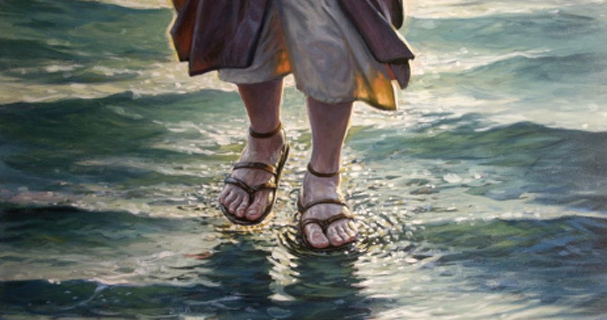
1 Some time after this, Jesus crossed to the far shore of the Sea of Galilee (that is, the Sea of Tiberias), 2 and a great crowd of people followed him because they saw the signs he had performed by healing the sick. 3 Then Jesus went up on a mountainside and sat down with his disciples. 4 The Jewish Passover Festival was near. 5 When Jesus looked up and saw a great crowd coming toward him, he said to Philip, “Where shall we buy bread for these people to eat?” 6 He asked this only to test him, for he already had in mind what he was going to do. 7 Philip answered him, “It would take more than half a year’s wages to buy enough bread for each one to have a bite!” 8 Another of his disciples, Andrew, Simon Peter’s brother, spoke up, 9 “Here is a boy with five small barley loaves and two small fish, but how far will they go among so many?” 10 Jesus said, “Have the people sit down.” There was plenty of grass in that place, and they sat down (about five thousand men were there). 11 Jesus then took the loaves, gave thanks, and distributed to those who were seated as much as they wanted. He did the same with the fish. 12 When they had all had enough to eat, he said to his disciples, “Gather the pieces that are left over. Let nothing be wasted.” 13 So they gathered them and filled twelve baskets with the pieces of the five barley loaves left over by those who had eaten. 14 After the people saw the sign Jesus performed, they began to say, “Surely this is the Prophet who is to come into the world.” 15 Jesus, knowing that they intended to come and make him king by force, withdrew again to a mountain by himself. 16 When evening came, his disciples went down to the lake, 17 where they got into a boat and set off across the lake for Capernaum. By now it was dark, and Jesus had not yet joined them. 18 A strong wind was blowing and the waters grew rough. 19 When they had rowed about three or four miles, they saw Jesus approaching the boat, walking on the water; and they were frightened. 20 But he said to them, “It is I; don’t be afraid.” 21 Then they were willing to take him into the boat, and immediately the boat reached the shore where they were heading.

Background2https://www.easyenglish.bible/bible-commentary/john-ma-lbw.htm

The Miracle of Feeding 5,000

Jesus often went away from the crowds to be alone. He needed time to pray to His  Father. Other times, He went away from the crowds with His disciples to teach them important things. On this occasion, it seemed that He wanted to get away from the Jewish leaders. They had accused Him and He had answered them  back strongly. However, this was not yet the time for Him to die.

Jesus and His disciples went back across Lake Galilee but the crowd saw where He was going and the people followed him on the land. The people went round the north shore of the lake to be at the site where Jesus and His disciples would come ashore.. It was nearly the Passover. Many Jews were travelling to Jerusalem and many of them had joined the crowd to follow Jesus. By the time they found Him on the mountain, the original crowd had increased in size. John recorded that there were 5,000 men there. The actual crowd was  probably much larger because John did not include the women and children in this count.

The crowd had been travelling for a long time, around the lake so Jesus knew that they were tired and hungry. It would take a miracle in order to feed so many people. Jesus already knew this but he wanted to see if Philip knew it also. So Jesus asked Phillip a question on purpose (verse 5). Philip had lived in Bethsaida, which was the nearest town and would know where to buy food.

Immediately, Philip tried to think of a practical solution to the problem. He estimated the cost. But he realized that the disciples did not have enough money to buy food for everyone! One silver coin was the amount that a workman could earn in a day. So 200 coins was about 8 month’s wages for one man. This was a lot of money. Jesus intended to make Philip’s faith stronger by having him think of a practical solution to an impossible problem.  Phillip, however, had not included God in his solution. Jesus’ disciples did not have the resources to feed so many people. But the lack of resources does not stop what God can do!

A young boy gave what he had: his own lunch. But Andrew, like Philip, still could not understand what was possible for God to do. Probably the disciples had money with them, to buy food as they traveled. But because their money was not enough, they did not even think to offer it. Yet, this boy had much less than they had. In fact, the boy was probably poor. Our clue: Only poor people cooked with barley, which was usually food for animals but still the boy offered what he had to Jesus. Jesus took it and a miracle happened. Jesus thanked God for the small gift and then  passed it to the crowd. Everyone there had enough to eat.

We  learn from this boy is that God can take our meager resources,  our time, our money and our possessions and our God-given skills  While we may not think that we have much to offer to God even the smallest offer (gift) when given from the heart, is better than nothing. God will take whatever we offer to him and do great things with it on behalf of His kingdom. After the meal, there was a lot of food that the people had left. We can learn from this, too. We can offer ourselves and our resources to God. and then God does much more than we can imagine.

The people used the term “Prophet” as a reference to the person about whom Moses prophesied (Deuteronomy 18:15). Moses had said that this person would be “a prophet like me (Moses). ” Moses was talking about the Messiah. Moses had led the Israelites out of a land where they were slaves. The Jews were not slaves at the time of Jesus. But they did not rule in their own land. The Romans ruled their land forcing the Jews to obey the laws of the Roman government. For the average Israelite, they wanted to be free from Roman rule and were looking for a leader who would defeat the Romans on their behalf.

Jesus had the power to do something that did not seem possible and the crowd saw this. Their reaction was to make Him their king. They wanted a political and military ruler who would lead them to fight against the Romans.  Unfortunately, the Jews had the wrong idea about what the Messiah was there to do. The Jewish nation did not want God’s plans,  they wanted to use Jesus for their purposes. So Jesus escaped from them and later, in the synagogue at Capernaum, he would try to explain more about who He was and why He had come to the earth (John 6:22-59).

The Miracle of Walking on Water

Jesus was escaping from the crowds and going up into the hills. We summarize that Jesus wanted to pray to His Father (God) but it was now night . The disciples decided to cross the lake without Him. It seems strange that they did not wait for him. But in Mark’s account of this incident, Jesus had sent them ahead of Him (Mark 6:45). Probably, they had arranged to meet him later.  The disciples got into a boat and started to cross the lake towards Capernaum. Many hills surround Lake Galilee.and it is deep. Sudden storms are common. Several of the disciples had fished on the lake for their work and were familiar with the weather on the lake. However, this storm even frightened them. (See also Matthew 8:23-27; Mark 4:35-41; Luke 8:22-25.)

When the disciples were about half of the way across, they saw Jesus. The most direct route to Capernaum is about 6 miles. Jesus was walking on the water towards them.  Immediately this brought fear as they thought Jesus was a spirit. (See Matthew 14:26; Mark 6:49.) While the disciples had seen Jesus do miracles, they did not expect Him to walk on the water. However, as soon as Jesus spoke, the fear left them. They wanted him to get in the boat and another wonderful thing had happened. Suddenly, they had reached the place where they were heading. Their struggle was over. They were safe and Jesus was with them.

This story shows us how Jesus helps us, too. Bad things can happen to us suddenly, like the storm on the lake. We may feel that we have no control over our situation. We may think that we are struggling alone with our problems. But sometimes Jesus comes to us when we do not expect him. He may surprise us by the way that he comes to us. But Jesus can do anything! He protects us from bad things. We know that we are safe with him and just as suddenly, we are on a calm shore.

Items For Discussion

  • Why do crowds follow people today?
  • What do you define as a miracle?
  • The people were following Jesus because they wanted something – How is that still prevalent in our society today?
  • When you think about an unexplained events such as the feeding of the 5,000 or walking on water, how many different miracles do you see?
  • Which do you think is the greatest miracle and why?
  • What do these two stories teach us first, about our GOD? and second, about JESUS?
  • In spite of being witness to these two stories, the disciples still struggled with their faith – What human traits, weaknesses, or attributes make us vulnerable to this struggle?
  • If we wanted to take away three learnings from these stories, how would you explain the following:
    • We cannot be saved by our own efforts
    • God’s saving grace is given in an instant
    • There are always lessons along with the saving

Discussion Challenge

  • What is the REAL MIRACLE?

Led By The Spirit

John 14:1-17; 25-261NIV New International Version Translations
1 “Do not let your hearts be troubled. You believe in God; believe also in me. 2 My Father’s house has many rooms; if that were not so, would I have told you that I am going there to prepare a place for you? 3 And if I go and prepare a place for you, I will come back and take you to be with me that you also may be where I am. 4 You know the way to the place where I am going.” 5 Thomas said to him, “Lord, we don’t know where you are going, so how can we know the way?” 6 Jesus answered, “I am the way and the truth and the life. No one comes to the Father except through me. 7 If you really know me, you will know my Father as well. From now on, you do know him and have seen him.” 8 Philip said, “Lord, show us the Father and that will be enough for us.” 9 Jesus answered: “Don’t you know me, Philip, even after I have been among you such a long time? Anyone who has seen me has seen the Father. How can you say, ‘Show us the Father’? 10 Don’t you believe that I am in the Father, and that the Father is in me? The words I say to you I do not speak on my own authority. Rather, it is the Father, living in me, who is doing his work. 11 Believe me when I say that I am in the Father and the Father is in me; or at least believe on the evidence of the works themselves. 12 Very truly I tell you, whoever believes in me will do the works I have been doing, and they will do even greater things than these, because I am going to the Father. 13 And I will do whatever you ask in my name, so that the Father may be glorified in the Son. 14 You may ask me for anything in my name, and I will do it.15 “If you love me, keep my commands. 16 And I will ask the Father, and he will give you another advocate to help you and be with you forever— 17 the Spirit of truth. The world cannot accept him, because it neither sees him nor knows him. But you know him, for he lives with you and will be in you.

25 “All this I have spoken while still with you. 26 But the Advocate, the Holy Spirit, whom the Father will send in my name, will teach you all things and will remind you of everything I have said to you.

Background2https://www.christianity.com/bible/commentary.php?com=mhc&b=43&c=14

We are too often overwhelmed with the sorrows of our present time,  but Christ calls to us and says do not be so. The calling to a Christian life requires  full trust in God. Christ’s disciples, more than others, needed to keep their minds quiet, when everything else around them was loud and noisy. The remedy was simply, “Believe.” By believing in Christ as the Mediator between God and man, we find our comfort.  These verses speak to the happiness of heaven as in a father’s house. There are many mansions, for there are many sons to be brought to  eternal glory.

Mansions are lasting dwellings. Christ will be the Finisher (Omega) of that of which He is the Author or Beginner (Alpha).  If He prepared the place for us, He will also prepare us for the place. Christ is the sinner’s Way to the Father and to heaven. We must always remember (never forget!) that Christ in his person as God manifest in the flesh, in His atoning sacrifice, and  He operates as our Advocate before God.  Christ is the Truth, as fulfilling all the prophecies of a Savior, simply meaning that believing  in Him as sinners, He is our Way, our Gate. Christ is the Life, by whose life-giving Spirit the dead to sin are brought to life. No man can come to God , their Father, who is not led by Christ who is the Life. How does that work? We are  led by Him as the Truth, to come by Him as the Way. By Christ, as the Way, our prayers go to God, and His blessings come to us. It is the best Internet connection in the Universe.

Christ shows us the Resurrection and the eternal Life that lies ahead. All that see Christ by faith, see the Father(God) in Christ. In the light of Christ’s doctrine, we see God as the Father of all light; and through Christ’s miracles, we see God as the God of all power. It is when the holiness of God shines a light on the spotless purity of Christ’s life, we can believe the revelation of God and man in Christ together.

Whatever we ask in Christ’s name, will always be for our own good,  suitable, adequate and sufficient for our needs.  To ask in Christ’s name, is to plead His merit and intercession, and to depend fully upon that plea. The gift of the Spirit is a fruit of Christ’s mediation, bought by His merit, and received by His intercession. The word used here, signifies an advocate, counselor, monitor, and comforter. Christ would abide with the disciples to the end of time; His gifts and graces would encourage their hearts. The expressions used in these verses and elsewhere, plainly denote a person, and the office itself includes all the Divine perfection due Him. The gift of the Holy Spirit is bestowed upon the disciples of Christ, and not on the world. This is the favor God bears to His chosen. As the source of holiness and happiness, the Holy Spirit will abide with every believer forever.

While we know these things are all for our good, we must also pray for, and depend on the teaching of the Holy Spirit. This is the way Christ’s own words can serve our memory as we struggle with the problems of life itself.  To all Christians, the Spirit of grace is given to remember Christ, to keep faith in Christ and to always pray to Christ. Peace of mind from our forgiveness before God is our source hope.

Items for Discussion

  • How would you describe the Holy Spirit to someone?
  • What is the caveat you see in verse 26?
  • How would you summarize the teachings of Jesus? Are they complex? Is there a lot to remember? What are the most important teachings?
  • If you had to compare worldly teachings with those from the Holy Spirit, what should be the things you can do to help the Spirit along?
  • Keeping the faith, not worrying is much easier said than done. How does one practice this?

Discussion Challenge

  • This is the Holy Spirit – Are you comfortable with these concepts?
    • The Holy Spirit is part of the Trinity
    • The Holy Spirit inspired Scripture
    • The Holy Spirit convicts of sin, righteousness, and judgment
    • Holy Spirit leads us into all truth
    • The Holy Spirit gives revelations

That’s Dancing

2 Samuel 6:1-191NIV New International Version Translations
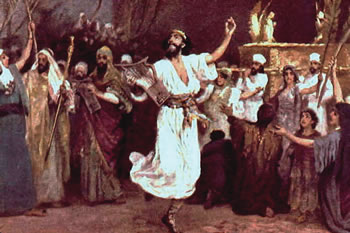
1 David again brought together all the able young men of Israel—thirty thousand. 2 He and all his men went to Baalah in Judah to bring up from there the ark of God, which is called by the Name, the name of the Lord Almighty, who is enthroned between the cherubim on the ark. 3 They set the ark of God on a new cart and brought it from the house of Abinadab, which was on the hill. Uzzah and Ahio, sons of Abinadab, were guiding the new cart 4 with the ark of God on it, and Ahio was walking in front of it. 5 David and all Israel were celebrating with all their might before the Lord, with castanets, harps, lyres, timbrels, sistrums and cymbals.6 When they came to the threshing floor of Nakon, Uzzah reached out and took hold of the ark of God, because the oxen stumbled. 7 The Lord’s anger burned against Uzzah because of his irreverent act; therefore God struck him down, and he died there beside the ark of God. 8 Then David was angry because the Lord’s wrath had broken out against Uzzah, and to this day that place is called Perez Uzzah. 9 David was afraid of the Lord that day and said, “How can the ark of the Lord ever come to me?” 10 He was not willing to take the ark of the Lord to be with him in the City of David. Instead, he took it to the house of Obed-Edom the Gittite. 11 The ark of the Lord remained in the house of Obed-Edom the Gittite for three months, and the Lord blessed him and his entire household. 12 Now King David was told, “The Lord has blessed the household of Obed-Edom and everything he has, because of the ark of God.” So David went to bring up the ark of God from the house of Obed-Edom to the City of David with rejoicing. 13 When those who were carrying the ark of the Lord had taken six steps, he sacrificed a bull and a fattened calf. 14 Wearing a linen ephod2https://en.wikipedia.org/wiki/Ephod, David was dancing before the Lord with all his might, 15 while he and all Israel were bringing up the ark of the Lord with shouts and the sound of trumpets. 16 As the ark of the Lord was entering the City of David, Michal daughter of Saul watched from a window. And when she saw King David leaping and dancing before the Lord, she despised him in her heart. 17 They brought the ark of the Lord and set it in its place inside the tent that David had pitched for it, and David sacrificed burnt offerings and fellowship offerings before the Lord. 18 After he had finished sacrificing the burnt offerings and fellowship offerings, he blessed the people in the name of the Lord Almighty. 19 Then he gave a loaf of bread, a cake of dates and a cake of raisins to each person in the whole crowd of Israelites, both men and women. And all the people went to their homes.

Background

David moves the neglected ark to his new capital in order to place God back into the center of Israel, thus consolidating his political power. David has conquered a city that was not part of any tribe; Jerusalem can literally be termed the “city of David.”

The ark had struck terror among the Philistines after they captured it from Israel (1 Samuel 5-6). Later some in the vicinity of Bethshemesh found it equally lethal (1 Samuel 6:19-21). It eventually was housed in Kiriath-Jearim for at least twenty years under the care of Eleazar, son of Abinadab (1 Samuel 7:1). When David begins to move it, the sons of Abinadab, Uzzah and Ahio, guide the ox-drawn cart.

As 2 Samuel describes the event, David started out with no acknowledgement of the fear-filled history of the ark. Why does he want to move it? His initial motive is not given, but one can wonder whether David is just adding to the luster of his new city. After all, David changed the name of the Jebusite city to the “city of David” (5:9). He adds wives and concubines and fathered eleven more sons (5:13-16). A foreign king acknowledges him (5:11), and David once again defeats the Philistines, this time rather soundly (5:1-25). David becomes “greater and greater.”

Theologians have long sought to rationalize the death of Uzzah with speculation about what he did wrong. Yes, the ark was sacred and not to be treated with indifference or handled improperly. But did Uzzah’s individual carelessness reach the same level of Ananias and Sapphira (cf. Acts 5:1-11)?3https://www.biblegateway.com/passage/?search=Acts+5%3A1-11&version=NIV Or is David somehow at fault too?  The failures of leaders  often impact those with less power.  David learns that as the Lord can burst out against the Philistines (5:20)  as well as burst out within Israel (6:8). In the short term, Uzzah pays most for the lesson. In other words, David’s motives  may not pure and yet God is involved.

David thought that he was doing the right thing, giving honor to the Lord. He wanted all the Israelites to worship the Lord again. But the Lord had stopped the  procession. David became angry. Then David realized how holy God really was and became afraid of the Lord. He did not want the Lord to punish any more people. David did not know whether the ark would ever go to Jerusalem.  David would not have given the ark to an ordinary Israelite. The Levites knew how to look after the ark in the proper way so the ark ended up in the care of Obed-Edom .

For three months the Lord blessed everything that Obed-Edom had. David realized that the ark itself was not the problem. The Lord had only been angry because Uzzah had done something wrong. He had touched the ark. But then, the Lord blessed everyone who gave Him honor. The problem was that David’s men had carried the ark in the wrong way. They had not obeyed the Lord. This time they carried it as the Lord had said. And they sacrificed to the Lord. David wore a linen ephod to show humility.

Items for Discussion

  • In what ways do you think God still renders His judgement in our world? – How can we tell it is God, and not just an act of coincidence?
  • How does the world learn the proper ways to behave before their God?
  • What is the evidence of proper behavior?
  • David was sinful before God – David was righteous and faithful before God: how to you reconcile God’s love of David and God’s blessings on Israel?
  • The people of Israel danced two different times, the first time was not pleasing to God. What was the difference the second time?


Mark 6:14-29
14 King Herod heard about this, for Jesus’ name had become well known. Some were saying, “John the Baptist has been raised from the dead, and that is why miraculous powers are at work in him.” 15 Others said, “He is Elijah.” And still others claimed, “He is a prophet, like one of the prophets of long ago.” 16 But when Herod heard this, he said, “John, whom I beheaded, has been raised from the dead!” 17 For Herod himself had given orders to have John arrested, and he had him bound and put in prison. He did this because of Herodias, his brother Philip’s wife, whom he had married. 18 For John had been saying to Herod, “It is not lawful for you to have your brother’s wife.” 19 So Herodias nursed a grudge against John and wanted to kill him. But she was not able to, 20 because Herod feared John and protected him, knowing him to be a righteous and holy man. When Herod heard John, he was greatly puzzled; yet he liked to listen to him. 21 Finally the opportune time came. On his birthday Herod gave a banquet for his high officials and military commanders and the leading men of Galilee. 22 When the daughter of Herodias came in and danced, she pleased Herod and his dinner guests. The king said to the girl, “Ask me for anything you want, and I’ll give it to you.” 23 And he promised her with an oath, “Whatever you ask I will give you, up to half my kingdom.” 24 She went out and said to her mother, “What shall I ask for?” “The head of John the Baptist,” she answered. 25 At once the girl hurried in to the king with the request: “I want you to give me right now the head of John the Baptist on a platter.” 26 The king was greatly distressed, but because of his oaths and his dinner guests, he did not want to refuse her. 27 So he immediately sent an executioner with orders to bring John’s head. The man went, beheaded John in the prison, 28 and brought back his head on a platter. He presented it to the girl, and she gave it to her mother. 29 On hearing of this, John’s disciples came and took his body and laid it in a tomb.

Background

Herod was Herod Antipas, a son of Herod the Great. He ruled Galilee and Perea. Although Mark calls him ‘king’, the Romans would not let Herod use that word about himself. People believed that Elijah would come to announce the arrival of the Messiah (Malachi 4:5). Some people believed that John was a prophet because he spoke with authority. Herod had first married the daughter of king Aretas, who ruled a country in Arabia (2 Corinthians 11:32). But he left her and he married Herodias. She was the wife of his half brother Philip. They were both sons of Herod the Great but they had different mothers. Salome was the daughter of Herodias. John had said that Herod was wrong to marry Herodias. She could not forgive John for that. She wanted Herod to kill John. She persuaded Herod to put John in prison at the castle of Machaerus near the Dead Sea.

Herod was afraid of John, but he respected him. He recognized that John was a good man. He hated John’s message, but he could not stop listening to John. He tried to protect him from the anger of Herodias. Herodias encouraged Salome to dance alone in front of Herod and his guests. It is possible that Harod had drunk too much wine. He promised Salome anything that she asked for without thinking about what she might ask. He could not give Salome ‘half his kingdom’, because he only ruled with the authority of the Romans. But he made his promise sound very serious.

Herodias now had her opportunity to murder John. The girl asked for John’s head ‘immediately’. She wanted it at once. She did not want Herod to have time to change his mind. Usually it is right to keep a promise. But Herod’s promise had been a foolish one.  He was afraid that his guests would laugh at him so he was too proud to refuse. And so he made his soldiers kill John the Baptist

Items for Discussion

  • We have two stories about dances, one blessed by God and two probably not – What are all of the differences that you see between them?
  • In both our stories, old and new testaments, God sees the “Truth of the Heart.” If this is the nature and power of our God, why do people, even Christians, try to deceive?
  • How do you think God would like to see Joyful Dancing used to celebrate His love for us and character?
  • In what way does pride destroy a person’s character? Use both Harod and David as examples.

Discussion Challenge

  • In what way should the Christian Church celebrate joyfully?  What is appropriate and what is not?

Peace Be Still

1 Samuel 17:4-111NIV New International Version Translations
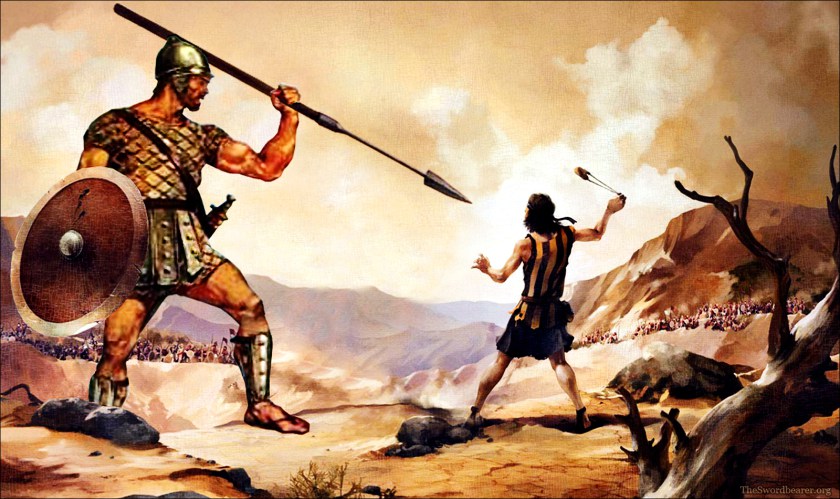
4 A champion named Goliath, who was from Gath, came out of the Philistine camp. His height was six cubits and a span. 5 He had a bronze helmet on his head and wore a coat of scale armor of bronze weighing five thousand shekels; 6 on his legs he wore bronze greaves2a piece of armor used to protect the shin, and a bronze javelin was slung on his back. 7 His spear shaft was like a weaver’s rod, and its iron point weighed six hundred shekels. His shield bearer went ahead of him. 8 Goliath stood and shouted to the ranks of Israel, “Why do you come out and line up for battle? Am I not a Philistine, and are you not the servants of Saul? Choose a man and have him come down to me. 9 If he is able to fight and kill me, we will become your subjects; but if I overcome him and kill him, you will become our subjects and serve us.” 10 Then the Philistine said, “This day I defy the armies of Israel! Give me a man and let us fight each other.” 11 On hearing the Philistine’s words, Saul and all the Israelites were dismayed and terrified.

Background

This is the most notable story about David and Goliath. This event took place in Sucoh, about 17 miles south west of Jerusalem. The land belonged to the Israelites but the Philistines were attacking it. This time the Philistines did not fight with all of their army or want the Israelites to kill any of their soldiers. Instead, Philistines came up with a creative plan. They wanted an Israelite soldier who was a champion to fight against Goliath, the Philistine champion. The Philistines were certain that they would win. Goliath was a very tall and strong man. He had armor to protect him. Goliath’s spear had an iron point, stronger that the typical Israelite point made of bronze. What the Philistines did not count on is when Goliath opposed the army of Israel, he also opposed the God of Israel.

Saul was a tall man (9:2). He was a strong soldier. In chapter 11, the Holy Spirit had made Saul strong to fight the Ammonites. But Saul did not trust God now and he was afraid of Goliath. As we know the story from our Scriptures, David a simple shepherd, would use his slingshot and kill Goliath.  There are two very good reasons for this victory.  First, David’s life as a shepherd was filled with danger, training him to know how to defend himself and his flock with a slingshot. David was an expert with a slingshot.  Second, David was God’s choice to lead the Israelites.   With God on David’s side, he could not lose.

Items for Discussion

  • How would you define bravery?
  • Why were both men, David and Goliath, confident?
  • Can you think of any modern day examples of the “David and Goliath” battles that have gone on?
  • In your examples, how and where was God?
  • David’s life experiences conditioned him to be brave and skilled. How does that happen in today’s society? (developing bravery and survival skills)


Mark 4:35-41
35 That day when evening came, he said to his disciples, “Let us go over to the other side.” 36 Leaving the crowd behind, they took him along, just as he was, in the boat. There were also other boats with him. 37 A furious squall came up, and the waves broke over the boat, so that it was nearly swamped. 38 Jesus was in the stern, sleeping on a cushion. The disciples woke him and said to him, “Teacher, don’t you care if we drown?” 39 He got up, rebuked the wind and said to the waves, “Quiet! Be still!” Then the wind died down and it was completely calm. 40 He said to his disciples, “Why are you so afraid? Do you still have no faith?” 41 They were terrified and asked each other, “Who is this? Even the wind and the waves obey him!”

Background

Why was Jesus asleep during what must have been a bad storm? Matthew Henry, theologian, tell us it was to test the faith of his disciples, and to get them to pray. Their faith appeared weak, and their prayers strong. Our hearts, sinful as they are, are like the troubled sea which never rests, when our passions are burning because of no control over life, this story tells us be silent. When chaos is around us and fear is within us, Jesus says, “Peace, be still,” there is a great calm at once. So why are we so fearful?

There are good causes to be fearful but this story says that no fear should be so great as to overcome your faith in Jesus Christ.  Jesus cares about us and cares that  we should not be paralyzed by fear. Remember, Jesus came to save us, imperfect as we are! Faith and fear take their turns while we are in this world. The challenge is not to ever let fear overcome us or else  we can lose sight of our own faithfulness.

Items for Discussion

  • How was Jesus like David?
  • Since the disciples were fisherman, what can you conclude about the severity of the storm?
  • Why are the disciples still “terrified” even after Jesus calms the storm?
  • How are bravery and faith linked together?
  • How does one keep fear from overcoming faithfulness?
  • Jesus shows us that faithfulness needs practice – How is this done in our world today?

Discussion Challenge

  • How can a Christian become an ambassador for the “Peace of Christ?”
  • 1
    NIV New International Version Translations
  • 2
    a piece of armor used to protect the shin

Why Did It Happen?

Proverbs 22:71NIV New International Version Translations
The rich rules over the poor, And the borrower becomes the lender’s slave.

Proverbs 13:22
A good man leaves an inheritance to his children’s children, And the wealth of the sinner is stored up for the righteous.

Background

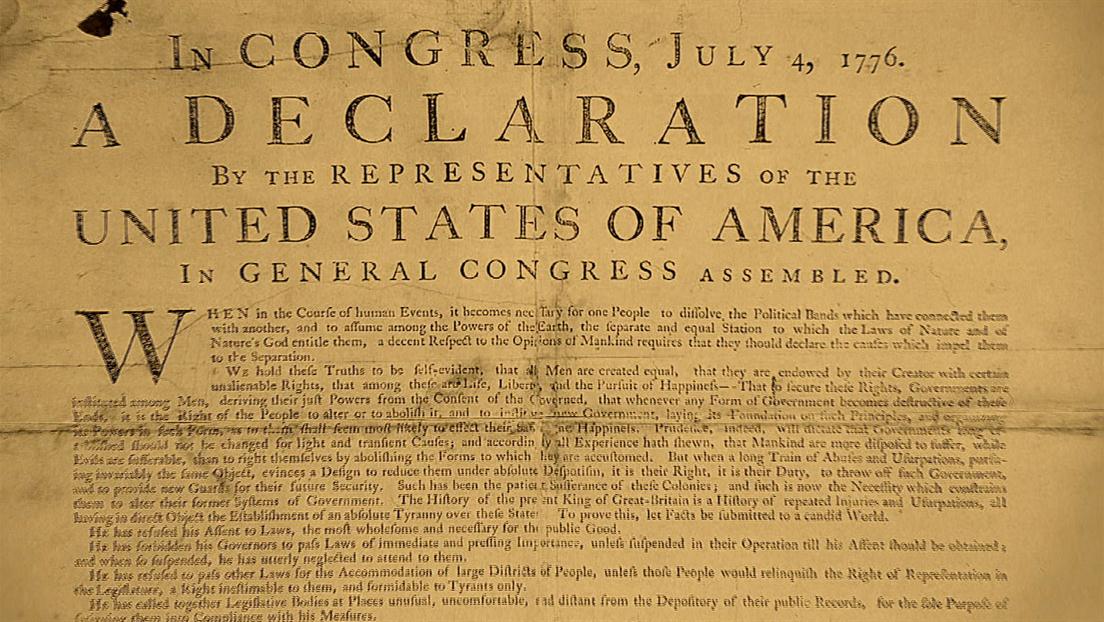
It is quite unusual for proverbs to make it into the mainstream selection process for congregational messages.  This specific Snapshot is created to support a celebration. The message preached here is for a US Holiday, the 4th of July. In 2018, the United States will be 242 years old.  It is our country’s birthday.  As with all births, there is a “birth certificate.” For America, it is “The Unanimous Declaration of the Thirteen United States of American.” Proverbs were chosen because it comes from Solomon, not only the wealthiest man who ever lived but as Scripture tells us, the wisest.  Just one quick look at the world today and it is easy to see, we could all use some wisdom.

To the Jewish nation, wisdom was meant to reveal the will of God (the Law) and to observe the order which God placed into the universe. Evidence, visible evidence of God’s power and love. To understand a proverb, we must first understand that these are not commands from God. Proverbs are “wisdom” from God, directed to us through Solomon.

King Solomon ruled the nation of Israel for 40 years. He brought peace and wealth to the nation. Solomon’s workmen built palaces, and the great temple. The people of Israel learned arts, sciences and music. When he was young, Solomon obeyed God. He asked God for wisdom, and God gave it to him (1 Kings 3:9, 12). Other rulers, including the queen of Sheba, visited Solomon (1 Kings 10:1-13). She asked him many questions. His answers showed great knowledge of many subjects. He taught about plants, animals and fish. Solomon wrote and collected 3000 proverbs (1 Kings 4:29-34). The Book of Proverbs contains many of these proverbs. Solomon also wrote Ecclesiastes and the Song of Solomon in the Bible.

Proverbs:

  • Enable us to learn and apply the fear of the Lord to our lives
  • Provide skill for successful living
  • Grant us wisdom and instruction
  • Provide us teaching in wise dealing, righteousness, justice and fairness
  • and warn us to be cautious and, for our youth, an opportunity to gain knowledge and discernment

For Proverbs 22, if there was a nice short title, it might be “The Cure for Humanities Aliments Comes Through Discipline” and for Proverbs 13 it might be “To Walk With The Wise.”

Proverbs 22:7 means the following2https://www.easyenglish.bible/bible-commentary/proverbs-lbw.htm:

Solomon collected 3000 wise lessons and the section of Proverbs 10-22 contains over 400 proverbs. Here, Solomon is almost at the end of his list. As he finishes his work, he repeats the main principles.

  • Wealthy people are powerful, because of their money. They should use their power wisely. They should be generous. They should not cause poor people to suffer. A wealthy man should care about his servants.
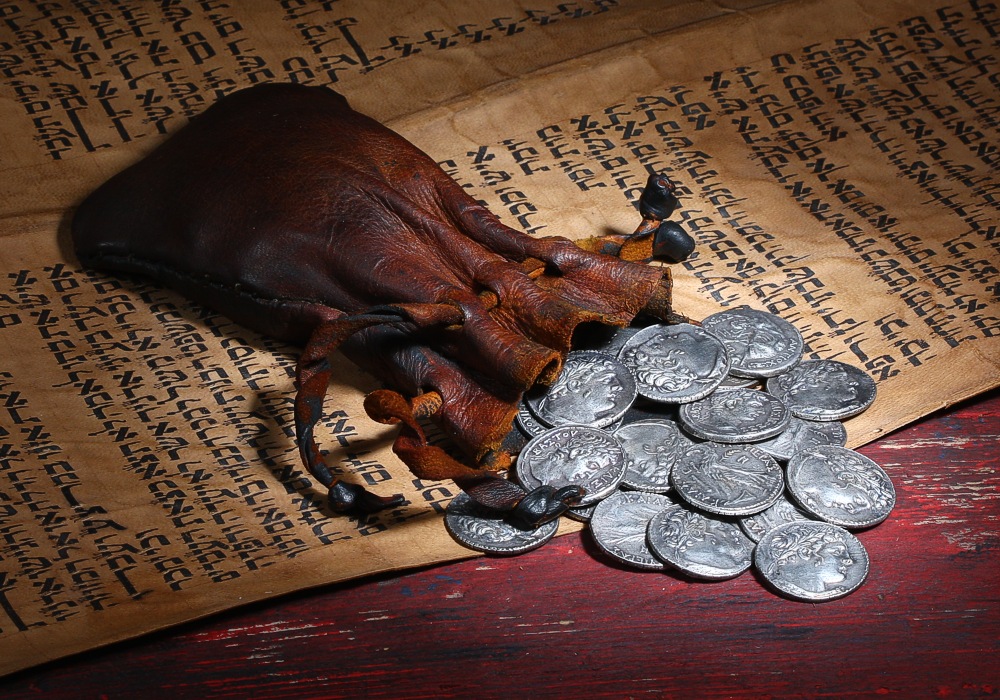
  • It is not good to owe a debt (Proverbs 6:1). We should work hard and save money. We should spend our money wisely. We should not waste it on luxuries. Then we may perhaps avoid the need for a loan.

Proverbs 13:22 means the following3https://www.easyenglish.bible/bible-commentary/proverbs-lbw.htm:

  • A good man’s success helps other people. He will be able to help his children. He will even be able to help his grandchildren.
  • An evil man tries to copy this. He stores his money. He thinks that he is very wealthy. But he cannot benefit from his great wealth. When he dies, he will lose it all. In the end, everything belongs to God.

History shows us that the principle cause of the American Revolution was the burden of debt placed upon the colonies due to the French and Indian War. For Britain, this debt was 140 million Pounds Sterling, or about 6 billion U.S. dollars today4https://www.officialdata.org/. From the end of the French and Indian War in 1764 to the signing of the Declaration on July 4, 1776, many taxes were levied by King George III along with punitive rules and regulations. The colonies became enslaved to this debt. While the sermon will visit much historical detail, this study reviews issues concerning the borrowing and repayment of funds. A study of the American Revolution will always point to an important word, “unanimous.” It was the unity of our thirteen colonies that made the difference.

Items for Discussion

  • What are your valid reasons for borrowing money personally?
  • The Bible does not prohibit debt but warns against debt – what is the difference?
  • How does debt “enslave” someone?
  • Is there ever any moral rational that would overshadow the obligations of a debt?
  • Can you explain the obligations of a borrower and a lender and how they are different?

Discussion Challenge

  • In society today, how does the Christian Church help a society in debt?


A Good Judge of Character

1 Samuel 8:4-151NIV New International Version Translations
4 So all the elders of Israel gathered together and came to Samuel at Ramah. 5 They said to him, “You are old, and your sons do not follow your ways; now appoint a king to lead us, such as all the other nations have.” 6 But when they said, “Give us a king to lead us,” this displeased Samuel; so he prayed to the Lord. 7 And the Lord told him: “Listen to all that the people are saying to you; it is not you they have rejected, but they have rejected me as their king. 8 As they have done from the day I brought them up out of Egypt until this day, forsaking me and serving other gods, so they are doing to you. 9 Now listen to them; but warn them solemnly and let them know what the king who will reign over them will claim as his rights.” 10 Samuel told all the words of the Lord to the people who were asking him for a king. 11 He said, “This is what the king who will reign over you will claim as his rights: He will take your sons and make them serve with his chariots and horses, and they will run in front of his chariots. 12 Some he will assign to be commanders of thousands and commanders of fifties, and others to plow his ground and reap his harvest, and still others to make weapons of war and equipment for his chariots. 13 He will take your daughters to be perfumers and cooks and bakers. 14 He will take the best of your fields and vineyards and olive groves and give them to his attendants. 15 He will take a tenth of your grain and of your vintage and give it to his officials and attendants.

Background

The book of 1 Samuel records a major change from the time of the judges to Israel’s first king. The judges had led the Israelites for about 350 years after the death of Joshua. During this time the Israelites called their leaders ‘judges’. Samuel was the last of the judges. He was also a prophet and a priest. Samuel anointed Saul, the first king of Israel. But Saul did not obey God. So, God chose another king, David, who would obey him. 1 Samuel ends with the death of Saul. The book of 2 Samuel records the life of David as king.

Verse 20 tells us the real reason why the Israelites wanted a king. They wanted a king to fight against their enemies. They wanted a king to lead them to war. But God led them when they went to war. They always won their battles when they trusted God. A human king can not promise that he will always win wars. But the Israelites often forgot God because they could not see him.

Samuel warned them what a human king would do to them. He saw what the kings of other nations did.  Many times Samuel said ‘he will take’ and ‘he will make’. A king would take a lot for himself and his friends and servants. He would take all the best things. He would take people and animals. He would take crops and land. The people would have pay taxes to him. This would be hard for them. Sometimes they could only grow enough food to feed themselves. The people of Israel already had to give a tenth part of their animals and crops to the priests (Deuteronomy 14:22-29).

Samuel knew that the king would demand all these things and this would make them unhappy. Samuel warned them of the disadvantages. But the people could only think of the advantages. They would not change their decision even though it was not the best for them.  God gave them what they asked for. However, in the future, God would not help them when they complained. They would get what they deserved. In verse 22, the Lord said to Samuel ‘You must give them a king’. This does not mean that Samuel chose the king. God chose the king. Then the people went home to wait for their king.

Items for Discussion

  • How are these verses a perfect description for the old saying, “Be careful for what you ask?”
  • What is the difference between a judge and a king?
  • What did God tell Samuel?
  • What are examples in today’s society, when we want something or someone in spite of what our God might have in mind?
  • How important is the character of a king to a nation?


Mark 3:20-29
20 Then Jesus entered a house, and again a crowd gathered, so that he and his disciples were not even able to eat. 21 When his family heard about this, they went to take charge of him, for they said, “He is out of his mind.” 22 And the teachers of the law who came down from Jerusalem said, “He is possessed by Beelzebul! By the prince of demons he is driving out demons.” 23 So Jesus called them over to him and began to speak to them in parables: “How can Satan drive out Satan? 24 If a kingdom is divided against itself, that kingdom cannot stand. 25 If a house is divided against itself, that house cannot stand. 26 And if Satan opposes himself and is divided, he cannot stand; his end has come. 27 In fact, no one can enter a strong man’s house without first tying him up. Then he can plunder the strong man’s house. 28 Truly I tell you, people can be forgiven all their sins and every slander they utter, 29 but whoever blasphemes against the Holy Spirit will never be forgiven; they are guilty of an eternal sin.”

Background

In these verses we find a house divided. Jesus’s family sees His actions  as abnormal and attempts to stop Him. Jesus simply asserts that he is doing God’s work, and to suggest otherwise is blasphemy against the Holy Spirit. More astonishingly, Jesus refers to this form of blasphemy as an unforgivable sin. But this raises an interesting question. As there is no apparent reference to blasphemy against the Holy Spirit in the Old Testament, what is it? A simple answer is that to blaspheme against the Spirit is to undermine the work of God in the context of the economy of salvation.

Jesus insinuates that the commission He has given to the Apostles is relatively important. If we read the commissioning in the Synoptic gospels we see that the work of the apostles is to preach, to heal and to cast our demons. These are apostolic works ordained and willed by God. These actions and miracles point to the Kingdom of Heaven, and they bear testimony to the authority that Jesus has. For the scribes to insinuate that Jesus might be doing the devil’s work is a blasphemy of the highest order. It suggests that Jesus is not of God, and that these mighty works of God are fraudulent.

We should take care not to interpret the blasphemy against the Holy Spirit too lightly. We should never testify against the will of God, or disparage or deny the  works of God.

Items for Discussion

  • How would you describe the unforgivable sin that Jesus talks about here in Mark?
  • How might a family become a divided house such as Jesus had?
  • Jesus responds to false accusations of insanity and being of satan – How did he handle His response?
  • Jesus redefines the criteria for who constitutes His true family – To what?
  • What are the ways people undermine the work of God?

Discussion Challenge

  • How can the local church underpin the work of God and demonstrate its character as “of God?”


  • 1
    NIV New International Version Translations

Talk of the Towns

Isaiah 6:1-81NIV New International Version Translation
1 In the year that King Uzziah died, I saw the Lord, high and exalted, seated on a throne; and the train of his robe filled the temple. 2 Above him were seraphim, each with six wings: With two wings they covered their faces, with two they covered their feet, and with two they were flying. 3 And they were calling to one another: “Holy, holy, holy is the Lord Almighty; the whole earth is full of his glory.” 4 At the sound of their voices the doorposts and thresholds shook and the temple was filled with smoke. 5 “Woe to me!” I cried. “I am ruined! For I am a man of unclean lips, and I live among a people of unclean lips, and my eyes have seen the King, the Lord Almighty.” 6 Then one of the seraphim flew to me with a live coal in his hand, which he had taken with tongs from the altar. 7 With it he touched my mouth and said, “See, this has touched your lips; your guilt is taken away and your sin atoned for.” 8 Then I heard the voice of the Lord saying, “Whom shall I send? And who will go for us?” And I said, “Here am I. Send me!”

Background2https://www.christianity.com/bible/commentary.php?com=mhc&b=23&c=6

In this figurative vision, the temple is thrown open to public view, even to the most holy place. Isaiah, standing outside the temple, sees God seated on the mercy-seat, raised over the ark of the covenant, between the cherubim and seraphim, and the Divine glory filled the whole temple. This vision is further explained, in John 12:41, that Isaiah now saw Christ’s glory, and spoke of Him, which is our full proof that Christ is God. In Christ Jesus, God is seated on a throne of grace; and through Him the way into the holiest is laid open to us.

We see God’s temple, His church on earth, filled with His glory. His train, the skirts of his robes, filled the temple, the whole world, for it is all God’s temple. And yet God dwells in every penitent heart. We see the blessed attendants by whom Government government is served. Above the throne stood the holy angels, called seraphim, which means “burners;” they burn in love to God, and zeal for his glory against sin. The seraphim showing their faces veiled, declares that they are ready to yield obedience to all God’s commands, though they do not understand the secret reasons of God’s counsels, government, or promises. All vainglory, ambition, ignorance, and pride, would be done away by one view of Christ in His glory. This vision of God overwhelmed Isaiah with a sense of his own sinfulness.  We have no hope if there is not a Mediator between us and the Holy God. A glimpse of heavenly glory is enough to convince us that all our righteousnesses is nothing more than filthy rags.  There is no man that would dare to speak to God after seeing the justice, holiness, and majesty of God, without understanding God’s glorious mercy and grace in Jesus Christ.

The live coal is meant to be the assurance given to Isaiah of the forgiveness of his sins, and the acceptance of his work, through the atonement of Christ. Nothing is more powerful to cleanse and comfort the soul, but what is taken from Christ’s intercession. The taking away of sin is necessary to our speaking with confidence and comfort, either to God in prayer, or from God in preaching. When we complain of the burden of our sins, they are taken away through the grace offered by our God through Christ.  It is only then do we see the dangers of sin. We are then equipped to go out and share the good news about our Savior, Christ and the grace freely offered by our God.

Items for Discussion

  • Where do people go today to see and compare themselves against the standards of holiness only found in God?
  • What, in this world, helps you draw contrast to your own sinful life versus the perfections found in God?
  • How is the image of Isaiah’s lips being touched by burning coals different than our concept of forgiveness?
  • When the burden of sin is lifted, how does that make you feel?
  • How did the removal of Isaiah’s sin help him see his role in spreading the “Good News?”
  • Thinking of the last question, how do you think that sin inhibits the spreading of the “Good News?”


Luke 19:11-27
11 While they were listening to this, he went on to tell them a parable, because he was near Jerusalem and the people thought that the kingdom of God was going to appear at once. 12 He said: “A man of noble birth went to a distant country to have himself appointed king and then to return. 13 So he called ten of his servants and gave them ten minas. ‘Put this money to work,’ he said, ‘until I come back.’ 14 “But his subjects hated him and sent a delegation after him to say, ‘We don’t want this man to be our king.’ 15 “He was made king, however, and returned home. Then he sent for the servants to whom he had given the money, in order to find out what they had gained with it. 16 “The first one came and said, ‘Sir, your mina has earned ten more.’ 17 “‘Well done, my good servant!’ his master replied. ‘Because you have been trustworthy in a very small matter, take charge of ten cities.’ 18 “The second came and said, ‘Sir, your mina has earned five more.’ 19 “His master answered, ‘You take charge of five cities.’ 20 “Then another servant came and said, ‘Sir, here is your mina; I have kept it laid away in a piece of cloth. 21 I was afraid of you, because you are a hard man. You take out what you did not put in and reap what you did not sow.’ 22 “His master replied, ‘I will judge you by your own words, you wicked servant! You knew, did you, that I am a hard man, taking out what I did not put in, and reaping what I did not sow? 23 Why then didn’t you put my money on deposit, so that when I came back, I could have collected it with interest?’ 24 “Then he said to those standing by, ‘Take his mina away from him and give it to the one who has ten minas.’ 25 “‘Sir,’ they said, ‘he already has ten!’ 26 “He replied, ‘I tell you that to everyone who has, more will be given, but as for the one who has nothing, even what they have will be taken away. 27 But those enemies of mine who did not want me to be king over them—bring them here and kill them in front of me.’”

Background

This parable shows that different servants have been given different abilities, and that the danger is for the person with relatively smaller ability to do nothing. This parable shows that every servant has been given the same gift and that the difference in results is not due to differing gifts, but to differing levels of diligence in using the gift.

The fact that each of ten servants received a mina shows that it was not just the twelve apostles who were in view, but rather, God’s servants in general. Thus the parable is not directed just to those in leadership, but to all of Christ’s subjects, to us. The fact that each was given the same amount shows that it is not referring to differing gifts, but to something that all followers of Christ share in common, namely, the Word of God and in particular, the central message of that Word, the Gospel. We all have been given the same Gospel and we are told to do business with it for Christ during His absence.

Unless you possess the gospel as your own, you are not a Christian, no matter how often you attend church. A Christian has heard the good news that Jesus Christ is the Savior of sinners and has personally believed that good news as his or her own. In other words, a true Christian does not just believe in a general sense that Jesus is the Savior. They believe it in a personal sense, that Jesus is THEIR Savior. He died for THEIR sins.

While each of us wait for Christ’s return, we must do  Christ’s “business” with the Gospel in a hostile environment. There is always a risk in doing business in a hostile environment. But this parable’s message is that there is a greater risk is not to do business at all. When we carefully wrap up the Master’s mina (the Gospel’s message) in a handkerchief, we are not using it for His purposes. Also, it is implied here and taught elsewhere, that the power of the Gospel is in the message itself, not in the skill of the messenger.

Items for Discussion

  • What makes a person hesitant to share the Gospel? 
  • What are the circumstances that you consider dangerous, a risk when it comes to sharing your faith?
  • What characteristics about God do you see in this parable?
  • What does God do with a person who has shared the Gospel’s message of good news?
  • Do you believe that this parable is telling us there are “degrees of glory” in heaven?
  • While the job was minor and the risk was small, just one mina, what did God do for those who obeyed?

Discussion Challenge

  • What should the church be doing more of to help equip you for your task, your “business,” sharing the Good News?
« Older posts Newer posts »

"For it is by grace you have been saved" - Ephesians 2:8-9  

Copyright: © 2001 - 2025 Lostpine

Translate »