Inspiration for Today's World

Category: Snapshots (Page 11 of 45)

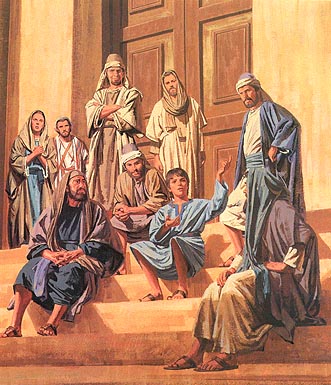
Lost and Found

Luke 2:41-521NIV New International Version Translations
41 Every year Jesus’ parents went to Jerusalem for the Festival of the Passover. 42 When he was twelve years old, they went up to the festival, according to the custom. 43 After the festival was over, while his parents were returning home, the boy Jesus stayed behind in Jerusalem, but they were unaware of it. 44 Thinking he was in their company, they traveled on for a day. Then they began looking for him among their relatives and friends. 45 When they did not find him, they went back to Jerusalem to look for him. 46 After three days they found him in the temple courts, sitting among the teachers, listening to them and asking them questions. 47 Everyone who heard him was amazed at his understanding and his answers. 48 When his parents saw him, they were astonished. His mother said to him, “Son, why have you treated us like this? Your father and I have been anxiously searching for you.” 49 “Why were you searching for me?” he asked. “Didn’t you know I had to be in my Father’s house?” 50 But they did not understand what he was saying to them. 51 Then he went down to Nazareth with them and was obedient to them. But his mother treasured all these things in her heart. 52 And Jesus grew in wisdom and stature, and in favor with God and man.

Background

Here in Luke, we find the only real story of Jesus’s childhood. It seems like a Hollywood movie, “Home Alone2https://en.wikipedia.org/wiki/Home_Alone,” Joseph and Mary forget the Messiah in Jerusalem after a holiday trip. Days go by and Jesus is found in the temple, holding His own, having discussions with the church leaders. Maybe the most shocking point of this story comes from Jesus’s response to his mother when she finds him. Mary says, “how could you do this to us [paraphrased]” Jesus responds, why were you looking everywhere, where else would I be but in my “Father’s House.” What is shocking is that both Mary and Joseph knew the circumstances of their son’s lineage. It is almost as if after twelve years of childhood, His earthly parents were forgetting that Jesus is “the Son of God.” It is easy for humans, for Christians, to become accustomed to life and let their guard down. It just takes a few seconds and we find ourselves searching for what we consider most precious.

It is for the honor of Christ that children should attend public worship. His parents did not return home till they had stayed all the seven days of the feast. Mary and Joseph had created a Godly household, making the annual pilgrimage to celebrate the Jewish holiday of Passover.  They did so with a crowd of people from their village, and considered it good to be there, not an obligation of faith. This story reminds us that when we become too comfortable with the world around us, we can easily lose sight of Christ. When we discover that loss, the response must be to turn back and find Him. And where do we look? We must go to the place in which He has put His name; there we hope to meet Him again.

Mary and Joseph found Him in some part of the temple, where the doctors of the law kept their schools; Jesus was sitting there, listening to their instructions, proposing questions, and answering inquiries, with such wisdom, that those who heard were delighted with Him. Young persons should seek the knowledge of Divine Truth. Children need to be exposed to the Word of God, be taught the gospel’s message, and feel free to ask questions of their elders and teachers so they may increase their own knowledge.

Whether because of sorrow or joy, we all should know where to find Jesus. As Jesus answers his mother, “I had to be in my Father’s house.” Although Jesus was the Son of God, He was also subject to his earthly parents. Jesus’s ministry would not start for another 18 years. Yet, He obediently returned to the guidance and council of this parents. There is no substitute for Godly parenting. Jesus needed it and so does every child in today’s world need it.

In the gospel of Luke and the book of Acts, Jesus is the model for the apostles who are the leaders and models for the church. In the broad sense, then, the last line of this passage is a model for Christian education and child raising: to encourage children to increase in wisdom and in stature (the latter a preferable translation to “years”). Wisdom and stature refer to the capacity to discern God’s real purposes and to respond accordingly.

Items for Discussion

  • Have you ever lost a child or while a child have been lost yourself?
  • How is it that one knows when they are lost?
  • What are the dangers of being lost but not knowing it?
  • How does a child (or adult) learn discernment?
  • What do you think that Jesus, the Son of God, learned by His years with Mary and Joseph?

Discussion Challenge

  • What type of life must a person lead so that they never leave Jesus behind?


To the Eye Invisible; To the Ear Impossible

Proverbs 1:51NIV New International Version Translations
5 let the wise listen and add to their learning, and let the discerning get guidance—

Background

Proverbs 1 is Solomon’s advice to fear God and obey one’s parents. The lesson is plain, and likely to be of most benefit to those who are aware of their own failings and desire to be taught. If young people take heed about their behavior and actions, according to Solomon’s Proverbs, they will gain knowledge and discernment. Solomon speaks of the most important points of truth, and an inspired  Solomon can be found here. It is Christ who speaks by His word and by His Spirit and Christ is the Word and the Wisdom of God. Therefore, Christ is provided to us for wisdom.

A wise person loves wisdom. ‘They love God’s law. They are always thinking about it.’ (Psalm 1:2).
They always want to learn more. They are never too tired to think about wisdom. They still make mistakes. “Show a wise man how he is wrong! He will love you for your correction.’ (Proverbs 9:8). He even wants you to teach him. ‘Teach a wise man and he will become still wiser.’ (Proverbs 9:9).” We can all learn more. We can all grow in knowledge. The Bible is our source for God’s wisdom.

Like the wise person, the intelligent person wants to learn. They will ask for advice. They are trying to understand God’s ways. As they study, they will know more, even understanding the  difficult words of wisdom.

Items for Discussion

  • What is the difference between wisdom and intelligence?
  • How does discernment play a role in wisdom?
  • How is it that someone seeking wisdom should listen?
  • How does discernment play a role in listening?


Colossians  1:15-18
15 The Son is the image of the invisible God, the firstborn over all creation. 16 For in him all things were created: things in heaven and on earth, visible and invisible, whether thrones or powers or rulers or authorities; all things have been created through him and for him. 17 He is before all things, and in him all things hold together. 18 And he is the head of the body, the church; he is the beginning and the firstborn from among the dead, so that in everything he might have the supremacy.

Background2https://www.easyenglish.bible/bible-commentary/col-lbw.htm

Paul wrote this letter to Epaphras when Paul was in prison (Colossians 4:3). He was probably in Rome (Acts 28:16, 30-31). If he was, he wrote it about 60 years after Jesus’ birth. The letter was for those who lived in the city of Colossae. It was 160 kilometers (100 miles) east of the city called Ephesus. Today this area is part of the country is called Turkey. The main roads for trade went past Colossae. It was a large and wealthy city for many centuries. But Laodicea (16 kilometers or 10 miles away) and Hierapolis (21 kilometers or 16 miles away) grew to be larger and more important cities. When Paul wrote this letter, Colossae had become a small town. It was no longer very important. Epaphras lived in Colossae (1:7; 4:12-13). There he preached the good news about Jesus. The people who became Christians formed the church at Colossae. Most of them were Gentiles.

Epaphras visited Paul in prison and told Paul about the young church  at Colossae. The Christians who lived there had begun to listen to false teachers. Paul was worried that the Christians would turn away from the true gospel. Even today many false teachers do not seem to deny the gospel message. Instead, they slightly change it. Often they teach extra things or add rules to the gospel. Paul wrote to the Christians at Colossae to remind them about Jesus Christ and about His true message. Paul emphasized that Christ is superior. Paul wrote more about Christ in this letter than in any other of his letters. He reminded the Christians that their past life had gone. Christ was now their life. Christ had made them free from rules and evil powers. Paul then went on to teach the Christians how to live this new life.

Paul wrote this letter in the Greek language. He wrote these verses like a poem. But it does not look like a poem when it is in the English language. Many teachers of the Bible think that this was a song of praise. Paul showed the Christians at Colossae that Christ is better and more powerful than anyone or anything else. Paul wanted the Christians to understand more about Christ. This would guard them against the false teachers.

John 1:18 says that nobody has ever seen God the Father. God is spirit. We cannot see Him because He does not have a physical body. But Jesus said, ‘If you have seen me you have seen God the Father’ (John 14:9). Jesus meant that He has the same nature and character as God. So, when we learn more about Jesus Christ, we learn more about God. Christ existed before God created anything. And Christ has the place of honor over all that God created. Paul emphasized this many times in his letter.

Christ existed before He had a physical body. God created all physical things by means of Christ. He also created everything that is not physical. This includes the angels and spirits. In this verse, heaven means the sky rather than the place where God lives. As Christians, we believe that good angels serve God. But evil angels and spirits serve Satan, who is the chief evil spirit. The false teachers worshipped angels (2:18). They also believed that there were many ranks of angels and spirits. Paul lists 4 of these ranks. This does not mean that Paul agreed with the false teachers. But Paul was again emphasizing that Christ is greater than all the angels and spirits. God in Christ created them. So Christ has power over them. God created everything ‘for’ Christ. Therefore, Christ is the reason why everything exists.

Christ maintains the physical world. This is why it works well. The sun, moon and stars stay in their correct places in the sky. Every day has the same number of hours. People in the world live because Christ keeps them alive. Christ also maintains everything that is not physical. Without Christ, everything would break down. Christ is the ruler of everything that He created.

Paul now showed that Christ created the church. ‘The church’ means all the Christians in the world. ‘Church’ always refers to people. The ‘local church’ means all the Christians who live in a particular town or village.  Since Christ does not live in his physical body on earth any more, Christ lives in all Christians by means of the Holy Spirit (Romans 8:9-11). Now, Christ lives on this earth in his church (the Christians). So He calls the church His ‘body’. To be ‘head’ means that Christ is the ruler of His earthly church.

Items for Discussion

  • What makes you believe in things that you have not personally seen with your own eyes?
  • Why do you believe what you may hear from others?
  • Many times, we hear what sounds too good and see what is too perfect – What tests do you apply be discerning?
  • How do our two senses, sight and sound, work together to influence what we believe in?
  • Many do not have either hearing or sight, yet they believe in Christ – What other factors then establish one’s beliefs?

Discussion Challenge

  • How can each member of Christ’s body (church members) protect against the intrusion of false teachings?

Imagine the Gift of Forever

Psalm 37:181NIV New International Version Translations
18 The blameless spend their days under the Lord’s care, and their inheritance will endure forever.

Background2https://www.biblestudytools.com/commentaries/treasury-of-david/psalms-37-18.html

The Lord knows the days of the upright. God’s foreknowledge makes Him laugh at the proud, but in the case of the upright God sees a brighter future, and treats them as heirs of salvation. Here is where we, the Christian, gain our comfort: all events are known to our God, and that nothing in our future can surprise Him. No arrow can pierce us by accident, no danger can sneak up on us; over time or in eternity, can any unforeseen problem happen to us. Simply stated, God knows all.

Our future is constructed by a continual development of the good things which God has laid up in store for us (set aside), and our inheritance will be for ever. God’s inheritance does not fade away. It is such that none can deprive us of it, and our inheritance is preserved, so that no one can destroy it. Eternity has this peculiar attribute:: what we have on earth is safe enough, but what we will have in heaven is ours without end.

Items for Discussion

  • Have you thought about “forever?” How would you explain it to someone?
  • When do you think forever starts: Now; At Death; When Jesus Returns? Explain your choice.
  • What are the unique attributes of “inheritance?”
  • While we all must accept our imperfection before God, how would you describe the term “Blameless?”
  • What does it mean to you to spend your days under the Lord’s care?


John 5:24
24 “Very truly I tell you, whoever hears my word and believes him who sent me has eternal life and will not be judged but has crossed over from death to life.

1 John 5:11
11 And this is the testimony: God has given us eternal life, and this life is in his Son.

Background

Our Lord declared his authority and character, as the Messiah. The time will come when the dead will hear his voice, as the Son of God, and live. Our Lord first refers to his raising those who were dead to sin, to gaining a newness of life, by the power of the Holy Spirit, and then to His raising the dead in their graves.

The office of Judge of all mankind, can only be exercised by one who has all knowledge,, power and authority. Our roll, to  believe His testimony. Therefore, if we place our faith and hope in God, we are not condemned. Our prayers is that Christ’s voice reach the hearts of those dead in sin; that they may  repent, and prepare for their crossing into eternity.

3https://www.studylight.org/commentaries/dsb/1-john-5.htmlThe Greek word for eternal is aionios. It means far more than simply lasting for ever. A life which lasted for ever might well be a curse and not a blessing, an intolerable burden and not a shining gift. There is only one person to whom aionios may properly be applied and that is God. In the real sense of the term it is God alone who possesses and inhabits eternity. Eternal life is, therefore, nothing other than the life of God himself.

We are promised is a share in the very life of God. In God there is peace and, therefore, eternal life means serenity. It means a life liberated from the fears which haunt the human situation. In God there is power and, therefore, eternal life means the defeat of frustration. It means a life filled with the power of God and, therefore, victorious over circumstance. In God there is holiness and, therefore, eternal life means the defeat of sin. It means a life clad with the purity of God and armed against the soiling infections of the world. In God there is love and, therefore, eternal life means the end of bitterness and hatred. It means a life which has the love of God in its heart and the undefeatable love of man in all its feelings and in all its action. In God there is life and, therefore eternal life means the defeat of death. It means a life which is indestructible because it has in it the indestructibility of God himself.

It is John’s conviction that such a life comes through Jesus Christ and in no other way. Why should that be? If eternal life is the life of God, it means that we can possess that life only when we know God and are enabled to approach Him and rest in Him. We can do these two things only in Jesus Christ. The Son alone fully knows the Father and, therefore, only He can fully reveal to us what God is like. As John had it in his gospel: “No one has ever seen God; the only Son, who is in the bosom of the Father, He has made him known” (John 1:18). And Jesus Christ alone can bring us to God. It is in Him that there is open to us the new and living way into the presence of God (Hebrews 10:19-23). We may take a simple analogy. If we wish to meet someone whom we do not know and who moves in a completely different circle from our own, we can achieve that meeting only by finding someone who knows him and is willing to introduce us to him. That is what Jesus does for us in regard to God. Eternal life is the life of God and we can find that life only through Jesus Christ.

It is most unfortunate that in the English language, we don’t have a specific word for this. In Chinese culture it is “guān xì (关系).” The phrase “it’s not what you know, but who you know” is well known in Western business circles due to the fact that having the right contacts can provide a great deal of assistance in advancing one’s career and closing important business deals. This idea takes on a much greater significance within China, in which business organizations and social circles are often nepotistic in nature. That is, relationships do not merely supplement an individual’s effectiveness in business and dealings in everyday life; instead, relationships form the foundations upon which business and society are built upon.

Items for Discussion

  • How do you feel about someone who does not believe in life after death? Why? What to you tell them?
  • Scripture is clear, no Jesus, no eternal life – How do you feel about that?
  • If you consider the upside of the prior question, how do you feel about anyone with a relationship with Jesus being assured of eternal life?
  • How do “good works” differ from being “blameless?”

Discussion Challenge

  • Why is it so hard to think about and discuss eternity and eternal life? What should the Church be doing to help us improve the dialogue?

What’s My Legacy?

1 Kings 17:8-161NIV New International Version Translations
8 Then the word of the Lord came to him: 9 “Go at once to Zarephath in the region of Sidon and stay there. I have directed a widow there to supply you with food.” 10 So he went to Zarephath. When he came to the town gate, a widow was there gathering sticks. He called to her and asked, “Would you bring me a little water in a jar so I may have a drink?” 11 As she was going to get it, he called, “And bring me, please, a piece of bread.” 12 “As surely as the Lord your God lives,” she replied, “I don’t have any bread—only a handful of flour in a jar and a little olive oil in a jug. I am gathering a few sticks to take home and make a meal for myself and my son, that we may eat it—and die.” 13 Elijah said to her, “Don’t be afraid. Go home and do as you have said. But first make a small loaf of bread for me from what you have and bring it to me, and then make something for yourself and your son. 14 For this is what the Lord, the God of Israel, says: ‘The jar of flour will not be used up and the jug of oil will not run dry until the day the Lord sends rain on the land.’” 15 She went away and did as Elijah had told her. So there was food every day for Elijah and for the woman and her family. 16 For the jar of flour was not used up and the jug of oil did not run dry, in keeping with the word of the Lord spoken by Elijah.

Background

This is an account of a divinely ordained encounter between a widow who is at the end of her resources, and a prophet of God. God put them together for a reason, or a set of reasons.

Elijah shows us obedience here. He is sent by God to intervene with this widow. He gives her specific instructions, and she at first is hesitant. She explains her situation. We understand that it is dire.

In response, Elijah tells her not be afraid. God’s messengers are always telling people not to be afraid. Fear is immobilizing. When one is freed from fear, by God’s graciousness, one can have hope and live into the future.

Elijah further makes the promise of the meal and the oil not being depleted. What the woman needs will be provided. It sounds like wishful thinking, but Elijah had proven himself over and over to be the conduit of God’s power and grace. So, she dares to trust what he says. And what Elijah promises comes to reality.

Items for discussion

  • What were the reasons that you believe God had in mind when he sent Elijah to the widow?
  • What did Elijah do for the widow?
  • What did the widow do for Elijah?
  • Would you call this event a miracle? Please explain.
  • What must we do to trust the way the widow trusted?

Mark 12:41:44
41 Jesus sat down opposite the place where the offerings were put and watched the crowd putting their money into the temple treasury. Many rich people threw in large amounts. 42 But a poor widow came and put in two very small copper coins, worth only a few cents. 43 Calling his disciples to him, Jesus said, “Truly I tell you, this poor widow has put more into the treasury than all the others. 44 They all gave out of their wealth; but she, out of her poverty, put in everything—all she had to live on.”

Background

Jesus is the observer of human life, and even as He observes, he is also aware of the inner workings of the heart and mind. So, when he watches the people putting their gifts in the Treasury of the Temple, he knows what motivates their giving.  Sometimes people are motivated by faith and sometimes something else motivates  them. In any case, their gift can be used to glorify God and to extend God’s love.

But we know that some gifts stand out, because of this moment in Christ’s ministry. A widow puts in everything she has. We do not know why. But we do know that she is generous. We know that she is faithful. We know that she wants to honor God in this way. All of these are good.
Many others were putting in much. Their gifts were also needed and thankfully received. But the widow’s gift was extraordinary in its generosity.

Mark does not tell us any more about the widow or her plight afterwards.

Items for Discussion

  • Why did the widow go to the Temple? How do her reasons line up with the reasons Christians go to church in today’s times?
  • What did the widow do for God?
  • Why did Jesus praise the widow?
  • Would you call this event an act of faith? Please explain.
  • What must we do to trust the way the widow trusted?
  • What is the widow’s legacy?

Discussion Challenge

  • How does the contemporary church develop a “widow’s faith” in all that worship?
  • What would this do for the church? For the world?
  • 1
    NIV New International Version Translations

Why is Life So Fragile?

Deuteronomy 6:1-91NIV New International Version Translations
1 These are the commands, decrees and laws the Lord your God directed me to teach you to observe in the land that you are crossing the Jordan to possess, 2 so that you, your children and their children after them may fear the Lord your God as long as you live by keeping all his decrees and commands that I give you, and so that you may enjoy long life. 3 Hear, Israel, and be careful to obey so that it may go well with you and that you may increase greatly in a land flowing with milk and honey, just as the Lord, the God of your ancestors, promised you. 4 Hear, O Israel: The Lord our God, the Lord is one. 5 Love the Lord your God with all your heart and with all your soul and with all your strength. 6 These commandments that I give you today are to be on your hearts. 7 Impress them on your children. Talk about them when you sit at home and when you walk along the road, when you lie down and when you get up. 8 Tie them as symbols on your hands and bind them on your foreheads. 9 Write them on the doorframes of your houses and on your gates.

Background2https://www.sermonwriter.com/biblical-commentary/deuteronomy-61-9/

The book of Deuteronomy opens by saying: “These are the words that Moses spoke to all Israel beyond the Jordan” (1:1). Moses recalled something of their history, including their wilderness years—years spent wandering because of their unfaithfulness to God. In chapter 4, Moses  also charged them to “make them known to your children and to your children’s children” (4:9), referring to God’s laws.

In chapter 5, Moses recited the Ten Commandments, given originally in Exodus 17. He concluded chapter 5 by saying, “You shall observe to do therefore as  God has commanded you.

Now, in chapter 6, Moses gives the Israelites the commandment that would become known to Jews as the Shema—a commandment that summarizes the demands of the first two of the Ten Commandments—a commandment that calls them to internalize the commandments, so that the commandments, once written on stone tablets, would be written on their hearts (6:6). He also commands them once again to teach this commandment to their children (6:7a) and to take specific measures to remember the commandments (6:7b-9).

In chapters 6 through 11, Moses appeals to the Israelites to be faithful to God and gives a rationale for doing that. These chapters, then, serve as an introduction to the more detailed giving of the law that Moses outlines in chapter 12-26.

Items for Discussion

  • What do you do to make sure you internalize and remember important things?
  • Our world today dislikes the idea of placing the ten commandments visibly in public places – Why do you think that is?
  • What benefits to society would we gain if God’s commandments were more visible?
  • Why is the idea of “summarization” an effective way to remember and to “pass on” God’s Laws? Are there any risks?


Mark 12:28-34
28 One of the teachers of the law came and heard them debating. Noticing that Jesus had given them a good answer, he asked him, “Of all the commandments, which is the most important?” 29 “The most important one,” answered Jesus, “is this: ‘Hear, O Israel: The Lord our God, the Lord is one. 30 Love the Lord your God with all your heart and with all your soul and with all your mind and with all your strength.’ 31 The second is this: ‘Love your neighbor as yourself.’ There is no commandment greater than these.” 32 “Well said, teacher,” the man replied. “You are right in saying that God is one and there is no other but him. 33 To love him with all your heart, with all your understanding and with all your strength, and to love your neighbor as yourself is more important than all burnt offerings and sacrifices.” 34 When Jesus saw that he had answered wisely, he said to him, “You are not far from the kingdom of God.” And from then on no one dared ask him any more questions.

Background

Those who sincerely desire to be taught their duty, God’s Laws, can look to Christ as a guide. Those who accept the role of instructor, can also look to Crist and teach His way. He tells the scribe that the great commandment, which indeed includes all, is, that of loving God with all our hearts. Wherever this is the ruling principle of someone’s soul, every other duty will fall into its proper place. Loving God with all our heart, will engage us to do every thing by which God will be pleased.

The sacrifices only represented the atonements for men’s transgressions of the moral law; they were of no power to influence God’s judgment upon them.  Mankind is given but one choice, except the expressed repentance and faith as promised Christ. This, of course, must also lead to moral obedience. Because we have not loved God first and then ourselves, but instead did the very reverse, we are condemned sinners. We need repentance, and we need mercy.

Christ approved what the scribe said, and encouraged him. It becomes our knowledge of the law that leads to our conviction of sin, to repentance, to discovery of our need of mercy, and to understanding the way of justification through Christ.

Items for Discussion

  • Why is life so fragile? If you agree it is fragile, then why do people put themselves before God?
  • What activities in life convict us of our sins?
  • Why is it that we cannot begin our repentance until we accept our sinfulness?
  • How would you explain repentance to a child, to a friend?
  • Why is one’s recognition of a need for “God’s Mercy” so important to the Christian faith?

Discussion Challenge

  • How can you and your Church make Christ relevant to the upcoming generations, thus honoring God’s command to “pass it on?”

Be Prepared to Take the Helm

Jeremiah 31:7-91NIV New International Version Translation
7 This is what the Lord says: “Sing with joy for Jacob; shout for the foremost of the nations. Make your praises heard, and say, ‘Lord, save your people, the remnant of Israel.’ 8 See, I will bring them from the land of the north and gather them from the ends of the earth.  Among them will be the blind and the lame, expectant mothers and women in labor; a great throng will return. 9 They will come with weeping; they will pray as I bring them back. I will lead them beside streams of water on a level path where they will not stumble, because I am Israel’s father, and Ephraim is my firstborn son.

Background

The Lord must surely be speaking tongue-in-cheek when he calls Jacob-Israel “the chief of nations.” Israel experienced its heyday under Kings David and Solomon, and had been in decline ever since. For several decades, they have suffered in exile as slaves in a foreign land. We would expect the Lord to call them “the least of nations,” because, to all appearances, that is what they were. But there is more to Israel than meets the eye. Long ago, God made a covenant with Abram to make of him a great nation and to make him a blessing to all the families of the earth (Genesis 12:1-3). Later, God promised David, “Your house and your kingdom shall be made sure forever before you. Your throne shall be established forever” (2 Samuel 7:16).

At that moment, Israel might be in shambles, but the Lord’s promises are still intact. The Lord has allowed Israel to suffer to purge it of its sinful ways. Once Israel has seen the light, the Lord will turn its suffering into rejoicing. The Israelites are given three distinct actions to come back into fellowship with God and save themselves. These are just as good for today as they were in Jeremiah’s day.

  • Proclaim. Tell people about God.
  • Praise. Praise the God for His tender mercies.
  • Petition. Ask God for salvation.

The word “remnant” is important in both Old and New Testaments. The concept (if not the word itself) is introduced with Noah and the flood. In that story, God destroyed the evil population on earth but saved righteous Noah and his family (Genesis 6-9). In that instance, Noah and his family constituted the remnant—the righteous nucleus preserved by God to repopulate the world. The idea behind a remnant is that God is faithful even when people are not. The people’s sin does not nullify God’s promise. God sometimes imposes a harsh penalty for sin, but that is foreshadowed by God’ overwhelming mercies.

Items for Discussion

  • What role does the Christian Church play with “the remnant?”
  • We would all like to be considered part of the remnant. How would you expect that group to behave?
  • How does God span generations and keep a “remnant” alive and well in the world?

Mark 10:46-52
46 Then they came to Jericho. As Jesus and his disciples, together with a large crowd, were leaving the city, a blind man, Bartimaeus (which means “son of Timaeus”), was sitting by the roadside begging. 47 When he heard that it was Jesus of Nazareth, he began to shout, “Jesus, Son of David, have mercy on me!” 48 Many rebuked him and told him to be quiet, but he shouted all the more, “Son of David, have mercy on me!” 49 Jesus stopped and said, “Call him. ”So they called to the blind man, “Cheer up! On your feet! He’s calling you.” 50 Throwing his cloak aside, he jumped to his feet and came to Jesus. 51 “What do you want me to do for you?” Jesus asked him. The blind man said, “Rabbi, I want to see.” 52 “Go,” said Jesus, “your faith has healed you.” Immediately he received his sight and followed Jesus along the road.

Background2https://www.workingpreacher.org/preaching.aspx?commentary_id=466

Jesus names faith as what impels Bartimaeus. The rest of the story shows us what that faith is. Bartimaeus’s faith is not about reciting the correct confession or subscribing to certain dogmas. It is his unrelenting conviction that Jesus can and will rescue him from his need. We see this faith in what Bartimaeus does:

He grasps who Jesus is. No one else so far in Mark has been able to perceive so much about Jesus from so little data. The title Bartimaeus uses, Son of David, appears only here in Mark, therefore we cannot say too much about exactly what it expresses about Jesus. Elsewhere (12:35-37) Jesus adds nuance to his connection to David (or his differentiation from David) and implies his superiority over Israel’s greatest king. For Bartimaeus, the title obviously indicates that Jesus is God’s designated agent, and it introduces the notion of Jesus as a royal figure, an image that becomes very important when Jesus enters Jerusalem (11:1-10), goes on trial (15:1-15), and dies (15:16-32) as a king. Bartimaeus, despite his blindness and all its connotations of spiritual ignorance (compare 4:12; 8:18), sees the royal dimensions of Jesus’ identity. As the story progresses, we discover that Bartimaeus also discerns that Jesus is specially able to show mercy and heal.

He persists despite hindrances. Faith does not come easily to people in Mark; it must surmount obstacles to obtain what it seeks (see 2:4; 5:27, 35-36; 7:27; 9:18b). Others in the crowd rebuke Bartimaeus, demanding he be silent. This detail reminds us that blind beggars dwell near the bottom rung of social privilege in ancient (and contemporary) society. Do people shout Bartimaeus down because they think he deserves to be who he is? Probably. Do they put their own needs before his? Perhaps. In their ignorance about Jesus, the focus of his message, and his concern for blind beggars, their reprimand of Bartimaeus threatens to limit the range within which Jesus might dispense his compassion and grace. Bartimaeus knows better, and so he yells “even more loudly” until his words penetrate Jesus’ ears.

He expects a transformation. Presumably Jesus could have walked to Bartimaeus to talk with him. Instead, he tells the onlookers to summon Bartimaeus to him. Now those who sought to inhibit the beggar must assist in Jesus’ ministry to him. Then Mark adds one more delicious detail: Bartimaeus tosses aside his cloak. Obviously he expects to regain his sight, for a blind beggar would ordinarily do well to keep his possessions close at hand. He obviously expects a change in his status. His health problem (blindness) and his economic problem (begging) are a single piece of fabric. As with other healings (5:1-20, 25-34), Jesus can restore Bartimaeus to a place of wholeness that will demand his belonging within society. When Bartimaeus casts off his cloak, he confidently prefigures that he will no longer sit on his garment dependent upon handouts from passersby.

He asks for the right thing. When Jesus asks Bartimaeus, “What do you want me to do for you?,” his reply is a simple request voiced with the confidence that Jesus can deliver. “That I would see again,” declares resolutely that Jesus can bring the wholeness and deliverance that people seek. In this confidence and simplicity, what Bartimaeus says is fully consistent with the expressions of faith others have made in Mark. Note that Bartimaeus seeks no special privileges. This reiterates that Jesus has not come to bestow power and honor but to open eyes to the new spiritual, social, and material realities made possible when God reigns. When it comes to understanding what Jesus has come to do, the disciples James and John are actually more “blind” than Bartimaeus.

It ends with Bartimaeus following Jesus.  It is the ultimate statement of faith that we all should take heart and do willingly.

Items for Discussion

  • What does it mean to be persistent in our faith?
  • When others shout us down (about our faith) what does this story tell us we should be doing?
  • Why are one’s actions after an encounter of faith, healing, deliverance so important to us?

Discussion Challenge

  • How can we as a body of believers support each other when the world is “shouting us down?”

The Value of Service

Job 23:1-9; 16-17
1 Then Job replied: 2 “Even today my complaint is bitter; his hand is heavy in spite of my groaning. 3 If only I knew where to find him; if only I could go to his dwelling! 4 I would state my case before him and fill my mouth with arguments. 5 I would find out what he would answer me, and consider what he would say to me. 6 Would he vigorously oppose me? No, he would not press charges against me. 7 There the upright can establish their innocence before him, and there I would be delivered forever from my judge. 8 “But if I go to the east, he is not there; if I go to the west, I do not find him. 9 When he is at work in the north, I do not see him; when he turns to the south, I catch no glimpse of him.

16 God has made my heart faint; the Almighty has terrified me. 17 Yet I am not silenced by the darkness, by the thick darkness that covers my face.

Carving by Willard Wigan

Background1https://www.christianity.com/bible/commentary.php?com=mhc&b=18&c=23

Job appeals from his friends for the just judgement of God. He wants to have his cause tried quickly. We are much more fortunate than Job. He looks to find God but we know where to find him. He is in Christ, reconciling the world to Himself; and sits upon a seat of mercy, waiting to be gracious to each of us. To Christ,  the sinner may go and there the believer may state their cause before Him, with arguments taken from his promises, His covenant, and His glory. We are nothing more than a patient waiting for death and judgment. This must be our wisdom and duty, and it cannot be without a holy fear and trembling. A passionate wishing for death or judgement is nothing more than our sin and folly, and ill becomes us, as it did Job.

Job knew that the Lord was present every where; but his mind was in such confusion, that he could not get a fixed view of God’s merciful presence and find comfort by stating his case before God. Job’s views were all gloomy. God seemed to stand at a distance, and frown upon him. Yet Job expressed his assurance that he should be brought forth, tried, and approved, for he had obeyed the precepts of God. He had relished and delighted in the truths and commandments of God. Here we should notice that Job was justifying his own actions rather than God. Job felt that he was clear from the charges of his friends, but boldly to assert that, though visited by the hand of God, it was not a punishment of sin. This was an error on his part. Job was also guilty of a second mistake, when he denies that there are dealings of Providence with men in this present life, wherein the injured find redress, and the evil are visited for their sins.

As Job does not once question that his trials are from the hand of God, and that there is no such thing as chance, how does he account for them? The principle on which he views them is, that the hope and reward of the faithful servants of God are only laid up in another life; and he maintains that it is plain to all, that the wicked are not treated according to what they deserve in this life, but often directly the reverse. The first-fruits of the Spirit of grace, pledges a God, who will certainly finish the work which He has began; yet the afflicted believer is not to conclude that all prayer will be in vain, and that they should sink into despair. Job cannot tell God’s intention in afflicting him. Ir may be to produce penitence and prayer in his heart. We are to learn to obey and trust the Lord, even in our trials and to live or die as he pleases.

Items for Discussion

  • What thoughts go through your mind as you pray for God’s grace but do not receive it?
  • How do you justify in your own mind, being witness to the pain and suffering of those who appear not to deserve the harsh judgment?
  • When you are overwhelmed trauma and fear, where do you go for rest and peace?
  • How can we help our friends and family members who might be going through a “Job Experience?”


Mark 10:17-31
17 As Jesus started on his way, a man ran up to him and fell on his knees before him. “Good teacher,” he asked, “what must I do to inherit eternal life?” 18 “Why do you call me good?” Jesus answered. “No one is good—except God alone. 19 You know the commandments: ‘You shall not murder, you shall not commit adultery, you shall not steal, you shall not give false testimony, you shall not defraud, honor your father and mother.’” 20 “Teacher,” he declared, “all these I have kept since I was a boy.” 21 Jesus looked at him and loved him. “One thing you lack,” he said. “Go, sell everything you have and give to the poor, and you will have treasure in heaven. Then come, follow me.” 22 At this the man’s face fell. He went away sad, because he had great wealth. 23 Jesus looked around and said to his disciples, “How hard it is for the rich to enter the kingdom of God!” 24 The disciples were amazed at his words. But Jesus said again, “Children, how hard it is to enter the kingdom of God! 25 It is easier for a camel to go through the eye of a needle than for someone who is rich to enter the kingdom of God.” 26 The disciples were even more amazed, and said to each other, “Who then can be saved?” 27 Jesus looked at them and said, “With man this is impossible, but not with God; all things are possible with God.” 28 Then Peter spoke up, “We have left everything to follow you!” 29 “Truly I tell you,” Jesus replied, “no one who has left home or brothers or sisters or mother or father or children or fields for me and the gospel 30 will fail to receive a hundred times as much in this present age: homes, brothers, sisters, mothers, children and fields—along with persecutions—and in the age to come eternal life. 31 But many who are first will be last, and the last first.”

Background2https://www.workingpreacher.org/preaching.aspx?commentary_id=1485

The story of Jesus and the rich man, can be found in all three synoptic gospels. It is notoriously challenging and has resulted in many creative approaches to explaining what seems to most of us a ridiculously extreme demand. From concocting a mythic entrance to Jerusalem that required a camel to unburden itself of all it was carrying to reading it as an intentionally impossible demand to drive us to Christ, interpreters over the centuries have been tempted to tone down this passage.

This means for us that we should read and interpret with care. Keeping this goal in mine, there are two elements of the text that will help us read and interpret it with equal measures of integrity and creativity. The first is in the details. Any author cannot tell us everything and the choices he or she therefore necessarily makes in what is written are only clues to the intention of a particular passage. While there are many revealing details in this passage, we will focus on five.

  1. Jesus is again “on the way” (verse 17). In Mark, this is not merely “a journey”, but rather it represents the road to Jerusalem and the cross. So while Jesus’ demand of the man may seem extreme to us, it is certainly no less than the demand he places on himself, giving not just his wealth but his very life for the world, including this rich man.
  2. Everywhere else in Mark when a person kneels down to ask Jesus urgently and fervently to do something (verse 17), it is in regard to a request for healing, for him or herself or for someone else. Mark, therefore, views this scene as a healing and invites us to do the same. Jesus words are not an impossible demand or Herculean test of faith or extreme requirement. Rather, they are a radical prescription to a deep-seated illness and need.
  3. Jesus looks at him with love (verse 21). He does not treat him as insincere or mock him as self-righteous, but rather loves him. Every interpretation we may offer must therefore take seriously Jesus’ absolute regard and unconditional love for this man.
  4. He is not asked simply to give away his wealth, but to give it to the poor (not the church either, mind you, but the poor) (verse 21). Implied is the importance of sharing in the hardships and need of one’s fellow human beings that is a requirement of life in the kingdom.
  5. The rich man is not the only one who is shocked by Jesus’ pronouncement (verses 22, 26). So also are all those within earshot. Given that wealth was considered a sign of blessing in the first century as well as even today, Jesus words to this man and His later statement about the difficulty the rich will have in entering the kingdom are alarming and difficult to understand.

To summarize, when reading this Scripture from Mark, one needs to limit its scope to an individual who had an “illness” caused by his wealth. Jesus, who took the man at face value over his desire for eternal life, went right to the heart of the matter. This man needed to give up his wealth to heal himself. Mark also shows us that when we set out to help others, those in the greatest need are to be at the top of the priority list.

Items for Discussion

  • We here are rich beyond comparison when considering most in the world. What goes through your own mind as you hear this story about Jesus?
  • In what ways does the financial support given to a church help with Jesus’ commands given to this man?
  • Where can a church/congregation go wrong? 
  • Why do you think this man was given such as harsh commandment to follow? Think healing!
  • Read Verse 29- What do you think Jesus is telling us?
  • Where is Jesus telling us there is more to do than just give money?

Discussion Challenge

  • What is the Christian church’s roll (like Job’s friends) when they witness someone like Job? How does this relate to Mark’s comments?

The Power of Prayer

Psalm 1241NIV New International Version Translations
1 If the Lord had not been on our side—let Israel say—2 if the Lord had not been on our side when people attacked us, 3 they would have swallowed us alive when their anger flared against us; 4 the flood would have engulfed us, the torrent would have swept over us, 5 the raging waters would have swept us away. 6 Praise be to the Lord, who has not let us be torn by their teeth. 7 We have escaped like a bird from the fowler’s snare; the snare has been broken, and we have escaped. 8 Our help is in the name of the Lord, the Maker of heaven and earth.

Background2https://www.christianity.com/bible/commentary.php?com=mhc&b=19&c=124

Called the Song of Assent, some think that David wrote this psalm when he was fighting the Philistines. David thought that the Philistines would win, but they did not. God gave David and his people help. Later, Hezekiah and Nehemiah may have also used this psalm. God gave them all help to beat their enemies. The psalm says that if God had not given his people help, the enemy would have destroyed them.

God knows His people’s pain when their enemies prevail against them but His power can be seen in their deliverance. Happy are the people whose God is Jehovah, a God all-sufficient. Besides applying this to any particular deliverance in our current days or the ancient times, we should have in our thoughts the great work of redemption by Jesus, by which believers were rescued from Satan.

God is the Author of all our deliverances (victories), and He must have the glory. The enemies lay snares for God’s people, to bring them into sin and trouble, and to hold them there. Sometimes it seems our enemies prevail; but in God let us put our trust, and we will not be led to confusion. The believer will ascribe all the honor of his salvation, to the power, mercy, and truth of God, and look back with wonder and thanksgiving on the way in which God has led him. Let us rejoice that our help for the time to come is in Him who made heaven and earth.

Items for Discussion

  • What are the great battles that you think lie ahead? Either personally, as a church or as a nation?
  • How would you discern whether God is involved with the outcome?
  • If God already knows ALL, why do you think we should still pray?
  • Why do you think God lets us suffer for a while when things seem to be going wrong?
  • After the victory, why is it so important to give the credit ALL to God?


James 5:13-20
13 Is anyone among you in trouble? Let them pray. Is anyone happy? Let them sing songs of praise. 14 Is anyone among you sick? Let them call the elders of the church to pray over them and anoint them with oil in the name of the Lord. 15 And the prayer offered in faith will make the sick person well; the Lord will raise them up. If they have sinned, they will be forgiven. 16 Therefore confess your sins to each other and pray for each other so that you may be healed. The prayer of a righteous person is powerful and effective. 17 Elijah was a human being, even as we are. He prayed earnestly that it would not rain, and it did not rain on the land for three and a half years. 18 Again he prayed, and the heavens gave rain, and the earth produced its crops. 19 My brothers and sisters, if one of you should wander from the truth and someone should bring that person back, 20 remember this: Whoever turns a sinner from the error of their way will save them from death and cover over a multitude of sins.

Background

A large number of the Christians had left Jerusalem and had gone to live in other countries. But the apostles and leaders of the church did not go. So, these Christians (those who left the area) no longer had the day-to-day contact with their leaders. James wrote to help them. He wrote to encourage them to live as Christians should, in the places where they now lived.

What Christians believe affects what they do. That is the main subject of his letter. He shows how they should apply their trust in God to the problems that they have. Real faith must be active. That is the key to what he wrote. Faith that does nothing is not real faith. So he says that faith without works is dead.

Our verses tell us that if anyone is in trouble, that person should pray to God. The answer to that prayer may not remove the problem. But it will give help and strength to be able to live through the trouble. Those who are cheerful (who feel good) should praise God. They should sing psalms or praises to God. James is reminding his readers to turn to God in good times as well as bad. Prayer and praise are important parts in the lives of Christians. When they are ill, they should ask the elders to come and pray with them and believe that God will answer them. This is a request for God to act, because He is the source of all healing.

Those who pray with the sick person must also believe. They must believe that God will answer their prayers. They must be confident that God will heal. It is the prayer with faith that God uses. It is prayer, not the oil, that leads to the healing of the sick person. Not only the elders and the sick person  should pray but all the Christians should pray for one another. When they pray to God, he will hear them. God does great things in answer to their prayers.

Elijah was a prophet who prayed to God and then he declared that there would be no rain for a period of time. God answered him and there was no rain for three and a half years. With no rain, the crops did not grow. After that time, he prayed again. And, as a result, it rained. Now the rain had come, the crops could grow again. (These events are in 1 Kings 17:1; 18:42-45.) Elijah is just one example of someone who trusted in God. There was nothing special about him. He had no special power. He was a person just like the readers. James is showing them that anyone who is right with God can pray strong prayers. If Elijah could pray in this way, so could the readers.

It is possible for a person, who knows the truth about the Lord Jesus, to turn away from him. This is not when a Christian does something wrong. It is more than that. It is when a person wanders away from Jesus Christ and denies the truth. James knows this.  Therefore, Christian brothers and sisters should look after one another. So, when one of them wanders away, the rest should feel it deeply. It is their duty and desire to try to bring back to the Jesus any who have turned away. James is speaking about the death of the soul. To bring back a brother or sister to Jesus is a great work. As that brother or sister comes back to the Jesus, God will forgive all his or her sins. A person who comes to Jesus with real trust and receives new life from him, can never lose that life. But these verses talk about one of them, that is one of that church, who turns away. This passage speaks about those who have heard the truth but they have not really put their trust in Jesus Christ.

Items for Discussion

  • What responsibilities does a member of a Christian Church have according to James?
  • Why would you believe that the members of a church can “save” someone?  Isn’t it God’s job?
  • What should our attitude be for those who: 1) left the church; 2) are considering leaving the church; 3) never liked the church and will not come back; and 4) are openly hostile to the church?
  • Why do you pray?
  • Why is the act of prayer the ultimate statement of faith?

Discussion Challenge

  • How would you teach your children or a friend how to pray?

The Usual Suspect

Isaiah 50:4-91NIV New International Version Translations
4 The Sovereign Lord has given me a well-instructed tongue, to know the word that sustains the weary. He wakens me morning by morning, wakens my ear to listen like one being instructed. 5 The Sovereign Lord has opened my ears; I have not been rebellious, I have not turned away. 6 I offered my back to those who beat me, my cheeks to those who pulled out my beard; I did not hide my face from mocking and spitting. 7 Because the Sovereign Lord helps me, I will not be disgraced. Therefore have I set my face like flint, and I know I will not be put to shame. 8 He who vindicates me is near. Who then will bring charges against me? Let us face each other! Who is my  accuser? Let him confront me! 9 It is the Sovereign Lord who helps me. Who will condemn me? They will all wear out like a garment; the moths will eat them up.

Background

During the times of Isaiah, the stone, flint, was one of the  hardest known substances. On the international hardness scale, flint ranks 7 out of 10, where diamond is 10, so it is harder than most materials commonly encountered in the natural environment, especially around  740-681 BC when Isaiah was alive . Flint also has the property of taking an edge thinner than a steel blade (only a few molecules thick) so it is literally sharper than a razor. Flint is still in use today as surgical tool because incisions made with a flint blade heal more quickly and are more sterile.  Because this is part of the 2nd Book of Isaiah,  he is called “the servant. ” We assume that it was his followers who were passing on the wisdom of Isaiah’s teachings. When the servant says “I set my face like flint,” he very well knew that those listening would understand he was very determined in his position.

The communication of God’s intentions to the people is fundamental to the core of a prophet’s calling. The verses begin with an emphasis on the tongue of this loyal “teacher” used to support the weary people. The ear of the servant is opened to both those whom he teaches and to God. The servant is obedient and declares with  confidence, “I have not been rebellious, I have not turned away.” It was God, the servant declares that gave him his tongue in order to speak words that sustain the people. It was also God who opened his ears. God is both enabling and is the source of the servant’s prophetic calling, making possible both his speech and hearing.

Verse 6 is the main theme as it describes the the servant’s suffering at the hands of his enemies. This theme is directly related to the calling and message described in verses 4 and 5. It is important to point out that the servant does not receive this suffering passively.  He actively chooses to accept the conflict that arises as a result of his proclamation. This last point emphasizes that suffering, in and of itself, is not something we receive secondhand. The suffering of the servant comes from speaking truth to the powerful.

Also, the servant was willing to suffer. To pull out the hairs of a man’s beard was not only painful. It was the traditional way to bring shame upon a man (see the servant 7:20; the servant 15:2; Nehemiah 13:25). How does he handle this? The servant concentrates his mind on the God. That action gives him the determination that he needs to carry on God’s work. That determination is the meaning of the word picture about flint. The language of a court of law shows the servant’s attitude. He has complete confidence in God’s judgement. The attacks of those who oppose him will be too weak to succeed. Old clothes that insects have spoiled will fall to pieces and the accuser’s arguments have no more substance than those old clothes.

Items for Discussion

  • Generally speaking, people do not want to suffer – What are the things you would suffer for?
  • If you choose to suffer for a reason, how do justify the purpose to yourself?
  • How do you personally handle suffering at the hands of others?
  • In what way does God provide you comfort?

Mark 8:27-38
27 Jesus and his disciples went on to the villages around Caesarea Philippi. On the way he asked them, “Who do people say I am?” 28 They replied, “Some say John the Baptist; others say Elijah; and still others, one of the prophets.” 29 “But what about you?” he asked. “Who do you say I am?” Peter answered, “You are the Messiah.” 30 Jesus warned them not to tell anyone about him. 31 He then began to teach them that the Son of Man must suffer many things and be rejected by the elders, the chief priests and the teachers of the law, and that he must be killed and after three days rise again. 32 He spoke plainly about this, and Peter took him aside and began to rebuke him. 33 But when Jesus turned and looked at his disciples, he rebuked Peter. “Get behind me, Satan!” he said. “You do not have in mind the concerns of God, but merely human concerns.” 34 Then he called the crowd to him along with his disciples and said: “Whoever wants to be my disciple must deny themselves and take up their cross and follow me. 35 For whoever wants to save their life will lose it, but whoever loses their life for me and for the gospel will save it. 36 What good is it for someone to gain the whole world, yet forfeit their soul? 37 Or what can anyone give in exchange for their soul? 38 If anyone is ashamed of me and my words in this adulterous and sinful generation, the Son of Man will be ashamed of them when he comes in his Father’s glory with the holy angels.”

Background2https://www.easyenglish.bible/bible-commentary/mark-lbw.htm

Caesarea Philippi was in the north, near the source of the River Jordan. Philip, who was the ruler of that area, had built the city, naiming it Caesarea “Philippi’.” That showed that it was not the same place as Caesarea which belonged to his brother, Herod Antipas. Caesarea Philippi was a city that was full of temples to the Greek gods, and to the nature god, Pan. Jesus asks the disciples to tell Him who they think He is? The opinions that Jesus was John the Baptist or Elijah are the same as those in 6:14.  Another opinion was  that Jesus was one of the prophets, not just like one of the prophets (6:14).

It was not enough for the disciples to know what other people thought. They must decide for themselves. The disciples had asked, ‘Who is this?’ (4:41). Jesus had spoken about the fact that they did not understand (8:17-21). But now Peter speaks for all the disciples. He made the bold statement, “You are the Christ.”

This incident comes in the middle of Mark’s Gospel. The first chapters record the works and words of Jesus as He invited people into God’s kingdom. From the time at Caesarea Philippi, Jesus taught that He must suffer. He explained what it means to be a disciple. And He began his journey to Jerusalem.

Peter uses the Hebrew word “Messiah.” The  Messiah the Jews were expecting  would defeat their enemies. This person would lead an army against the Romans and he would gain political freedom for all Jews. Jesus did not want the disciples to encourage that belief. So He did not want them to say that He was the Messiah. The crowds might then stop Jesus from His plans to teach the true nature of the Messiah’s work. On three different occasions (8:31-33; 9:31-32; 10:32-34) Jesus tells his disciples He would suffer and die. This was the first occasion.

Then Jesus began to teach the disciples that the Son of Man must suffer greatly. The chief priests and the scribes and the other leaders would refuse to accept Him. They would kill Him. He would rise up three days later.  Jesus said this clearly. Peter took him aside and began to protest against such an idea.  But Jesus turned round. He saw His disciples, and He spoke very firmly to Peter. He said, “Get behind me, Satan. You are thinking in men’s ways, not God’s ways.”

Jesus tells His disciples He will suffer on behalf of other people. He would be like the servant of God whom Isaiah described (Isaiah chapter 53). Here, the “Son of man” can refer to a picture that Daniel saw in his mind. (See Daniel 7:13-14.)  In Daniel’s vision, someone called a “son of man” would receive authority and power from God. He would receive an *eternal *kingdom. The name that Jesus used for himself may therefore mean the same as “Messiah.”

Jesus said that He must suffer. He knew that his pain and death were part of God’s plan. God’s plan was to rescue mankind from sin. Matthew (16:21) and Luke (9:22) say “on the third day.” Mark says “three days later” because he included the first and the last day in the count. Peter and the other disciples understood what Jesus said. But they did not want to believe that these things would happen to Him. For them, talk about suffering was difficult to accept. It was only after Jesus’ death and resurrection that they were able to see’clearly. Then they understood why Jesus had to suffer.

Satan was tempting Jesus by means of Peter. It was the same temptation to avoid pain and trouble as in Luke 4:5-7. Then Satan was tempting Jesus. “Get behind me” was a command to Satan that he must stop tempting Jesus. It was also a command to Peter and the other disciples. Jesus meant, “I do not follow you. You should follow me and my ideas.” Peter may have spoken because of love for Jesus. But it was not his job to teach Jesus. He was to allow Jesus to teach him.

Now comes the really hard part. Jesus called the crowd and the disciples to him and says, “If anyone wants to come with me, let him say no to his own wishes and comfort. Let him carry his cross and follow me. Because anyone who wants to save his life will lose it.” Jesus was speaking not only to the 12 disciples, but also to anyone in the crowd who might follow Him. Jesus was honest. Jesus did not offer people an easy life. He did not try to persuade people to follow him. A disciple must forget his own wishes if he wants to follow Jesus. The Romans fixed criminals to a cross. That is how they punished them. The criminal had to carry part of his own cross to the place where the soldiers would kill him. Jesus said that those who followed him must be willing for the same shame and suffering as himself.

A selfish way to live will not give anyone a life on earth of true worth. It also means life on earth is of no value if a person loses the life with God after death. Some Christians suffer and die for their *faith. Those Christians know that they will gain life with God for all time. Possessions, power, pleasures and popularity are all temporary. What the world offers is nothing compared with the value of one’s soul for eternity. Our verses end with an instruction not to fear of the opinion or laughter of other people and be ashamed to declare our faith. Jesus said that He would then be ashamed of them. He referred to the time when he will come again. Then, he will return in the very bright light from his Father.

Items for Discussion

  • How does a sacrifice help draw people together?
  • Read Genesis  3:1-21 but especially 3:21 What was God’s purpose for creating the first sacrifice?  Why is this just as relevant today for Jesus’ sacrifice?
  • Why do you think the disciples still followed Jesus even though the job description was one of no pay, lots of suffering and death?
  • The idea that if you believe in Jesus, your life will be filled with suffering and pain is not necessarily the good news we are called to spread. What would you tell your best friend the benefits are of a relationship with Jesus?

Discussion Challenge

  • How do we help other Christians around us lose the fear of sharing their testimony?
Just As We Expected

Proverbs 22:1-231NIV New International Version Translations
1 A good name is more desirable than great riches; to be esteemed is better than silver or gold. 2 Rich and poor have this in common: The Lord is the Maker of them all. 3 The prudent see danger and take refuge, but the simple keep going and pay the penalty. 4 Humility is the fear of the Lord; its wages are riches and honor and life. 5 In the paths of the wicked are snares and pitfalls, but those who would preserve their life stay far from them. 6 Start children off on the way they should go, and even when they are old they will not turn from it. 7 The rich rule over the poor, and the borrower is slave to the lender. 8 Whoever sows injustice reaps calamity, and the rod they wield in fury will be broken. 9 The generous will themselves be blessed, for they share their food with the poor. 10 Drive out the mocker, and out goes strife; quarrels and insults are ended. 11 One who loves a pure heart and who speaks with grace will have the king for a friend. 12 The eyes of the Lord keep watch over knowledge, but he frustrates the words of the unfaithful. 13 The sluggard says, “There’s a lion outside! I’ll be killed in the public square!” 14 The mouth of an adulterous woman is a deep pit; a man who is under the Lord’s wrath falls into it. 15 Folly is bound up in the heart of a child, but the rod of discipline will drive it far away. 16 One who oppresses the poor to increase his wealth and one who gives gifts to the rich—both come to poverty.

Sayings of the Wise

First of the Thirty – Saying 1: 17 Pay attention and turn your ear to the sayings of the wise; apply your heart to what I teach, 18 for it is pleasing when you keep them in your heart and have all of them ready on your lips. 19 So that your trust may be in the Lord, I teach you today, even you. 20 Have I not written thirty sayings for you, sayings of counsel and  knowledge, 21 teaching you to be honest and to speak the truth, so that you bring back truthful reports to those you serve?

Second of the Thirty – Saying 2: 22 Do not exploit the poor because they are poor and do not crush the needy in court, 23 for the Lord will take up their case and will exact life for life.

Background

Proverbs 22 seems to wonder across many topic but actually, it can be summarized as follows:  Having a good name is better than being rich. Train a child and they will not go astray. Listen to the wise and apply your heart to their teaching. Unlike many places in the Bible where we are given commands, Proverbs are all about wisdom and advice. Following wise instruction will bring us a more peaceful, productive life.

The second major section in the Book of Proverbs is Proverbs 10:1, to Proverbs 22:16, containing 375 short poems. Most poems have two lines, and each poem is one verse long. We call each poem a ‘proverb’. Solomon uses a conversational style . For example, one proverb might explain the previous one. Another proverb might contrast with the previous one. Imagine that a group of wise people talking about wisdom. Each person in the group speaks briefly. They all listen to each other. Then, each person tells his thoughts or ideas to the other people. The conversation would be similar to this section of the Book of Proverbs.

The proverbs describe  living. Often, they describe good things in our lives but also contrast bad things. They do not always explain whether something is good or bad. Here, you need to use your own wisdom to decide. For example, Proverbs 10:15 says, “Great wealth protects a rich man. Lack of wealth ruins a poor man.’”This does not mean that we should try to get great wealth. Proverbs 8:10 tells us that wisdom is better than wealth. We should want wisdom more than we want wealth.There are 30 wise lessons in Proverbs 22:17 to Proverbs 24:22. The number ‘30’ was important to Solomon. It meant that there were many lessons. these were the great lessons.

Items for Discussion

  • What are your good sources for advice?  Why do you choose to believe those sources?
  • How does experience help someone with providing advice to others?
  • Why does experience not necessarily assure the advice you will receive is good?
  • When you read the above Proverb and examine the advice,  pick one example and discuss why it is logical and to be followed?

Mark 7:24-30
24 Jesus left that place and went to the vicinity of Tyre. He entered a house and did not want anyone to know it; yet he could not keep his presence secret. 25 In fact, as soon as she heard about him, a woman whose little daughter was possessed by an impure spirit came and fell at his feet. 26 The woman was a Greek, born in Syrian Phoenicia. She begged Jesus to drive the demon out of her daughter. 27 “First let the children eat all they want,” he told her, “for it is not right to take the children’s bread and toss it to the dogs.” 28 “Lord,” she replied, “even the dogs under the table eat the children’s crumbs.” 29 Then he told her, “For such a reply, you may go; the demon has left your daughter.” 30 She went home and found her child lying on the bed, and the demon gone.

Background

Before we begin our attempt to understanding this story, we need to understand the meaning of the word Jesus uses for “dogs “. He uses a word that really means “puppies” (kunariois – a little dog). The woman is a mother and Jesus is saying to her, “You know how families eat: First the children eat at the table, and afterward their pets eat too. It is not right to violate that order. The puppies must not eat food from the table before the children do.” If we go to Matthew’s account of this incident, he gives us a slightly longer version of Jesus’s answer in which Jesus explains his meaning: “I was sent only to the lost sheep of Israel.” Jesus  has concentrated his ministry on Israel, to show Israel that He was the fulfillment of all Scripture’s promises, the fulfillment of all the prophets, priests, and kings, the fulfillment of the temple. It would be after His resurrection, Jesus would say to the disciples, “Go to all the nations.” His words, then, are not the insult they appear to be. What he’s saying to the Syrophoenician woman is, “Please understand, there’s an order here. I’m going to Israel first, then the Gentiles (the other nations) later.”

However, this mother comes back at him with an astounding reply.  She says, Yes, Lord, but the puppies eat from that table too, and I’m here for mine. Jesus has told her a parable in which he has given her both a combination of challenge and offer, and she gets it. She responds to the challenge: “Okay, I understand. I am not from Israel, I do not worship the God that the Israelites worship. Therefore, I don’t have a place at the table. I accept that.” What is amazing is that she doesn’t take offense; she doesn’t stand on her rights. She says, “All right. I may not have a place at the table—but there’s more than enough on that table for everyone in the world, and I need mine now.” She is wrestling with Jesus in the most respectful way and she will not take no for an answer.

Jesus understood the blockage of sin between humanity and God as the root cause behind all personal, political, ethical, religious, social, and familial strife. That was His purpose on earth. His mission was not about fixing the apparent problems of human culture as much as it was about redeeming the inherent problem with the human heart. In our society today, people assert their rights. People claim, “This is what I’m owed.” But this woman is not doing that at all. She’s not saying, “Lord, give me what I deserve on the basis of my goodness.” She’s saying, “Give me what I don’t deserve on the basis of your goodness—and I need it now.” Because she was humble, she was persistent in bringing her needs to Jesus, and she had faith that Jesus had ample power and good will to meet her needs, her child was healed.

Items for Discussion

  • Jesus was trying to go incognito and get some rest. He couldn’t do it because He was found out and and asked to heal a young girl, What might we conclude about our Lord and Savior from this need for rest? Why should it matter to us?
  • Jesus has a plan. What is it?
  • How did the mother with the ill daughter defend her needs before Jesus?
  • What can we conclude about Jesus by His healing of the young girl?

Discussion Challenge

  • How should the body of Christ (the Church) then deal with people of need that seem to disrupt our plans?


  • 1
    NIV New International Version Translations
« Older posts Newer posts »

"For it is by grace you have been saved" - Ephesians 2:8-9  

Copyright: © 2001 - 2025 Lostpine

Translate »