Inspiration for Today's World

Category: Snapshots (Page 10 of 45)

Lead Us Not Into Temptation

Deuteronomy 26:1-111NIV New International Version Translations
1 When you have entered the land the Lord your God is giving you as an inheritance and have taken possession of it and settled in it, 2 take some of the firstfruits of all that you produce from the soil of the land the Lord your God is giving you and put them in a basket. Then go to the place the Lord your God will choose as a dwelling for his Name 3 and say to the priest in office at the time, “I declare today to the Lord your God that I have come to the land the Lord swore to our ancestors to give us.” 4 The priest shall take the basket from your hands and set it down in front of the altar of the Lord your God. 5 Then you shall declare before the Lord your God: “My father was a wandering Aramean, and he went down into Egypt with a few people and lived there and became a great nation, powerful and numerous. 6 But the Egyptians mistreated us and made us suffer, subjecting us to harsh labor. 7 Then we cried out to the Lord, the God of our ancestors, and the Lord heard our voice and saw our misery, toil and oppression. 8 So the Lord brought us out of Egypt with a mighty hand and an outstretched arm, with great terror and with signs and wonders. 9 He brought us to this place and gave us this land, a land flowing with milk and honey; 10 and now I bring the firstfruits of the soil that you, Lord, have given me.” Place the basket before the Lord your God and bow down before him. 11 Then you and the Levites and the foreigners residing among you shall rejoice in all the good things the Lord your God has given to you and your household.

Background

After forty years in the wilderness, Moses instructs the Israelites about God’s covenant and the way His people are to lead their life. In return, they are to receive God’s blessing and the Promised Land. Deuteronomy 26:1-11 presents a theological interpretation of the summer harvest, during which choice agricultural produce was brought to the temple in Jerusalem. This offering was to be from the bounty provided by God through the gift of the land and was associated with the pilgrimage festival known as Shavuot or Weeks, held seven weeks after Passover (hence the Greek name Pentecost, for “fifty” days after Passover).

According to Jewish tradition, first fruit offerings were made of seven species native to the land: wheat, barley, grapes, figs, pomegranates, olives, and dates. This specificity should encourage us to locate ourselves within our own particular contexts today, giving thanks and offering from what we have been uniquely given by God for the prospering of our neighbors and the community at large.

Enjoyment of God’s sustenance was to be extended even farther to others listed in the longer description of participants in the festival of Shavuot or Weeks in Deuteronomy 16:11: “Rejoice before the LORD your God — you and your sons and your daughters, your male and female slaves, the Levites resident in your towns, as well as the strangers, the orphans, and widows who are among you” (cf., Deuteronomy 26:12-13). The reason for inclusion of the entire community is again stated clearly in Deuteronomy 16:12: “Remember that you were a slave in Egypt.”

When God makes good His promises to us, He expects us to honor His faithfulness. There is no doubt that we enjoy God’s many blessings. The person who offers his first fruits, is called to remember and own the history of that nation, the one to which they claim membership. Israel as a nation was in its infancy, having journeyed in Egypt as strangers. They served there as slaves, were a poor, despised, oppressed people in Egypt.   Although now, they were about to become rich and great, they had no reason to be proud, secure, or forget God. It was time to be thankful and acknowledge God’s great goodness to Israel.

The comfort we have in our own lives should lead us to be thankful for our share in the peace and plenty of our world. It is our present mercies that should move us to remember the former mercies of God and the future mercies we expect and hope for.  So each is called to offer their basket of first fruits filled of good things that God given us.

Items for Discussion

  • What would today’s first fruits look like?
  • What are your first fruits?
  • What happens to our relationship with God when we acknowledge His generosity?
  • What makes an offering a “first fruit?”
  • To a church or congregation, what would you list as the first fruits?


Luke 4:1-13
1 Jesus, full of the Holy Spirit, left the Jordan and was led by the Spirit into the wilderness, 2 where for forty days he was tempted by the devil. He ate nothing during those days, and at the end of them he was hungry. 3 The devil said to him, “If you are the Son of God, tell this stone to become bread.” 4 Jesus answered, “It is written: ‘Man shall not live on bread alone.’” 5 The devil led him up to a high place and showed him in an instant all the kingdoms of the world. 6 And he said to him, “I will give you all their authority and splendor; it has been given to me, and I can give it to anyone I want to. 7 If you worship me, it will all be yours.” 8 Jesus answered, “It is written: ‘Worship the Lord your God and serve him only.’”
9 The devil led him to Jerusalem and had him stand on the highest point of the temple. “If you are the Son of God,” he said, “throw yourself down from here. 10 For it is written: “‘He will command his angels concerning you to guard you carefully; 11 they will lift you up in their hands, so that you will not strike your foot against a stone.’” 12 Jesus answered, “It is said: ‘Do not put the Lord your God to the test.’” 13 When the devil had finished all this tempting, he left him until an opportune time.

Background

These verses offer us both challenges and opportunities:

  • If our Lord taught the disciples to pray, “Lead us not into temptation,” (Matt. 6:13) why then did the Spirit lead our Lord into temptation, as our text indicates? Furthermore, if James informs us that God cannot be tempted (James 1:13) and we know that Jesus was fully God, how then could Jesus  be tempted?
  • From the standpoint of our Lord’s ministry and calling, His entire mission is contingent upon His victory over every temptation of Satan. Jesus is being tested as the “Son of God,” Israel’s Messiah and King. To fail these tests would be to nullify all of God’s purposes and promises which were to be realized through the Son of God.
  • By studying the temptation of our Lord by Satan, we learn a great deal about our adversary, Satan. To know the mindset and the methods of our enemy, we are forewarned and forearmed as to the temptations by which Satan will seek to destroy us.

The term “temptation” is used in two very different senses, which can be seen from the temptation of our Lord. Temptation is, on the one hand, a solicitation to sin, to do that which is contrary to the will and the word of God. Temptation is an attempt to cause a person to sin. Satan’s efforts at temptation always fall into this category. But “temptation” when viewed from God’s point of view is a “test,” an opportunity for one to be proven righteous. Thus, in the case of Job (cf. especially chapters 1 and 2) Satan sought to bring Job to the point of forsaking his faith, to the point of sinning, but God’s purpose was to deepen Job’s faith, as well as to demonstrate to Satan that Job’s love for God was not based upon the material blessings which God bestowed upon him.

We might therefore maintain that Jesus was “tempted” in two ways: From the vantage point of Satan’s intended purpose, our Lord was tempted. Satan wished to prompt the “Son of God” to act in disobedience to the Father, thus terminating His ability to fulfill His mission. From the viewpoint of God, and the author (Luke), this was a “test” of Jesus Christ, proving Him to be suited and qualified to fulfill His mission as the Son of God.

  • First, our Lord understood that God uses deprivation to test man’s faith, as reflected by his obedience when doing so was dangerous or could have been deadly.
  • Second, our Lord understood that testing through deprivation is often God’s preparation for future blessing.
  • Third, our Lord refused Satan’s proposition, not because He could not achieve it, but because He should not do so.
  • Fourth, our Lord’s presence and His hunger in the wilderness, like that of Israel of old, was the will of God, the result of God’s leading.
  • Fifth, the only motive for making the stone into bread would have been to express distrust regarding the goodness and the guidance of God.
  • Sixth, Life is more than mere physical survival and thus must be sustained by more than food. Luke stops after the words, “Man does not live by bread alone,” thus emphasizing the fact that life is more than a matter of food.

Items for Discussion

  • What value is there in understanding evil?
  • Do you think that temptation for the purposes of strengthening someone is fair?
  • Read 1 Corinthians 10:13 – What comfort do you get from the Apostle Paul’s words?
  • How do you personally strengthen yourself so you do not succumb to temptation?
  • Why is this true? “It is much more important to fear the One who can destroy the soul than the body” If you believe it to be true, why do people disagree with you?
  • How do you think our Old and New Testament verses are linked?  Hint: Verse 4 in our old testament above

Discussion Challenge

  • In what ways might God be testing our church or our society today in order to prepare us for a future blessing?
  • 1
    NIV New International Version Translations

The Grace of God Has No Boundries

Isaiah 42:1-91NIV New International Version Translations
1 “Here is my servant, whom I uphold, my chosen one in whom I delight; I will put my Spirit on him, and he will bring justice to the nations. 2 He will not shout or cry out, or raise his voice in the streets. 3 A bruised reed he will not break, and a smoldering wick he will not snuff out. In faithfulness he will bring forth justice; 4 he will not falter or be discouraged till he establishes justice on earth. In his teaching the islands will put their hope.” 5 This is what God the Lord says—the Creator of the heavens, who stretches them out, who spreads out the earth with all that springs from it, who gives breath to its people, and life to those who walk on it: 6 “I, the Lord, have called you in righteousness; I will take hold of your hand. I will keep you and will make you to be a covenant for the people and a light for the Gentiles, 7 to open eyes that are blind, to free captives from prison and to release from the dungeon those who sit in darkness. 8 “I am the Lord; that is my name! I will not yield my glory to another or my praise to idols. 9 See, the former things have taken place, and new things I declare; before they spring into being I announce them to you.”

Background2https://www.workingpreacher.org/preaching.aspx?commentary_id=1938

Israel was abandoned to its enemies: How could God allow this to happen? Had God abandoned them? Removed from access to their temple and to their land. Were they still God’s people? Was God still God? In exile they could only conclude that God had withdrawn favor and allowed the Babylonians to punish them for Israel’s sins and disobedience.

Into this crisis comes Isaiah, the prophet reminding the people who God is and how God works. He draws their attention from this particular, historical moment, to the larger purposes of God. By reminding Israel of who God is, how God works, and what God is doing by sending a servant, Isaiah expands the frame of reference, re-locating Israel’s circumstances to the wider framework of God’s eternal perspective.

God is the God not of Israel only or even of Babylon, but the one who “created the heavens . . . and stretched out the earth” (verse 5). This is the God of creation, who made everything that is, and who dwells in this wide, open cosmic space, not contained by the cramped space of Israel’s exile. This is the God “who gives breath to the people upon [the earth] and spirit to those who walk on it” (verse 5). God’s breath animates not only the people of Israel, but every living, breathing creature on the planet. And finally, this is also the God who has reached out to create the particular people called Israel, to call them to righteousness, and to keep them (verse 6). This is the God of the expansive universe and the God of these very particular people.

Isaiah proclaims our God acts in particular ways.

  • First, God sends a spirit-filled servant not a conqueror or tyrant — (“a bruised reed he will not break,” verse 3). This agent of God is to be a liberator who will bring justice, not domination.
  • Second, God works to bring justice “in the earth,” that is, to bring it to all, everywhere. God sends this servant to persevere until justice is done all the way “to the coastlands” (verse 4).
  • Third, God defines the mission of God’s people, to be “a light to the nations, to open the eyes that are blind, to bring out the prisoners from the dungeon, from the prison those who sit in darkness” (verses 6-7). God calls them to righteousness not for themselves alone, but for the nations. Isaiah reminds this exiled people that God has not abandoned them but is indeed at work among them, restoring them to be a blessing.

This is good news! God is still God and people are still God’s people. They have a purpose that extends beyond themselves to all the earth.

Items for Discussion

  • What can we learn about God’s character from Isaiah?
  • What are we asked to do and what does this mean to you?
  • Based on God’s character, what do you think we as Christians should be doing? What is our mission?
  • How can we affect the hearts of those in our society and world?
  • How are we doing?


Acts 10:34-43
34 Then Peter began to speak: “I now realize how true it is that God does not show favoritism 35 but accepts from every nation the one who fears him and does what is right. 36 You know the message God sent to the people of Israel, announcing the good news of peace through Jesus Christ, who is Lord of all. 37 You know what has happened throughout the province of Judea, beginning in Galilee after the baptism that John preached— 38 how God anointed Jesus of Nazareth with the Holy Spirit and power, and how he went around doing good and healing all who were under the power of the devil, because God was with him. 39 “We are witnesses of everything he did in the country of the Jews and in Jerusalem. They killed him by hanging him on a cross, 40 but God raised him from the dead on the third day and caused him to be seen. 41 He was not seen by all the people, but by witnesses whom God had already chosen—by us who ate and drank with him after he rose from the dead. 42 He commanded us to preach to the people and to testify that he is the one whom God appointed as judge of the living and the dead. 43 All the prophets testify about him that everyone who believes in him receives forgiveness of sins through his name.”

Background

This is a wonderful summary of the faith of a Christian. Peter summarizes the entire Bible for us right here.

Acceptance by God cannot be obtained on any other ground than through His mercy and grace. This is done through the work of Christ.  God accepts us without regard for our denomination. The fear of God and works of righteousness are the substance of true religion. These are not the cause of a man’s acceptance, they just reflect it. Whatever we may not understand about faith  will eventually be shown to us.  Why, because Christ started it and finished it.

People knew, in general, the gospel, which God sent to the children of Israel. They knew the purpose of God’s Word, that God published the good tidings of everlasting peace through Jesus Christ. They knew the facts relating to the gospel. They knew about the baptism of repentance which John the Baptist preached.

This message was that Jesus Christ, by whom peace is made between God and man, is Lord of all as Mediator. All power, both in heaven and in earth, is put into His hand, and all judgment committed to Him. God will be with those who Jesus anoints. He will be with those to whom He has given His Spirit.

Peter then declares Christ’s resurrection from the dead as proof. The Christian faith is built upon the foundation of the apostles and prophets, on the testimony given by them. We are all accountable to Christ as our Judge; so every one must seek His favor, and to have Him as our Friend. And if we believe in Him, we will all be justified by Him into Righteousness. The remission of sins lays a foundation for all other favors and blessings, by taking that out of the way that which hinders the bestowing of these favors. If sin be pardoned, all is well, and will end well for eternity.

Items for Discussion

  • What would the “fear of God” look like?
  • Why do you believe the Apostles and Witnesses of Scripture?
  • The threats of eternal damnation don’t seem to change the world’s behavior for the better. What message would you give the world that might have an influence on a new and better direction?
  • What does having Jesus as a “friend” mean to you?

Discussion Challenge

  • How can we reflect the happiness and peace of Christ without ever quoting the Bible?

His Dream, It Was Impossible but not to God

Psalm 37:1-11; 39-40
1 Do not fret because of those who are evil or be envious of those who do wrong; 2  for like the grass they will soon wither, like green plants they will soon die away. 3 Trust in the Lord and do good; dwell in the land and enjoy safe pasture. 4 Take delight in the Lord, and he will give you the desires of your heart. 5 Commit your way to the Lord; trust in him and he will do this: 6  He will make your righteous reward shine like the dawn, your vindication like the noonday sun. 7 Be still before the Lord and wait patiently for him; do not fret when people succeed in their ways, when they carry out their wicked schemes. 8 Refrain from anger and turn from wrath; do not fret—it leads only to evil. 9 For those who are evil will be destroyed, but those who hope in the Lord will inherit the land. 10 A little while, and the wicked will be no more; though you look for them, they will not be found. 11 But the meek will inherit the land and enjoy peace and prosperity.

39 The salvation of the righteous comes from the Lord; he is their stronghold in time of trouble. 40 The Lord helps them and delivers them; he delivers them from the wicked and saves them, because they take refuge in him.

Background

When we look around, we see the world full of evil, that flourishes and lives on with ease. The same was true thousands of years ago. Therefore, we should not be overly concerned with this. We are tempted to worry, to think that the only happy people were those who lived with God a long time ago. It seems almost too simple to just say “don’t worry.” However, in this Psalm, which is more like a sermon, we are warned against letting our faith be weakened even while worldly prosperity may seem to be fading.

When we look forward, though the eyes of faith, there should be no reason to envy the wicked. Their weeping and wailing is destined to be everlasting. The life of our religion is a believing trust in the Lord, and the diligent care to serve Him according to His will, not our will. We must  make it a point of our duty to God to trust God.  The believer’s life exists not in abundance, but in convenience. This is more than we deserve, and it is enough for one that is destined for eternal salvation. To delight in God is as much a privilege as a duty. He has not promised to gratify the appetites and pleasures of the body but the desires of a renewed, sanctified soul. What is the desire of the heart of a good man? It is this, to know, and love, and serve God.

We are to commit our way to the way of the Lord; to cast our burdens on the Lord, the burden of our very care. We must not become afflicted and overcome with thoughts about future events. Instead, leave them to God. It is by prayer that we state our case and list our concerns before God, and trust in Him. We are called to do our duty, and then leave the outcome to God.

The salvation of the righteous will be the Lord’s doing. He will help us to do our duties, to bear our burdens; to help us bear our troubles, and find good in them somewhere. In due time, God will deliver us out of our troubles. Our job? As sinners, depart from evil, and do good; repent of and forsake sin, and trust in the mercy of God through Jesus Christ. Let us gladly take God’s yoke upon us and learn from Him. When we do, our reward is to dwell for evermore with God.

Items for Discussion

  • The psalmist points out a human frustration: the wrongdoers seem to be getting earthly rewards. Where do you see this in today’s society?
  • Why do you thing that God does not immediately correct all wrongs, answer your prayers? 
  • What does it mean to be meek?
  • It you could summarize the “duty” of a believer, what would it sound like? See verse 3


Genesis 45:3-11; 15
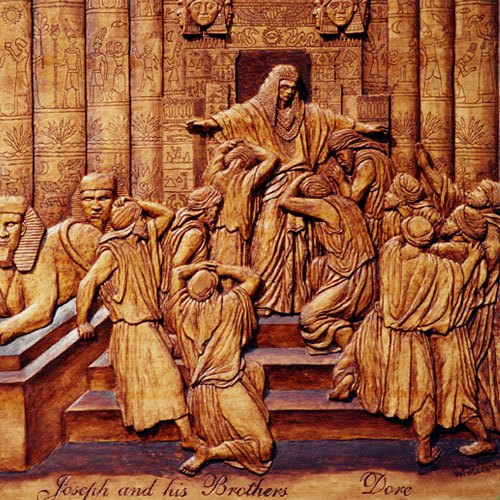
1 Then Joseph could no longer control himself before all his attendants, and he cried out, “Have everyone leave my presence!” So there was no one with Joseph when he made himself known to his brothers. 2 And he wept so loudly that the Egyptians heard him, and Pharaoh’s household heard about it. 3 Joseph said to his brothers, “I am Joseph! Is my father still living?” But his brothers were not able to answer him, because they were terrified at his presence. 4 Then Joseph said to his brothers, “Come close to me.” When they had done so, he said, “I am your brother Joseph, the one you sold into Egypt! 5 And now, do not be distressed and do not be angry with yourselves for selling me here, because it was to save lives that God sent me ahead of you. 6 For two years now there has been famine in the land, and for the next five years there will be no plowing and reaping. 7 But God sent me ahead of you to preserve for you a remnant on earth and to save your lives by a great deliverance. 8 “So then, it was not you who sent me here, but God. He made me father to Pharaoh, lord of his entire household and ruler of all Egypt. 9 Now hurry back to my father and say to him, ‘This is what your son Joseph says: God has made me lord of all Egypt. Come down to me; don’t delay. 10 You shall live in the region of Goshen and be near me—you, your children and grandchildren, your flocks and herds, and all you have. 11 I will provide for you there, because five years of famine are still to come. Otherwise you and your household and all who belong to you will become destitute.’

15 And he kissed all his brothers and wept over them. Afterward his brothers talked with him.

Background

Joseph’s own brothers hated him, (Genesis 37:4), and kidnapped him, (Genesis 37:23). They had even planned to murder him, (Genesis 37: 18ff). They “settled” for selling him into slavery, (Genesis 37:28), a possible if not likely death sentence. And now, Joseph is in a position to get revenge on them. They need him. He does not need them. The famine that he Pharaoh has dreamed about has come to pass, (Genesis 41:17ff); Egypt has grain in abundance because of Joseph’s interpretation of the Pharaoh’s dream and their mutual stewardship in preparation, (Genesis 41:49). Yet Joseph does not take revenge on his brothers. He provides for them and their families. He receives them as his brothers. He embraces and forgives them.

Remembering Joseph, telling his story, means remembering that some family relationships are deeply troubled, even violent. Remembering Joseph means reminding ourselves that even in the most deeply troubled family that has experienced unimaginable rupture, that forgiveness and healing are possible. Remembering Joseph and telling his story provides an opportunity to reflect on our own stewardship, generosity and relationships with others, neighbors and strangers. And maybe most importantly, this story of Joseph reminds us that our actions have consequences that we may not be able to foresee.

There is a difference between forgiveness and reconciliation. Consider this example, “you’re a Christian so you must forgive me”, The implication is that the wrongdoer is then free to continue hurting people. But who would be foolish to open themselves up to another round of abuse? A truly restored relationship requires recognizing and confessing guilt and real repentance which may very well include restitution when possible.

Items for Discussion

  • What are the issues that seem to divide families?
  • What are your secrets to embracing the “differences” and still nurturing the bonds of a close relationship?
  • In what ways do you see God working to reconcile Joseph to his brothers in this story?
  • Explain how the capacity to forgive and the will to repent work to reconcile broken relationships?

Discussion Challenge

  • How would the story of Joseph help in our relationship with God? Explore the idea that we are not ready to receive God’s Grace until we Confess our own guilt and Repent. (1 John 1:8-9)


Hello My Name Is …

Psalm 139:1-161NIV New International Version Translations

1 You have searched me, Lord, and you know me. 2 You know when I sit and when I rise; you perceive my thoughts from afar. 3 You discern my going out and my lying down; you are familiar with all my ways. 4 Before a word is on my tongue you, Lord, know it completely. 5 You hem me in behind and before, and you lay your hand upon me. 6 Such knowledge is too wonderful for me, too lofty for me to attain. 7 Where can I go from your Spirit? Where can I flee from your presence? 8 If I go up to the heavens, you are there; if I make my bed in the depths, you are there. 9 If I rise on the wings of the dawn, if I settle on the far side of the sea, 10 even there your hand will guide me, your right hand will hold me fast. 11 If I say, “Surely the darkness will hide me and the light become night around me,” 12 even the darkness will not be dark to you; the night will shine like the day, for darkness is as light to you. 13 For you created my inmost being;you knit me together in my mother’s womb. 14 I praise you because I am fearfully and wonderfully made; your works are wonderful, I know that full well. 15 My frame was not hidden from you when I was made in the secret place, when I was woven together in the depths of the earth. 16 Your eyes saw my unformed body; all the days ordained for me were written in your book before one of them came to be.

Background2https://www.christianity.com/bible/commentary.php?com=mhc&b=19&c=139

God has perfect knowledge of us, and all our thoughts and actions are open before Him. It is more beneficial for us to meditate on God’s Divine truths, applying them to our own circumstances, and with our hearts lifted to God in prayer, than to approach God with a curious or disputing frame of mind. God knows all things, He is every where. These are the truths acknowledged by all, yet they are seldom  believed in by mankind.

God takes strict notice of every step we take, every right step and every wrong step. He knows what rule we walk by, what end we walk toward, what company we walk with. When we choose to withdrawn from all company, God knows what is in our hearts. There is not a vain word, not a good word, or our motives that God does not hear and understand. Wherever we are, we are under the eye and hand of God. We cannot find God. He finds us. These are the characteristics of God that should restrain us from sin.

We cannot see God, but He can see us. The psalmist, David, did not desire to go hide from the Lord. Where could he go? In the most distant corners of the world, in heaven, or in hell, David could not be out of God’s reach or watchful eye. Nothing can hide us from God; not the thickest darkness. No disguise can save any person or a person’s action from being seen in its true light by God. The secrets of sin are as open before God as the most open acts of disobedience.

On the other hand, we cannot be removed from the supporting, comforting presence of God. Even the grave cannot separate our body from the love of God, who because of Jesus Christ, will raise us into a new and glorious body. No outward circumstances can separate us from God and Jesus.

Items for Discussion

  • Where does society try to “hide” from God?
  • How might the idea of “no place to hide” from God, help us to understand hard issues?
  • How do you think mankind can find out what is sinful and what is not?
  • Who claims to be the spokespersons for God?
  • When does this psalm say life begins?


Ephesians 1:3-14
3 Praise be to the God and Father of our Lord Jesus Christ, who has blessed us in the heavenly realms with every spiritual blessing in Christ. 4 For he chose us in him before the creation of the world to be holy and blameless in his sight. In love 5 he predestined us for adoption to sonship through Jesus Christ, in accordance with his pleasure and will— 6 to the praise of his glorious grace, which he has freely given us in the One he loves. 7 In him we have redemption through his blood, the forgiveness of sins, in accordance with the riches of God’s grace 8 that he lavished on us. With all wisdom and understanding, 9 he made known to us the mystery of his will according to his good pleasure, which he purposed in Christ, 10 to be put into effect when the times reach their fulfillment—to bring unity to all things in heaven and on earth under Christ. 11 In him we were also chosen, having been predestined according to the plan of him who works out everything in conformity with the purpose of his will, 12 in order that we, who were the first to put our hope in Christ, might be for the praise of his glory. 13 And you also were included in Christ when you heard the message of truth, the gospel of your salvation. When you believed, you were marked in him with a seal, the promised Holy Spirit, 14 who is a deposit guaranteeing our inheritance until the redemption of those who are God’s possession—to the praise of his glory.

Background

Spiritual and heavenly blessings are the best blessings. When we have them , it is impossible to be miserable. Without them is clearly the true definition of misery. This has been the choice of mankind even before the foundation of the world was laid. Man’s salvation would be through Jesus Christ, that you and I would be made holy, separated  from our sin. We are set apart for God, and sanctified (made clean) by the Holy Spirit through our faith (decision) in Christ.

We have been chosen by God to have endless happiness gained through holiness. In love this was predestinated, or fore-ordained, to be our fate, to be offered faith in Christ Jesus, and to be openly admitted to the privileges of that high relationship with Jesus. The redemptive and reconciled  believer becomes the pardoned sinner, giving all the praise of salvation to our gracious Father, God Himself. It was His love that chose this method of redemption, sparing nothing, including His own Son, and brought believers to hear and embrace this salvation. It was the gift of God’s grace, given freely to deliver Jesus to this task. God chose this method of grace because it gives no encouragement to evil. It shows sin in all its hatefulness, and how it deserves vengeance. It becomes our actions as believers that declare the praises of God’s Divine mercy.

Blessings were made known to those who believed through Christ’s own example. If God had not made them known by His written word, preached gospel, and Spirit of truth, mankind would have had no hope at all. Christ united the two differing parties, God and man, in his own person, and satisfied for that wrong which caused our separation from God. God’s gracious gift is clearly the first-fruits of happiness. For this we were made, and for this we were redeemed; this is the great design of God in all that He has done for us.

Items for Discussion

  • What is your definition of a “blessing?”
  • How would you explain the concept of “separated from God by sin?”
  • Many places in Scripture state that God has provided us evidence of His existence – Where do you see it?
  • What is the most powerful apologetic that you have heard to establish that God is real? What about Christ?

Discussion Challenge

  • What do thankful people look like?


Holy Impossible

Isaiah 6:1-81NIV New International Version Translations
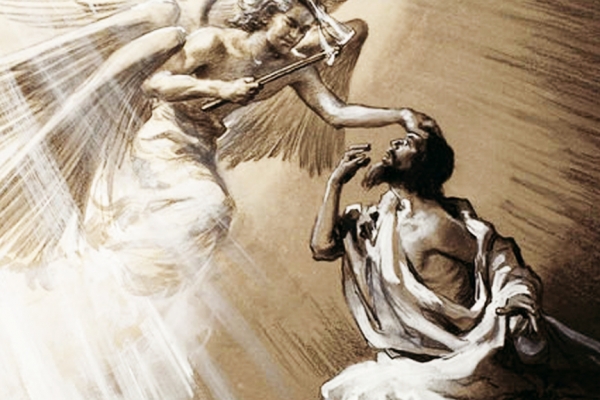
1In the year that King Uzziah died, I saw the LORD, high and exalted, seated on a throne; and the train of his robe filled the temple. 2Above him were seraphim, each with six wings: With two wings they covered their faces, with two they covered their feet, and with two they were flying. 3And they were calling to one another: “Holy, holy, holy is the LORD Almighty; the whole earth is full of his glory.” 4At the sound of their voices the doorposts and thresholds shook and the temple was filled with smoke. 5“Woe to me!” I cried. “I am ruined! For I am a man of unclean lips, and I live among a people of unclean lips, and my eyes have seen the King, the LORD Almighty.” 6Then one of the seraphim flew to me with a live coal in his hand, which he had taken with tongs from the altar. 7With it he touched my mouth and said, “See, this has touched your lips; your guilt is taken away and your sin atoned for.” 8Then I heard the voice of the LORD saying, “Whom shall I send? And who will go for us?” And I said, “Here am I. Send me!”

Background

This is a figurative vision, limited by the capacity of the human mind (Isaiah’s) as he is about to look into God’s temple, the most holy place. The prophet, who is standing outside the temple, sees the God, raised over the ark of the covenant, between the cherubim and seraphim, and God’s glory filled the whole temple.   This vision is explained, John 12:41, John 12:41 “Isaiah said this because he saw Jesus’ glory and spoke about Him.” John mentions this as full proof that Christ is God. Our imagery must be to see God seated on a throne of grace; and through Christ, the way into this of holiest places is made open to us.

God’s temple, His church is the earth, filled with His glory. The train of God’s robe, filled the temple, the whole world, for all that exists is God’s temple. And yet God can dwell in every contrite heart.  Isaiah stands recognizing that he is not worthy to be where he is. He is sinful. Instead of horror, God’s very own attendants begin to attend to Isaiah. Who ae the seraphim? Seraphim are the traditional angels of heaven, they are the ministering spirits who live near us and do so much for each of us Their name means “burners;” they burn in love to God, and zeal for His glory against sin.

The seraphim showing their faces veiled as a declaration of obedience to all God’s commands. The seraphim do not understand the secret reasons of God’s counsels, government, or promises. All vanity, ambition, ignorance, and pride, will be done away by one view of Christ in His glory. This vision overwhelmed the prophet with a sense of his own vileness.  We are completely undone if there is not a Mediator between us and this holy God. A glimpse of heavenly glory is enough to convince us that all our earthly righteousness’s are  no more than filthy rags. No man dare speak to the God, if he saw the justice, holiness, and majesty of God, without discerning the glorious mercy and grace in Jesus Christ.

The live coal may denote the assurance given to the prophet, of pardon, and acceptance in his work, through the atonement of Christ. The taking away sin is necessary to our speaking with confidence and comfort, either to God in prayer, or from God in preaching; and those shall have their sin taken away who complain of it as a burden, and see themselves in danger of being undone by it. It is great comfort to those whom God sends, that they go for God, and may therefore speak in His name, assured that He will stand behind them.

Items for Discussion

  • How would you describe the characters in this story: e.g. God, Isaiah, the Seraphim? Why is each in the story?
  • How would unforgiven sin interfere with someone’s ability to share Christ with others?
  • If you are positive that God is behind your efforts, how does this lessen any concerns over your effectiveness or results?
  • Clearly, Isaiah is called by God – What do you think a “calling by God” looks like today?

Luke 5:1-11
1 One day as Jesus was standing by the Lake of Gennesaret, the people were crowding around him and listening to the word of God. 2 He saw at the water’s edge two boats, left there by the fishermen, who were washing their nets. 3 He got into one of the boats, the one belonging to Simon, and asked him to put out a little from shore. Then he sat down and taught the people from the boat. 4 When he had finished speaking, he said to Simon, “Put out into deep water, and let down the nets for a catch.” 5 Simon answered, “Master, we’ve worked hard all night and haven’t caught anything. But because you say so, I will let down the nets.” 6 When they had done so, they caught such a large number of fish that their nets began to break. 7 So they signaled their partners in the other boat to come and help them, and they came and filled both boats so full that they began to sink. 8 When Simon Peter saw this, he fell at Jesus’ knees and said, “Go away from me, Lord; I am a sinful man!” 9 For he and all his companions were astonished at the catch of fish they had taken, 10 and so were James and John, the sons of Zebedee, Simon’s partners. Then Jesus said to Simon, “Don’t be afraid; from now on you will fish for people.” 11 So they pulled their boats up on shore, left everything and followed him.

Background

When Christ had finished preaching, he told Peter to go back to the business of his calling, fishing. This example shows that the time  spent on week days in public exercises of religion, do not have to be so great as to take up all of our time, and may help us prepare our minds for our worldly business. With what cheerfulness do we go about the duties of our calling, after we have been with God, and have our worldly occupation blessed by the Word and prayer!

No fish were caught and they were disappointed and tired. Yet Christ told them to let down their nets once again. Jesus shows us that we must not abruptly quit our worldly callings because we have not had the success in them we desire. We are called to follow the guidance of Christ’s word in God’s world. The huge catch of fish was seen as a miracle. We too are like Peter, sinful people, therefore Jesus Christ has the right to just depart from us. It is up to us to call out and ask Jesus not to leave  for woe to us if Jesus ever departed from sinners!

Rather let us always call out to Jesus to come and dwell in our hearts and do so by our faith so that Jesus may transform and cleanse us. These fishermen gave up everything and followed Jesus, even when their calling, fishing,  prospered. When riches increase, and we are tempted to set our hearts on them, but to give them up for Christ is the greatest gift.

Items for Discussion

  • Now that you have read both an old and new Testament verse on a calling, what would you say are the elements of being called?
  • Are these the same for every Christian or just for those who become ministers?
  • How are both different and similar to one’s personal salvation?
  • What makes you follow someone? In other words, become an apprentice of sorts?

Discussion Challenge

  • How do you know what your own personal calling is?


  • 1
    NIV New International Version Translations

Exit Laughing

Matthew 6:211NIV New International Version Translations
21For where your treasure is, there your heart will be also.

Background

If God is the treasure of our souls, our hearts, our affections and desires, we should find our lives focused on Godly things, things to come.  A focus on worldly things just prove that our treasure is here and now; a heavenly minded person shows that our treasure is lies somewhere in eternity. The principal concern of Jesus can be seen in verse.  “Where is thy heart?” The love of Christ and His kingdom is comprised of the constant choice of spiritual things rather than physical things of worldly values. This preference for eternal things as contrasted with things material and secular, mark the broad purposes of the new life in Christ. Possessions must be possessed; they must not possess their owners.

Items for Discussion

  • Where does the trap of possessions and worldly values come from?
  • How do worldly “things” ensnare our lives?
  • Leading a eternally focused life and a worldly life are both necessary. We must survive for today to exist tomorrow and for eternity – What is your secret to this balance?
  • What spiritual growth have you received from the possession of “things?”
  • What spiritual growth have you received from focusing on things eternal?
  • What are the warning signs of entrapment into worldly treasures?


Romans 6:23
23For the wages of sin is death, but the gift of God is eternal life in Christ Jesus our LORD.

Background

This verse in Romans is painfully sobering. Those whose “work” is sin will receive a payment of spiritual death, which is ultimately eternal separation from God. The verse, however,  immediately includes the solution on how to avoid this problem. Through faith in Jesus Christ our Lord and Savior, the gift of eternal life is given. It is not earned through our effort (Ephesians 2:8-9), but is instead freely given through God’s grace because of what Jesus did on the cross, dying as a substitute for our sin.

2https://www.christianity.com/bible/commentary.php?com=mh&b=45&c=6The wages of sin is death means death is as due to a sinner as wages are to a servants for their labor. This is true of every sin. There is no sin in its own nature small or large. The scope and judgment of what is sin is not ours to ever define. The definition of what is a sin belongs solely to God.

Items for Discussion

  • Where does society try to define what is sinful and what is not?
  • Why does is seem so foolish to try to define sin?
  • How do we discover what is sinful before God?
  • How do you think society is doing on discovering what God thinks is sinful?


Philippians 4:19
19 And my God will meet all your needs according to the riches of his glory in Christ Jesus.

Background

Luke described the city called Philippi as a Roman ‘colony’ (Acts 16:12). The emperor Augustus allowed retired soldiers to live there after they had supported him in a battle in 31 BC. As a Roman colony, its citizens possessed the same rights and laws as those who lived in Italy. Paul and Silas, with Timothy and Luke, established the church there after they crossed from Asia into Europe (Acts 16:12-40). Paul visited Philippi again on his third journey (Acts 20:1-6). It was a group of Christians of whom Paul was very fond. He called its members his ‘joy and crown’ (4:1). The Christians in Philippi were not rich, but they supported Paul with more than one gift of money. They also gave money for the poor Christians in Jerusalem (2 Corinthians 8:1-5).

Paul wanted to:

  • thank the Christians at Philippi for the gifts that they had sent him by Epaphroditus.
  • inform the Christians at Philippi about his own circumstances. He also wanted to tell them that Epaphroditus had recovered from his dangerous illness. He was returning to Philippi.
  • appeal for unity and for the end of quarrels in the church.
  • warn them about false doctrine, especially that of Jewish Christians who insisted on circumcision for Gentiles.
  • urge them to remain loyal to their faith and to stand firm against opponents.

Paul was in prison when he wrote this letter. He was not sure of the result of a trial. Some writers suggest that the prison was in Ephesus or Caesarea. But it is more likely that he was in Rome. He probably wrote this letter at the end of the two years that we read about in Acts 28:30.

Paul is thanking his supporters in Philippi.  This is not a promise of wealth, or even an easy life. Rather, the concept of “need” has to be considered according to God’s will. What we “need” and what we “want” are not always the same thing. That being said, God tends to bless those who will use the resources they have according to His purposes. This is something Paul observed specifically happening with the Philippians.

Their needs would be met through Christ, the one who made and controlled all things. They would never lack with Christ as their provider. From the earliest pages of Scripture, God has been known as the Lord who will provide (Genesis 22:14), affirmed by Peter as well (2 Peter 1:11). As Paul noted in 2 Corinthians 9:10, “He who supplies seed to the sower and bread for food will supply and multiply your seed for sowing and increase the harvest of your righteousness.”

Items for Discussion

  • How does humor help us with our relationship with God?
  • What are the top three priorities you might list if you had to summarize what you have learned from God?

Discussion Challenge

  • If you were never to see someone you cared for again, what would you try to tell them before you left? (you cannot use “I love them” as  your only answer).

When We Have Wandered Too Far

Psalm 231NIV New International Version Translations

1 The LORD is my shepherd, I lack nothing. 2 He makes me lie down in green pastures, he leads me beside quiet waters, 3 he refreshes my soul. He guides me along the right paths for his name’s sake. 4 Even though I walk through the darkest valley, I will fear no evil, for you are with me; your rod and your staff, they comfort me. 5 You prepare a table before me in the presence of my enemies. You anoint my head with oil; my cup overflows. 6 Surely your goodness and love will follow me all the days of my life, and I will dwell in the house of the LORD forever.

Background

We do not know when David wrote Psalm 23. Perhaps it was when his son Absalom tried to become king and David ran away. He went down to the Jordan River, crossing it by the ford called Jabbok. David then went on into a land called Gilead. There he met Brazillai, the shepherd. This experience made David think that God, too, was like a shepherd. God was just like Brazillai, a good friend to David. Barzillai gave David food and shelter. Additionally, Brazillai offered David good advice at a time in his life that he needed it.

The popularity of this psalm is great. Many people gain comfort from Psalm 23 because later in the New Testament, we find that Jesus says He is the shepherd in the psalm. The shepherd leads the sheep to all that we need: food, rest and water. It is through our faith in Jesus, the shepherd, that we become His sheep and join His flock. Christ leads us to all we need too.

Items for Discussion

  • Where to you “run to” when things seem out of control and piling on?
  • How would you describe a friend?
  • Why is it helpful to you to spend time with a good friend when things are troubling you?
  • What is the purpose of the shepherd’s staff? the rod and the hook? How does it relate to us today?
  • Are there things in our society today that are taking away from the skills of friendship?
  • What about the “life experiences” of a shepherd prepare them to be a good friend?


Luke 15:1-7
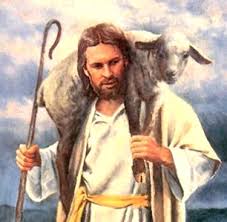
1 Now the tax collectors and sinners were all gathering around to hear Jesus. 2 But the Pharisees and the teachers of the law muttered, “This man welcomes sinners and eats with them.” 3 Then Jesus told them this parable: 4 “Suppose one of you has a hundred sheep and loses one of them. Doesn’t he leave the ninety-nine in the open country and go after the lost sheep until he finds it? 5 And when he finds it, he joyfully puts it on his shoulders 6 and goes home. Then he calls his friends and neighbors together and says, ‘Rejoice with me; I have found my lost sheep.’ 7 I tell you that in the same way there will be more rejoicing in heaven over one sinner who repents than over ninety-nine righteous persons who do not need to repent.

Background2https://www.studylight.org/commentaries/dsb/luke-15.html

It was an offence to the scribes and Pharisees that Jesus associated with men and women who, by the Jewish faith, were labelled as sinners. The Pharisees gave to people who did not keep the law a general classification. They called them the People of the Land; and there was a complete barrier between the Pharisees and the People of the Land. To marry a daughter to one of them was like exposing her bound and helpless to a lion. The Pharisaic regulations laid it down,

“When a man is one of the People of the Land, entrust no money to him, take no testimony from him. trust him with no secret, do not appoint him guardian of an orphan, do not make him the custodian of charitable funds, do not accompany him on a journey.”

A Pharisee was forbidden to be the guest of any such man or to have him as his guest. He was even forbidden, so far as it was possible, to have any business dealings with him. It was the deliberate Pharisaic aim to avoid every contact with the people who did not observe the petty details of the law.

Obviously, the Pharisees were shocked to the core at the way in which Jesus spent time with people who were not only outsiders, but sinners. In the minds of the religious leaders of Israel, this contact defiled Him. We will understand this parable more fully if we remember that the strict Jews did not say “There will be joy in heaven over one sinner who repents,” but, “There will be joy in heaven over one sinner who is obliterated before God.” They looked sadistically forward not to the saving but to the destruction of the sinner.

So Jesus told them the parable of the lost sheep and the shepherd’s joy. The shepherd in Judaea had a hard and dangerous task. Pasture was scarce. The narrow central plateau was only a few miles wide, and then it plunged down to the wild cliffs and the terrible devastation of the desert. There were no restraining walls and the sheep would wander. The shepherd was personally responsible for the sheep. If a sheep was lost the shepherd must at least bring home the fleece to show how it had died. These shepherds were experts at tracking and could follow the straying sheep’s footprints for miles across the hills. Every shepherd would to risk his life for his sheep.

Many of the flocks were communal flocks, belonging, not to individuals, but to villages. There would be two or three shepherds in charge. Those whose flocks were safe would arrive home on time and bring news that one shepherd was still out on the mountain side searching for a sheep which was lost. The whole village would be on the watch, and when, in the distance, when they saw the shepherd striding home with the lost sheep across his shoulders, there would rise from the whole community a shout of joy and of thanksgiving.

Jesus is telling us that God is like this too. God is as glad when a lost sinner is found as a shepherd is when a strayed sheep is brought home. God knows the joy of finding things that have gone lost. Our society today seems to have flipped this, finding joy in the sinning and hatred with the saved. Thank goodness it is a thousand times easier to come back to God than it is to come home to a world filled with criticism.

Items for Discussion

  • Why is it comforting to think of Jesus as a shepherd?
  • What are the responsibilities of a shepherd?
  • How might the role of a shepherd be different than say a cowboys on a cattle ranch?
  • How do you feel about the fact that Jesus seems to care more for the one who is lost than the ninety nine who are not lost?
  • What do you think this story says about the other ninety nine?
  • What makes Jesus a good friend?

Discussion Challenge

  • There can be no greater feeling in life than to be saved, carried on the shoulders of the shepherd. How do we keep this moment of gratitude and happiness alive in our lives?

The Savior of the World

Isaiah 49:1-61NIV New International Version Translations
1Listen to me, you islands; hear this, you distant nations: Before I was born the LORD called me; from my mother’s womb he has spoken my name. 2He made my mouth like a sharpened sword, in the shadow of his hand he hid me; he made me into a polished arrow and concealed me in his quiver. 3He said to me, “You are my servant, Israel, in whom I will display my splendor.” 4But I said, “I have labored in vain; I have spent my strength for nothing at all. Yet what is due me is in the LORD’s hand, and my reward is with my God.” 5And now the LORD says- he who formed me in the womb to be his servant to bring Jacob back to him and gather Israel to himself, for I am honored in the eyes of the LORD and my God has been my strength- 6he says: “It is too small a thing for you to be my servant to restore the tribes of Jacob and bring back those of Israel I have kept. I will also make you a light for the Gentiles, that my salvation may reach to the ends of the earth.”

Background

Chapters 42-53 of the book of Isaiah contain four Servant Songs. The Servant is God’s agent to do God’s work in the world (Christ).  Our verses are the second song (49:1-6). They further define the Servant’s mission. The Servant is “to raise up the tribes of Jacob, and to restore the preserved of Israel” (49:6a). Furthermore, God says, “I will also give you for a light to the nations, that you may be my salvation to the end of the earth” (49:6b).

Many Israelites lived abroad, not in the lands of Israel. But here, the reference is to the foreign nations, rather than to the Israelites. Isaiah repeats the command to listen. This is to emphasize that the message is for foreigners. To be called does not mean to shout to gain attention but to be appointed to a task. Isaiah’s call came before he was even born. (See Jeremiah 1:4-5). Words like sword and arrow show that Isaiah’s message from God will have a powerful effect on people’s lives. Like a sword or an arrow, Isaiah’s words will be sharp and powerful. The Lord has prepared Isaiah ahead of time to speak the sharp words of God’s judgement. We may think that a shadow is not much protection from danger but with God, even His shadow is always sufficient (see Psalm 17:8). The shadow also reminds God’s people that He is always very close to each believer.

When God originally called Isaiah to speak for Him, He had warned Isaiah about the people’s reaction. People would not listen to Isaiah (see Isaiah 6:9-12). But Isaiah wisely realized that his own duty was to obey God anyway. What happened as a result was not Isaiah’s responsibility (see Isaiah 40:4-8). It was God’s responsibility.

The first words are similar to those in Isaiah 43:1 and 49:1. But here Isaiah adds that the Lord provides him with the necessary help. The Lord has an even greater task for Isaiah. He is to tell all nations that God can rescue every person from the result of their evil lives. God intends them to spread His ‘light’ to the whole world (see Isaiah 42:6) and to everybody in the world (see Isaiah 48:20).

Items for Discussion

  • Do you think you have a calling, a calling from God? What is it?
  • What in your mind constitutes failure when you do not seem to be accomplishing your calling?
  • Why is it only our duty to speak on behalf of God and not feel responsible for those who refuse to hear it?
  • What do you think God’s light is?

John 1:29-41
29 The next day John saw Jesus coming toward him and said, “Look, the Lamb of God, who takes away the sin of the world! 30 This is the one I meant when I said, ‘A man who comes after me has surpassed me because he was before me.’ 31 I myself did not know him, but the reason I came baptizing with water was that he might be revealed to Israel.” 32 Then John gave this testimony: “I saw the Spirit come down from heaven as a dove and remain on him. 33 And I myself did not know him, but the one who sent me to baptize with water told me, ‘The man on whom you see the Spirit come down and remain is the one who will baptize with the Holy Spirit.’ 34 I have seen and I testify that this is God’s Chosen One.” 35 The next day John was there again with two of his disciples. 36 When he saw Jesus passing by, he said, “Look, the Lamb of God!” 37 When the two disciples heard him say this, they followed Jesus. 38 Turning around, Jesus saw them following and asked, “What do you want?” They said, “Rabbi” (which means “Teacher”), “where are you staying?” 39 “Come,” he replied, “and you will see.” So they went and saw where he was staying, and they spent that day with him. It was about four in the afternoon. 40 Andrew, Simon Peter’s brother, was one of the two who heard what John had said and who had followed Jesus. 41 The first thing Andrew did was to find his brother Simon and tell him, “We have found the Messiah” (that is, the Christ).

Background

The witness of John the Baptist is crucial to the beginning of Jesus’ ministry. John’s witness begins with the reference to “his own testimony to priests and Levites who had been sent from Jerusalem to ask, “Who are you?” (1:19). John made it clear to them that he was not the Messiah, but was sent to “Make straight the way of the Lord” (1:23). Then, speaking of the one on whom the Spirit descended, John said, “I have seen and have testified (witnessed) that this is the Son of God” (1:34).

Then John witnesses to his own disciples, saying of Jesus, “Behold, the Lamb of God!”—with the result that the two disciples stop following John and start following Jesus (1:37). At that point, having accomplished his witnessing task, John fades from the picture. We see him only once more in this Gospel, when his disciples ask him about Jesus, who has become quite popular (3:26). John tells them, “He must increase, but I must decrease” (3:30).

Items for Discussion

  • In what ways are each of us contemporary witnesses to Jesus ?
  • How do we demonstrate to others who Jesus is?  In other words, how does your life say, “Look, the Lamb of God?”
  • We do not sacrifice lambs today – What are the appropriate sacrifices that people are making to remove guilt?
  • Why do sacrifices fall short to remove sin in our world?
  • What is the one characteristic of Jesus that gives you hope for this world?

Discussion Challenge

  • Think about how God has called you. How is it that you will help spread the “light of the world?”


  • 1
    NIV New International Version Translations

Fulfilling All Righteousness

Isaiah 42:1-81NIV New International Version Translations
1“Here is my servant, whom I uphold, my chosen one in whom I delight; I will put my Spirit on him, and he will bring justice to the nations. 2He will not shout or cry out, or raise his voice in the streets. 3A bruised reed he will not break, and a smoldering wick he will not snuff out. In faithfulness he will bring forth justice; 4he will not falter or be discouraged till he establishes justice on earth. In his teaching the islands will put their hope.” 5This is what God the LORD says- the Creator of the heavens, who stretches them out, who spreads out the earth with all that springs from it, who gives breath to its people, and life to those who walk on it: 6“I, the LORD, have called you in righteousness; I will take hold of your hand. I will keep you and will make you to be a covenant for the people and a light for the Gentiles, 7to open eyes that are blind, to free captives from prison and to release from the dungeon those who sit in darkness. 8“I am the LORD; that is my name! I will not yield my glory to another or my praise to idols.

Background2https://www.workingpreacher.org/preaching.aspx?commentary_id=1938

Dictionaries define righteousness as “behavior that is morally justifiable or right.” Such behavior is characterized by norms and accepted standards of morality, justice, virtue, or uprightness that are derived from society.  However, the Bible’s standard of human righteousness is God’s own perfection in every attribute, every attitude, every behavior, and every word. In other words, God’s laws, as stated in the Bible, describe His own character as well as create a plumb line by which God Himself measures human righteousness. We will learn that God’s plumb line is no other than Jesus Himself.

This passage in Isaiah shows God speaking to the pain of exile and His plan to send a servant who will bring justice, not only to Israel but to all nations. History tells us that God delivered His people from bondage in Egypt, made a covenant with them, and brought them through wilderness into the land of Canaan. They became a nation and built a temple for the Lord. For centuries they saw military victories and defeats under kings and generals. They strayed from God’s covenant but prophets called them back. Then, in the sixth century BCE, the unthinkable happened.

The Babylonians defeated Israel. They destroyed the temple, plundered Israel’s treasure and livelihoods, took them into bondage, and marched them back to the gates of Babylon in chains, prompting “By the rivers of Babylon there we sat down and there we wept when we remembered Zion” (Psalm 137:1). The Babylonian victory over Israel was absolute and complete, destroying all political, social, economic and religious life as God’s people had known for centuries. Israel was abandoned to its enemies: How could the Mighty Deliverer allow this to happen? Had God abandoned them? Removed from access to the temple and to the land, were they still God’s people? Was God still God? In exile they could only conclude that God had withdrawn favor and allowed the Babylonians to punish them for their sins and disobedience. The exile would last about 50 years.

Isaiah now speaks to their dishearten spirits. The prophet reminds the people of who God is and how God works. He draws their attention from this particular, historical moment, to the larger purposes of God. By reminding Israel of who God is, how God works, and what God is doing by sending a servant; Isaiah expands the frame of reference, re-focusing Israel’s purpose within God’s cosmic frame.

God is not only the God of Israel or even of Babylon, God is the One who “created the heavens . . . and stretched out the earth” (verse 5). This is the God of creation, who made everything that is, and who dwells in universe, not contained by the cramped space of Israel’s earthly exile. This is the God “who gives breath to the people upon the earth and provides the Spirit to those who walk on it” (verse 5). God’s breath gives life not only the people of Israel, but to every living, breathing creature on earth. This is also the God who has reached out to create the people called Israel and to call them to righteousness(verse 6).

Isaiah proclaims that God acts in particular ways. First, God sends a spirit-filled servant not a conqueror or tyrant — (“a bruised reed he will not break,” verse 3). This servant of God will be a liberator who will bring justice, not domination. God is working to bring justice to “the earth,” to bring it to all, everywhere on earth. God sends this servant to persevere until justice is complete everywhere “to the coastlands” (verse 4).

God tells His people, to be “a light to the nations, to open the eyes that are blind, to bring out the prisoners from the dungeon, from the prison those who sit in darkness” (verses 6-7). God calls them to righteousness not for themselves alone, but for all nations. Isaiah reminds this exiled group of people that God has not abandoned them but is indeed at work among them, restoring them so they will become a blessing to the world.

Items for Discussion

  • When society loses God, such as happened or appeared to happen to the Israelites, how does a society get God back?
  • How would believers help others, non-believers with gaining an understanding of our God? Remember, many in the world have a god, but this question pertains to helping the world get to know “Our God?”
  • In what ways does a society fulfill God’s plan for righteousness?
  • Is our society today succeeding, failing and in what ways?
  • How should we bring justice to this earth?
  • What do you think Isaiah’s call to “7to open eyes that are blind, to free captives from prison and to release from the dungeon those who sit in darkness” means?

Matthew 3:13-17
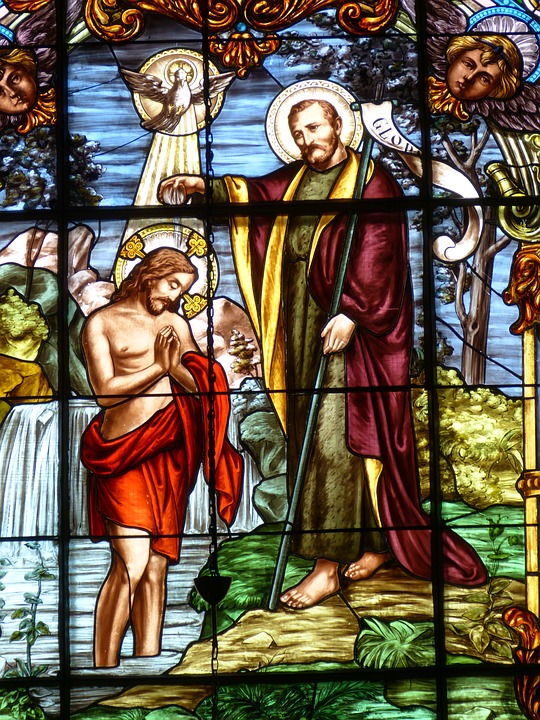
13Then Jesus came from Galilee to the Jordan to be baptized by John. 14But John tried to deter him, saying, “I need to be baptized by you, and do you come to me?” 15Jesus replied, “Let it be so now; it is proper for us to do this to fulfill all righteousness.” Then John consented. 16As soon as Jesus was baptized, he went up out of the water. At that moment heaven was opened, and he saw the Spirit of God descending like a dove and alighting on him. 17And a voice from heaven said, “This is my Son, whom I love; with him I am well pleased.”

Background

Jesus came into the world as a light that “darkness cannot overcome” (John 1:5), “a light to the nations” (Isaiah 42:6). Matthew 3:13-17 marks the baptism of Jesus with an echo of Isaiah 42:1, “the Spirit of God descended upon him,” and “a voice from heaven” announces, “This is my Son, my Beloved, with whom I am well pleased.” The pattern of the servant continues from Isaiah to Matthew. In Jesus, God again sends a servant who will bring justice, who God “anoints to bring good news to the poor . . . proclaim release to the captives, and recovery of sight to the blind, to let the oppressed go free, and declare the year of the Lord’s favor” (Luke 4:18-19).

Matthew used the Gospel of Mark as one of his sources, adding material from other sources as well. Matthew adds two important pieces to Mark’s brief account of Jesus’s baptism:

  • First, Matthew notes, “Jesus came from Galilee to the Jordan to be baptized by John.” (vs. 13), making it clear that Jesus took the initiative.
  • Second, “John tried to deter him,,” but Jesus insists on being baptized “to fulfill all righteousness” (vv. 14-15).

John was not the first to baptize people. Jews baptized new converts to Judaism, generally coming from Ancient Greek religions into their faith, but did not baptize other Jews. Jews couldn’t imagine themselves as needing baptism.  There was no written legal requirement for Jesus to be baptized in order to start His ministry. Jesus followed the law, but he also followed the traditions in line with the heart of the law. By this act, Jesus proclaimed the beginning of His ministry. Baptism today is an outward act that symbolizes the inward coming to and acceptance of Jesus Christ as real, as God incarnate, as the sacrificial means by which those who believe in Him can forever coexist with God. The purpose of baptism is to give visual testimony of our commitment to Christ who has facilitated that reconciliation.

When questioned by John as to why, Jesus answers simply “to fulfill all righteousness.” As we see back in Isaiah, Jesus is reminding us that we are to be “a light to the nations, to open the eyes that are blind, to bring out the prisoners from the dungeon, from the prison those who sit in darkness.”  Jesus came to be a light to all nations and He is calling us to do the same.

Items for Discussion

  • What goes through your mind when you see or participate in a baptism?
  • Jesus followed traditions as well as the law – What benefits come from following traditions?
  • Why are public covenants so much more effective than private or personal ones?
  • While Jesus had no sin, His purpose for baptism was to show us He was all in with respect to God’s plan – What does that mean, to be all in with Jesus?

Discussion Challenge

  • How can a church fulfill all righteousness?

A Crown of Beauty

Isaiah 62:1-31NIV New International Version Translations
1For Zion’s sake I will not keep silent, for Jerusalem’s sake I will not remain quiet, till her vindication shines out like the dawn, her salvation like a blazing torch. 2The nations will see your vindication, and all kings your glory; you will be called by a new name that the mouth of the LORD will bestow. 3You will be a crown of splendor in the LORD’s hand, a royal diadem in the hand of your God.

Background

God is assuring His church of His unfailing love, and His pleading for her under all trials and difficulties. His church will be called by a new name, a pleasant name, such as the church was never called by before.

The state of true religion in the world, before the preaching of the gospel, gives us a history and perception that no man seemed to have any real concern for God. By God’s grace, He has determined that in His church, there will be delight. If God rejoices over us, we should rejoice in Him too.

God has made similar promises before about the wonderful future for Jerusalem and its inhabitants but that wonderful future never seemed to come. So Isaiah (his followers) continue to urge God to act as He has originally promised them.

Foreign nations will think seriously about God’s actions on behalf of His people because God will also bring about a new relationship with us. He will change the very character of His people through Christ.

Items for Discussion

  • How do you know that God loves you?
  • Even as Christians, we are impatient, wanting bad things to stop, good things to come quickly – How do we learn to wait and trust during what seems to be taking “forever” to become good news?
  • Change can be a good thing if things are not going well – Why?
  • Where is it that we should get our counsel during hard times?


John 1:1-18
1 In the beginning was the Word, and the Word was with God, and the Word was God. 2 He was with God in the beginning. 3 Through him all things were made; without him nothing was made that has been made. 4 In him was life, and that life was the light of all mankind. 5 The light shines in the darkness, and the darkness has not overcome it. 6 There was a man sent from God whose name was John. 7 He came as a witness to testify concerning that light, so that through him all might believe. 8 He himself was not the light; he came only as a witness to the light. 9 The true light that gives light to everyone was coming into the world. 10 He was in the world, and though the world was made through him, the world did not recognize him. 11 He came to that which was his own, but his own did not receive him. 12 Yet to all who did receive him, to those who believed in his name, he gave the right to become children of God— 13 children born not of natural descent, nor of human decision or a husband’s will, but born of God. 14 The Word became flesh and made his dwelling among us. We have seen his glory, the glory of the one and only Son, who came from the Father, full of grace and truth. 15 (John testified concerning him. He cried out, saying, “This is the one I spoke about when I said, ‘He who comes after me has surpassed me because he was before me.’”) 16 Out of his fullness we have all received grace in place of grace already given. 17 For the law was given through Moses; grace and truth came through Jesus Christ. 18 No one has ever seen God, but the one and only Son, who is himself God and[b] is in closest relationship with the Father, has made him known.

Background2https://www.christianity.com/bible/commentary.php?com=mhc&b=43&c=1

The reason why the Son of God is called the Word, is that as our words explain our minds to others. The Son of God was sent in order to reveal God’s mind to the world. We make the assertion that Christ is God because He existed from the beginning with God. All things were made by Him, and not as just individual things. They all worked together with Him. Without Christ, nothing was made, from the highest angel to the lowest worm. This shows how well qualified Jesus was for the work of becoming our redeemer and savior. Common Sense and Reason are derived from Him, and depend on Him. This eternal Word, this true Light shines, but the darkness just does not understand Him.

John the Baptist came to bear witness concerning Jesus. Nothing more fully shows the darkness of men’s minds, than when Christ, the Light, had appeared. Christ was and is the true Light; that one great Light which deserves to be called as such. By Christ’s Spirit and grace He enlightens all that are themselves enlightened to salvation; and those that are not enlightened by him, will perish in darkness. Christ was in the world when He took our nature upon Himself, and lived among us. The Son of the Highest was here in this lower world. He was in the world, but not of it. He came to save a lost world, because it was a world of His own making. Yet the world would never know Him.

When He finally comes as a Judge, the world will know Him then. Many will claim that they are Christ’s own, yet will not really receive him, because they will not give up their sins, or allow Christ to reign over them. All the children of God will have been born again. This new birth is through the word of God and by the Spirit of God as the Author.

By His Divine presence, Christ always was in the world. But now that the time was correct, He became God manifested in the flesh. We must, however, observe His Divine glory, which was part of His flesh. Men discover their weaknesses but it was not so with Christ. We were able to be intimate with Him and yet see His glory. Although He was in the form of a servant, His form was like the Son of God, His Divine glory appeared in the holiness of His doctrine (words), and in His miracles. He was full of grace, fully acceptable to his Father, therefore qualified to plead for us. Jesus was full of truth, fully aware of the things He was to reveal.

As to the order of timing and the beginning of His work, Christ came after John, but in every other way He was before John. The expression clearly shows that Jesus had existence before He appeared on earth as man. All fulness dwells in Him, from which alone fallen sinners have, and will receive, by faith, all that makes them wise, strong, holy, useful, and happy. Our gifts which we receive from Christ are all summed up in this one word, grace; we have received “even grace,” a gift so great, so rich, so invaluable; the good will of God towards us, and the good work of God in us. The law of God is holy, just, and good; and we should make the proper use of it.

But we cannot derive from grace a  pardon, righteousness, or strength. Grace teaches us to adorn the doctrine of God our Savior, but it cannot take the place of that doctrine. Since no mercy comes from God to sinners except through Jesus Christ, no man can come to the Father but through Christ; no man can know God, except as Jesus Himself is made known as the only begotten and beloved Son of God.

Items for Discussion

  • The Gospel of John repeats certain words: word, life, light, darkness, believe, know, “his own,” fullness, and bosom – How do you think those words help us understand who Jesus is?  Go through each word.
  • John’s Gospel negates the concept of time.  Why do you think it is important for us to know Jesus was always there?
  • Why do you thing the “darkness” doesn’t understand Jesus?
  • How did those close to Jesus, those who took time to know Him, know He was God?
  • What do we learn about how to live life when we take time to observe the life of our Lord Jesus Christ?

Discussion Challenge

  • If God, through Christ, gives all people a visible Crown, why is it so few can be recognized as wearing one?
  • 1
    NIV New International Version Translations
  • 2
    https://www.christianity.com/bible/commentary.php?com=mhc&b=43&c=1
« Older posts Newer posts »

"For it is by grace you have been saved" - Ephesians 2:8-9  

Copyright: © 2001 - 2025 Lostpine

Translate »