Biblical wisdom, historical insight, and personal growth — all in one place

Category: Shadows (Page 18 of 26)

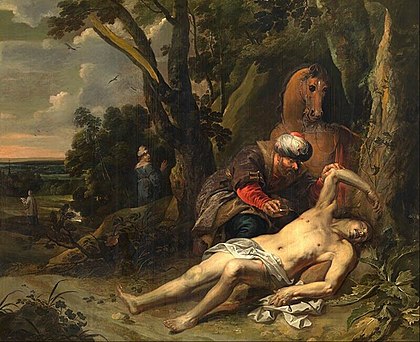
Who were the Samaritans?

Our Bible mentions Samaria and its people over one hundred times. But we remember the Samaritan people most for two parables that Jesus tells. To find the roots of the Samaritan people and understand their full story, we need to look to Jacob and his twelve sons. Joseph, his favorite son, was despised by his other brothers (Genesis 37:3-4), and they attempted to do away with him. God intervened and not only preserved Joseph’s life but used him to preserve the lives of his entire family. Before Jacob’s death, Joseph’s father gave him a special blessing:

(Genesis 49:22)1NIV New International Version Translations – “Joseph is a fruitful vine, a fruitful vine near a spring, whose branches climb over a wall.”

The blessing was fulfilled by God.

(Genesis 41:51-52) – “Joseph named his firstborn Manasseh and said, ‘It is because God has made me forget all my trouble and all my father’s household.’ The second son he named Ephraim and said, ‘It is because God has made me fruitful in the land of my suffering.’”

When Jacob (representing the nation of Israel) migrated with his entire family to be with his son Joseph in Egypt, he “adopted” the two boys and made them the primary partakers of God’s blessings. Although not the firstborn, God selected Ephraim and his descendants to be the leading Israelite tribe (Genesis 48). The land allotted to the tribes of Joseph’s two sons was the fertile land that would eventually become Samaria. Later, Israel would divide itself into two kingdoms. In 722 BC, the Assyrians conquered the northern lands known as Israel. The Assyrians were aggressive and effective; the history of their dominance over the Middle East is a history of constant warfare. To assure that conquered territories would remain pacified, the Assyrians would force many of the native inhabitants to relocate to other parts of their empire. They would also send Assyrians to relocate into the conquered territory.

The Assyrians did not settle the Israelites in one place but scattered them in small populations all over the Middle East. When the Babylonians later conquered the southern kingdom, Judah, they, too, would relocate a massive amount of the population. However, they moved that population to a single location so that the Jews could set up a separate community and still retain their religion and identity.

An additional consequence of the Assyrian invasion of Israel involved the settling of a group in the capital of Israel, Samaria. This group took with them Assyrian gods and cultic practices. Within a short time, the Assyrians in Samaria were worshipping Yahweh as well as their gods. Within a few centuries, however, they would be worshipping Yahweh exclusively. Fast forward to Jesus’ time, the Jews called the Samaritans “half-breeds.” The Samaritan people were viewed as being neither Jewish nor pagan anymore. Hence, hatred and division existed between them.

Why then would Jesus refer to Samaritans in a positive way in His parables? Jesus was simply pointing out that a new attitude must be taken toward people that appear different from us. Jesus chose to pass through their towns instead of crossing the Jordan to avoid them (John 4:4-5). Jesus would also talk to a Samaritan woman, contrary to Jewish custom (John 4:9). On Mount Gerizim, the Samaritans had built their own separate Temple in Samaria. Jesus would meet and talk with the Samaritan woman at the well near Gerizim where the Samarians worshiped (John 4:19–20). Samaritans had even created their version of the Torah now known as the Samaritan Pentateuch. Yet, when Jesus gave us the parable of the Good Samaritan (Luke 10:25-37), He was asked who is our neighbor? In this history, is our lesson!

What if technology like functional Magnetic Resonance Imaging (fMRI) was used to investigate our brain, could we see divisiveness and hatred? In 2021, a neurobiologist in a University College London laboratory tried to do this 2The Origin of Hatred – Scientific American. What he found was that love and hate are closely related. Love seemed to deactivate areas of the brain associated with judgment while hatred activated areas in the frontal cortex that are used when attempting to predict another person’s behavior (being judgmental). If you add to this information, history, and the impact of prior experiences, it is possible to understand why countries, peoples, families, etc. can find themselves divided by long-standing differences. Once our experiences with someone are programmed to expect behavior that does not meet our standards, the gap between understanding and divisiveness can only grow wider. In other words, hatred grows the more judgmental we become.

(Luke 6:37) – “Do not judge, and you will not be judged. Do not condemn, and you will not be condemned. Forgive, and you will be forgiven.”

Jesus was implying that we should begin by regarding everyone’s viewpoint equally. However, Jesus didn’t mean we should ignore and tolerate evil. Jesus wasn’t passively tolerant toward people who were doing evil things and promoting evil values. [see Lostpine’s Study: Is it All About Compromise?] He often made judgments regarding their actions and confronted them (Matthew 21:13; 23:13-36; John 6:70-71; 8:39-47). Jesus taught in the tradition of the Old Testament where prophets consistently confronted evil, even at the risk of their lives (2 Samuel 12:1-12; 1 Kings 18:18). A parent who gives their children anything will spoil them. God sets limits for us for this purpose.

Judging, as Jesus condemned it in these verses, is unforgiving condemnation. It comes from a hypercritical, self-righteous, vindictive spirit that continually seeks to find faults in others while overlooking one’s shortcomings. The apostles recognized that in the new Christian Church, Samaritans must be accepted as equal to Jews. Peter and John conducted a special mission to Samaria to confirm Samaritans who had already been baptized by Philip (Acts 8:14-17). This initiation of the Samaritans was a middle stage between the preaching of the gospel to the Jews (Acts 2) and the preaching of the gospel to full-blooded Gentiles (Acts 10).

There are countless modern parallels to the Jewish-Samaritan hatred. We can see it wherever people are divided by racial and ethnic barriers. We can see it through the brutalities of war where hatred can be generational. Perhaps that’s why the Bible provides so many instances of Samaritans. It is not the person from the radically different culture on the other side of the world that is hardest to understand. Jesus is pointing out that it is often a nearby neighbor whose skin color, language, rituals, values, ancestry, history, and customs are different from our own. The questions then become how do we stay focused on God’s Truth but avoid judgment on inconsequential matters?

  • Before passing judgment, seek wisdom and discernment (Proverbs 10:13).
  • Not everyone makes decisions like you (Matthew 7:12).
  • Resist the temptation to form quick opinions when you are short on facts (1 Samuel 1:1-15).
  • It is only God that knows everything (Proverbs 16:2).
  • Respect the diversity within the body of Christ throughout the world (1 Corinthians 12:27).

Yes, there were idols everywhere in Samaria, even in Jesus’ day. Samaritans were hated even more than the conquering Romans were. After the history of King Ahab [see Lostpine’s Study” Who was King Ahab?], the son of Omri reigned, he built a house of worship for Baal and “laid its foundation at the cost of Abiram his firstborn and set up its gates at the cost of his youngest son Segub” (1 Kings 16:34). The history of the people had sunk so low that they sacrificed their children, and to a god that is no god at all but is merely a representation of Satan himself in Baal.

Irreconcilable differences! Samaria had become a place of refuge for all the outlaws of Judea (Joshua 20:6-7; 21:21). The Samaritans willingly received Jewish criminals and refugees from justice. The violators of the Jewish laws, and those who had been excommunicated, found safety for themselves in Samaria, greatly increasing the hatred which existed between the two nations. Despite the hatred between the Jews and the Samaritans, Jesus broke down the barriers between them, preaching the gospel to the Samaritans (John 4:6-26), and the apostles later followed His example (Acts 8:25). God’s Truth came for reconciliation and salvation. It is humanity’s only hope.

The most significant lesson in the Samaritan story may come from the risks of forced migration and the effects on religious beliefs and cultures. Jacob’s family all started their historical journey from the same place, the same God. Different experiences, different cultures would expose multiple generations to much sin and corruption. Their paths through history would lead them in the end divided, filled with hatred for each other. That was clearly Jesus’ point, it doesn’t have to end this way!

(John 5:22) – “Moreover, the Father judges no one, but has entrusted all judgment to the Son,”

Contemplations

  • Think of the current mass migration going on in our world. Where do you see future cultural issues?
    • Ideas to Explore: US Border Crisis? Expansion of Russia into Europe? Challenges coming from Muslim countries. Migration from the Blue States into the Red States?
  • How do we prepare our families for living within a sinful and corrupt world? In other words, how do we keep our families focused on God and Christ in the middle of our world’s spiritual storms?
    • Ideas to Explore: The importance of having a nuclear family in place. The importance of a church. The importance of the Word of God in your life.
  • How would you and your family survive being exiled into a strange country or place?
    • Ideas to Explore: How would you retain your faith? How would you protect your family against the sins of the world around them?
  • How do we keep from worshipping false gods?
    • Ideas to Explore: What are the false gods around us today? When everyone around you is wrong, how will you stay right, right with God?

Are we getting any smarter?

The English dictionary defines learning as:

  1. The act, process, or experience of gaining knowledge or skill.
  2. Knowledge or skill gained through schooling or study.
  3. Behavioral modification especially through experience or conditioning.

We learn in many ways, through observation, experience, and education. But the bottom line on learning, getting smarter, should be measured by the “lasting change it makes in our behavior.” Science says people are getting smarter. Over the past 100 years, the U.S. mean IQ has been on a slow but steady climb. Between 1900 and 2012, it rose nearly 30 points. Yet, our country is over 30 trillion dollars in debt, crime is rising and at an all-time high. Over twenty million people in the U.S. battle addictions, yet we are legalizing more drugs. These are just the tip of the iceberg (See Lostpine’s Study: Has the World Gone Mad?). And to cap this discussion off, the average life expectancy in the United States is expected to drop by 2.26 years from 2019 to 2021, the sharpest decrease during that time among high-income nations. Something is not right here!

Where is the understanding that leads to smarter behavior?

(Exodus 20:16)1NIV New International Version Translations – “You shall not give false testimony against your neighbor.”

The ninth commandment given to us from God is about telling the truth. Why would “truth” make the BIG LIST of the top 10? Because you cannot grow smarter on a foundation of lies!  Understanding, one of the key attributes of growing smarter, relies on clarity in our communication. What type of communication then do we need to better understand our world?

(Proverbs 18:2) – “Fools find no pleasure in understanding but delight in airing their own opinions.”

When someone delights in their own opinion, there are some common traits to look for. First, you will find them argumentative. Discourse, mutual discourse requires mutual respect for all sides. There always seems to be a condescending attitude. When someone is convinced they hold the correct answers, you will find pity for you in their voice. They will be quick, however, should you have a point of value, to change the argument, change the goalposts. Why? Their illusion of knowledge and self-value is necessary to feed their ego. Nowhere in their discourse is pleasure found in being correct, in knowing the truth. Here are a few of society’s reasons for elevating their opinions.

  • Few people enjoy punishment. Avoidance is one of the greatest motivators for lying. Sometimes it is to protect others from punishment. Avoiding physical harm is often the basis for untruthfulness.
  • Personal rewards require time and work. Some rewards may not be available or even obtainable by being truthful.
  • Social pressures to increase one’s popularity frequently bend the truth. Just listen to a politician and their promises. Much of a person’s behavior is often to assure their privacy and protection.
  • Finally, the greatest motivation to ignore facts, and to elevate one’s opinion is to exercise power over others by controlling knowledge. We see that today within Social Media, search engines, and Cable News.

How then can we get smarter, change our behavior to be more Christ-like, and avoid the downhill slide our society is going through these days? To begin with, know that any untruth is a sin! Sins are anything contrary to the law or will of God. Society cannot define sin! Only God who is Truth and Honesty can establish the boundaries of humanity which should not be crossed. Anything else is a lie. When we start believing our lies, we start justifying sinful behavior. Lying then becomes a pathway to a long, slow walk away from God. This requires each of us to know God, know His Truth, and labor to follow His will. Notice the word is labor. Humanity is imperfect and will be so until the return of our Savior. The good news is that Christ has reconciled us (made right) to God. To know that we are getting smarter is to measure life against God’s Truth and to stand against the lies of the world. When we have been wrong, the truth hurts. Repentance is the healing ointment. Telling the truth does not mean that the world will accept you. Most of the world will hate you.

(2 Timothy 4:3-4) – “For the time will come when people will not put up with sound doctrine. Instead, to suit their desires, they will gather around them a great number of teachers to say what their itching ears want to hear. They will turn their ears away from the truth and turn aside to myths.”

We began this lesson by stating that you grow smarter in many ways, through observation, experience, and education.

  • Open your eyes and observe our world! Pain, death, drugs, crime, disease, war, and debt are just the breadcrumbs left by a sinful society. Help change it!
  • Do not become part of the experiences that negatively impact lives. Children need our protection from society until they can learn to trust God for who He is. Satan is after the children, make your experiences in life a mirror of God’s Truth.
  • We have removed God from education, we have stripped our history out of the books. That has not gone well. Pray that God’s rich history, His Holy Word, is placed back again into the communication to our nation.

(John 3:19) – “This is the verdict: Light has come into the world, but people loved darkness instead of light because their deeds were evil.”

Not only do people today not want the truth, but they will also hate anyone who attempts to tell them the truth. Truth is hate to those who hate the truth.

Contemplations

  • Make a list of the places where you see the most lying going on?
    • Ideas to Explore: Now try to determine why they made your list? What was it you saw in their communications that you did not trust?
  • What were the consequences of those in your group telling the lies? What happens when they are caught in a lie?
    • Ideas to Explore: Consequences might be loss of trust, public apology, removal from the communication platform, litigation, increase in popularity, more power, etc.
  • What societal lie are you troubled by the most? What do you do about them?
    • Ideas to Explore: Lies to our children, lies from our leaders, lies from our friends, family, lies from our children, etc.
  • How do you tell if you have heard the truth?
    • Ideas to Explore: Trust the source, do your research, compare it to something in the Bible, etc.
  • Where might the world be lying to you and how can you bolster your spiritual protections against those lies?
    • Ideas to Explore: Become more open-minded, expand your sources for information, seek only trusted friends for advice, etc.
  • Is there any justifiable lie?
    • Ideas to Explore: Many believe that the end justifies the mean? Is there any lie that is justifiable in God’s Eyes?
  • 1
    NIV New International Version Translations

What exactly is free will?

Free will is the idea that humans were created with the ability to make their own choices. Through these choices, they could determine their own fate. This is probably too simplistic to just take this definition at face value. Circumstances can and do impact many of life’s decisions. The Bible teaches us that humanity possesses free will, and that humanity is capable of originating evil. To understand this gift from God, we can begin in the first chapter of the Bible.

(Genesis 1:26)1NIV New International Version Translations – “Then God said, ‘Let us make mankind in our image, in our likeness, so that they may rule over the fish in the sea and the birds in the sky, over the livestock and all the wild animals, and over all the creatures that move along the ground.’”

God’s command to be productive and exercise dominion over the earth reveals that we were never forced to carry out His will. We were given a choice to either obey God or not. Human free will is manifested in the fact that, throughout Scripture, God gives us lots of choices and lets us choose. With choice came accountability and responsibility. Both good choices and poor choices have consequences.

(Deuteronomy 30:15-19) – “See, I set before you today life and prosperity, death, and destruction. For I command you today to love the Lord your God, to walk in his ways…then you will live and increase, and the Lord your God will bless you in the land you are entering to possess. But if your heart turns away and you are not obedient, and if you are drawn away to bow down to other gods and worship them, I declare to you this day that you will certainly be destroyed…I have set before you life and death, blessings, and curses. Now choose life, so that you and your children may live….”

There are four ways to look at the idea of free choice:

  1. You should always read the directions first!
  2. You should consider choosing God’s way!
  3. You can always make your own choices. But when you are wrong, God is going to do His best to guide you to Him in the end!
  4. You can always do whatever you want, including avoiding God’s advice!

The choices we make are often influenced by forces outside of our control. There is genetics, and what our environment may be that we cannot control. Children born in the inner-city of Chicago will have different choices forced upon them in life than a child growing up on a rural farm. Genetics may keep someone out of the Olympics despite their competitive nature. Education and training opportunities can also broaden one’s ability to make both good and bad decisions. And of course, we have the big Gorilla in the room, the world’s influence on us all. While there are many reasons to believe that a person’s will is not completely free of influence, humanity is still free to make conscious decisions affecting the outcomes of a person’s life.

(Proverbs 16:9) – “In their hearts, humans plan their course, but the Lord establishes their steps.”

In the wisdom of Proverbs, we are told that humanity also holds the power of choice. It is this simple in the eyes of God. Good choices, choosing God, was never meant to be hard. From God’s perspective, He followed up the creation of humanity by creating a full set of instructions for our use. Yes, we are free to make choices, and yes, God still oversees our world. Therefore, life should be about getting better at making good, Godly choices that are consistent with God’s directions for life.

  • First, we must remain faithful to our Core Values. Core Values are those virtues in life that bind our choices to our goals. It is the glue of life. To have core values, one needs a reference point. God’s Word, God’s Son is the glue of eternal life. A person cannot have meaningful values if the values are of this world.
  • Choices require thought. If there was a problem in our world today, too many of life’s decisions have become spontaneous. Impulse, compulsion, perversion, habit, or luck are alive and well in our world’s choices. Making poor life-altering decisions often leads to sin and always leads to disappointment. They lead to everything bad in our world today. Remember, you have the power of the choice! Take time, make good ones.
  • Try listening for the whisper of the Holy Spirit. He can be a Comforter, Counselor, and Advocate (Isaiah 11:2; John 14:16; 15:26; 16:7); the Convicter of Sin (John 16:7-11); a Guide: (John 16:13). Not only did God give you instructions, but He also gave you “Power Tools”.
  • Finally, don’t be afraid of mistakes. When Jesus died on the cross, He erased your guilt forever. Just don’t keep making them! Do your homework. Examine the outcome of each choice you make. Let history guide you. If you need to, change where you get your information, change how you study God’s Word, change who you let influence your choices, change what you believe to be consistent with God’s Truth.

We are living in a world filled with leaders, politicians, profit-seekers, narcissists, even a few despots, who were all empowered by the very people they are harming. Our world now watches peaceful nations being destroyed, thousands dying, starving. Instead of action, there is inaction. Remember, Jesus threw caution to the wind on Calvary. In the Garden of Gethsemane, just before Jesus was arrested, He prayed to his Father three times, saying, “My Father, if it is possible, may this cup be taken from me. Yet not as I will, but as you will.” (Matthew 26:39). The human nature of Jesus led Him to ask His Father to lift the hard choice to die on the cross, but Jesus said, “My Father, if it is not possible for this cup to be taken away unless I drink it, may your will be done.” (Matthew 26:42) The ultimate hard choice! With that eternal gift of free will comes a responsibility for us to learn how to make good choices in life. If you don’t like the world you are in, then make better choices, Godly choices. Where your sneakers are made makes a difference, where our oil comes from makes a difference, the people who lead our country make a difference. Choices matter!

Contemplations

  • Why do you think we still purchase products and services from places that do not honor our God nor uphold basic human rights?
    • Ideas to Explore: Our sources for knowledge insulate us from the truth. Do we care? It is all about the price! It keeps other countries dependent upon us and therefore, peaceful? Do you believe that the choices you make have power?
  • Why does our government try to do business with evil leaders who hate us? How are these choices being made?
    • Ideas to Explore: It is all about the money. We are fearful of the bad actors. Our leaders just don’t care? We’ve picked the wrong leaders?
  • Why is the world reluctant to get involved with helping a country whose hospitals, children, even bread lines are being bombed and shot at? What is driving the choices of complacency and/or caution?
    • Ideas to Explore: What do you think Jesus would do with the present world conditions? Why is our country different than what Jesus would do? How do we make our country more Godly?
  • How would you help keep the free will of the people focused on God?
    • Ideas to Explore: Start making your choices better. Be more open and evangelical about how you make decisions. Teach people by example?
  • 1
    NIV New International Version Translations

Empty, Alive!

Easter is a time of celebration. The liturgical calendar has carried us from the little town of Bethlehem all the way to an empty tomb. When you think about it, the empty tomb might be the greatest gift from our Creator. Since our history was first recorded, humankind has had an inbred sense of God’s existence. It does not matter where we go, how isolated a people have been, are, or might become, God has placed His presence into the human heart (mind). Yes, there are the outliers, those who cannot see that creation carries the most eloquent design, a design far beyond the human mind. The design along with the universe is so complex but in a perfect way, that the random collision of molecules could never have produced it. Easter is a perfect opportunity to celebrate life, not just the ordinary life we can see but the extraordinary life that lies just beyond earth’s door to eternity.

How then should we celebrate Easter? There is the usual list of gifts, God’s forgiving Grace, Jesus, or His work on the cross for our benefit. Is it that we are finally reconciled with our Creator? No longer separated by sin, with our assurances coming from His Holy Word. The unfortunate truth is that too many celebrate Easter with a new hat or suit, a family gathering, and maybe that once or twice a year visit to their local church. Up for your consideration, however, is to spend a moment and think about the significance of the “empty tomb.”

(Mark 16:2-8)1NIV New International Version Translations – “Very early on the first day of the week, just after sunrise, they were on their way to the tomb and they asked each other, ‘Who will roll the stone away from the entrance of the tomb?’ But when they looked up, they saw that the stone, which was very large, had been rolled away. As they entered the tomb, they saw a young man dressed in a white robe sitting on the right side, and they were alarmed. ‘Don’t be alarmed,’ he said. ‘You are looking for Jesus the Nazarene, who was crucified. He has risen! He is not here. See the place where they laid him. But go, tell his disciples and Peter, ‘He is going ahead of you into Galilee. There you will see him, just as he told you.’ Trembling and bewildered, the women went out and fled from the tomb. They said nothing to anyone because they were afraid.”

To start, we find it was most probable that as many as five women could have come to the tomb. Putting Mark 16:1 and Luke 24:10 together, we know the names of four. Mary Magdalene, Mary the mother of James, Salome, and Joanna, wife of Chuza. The number of women named Mary adds to the confusion and Jesus’ mother may very well been there too. God, while not explicitly named, has opened the tomb for them. The women see the first glimpse of what God has done that is humanly impossible, reversing death. Without yet being aware of it, three women enter the open tomb and find themselves confronted with the first disclosure of God’s action in the resurrection. The tomb is empty!

Once the women enter the tomb itself, the absence of Jesus’ body is quickly overshadowed by the presence of a white-robed young man. Confidently, the heavenly figure says, “He has been raised. He is not here. See the place where they laid him.” The angel proclaims the great truth that concerns everyone and will change the universe forever. Jesus is not dead; He has been raised. The frightened women flee.

The initial reaction is met with trembling, astonishment, silence, and fear. Jesus is not dead (Mark 16:6) and they can see Jesus in Galilee (Mark 16:7). God has changed everything! They expected to find a crucified corpse, but the angel’s words show them the awesome power of God. God has triumphed over evil; the divine kingdom has permanently entered our world. The victim, Jesus is vindicated. He IS the Son of God. The resurrection of Jesus from the dead has been at the heart of the gospel message from the beginning. The empty tomb tells us that the grave could not hold Jesus. That He bodily rose from the grave. Jesus demonstrated his victory over death and that we also will have victory over death. The earliest disciples of Jesus had no need for evidence of an empty tomb. They could see it for themselves. They also could see Jesus for Himself! Study their lives. All chose to die rather than to recant their belief that the tomb really was empty, and Jesus was alive. Why is this so important? You cannot have a relationship with someone who is dead. Jesus lives! Death is not the end of a journey; it is the beginning.

Knowing Jesus is not about avoiding things. It’s about receiving the fullness of life. Jesus, the incarnate God, came for each of us so we could have a deep and intimate relationship with Him. It is a relationship where you hear His voice, reason with Him and with His help, love the world. A relationship with Jesus isn’t always easy.  It requires choices, sometimes hard choices. Jesus doesn’t need our money. He doesn’t need our attendance in church. Jesus doesn’t even need us to behave. Jesus simply needs our permission, permission to walk and talk with us. His love is never forced. Love must always a mutual choice.  Want that relationship?

  • Confess your sins and admit that you are a sinner. (Romans 3:10)
  • Be willing and ready to repent from your sins. (Acts 17:30)
  • Believe that Jesus died on the cross for you, was buried, and rose from the dead. Believe He lives! (Romans 10:9-10)
  • Pray and invite Jesus to come into your life and become your personal savior. (Romans 10:13)
  • Read and study the Holy Bible and fellowship with other Christians. 

For further information, re-read Lostpine’s last Easter’s study, Is the Resurrection of Jesus True? 

Contemplations

  • What are your Easter traditions?
    • Ideas to Explore: Church, family time, special gatherings and special foods. Dressing up, looking your best!
  • Do you use Easter as an opportunity to re-enforce your faith with your family?
    • Ideas to Explore: Easter is a time to renew our relationship with Christ. How do you do that? Is there a special tradition that helps your family, friends, and children understand who Jesus is?
  • Scriptures tell us that Jesus has a body. That means heaven is a real place. Have you thought about that?
    • Ideas to Explore: The Word of God, the Bible reinforces the fact that Jesus had a body. He was resurrected! Jesus had wounds that Thomas could touch. Jesus ate, shared meals with His friends. The prospect of eternity is a place where peace is present. Have you given that some thought?
  • How’s your relationship with Jesus lately?
    • Ideas to Explore: Relationships need work. Sometimes they need repair. Sometimes, they just need time. Jesus is just one decision away.
  • 1
    NIV New International Version Translations

The Assent into the City

The idea of Jesus “going up” to Jerusalem on Palm Sunday is much more interesting than it might at first appear. First, it could be taken literally, physical climbing. The city of Jerusalem rests at approximately 2,500 feet above sea level on a high mountain ridge. Nazareth, Jesus’ birth city, is between 1,000 and 1,500 feet lower, to the north. There are fifteen Psalms (120 –134) labeled “song of ascent.” Scholars believe that these psalms were sung by worshippers walking up the road to Jerusalem for the three great pilgrimage festivals each year: Passover, Tabernacles, and Pentecost. Most people did not understand what kind of king Jesus would be. They expected their Messiah to be a great political and military leader who would free them from the tyranny of Roman rule. Their expectations would be reinforced because Jesus would enter the city riding on a donkey, as the prophet Zechariah had proclaimed.

(Zechariah 9:9-10)1NIV New International Version Translation – “Rejoice greatly, Daughter Zion! Shout, Daughter Jerusalem! See, your king comes to you, righteous and victorious, lowly and riding on a donkey, on a colt, the foal of a donkey. I will take away the chariots from Ephraim and the warhorses from Jerusalem, and the battle bow will be broken. He will proclaim peace to the nations. His rule will extend from sea to sea and from the river to the ends of the earth.”

It was springtime in Jerusalem, a Sunday in about 30 A.D. Jerusalem was crowded with pilgrims who had come for the annual Passover celebration. By now, Jesus had spent many months traveling through the towns and villages of old Cannan. He preached about the kingdom of God and healed the sick wherever He went. It was time for Him to claim His title as the Messiah, the Savior God had promised to the Jewish people. As Jesus ascended into the city, the people acknowledged His kingship by quoting Psalm 118:25–26, another prophecy of Christ.

(Psalm 118:25-26) – “Lord, save us! Lord, grant us success! Blessed is he who comes in the name of the Lord. From the house of the Lord we bless you.”

The word hosanna comes from a Hebrew word meaning “save now” or “save us, we pray.” Thus, in Matthew and Mark, we hear the people saying the Hebrew version, “Hosanna in the highest.” On Palm Sunday, most are amazed that Jesus could be a king on Sunday and then crucified just a few days later, on Friday. It is worth spending a moment to understand exactly how this happened. It happens even today in government, politics, and society.

Right off, the reference to the Messianic psalm drew resentment from the religious leaders that were present. “Some of the Pharisees in the crowd said to Jesus, ‘Teacher, rebuke your disciples!’” (Luke 19:39). However, Jesus saw no need to rebuke those who hold God’s Truth. Jesus simply replied, “’I tell you,’ He replied, ‘if they keep quiet, the stones will cry out.’” (Luke 19:40). This would begin the plans to have Jesus crucified. But there is more to this. What was it about the first impressions of the people on Palm Sunday that they would abandon days later? Here are three possible things to consider:

  1. The people had the wrong set of expectations. While heavily influenced by the Old Testament prophets, the people wanted something that Jesus was not there to do. Much of this can be described as focused on selfish and earthly motives. Judea was ruled by a Roman procurator who managed its political, military, and fiscal affairs. Its governmental structure was reorganized into five administrative districts. The reorganization was intended to destabilize the nation and make certain that any resistance to Roman rule would be impossible. Roman rule controlled life and death for all Israelites. There was a heavy burden of taxes and no representation at all. Tax collectors were not only corrupt but so were the Pharisees. The heavy hand of oppression snuffed out all freedom. The Israelites loved the idea of a Messiah who could cure disease and bring people back to life. But what they wanted even more was a king to crush the grip of the Roman Empire and make Israel great again. Their expectations were for a warrior, not a savior. It makes one wonder if anyone listened to Jesus’ messages in the prior three years of His ministry.
  2. The people’s hearts were blinded by hatred. If you think that hatred is not destructive, think again. It interferes with common sense and decision-making. If you look at much of Jesus’ ministry, it was directed at removing the internal hatred caused by injustice and sin. The problem, however, comes when internal hatred is harnessed by others and moved into external actions. Just ask Barabbas how that works. Love Jesus, hate Barabbas one day, love Barabbas, hate Jesus the next. All it took were a few corrupt Pharisees and a complicit Roman government to turn the hatred against Barabbas into hatred for Jesus. This story is just as appropriate for us today. The cure: stop making decisions based on hatred!
  3. The people would listen to the wrong people. When Jesus did not respond the way they expected, they turned on Him. Many do not remember that Jesus drove out the money changers from the Temple on Monday of Passion Week, just three days before the Passover and four days before his crucifixion. What was at the heart of our Savior’s strategy? Stop the corruption of God’s Truth. The Temple had been converted into a money machine. Risks to the leader’s profits drove them to misrepresent God’s Truth to the people. While that may not be surprising, what is shocking is that seemingly Godly people gave up on what they had witnessed for years from Jesus and, instead, believed the corrupt Pharisees. They did all of this without social media too! (see Lostpine’s Study: Why The Anger)

The kingdom of God has never been about this world. It is a spiritual kingdom that must grow in the hearts of people who put their faith and trust in Jesus. The kingdom of God is not about moving from side to side depending on the issues. It is about learning and following God’s Truth one hundred percent of the time. There should be no doubt that the world is out promoting its self-interests. Think this is wrong? Why would a child in elementary school be forced to wear a face mask that doctors say will arrest their development? Yet, looking at a sporting event, a governmental show and tell like the State of the Nation address, masks are found to be unnecessary. Fairness, common sense, hardly! Palm Sunday is meant to be a wake-up call. Everyone has choices to make as they follow Jesus up the assent. Is Jesus the Son of God? Do we form our opinions based on God’s Truth? Will we weep for Jesus on Friday as He bore our sins upon His Cross? Will we jump for joy on Sunday when His tomb is discovered empty?

Contemplations

  • What reflections do you have on Palm Sunday?
    • Ideas to Explore: Time with family? Traditions of receiving a cross made of palm branches. The end of Lent coming soon. Maundy Thursday and Good Friday services. What makes Palm Sunday special for you?
  • What examples have you experienced where someone came in as a king only to be “crucified” by the people?
    • Ideas to Explore: Political leaders, sports stars, and famous people fell out of grace.
  • Why do you think people did not see that Jesus was not the warrior king?
    • Ideas to Explore: What about His message was difficult to understand? Why is the power of this world so strong, even over the thought of an eternal world?
  • Why do people put up with corruption from their leaders?
    • Ideas to Explore: They don’t care. They don’t see it. They want to be just as wealthy and don’t care about how the wealth is obtained.


  • 1
    NIV New International Version Translation

Does God Ever Give Up on a Nation?

Today, the world is crazier. With the war in the Ukraine and China poised to do the same in Taiwan, one might ponder the question: does God ever give up on a nation? Does God have a red line for those who deliberately do morally wrong things? The question goes far beyond the acts of war around the world. We should also worry about our own nation. Is there a point of no return?

We have a sovereign God. This means that the designer and creator of our universe is also its supreme ruler. Worldly kings and queens, earthly monarchs, and presidents are powerless before God. However, no nation, or individual, is ever totally beyond hope. God can bring new life to even the coldest heart or the most rebellious nation.

Psalm 85 comes from about 520 BC, just after the Jewish nation came back from its exile in Babylon. The psalm begins with Jewish history:

(Psalm 85:1-3)1NIV New International Version Translations – “You, Lord, showed favor to your land; you restored the fortunes of Jacob. You forgave the iniquity of your people and covered all their sins. You set aside all your wrath and turned from your fierce anger.”

God had been angry with his people. After 70 years of captivity, the king of Persia beat the king of Babylon. Cyrus, the King of Persia, sent the Jewish people back to Jerusalem. After their return, things did not get better. They had not rebuilt the temple or restarted their worship. There was a drought so there was not much food. The people cried out and asked God for help.

(Psalm 85:6) – “Will you not revive us again, that your people may rejoice in you?

God’s answer, in verses 8-13.

(Psalm 8:8-13) – “I will listen to what God the Lord says, he promises peace to his people, his faithful servants—but let them not turn to folly. Surely his salvation is near those who fear him, that his glory may dwell in our land. Love and faithfulness meet together; righteousness and peace kiss each other. Faithfulness springs forth from the earth, and righteousness looks down from heaven. The Lord will indeed give what is good, and our land will yield its harvest. Righteousness goes before him and prepares the way for his steps.”

When people or a nation repeatedly disregard God’s ways and continually follow paths that are destructive and immoral, there is an eventual reckoning with God. It is paid by nations through conflict, social disruption, and war.  It is paid as individuals through addictions, broken relationships, unhappiness, and even death. While the Bible warns, “Do not be deceived: God cannot be mocked. … Whoever sows to please their flesh, from the flesh will reap destruction” (Galatians 6:7-8). Our response should never be to give up in despair. First, our response should be to ask God to bring revival to our hearts. We need a revival of love for Christ and His Word “Love the Lord your God with all your heart and. … love your neighbor as yourself” (Mark 12:30-31). It is time to pray for our nation, for other nations of the world, and especially for the leaders who hold the lives of their citizens in their hands.

(Romans 1:18) – “The wrath of God is being revealed from heaven against all the godlessness and wickedness of people, who suppress the truth by their wickedness,”

The wrath of God is admittedly not a popular subject in the world, and not even a very popular subject in the church. However, God’s wrath is central to any understanding of the gospel. God’s wrath is often thought of in the terms of catastrophic events. But what happens when God turns His back to a nation when God exercises the “wrath of abandonment.” Frightening to think that you might be abandoned by God. Your opportunity for salvation is past. The promised day of grace is over. What would the signs of abandonment look like?

A nation would be defining its sin, picking and choosing from God’s Truth. The people would be free to make all their own choices and bear the consequences of those choices. The freedom to sin would be fueled by the removal of God’s restraining grace. Sin can run rampant through a nation when there is no restraining grace. Sin becomes both the cause and effect of moral decay. Society no longer tolerates anger against sin. A nation’s society then feeds itself on sin and wants no one to deny its iniquities. Truth is suppressed. The last and most frightening thought is that human reasoning becomes so corrupted that it is crippled. The intellectual faculty can no longer function. The moral law of God written in the heart is crushed and replaced with cultural immorality. The human conscience can no longer function. Cancel Culture reigns supreme!

The wrath of God is revealed from heaven against all ungodliness and unrighteousness against those who suppress God’s Truth. There is no more positive evidence of a corrupted, wicked abandoned society than when that society will not tolerate anger against sin. But God says people have a choice. Revive God’s Word. Allow the people to listen to it, learn it, and, most importantly, live it.

(Psalm 66:7) – “He rules forever by his power, his eyes watch the nations—let not the rebellious rise up against him.”

Genesis 1 describes for us not only the fact of an ordered creation by God, but also God’s response to His creation. Five times, God stands back and looks at His creation. Each time God says, “And God saw that it was good” (Genesis 1: 4, 1:12, 1:18, 1:21, 1:25). And when all was finished and man and woman were created in His image, it says, “And God saw everything that he had made, and behold, it was very good.” God was pleased, happy with His creative effort. God will not destroy it. God desires to save it!

In times like these, it’s easy to lose focus and hope. God created us to know Him, love Him, serve Him, and spend eternity with Him. It is time to ask for His forgiveness. You know, the forgiveness that comes through repentance and faith in Jesus Christ (Acts 20:21) and His death on the cross (1 Corinthians 15:1-4). Imagine our nation filled with dedicated servants of God the Father and the Lord Jesus Christ! Imagine our nation filled with people building their character, not on the cultural values of the moment, but upon the values of the perfect Word of God. Our nation can get there, that place of humility and obedience before God. It is time, WE NEED A REVIVAL!

Contemplations

  • There are no Godly Laws against righteousness – Where do you see the assault on righteous behavior in our society?
    • Ideas to Explore: Cancelling financial accounts of people just because of their views? Social Media censorship of conservatives? Jailing of dissidents without trial or specific charges?
  • Do you see any laws created against righteous behavior?
    • Ideas to Explore: First Amendment, Second Amendment, other Bill of Rights violations?
  • While God holds out hope for everyone, do you think people can go too far?
    • Ideas to Explore: What would you consider going too far for a society? How would you know if God has abandoned a nation? What are the obvious signs?
  • Who should start the REVIVAL?
    • Ideas to Explore: The people, how? The churches, how?
  • What is the one greatest contribution you can make to our nation?
    • Ideas to Explore: Pray, read and study the Bible, carefully consider your choice of leaders, do more research before forming opinions, trust God more!
  • 1
    NIV New International Version Translations

Some Good Advice from God!

Wouldn’t it be great if we could just click on God’s social media feed and ask for advice? Would it be different than the advice the prophets were giving thousands of years ago? Here are five things that might make the 2022 list!

Make sure you know who the enemy is!

Scriptures tell us “Do not love the world or anything in the world. If anyone loves the world, love for the Father is not in them.” (1 John 2:15)1NIV New International Version Translations. The “world” is the value-system which dominates society contrary to the ways (Truth) of God. It is too easy to just blame the term “Satan” or “Evil” for everything that goes wrong in our world. Because of our free will, humanity is forever inclined to sin. Unfortunately, to find our enemies, the first place to look might be inward. Even the best intentions of good people can be tainted by selfishness and pride. Our enemies are those who seek worldly powers over humanity. They worship themselves (their abilities, strengths, wealth, cleverness, ideas, and/or good looks). Enemies come in many flavors, liberals, conservatives, Marxists, Democrats, Republicans, and lately, Communists. It is our responsibility to tell the differences between them! And for sure don’t forget, our friends may come in many flavors too! Our job is not to just disagree or hate those with differing opinions but to understand and know God’s Truth!

Evil, Satan, is hard to spot. He is not a bright red monster with horns that carries a pitchfork. More often, evil comes as an angel of light, using subtle and crafty ways. Satan uses the allurements of the world and the appeal of the flesh to try and get us to do what God forbids. Today, we are bearing witness to one of Satan’s best techniques, discord, and discouragement. Discouraged people lose confidence, become depressed. Crime, drugs, human trafficking are just glimpses of what a society can become under Satan’s influence. The best test we can give to any action is to see if a behavior is honoring the fundamental Truth as defined by God. Satan breaks down the sacredness of marriage, the sanctity of human life, and the absoluteness of moral standards. Worse yet, he seeks to instill complacency in our world. Enemies love it when godly people are quiet, fearful and do nothing!

(Ecclesiastes 3:7) – “a time to tear and a time to mend, a time to be silent and a time to speak,”

Do not compromise God’s Truth!

To know God’s Truth will take effort. You should believe only God and the Holy Spirit on what it True. That means it takes research and practice, it takes time to identify what is True in the eyes of God. Our world is filled with a thousand reasons to keep you from concentrating on prayer. Our government, the media (both social and entertainment), life’s challenges like COVID, all work to distract us from the careful study of God’s Word. Add to that the deceit in our world’s governments and educational systems, and finding the truth is an arduous journey, not a simple Internet Search.  It is an easy thing to become confused, and uncertain. A favorite tactic is the use of the “unstated premise,” you are told you are wrong, and they are right, but there is no logical reason is ever given. Reject their premise! And here is a tip on where to start:

(John 14:6) – “Jesus answered, I am the way and the truth and the life. No one comes to the Father except through me. ‘”

You will never find God’s Truth until you find God’s Son! In the life and death of Jesus, we see a living example of God’s Truth. Compare all you read, all you see, all you hear to Jesus, how He lived and how He died.

There is one critical point to add here that we often take for granted. In the United States, we are free to pursue our search for God’s Truth! This is not true for the entire world. Our Constitution, our Bill of Rights has been carefully crafted by our forefathers so that all who wish to worship our Creator, can do so freely. This right is worth defending at all costs. Without it, the pathway to salvation is obscured.

You have the power – Use it!

In our New Testament Gospels, there are four different Greek words are used to represent the English word “power.” The most used of those words is “dunamis.” Used 117 times, dunamis represents the kind of power that is an inherent force. It flows from a person to give them the ability to do things beyond their natural abilities. In Mark, chapter 5, the Bible gives us several examples of dunamis working through Jesus. First, we see Jesus rid a demon-possessed man of his burden (Mark 5:6-8), and then Jesus raises a dead child to life (Mark 5:40-42). Dunamis is REAL power!

Sandwiched between those two miracles is another story of a woman touching Jesus. A woman had dealt with a debilitating illness for 12 years. The woman bled constantly and spent her life savings trying to find a cure. Nothing had helped. Her condition worsened day by day. Through the crowd, the woman managed to touch Jesus’ tunic and she was healed.

The power, dunamis, that Jesus demonstrated has been at work throughout history. Whether miracle cures, bravery shown beyond human bounds, or the forgiveness of even the most egregious sins, God’s Truth is the power to truly set us free. Dunamis is the power that allows each of us to share our testimony with others even when we are afraid. Dunamis comes from the power of FAITH!

(John 8:31-32) – “To the Jews who had believed him, Jesus said, ‘If you hold to my teaching, you are really my disciples. Then you will know the truth, and the truth will set you free.’”

Leave the fear at home!

(Hebrews 2:14-15) – “Since the children have flesh and blood, he too shared in their humanity so that by his death he might break the power of him who holds the power of death—that is, the devil— and free those who all their lives were held in slavery by their fear of death.”

The best reason for having no fear is that Jesus has freed us from the power of death. Satan’s world has no lasting power over you. Jesus earned your redemption on His Cross. That should be the most confidence building thought anyone can ever have. It is, therefore, OK to fight the corruption in our world because the world has no power over your eternal future. We are called to push back against the world’s deceptions. The fear of dying controls the lives of unbelievers and enslaves them to actions that feed their desire to escape death. Through Christ, you will live forever!

Because Jesus took on every temptation we might ever endure, without giving in. By the way, He understands temptations better than anyone. Because Jesus endured the Cross for our sins, He understands God’s wrath and death better than anyone. When life gets too hard, when pain is too much, when we are too impatient to wait, it is not the time to quit. It is time to place your faith and trust in Jesus who can remove fear forever.

The best defense is a Godly offense

(Ephesians 6:10-18) – “Finally, be strong in the Lord and in his mighty power. Put on the full armor of God, so that you can take your stand against the devil’s schemes. For our struggle is not against flesh and blood, but against the rulers, against the authorities, against the powers of this dark world and against the spiritual forces of evil in the heavenly realms. Therefore put on the full armor of God, so that when the day of evil comes, you may be able to stand your ground, and after you have done everything, to stand. Stand firm then, with the belt of truth buckled around your waist, with the breastplate of righteousness in place, and with your feet fitted with the readiness that comes from the gospel of peace. In addition to all this, take up the shield of faith, with which you can extinguish all the flaming arrows of the evil one. Take the helmet of salvation and the sword of the Spirit, which is the word of God. And pray in the Spirit on all occasions with all kinds of prayers and requests. With this in mind, be alert and always keep on praying for all the Lord’s people.”

Whether you have enlisted or have been drafted, you are a soldier in a world at war. Not only are there physical conflicts but Satan is doing a great job organizing the spiritual conflicts too. God has made a simple request, “It is time for action!” Today, you are fighting for your convictions, your culture, your children, and even your freedom to worship. You are fighting for your families and your future. The Apostle Paul defines both defensive and offensive weapons. He wants you to protect your faith and family first and foremost. But don’t miss the one offensive weapon, the Sword of the Spirit. The Truth of God reminds us that we are not alone in this battle. His Word, God’s Truth has the dunamis, the power. The Holy Spirit is alive and well and on our side. It is time as a nation that we claim it!

Being stuck on defense leads to faithful people being silenced by the “woke” culture that is running unchecked in our world today. God is not asking you to fight back with quick quips/replies in the heat of the moment. Instead, God is asking you to use reason, logic, and question what you are hearing in your world. Then compare to God’s Truth what you are being asked to tolerate. Be prepared to defend God. Apologetics is your playbook for going on the offense.

Contemplations

  • What do you fear most about fighting back at the ungodly culture in our world?
    • Ideas to Explore: Don’t believe it is really that bad yet? Your position requires neutrality. Do you get both sides of an issue?
  • Have you given up?
    • Ideas to Explore: Overwhelmed by the world and nothing ever changes. What can you really do to change the world? You are going to heaven so who cares about the rest of the people? Is God really calling you to step up and fight for Him?
  • When you hear disturbing news, do you carefully use common sense, logic and research to form an opinion?
    • Ideas to Explore: If you were to be graded on your opinions, what grade would you give yourself? Why? What grade would God give you?
  • What would be your offense?
    • Ideas to Explore: Youth focus, church, bible study, reading, prayer, etc.
  • 1
    NIV New International Version Translations

I am Who I am!

The 2nd millennium BC spanned the years 2000 through 1001 BC. It is thought that the Book of Job was written during this period, making it the first and oldest biblical writing. This would place the events of Job before the time of Moses, possibly during the era of the Bible’s Patriarchs. The Book of Job is written differently from all the other books in the Bible. It does not refer to any other books or events in the Bible. This suggests that the story of Job took place long before those in the rest of the Bible. Job uses Arabic words and describes Arabic customs, opinions, and manners. While the storyline of Job is about a man suffering from what seems to be an unjust God, it offers us a unique opportunity to learn more about our Creator.

The Book of Job records one of humanity’s early discussions with God. To read the entire conversation, go to (Job 38-42). Due to the length of the Scripture, we will look at just some highlights.

(Job 38:1-11)1NIV New International Version Translations – Then the Lord spoke to Job out of the storm. He said: ‘Who is this that obscures my plans with words without knowledge? Brace yourself like a man; I will question you, and you shall answer me. Where were you when I laid the earth’s foundation? Tell me if you understand. Who marked off its dimensions? Surely you know! Who stretched a measuring line across it? On what were its footings set, or who laid its cornerstone—while the morning stars sang together, and all the angels shouted for joy? Who shut up the sea behind doors when it burst forth from the womb, when I made the clouds its garment and wrapped it in thick darkness when I fixed limits for it and set its doors and bars in place, when I said, ‘This far you may come and no farther; here is where your proud waves halt’?

The human mind may find it hard to comprehend but before the universe was created, God existed. We also know that Jesus existed before creation:

(John 1:1) – “In the beginning was the Word and the Word was with God, and the Word was God.”

The pre-incarnate Christ was already with His Father, to partake of His glory and to be appropriately called God. Jesus, Himself explains this:

(John 17:5) – “And now Father, glorify Me with Yourself with the glory which I had with You before the world was.”

We also know that the Holy Spirit was present before the universe was created. Genesis 1:2 describes the Spirit “hovering over the face” of the dark and formless earth. Therefore, even before our universe and earth was created, God existed in three Persons: Father, Son, and Holy Spirit. The Trinity existed in perfect harmony. One might conclude that the “Big Bang,” the actual creation of our universe, and the concept of time itself were done solely for the needs of humanity!

(Job 38:12-15) – “Have you ever given orders to the morning, or shown the dawn its place, that it might take the earth by the edges and shake the wicked out of it? The earth takes shape like clay under a seal; its features stand out like those of a garment. The wicked are denied their light, and their upraised arm is broken. “

God states to Job that the concept of wickedness also existed before Creation. You can find a conversation between God and Satan at the beginning of the book (Job 1:6-22). The most important point is that God, not Satan, is and has always been in charge. While we may not know the exact nature of why wickedness even exists, wickedness (evil) remains subservient to our God. God then asks Job a set of piercing questions:

(Job 38:17-18) – “Have the gates of death been shown to you? Have you seen the gates of the deepest darkness? Have you comprehended the vast expanses of the earth? Tell me, if you know all this.”

God asks Job if he knows what death is like? God is pointing out that He existed before humanity was created and He will exist after death consumes our human lives. Jesus came to our world, the incarnate God, to show us “the gates through which death can lead us to God.” Our human mind is programmed to learn through observation and repetition. No one is born with any knowledge. In the comparative space of eternity, we have but a flash of existence to learn all we can learn. Our God is simply pointing out GOD IS who He IS!

(Exodus 3:14) – “God said to Moses, ‘I am who I am. This is what you are to say to the Israelites: ‘I am has sent me to you.’”

Our galaxy has been uniquely positioned in the universe to allow us the privilege to observe and learn. You can find more about this amazing fact in the book, entitled “The Privileged Planet: How Our Place in the Cosmos Is Designed for Discovery – February 1, 2004, by Guillermo Gonzalez (Author), Jay Richards (Author).” Yet, there are still some that cling to the idea of random creationism. However, unbiased observation will only find purposeful design.

In his book, “Why the Universe is the Way it is,” Caltech astrophysicist Hugh Ross states that the gravitational and magnetic forces that hold our universe together are also part of purposeful design. Ross uses this analogy. 

“Cover North American with dimes, then make the pile reach the moon. Now find one billion more continents like North America and build similar piles of dimes, reaching 240,000 miles each (to the moon). The number of dimes represents ‘ten to the fortieth power.’ Ross then states that the maximum deviation or ratio between the gravitational and electromagnetic forces must be no greater that one dime (one part in ten to the fortieth power) in order for life to exist on our planet.”

The astrophysical balance of our universe is simply astounding. This tight relationship exists among all planetary and stellar bodies within the universe. Our heavens, formed billions of years ago, have been so carefully laid out that three reflective bodies aligned to welcome our Savior as a Christmas Star over 2,000 years ago! That is not luck, not circumstance, that is perfect design!

(Job 38:31-33) “Can you bind the chains of the Pleiades? Can you loosen Orion’s belt? Can you bring forth the constellations in their seasons or lead out the Bear with its cubs? Do you know the laws of the heavens? Can you set up God’s dominion over the earth?

God then goes on in the remaining chapters to ask Job questions about life, living things. God is asking Job do you know the details of all the living diversity on our planet?

(Job 39:1-4) – “Do you know when the mountain goats give birth? Do you watch when the doe bears her fawn? Do you count the months till they bear? Do you know the time they give birth? They crouch down and bring forth their young; their labor pains are ended. Their young thrive and grow strong in the wilds; they leave and do not return.”

God is just trying to get Job’s attention. If today you were writing to Job, you might tell him that there are 6,495 species of mammals, some 900 thousand different kinds of living insects. Our oceans are home to 20,000 species of fish. Plants, yes, we have plants, estimates are over 390,000 types. We haven’t even started to list the microorganisms and other life forms that exist. God is simply stating to Job that he knows nothing about his world.

(Job 4:1-5) – “The Lord said to Job: ‘Will the one who contends with the Almighty correct him? Let him who accuses God answer him!’ Then Job answered the Lord: ‘I am unworthy—how can I reply to you? I put my hand over my mouth. I spoke once, but I have no answer—twice, but I will say no more.”

Job finally comes to his senses.

(Job 40:6-14) – “Then the Lord spoke to Job out of the storm: ‘Brace yourself like a man; I will question you, and you shall answer me. Would you discredit my justice? Would you condemn me to justify yourself? Do you have an arm like God’s, and can your voice thunder like his? Then adorn yourself with glory and splendor and clothe yourself in honor and majesty. Unleash the fury of your wrath, look at all who are proud and bring them low, look at all who are proud and humble them, crush the wicked where they stand. Bury them all in the dust together; shroud their faces in the grave. Then I will admit to you that your right hand can save you.’ “

Job shuts up and finally LISTENS! Job sees his sin and repents. These are God’s answers not only to Job’s problems but to the problems of all of humankind. Tired of our world being screwed up? Tired of governments seeking unjust powers? Tired of crime, pandemics, and wars? God lays out the solution for peace! Be quiet, listen for His Truth, repent, seek Him! We live in a noisy, distractive world. Government, sports, entertainment, social media, to name a few, all compete for your time. The noise of the world drowns out God’s voice. In what may be the 1st written advice to humanity, God simply says I will show you and tell you what is necessary for eternal peace and happiness. HE IS, remember!

Job 42:1-6) – “Then Job replied to the Lord: ‘I know that you can do all things; no purpose of yours can be thwarted. You asked, ‘Who is this that obscures my plans without knowledge? Surely I spoke of things I did not understand, things too wonderful for me to know.’ ‘You said, ‘Listen now, and I will speak; I will question you, and you shall answer me.’ ‘My ears had heard of you but now my eyes have seen you. Therefore I despise myself and repent in dust and ashes.’”

Contemplations

  • How do you personally handle the differences between the scientific community and religious community regarding God?
    • Ideas to Explore: Science and faith, creationism and evolution can and do co-exist.  Do you take time to search for their common beliefs? What are the areas of each that give you comfort in knowing we have a world under God’s direction? 
  • Why do you think people have issues with the legitimacy of the Bible?
    • Ideas to Explore: Archeology supports Scripture, have you taken the time to explore history’s findings? Do people spend enough time thinking about God and who He really is?
  • Why is there pain and suffering in the world?
    • Ideas to Explore: Suffering is always personal. Our Bible tells us it will occur. Do you think suffering proves there is a God? What about suffering helps you learn about God?
  • Everything hinges on one’s belief in Jesus and whether you believe He is who he claims to be.
    • Ideas to Explore: Every Christian must sort out whether they believe in the incarnation. Do you believe Jesus is God? Do you believe Jesus proved there is life after death?
  • God shows Job, God is not only the master planner of all things, but God is in control of everything.
    • Ideas to Explore: How does that make you feel? Do you believe there is purpose in all life’s experiences, good and bad?
  • Do people need to understand God to know He exists?
    • Ideas to Explore: God tells Job he will never understand God. Is understanding necessary for a faithful life?
  • Why is life so full of “noise?”
    • Ideas to Explore: What do we do that makes it hard to hear God? Do we hear Him but don’t like what He is telling us? What would you have to give up leading a humble life?


  • 1
    NIV New International Version Translations

The sayings of Agur son of Jakeh

The Book of Proverbs is viewed as a “one-stop-shop” for wisdom. Credit for the Book of Proverbs goes to King Solomon. The Bible tells us that Solomon was the wisest man to ever live. What is interesting about Proverbs is that it ends, Proverb 30, on the wise writings of someone other than Solomon. The collection of wisdom to save a world is wrapped up by a summary from Agur ben Jakeh. We know this because the proverb tells us this. Agur was an Arab sage and compiler of wise sayings. He probably lived in the 3rd century BC. His name means compiler or gatherer. Like all great books, the last chapter is typically a great summary and wrap-up. Let’s begin a journey to close out the Wisdom of the World.

(Proverbs 30:1-6 The sayings of Agur son of Jakeh—an inspired utterance) 1NIV New International Version Translations“I am weary, God, but I can prevail. Surely, I am only a brute, not a man; I do not have human understanding. I have not learned wisdom, nor have I attained to the knowledge of the Holy One. Who has gone up to heaven and come down? Whose hands have gathered up the wind? Who has wrapped up the waters in a cloak? Who has established all the ends of the earth? What is his name, and what is the name of his son? Surely you know! Every word of God is flawless; he is a shield to those who take refuge in him. Do not add to his words, or he will rebuke you and prove you a liar.

In verses 1 through 4, Agur confesses his stupidity and lack of wisdom. In comparison to God and his Son, his knowledge is limited. Note that Agur believes God has a Son! Next in verses 5 through 6, Agur reminds us of the Truth of God’s Word. To go against God’s Word makes us a liar. We are called to hold to God’s Word above all other wisdom.

(Proverbs 30:7-8) – “Two things I ask of you, Lord; do not refuse me before I die: Keep falsehood and lies far from me; give me neither poverty nor riches but give me only my daily bread. Otherwise, I may have too much and disown you and say, ‘Who is the Lord?’ Or I may become poor and steal, and so dishonor the name of my God.

In verses 7 through 9, Agur takes a turn and outlines for us his prayer, not a prayer for more things, but a prayer for integrity. It is most interesting that Agur is concerned about “false wisdom.” In our overly connected world today, we should be our concern too. Wisdom, both correct and incorrect (falsehoods) bombard us every day. His prayer shows that we will need God’s help to keep us grounded in the Truth of God. Then comes a caution that “either riches or poverty” can both stand in the way of our relationship to God. A similar request is made, “Give me only my daily bread.” Familiar, isn’t it? We are to strive to stay out of poverty and to also keep from embracing riches in a way that would make us forget God’s provisioning. This is also an indirect callout on Christ’s command to help the poor. Poverty can be used by Satan to effectively destroy lives. Agur closes these verses by asking God, give him enough, keep him humble, keep him from the dishonor associated with poverty, keep him from the lure of riches. Our world should not take these thoughts lightly.

(Proverbs 30:10-19) – “Do not slander a servant to their master, or they will curse you, and you will pay for it. “There are those who curse their fathers and do not bless their mothers; those who are pure in their own eyes and yet are not cleansed of their filth; those whose eyes are ever so haughty, whose glances are so disdainful; those whose teeth are swords and whose jaws are set with knives to devour the poor from the earth and the needy from among mankind. The leech has two daughters. ‘Give! Give!’ they cry. There are three things that are never satisfied, four that never say, ‘Enough!’: the grave, the barren womb, land, which is never satisfied with water, and fire, which never says, ‘Enough!’ The eye that mocks a father, that scorns an aged mother, will be pecked out by the ravens of the valley, will be eaten by the vultures. There are three things that are too amazing for me, four that I do not understand: the way of an eagle in the sky, the way of a snake on a rock, the way of a ship on the high seas, and the way of a man with a young woman.”

Agur then gets personal. Verses 10 and 11 warn us not to slander or curse others. This is a lesson for our world today. Have you listened to the news? Civility is missing, just hatred for anyone with a different opinion. Verses 12 through calls us to look inside ourselves, make an honest assessment of who we are compared to God. The caution is never to think too highly of yourself and too lowly of others. Agur compares greed to leeches. In verses 15 through 16, he talks about the insatiable appetite of human desires. The only real satisfaction in life comes from God. It is also amazing how Proverbs supports the role of parenting and its importance in life. Anyone who thinks that the role of a nuclear family is wrong is against the very teachings of God. Verses 17 through 19 define one of the worst displays of disrespect as mocking your parents. Agur says it kills relationships.

(Proverbs 30:20-28) – “This is the way of an adulterous woman: She eats and wipes her mouth and says, ‘I’ve done nothing wrong.’ Under three things the earth trembles, under four it cannot bear up: a servant who becomes king, a godless fool who gets plenty to eat, a contemptible woman who gets married, and a servant who displaces her mistress. Four things on earth are small, yet they are extremely wise: Ants are creatures of little strength, yet they store up their food in the summer; hyraxes are creatures of little power, yet they make their home in the crags; locusts have no king, yet they advance together in ranks; a lizard can be caught with the hand, yet it is found in kings’ palaces.”

Agur then sets a new tone on wisdom. He draws us back to the Creator who made everything remarkable. You don’t have to understand remarkable things, sometimes all you must do is appreciate them! There is a warning on adultery in verse 20. Too bad we still need this warning today after thousands of years. Then Agur goes directly to a warning on arrogance that is left unchecked (verses 21 through 28). We are to hold our arrogance in check and never, never underestimate anyone or anything that is in the hands of an Almighty God.

(Proverbs 30:29-33) – “There are three things that are stately in their stride, four that move with stately bearing: a lion, mighty among beasts, who retreats before nothing; a strutting rooster, a he-goat, and a king secure against revolt. If you play the fool and exalt yourself, or if you plan evil, clap your hand over your mouth! For as churning cream produces butter, and as twisting the nose produces blood, so stirring up anger produces strife.”

The last four verses (29 through 33) close on the idea that nothing is arrogant or foolish that has been created by God. All God’s creations are noble. Be angry, vent your anger if you must but Agur simply says, stop the foolishness. Anger produces nothing of lasting value. It is interesting to note that Agur ends his thoughts of wisdom by mentioning a lion. There is nothing stronger than a lion, or more courageous and undaunted. The lion walks with great majesty, very slowly, step by step, and this without fear. As Aristotle confirmed, the lion does not turn its back to anything of danger. It is not by chance that we call Christ, the Lion of Judah! The lion is the symbol of righteous people, who are called to be as bold as a lion. They cannot be moved from their duty by anything they meet up with. This is the wisdom of Agur, of his Proverbs, of Scripture, of the Son of God, of our mighty God Himself! Take comfort, says Agur.

Contemplations

  • What is wisdom?
    • Ideas to Explore: Good advice? Things that are true? How do you know what is true? Things you learn from experience?
  • What stands out to you?
    • Ideas to Explore: The structure of Agur’s prayer? His reference to the “Son of God?” The risk of either wealth or poverty?  Anything else?
  • Where do you go for your “Wisdom?”
    • Ideas to Explore: Church, the Bible, Family, Friends, the Internet, News, Government, etc.
  • How do you know the Truth, God’s Truth when you hear what is presented as wisdom?
    • Ideas to Explore: Experience, trusted friends, prayer, Biblical confirmation?
  • 1
    NIV New International Version Translations

A Few Good People Needed

We live in a world that loves to pervert the truth. The perversion occurs against both at the level of science and of Creation. If you have doubts, just watch the news for a few days. Can you discern any clear message on the topics of education, health, economy, our environment, causes of crime, drugs, warring countries? Do you even know who’s in charge of our own country? Nothing seems settled or sacred anymore including life. It is important to remember that science, the rules of our universe, were all created by God’s hand. There is but One Truth. Truth, however, has now become just an “inconvenient truth.” It appears that God’s Truth often interferes with the path to wealth and power. Our Apostle Paul tells us how this happens:

(Romans 1:21-25)1NIV New International Version Translations – “For although they knew God, they neither glorified him as God nor gave thanks to him, but their thinking became futile, and their foolish hearts were darkened. Although they claimed to be wise, they became fools and exchanged the glory of the immortal God for images made to look like a mortal human being and birds and animals and reptiles. Therefore, God gave them over in the sinful desires of their hearts to sexual impurity for the degrading of their bodies with one another. They exchanged the truth about God for a lie and worshiped and served created things rather than the Creator—who is forever praised. Amen.”

Our question for this week should be how to get back on track with God?

(Ezekiel 22:30) – “I looked for someone among them who would build up the wall and stand before me in the gap on behalf of the land so I would not have to destroy it, but I found no one.”

Ezekiel was staring at gaps in a societal wall where perversions were commonplace. He was staring out at real walls too. The reference to the walls of Jerusalem was a metaphor for the ills of Jewish society. The condition of the “real walls” exemplified a decaying society. They no longer took pride in their city. Because of the perversions of society, the people, the children were not protected any longer. As Ezekiel called out to God for answers, God simply said, “fill the gaps with people who know the Truth.” God had searched but did not find anyone worthy to fill the role of “Wall Repairer.” Is there a place in our Bible where we might find such a “game plan” to redemption and better discernment? Where in society might we find the wall repairers?

In what is the second shortest book in the Bible, we might try the often overlooked second letter from the Apostle John. John is important because, as the oldest living disciple of Christ, John lived long enough to see how our world distorts the Truth about Christ. John may be the best author to help us understand how to handle the enemies of the Truth. John did not identify himself by name in this letter, but he did use the term “elder.” This was not without precedent. Peter did that very thing in his first letter (1 Peter 5:1). John’s short letter is written to “the chosen lady and her children,” a love he shared with those who knew the truth (2 John 1:1). The apostle was responding to reports he had received that this group of believers was following the teachings of Christ. That was a good thing.

(2 John 1:5) – “And now, dear lady, I am not writing you a new command but one we have had from the beginning. I ask that we love one another.”

There is nothing new in Second John that you cannot find in any other of the apostle’s writings. The apostle is extending a warning that some people are destructive to Christ’s message. John was simply warning this church about such false teachings. Remember, John was older and had more experience in the perversions of Jesus’ message and Truth. He saw how easy it was to destroy the very foundation of a Godly society. John told the church members not to accept those teachers in their homes that did not teach the Truth about Christ. Christ’s Truth: love each other and live out the true message that they had received from Him. Between Ezekiel’s and John’s message, one could summarize that society around the people of Israel was degrading. God’s plan was to plug the gaps, fix the societal ills with knowledgeable people who would serve Him. Unfortunately, God couldn’t find anyone.

Fast forward to today. Do you think society knows who Jesus is? Most people believe He was a real man but not enough believe He died for us. Our world today denies the Truth that Jesus is Christ, the resurrected Son of God. Life together in Christian love is great protection against deception. John uses the word “truth” five times in the first four verses. He speaks of those he “loves in truth”, those who “know the truth”, and living in Christ “for the sake of the truth”. In verse 4, John speaks of being glad to find “children walking in the truth”.

Just decades after the ministry of Jesus on earth, false teachers were already active in Jewish society. John spends the second half of this letter warning us against them. Believers today must be careful to know and understand the truth of the gospel and speak out against those who would manipulate it. In a world where truth is considered subjective and based on feelings, knowing, and living out biblical truth is critical to sustaining the impact of the gospel on our world.

John brings us back to the words of Jesus written in John 13:34, the commandment that “we have had from the beginning(verse 5) that we should “love one another.” John goes on to tell us what this means: to “walk in obedience to his commands”. In this way honoring the truth of the gospel and living in obedience to it is specifically tied to the way we treat and love one another.

(2 John 1:12) – “I have much to write to you, but I do not want to use paper and ink. Instead, I hope to visit you and talk with you face to face, so that our joy may be complete.”

In a world driven by technology, mobile phones, social media, and instant communication, we often miss out on the joy of having a good old-fashioned face-to-face conversation. It is easy to miss both smiles and tears online. Second John ends with a declaration of having much to say but preferring to share these things “face to face” instead of writing them “with paper and ink”. His reason: so that the people’s “joy be made complete.”

COVID, mandatory masks, lockdowns have pressure tested everyone’s faith in God’s Truth. Let’s take a refresher:

  • God is moral (e.g., His character, such His justice, and faithfulness) God gives us examples through Christ. God did not give us COVID! A sinful world gave us COVID!
  • God is truth declares that the very definition of truth itself can be found only in God’s nature. Other things can be truthful, but only God Himself IS Truth.
  • Hebrews 6:18 states that “God can’t lie.”
  • God is unchanging: “Every good gift and every perfect gift is from above, coming down from the Father of lights with whom there is no variation or shadow due to change” (James 1:17; see also Malachi 3:6; Hebrews 13:8). Because God does not change, we can remain confident in His ongoing faithfulness, truthfulness. This can never be said about humankind.

There was a time when following God’s Laws freed one from the impact of humanity’s interference. Rules, regulations were only meant to gird up God’s Commands, providing no one with an advantage. You remember, Exodus 20:13: “You shall not murder” meant no taking of innocent lives. Things have changed! Many disagree over the definition of when life itself begins, create policies that place children in harm’s way, even accept the collateral damage of a sinful society (watch Chicago’s news for a weekend). Is all of God’s Truth really subject to review and modification? Or has the Apostle John given us a message for today? John has told us that when we are in Christ, submitting to His truth, God’s Truth will prevail IN us. When that happens, something changes! God’s Truth overshadows our own opinions and desires. And what does all that get us? “You will know the truth, and the truth will set you free” (John 8:32).
.

Contemplations

  • What do you see in our country that God is most displeased with?
    • Ideas to Explore: Societal ills? Wealth? The extent of social programs disincentivizing labor? Lack of belief? Selfishness?  Who do we elect as leaders? Any you want to add?
  • With society losing interest in God, what do you think the future looks like for our nation?
    • Ideas to Explore: God is no longer in schools. God is found in fewer and fewer families. Can society function without a belief in God?
  • Why would Christ be so important to our society as compared to just generally believing in God?
    • Ideas to Explore: What is it about Christ’s command to love one another that binds Christians together? The command to love one another is between believers – do you think we are being called to love non-believers in such a way as to give them a free pass for sin? 
  • What are your concerns with being asked to stand up and fill a gap in society’s wall?
    • Ideas to Explore: Twenty percent of the people do eighty percent of the good works. Why?
  • What areas have you seen the intrusion of false teaching in both society and churches?
    • Ideas to Explore: How comfortable are you with “Discomfort?” Why is it that we never have enough time to become servants? What is your greatest fear in becoming a “wall repairer” and standing in the gap?
  • What do you think it means not to accept those who are false teachers in your home?
    • Ideas to Explore: While in the apostle John’s time, this was taken as a literal statement, how would you interpret it today? Does this mean avoiding the support of friends, coworkers or politicians who are against what Jesus taught? Why or why not?
  • John says to do “face-to-face” communications – what is lost when we don’t see someone’s face during a discussion?
    • Ideas to Explore: Impacts of COVID masks on education, families, neighbors? Could you share the Gospel’s message of hope with a mask on? What are the challenges? 
  • 1
    NIV New International Version Translations
« Older posts Newer posts »

"For it is by grace you have been saved" - Ephesians 2:8-9  

Copyright: © 2001 - 2025 Lostpine

Translate »